
Castles in Europe: 14 of the continent's most iconic to visit
From Bavaria's Neuschwanstein to Sintra's Pena Palace and Granada's Alhambra: Europe's grandest castles span 14 countries and 100,000 surviving structures.
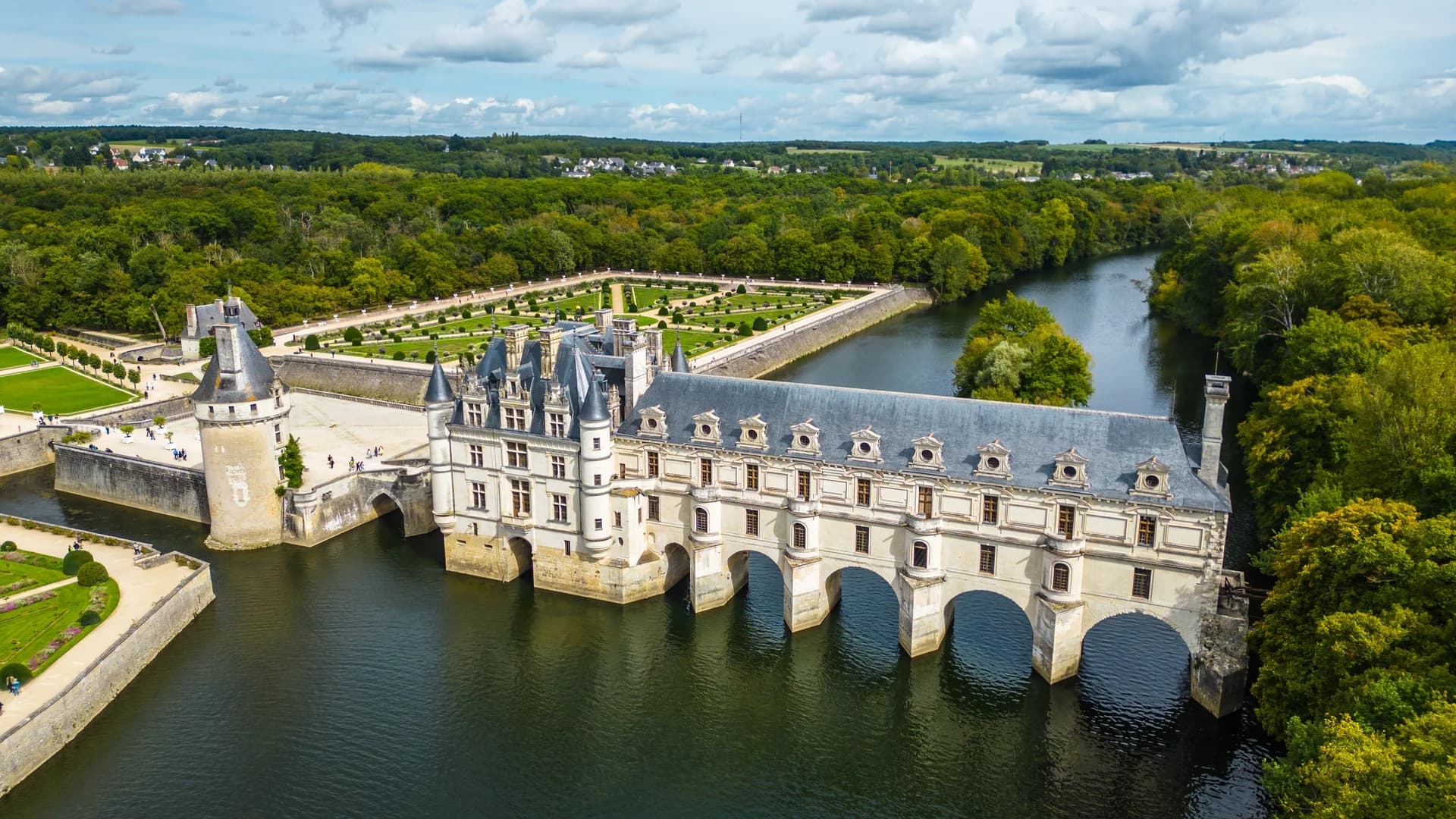
Fourteen of the continent's most iconic castles, with what to see, when to go, what it costs, and how to get there. From a tidal abbey on the Norman coast to a Bavarian fairy-tale palace, the canonical European itinerary.
Europe holds more castles than any other continent. Survey-level estimates put the total of surviving fortified historic structures at over 100,000 once you include ruins, manor-fortifications and palatial residences. The strict definition (medieval and post-medieval defensive castles formally protected under national heritage law) covers around 45,000 across the 14 countries the Castle Price Index tracks. France alone holds over 19,000 protected châteaux. Germany and Italy each carry several thousand. Scotland holds an estimated 2,000 standing stone castles in a country smaller than South Carolina.[1]
The geography clusters in five corridors. The Loire Valley in France, where the French monarchy built its summer pleasure-palaces between Charles VII and Henry III. The Rhine corridor through Germany, where over forty toll castles still line the river between Mainz and Koblenz. The Welsh Edwardian ring, where Edward I's late-13th-century invasion built four UNESCO-listed fortresses in twenty-five years. The Italian peninsula, stretching from Frederick II's Apulian octagons in the south to the Habsburg-era Tyrol castles in the north. And the Spanish Reconquista frontier, where Christian and Moorish builders left a thousand years of competing fortification.
The castles below are the canonical fourteen, drawn from twelve countries. Each entry covers what to see, when to go, what it costs, and how to get there.
1. Château de Versailles
France Closed Mondays Sun King's seat Map
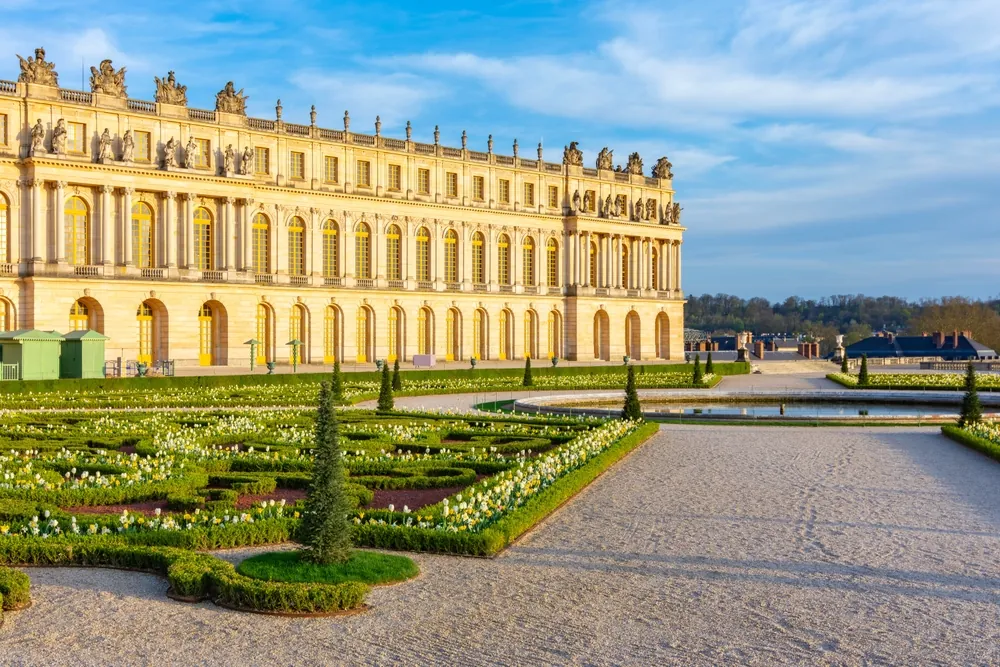
Versailles is the residence Louis XIV transformed from his father's hunting lodge between 1661 and 1715, recruiting Le Vau, Le Brun and Le Nôtre, the same trio Fouquet had hired for Vaux-le-Vicomte three years earlier. The Hall of Mirrors, the King's State Apartments, and the formal gardens beyond are the canonical visit. The Estate spreads over more than 800 hectares and includes the Trianon palaces and Marie-Antoinette's hamlet, both worth a half-day of their own.[2]
It is also the most visited château in Europe: 8.4 million visitors in 2024 according to the official rapport annuel, with 4.4 million through the palace itself.[2] Under French heritage law (Article L621-36 of the Code du patrimoine), Versailles is a domaine national, state property that is inalienable and cannot be sold under any circumstance.[3]
Practical: open Tuesday to Sunday 09:00–18:30, closed Mondays. Passport ticket €35 / €32 EEA residents; Trianon-only €15. Free under 18 and EEA under 26. From central Paris, RER C to Versailles Château–Rive Gauche, ~40 minutes. Plan your visit.[2]
2. Mont-Saint-Michel
France (Normandy) Daily, year-round Pilgrim's tidal island Map
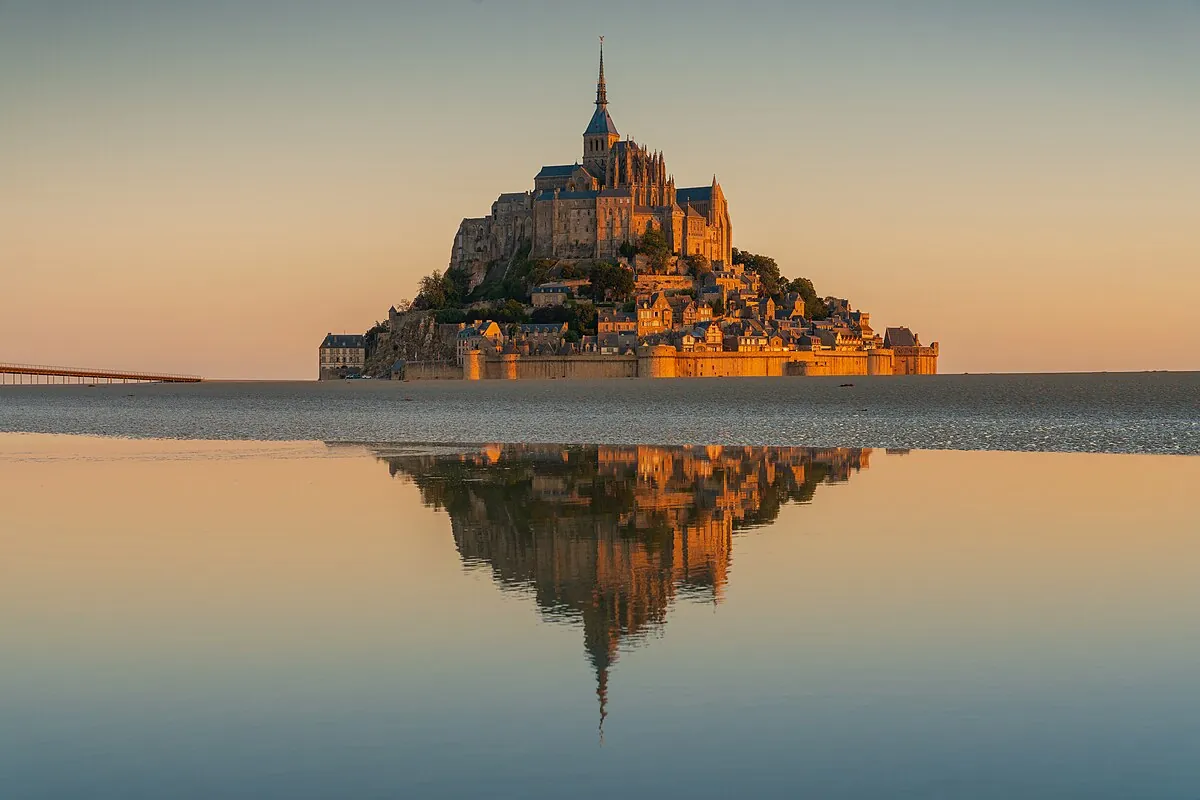
The granite islet rising off the Norman coast was a place of Christian pilgrimage from the 8th century, when Bishop Aubert of Avranches founded the original sanctuary. The Romanesque abbey church and Gothic Merveille monastic buildings were added between the 11th and 13th centuries. Tides isolate the Mount from the mainland twice daily, which gave it a defensive role through the Hundred Years' War: English forces besieged it repeatedly between 1424 and 1434 and never took it.
The Grande Rue climbs from the gate to the abbey at the summit, lined with shops and restaurants. The abbey church, the Knights' Hall, the cloister and the refectory are the key interiors. The walk back at low tide, with the bay opening to the horizon, is the experience that makes the trip.
Practical: abbey open daily, year-round (closed 1 Jan, 1 May, 25 Dec). Adult €13, free under 18 and EEA 18–25. The town and ramparts are free; only the abbey is ticketed. From Paris, TGV Montparnasse to Rennes (~2h), then connecting bus or train; allow a full day. Abbey official site.[4]
3. Tower of London
England Daily, year-round Crown Jewels & ravens Map
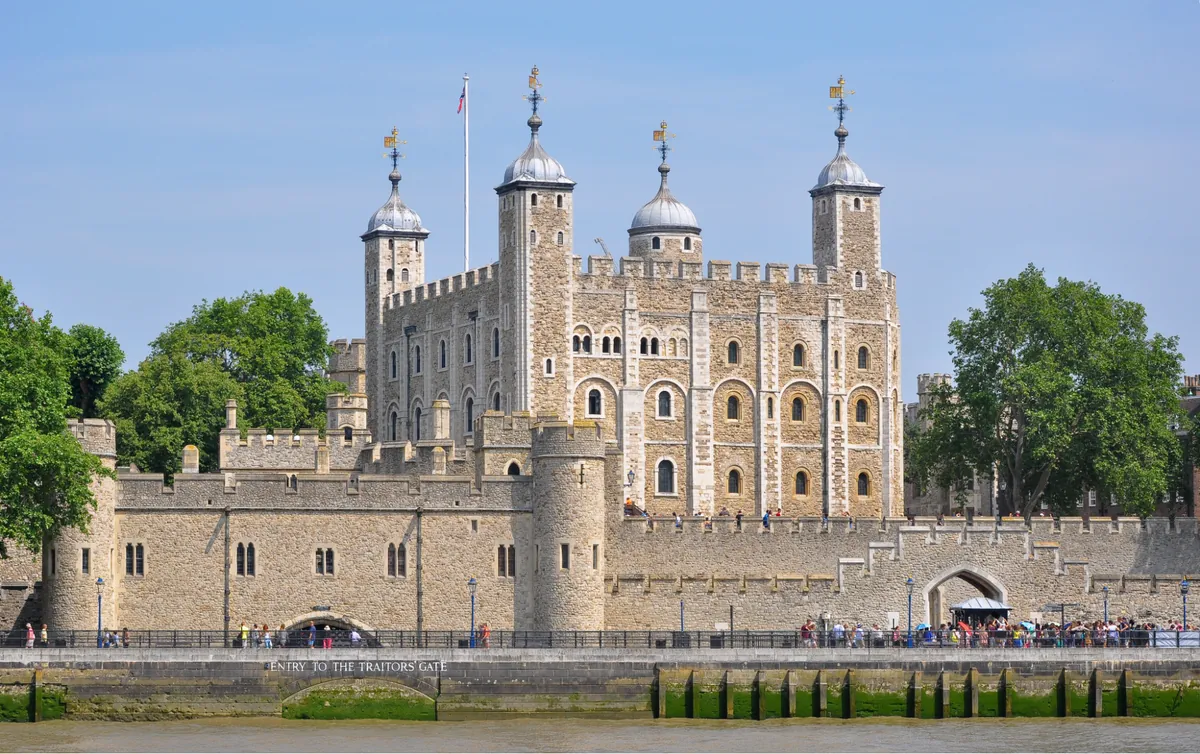
William the Conqueror began the White Tower in 1078, six years after the Norman conquest, as both a royal residence and a fortress projecting Norman power over the conquered city. The walls and outer bailey were extended over the next 250 years; Edward I added the curtain walls and the Traitor's Gate in the late 13th century. The Tower has served as palace, treasury, mint, menagerie, observatory, prison and execution site across nearly 1,000 years of continuous occupation. Anne Boleyn, Catherine Howard and Lady Jane Grey were executed inside its walls; the Princes in the Tower vanished here in 1483.
The Crown Jewels remain the visitor centrepiece, as do the Yeoman Warder ("Beefeater") tours and the seven resident ravens kept by tradition to ensure the kingdom's survival. Tower of London received approximately 2.9 million visitors in 2024.[5]
Practical: open daily; opening hours vary by season. Adult from £35 advance, concessions available. Middle Tower closed for conservation through mid-June 2026. From central London, Underground to Tower Hill (Circle/District lines). Plan your visit.[5]
4. Edinburgh Castle
Scotland Daily, year-round Honours of Scotland Map
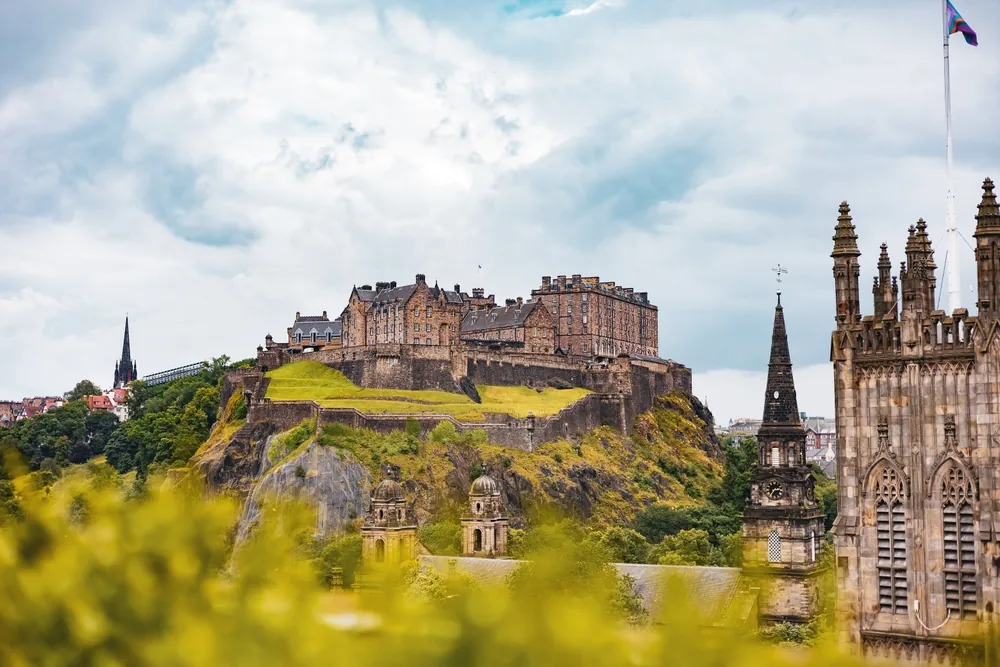
The fortress on Castle Rock, the volcanic plug dominating the city skyline, has been continuously inhabited and fortified since at least the Iron Age. The earliest surviving building, St Margaret's Chapel, dates to around 1130. The castle has been besieged 26 times, more than any other place in the British Isles. It holds the Honours of Scotland (the Scottish crown jewels), the Stone of Destiny, the One O'Clock Gun fired daily at 13:00, and Mons Meg, the 15th-century siege bombard. Scotland's National War Memorial sits within the walls.
Edinburgh Castle drew 1,981,152 paid visitors in 2024, the most-visited paid attraction in Scotland.[6]
Practical: open daily; September to March 09:30–17:00, April to August 09:30–18:00. Adult £21.50 advance, child £13.50, concession £18. Crown Room closed January through April 2026. Walk from city centre, ~10 minutes from Princes Street. Plan your visit.[6]
5. Schloss Neuschwanstein
Germany (Bavaria) Tour by reservation Fairy-tale castle Map
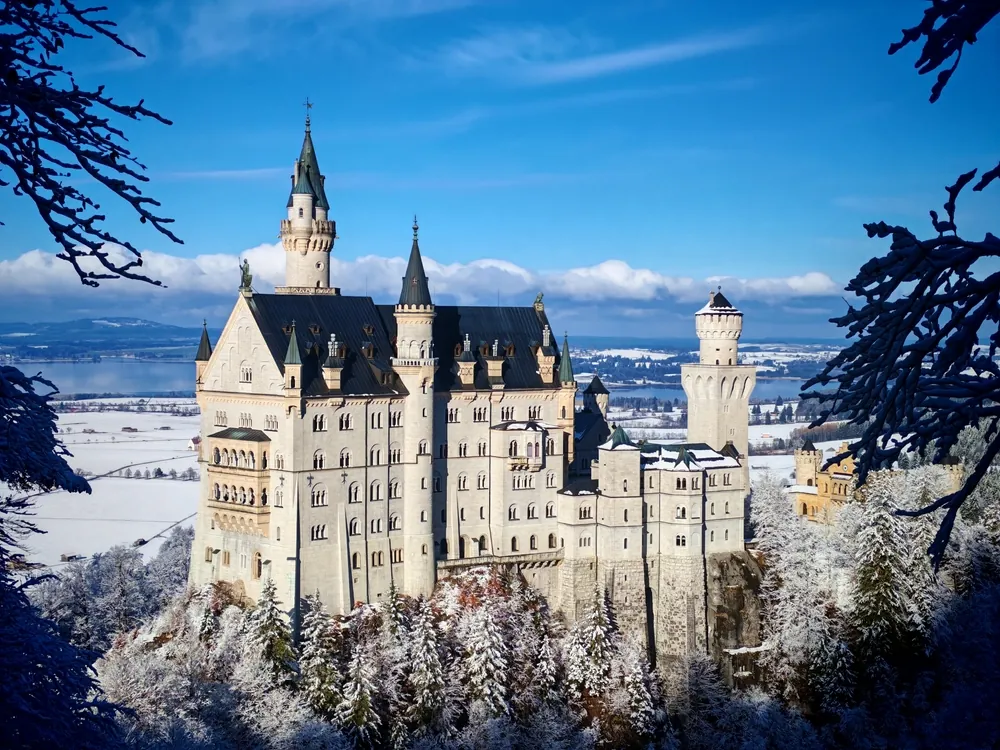
Ludwig II of Bavaria commissioned Neuschwanstein in 1869 as a private retreat and homage to the Wagnerian operatic world he had grown up inside. Construction continued for seventeen years; Ludwig lived in the partially-finished castle for only 172 days before he was deposed in 1886 and died days later under disputed circumstances. The interiors he completed (the Throne Hall, the Singers' Hall, the Wagner-themed murals) are the canonical visit. Walt Disney visited in the 1950s; Sleeping Beauty Castle in Anaheim is widely understood to derive from the silhouette.
UNESCO inscribed Neuschwanstein in 2025 alongside Linderhof and Herrenchiemsee as Ludwig II's "Royal Palaces of Bavaria".[7]
Practical: open daily; tours by reservation only. Adult €23.50, child under 18 free. Tours leave from Hohenschwangau village every 5 minutes; book 2-3 days ahead in summer. From Munich, Bayern-Ticket regional train to Füssen (~2h) then bus 73 or 78 to Hohenschwangau. Plan your visit.[7]
6. Cité de Carcassonne
France (Languedoc) Daily, year-round Medieval walled stronghold Map
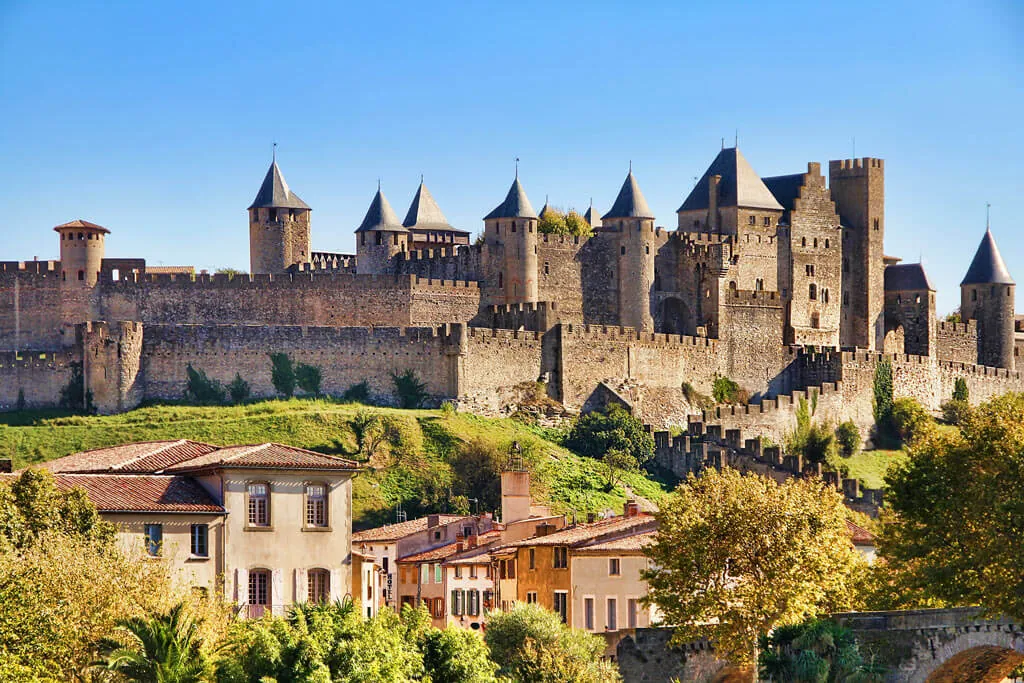
The double-walled medieval citadel above the modern town of Carcassonne is the largest fortified city in Europe: around 52 towers across two concentric ramparts spanning roughly 3 km. The site was a Roman castrum before the Cathar wars; under Louis IX (Saint Louis) and his son Philippe III, the inner walls and the Comtal Castle were rebuilt as a southern bulwark of the kingdom. The 19th-century architect Eugène Viollet-le-Duc led the restoration that gave the towers their now-iconic conical roofs, a reconstruction that some heritage purists still argue with.[8]
The Cité is a living town: about 50 residents, plus shops, hotels and restaurants inside the walls. The Comtal Castle and the ramparts walk are ticketed; the streets, the basilica and the views over the lower town are free.
Practical: Comtal Castle open daily 09:30–17:00 (Oct–Mar) / 10:00–18:30 (Apr–Sep), closed 1 Jan, 1 May, 1 Nov, 11 Nov, 25 Dec. Adult €13, free under 18 and EEA 18–25. From Paris, TGV from Gare de Lyon to Carcassonne (~5h30 direct). Official site.[8]
7. Caernarfon Castle
Wales Daily, year-round Edward I's polygonal towers Map
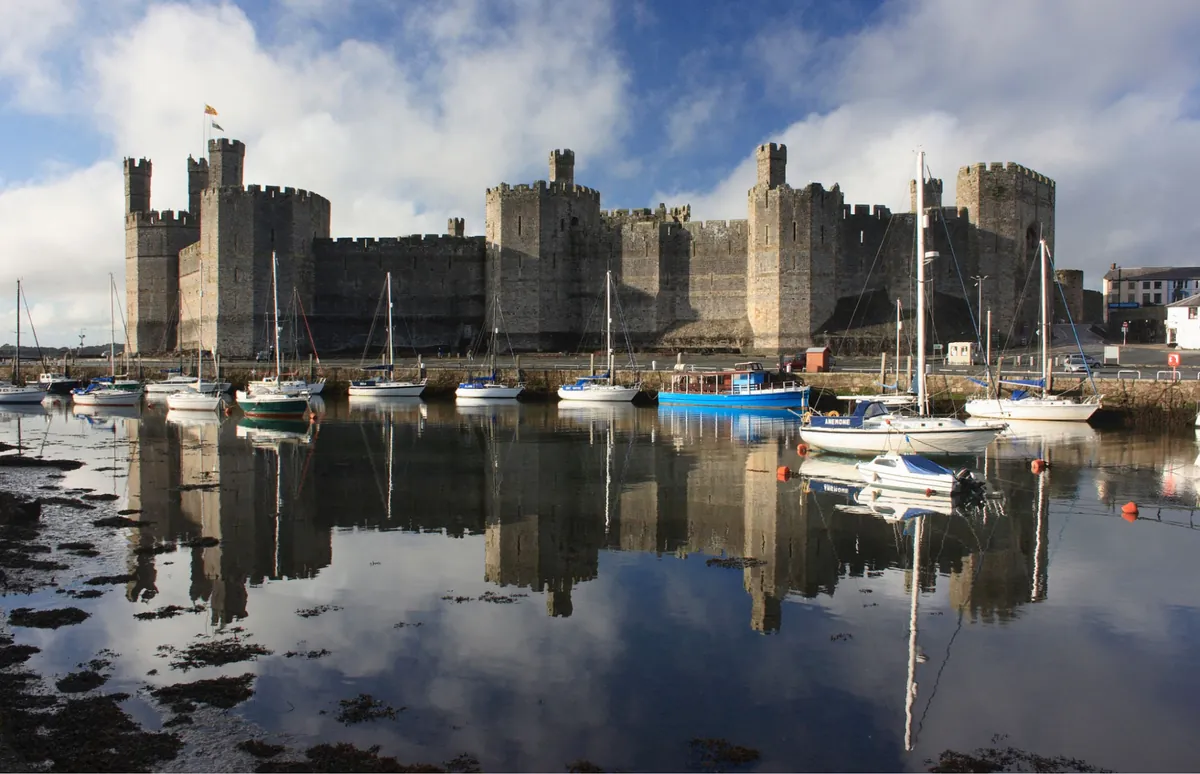
Edward I built Caernarfon between 1283 and 1330 as the political capital of his conquest of Wales, modelled after the imperial city walls of Constantinople (which Edward had seen on crusade). The polygonal banded towers, deliberately echoing the walls of Constantinople in colour and shape, are unique in British military architecture. The castle was the site of Edward II's birth in 1284 (Edward presented his infant son to the Welsh as their "prince born in Wales who spoke no English"). It was the site of Charles III's investiture as Prince of Wales in 1969 and where his son's investiture would be held.
The Eagle Tower, the King's Gate, the Queen's Tower and the polygonal Watch Tower are the visit. UNESCO inscribed Caernarfon, Beaumaris, Conwy and Harlech together in 1986 as the "Castles and Town Walls of King Edward in Gwynedd".[9]
Practical: open daily; March to October 09:30–17:00, November to February 10:00–16:00. Adult £14.30, concession £11.50, child £8.60. From London, Avanti West Coast to Bangor (~3h30) then bus 5/5C to Caernarfon (~30 min). Plan your visit.[9]
8. Alhambra
Spain (Granada) Daily, advance booking Nasrid palace city Map
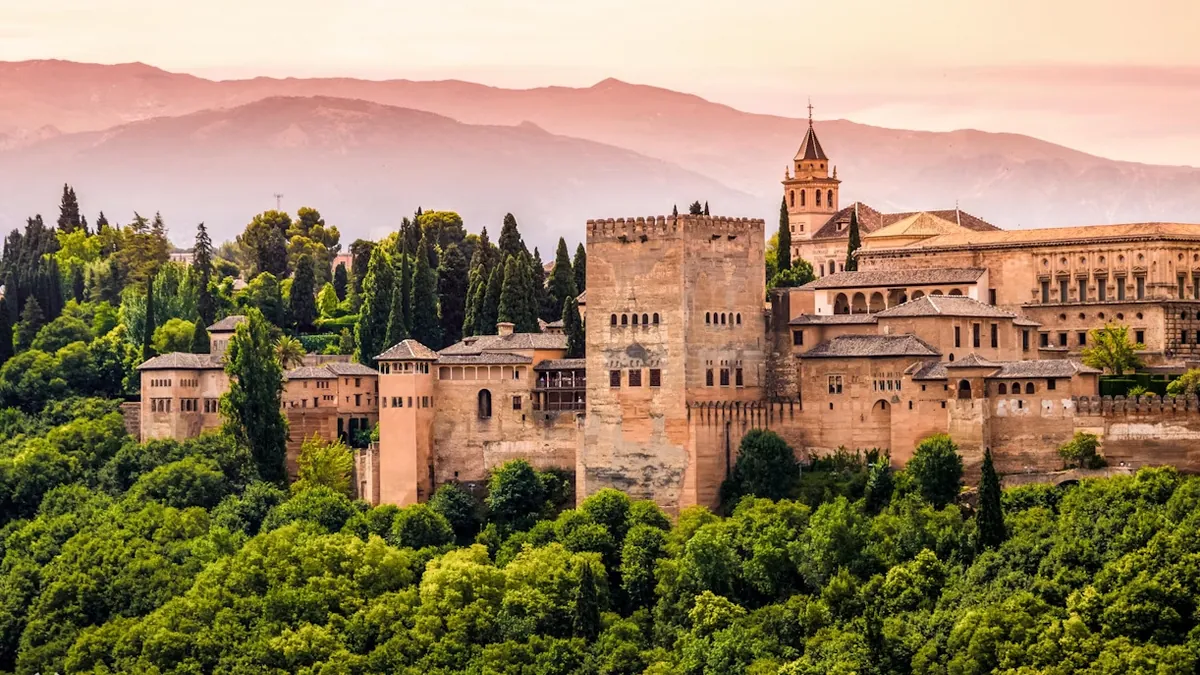
The Alhambra is the only surviving major Islamic palace city in Western Europe, built across the 13th and 14th centuries by the Nasrid dynasty as the seat of the last Muslim emirate on the Iberian peninsula. Boabdil surrendered it to the Catholic Monarchs in 1492, ending 781 years of Al-Andalus. Charles V added a Renaissance palace in the 1530s; the Nasrid palaces, the Generalife gardens and the Alcazaba fortress all survived. The decorative tilework, stucco muqarnas vaults, and the Court of the Lions remain the most refined Islamic civic architecture surviving anywhere in Europe.
The Alhambra is the most-visited monument in Spain, drawing approximately 2.7 million visitors in 2024.[10]
Practical: open daily; March to October 08:30–20:00 (with night visits), November to February 08:30–18:00. Advance booking essential, often 2-3 weeks ahead in peak season. General admission €19.09, free under 12 and over 65. From Madrid, AVE high-speed train to Granada (~3h15). Buy tickets.[10]
9. Malbork Castle
Poland Open daily; free Mondays World's largest brick castle Map
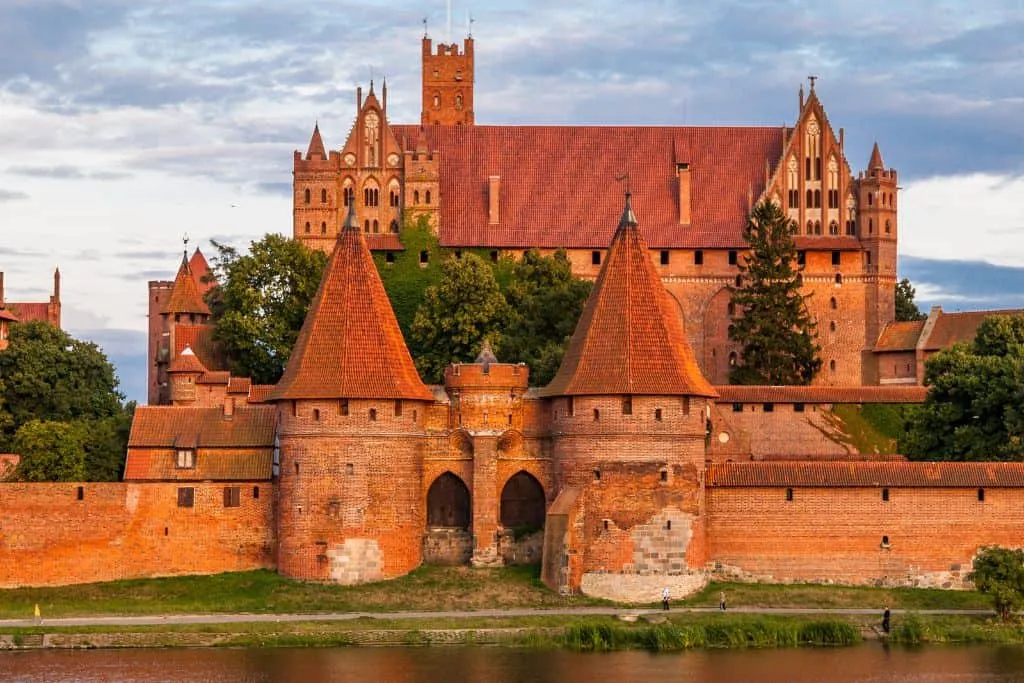
Malbork is the largest brick castle in the world by land area, the headquarters of the Teutonic Order from 1309 until the Order's defeat at Tannenberg in 1410. The complex covers 21 hectares: three concentric castle baileys (the Low, Middle and High Castles), the Grand Master's palace, the church of St Mary, and the longest hostel in medieval Europe. The Order's grand masters administered an Ostsee colonial empire from these brick walls, controlling Baltic trade routes and the Hanseatic network.
UNESCO inscribed Malbork in 1997. It draws around 480,000 visitors a year, the most-visited heritage attraction in northern Poland.[11]
Practical: open daily 09:00–20:00 (Apr–Sep) / 10:00–15:00 (Oct–Mar). Mondays free entry to the grounds and selected exhibitions. Full ticket adult 100 PLN, concession 75 PLN. From Warsaw, intercity train to Malbork (~3h direct) or via Gdańsk. Plan your visit.[11]
10. Prague Castle
Czech Republic Grounds free, circuits ticketed World's largest castle complex Map
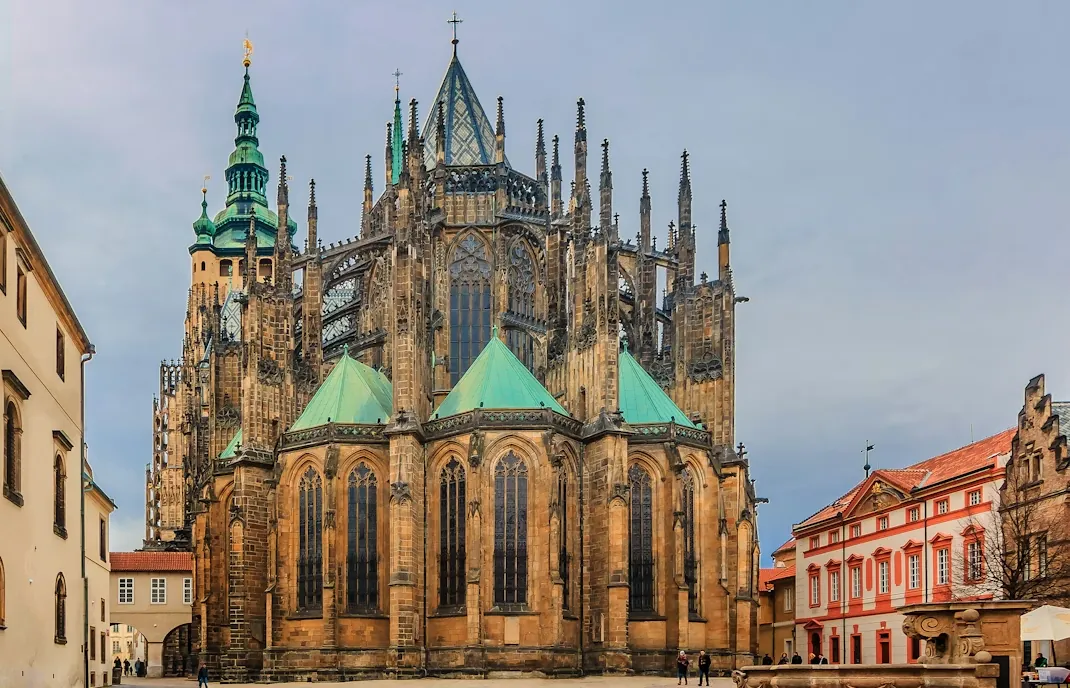
Prague Castle is the largest coherent castle complex in the world by area: 70,000 m² across the Old Royal Palace, St Vitus Cathedral, St George's Basilica, the Golden Lane and the gardens, all on the Hradčany hill above the Vltava. Construction began in the 9th century; the Gothic St Vitus Cathedral was begun in 1344 under Charles IV and finished in 1929. The castle has served as the seat of every Czech ruler from Bohemian dukes through Habsburg emperors to the modern Czech presidency.
The Crown Jewels of Bohemia are kept here (rarely displayed). The Old Royal Palace, St Vitus Cathedral, the Golden Lane and the Royal Garden are the canonical circuit. The castle precinct itself is free to walk through; only the interiors are ticketed.[12]
Practical: grounds open daily 06:00–22:00, free. Interior circuit (Vladislav Hall, Cathedral, Basilica, Golden Lane) 250 CZK adult, 125 CZK concession. From Prague city centre, Tram 22 to Pražský hrad. Plan your visit.[12]
11. Kronborg
Denmark (Helsingør) Closed Mondays Nov–Mar Hamlet's Elsinore Map
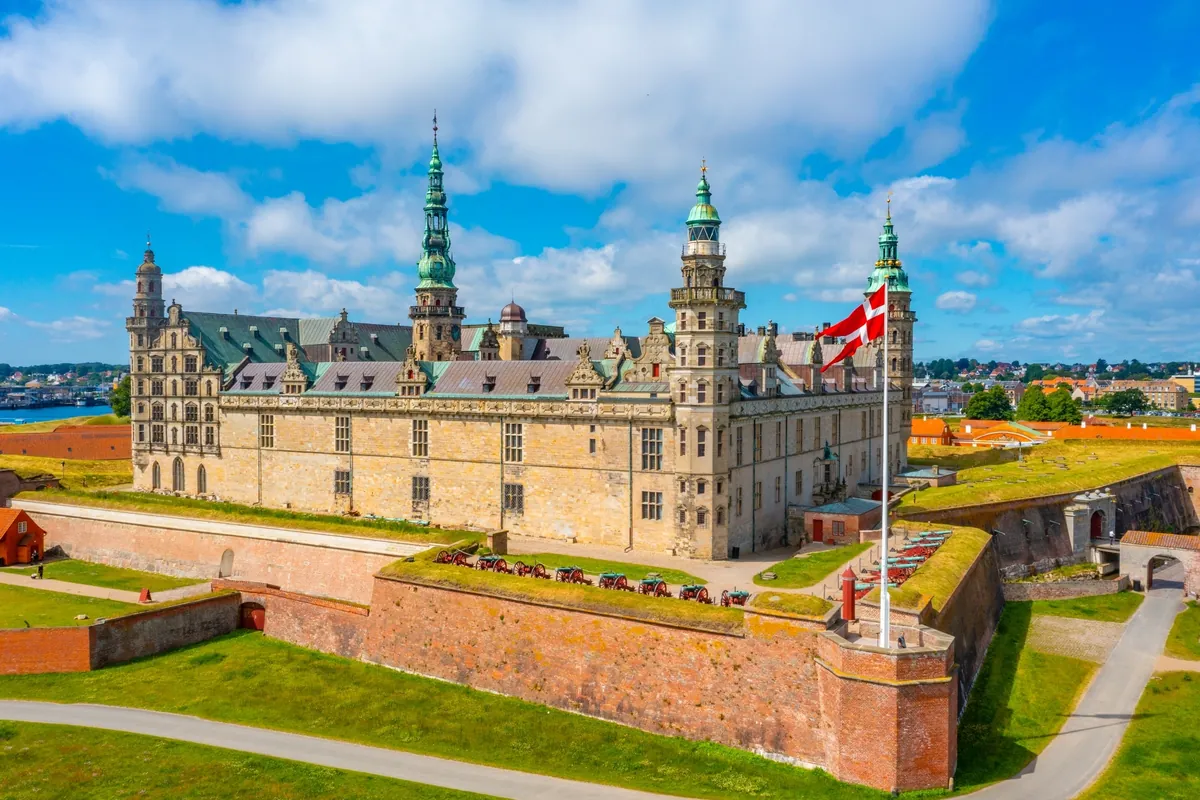
Kronborg sits at the narrowest point of the Øresund, the strait between Denmark and Sweden, where Danish kings collected the Sound Toll on every passing ship from 1429 until 1857. The current Renaissance castle was built by Frederick II between 1574 and 1585 in the Dutch Renaissance style imported via Antwerp and Amsterdam, with a fire-and-restoration cycle in the 17th century. Shakespeare set Hamlet here as Elsinore, basing his framing on Danish travelogues he likely read in London. Kronborg has hosted Hamlet performances annually since 1816.
UNESCO inscribed Kronborg in 2000. The casemates, the chapel, the royal apartments and the Telegraph Tower battery are the visit. The legendary Holger Danske statue sleeps in the casemates (he is supposed to wake when Denmark needs him).[13]
Practical: open Tuesday to Sunday year-round, closed Mondays November to March. Hours 11:00–17:00 (winter), 10:00–17:30 (summer). Adult ~145 DKK online. From Copenhagen, regional train to Helsingør (~45 min) then 15-minute walk. Plan your visit.[13]
12. Castel Sant'Angelo
Italy (Rome) Closed Mondays Hadrian's mausoleum Map
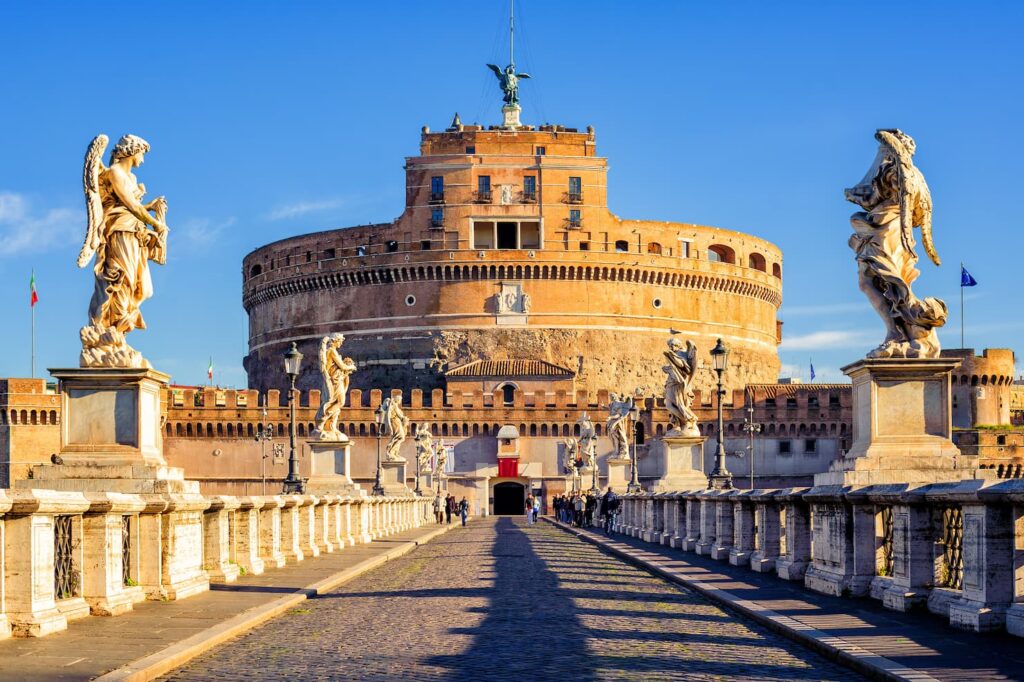
Hadrian commissioned his own mausoleum in 134 CE on the right bank of the Tiber, completed shortly after his death in 138. The cylindrical Roman drum survives at the core; over 1,800 years it became, in turn, the burial place of Roman emperors, a fortress for Aurelian's walls, a papal fortress connected to the Vatican by the Passetto di Borgo (the elevated escape corridor used by Clement VII during the 1527 Sack of Rome), a renaissance palace, a prison and now a national museum. Puccini set the final scene of Tosca on its ramparts.
The papal apartments, the Renaissance frescoes, the Sala Paolina and the rooftop terrace giving 360° views over Rome and the Vatican are the visit. The angel statue on the summit (after which the castle is named) commemorates the legend of Pope Gregory the Great seeing the Archangel Michael sheath his sword above the building in 590, ending a plague.[14]
Practical: open Tuesday to Sunday 09:00–19:30, closed Mondays. Adult €15.50, free first Sunday of the month. From Rome city centre, walk from St Peter's (~10 minutes) or Metro A to Lepanto. Plan your visit.[14]
13. Château de Chillon
Switzerland (Vaud) Daily, year-round Lake Geneva island fortress Map
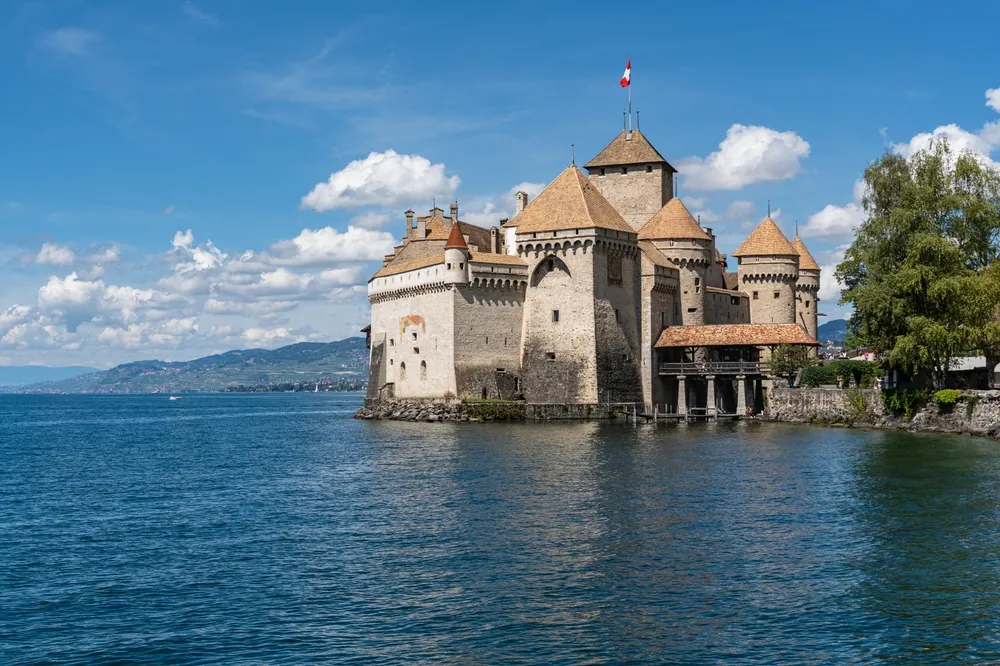
Chillon stands on a rocky islet in Lake Geneva, controlling the road through the Alps from Italy to Burgundy along the lake's eastern shore. The Counts of Savoy held it from the 12th to 16th centuries; Bonivard, the prior of Saint-Victor, was imprisoned in its dungeon from 1530 to 1536. Lord Byron made the dungeon famous with The Prisoner of Chillon (1816), carved his name in the column where Bonivard had been chained, and triggered the modern tourist circuit. Chillon has been a museum since 1903.
The dungeon, the lakeside courtyards, the Great Halls, the bedchambers and the ramparts are the visit. Chillon is the most-visited historic monument in Switzerland with ~390,000 visitors annually.[15]
Practical: open daily; April to October 09:00–19:00, November to March 10:00–17:00. Adult CHF 15, child (6–15) CHF 7. From Lausanne or Geneva, train to Veytaux-Chillon (1h from Geneva). Plan your visit.[15]
14. Burg Eltz
Germany (Mosel valley) Daily late Mar–Nov Untouched Mosel fairytale Map
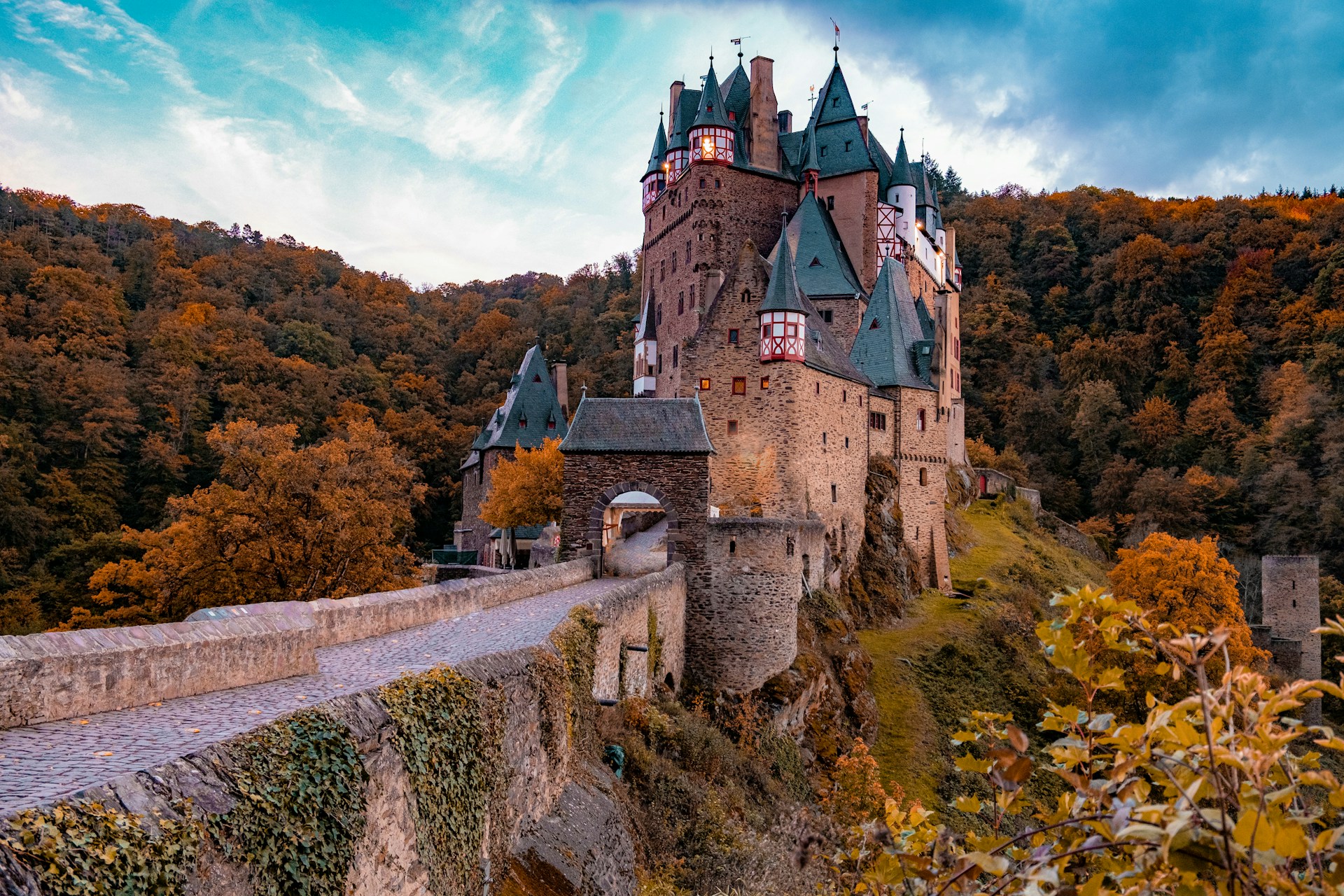
Burg Eltz is the rare medieval German castle that survived eight centuries without being destroyed: it has been continuously held and lived in by the same family (the Counts of Eltz) for 33 generations since 1157. The castle's Ganerbenburg construction (where multiple branches of the family share one defensible outer wall while each holds a separate residence within) makes it architecturally unusual. It survived the Thirty Years' War, the Palatine Succession War and both World Wars without significant damage. The interiors have not been restored: they survive as the family arranged them.
The treasury, the family rooms, the Great Hall and the Knights' Hall are the visit. The approach itself is part of the experience: a 1.5 km walk through forest from the parking area, the castle revealing itself in stages.[16]
Practical: open daily April through early November, 09:30–17:30. Closed mid-November to late March. Adult €14, child (6–17) €7. From Koblenz, regional train to Moselkern (~30 min) then 35-minute forest walk. Plan your visit.[16]
At a glance
| Castle | Region | When to go | |
|---|---|---|---|
| Château de VersaillesSun King's seat | France | Closed Mondays |
| Mont-Saint-MichelPilgrim's tidal island | France (Normandy) | Daily, year-round |
| Tower of LondonCrown Jewels & ravens | England | Daily, year-round |
| Edinburgh CastleHonours of Scotland | Scotland | Daily, year-round |
| Schloss NeuschwansteinFairy-tale castle | Germany (Bavaria) | Tour by reservation |
| Cité de CarcassonneMedieval walled stronghold | France (Languedoc) | Daily, year-round |
| Caernarfon CastleEdward I's polygonal towers | Wales | Daily, year-round |
| AlhambraNasrid palace city | Spain (Granada) | Daily, advance booking |
| Malbork CastleWorld's largest brick castle | Poland | Open daily; free Mondays |
| Prague CastleWorld's largest castle complex | Czech Republic | Grounds free, circuits ticketed |
| KronborgHamlet's Elsinore | Denmark (Helsingør) | Closed Mondays Nov–Mar |
| Castel Sant'AngeloHadrian's mausoleum | Italy (Rome) | Closed Mondays |
| Château de ChillonLake Geneva island fortress | Switzerland (Vaud) | Daily, year-round |
| Burg EltzUntouched Mosel fairytale | Germany (Mosel valley) | Daily late Mar–Nov |
How many castles are in Europe?
The strict count of medieval and post-medieval defensive castles formally protected under national heritage law sits around 45,000 across the 14 countries Castle Collector's market index covers. The broader estimate (including ruins, fortified manors, palatial residences and partial structures) reaches 100,000+.[1]
The country distribution is uneven. France alone holds over 19,000 protected châteaux. Germany lists around 25,000 historic castles and palaces in the EBIDAT database, of which approximately 8,500 are protected as Burgen or Schlösser. Italy has several thousand. Scotland holds an estimated 2,000 standing stone castles. The smallest national stocks are Switzerland (~300 protected sites), Denmark (~200), and the Republic of Ireland (~150 with significant standing fabric). The contrast tells you about three structural variables: terrain (more rugged borders breed more fortifications), state-formation timing (fragmented late-medieval states like Germany and Italy built more castles than centralised early-modern ones like France or England), and Protestant/Catholic Reformation patterns (which determined how many ecclesiastical castles survived the post-1530s upheaval).
Public access is the smaller question. The major heritage operators (Centre des monuments nationaux, English Heritage, Historic Environment Scotland, Cadw, Bayerische Schlösserverwaltung, Patrimonio Nacional, OPW Ireland) collectively run several thousand ticketed visit experiences. The privately-held majority is mostly closed to visitors, though associations like the Demeure Historique (France, 400+) and the Verband Privater Schlösser und Burgen (Germany) coordinate seasonal openings and combined-ticket schemes.
Where the castles cluster: country by country
If the fourteen above are the canonical highlights, the country-level coverage runs deeper. Quick guide to where to go after the headliners:
- France holds the deepest castle landscape in Europe (Loire Valley, Île-de-France, Périgord, Provence). Three of our top fourteen are French, and the country-level guide has a further eight worth a day.
- Germany divides into the Rhine corridor toll castles (Eltz, Marksburg, Rheinfels, Stolzenfels), the Bavarian royal palaces (Neuschwanstein, Linderhof, Herrenchiemsee, Hohenschwangau) and the Brandenburg/Prussian residences (Sanssouci, Charlottenburg). Country guide.
- The UK splits sharply between England (Norman keeps, Tudor palaces, Edwardian fortifications), Scotland (royal residences, Highland tower-house clusters), and Wales (the four UNESCO Edwardian castles plus a wider Cadw portfolio).
- Ireland holds Norman keeps and tower houses across the Republic and Northern Ireland; Blarney, Bunratty, the Rock of Cashel and the spectacular Dunluce ruins lead the country guide.
- Italy runs from Frederick II's Apulian octagons in the south (Castel del Monte) through Tuscan and Trentino castelli to the Habsburg residences in the north. Country guide.
- Spain holds the Moorish-era palace-fortresses (Alhambra, Aljafería, Castillo de Loarre) and the Reconquista castles of Castile and Aragon. Country guide.
- Eastern Europe is the most undertrodden of the major castle regions. Poland (Malbork, Wawel, the Eagles' Nests trail), the Czech Republic (Karlštejn, Český Krumlov, Konopiště), and Slovakia (Bratislava, Spiš).
- Northern Europe holds royal residences rather than feudal castles. Denmark leads with Kronborg, Frederiksborg and Rosenborg.
- The Alpine countries. Switzerland carries Chillon, Bellinzona's three-castle UNESCO ensemble, and the Aargau Habsburg seats. Austria and the Tyrol are covered partly through Italian and German listings.
- The Americas. Across the Atlantic, the United States has the Gilded Age industrial palaces (Biltmore, Hearst, Boldt) plus the Spanish-colonial coastal forts of Florida and Puerto Rico.
Tracking the European castle market
The Castle Price Index covers 1,118 verified listings with confirmed price and floor area across 14 countries.[17] The continental median sits at €1,700,000 for 750 m² (€2,250/m²). The country-by-country picture:
| Country | n listings | Median asking | Median m² | Median €/m² |
|---|---|---|---|---|
| France | 945 | €1,680,000 | 700 | €2,285 |
| Italy | 100 | €2,950,000 | 1,500 | €1,750 |
| Spain | 61 | €2,300,000 | 1,052 | €2,368 |
| Germany | 42 | €1,500,000 | 446 | €1,971 |
| Belgium | 29 | €1,795,000 | 880 | €2,200 |
| Poland | 12 | €1,104,000 | 2,070 | €632 |
| Ireland | 12 | €2,000,000 | 647 | €3,358 |
| United Kingdom | 8 | €1,038,000 | 452 | €2,614 |
| Switzerland | 6 | €16,008,000 | 900 | €19,551 |
| All markets | 1,118 | €1,700,000 | 750 | €2,250 |
Source: Castle Collector Castle Price Index, March 2026.[17]
France carries 67% of the live for-sale market by volume, the deepest single-country castle market in the world. Switzerland sits in a separate tier at €19,551/m², driven by Lex Koller foreign-buyer restrictions and alpine land scarcity. Poland's €632/m² is the European floor among indexed markets, with verified Romanian transactions running below €200/m² at the absolute entry tier.
The size discount is the strongest single pricing variable across the dataset: properties under 500 m² index at €3,000/m² median, properties over 5,000 m² collapse to €515/m². A 6,000 m² rural French château sells at roughly one-fifth the per-m² of a 300 m² Loire tower in the same region. Size predicts per-m² price more reliably than country.
If you're looking to buy
The European castle market is really 14 distinct national markets sitting under one label. Transaction costs run from 1% (Ireland, Czech Republic) to 12% (UK with non-resident SDLT). Foreign-buyer restrictions are mild in most of Europe and tight in Switzerland (Lex Koller), Austria (provincial approval for non-EU) and France (no restrictions but cash-only norms for château purchases since credit insurers refuse to underwrite them). Foreign buyer mechanics and the wider guide to buying a castle cover the operational sequence in detail.
Annual transaction volume is small: across the ~46,000 protected castle-type properties in the indexed countries, the visible market clears 200 to 400 sales a year, a turnover of 0.4 to 0.9% per annum. Prime residential property turns over at 2 to 4% by comparison. Castles are structurally three to seven times less liquid than equivalent prime residential property in the same country.[17] A serious buyer should expect a 2 to 10 year average time-to-sell if they ever need to exit.
For investment-tier listings and the luxury-hotel conversion route, see our category insights. For listings active across the continent, browse castles for sale by country.
Sources
1. French Ministry of Culture, Inventaire général du patrimoine culturel.
2. Versailles Rapport Annuel 2024 (PDF).
3. Code du patrimoine, Partie législative, Articles L621-36, L621-41 (consolidated text). Légifrance / Journal officiel.
4. Mont-Saint-Michel, Centre des monuments nationaux official site.
5. Tower of London, Historic Royal Palaces.
6. Edinburgh Castle, Historic Environment Scotland.
7. Schloss Neuschwanstein, Bayerische Schlösserverwaltung.
8. Cité de Carcassonne / Remparts, Centre des monuments nationaux.
9. Caernarfon Castle, Cadw.
10. Patronato de la Alhambra y Generalife, Memoria 2024.
11. Muzeum Zamkowe w Malborku, official site.
12. Pražský hrad / Prague Castle, Office of the President.
13. Kronborg Slot, Slots- og Kulturstyrelsen.
14. Museo Nazionale di Castel Sant'Angelo, Direzione Musei Statali della città di Roma.
15. Château de Chillon, Fondation des Châteaux de Chillon.
16. Burg Eltz, official site of the Eltz family.
17. Castle Collector, Castle Price Index, March 2026 edition.