
How to Buy a Castle in Europe: Real Prices, Heritage Rules, Costs
From £130,000 ruins to €20m estates: real per-m² prices by country, heritage rules, renovation costs and where the private market actually clears.
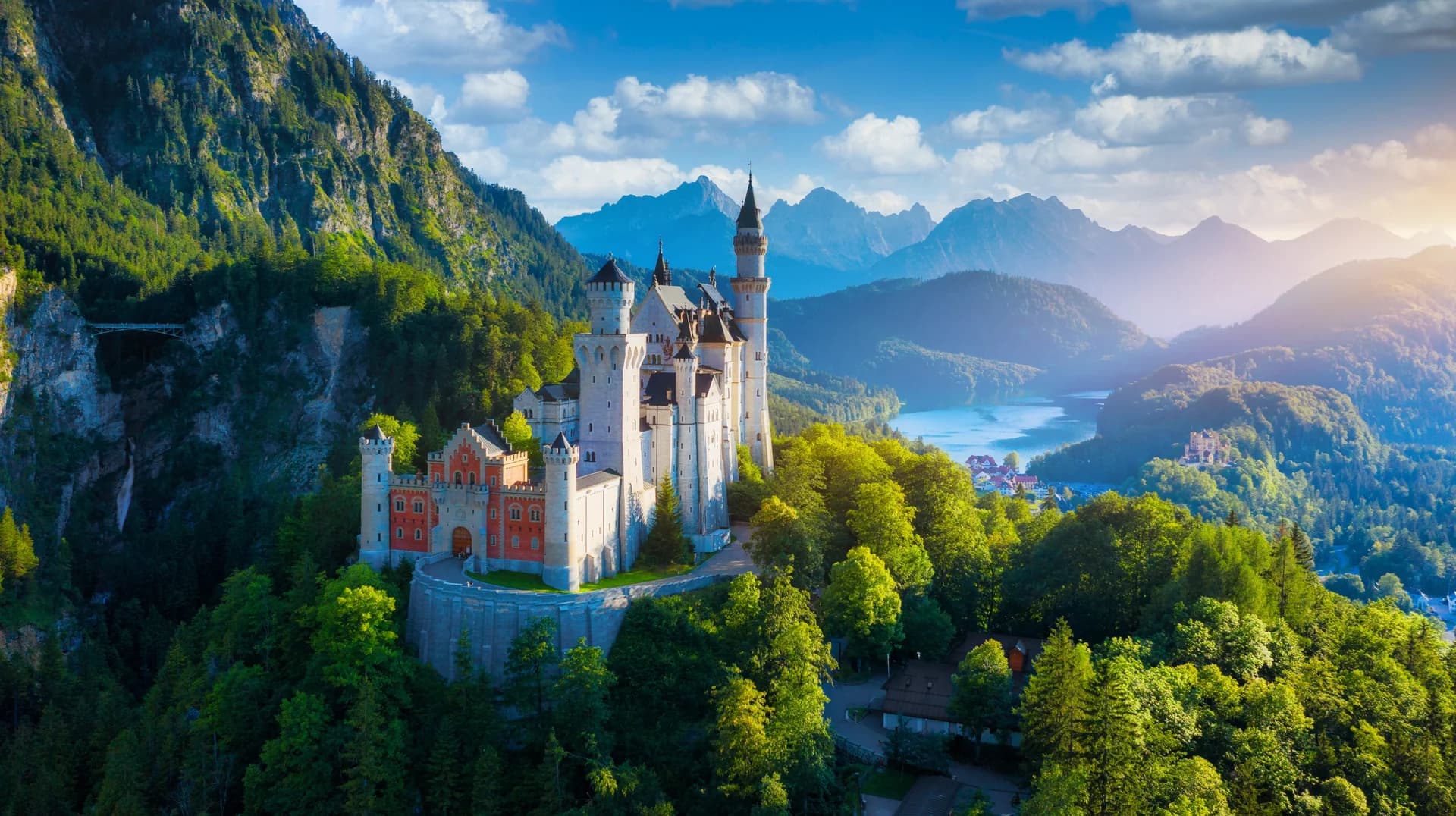
You can buy a castle in Europe today for around £130,000. That gets you a Scottish ruin, or a distressed German Schloss at auction. At the other end, €20 million gets you a turnkey country estate already pulling income.
The middle of the market is narrower than that range suggests. We track 1,118 verified listings across the continent, and the median sits at €1.7 million for around 700 m², or roughly €2,250 per square metre.[1] The single biggest driver of price per square metre is size rather than country. Properties under 500 m² average €3,000/m². Properties over 5,000 m² collapse to €515/m². Add 12 to 15% on top of the headline price for transaction costs.
What follows is the regional pricing picture, the legal framework you will need to navigate, and the operational sequence buyers who actually close on the property tend to follow.
Why buy a castle?
Use case drives every other decision: country, budget, financing, consent strategy. Most successful buyers fall into one of four profiles, and the four lead in different directions financially.
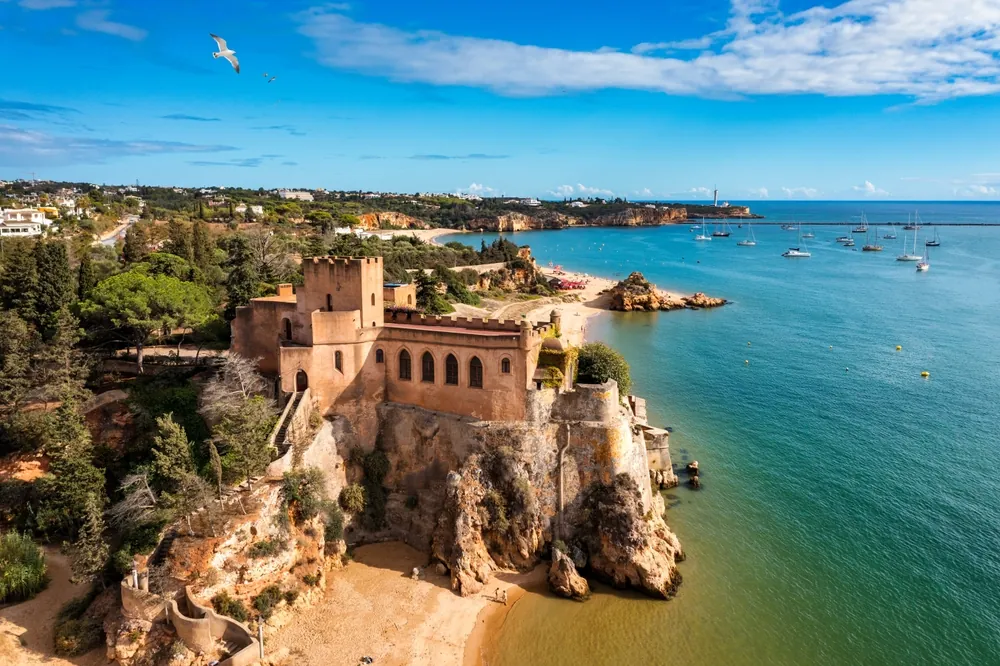
Private residence. A castle as a singular family home, often with multi-generational use built in. Heating large stone halls, upgrading services without compromising historic fabric, maintaining roofs and façades: these are sustained capital commitments, not a one-off renovation budget. The Strawbridges' deliberate cap at five suites at Château de la Motte-Husson illustrates the discipline. Stay below the French five-suite hotel-regulation threshold and the property keeps its residential character while still permitting paid use.[2]
Holiday home. Seasonal use with a primary residence elsewhere. The complication is that a castle cannot simply be locked and left. Grounds need constant care, roofs and drainage need monitoring, and unoccupied historic property attracts higher insurance premiums. Cross-border owners then face cross-border taxation, reporting and inheritance planning on top.
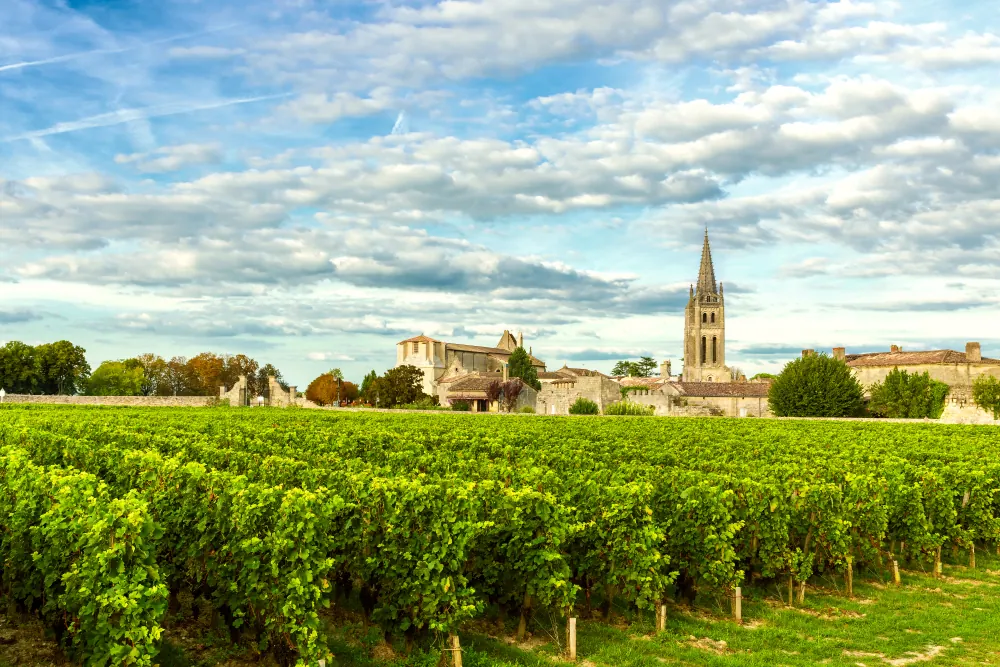
Business venture. Hotel, wedding venue, vineyard estate, filming location. Capital-intensive (fire safety, accessibility, commercial kitchens, parking, change-of-use consent), but the documented revenue is real. Ashford Castle in Ireland models at around €25.1m gross/year at 75% occupancy from 83 rooms. Dromoland Castle gets to around €49.2m from 97 rooms.[1] A castle hotel is a full enterprise, not a passive holding.
Restoration project. A purchase priced for the work it needs, often acquired well below regional benchmark in exchange for committing five to ten times the purchase price (and five to fifteen years) to bring it back. The Schloss Weigsdorf case in Saxony sets the extreme: it cleared at €170,000, which works out to €75/m², with restoration of 2,269 m² estimated at €2.7m to €8.5m.[1] Stephanie Jarvis's Lalande footage records the operational truth from the inside. This is a labour of love, not an investment.[3]
Worth saying upfront, the four routes are not interchangeable. A property bought as a passion project rarely re-rates as a hotel without the change-of-use consent and the capital programme to match.
How much does it cost? Country price breakdown
The most useful reference is verified listing data, not headline anecdotes. We aggregated 1,118 listings with confirmed price and floor area across 18 platforms for the Castle Price Index. Per-country medians below are asking prices unless flagged otherwise:[1]
Editor's note
The Castle Price Index excludes restoration-required properties priced below €100,000 and listings that haven't transacted or refreshed in the last 24 months. The numbers describe the market a serious buyer would actually face.
Country | Typical asking | Per m² |
|---|---|---|
France | €1.7m | €2,300 |
Italy | €3.0m | €1,750 |
Spain | €2.3m | €2,400 |
Belgium | €1.8m | €2,200 |
Germany | €1.5m | €2,000 |
United Kingdom | ~€1.2m | €2,600 |
Ireland | €2.0m | €3,400 |
Poland | €1.1m | €630 |
Switzerland | €16m | €19,500 |
All markets | €1.7m | €2,250 |
Source: Castle Collector Castle Price Index, March 2026 (Belles Demeures, Belles Pierres, JamesEdition, Castleist, Realportico, Lionard, Savills, Knight Frank, Lucas Fox, Le Figaro Properties, Immoweb, ImmoScout24, LuxuryEstate, Daft.ie, Realtor.com, SpecialFinds, Zillow, plus our own listings).[1]
France is the largest and most transparent market on the continent. 945 listings, under 5% price-on-request, the most statistically robust single-country dataset we hold. The median masks substantial regional variation, and rural Loire and Dordogne entry points start meaningfully below €1m for properties that need work.
Ireland posts the highest asking €/m² of any mainland European market at €3,358/m². The driver is supply scarcity: under 200 protected properties nationally. Verified sold prices show a wider asking-to-sold discount than France (Killoskehane Castle at €2,258/m², Belvelly Castle at €705/m² in distress), no restrictions on foreign buyers, and the lowest transfer tax in Western Europe for this asset class at 1%.[1]
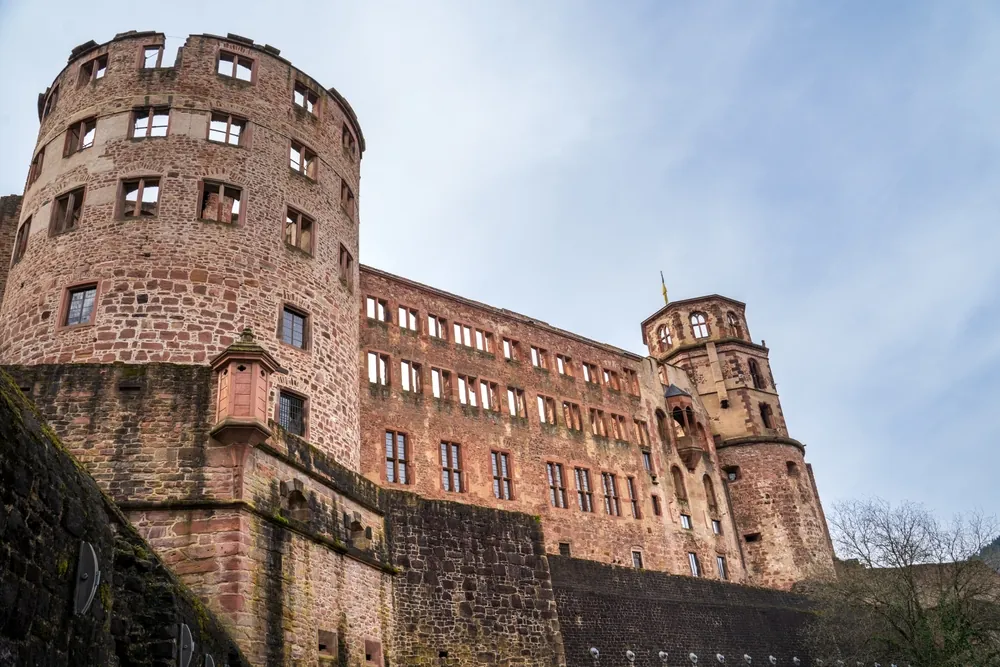
Germany enters the index at €1,971/m² for habitable Schlösser, with verified distressed sales at €75/m² showing the floor (Schloss Weigsdorf at the Saxony auction). The Denkmal-AfA depreciation regime applies 9% per year over nine years on certified restoration spend, totalling 81%, and meaningfully changes the maths for restoration buyers.[1]
Italy sits at €1,750/m² visible asking median, but the 24 to 35% price-on-request rate means the disclosed listings skew toward lower-condition properties. Cross-referencing Italian land-registry benchmarks (OMI) puts the true market median around €2,500 to €3,000/m².[1]
United Kingdom verified-sold medians come in materially above the asking median. HM Land Registry-verified sold transactions across seven properties from 2022 to 2024 put the median at £2,465,000 for 604 m², or about €3,502/m². The verified sample skews toward larger, fully-renovated properties, which is what lifts it.[1]
The size discount is the dominant pricing variable across the dataset:[1]
Size band | Per m² |
|---|---|
Under 500 m² | €3,000 |
500–1,000 m² | €2,250 |
1,000–2,000 m² | €1,830 |
2,000–5,000 m² | €1,270 |
Over 5,000 m² | €515 |
A 6,000 m² castle in rural France clears at roughly one-fifth the per-m² of a 300 m² tower in the same market. Across 1,118 records, size predicts per-m² price more reliably than country does. Bigger is cheaper by the metre.
The buying process
Transaction costs add 12 to 15% to the headline price across most European markets, dominated by the transfer tax and notary regime.[1]
Country | Total tax + fees | Foreign buyers | Timeline |
|---|---|---|---|
France | 7–8% | No restrictions | 3–6 months |
Scotland | LBTT 0–12% | No restrictions | 3–5 months |
England | SDLT + 2% non-resident | No restrictions | 3–6 months |
Ireland | 1% | No restrictions | 3–6 months |
Germany | ~5–8% | Open (non-EU: extra docs) | 4–8 months |
Czech Republic | 1–2% | No restrictions | 3–6 months |
Austria | ~6% | Non-EU: provincial approval | 4–9 months |
Luxembourg | ~7% | Open | 4–8 months |
Source: Castle Price Index Section 8.1.[1]
The operational sequence buyers who close on the property tend to follow goes like this. First, brief specialist agents and watch the off-market channels. Many properties (especially in France, Italy and Germany) never reach public listings, either because families hold them generationally or because heritage authorities limit who can buy. The specialist broker networks (Belles Demeures, Knight Frank Heritage, Sifex, Lionard) carry that off-market pipeline.
Second, run condition and heritage diagnostics before any offer. A heritage-experienced surveyor and conservation architect should assess structural state and consent appetite before negotiations start. We treat the survey as the gating step, not a tick-box. The cleaner read on these properties is that what looks like cosmetic damp on a viewing visit is often signalling something the consent regime will eventually force you to fix.
Third, engage country-specific legal counsel. A French notaire for château transactions, an Italian notaio for castelli, a Spanish notario and chartered solicitor for BIC properties, a UK conservation-experienced solicitor for listed buildings. Tom Soane's operational note from buying a Grade II listed building in the UK lands cleanly here: use a local solicitor, not an online firm, because they know the property type and the local issues that standardised conveyancing checklists do not catch.[6]
Fourth, build the renovation budget into the purchase model from the start. For derelict properties, renovation runs five to ten times the purchase price. On the documented case record (Château du Theil, Lalande, Motte-Husson, Razac, Gudanes), every project we have followed ran over its original timeline.[5]
Fifth, stress-test the transaction taxes and the ongoing operating costs. Transfer tax runs 1 to 8% by country. Annual maintenance averages £160,000/year for UK historic-house owners. Heating bills run £15,000 to £100,000+ on a medium-sized castle.[1] The headline price is half the equation, sometimes less.
Most French château transactions close in cash, not because buyers prefer it but because credit insurers refuse to underwrite the property type. Specialist broker Ben Ashcroft-Dinning of Milieux Property notes that around a third of his château enquiries are ruled out at the financial vetting stage, mainly because buyers had assumed they could get a French mortgage and discover they cannot.[4] Worth knowing before the brief goes out.
The cleaner read on the auction route: château auctions in France require payment within 30 days of the hammer falling, which in practice means a banking relationship in place beforehand. Antoni Calmon, the French doctor who bought Château de Dampierre at auction in 2021, describes how he had to use an existing bank relationship to secure emergency finance against the timeline.[7] Auctions are not a path for buyers who still need to arrange financing.
Watch out
Around one in three serious château enquiries get ruled out at the financial vetting stage. Buyers assume a French mortgage exists for château purchases. It mostly doesn't. Get the financing structure agreed before the brief goes out to specialist brokers.
Heritage law and consent obligations
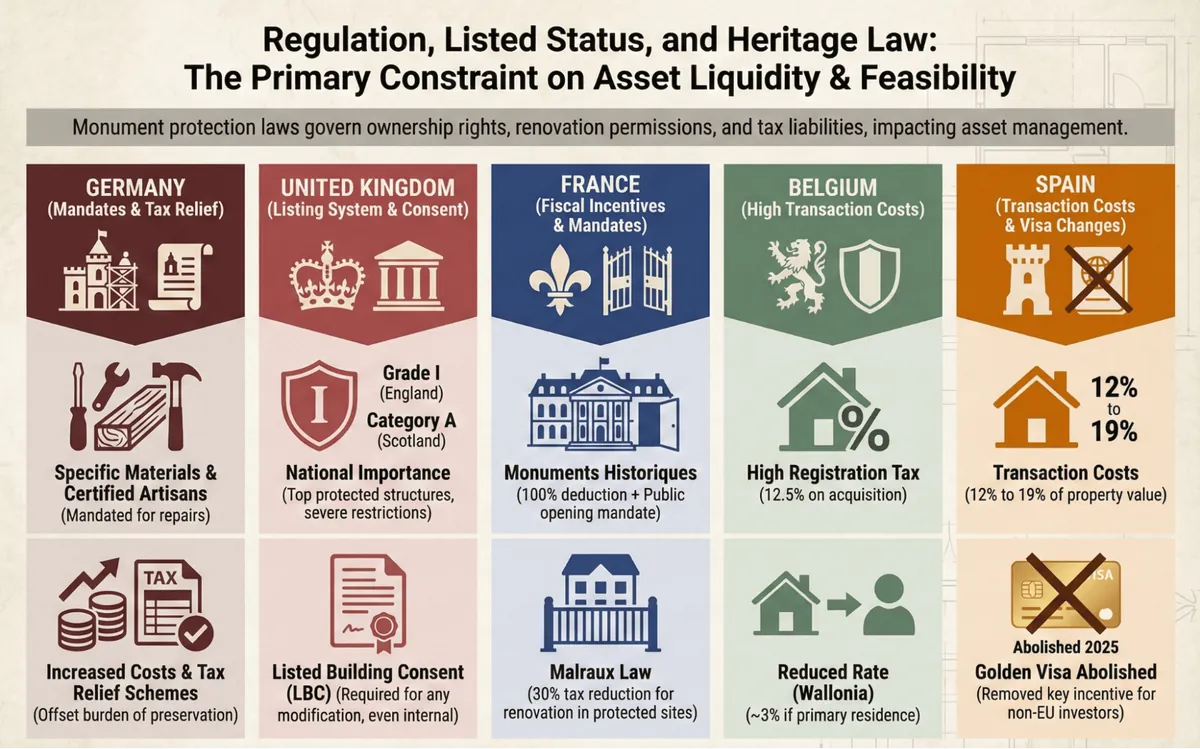
Every European jurisdiction in this guide protects castles under national heritage law derived from the Council of Europe's 1985 Granada Convention. The procedural names diverge but the principle is identical. Any work affecting protected fabric requires prior official authorisation, and unauthorised work attracts criminal sanction.
In the United Kingdom, Listed Building Consent governs all alterations to listed buildings on top of ordinary planning permission, with Scheduled Monument Consent for Scheduled Monuments. The statutory framework is the Planning (Listed Buildings and Conservation Areas) Act 1990, and listed-building enforcement has no time bar. In France, Monument Historique authorisation runs through the regional DRAC, with the Architecte des Bâtiments de France reviewing the design, and on classé monuments an Architecte en Chef des Monuments Historiques must design and supervise the work.
Italy uses Soprintendenza authorisation under the Codice dei beni culturali e del paesaggio (Decree 42/2004), with state pre-emption rights on certified culturally significant transactions. Spain requires regional heritage authority approval on Bien de Interés Cultural properties alongside municipal planning consent. Germany operates through Denkmalschutzbehörde approval at Länder level, with strong emphasis on material authenticity and reversibility, and the same pre-approval is the gateway to Denkmal-AfA tax depreciation.
On any classified property, budget four to twelve months for consent on standard work and longer for change of use. The harder reality is that consent is iterative: routine renovation tasks that would be trivial on an unlisted property require formal sign-off, and the design comes back with comments before it comes back approved.[6] On the upper tier (Class I Monument Historique, Grade I listed, BIC), the architect supervising the work usually has to be drawn from a heritage-accredited list rather than chosen freely.
Renovation cost reality
For habitable, structurally sound properties, renovation budgets follow the Castle Price Index per-m² ranges: France €800 to €5,000/m², Germany €1,200 to €3,500/m², England £1,500 to £4,500/m², Ireland €1,500 to €4,000/m², Austria/Luxembourg €2,000 to €5,000/m².[1] On a 1,500 m² property at mid-range French rates (€3,000/m²), full restoration runs roughly €4.5 million. That is almost always in excess of the purchase price for the same property.
The named-case-study record sets out the realism.[1] Light cosmetic on a structurally sound château runs around €100,000 to date for the Cherry family at Château de Cadres, doubling without an in-house builder. Full interior to luxury rental standard ran around €500,000 over three years for Yuille and Fairie at Château Labarthe. Full structural restoration at Château de Razac came to €1.05 to €1.15 million across a 10-year plan under John Way. Full derelict-to-habitable at Château de la Motte-Husson cost the Strawbridges £1m+ at part-self-build rates, equivalent to £2 to 3m at professional contractor pricing. Full commercial hotel standard ran £3.5 million over three years for the Halpin brothers at Château de Jalesnes. And the open-ended Class I Monument Historique end of the spread is Château de Gudanes, where the Waters family is past twelve years and still going.
What I keep coming back to in the Gudanes record is that the ceiling is not a number. The Waters family bought the property in 2011, and twelve years in the work is still being done in phases. On a Class I monument the architect has to be heritage-accredited, the materials have to be like-for-like, and the consent regime treats the building as a public asset that the owner pays to keep alive. The reasonable read is to treat the purchase price as the entry fee, not the budget.
The owner-narrated channels record the same financing reality. The gap between original budget and actual cost is the single most common surprise. Château du Theil's $2 million budget doubled to nearly $4 million as foundations, walls and roofing surfaced unexpected work.[7] Davey's standard reference recommends 10%+ contingency on conservation contracts. The case-study record argues for closer to 25 to 30% on derelict projects.
The Gudanes lesson
On a Class I Monument Historique, the ceiling is not a number. Twelve years into the Waters family's restoration of Château de Gudanes, the work is still being done in phases. Treat the purchase price as the entry fee, not the budget.
Common mistakes
Four failure patterns recur across the documented case record:
- Underestimating ongoing costs. Most first-time buyers calibrate to purchase price and renovation, then under-fund operating costs. The UK Historic Houses Association owner-survey average is £160,000 a year. Sudeley Castle runs around £500,000 a year. Burghley House's roofing programme alone is around £100,000 a year.[1]
- Buying without local legal counsel. Cross-border transactions on heritage property routinely uncover issues that local specialist counsel would catch in pre-contract diligence: pre-emption rights in Italy, ABF design control in France, regional BIC variations in Spain. The cost of fixing the issue after completion is materially higher than the saving on the legal fee.
- Skipping the heritage consent diligence. Buyers who assume the property's existing approvals translate to their planned use routinely discover otherwise. The "what you can change without consent" question is much narrower in scope than buyers expect, particularly on Grade I, classé Monument Historique, or BIC properties.
- Choosing the wrong region. The location decision is structural. It determines per-m² price (Eastern Europe €500 to €1,500/m², Switzerland €19,500/m²), supply scarcity (Ireland 200 properties versus France 19,000+), legal regime (UK criminal-sanction LBC versus French DRAC oversight), and operating economics (Loire château energy bills €15,000 to €20,000 a year versus the UK Historic Houses average of £160,000 a year).
Common questions
Can anyone buy a castle in Europe?
Yes. Every major European castle market in this guide places no restrictions on foreign buyers (France, UK, Ireland, Germany, Italy, Spain, Czech Republic). The exception worth flagging: Austria requires Grundverkehrsbehörde approval for non-EU buyers in some federal states. Funding the purchase is the harder constraint, not legal access.[1][4]
How much money do you need to buy a castle?
From around £130,000 for a Scottish ruin or a Saxon distressed Schloss at auction (Schloss Weigsdorf €170,000 / €75/m²), through €1.7 million for the European market median property (700 m² at €2,285/m²), to €20 million+ for turnkey hotels, vineyard estates, or top-tier prestige properties.[1] Add 12 to 15% in transaction costs on top of any headline price, and budget for renovation that on derelict properties commonly runs five to ten times purchase price.
Is buying a castle a good investment?
The capital appreciation record is mixed. Verified Scottish transactions show Dalhousie Castle moving £2.5m to £5.6m across 2012 to 2023 (a 124% gain over 11 years against an active hotel operation), Ayton Castle £2.4m to £3.25m (35% over 12 years).[1] At the other end, Ribbesford House lost 44% (£810,000 in 2018 to £450,000 by 2025/26 despite around £3m of restoration). The pattern: revenue-generating use creates equity. Passive restoration usually does not recover its cost.
What is the first step to buying a castle?
Build a total-cost budget covering purchase price + 12 to 15% transaction costs + renovation estimate + a 3-year operating cost reserve. Then engage specialist brokers (Belles Demeures, Knight Frank Heritage, Sifex, Lionard) and country-specific legal counsel for the targeted market before any property visit. Visiting properties without this groundwork wastes time on the buyer side and the agent side.
Do castles have higher taxes?
It depends on use and country. Property tax bases follow the residential or commercial classification of the building, which varies materially by use case. Heritage designation can both increase the regulatory burden (mandatory consent for any work) and reduce it (tax depreciation under Germany's Denkmal-AfA §7i, French Monument Historique deductions up to 100% of qualifying spend under specific conditions, Ireland Section 482 relief). A specialist tax adviser engaged country-by-country is the right answer for any specific property.[1]
Can I get a mortgage for a castle?
Specialist lenders only. High-street banks decline castle mortgages routinely. Typical LTVs: 40 to 60% in the UK, 50 to 70% in France and Germany, less than 50% in Italy and the Czech Republic. The structural blocker on French châteaux specifically is that credit insurers refuse to underwrite the property type, which is why most French château transactions close in cash.[4] For full coverage, see How to Finance a Castle Purchase.
What are the price extremes on record?
The cheapest large castle on our books is Castello del Catajo in Italy's Veneto: 350 rooms across roughly 20,000 m² of palace, sold in 2016 for €3 million after multiple failed auctions, working out to about €150 per square metre. The largest UK castle sale we have recorded is Picton Castle in Pembrokeshire, registered with HM Land Registry on 18 August 2023 at £28 million. Anyone considering castle ownership should know the floor and the ceiling before reading the median.
References
1. Castle Collector, Castle Price Index, March 2026.
2. Strawbridge, D. & A. A Year at the Chateau, Seven Dials / Orion Publishing, 2020.
3. The Chateau Diaries — The TRUE COST of Restoring a Chateau.
4. Fab Expat — Buying a Château in France: The Real Costs & Process.
5. The Chateau Chronicles — Want To Buy A French Chateau? How To Make Your Dream A Reality.
6. Tom Soane — Buying a Grade 2 Listed Building.
7. Château de Dampierre — How Much I Bought the Chateau, Restoration Costs.