
Castle and Listed Building Mortgages
You can finance a castle, but rarely with a high-street bank. Typical LTV runs 40–60%. Specialist lenders and private banking are the realistic routes.
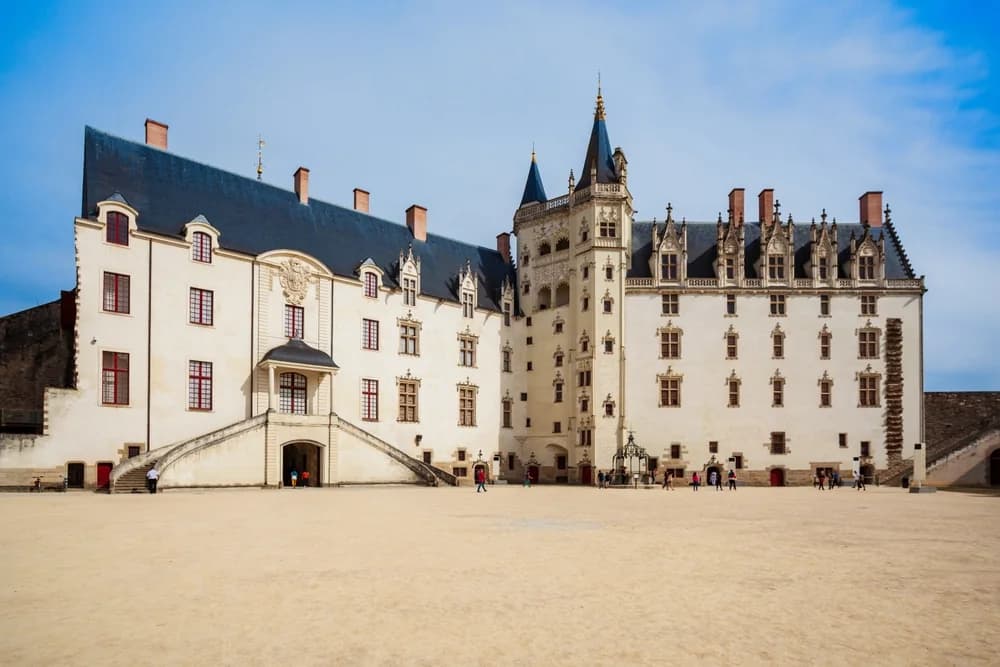
Yes, you can finance a castle. Rarely with a high-street mortgage, almost never at standard residential terms.
Listed-building mortgages and castle mortgages exist as specialist products, with typical loan-to-value ratios of 40 to 60 percent. The dominant pattern across the documented case record is still cash purchase or specialist private lending.
If you cannot put up the full price, the practical toolkit covers specialist mortgages, private banking and asset-backed loans, seller financing (in France, the credit vendeur), restoration grants of 50 to 80 percent on approved heritage works in some countries, and at the outlier end, crowdfunding. What follows runs each route by country, sets out what the upfront acquisition costs actually come to, and walks through the real-world cases that show how the pieces combine.
Financing options at a glance
| Country | Typical mortgage LTV | Restoration grant | Tax + fees |
|---|---|---|---|
| UK (England) | 40–60% | Historic England + Lottery Heritage Fund | SDLT + 2% non-resident |
| Scotland | 40–60% | Historic Environment Scotland | LBTT 0–12% |
| France | 50–70% (often cash) | DRAC 40–50% on MH | 7–8% |
| Italy | 40–60% | MiC + Bonus Ristrutturazioni | ~3–4% |
| Spain | 50–60% | Regional BIC + EU funds | ~10% |
| Germany | 50–70% | Denkmal-AfA: 81% over 9 yrs | ~5–8% |
| Ireland | 50–70% | BHIS / HSF 50–80% | 1% |
| Czech Republic | Under 50% | Program záchrany | 1–2% |
Source: country-specific lender guidance and the Castle Price Index aggregated transfer-tax and grant register, Sections 6 and 8.1.[1]
Are mortgages available?
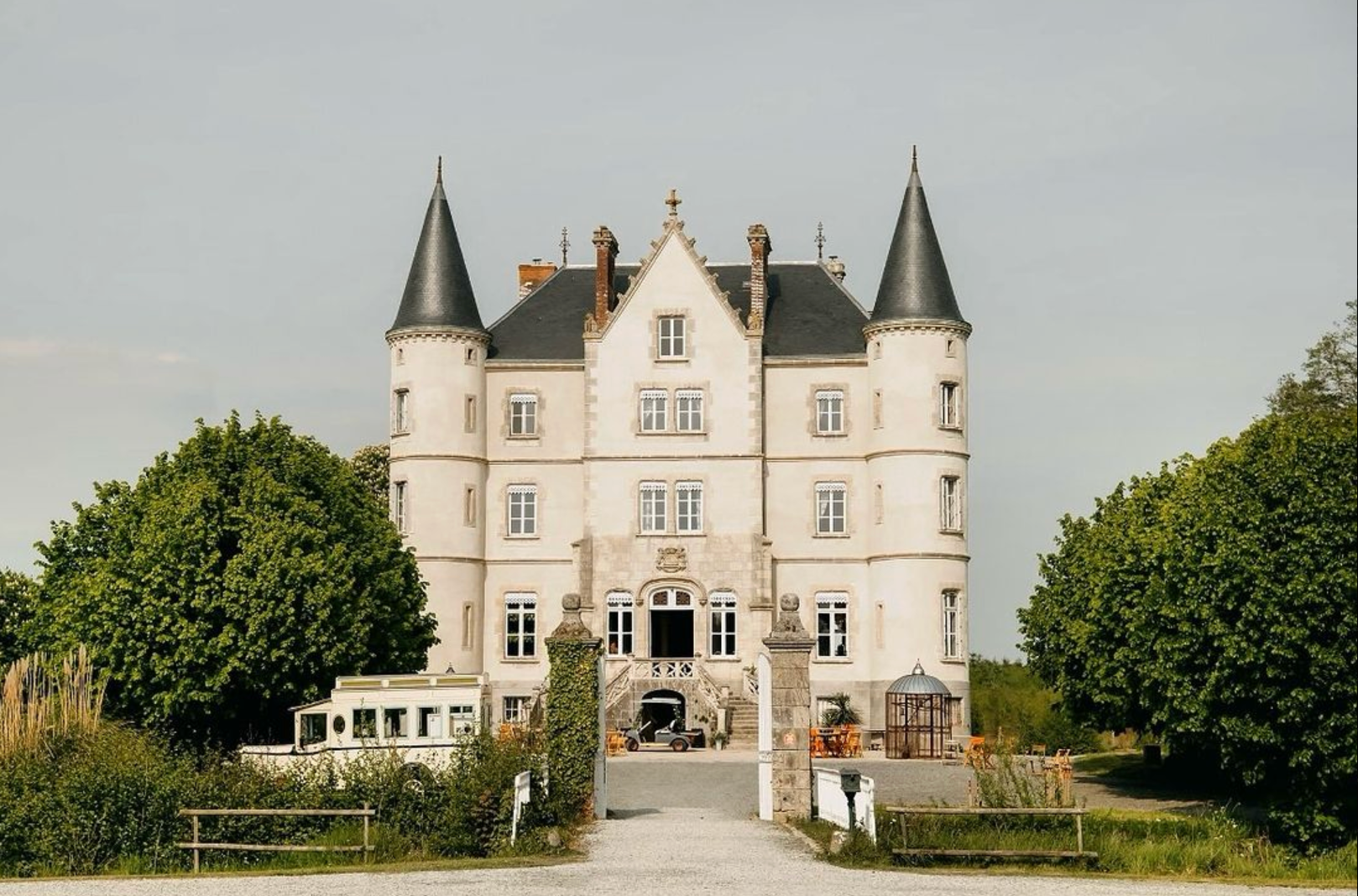
The honest baseline is that most castle purchases close in cash. The Fab Expat castle-buying advisory channel puts it directly: the vast majority of French chateau buyers are cash buyers, because credit insurers will not underwrite the property type and the bank mortgage market simply turns the file away.[2] Where mortgages do exist, they sit firmly in specialist territory, with higher deposits, lower LTVs, longer due diligence, and lender appetite that varies sharply by country and condition.
In the United Kingdom, listed-building mortgages are available through specialist lenders (Coutts, Handelsbanken, niche private banks) but routinely declined by high-street banks. LTVs typically land at 40 to 60 percent for strong applicants, with extensive structural and heritage surveys at underwriting. Grade I and Grade II\* status does not automatically disqualify a property, but it raises scrutiny on maintenance obligations and alteration restrictions. Foreign buyers can access the UK market, generally through international or private banking channels rather than high-street products. If the castle is intended for hospitality or events, a mixed-use or commercial mortgage replaces the residential product.
France offers the most accessible mortgage framework on paper, with LTVs running 50 to 70 percent for strong borrowers and long fixed-rate terms attractive to buyers planning multi-decade ownership. The reality on the ground is harder. The "How To Renovate A Chateau" channel documents being declined by four French banks before securing a loan through a personal banking relationship. Credit insurers refuse to underwrite a chateau as a private residence. That is the structural blocker.[3] Foreign buyers are eligible, but the process needs translated financial records, a French bank account and patience while valuations drag. The compensating advantage is that classified Monument Historique mortgages can be paired with the tax incentives discussed below.
Italy is where mortgage availability gets tightly conditioned. Italian banks favour properties that are already restored and habitable, so ruins or heavy-restoration projects typically need cash with a later refinance. LTVs run 40 to 60 percent. State pre-emption rights on culturally significant properties can complicate financing timelines, and foreign buyers need an Italian codice fiscale and a local bank account before any application is meaningful.
Spain is open to non-resident buyers in principle, with LTVs of 50 to 60 percent on habitable, legally compliant properties. Castles needing structural work are generally excluded from mortgage lending until restoration is complete, and hospitality use triggers a commercial-mortgage requirement rather than residential. Non-residents need an NIE (foreigner identity number) and a Spanish bank account.
Germany is among Europe's most conservative markets, but also among the most structured. German banks lend on Denkmalschutz-listed buildings at 50 to 70 percent LTV provided the borrower's income, asset base and renovation plans are in order. Long-term residency or an existing German banking relationship materially improves approval odds. The strong incentive is the Denkmal-AfA tax depreciation regime under §7i EStG, which gives up to 9 percent of certified restoration cost per year for nine years, totalling 81 percent of qualifying spend depreciated against income tax.[1]
The Czech Republic constrains mortgages on cultural monuments more tightly, with LTVs typically below 50 percent and lenders cautious of hospitality-use cases that depend on future income. Many buyers self-finance and refinance once the property is operational. EU citizens face fewer barriers than non-EU.
Private banks and wealth-based lending
For buyers who cannot secure a standard mortgage, private banks and family offices are the primary alternative. The structure is bespoke loans secured against an overall wealth position rather than income alone. The institution names are well-known across the European private-banking tier: Coutts, Lombard Odier, HSBC Private Banking and Barclays in the UK; BNP Paribas, Societe Generale and UBP in France; Intesa Sanpaolo, UniCredit, Mediobanca and Deutsche Bank Wealth in Italy; Santander, BBVA and Julius Baer in Spain; Berenberg, Bethmann and Commerzbank in Germany; J&T Banka, Komerční Banka and Raiffeisen across Central Europe. What matters more than the institution choice is what they actually require, which is detailed heritage and structural surveys, verified asset valuations, demonstrable wealth position, and (for restoration-heavy projects) a phased capital release schedule tied to certification of works completed.
The cleaner read on a private-bank application is to lead with the buyer's overall portfolio rather than the property's resale value. Prepare the heritage survey and the structural survey before approaching. Expect three to six months for terms to firm up on a complex castle deal, and assume a 40 to 50 percent deposit even where headline LTV ranges suggest higher loan availability. Castles are non-standard collateral and lenders price the risk accordingly.
Asset-backed loans
An asset-backed loan secures the borrowing against the buyer's existing assets (other real estate, investment portfolios, business interests, liquid holdings) rather than the castle being acquired. The advantage is structural flexibility. The lender prices on collateral strength, not on the castle's resale value or condition, which sidesteps the credit-insurance problem that blocks conventional mortgages on chateaux. Common requirements include independent asset valuations, clear title on pledged collateral, full financial documentation, legal opinions on liens, and tax structuring advice. The bespoke nature of these loans makes specialist legal and tax counsel material rather than optional.
Seller financing (and credit vendeur in France)
Seller financing, where the seller agrees to receive part of the purchase price over time rather than at closing, is one of the most useful and underused tools in the castle market. The structure varies by jurisdiction.
In the UK, seller financing is formalised through a private loan agreement with a legal charge registered at HM Land Registry. We see it used most often on listed properties where the buyer wants to preserve cash for restoration and operating costs.
In France, credit vendeur is the established mechanism. The deferred payment is recorded directly in the notarial deed, which gives the seller strong legal protection. It is widely accepted on family-owned chateaux and Monument Historique properties where sellers prefer staged payments over a lump sum, and where buyers need flexibility for restoration obligations. Among European markets it is the most accessible seller-financing environment we see.
In Spain, the structure is legally possible but region-dependent. Deals are typically notarised with default clauses that allow recovery of the property if the buyer defaults, and local legal advice is essential because regional property law varies materially.
In Italy, vendita con riserva di proprietà permits a similar structure under Italian law. It is used selectively for large estates or heritage properties where state pre-emption rights or slow approvals would delay a refinance, and strict default provisions are standard.
Germany sees less of it. Where it does appear, it is usually a bridge structure rather than a long-term financing strategy, and it must be fully notarised with the seller's security interest precisely registered.
Across Central and Eastern Europe (the Czech Republic, Poland and others) seller financing is increasingly relevant for foreign buyers without local credit history, commonly paired with later refinancing once the property is operational and income-generating.
The recurring caution applies wherever the structure is used. Interest rates run higher than bank loans. Balloon payments at term-end need advance planning. And cross-border buyers need to manage currency exposure when income and repayments sit in different currencies.
Government grants and tax incentives
Grants cover conservation works, not purchase price, and they almost always require approved heritage plans, specialist oversight and some form of public-access commitment. The headline figures by country come from the CPI grant register.[1]
In France, DRAC subsidies cover 40 to 50 percent of approved restoration costs on classified Monuments Historiques. The Fondation du Patrimoine adds up to 20 percent on labelled projects in exchange for a public-access commitment. Loto du Patrimoine channelled €155m to 950 projects between 2018 and 2024, and the national heritage budget runs €326m a year. Tax deductibility on eligible Monument Historique restoration spend can reach the full 100 percent of qualifying expenses, but only when the building is open to the public and the owner derives no other income from it. That is a narrower condition than the article's earlier "sometimes up to 100 percent" framing implied. Stephanie Jarvis at Chateau de Lalande and the team at Chateau de Purnon both confirm the operating reality: French government grants for heritage-listed restoration require opening the property to the public (typically two months a year during summer), and the grant percentage is materially higher for Class A classe elements than for inscrit elements.[4]
In Germany, the Denkmal-AfA tax depreciation regime under §7i EStG runs up to 9 percent of certified restoration cost a year for nine years, totalling 81 percent against income tax. Pre-approval by the local Denkmalschutzbehorde is mandatory, and a lost approval forfeits the depreciation entirely. The Sanierungsoffensive 2026 commits €360m a year over 2026 to 2030, at up to 30 percent of eligible costs.
In Ireland, the Built Heritage Investment Scheme (BHIS) and the Historic Structures Fund (HSF) both fund 50 to 80 percent of eligible work on Protected Structures, and Section 482 tax relief covers maintenance for buildings open to the public.
In the United Kingdom, Historic England runs discretionary grants on a case-by-case basis, ranging from low thousands to £500,000 plus, and the National Lottery Heritage Fund provides £10,000 to £250,000 grants with major-project awards historically into the millions. The Architectural Heritage Fund provides loan facilities, and SPAB combined an AHF loan with a Pilgrim Trust grant on its Grade II\* St Andrews chapel restoration in Kent, which is the textbook small-scale example of stacking instruments.[5]
In the Czech Republic, the Program zachrany architektonickeho dedictvi allocated CZK 245.6 million across 266 grants in 2024. The Havarijni program covers urgent structural works from a CZK 200,000 floor.[1]
In Italy, MiC administers direct restoration grants, prioritising urgent conservation and seismic safety. The Bonus Ristrutturazioni provides multi-year income-tax deductions on approved restoration spend, and properties under vincolo storico may qualify for reduced VAT on works.
The practical reality is that grants are competitive, applications are document-heavy, and disbursement is retrospective. Buyers must front the cost and recover it later. Grants reduce the renovation financing requirement, not the purchase price, and they should never be relied on as guaranteed financing.
Upfront acquisition costs by country
A €2 million French chateau purchase incurs roughly €140,000 to €160,000 in notary and registration fees on top of the purchase price. That figure dominates many financing decisions and is the largest single upfront cost beyond the headline. The CPI buyer-process register, Section 8.1, sets out the full country picture.[1]
| Country | Total tax + fees | Foreign buyers | Timeline |
|---|---|---|---|
| France | 7–8% | No restrictions | 3–6 months |
| Scotland | LBTT 0–12% | No restrictions | 3–5 months |
| England | SDLT + 2% non-resident | No restrictions | 3–6 months |
| Ireland | 1% | No restrictions | 3–6 months |
| Germany | ~5–8% | Non-EU: extra docs | 4–8 months |
| Czech Republic | 1–2% | No restrictions | 3–6 months |
| Portugal | ~3–10% | No restrictions | 3–6 months |
| Austria | ~6% | Non-EU: provincial approval | 4–9 months |
| Luxembourg | ~7% | Open | 4–8 months |
Source: Castle Price Index Section 8.1.[1] Scotland sees Historic Environment Scotland sign-off for listed buildings; England has Historic England oversight on listed assets; the Irish, German, Czech, Austrian, Luxembourg and Portuguese regimes each route through their own heritage authority.
For buyers stress-testing whether financing will close on time, Germany and Austria carry the longest timelines in the table at four to eight and four to nine months respectively. That matters when an offer-acceptance window is short, or when bridging finance interest is accruing.
Case studies: how castles actually get funded
The case-study record breaks into roughly six recurring patterns, and most actual deals blend two or more.
The first is cash funded by a city property sale. It is the most common pattern in the record. The CNBC-documented American couple bought and renovated their French chateau for $1.1 million all-in, paid in cash from the proceeds of a San Francisco apartment sale.[6] The owners of Chateau de Purnon used the sale of a Paris apartment to fund the chateau purchase, with a townhouse held in reserve.[7] When the operating model is sell the metropolitan asset, buy the rural castle, and deploy residual capital into restoration, conventional financing becomes unnecessary.
The second is property-flipping into a deposit, then a personal-relationship bank loan. The "How To Renovate A Chateau" couple built an €800,000 deposit by successively buying and renovating Paris apartments. The first was bought via loan and renovated for €60,000, then nearly doubled in value. The second generated €350,000 profit in two years. Their target chateau listed at just over €1m. With the €800k deposit and a €500k bank loan, they had €300k left for renovation. Securing the loan itself took four bank rejections (the credit insurers refused to underwrite the property) before a personal banking relationship closed the deal.[3]
The third is multi-stream funding for a restoration-stage chateau. Chateau de Purnon's funding architecture combines YouTube advertising revenue, Patreon subscriber support, book sales, government heritage grants (with the higher percentage rate applying to Class A listed elements), and private funding and prizes. The grant condition is opening the chateau to the public for at least two months a year during summer.[8]
The fourth is a specialist private lender for the renovation gap. A Scottish hotelier restoring a 16th-century castle as part of a wider luxury hospitality project used Lowry Capital, a specialist Scottish lender, for £512,000 of staged renovation funding, released in roughly 14 days after assessment, against a project that conventional banks had declined as too unusual. Worth flagging: the Lowry Capital figure originates from the lender's own published case study, which means the cost-of-capital and process detail is the lender's marketing framing rather than independently audited data.
The fifth is crowdfunding and collective ownership. Chateau de la Mothe-Chandeniers in Vienne was rescued in 2017 through a crowdfunding campaign run by the Dartagnans and Adopte un Chateau platforms. The reporting numbers diverge. France 24's documentary cites twenty-five thousand people across 115 nations who contributed.[9] The Guardian's 2017 reporting headlined 7,400 owners, the figure that takes a symbolic ownership stake rather than the broader contributor base. The article's previous "27,000 people" figure conflated the two. The cleaner read is that the broader crowdfunding pool numbered in the tens of thousands, while the legal share-holding ownership cohort numbered roughly 7,400.
The sixth is crowdfunding as gap financing on a private acquisition, the same instrument at smaller scale. Chateau du Theil in Correze was acquired with personal debt and renovated against a $2 million budget that doubled to nearly $4 million as foundation, wall and roof issues surfaced. The owners opened the project to public investment via crowdfunding when the renovation budget was exhausted, then opened the restaurant first and the hotel later in a staged revenue-led phasing.[10] Crowdfunding here is gap financing on a private deal, not collective ownership.
What I keep coming back to is how rarely any of these structures stand alone. The constant across all six patterns is that the financing structure tracks the property's specific legal status, the buyer's existing wealth position, and the planned use after restoration. Castles do not finance like residential homes, and most of the case record blends more than one of the routes above. The cleaner read for any buyer mapping their own deal is that the question is rarely which one of these. It is which combination, and in what sequence.
FAQ
Can you get a mortgage on a castle?
Yes, as a specialist product, typically at 40 to 60 percent LTV through specialist lenders rather than high-street banks. Listed Building Mortgages and Castle Mortgages exist in the UK. Monument Historique mortgages exist in France with LTVs up to 70 percent for strong borrowers, though credit insurers' reluctance means most chateaux still close in cash. Heavy-restoration ruins are generally excluded from mortgage lending until works are complete.[2][3]
What deposit is needed for a castle mortgage?
Typically 40 to 50 percent in most countries for habitable, structurally sound properties. Lower in pristine condition with strong borrower credit. Higher in Italy, Spain and the Czech Republic, where heritage assets attract LTV caps below 50 percent. For Monument Historique-classified chateaux in France, headline LTVs of 50 to 70 percent are achievable but conditional on detailed restoration plans and renovation cost certification.[1]
Can foreigners finance a castle in France?
Yes. French banks lend to non-residents with strong income and asset profiles, typically at 50 to 70 percent LTV with translated financials and a French bank account. The structural blocker is not nationality but property type. Credit insurers routinely decline to underwrite a chateau as a private residence, which forces multiple bank applications. The "How To Renovate A Chateau" case (four declines before approval) is representative of the process.[2][3]
Do grants reduce financing needs?
Yes, but only on the renovation side, never on the purchase price. France DRAC covers 40 to 50 percent of approved Monument Historique restoration costs (rising to 100 percent income-tax deductibility under specific public-access conditions). Germany's Denkmal-AfA depreciation totals 81 percent of qualifying spend over nine years. Ireland BHIS and HSF fund 50 to 80 percent of approved works. Grants are competitive, paid retrospectively, and usually require public-access commitments. They reduce the renovation financing burden, not the deposit needed at purchase.[1]
What is seller financing for a castle?
It is an arrangement where the seller agrees to receive part of the purchase price over time rather than at closing. In France it is credit vendeur, recorded directly in the notarial deed, and one of the most accessible mechanisms in Europe. In the UK it is a private loan agreement with a Land Registry charge. In Italy it is vendita con riserva di proprietà. Interest rates run higher than bank loans, balloon payments at term-end need advance planning, and cross-border deals introduce currency-exposure considerations.
For the broader picture on the buying process, the cost of castle ownership, and foreign-buyer rules across the major European jurisdictions, the linked guides cover each strand at length.
References
1. Castle Collector, Castle Price Index, March 2026.
2. Fab Expat — Buying a Château in France: The Real Costs & Process.
3. How To Renovate A Chateau — How we really paid for this CHATEAU.
5. SPAB Old House Lectures — Introducing St Andrews, Kent.
6. CNBC Make It — We Spent $1.1 Million Buying & Renovating Our French Chateau.
7. Château de Purnon — How much did we pay? What is the château restoration costing?.
8. Château de Purnon — How much did our 105 room château cost & all your tricky questions answered.
9. FRANCE 24 English — Owning a French castle: From dream to reality.
10. Quantum Makers — How Two Friends Turned Abandoned CASTLE into a 4-Star HOTEL.