
Castle Restoration and Listed Building Renovation
Castle restoration runs €1,000–€8,000/m² by scope and country. Permits, grants and the 7 stages from condition survey to handover certificate.
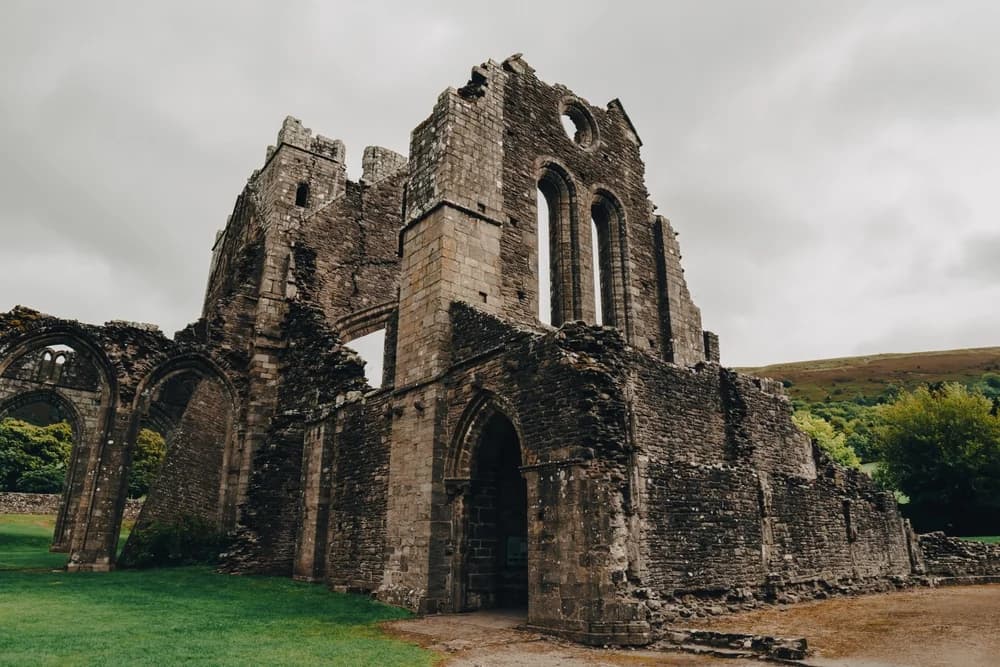
Castle restoration is not a renovation project. It is a multi-year conservation programme, governed by heritage law in every European jurisdiction, almost always costing more than the building itself.
We track restoration spend across the Castle Price Index at €1,000 to €8,000 per square metre, depending on country and scope.[1] On a derelict property, the work commonly runs five to ten times the purchase price. At the extreme end, sixteen to fifty times.
What follows is the seven stages from emergency stabilisation to final handover, the permits required across the UK, France, Italy, Spain and Germany, the grant schemes that meaningfully reduce private cost, and the failure patterns that recur case after case.
Cost summary by country
The verified per-square-metre ranges from CPI Section 4.1 are below.[1]
| Country | Renovation €/m² (low–high) | Notes |
|---|---|---|
| France | €800 – €5,000 | Light interior work to Monument Historique-grade restoration. Annual running cost on a large château: €50,000 to €100,000. |
| Germany | €1,200 – €3,500 | Denkmalschutz compliance lifts the floor. German broker rule: budget 5–10× purchase price for an unsaniert Schloss. |
| England | £1,500 – £4,500 | Grade II\* upper end; Grade I adds another 40 to 100%. Heritage repair runs 30 to 80% above modern equivalent. |
| Ireland | €1,500 – €4,000 | Atlantic climate, specialist masons, BHIS-compliant scopes. |
| Austria / Luxembourg | €2,000 – €5,000 | Highest contractor rates in Europe. |
| Czech Republic / Portugal | €800 – €2,500 | Lower labour costs, Western-Europe-grade specialist materials. |
Three structural facts shape every budget. The first is that renovation almost always exceeds purchase price on derelict stock. Schloss Weigsdorf in Saxony cleared at auction for €170,000 (€75/m²). Restoring its 2,269 m² at German rates costs €2.7m to €8.5m, a sixteen-to-fifty-times ratio.[1]
The second is that benchmarks compress in a misleading way. The Sifex agency benchmarks a "standard" French château renovation at €1,000 to €2,000/m². On a ruin, the same agency's projects clear €4,000/m².[1] Same shape of building. Different starting condition. The cleaner read is to set the budget against condition, not size.
The third is that on the largest projects the long tail dominates. Schloss Burg an der Wupper consumed €50.95 million between 2016 and 2025, almost entirely public money.[1] That is not a private-buyer scenario, but it sets the upper bound on what a complete public-conservation programme on one fortress costs over a decade.
Stage 1: Stabilisation and the team you need
Most castles arrive with decades of compounded neglect. At Château de Lalande in the Dordogne, owner Stephanie Jarvis bought a building with no heating, failing porcelain fuses and a collapsed chapel vault. Emergency roof works on the chapel had to come before any thought of habitation.[2] At Towie Barclay in Aberdeenshire, the front door was invisible under undergrowth on the day of purchase. The building had stood empty for roughly two hundred years.[3] At Château de Purnon in Vienne, a western outbuilding had begun to sink in the 1990s and was held up by a temporary support structure when the current owners arrived.[4]
Stabilisation work means temporary shoring, scaffolding to reach failing roofs, weather coverings on exposed openings, vegetation clearance, removal of unsafe debris. Costs scale with access difficulty and scope. A small to mid-size château might absorb €15,000 to €80,000 here. A severely unstable structure runs €80,000 to €350,000 or more.
Worth saying upfront, this is also the stage at which the team is assembled, and the same team carries through every subsequent stage. A heritage-experienced structural engineer reads load paths, settlement and the behaviour of masonry, vaults and timber frames. A conservation architect directs the strategy: in the UK an AABC- or RIBA-registered conservation accreditation, in France a state-approved Architecte en Chef des Monuments Historiques on classé monuments, in Germany a Denkmalpfleger-recognised practice. A chartered quantity surveyor with heritage experience prepares cost plans, and specialist heritage contractors carry out the physical work. An archaeologist is retained where ground disturbance is anticipated, which on most castle sites is unavoidable.
Bernard Feilden's foundational text on conservation codifies seven degrees of intervention, from prevention of deterioration through to reconstruction, and notes that the best preservation strategy is keeping the building in active use.[5] The Strawbridges' Château de la Motte-Husson, documented in their book and the Channel 4 series, sets the representative scope: forty-five rooms empty for forty years, no electricity, no heating, no sewerage. The only piece of acceptable electrical kit in the building was the meter.[6]
Stage 2: Survey, recording and significance
The survey phase is the single highest-leverage spend in the entire project. Every consent, cost plan and method statement that follows depends on it.
Measured surveys are increasingly produced by 3D laser scanning alongside traditional rod-and-tape work. Conservation scientists analyse stone, mortar, timber and metals to identify decay mechanisms. The structural engineer produces a load-path and moisture analysis. Archaeologists assess buried fabric and historical phasing.
A formal Statement of Heritage Significance, required in some form by every European heritage authority, distils what is protected and why. Stephen Bond and Derek Worthing's UK textbook sets out the four-part framework most authorities now expect: identify the values, identify the attributes that carry those values, assess change against significance, then agree a formal management policy for the site.[7] The recording standard for the survey itself is set out in Swallow, Dallas, Jackson and Watt's manual on building recording, and the brief is typically agreed with the local planning authority. The same record serves the consent application, the long-term conservation strategy and the legal record before any alteration.[8]
Documentation costs in Europe range from €30,000 to €120,000 for smaller properties, €120,000 to €450,000+ on castles with archaeological complexity. Underspending here is the single most reliable predictor of a refused consent or a redesign mid-build.
Stage 3: Permits and consents by country
Five categories of approval cover almost every project. Planning permission for changes of use, layout or external appearance. Heritage or listed-building consent for any work to historic fabric. Archaeological consent for ground disturbance. Environmental approvals for protected landscapes. And building regulations sign-off for safety and structure.
Even apparently minor work (roof patching, a window replacement, a new boiler flue) can trigger consent if it touches protected fabric.
In the United Kingdom, most British castles are Listed Buildings, generally Grade I or II\, requiring Listed Building Consent for any work affecting character, plus Planning Permission for extensions or change of use. Scheduled Monuments require Scheduled Monument Consent at national level. The statutory framework sits in the Planning (Listed Buildings and Conservation Areas) Act 1990, and the consequences of unauthorised work are criminal, not civil.[9] Pre-application discussions with the conservation officer, and with Historic England on Grade I or II\ sites, are routinely decisive.
In France, châteaux are protected as Monuments Historiques at two tiers, classé (highest) or inscrit. Any work needs DRAC authorisation. Classé monuments must be designed and supervised by a state-approved Architecte en Chef des Monuments Historiques (ACMH), and works are reviewed by the Architecte des Bâtiments de France. The framework is codified in the Code du patrimoine, which makes pre-approval of any intervention on a classé monument legally mandatory.[10]
In Italy, castles fall under the Codice dei beni culturali e del paesaggio. Authorisation comes from the Soprintendenza Archeologia, Belle Arti e Paesaggio for both interior and exterior work, with municipal planning permission separately required for change of volume or use.[11] Unauthorised work attracts criminal sanction.
In Spain, most castles are designated Bien de Interés Cultural, requiring approval from the regional heritage authority alongside municipal planning. Archaeological oversight is frequently mandatory even for repair, and procedures vary materially between autonomous communities.
In Germany, Schloss protection sits at Länder level. The relevant Denkmalschutzbehörde approves all work touching protected fabric, with strong emphasis on material authenticity and reversibility. That approval is also the gateway to the Denkmal-AfA tax depreciation discussed below. Without it, the depreciation is forfeit.
Approvals typically cost €20,000 to €70,000 in professional fees on straightforward applications, €70,000 to €250,000 or more on complex change-of-use cases such as hotel conversions. Timelines run from several months to multiple years.
Stage 4: Detailed design and tendering
Once permissions are in hand, the conservation architect develops construction-grade drawings. The quantity surveyor produces tender packages by trade: masonry, lime work, timber, metalwork, glazing. Contractors are pre-qualified for heritage competence, not price alone.
Ken Davey's standard reference on conservation contracts notes that conservation work routinely starts with an opening-up or investigative phase under prime cost or approximate Bills of Quantities. The firm-price contract follows once the full scope is visible.[12] On UK projects below roughly £150,000, BoQs are typically dispensed with. Above that they are standard practice. Davey also recommends a contingency allowance of 10% or more on conservation contracts, materially above the figure used on new build, and notes that professional fees themselves can qualify for grant aid up to prescribed limits.[12]
Detailed design and tendering typically runs €50,000 to €180,000+ in Europe, scaling with size and complexity.
Stage 5: Core repair works
This stage absorbs the largest share of every budget. The same team from Stage 1 (engineer, conservation architect, quantity surveyor, specialist contractors) runs the build.
Methods follow Historic England's published principles, summarised in David Watt's building pathology textbook. The primary purpose of repair is to restrain decay without damaging character. Intervention should be the minimum necessary, and existing materials and methods of construction should be matched to preserve appearance and historic integrity.[13] Lime mortar is the canonical example. Used correctly, it lets stone walls breathe. Misapplied or substituted with cement, it traps moisture and accelerates decay.
Mike Wye's pointing manual specifies a 3:1 to 3.5:1 sand-to-lime ratio for external work and a minimum 20 mm depth of mortar back into the joint for proper bond.[14] Aylin Orbaşlı's conservation practice handbook adds the temperature rule: lime should not be applied below 3°C, and hastened work in cold conditions can fail an intervention only several seasons later.[15]
Costs at this stage track the per-m² ranges in the country table above. Real project totals in the CPI dataset show the spread. Phase 1 of Château de Purnon (the roof, oak frame, stone façades, shutters and slate covering) is contracted at €2.7 to €2.8 million. The Beaufort Renaissance Castle in Luxembourg ran €3 million for full restoration, with €400,000 of that on the roof alone.[1][4] Specialist French agency benchmarks from Fab Expat put a "minimum €1,000 per square metre" floor on full interior gut-and-replace work (electrics, plumbing, finishes, excluding roof) and quote €30,000 to €40,000 for a simple rectangular outbuilding roof, with multi-turret château roofs an order of magnitude higher.[16]
The CPI 4.4 case studies set out the range across scopes.[1] Light cosmetic on a structurally sound building runs around €100,000 to date for the Cherrys at Château de Cadres, with the cost roughly doubling once you price in a professional contractor. Full interior to luxury rental standard ran around €500,000 over three years for Yuille and Fairie at Château Labarthe, where ten contractors working without shared plans produced expensive rework. Full structural over a decade at Château de Razac came to €1.05 to €1.15 million under John Way, with €250,000 on roof alone in the first phase. Full derelict-to-habitable at Château de la Motte-Husson cost the Strawbridges £1m+ at part-self-build rates, equivalent to £2 to £3m at professional pricing. The property is now valued at roughly £2 million against a £280,000 purchase, a six-times appreciation supported by an active wedding business and television profile. Full commercial hotel standard at Château de Jalesnes ran £3.5 million over three years for the Halpin brothers, around €5,000 to €6,000/m², which is the upper end of the private-buyer market. And the open end of the spread is Château de Gudanes, where the Waters family is past twelve years on a Class I Monument Historique and funding the work through medical income, social media, photoshoot revenue and book sales.
The cleaner read at the smaller end is SPAB's St Andrews chapel project in Kent, a Grade II\* derelict medieval chapel purchased for £60,000 with an estimated end value of £650,000 to £700,000 after restoration.[17] At the other end of the methodology spectrum, the Landmark Trust restoration of Astley Castle in Warwickshire treated the surviving fabric as un-restorable in any conventional sense and inserted modern accommodation within the consolidated ruin, using diamond-tip drilling and stainless steel rod stitching for masonry stabilisation.[18] The Trust spent £2 million on a comparable scheme at Fairburn Tower in the Scottish Highlands, restoring a roofless 475-year-old tower house to a holiday rental.[19]
Stage 6: Modern services and fit-out
After the envelope is secure, services and interior work begin. Full electrical replacement, plumbing, heating and cooling, fire detection and suppression, and on inhabited or commercial sites bathrooms, kitchens and accessibility upgrades. Every system has to be routed through a fabric that resists both demolition and visible alteration.
Heating is the hardest single problem. Château de Purnon installed a biomass wood-chip system using fuel from its own domain. They chose this explicitly over alternatives as a long-horizon investment, because winter interior temperatures otherwise drop far enough to damage 18th-century wallpapers, panelling and paintings.[20] At a typical 800 m² French château, oil heating runs €15,000 to €32,000 a year. A heat pump or biomass switch can cut that 30 to 50%.[1] The "How To Renovate A Chateau" YouTube series documents what installation looks like in practice. Trenches dug by hand under stone entrance steps, marble fireplaces sourced second-hand because the originals had been damaged in the war.[21]
Service upgrades alone might cost €300,000 to €800,000 on a residential conversion, rising to €800,000 to €2,500,000+ for full system modernisation with climate control, fire systems and accessibility on a commercial property.
Stage 7: Inspections, certification and handover
Final-stage work covers building-control sign-off, heritage authority compliance review against the consent conditions, and where relevant fire, safety and accessibility approvals. As-built drawings and operating manuals for installed systems are filed alongside the heritage compliance report. Costs are modest relative to the build, typically €10,000 to €60,000+, but conditions attached to consents can stay open long after handover and become live again at the next intervention. Castle insurance cover typically activates from this point, conditional on the compliance file being clean.
Maintenance after restoration
The Historic Houses Association's owner survey puts average annual repairs and maintenance on a UK listed historic house at £160,000.[1] On the largest properties the figure climbs sharply. Sudeley Castle's published benchmark is roughly £500,000 a year, and Burghley House spends around £100,000 a year on its roofing programme alone.[1] In France and Germany, owners of fully restored castles in the 1,500 to 2,500 m² range typically budget €50,000 to €100,000 a year. The HHA's 1,450 members carry a collective £2 billion repair backlog, averaging £1.4 million of deferred work per property.[1]
Historic Environment Scotland frames the underlying economics. Repair and maintenance now accounts for as much as 40% of the Scottish construction industry, and traditional slate roofs last up to 200 years against 25 to 30 years for concrete tile.[22] David Watt's building pathology reaches the same conclusion from a life-cycle costing angle. Lead sheet costs £59/m² over 100 years against £56/m² for Welsh slate, even though stone slates run £133/m² over the same horizon. Initial cost is the wrong frame for heritage roofing decisions.[13]
The principle codified in the Venice Charter, repeated in every national heritage framework, is unambiguous. Maintenance is a permanent obligation, not a project, and lapses accelerate decay disproportionately.
Grants, subsidies and tax relief
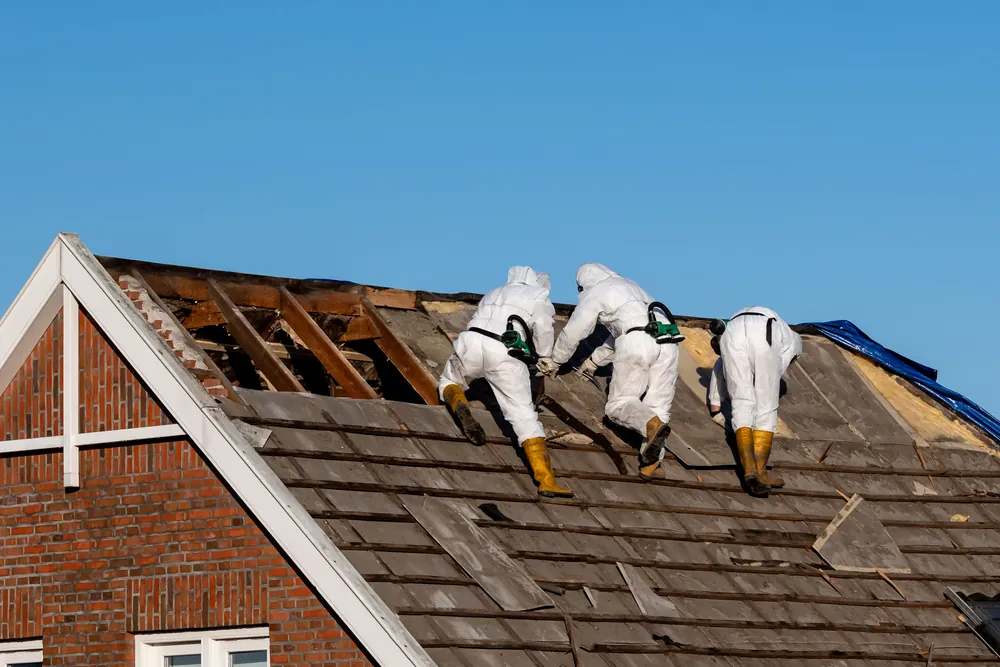
Private owners across Europe can recover a meaningful share of restoration cost through public grants, charitable funding and tax depreciation. The mechanisms vary materially by country. The current figures from the CPI grant register (Section 6) are below.[1]
In the UK, Historic England discretionary grants run £1,000 to £500,000+ for capital works on eligible heritage assets. The National Lottery Heritage Fund awards £10,000 to £250,000, historically up to £10 million on the largest projects, with strong preference for community access, education or tourism components. The SPAB St Andrews scheme combined an Architectural Heritage Fund loan facility with a Pilgrim Trust grant.[17] Larger restorations typically depend on Heritage Lottery support, as the BBC's Restoring England's Heritage documented across projects from the £1.2m Gayle Mill restoration to a £1.4m award for Newcastle's Black Gate.[23]
In France, DRAC subsidies for Monument Historique-classified buildings run up to 40 to 50% of restoration costs, and the Fondation du Patrimoine can add up to 20% on labelled projects in exchange for a public-access commitment. The national heritage budget is €326 million a year, and the Loto du Patrimoine raised €155 million between 2018 and 2024 across 950 projects.[1] Tax deductibility on eligible heritage spend can reach 50% of approved costs.
In Germany, the Denkmal-AfA depreciation under §7i EStG lets owners (investors and owner-occupiers alike) depreciate up to 9% of certified restoration cost a year for nine years, totalling 81% of qualifying spend written against income tax. Pre-approval by the local Denkmalschutzbehörde is mandatory, and a lost approval forfeits the depreciation entirely. The Sanierungsoffensive 2026 programme commits €360 million a year over 2026 to 2030 at up to 30% of eligible costs.[1]
In Ireland, the Built Heritage Investment Scheme (BHIS) and the Historic Structures Fund (HSF) both fund 50 to 80% of eligible work on Protected Structures, with Section 482 tax relief on maintenance and repair available for approved buildings open to the public.[1] In the Czech Republic, the Program záchrany architektonického dědictví allocated CZK 245.6 million across 266 grants in 2024.[1] EU programmes (the European Regional Development Fund, Creative Europe and LIFE) sit on top of national schemes for projects that align with sustainability, cultural activation or rural revitalisation goals.
Almost every grant scheme requires three things. Heritage designation in good standing, approved restoration plans, and some form of public access or heritage-benefit commitment. Owners pursuing private-residence-only restoration have a narrower funding universe than those building hospitality, education or tourism uses into the project. The commercial pivot is one reason turning a castle into a business recurs across the case-study record.
Where restorations actually go wrong
Five failure patterns recur across the documented case record.
The first is hidden structural and material problems. Centuries of compounded decay sit behind plaster, render and rubble. Foundations may have settled unevenly, internal timber may be rotted to a degree only visible after opening up. The Towie Barclay restoration spent months hand-chiselling Victorian cement render off soft sandstone (shot-blasting would have damaged the stone) before any meaningful structural work could begin.[3] Davey's reason for two-stage contracts is precisely that conservation work routinely exposes problems the survey could not see.[12]
The second is cement and other incompatible materials. Modern cement applied as repointing or render on stone designed for lime mortar is the single most common diagnosable error in the case record. NBC's Castles vs. Climate Change in Scotland documents the mechanism directly: cement traps moisture, the trapped moisture decays the stone, and remediation costs more than the original lime job would have. Scotland's growing season is now five weeks longer than it was, accelerating root damage to masonry on top of the climate stress.[24]
The third is unforeseen archaeological discovery. Castles are archaeological sites by default. Excavation during foundation or floor work routinely uncovers burials, tunnels, crypts or substantial undocumented features that trigger mandatory investigation, redesign and delay. Budgeting for it as a contingency rather than a certainty has cost more than one project a season.
The fourth is approvals delays. Heritage approval is iterative by design, and a common failure mode is starting work on the assumption that variations from the consent will be tolerated. Authorities then require the work halted, redesigned or reversed, with all the associated cost.
Now the harder one. Public and expert backlash. Even technically successful restorations attract opposition for design choices. The Castillo de Matrera in Spain drew sustained public criticism from local heritage groups for stylistically aggressive reconstruction of missing volumes, and the label "Frankenstein restoration" entered architectural discourse around it. John Goodall's The Castle: A History gives the longer historical pattern. Lord Curzon's 1919 to 1921 work at Bodiam, which involved dredging the moat and a year of staff research, is treated as exemplary. The late-Victorian state restoration of Farleigh Hungerford was condemned by the architect Harold Peto as deplorable.[25]
What I keep coming back to in the CPI 4.4 dataset is how cleanly the contingency line predicts everything else. Projects that budgeted 25 to 30% contingency from day one and hired specialists rather than the cheapest available contractors absorbed surprises. Those that optimised for headline price did not. As John Way at Château de Razac put it for the underlying economics, the income will not recoup the costs. Stephanie Jarvis at Lalande puts it more bluntly: restoring a château is a labour of love, not an investment.[2][1] Anyone considering castle ownership should sit with that line before reading any per-m² figure.
FAQ
How much does it cost to restore a castle?
A full restoration of a major castle typically runs €1m to €15m+ depending on scope, country and condition. Per-square-metre rates range from €800 (light French interior work) to €5,000+ (Monument Historique-grade or Austrian and Luxembourg projects). For a derelict property, renovation cost commonly runs five to ten times the purchase price, and Schloss Weigsdorf shows the extreme end at sixteen to fifty times.[1]
How long does castle restoration take?
Three to fifteen years for a full restoration, with smaller château interiors achievable in three to seven. Every named project in the CPI case-study set ran longer than its original schedule. Château de Purnon has restored five of 105 rooms in five years. Château de Gudanes is past twelve years and ongoing.[1][4]
Can you get grants for castle restoration?
Yes. France DRAC up to 40 to 50%, Germany Denkmal-AfA up to 81% over nine years (as tax depreciation), Ireland BHIS and HSF 50 to 80%. UK funding is competitive rather than entitlement-based and concentrates on projects with public benefit. Most schemes require heritage designation, approved restoration plans and some form of public access.[1][17]
What permissions are needed to restore a castle?
In the UK, Listed Building Consent (and Scheduled Monument Consent for SMs). In France, DRAC authorisation plus ABF oversight, with an ACMH-approved architect on classé monuments. In Italy, Soprintendenza permit. In Spain, BIC regional heritage authority plus municipal planning. In Germany, Denkmalschutzbehörde approval. Timescales typically run four to twelve months for straightforward work, longer for change of use.[9][10][11]
What is the contingency rule for castle restoration?
Ken Davey's reference text recommends 10%+ on conservation contracts, materially above new-build figures, and the case-study record argues for closer to 25 to 30% on derelict-to-habitable scopes. Two-stage contracts (opening-up work under prime cost, followed by a firm-price contract once the full scope is visible) are standard practice on heritage projects of any scale.[12]
References
1. Castle Collector, Castle Price Index, March 2026.
2. The Chateau Diaries — The TRUE COST of Restoring a Chateau.
3. WSJ Style — Inside A Castle Home, Restored After 430 Years.
4. Château de Purnon — Reawakening a French château.
5. Feilden, B. M. Conservation of Historic Buildings, 3rd ed., Architectural Press, 2003.
6. Strawbridge, D. & A. A Year at the Chateau, Orion Spring, 2020.
7. Bond, S. & Worthing, D. Managing Built Heritage: The Role of Cultural Values and Significance, 2nd ed., Wiley-Blackwell, 2016.
8. Swallow, P., Dallas, R., Jackson, S. & Watt, D. Measurement and Recording of Historic Buildings, 2nd ed., Routledge, 2017.
9. Planning (Listed Buildings and Conservation Areas) Act 1990.
10. République Française, Code du patrimoine, Partie législative, 2004, Livre VI.
11. Repubblica Italiana, Codice dei beni culturali e del paesaggio (Decreto Legislativo 22 gennaio 2004, n. 42).
12. Davey, K. Building Conservation Contracts and Grant Aid: A Practical Guide, E. & F.N. Spon, 2003 (orig. 1991).
13. Watt, D. S. Building Pathology: Principles and Practice, 2nd ed., Wiley-Blackwell, 2009.
14. Mike Wye Ltd — Lime Pointing: How to Point a Wall Using Lime Mortar.
15. Orbaşlı, A. Architectural Conservation: Principles and Practice, Wiley-Blackwell, 2008.
16. Fab Expat — Buying a Château in France: The Real Costs & Process.
17. SPAB Old House Lectures — Introducing St Andrews, Kent.
18. The Landmark Trust — The restoration of Astley Castle.
19. Our History — £2 Million Restoration of Scotland's Fairburn Tower.
20. Château de Purnon — The HEAT is on... nearly! Building a sustainable future. Part 3.
21. How To Renovate A Chateau — 4 Year Transformation Tour.
22. Historic Environment Scotland — How was Scotland built?.
23. meerkatfilms — Restoring England's Heritage (2013), BBC1 Archive.
24. NBC News — Castles vs. Climate Change in Scotland.
25. Goodall, J. The Castle: A History, Yale University Press, 2022.