
How to Live in a Castle: Heating, Costs, and the Realities of Daily Life
Pre-1945 stone uses 2–3× modern energy; UK castle owners average £160,000/yr in repairs. The realities of heating, space, staff and weekly maintenance.
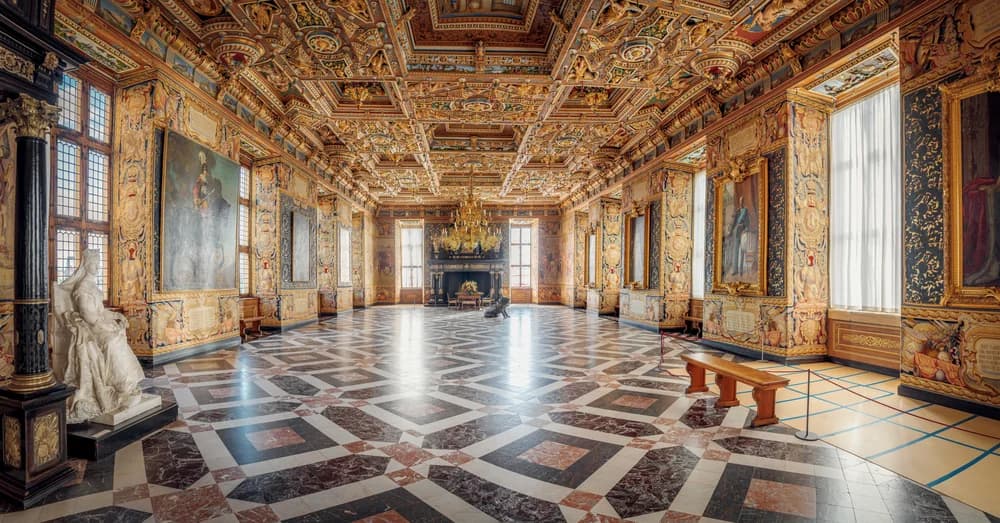
The honest version, from owners who do it: living in a castle means heating a building that was never designed for thermal comfort, cleaning rooms that count in the three figures, and budgeting tens of thousands a year for repairs that smaller properties absorb invisibly.
Pre-1945 stone castles in the UK EPC dataset run 519 to 800 kWh/m²/year. That's two to three times a modern home, and 65% of assessed castle units rate D or worse for energy.[1] We track UK historic-estate owners averaging £160,000 a year in repairs and maintenance through the Historic Houses owner survey.[1]
What follows is what daily life in a castle actually looks like, what the running costs come to, and which trade-offs every owner ends up making.
What to expect: by the numbers
Three benchmarks frame the rest of this guide.[1]
The first is energy. Pre-1945 stone castles in the UK EPC dataset use 519 to 800 kWh/m²/year against an EU residential average around 180 kWh/m²/year. On oil heating that works out to roughly £39 to £64 per square metre per year, or £58,000 to £96,000 a year on heating alone for a 1,500 m² castle. A community biomass scheme drops the same figure to around £11.54/m²/year. Aldourie Castle in the Highlands runs 1,330 m² on biomass and pays around £15,347 a year despite an E rating.
The second is maintenance. The Historic Houses Association's most recent owner survey averages £160,000 a year across 1,450 UK historic-house owners, and the same membership carries a collective £2 billion repair backlog, roughly £1.4 million of deferred work per property. Sudeley Castle's published benchmark is around £500,000 a year. Burghley House spends roughly £100,000 a year on its roofing programme alone.
The third is staff. A single live-in caretaker runs roughly £30,000 to £50,000 a year in the UK. Highclere (around 250 to 300 rooms) employs about 60 full-time staff plus 150 summer part-time across hospitality, tours, farming, gardens and conservation. Most private owners we track sit between those two poles and adjust seasonally.
Heating: the single biggest cost
Heating is the operational decision that dominates every other choice. The CPI EPC dataset pins the spread directly. The G-rated Ayton Castle main building (1,953 m², wood pellet boiler) costs £77,500 a year, or £39.68/m²/year, while the 1,953 m² Aldourie main house (E-rated, biomass) runs £15,347 a year, or £11.54/m²/year, despite an apparently mediocre energy rating. The difference is fuel. We put the saving on a community biomass scheme at roughly 70% less per kWh than oil-heated equivalents.[1] Biomass and ground-source heat pumps are the highest-leverage interventions for any owner with the option to install one.
Three structural strategies recur across owner-narrated channels. Zonal heating, meaning thermostatic control that warms only the wings and rooms in active use, is the single most effective software-side intervention, and it requires almost no physical change to the building. Underfloor heating under stone or flagstone floors is widely accepted by conservation authorities because it is invisible and reversible, ideally installed during a restoration window when floors are already lifted. Wall-mounted low-temperature radiators styled for historic interiors, paired with Energy Saving Trust-recommended ground-source heat pumps, deliver continuous low-grade heat that suits both stone fabric and listed-building consents.
Three real-world data points frame the trade-offs. Loire Valley château owners reporting to France24/AFP during the 2022 European energy crisis put a typical Loire château energy bill (heating, electricity, gas) at €15,000 to €20,000 a year with two-thirds of the building heated.[1] At Burg Eltz in Germany, the current Graf zu Eltz lives in the castle but treats it as a home office, with no domestic staff, cooking his own meals, and another local home for daily routine.[2] At Brancepeth Castle in County Durham, the family divides the building into separate living zones for different family members, with the owner blunt about the underlying economics: there is no end to the money the building could absorb.[3]
If you can drill outside the building, ground-source heating is a credible route. The Old Manse Stables retrofit in the US is the most-documented case. The owners ran ground-loop heat exchange under the property and got full climate control of the heritage interior without touching original fabric. Peer-reviewed work has now documented this as a workable model for older masonry, useful when conventional HVAC has nowhere to route through the walls.[4]
Insulation that respects historic fabric

Where a castle actually loses heat is rarely where you would expect. The solid stone walls absorb moisture and release it through evaporation, so they are seldom the dominant heat-loss path. The roofs are. So are the windows, the floors, and uncontrolled air movement around them. Put modern non-breathable insulation against that fabric, and you trap the moisture and accelerate decay. That is why cavity-wall foam, plastic membranes and cement-based insulants are usually unsuitable on heritage stone, and why conservation officers will normally refuse them.
Four targeted interventions earn their place. Roof and attic insulation is the single highest-impact upgrade. Roof voids are typically already separated from living areas, so retrofit rarely affects historic interiors and is widely approved. Sheep's wool, hemp, wood fibre or cellulose between or above rafters allow moisture to pass safely. Floor insulation is the next lever: when floors are lifted during restoration, breathable lime-based screeds, foamed glass gravel, cork or wood-fibre boards installed beneath stone or timber finishes improve comfort without changing appearance. Internal wall insulation is more delicate. External insulation is almost always prohibited on listed castles, and internal breathable systems (lime plaster, calcium silicate boards, wood-fibre panels, cork composites) may be permitted only when designed by conservation specialists. Window insulation is the last lever. Original windows are usually character-defining and replacement is prohibited, so discreet secondary glazing behind the original pane is the standard move, with heavy lined curtains, drapes and traditional shutters adding thermal performance at night.
The CPI EPC findings reinforce the methodological point. The Ripley Castle Boar's Head Hotel achieves a B-rated energy score yet uses 800 kWh/m²/year of primary energy, 35% more than the D-rated Amberley Castle at 591 kWh/m²/year.[1] EPC asset ratings measure carbon intensity, not running cost. For owner-occupiers focused on bills, kWh/m²/year and the derived £/m²/year are the right metrics.
Heating system comparison
| Heating system | Approx install cost (private estate) | Est. annual running cost, 1,500 m² castle | Heritage suitability |
|---|---|---|---|
| Zonal radiators (thermostatic, multi-circuit) | £15,000–£40,000 retrofit | £40,000–£80,000 (oil) / £25,000–£40,000 (gas) | High; minimal fabric impact |
| Underfloor heating (during restoration) | £80–£150/m² of installed area | £15,000–£25,000 paired with heat pump | High; invisible, reversible |
| Ground-source heat pump (GSHP) | £18,000–£35,000+ | £8,000–£15,000 (per CPI biomass-equivalent benchmark) | High; ground loops invisible |
| Air-source heat pump (ASHP) | £8,000–£18,000 | £10,000–£18,000 | Medium; outdoor unit needs siting consent |
| Biomass / wood pellet boiler | £20,000–£40,000+ | ~£17,000 (Aldourie benchmark scaled) | High; outbuilding sited |
Sources: CPI Section 5a (verified UK castle EPC dataset, biomass-vs-oil cost differential, derived £/m²/year figures);[1] Energy Saving Trust installation cost guidance for ground-source heat pumps. Install costs vary materially by access difficulty, listed-building consent scope and whether the work runs during a wider restoration window. Treat the table as indicative, not quote-grade.
Managing large spaces
The first choice every castle owner makes is which part of the building to actually inhabit. Most build a core living zone (main bedrooms, bathrooms, kitchen, dining and a daily living room) placed where the building is structurally sound, easiest to heat, and closest to existing plumbing and electrical infrastructure. The Brancepeth model is one variant. A single castle is divided into separate living zones for multiple family members, with owner, brother-in-law and daughter-in-law each in their own quarters. It's practical multi-generational use that spreads both occupancy and the maintenance load.[3] Beyond the core zone, secondary rooms (guest bedrooms, formal dining rooms, salons, libraries) are heated seasonally or on demand rather than continuously.
The recurring failure mode is undefined rooms. Castles routinely have 30 to 100-plus rooms, and rooms without a clear function get cluttered, neglected, or quietly mothballed in a way that drags on the whole building. The simplest discipline that works at scale is a written room-use plan, with every room assigned to daily, guest, ceremonial, storage, utility or conservation use, and revisited each year. For sizing the residential adaptations within that plan, Bernard Feilden's conservation textbook gives the working rule of thumb. A single bedroom or kitchen sits comfortably in 8 to 12 m². Living rooms and double bedrooms want 12 to 16 m². Lavatories and stores need 2 to 3 m².[5] Anything larger than that needs to be carved into functional zones with furniture, rugs, lighting and ceiling-height changes rather than partition walls.
Vertical zoning matters as much as horizontal. Lower floors typically work for public and social functions, including kitchens, dining, and living areas. Upper floors hold private bedrooms and offices. Basements and lower ground take the utility, storage, wine cellars, mechanical rooms and workshops. The arrangement reduces unnecessary movement through the building and preserves the natural separation between public and private life that the original architecture was usually designed around.
The historical reference point is useful here. Mark Girouard's foundational survey of the Victorian country house, reviewed by Royston Lambert, characterised the Victorian great house as an "enormously complicated and highly articulated machine" housing up to 150 permanent inhabitants. Every household function was given a separate room, with strict segregation between children, servants and parents.[6] Modern owners running the same buildings with two to ten residents inherit the architecture, but not the staff system that justified it.
Acoustics, lighting and storage
Stone walls, vaulted ceilings and hard floors reflect sound, light and temperature. Without enough furniture, textiles and soft surfaces, even beautiful rooms echo, feel cold and become tiring to occupy. Three principles repeat across functioning private estates.
Furnishing for scale comes first. Most modern furniture is designed for average-sized rooms and looks insignificant in a great hall. Visually grounding deep sofas, well-cushioned chairs, upholstered benches and substantial freestanding wardrobes work better than delicate or museum-style pieces. Large rugs define zones, reduce echo and visually ground furniture so it does not float in space.
Acoustics come second. Upholstered furniture, wall hangings and lined heavy curtains absorb sound. Heavy curtains carry double duty (thermal performance plus sound dampening), making them one of the highest-leverage textile decisions in any restored room.
Lighting is the third. Castles need at least three light layers per room. Ambient lighting (multiple sources, never a single ceiling fixture) does the basic load. Task lighting (table, desk, bedside, under-cabinet) makes the room usable in the evening. Accent lighting picks out arches, vaults, fireplaces and tapestries. Original windows were not designed for evening domestic use, and modern lighting is what restores human scale to oversized rooms.
Storage in a castle is paradoxical: vast rooms, rarely much usable storage. Existing chambers, service corridors and former service wings convert well to linen rooms and supply closets, and substantial freestanding wardrobes, sideboards and cabinets earn their place grounding rooms visually while absorbing daily clutter.
Cleaning and maintenance
Cleaning a castle is a zoning problem, not a single-house problem. The Brancepeth family's primary routine task is roof gutter clearance, identified as the single most important ongoing job because uncleared gutters drive water ingress that compounds into expensive masonry repairs.[3] That sequencing (daily-use areas cleaned consistently, less-used wings on a rotating schedule, building-envelope inspections treated as the highest-priority recurring task) is what stops upkeep tipping into burnout. Worth saying upfront, the gutters are the unglamorous decision the rest of the building hangs off.
The financial scale is already clear from the by-the-numbers figures, with £160,000 a year average across UK Historic Houses members, £500,000 at Sudeley, £100,000 on Burghley's roofing programme alone, and a £2 billion collective repair backlog across the membership.[1] The recurring failure pattern is deferred maintenance. Small issues (a slipped slate, a blocked gutter, a hairline crack in a chimney stack) compound into structural failures that cost an order of magnitude more to repair than the original maintenance would have. The cleaner read is that the building punishes inattention faster than it punishes underspending.
Do you need staff?
The historical extreme is well-documented. Highclere Castle's monthly running cost in July 1933 came to £909 (about £10,900 a year) covering coal, telephone, provisions and wages for 25-plus staff under a hierarchy of house steward, housekeeper, butler, footmen, cook, kitchen maids, housemaids, lady's maid, valet, chauffeur and estate workers.[7] Highclere had 66 service bells, one per State Room and family or guest bedroom, managed by a steward's room boy.[8] Adrian Tinniswood's history of the postwar English country house records that by 1950 a "medium-sized" country house with ten principal bedrooms was already considered uneconomical to run, and the Gowers Report calculated almost no private individual could retain more than £5,000 a year against a property that needed twice that in annual upkeep.[9]
The modern position is more flexible. Many owners run the building independently for years before adding staff, especially in smaller properties or where only part of the castle is in active use. Burg Eltz is an extreme case in the opposite direction. Jakob Graf zu Eltz lives in the building with no domestic staff at all, cooks his own meals, and keeps a separate local home for daily routines.[2] Most private owners sit between the two poles. The decision turns on budget, lifestyle, time availability, how much of the castle is in active use, and whether public-facing operations (events, tours, hospitality) generate the demand for permanent staff.
Where staff are needed, the typical roster is a small team rather than a Victorian household. A caretaker or estate manager combining practical oversight with administrative coordination is usually the central hire, monitoring building condition, scheduling repairs, supervising contractors, managing security, and ensuring heating, plumbing and electrical infrastructure function. Beyond the central hire, owners draw in cleaning staff trained to handle stone, antique wood, historic textiles and delicate finishes (not standard housekeeping), gardening and grounds staff for parkland and any agricultural land, and maintenance specialists for masonry, carpentry, roofing and heritage-grade repairs. Security staff come in where there are valuable collections, extensive grounds or any public access. The cleaner read is that what differentiates a sustainable household from one that quietly deteriorates is usually the caretaker hire, not the headcount.
What I keep coming back to is a line from the American-born Countess of Sandwich at Mapperton House. Living in a heritage castle is a joy, she says, but every day involves awareness of preserving a piece of national heritage that someone else will inherit.[10] That awareness, and the discipline it imposes on routine decisions, is most of what differentiates a sustainable castle from one that quietly deteriorates.
FAQ
How much does it cost to live in a castle per year?
Energy alone runs roughly £15,000 to £100,000+ a year on a 1,500 m² UK property depending on fuel: £39 to £64/m²/year on oil, dropping to around £11.54/m²/year on community biomass schemes. Add £160,000 a year average for repairs and maintenance from the Historic Houses owner survey, and the floor for a habitable medium-sized castle sits around £200,000 a year before any staff or capital works.[1]
Do you need staff to live in a castle?
Not necessarily. Burg Eltz's current Graf cooks his own meals and runs the building with no domestic staff.[2] At the other end, Highclere employs 60 full-time plus 150 summer part-time. Most private owners run independently for years, then add a caretaker (£30,000 to £50,000/yr) when scale or hospitality use demands it.
How do you heat a castle?
Zonal heating, meaning warming only the wings in use, is the single highest-leverage intervention. Ground-source heat pumps and biomass systems deliver continuous low-grade heat that's compatible with stone fabric and listed-building consents. The CPI EPC dataset shows community biomass cuts running cost by around 70% versus oil-heated equivalents.[1] Roof and attic insulation is the highest-impact fabric upgrade.
Is it possible to live comfortably in a listed castle?
Yes, but the comfort is engineered, not inherent. Heating zones, secondary glazing behind original windows, breathable insulation in roof voids and floor voids, and a deliberately compact core living zone are the standard combination. Non-breathable insulation will be refused by conservation officers and will damage the fabric if installed.
How long does it take to adapt to castle living?
Most owners describe a two to three year settling-in period, long enough to map the daily-use core, refine heating zones across a winter and a summer, develop a working maintenance rhythm, and decide whether to add staff. Owners who skip the planning phase tend to over-occupy too many rooms early, then retrench.
For the closing flex, the cheapest line in the dataset is the Loire bracket at €15,000 to €20,000 a year on energy, two-thirds of the building heated, on a habitable château. The most expensive in our records is Sudeley at around £500,000 a year, and that's before the roofing programmes that Burghley budgets at £100,000 a year on their own. Between the two sit most owners we track. The discipline that separates them is the same one Brancepeth identified: gutters, then roofs, then everything else. Anyone weighing the cost of castle ownership should know what the floor and the ceiling actually cost to keep standing.
References
1. Castle Collector, Castle Price Index, March 2026.
2. DW Travel — Eltz Castle in Germany: Would you like to live here?.
3. Saving Country Houses — See behind the scenes of an unusual family home, Brancepeth Castle.
4. Geothermal Technology for Sustainable Climate Control in an Historic House.
5. Feilden, B. M. Conservation of Historic Buildings, 3rd ed., Architectural Press, 2003.
6. Lambert, R. "Review of The Victorian Country House by Mark Girouard," Oxford University Press, 1972.
7. Carnarvon, F., the 8th Countess of. Lady Catherine, the Earl, and the Real Downton Abbey, Crown Publishing Group, 2013.
8. Carnarvon, F., the 8th Countess of. Lady Almina and the Real Downton Abbey, Crown Publishing Group, 2011.
9. Tinniswood, A. Noble Ambitions: The Fall and Rise of the English Country House After World War II, Basic Books, 2021.
10. Castles & Tiaras — Inside a 900-Year-Old Family Castle Frozen in Time.