
How Much Does It Really Cost to Own a Castle?
European castles sell at a median €1.7m for ~750m². Annual upkeep on a fully restored estate runs £250,000–£500,000. Buying is the cheap part.
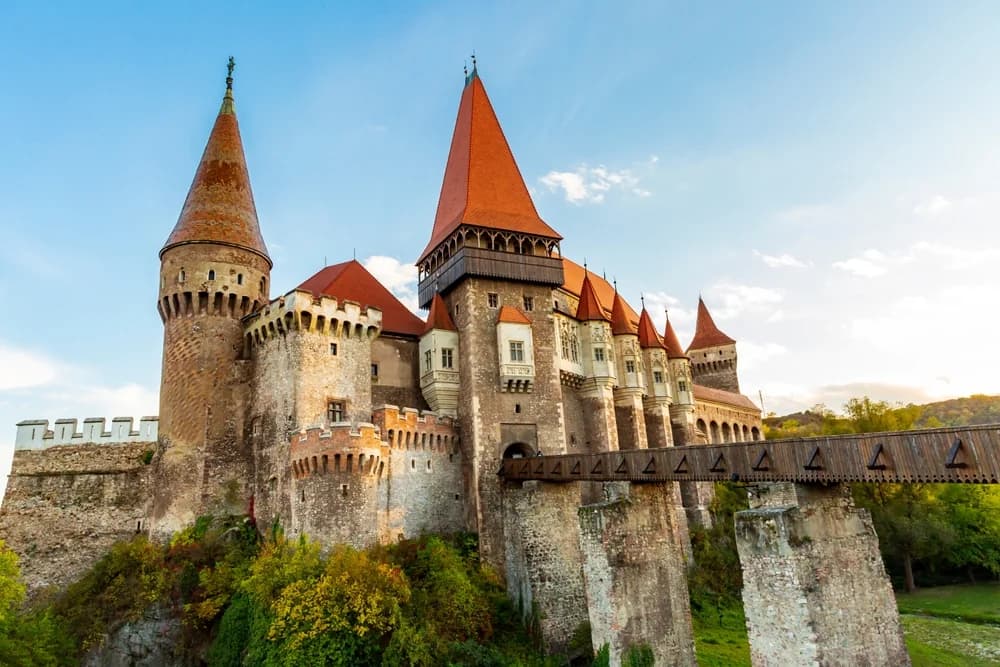
A typical European castle today asks €1.7 million for around 750 m². The buying is the easy part.
Once you own it, a fully restored 1,500 to 2,500 m² castle in the UK runs £250,000 to £500,000 a year to keep alive. France and Germany run lighter at €50,000 to €100,000. That figure barely moves with property value, which is the bit most buyers never see coming.
And if you buy derelict in the hope of doing the work yourself, the restoration usually costs five to ten times the purchase price.[1] What follows is the actual arithmetic, country by country, drawn from 1,118 verified listings, named transactions on the Land Registry and DVF, and the line items real owners have published from inside the work.
What does a castle cost to buy?
The European median sits at €1,700,000 for around 750 m², or €2,250 per square metre across our 1,118 priced listings, with the interquartile range running €1,468 to €3,321 per square metre.[1] France dominates the picture. 945 of those listings are French, and the country's share of online European castle stock grew from 43% in 2023 to 67% in 2025.[2]
Five things drive what any individual castle commands inside that range. Heritage status is the first: Monument Historique, Listed Building, or Denkmalschutz designation reshapes the consent regime and the tax position. Location is the second, and the city-rural split is sharper here than it is on residential property. Structural condition runs third, with a real spread between move-in, stabilise, and full restoration. Modern services come fourth: a building with working plumbing, heating and electrics already in place is structurally a different asset from one without them. Supply density in the local micro-market is the fifth, and it tends to do more of the work than buyers expect.
The biggest single price predictor across Europe is size, and it cuts the wrong way. Castles of 5,000 m² and above trade at a median €515 per square metre, a 5.8x spread between the smallest and largest size bands.[1] A Malbork-class structure benchmarks well below the per-m² rates of compact 500 m² family châteaux at €3,000/m². The buyer pool collapses faster than the asset shrinks.
| Country | Typical asking | Per m² |
|---|---|---|
| France | €1.7m | €2,300 |
| Italy | €3.0m | €1,750 |
| Spain | €2.3m | €2,400 |
| Germany | €1.5m | €2,000 |
| Belgium | €1.8m | €2,200 |
| United Kingdom | ~€1.2m | €2,600 |
| Ireland | €2.0m | €3,400 |
| Poland | €1.1m | €630 |
| Switzerland | €16m | €19,500 |
| All Europe | €1.7m | €2,250 |
Source: Castle Collector Castle Price Index (March 2026), n=1,118 priced listings across 18 platforms.[1] Markers indicate small-sample / indicative figures.\*
Where in Europe to buy
The right country depends less on price and more on the tax and grant regime you inherit on completion. The same €2m buys very different ownership economics in Bavaria versus Burgundy.
France: the most generous tax regime in Europe
France carries the deepest castle market by volume and the most transparent pricing on the continent. Under 5% of French listings are price-on-application, against 24 to 35% on Italian platforms.[1] The private-owner tax regime is also the most lucrative in Europe. Properties classified as Monument Historique can deduct restoration and maintenance costs from taxable income against an unlimited déficit foncier, running at 100% for fully rented or unused properties and 50% for owner-occupied with public access (which rises back to 100% with a Fondation du Patrimoine subsidy of more than 20% of work costs).[3] Public access requires either fifty days a year (April to September, including 25+ non-working days) or forty days (July to September only), six hours minimum daily.
Beyond the tax shield, the DRAC grants up to 40 to 50% of restoration costs on classified buildings, the Loto du Patrimoine raised €155m between 2018 and 2024 across 950 named projects, and the national heritage budget runs €326m a year.[1]
French renovation costs span €800/m² for light interior work up to €5,000/m² for full Monument Historique-compliant structural restoration, with the Sifex agents' rule of thumb landing at €1,000 to €2,000/m² for a standard château.[1] The verified case studies set out the actual range. Château de Razac in the Dordogne ran €1.05 to 1.15m over a 10-year, 16-bedroom programme. Château Labarthe in Tarn-et-Garonne ran €500k of interior over three years, and now generates €10,500 a week in season. Château de Cadres in Lot-et-Garonne ran €100k DIY, with the owner explicit that it would have been double under a professional contractor. Château de la Motte-Husson in Mayenne, the Strawbridge property and the Channel 4 case, ran £280k purchase plus £1m+ renovation, post-restoration valued around £2m. Château de Jalesnes in the Loire ran £750k purchase plus £3.5m on commercial-hotel-grade restoration. The Young Family château in Pays de la Loire took £900k in 2009 plus £500k+ over ten years, then listed for sale below original purchase.[1]
The takeaway from those cases is not the cost ranges. It's the cross-case finding: revenue-generating restoration creates equity, passive restoration often does not. The Strawbridges' Motte-Husson cleared 6x appreciation through the wedding venue plus television combination. The Young family lost money over a decade despite £500k+ of spend. Use determines outcome more than budget does.
Strawbridge's account of the Motte-Husson early years gives texture to the line items the index summary compresses. The septic-tank installation alone cleared £10,000, because they chose a low-running-cost system over the cheaper option. One plastering and painting quote came in over €20,000 once the contractor's €6,000 scaffolding hire and €4,000 hotel accommodation were added. They rejected it and sourced their own scaffolding.[4]
The Strawbridges are not unique. The Australian owners of Château de Purnon in Vienne (one of France's largest current private restorations: 105 rooms, around 20 outbuildings, 23 hectares) bought the property in 2020 for €740,000 and have spent about €2.7m on stage-one exterior works (slate roof, oak frame, stone façades, second-floor shutters and windows, statues), with another €500k going on the dry-moat wall, the farm wall, internal electrics and plumbing, and a new heating system.[5] Stephanie at Château de Lalande bought her 16th-century property in 2004 for €890,000 and spent €350,000 on a first pass: plumbing, fifteen bathrooms, electrics, geothermal underfloor heating. Five years later she was told the property's market value was unchanged, because nothing she had done was visible.[6] Subsequent work on three rooms (chapel, grand salon, kitchen) has cost a further €890,000. The chapel alone is at €600,000 and counting, of which €250,000 came through a public adopt-a-star crowdfunding campaign, and replacing failing floor beams with steel cost over €50,000 unforeseen.[6]
Worth saying upfront: the buyers who go in with a budget number rarely leave with that number intact. The transparency cuts the other way too. Verified DVF transactions show French castles sell at a structural ~19% discount to asking, across 884 sold properties from 2023 to 2025.[1] Named verified transactions include La Mothe-Chandeniers (€500k crowdfunded purchase by 7,500 backers in 2017), La Garoupe at Cap d'Antibes (around €65m in 2022), and La Messardière at Saint-Tropez (€154m in 2021, hotel acquisition).[1]
Germany: Europe's most lucrative castle tax break
If you want maximum income-tax shielding on a restoration, Germany is structurally the answer. Denkmalschutz §7i EStG allows up to 9% per year for nine years against approved restoration costs. That's 81% total income-tax write-off, and nothing else in Europe matches it.[1] Haspel's synthesised long-term German real-estate work finds this relief to be the dominant economic incentive driving monument conservation in Germany; listed properties in Hamburg and Berlin show positive long-term returns largely because of it.[7] Even owners of castles that are not viable as private homes alone confirm the dependence. Jakob Graf zu Eltz, the 33rd-generation owner of Burg Eltz on the Moselle, says it would be financially impossible to maintain the castle without tourist revenue, supplemented by financial help and specialist knowledge from the German government and local county.[8]
The market is correspondingly deep. We track 42 German Schloss listings at a median €1,500,000 / €1,971/m², including substantial eastern German stock in Mecklenburg, Saxony and Brandenburg that trades well below the headline number.[1] Renovation runs €1,200 to €3,500/m² with Denkmalschutz compliance and specialist materials. The standing broker rule for an unsaniert (unrenovated) Schloss is to budget five to ten times the purchase price for restoration.[1]
The canonical floor case is Schloss Weigsdorf in Saxony, sold at auction in 2022 for €170,000 (€75/m² across 2,269 m²). At German benchmarks of €1,200 to €4,500/m², bringing it back would cost €2.7m to €8.5m, sixteen to fifty times the purchase price.[1] At the other end, Schloss Salem on Lake Constance changed hands in 2008-09 for €25.8m, the largest postwar German castle deal. Schloss Marienburg sold for €1 plus a €2m art purchase in 2019. Schloss Rappoltenkirchen in Lower Austria changed hands at €5.5m in 2024 (€4,074/m²).[1]
State of Berlin funding covers up to 50% of extra costs for preservation work. The Sanierungsoffensive 2026 programme provides up to 30% of eligible costs from a €360m-a-year envelope running 2026 to 2030.[1] Transfer tax runs 3.5 to 6.5% Grunderwerbsteuer plus roughly 2% for notary and registry, on a four-to-eight month timeline.
Ireland: highest hotel occupancy in Europe + Section 482
Ireland is where castles work hardest as commercial assets. National hotel occupancy ran 80.7% in January-August 2025, the highest in any market we track.[1] Ashford Castle (83 rooms at €1,105+/night) generates roughly €25.1m a year on a 75% occupancy assumption. Dromoland Castle (97 rooms at €1,851+/night) generates around €49.2m.[1]
The grant infrastructure matches the operating economics. The Built Heritage Investment Scheme awards 50 to 80% of eligible works on Protected Structures, and the Historic Structures Fund covers the same range. Section 482 of the Taxes Consolidation Act provides relief on maintenance and repair costs for approved heritage buildings open to the public.[1] Stamp duty on the purchase itself is just 1%, the lowest in Europe.
Renovation runs €1,500 to €4,000/m², higher than continental ranges because of the Atlantic climate (driven roof and stonework cycles), specialist limestone masonry, and BHIS compliance.[1] Live stock spans Mountcashel Castle in County Clare at €95,000 entry (15th century, extensive refurb required), Turin Castle in Mayo at £1.32m (around 800 years old, operating as luxury rental), Gowran Castle in Kilkenny at around $2.6m (5 beds, 14 acres, 7,900 sq ft), and Fortwilliam Estate in Waterford at around $8m (216 acres with rental income offsetting caretaker costs).[1] The Irish pattern is unusual: castles bought sub-€1m can be made commercially viable at small-hotel scale within five to seven years if Sections 482 and BHIS are used in combination.
United Kingdom: light grant support, expensive labour, the Conditional Exemption
The UK is the structural opposite of France. Castle prices are mid-range by European standards (our index median is €1,038,000 across the indicative UK sample),[1] but grant support for private owners is light. As the Listed Property Owners' Club puts it, grants for private listed-building owners are very few and far between.[9] Historic England's Heritage at Risk Repair Grants run typically £1,000 to £500,000 for the most-at-risk listed buildings, and a one-off £15m Heritage at Risk Capital Fund opened in April 2025. The routing favours organisations and the most-deprived areas, not most private buyers.
The principal UK relief is the Conditional Exemption scheme, which exempts qualifying heritage assets from Inheritance Tax and Capital Gains Tax provided the new owner enters the undertakings: look after the asset, make it available for public viewing, keep it in the UK.[10] Breach the undertakings or sell, and the deferred tax becomes payable. There's no quantitative threshold; HMRC determines eligibility case by case on advice from the heritage agencies.
The historical context matters because UK estate economics have been hostile to private ownership for over a century. Cannadine documents how death duties, first introduced by Harcourt in 1894 at 8% on estates over £1 million, escalated to 15% by 1909-1914, 40% by 1919, 50% in 1930, and 60% by 1939. From 1919 land was valued for death-duty purposes at current selling price rather than rental value, sharply increasing the assessed burden.[11] On the Buccleuch estates in Eskdale and Liddesdale in the early 1920s, gross revenue of £42,496 went £19,229 to repairs, maintenance and management, plus £22,800 to taxes, leaving a surplus of about £473.[11] The Highclere estate's death duties on the 5th Earl's death in 1923 ran to half a million pounds, around £25 million in modern money, and nearly forced the sale of the castle.[12] The 11th Duke of Argyll faced the same problem in the 1950s, scrambling for £500,000 to settle Inveraray.[13] The Conditional Exemption scheme today is a direct response to a century of estates broken up by the Treasury.
Section 57 of the Planning (Listed Buildings and Conservation Areas) Act 1990 also gives local authorities discretionary power to grant or loan towards repair and maintenance of listed buildings, with a recovery clawback if the property sells within three years of the grant.[14] Practitioner accounts confirm the scale stays modest: Dartmoor National Park's 2018 Historic Rural Building Pilot Scheme distributed £1.3m across 13 projects at 80% of eligible repair costs.[15] Useful at the margin, not transformational on a castle-scale budget.
UK running costs are the heaviest in Europe. Insurance carries £10,000 to £30,000+ a year, reflecting larger footprints and higher rebuild costs. Labour sits well above continental rates. Renovation runs £1,500 to £4,500/m² for Grade II*; Grade I designation adds 40 to 100% on top.[1]
Verified UK transactions from HM Land Registry: Picton Castle in Pembrokeshire £28,000,000 on 18 August 2023, the highest confirmed Welsh castle price on record; Bovey Castle £12.52m in 2017 (£2,457/m²); Amberley Castle £8.09m in 2011 (£4,597/m²).[1] The current high-profile listing is Ripley Castle in Yorkshire, originally listed at £21m in January 2025 then cut to £7.5m for the castle alone, with the full estate guide at £13.5m by late 2025.[16] Ormiston Castle near Edinburgh sits at £4.2m for a comprehensively restored 1850s build on 15 acres.[17]
Italy: the price-on-application problem
Italy's market doesn't read cleanly from the listings index. Our data shows 100 priced Italian listings at a median €2,950,000 / €1,750/m². On Italian domestic platforms (Lionard, Knight Frank Italy), 35% of castle listings carry no disclosed price.[1] On Lionard alone the POA rate runs 48%. France runs under 5% on the same comparison. The transparency gap between the two largest European castle markets is roughly 7x.
Validation against the Italian government's official property valuation register (OMI, Agenzia delle Entrate) makes the picture clearer. The Italian asking median at €1,750/m² sits 14.6% below the OMI Normale benchmark for prestige rural property and 31.7% below the Ottimo benchmark of €2,562/m². The visible Italian asking index reflects the lower-condition, lower-tier listings; the higher-condition stock is what's hidden behind POA. The cleaner read is that the true Italian castle market median, if all POA listings disclosed, sits closer to €2,500 to €3,000/m².[1]
In practice, the published index undersells the Italian market by roughly a third. Buyers should expect bid-by-private-introduction transactions on the upper tier and direct listings only on rough-condition stock. The Art Bonus scheme provides a 65% income-tax credit for charitable donations to restoration of public cultural assets, relevant if the buyer plans to collaborate with public bodies, less so for purely private residential restoration. IMU (municipal property tax) runs 0.4 to 0.8% of cadastral value, with possible deductions for historic properties depending on use.
The standout verified Italian transaction is Castello del Catajo in the Veneto: €3 million in 2016 for 350 rooms across 20,000 m² of internal area (€150/m², distressed-auction territory after multiple failed sales).[1] Castagneto Po in Piedmont (Carla Bruni's family castle) sold for around €18.5m in 2009. Castello San Giorgio di Portofino changed hands in 2024 at €66.4m for 1,200 m², or €55,350/m², the highest per-m² in the entire dataset, driven by Portofino's irreplaceable location.
Spain: market depth at the low end + 25% deduction
Spain's market splits into three tiers. The Asociación Española de Amigos de los Castillos puts roughly 500 castles in some form of availability across the country.[18] We cover 61 of these at a median €2,300,000 / €2,368/m², which captures the active commercial listings, not the symbolic-price ruins or the prestige outliers.[1]
The tax structure rewards buyers who open the property to the public. There's a 25% deduction on acquisition, repair and restoration costs against income tax for historic properties accessible at specified intervals. Jiménez surveys the layered Spanish heritage-tax framework. Income tax, wealth tax, corporation tax, and inheritance/gift tax all carry distinct relief categories that vary between state and regional rules; his Córdoba case study calls explicitly for systematisation, because navigating the full set requires specialist advice.[19] Property taxes vary by municipality based on cadastral value.
Verified high-end Spanish transactions: La Fortalesa de Albercutx on Mallorca, €61.8m in 2022 for the 232-acre fortified estate where Rafa Nadal married, with a prior sale at around €45m in 2011 (Mallorca's all-time price record).[1] Castillo de Maqueda in Toledo, a 10th-century state fortress of 3,524 m², sold for €3.25m in 2025 to a hotel developer after twelve failed auctions, originally listed at €9.6m in 2013.[1] Distressed sales are common, and aggressive negotiation tends to work; state-owned castles have repeatedly been disposed of at fractions of original valuation after multiple failed processes.
Czech Republic: Europe's cheapest castle market
The Czech Republic produces the lowest entry prices in the European castle market. There has been no inheritance tax or gift tax since 1 January 2014.[20] The Program zachrany architektonickeho dedictvi allocated CZK 245.6m across 266 grants in 2024, the principal restoration funding stream. The Havarijni emergency programme covers urgent structural works on cultural monuments from a CZK 200,000 minimum, and the ORP programme distributed CZK 97.28m in 2024 with a private-owner application route.[1] Renovation runs €800 to €2,000/m², the lowest band in our coverage.
There's no transfer tax, only 1 to 2% for legal and notary work, on a three-to-six month timeline. The verified Czech transaction in our dataset is Chateau Hostacov in Vysočina at around $3.5m in 2022 (€1,750/m²), acquired by an Effective Altruism-linked group with FTX-donated funds (controversial context, cleanly verified pricing).[1] Koloděje Chateau in Prague sold for CZK 233m (around €9.3m) in 2010, a former prime ministerial residence.[1]
Other Eastern European markets sit at similar entry prices: Castle of Zlatna in Romania (€260,000 in 2021, €191/m², the second lowest in our dataset), Salbek Castle Estate in Arad County (€350,000 to €700,000 in 2017), and Zichy Castle in Hungary (around €1.68m in 2007 from Marcali municipality, €283/m²).[1] These are typically distressed disposals from municipalities or families, with restoration running five to ten times the purchase price, as German brokers warn.
How much does a castle cost to maintain per year?
The 1% rule from residential property does not apply to castles.
The conventional residential heuristic of setting aside 1% of property value for annual maintenance works for newer, straightforward homes. The source most often cited for it, allservices4u, explicitly excludes pre-1950s historic properties and recommends 1.5 to 4% reserves for them.[21] For castles specifically, even that wider band understates the truth. Castle running costs are largely independent of property value. A £3m castle and a £15m castle of similar size cost roughly the same to run.
Our verified data sets out the actual figures. Annual maintenance for a fully restored castle of 1,500 to 2,500 m² typically runs £250,000 to £500,000 a year in the UK, drawing on Historic Houses' published benchmarks: Sudeley Castle around £500k a year, Burghley House roofing alone around £100k a year as a standing programme.[1] The UK's 1,450 Historic Houses members face a collective £2 billion repair backlog, averaging around £1.4 million per property in deferred work. In France and Germany, fully restored castles run €50,000 to €100,000 a year. That covers ordinary maintenance on a structurally sound property, before utilities, before staff.
Historical comparison shows how persistent these numbers are. The Carnarvon family's own accounts give Highclere's monthly running cost in July 1933 at £909 7s 8d, about £85,000 in annualised modern equivalent, on a 250-to-300-room castle and a 5,500-acre estate.[12][22] Wages for more than 25 staff came to only £157 of that, with provisions and supplies the larger lines. By the mid-1990s, the 6th Earl told a BBC documentary crew that running Highclere required around £1 million a year, supporting a 6,000-acre estate, 85 staff, and a string of thoroughbred racehorses.[23] The current Lady Carnarvon, the 8th Countess and a chartered accountant by training, is blunt about the consequence. We don't have any trust fund, she says; we don't have any pot of gold.[24] Each month she works the spreadsheet to cover salaries first and fixed costs after. A century later, the Highclere estate is still managed for landscape stewardship rather than profit (each fleece fetches roughly £1, less than the cost of shearing).[22] The line items have changed; the absolute pull on the owner's bank account has not. Watt's principle, that lack of maintenance results in accelerated deterioration and decay,[25] is why the cost is non-negotiable rather than discretionary.
Two French owners have published their monthly arithmetic. On a half-château with one occupant, baseline winter electricity runs around €175 and gas around €228, plus insurance and around €1,500 a year taxe foncière. That's about €1,200 to €1,500 a month bare minimum before any maintenance. Setting up a B&B or gîte adds around €10,000 upfront for registration, plus 50% employer social tax on any staff hired.[26][27]
For utilities, the most useful single dataset is our UK EPC index of 29 castle units. Aldourie Castle (1,330 m², E-rated, biomass boiler) runs £15,347 a year, or £11.54/m². Ayton Castle (1,953 m², G-rated, wood pellets) runs £77,500 a year, £39.68/m².[1] That's a 3.4x spread per square metre despite Ayton being only 47% larger. The difference is fuel choice. Switching from oil to a community biomass scheme cuts annual energy costs by up to 70% on equivalent buildings; where no biomass scheme exists, oil-to-natural-gas conversion is usually the highest-impact single investment, paying back inside three years on most EPC recommendation reports.[1]
Worth knowing: the Ripley Boar's Head Hotel paradox illustrates why EPC ratings can mislead. It's the best-rated unit in the dataset (B grade), yet uses 800 kWh/m² a year, 35% more primary energy than the D-rated Amberley Castle at 591 kWh/m². EPC asset rating measures carbon intensity, not running cost. Buyers focused on bills should look at kWh/m²/yr and £/m²/yr, not the A-G grade.[1]
The verified French château energy bills give the equivalent picture. Château de Cheverny burns 30,000 to 40,000 litres of heating oil a year, around €28,500 to €38,000 at 2024 prices. Château de Meung-sur-Loire spends €15,000 to €20,000 a year, with two-thirds of the building heated. State-owned Chambord saw its energy budget double from €260,000 to over €600,000 between 2021 and 2023.[1] Anna and Philip's 18th and 19th-century Normandy château have published their actual diesel arithmetic: a 2,500-litre tank refilled about 2.5 times a year at around €2,500 each refill, roughly €6,250 a year, and only because they heat just the section they live in, not the whole building.[28] Emergency refills bought from a petrol station run €200 for two or three days of heat.
Land and grounds add separately. UK estates with forestry, equestrian facilities or lakes commonly add £20,000 to £100,000+ a year on grounds management alone. French châteaux with ornamental gardens and parks typically add €6,000 to €30,000.[1]
Staff is the line item most likely to surprise a first-time owner. UK estate overheads (groundskeepers, housekeepers, estate managers, security) easily run £100,000 to £300,000+ a year for a fully residential operation. In France, even a small permanent staff of gardeners and caretakers adds €40,000 to €100,000. Anyone walking into the question for the first time should read how to find castle staff before drafting a hiring plan.
Total annual cost on a fully restored 2,000 m² UK castle realistically lands £400,000 to £800,000 once everything is summed: maintenance, utilities, insurance, grounds, basic staff. For a French equivalent, €100,000 to €250,000. The 1% rule on a £5m castle suggests £50,000. The actual figure is eight to sixteen times that. This is the gap that catches buyers off guard.
How much does it cost to renovate a castle?
The single most important finding in the data is that renovation cost typically exceeds purchase price for any castle requiring full structural restoration.[1]
Renovation costs by country, on our compiled benchmarks: France €800/m² (light interior modernisation) to €5,000/m² (Monument Historique tier); Germany €1,200 to €3,500/m²; Ireland €1,500 to €4,000/m²; England £1,500 to £4,500/m² (Grade II*; Grade I adds 40 to 100%); Austria and Luxembourg €2,000 to €5,000/m²; Portugal €800 to €2,500/m²; Czech Republic €800 to €2,000/m².[1]
Run that against actual prices. A 2,000 m² castle requiring full restoration at mid-range European costs (around €3,000/m²) faces a renovation bill of around €6m. That exceeds the purchase price of more than 80% of the verified transactions in our dataset. Schloss Weigsdorf is the canonical case: €170,000 auction purchase in 2022, restoration estimated €2.7m to €8.5m, sixteen to fifty times the purchase price.[1]
Some named-project costs across Europe show the spread. Beaufort Castle in Luxembourg ran €3m on a full restoration 2024 to 2026, with separate €400k roof works as a standalone item. Château de Purnon in France phased the first six of 105 rooms at €2.7 to 2.8m. Saxony state-funded restoration of 25 castles since reunification totals €450m. Notre Dame is forecast at €800m.[1] At the private-buyer scale, the seven verified French case studies cited above run from €100,000 (Cadres, owner-built) to €4.2m (Jalesnes, commercial hotel grade).
What I keep coming back to in this dataset is time risk. Every documented renovation took longer than originally planned. The range across cases is three to twelve-plus years, with no case completing on the original timeline. Roof replacement on a large derelict French château runs €250,000 as a single line item, and a professional contractor costs roughly twice the DIY-managed equivalent. Davey, who has spent decades writing on heritage conservation contracts, recommends an allowance of 10% or even more as standard contingency on building conservation projects.[30] That's the floor, not the ceiling. Build the 10 to 15% contingency on top of every estimate, and budget the time cost honestly. Most buyers underprice the personal-bandwidth dimension of a multi-year project.
For more on specific approaches, see how to restore a castle and how to assess castle condition before you buy.
Insurance, taxes and transfer costs
Castle insurance is more expensive than ordinary residential cover. Rebuild costs are higher, contents valuations are usually significant (furniture, art, antiques, architectural elements), and specialist underwriting is required. UK historic estates typically carry £10,000 to £30,000+ a year. French castle insurance runs €2,000 to €6,000+ depending on residential or commercial use.[29]
Transfer tax is the biggest line buyers underestimate at purchase. The tracked rates by country: France 7 to 8% (notary plus registration); Scotland LBTT 0 to 12% (no non-resident surcharge); England standard SDLT plus a 2% non-resident surcharge; Ireland 1% stamp duty; Germany Grunderwerbsteuer 3.5 to 6.5% plus around 2% notary and registry; Czech Republic effectively zero plus 1 to 2% legal/notary; Portugal IMT 0 to 7.5% plus 0.8% stamp plus around 1.5% notary; Austria 3.5% plus 1.1% land registry plus around 1.5% notary; Luxembourg 6% registration plus 1% transcription, totalling 7%.[1] On a €2m purchase in France that's an additional €140,000 to €160,000 upfront. In Czech Republic it's €20,000 to €40,000.
The annual property-tax burden varies by country and use. France's taxe foncière on a large estate can reach €2,000 to €50,000+ depending on size and assessed value, and taxe d'habitation is now mainly a second-home tax. In the Netherlands, Onroerendezaakbelasting is municipally assessed and historic status doesn't automatically exempt; the Dutch heritage tax-deduction regime was significantly reformed in 2019, replacing earlier 80% income-tax deductions with direct subsidy schemes (verify current rules with the Belastingdienst before buying).
Heritage authorities to know by country are the DRAC plus the Architectes des Bâtiments de France in France, Historic England (Grade I/II*/II), Historic Environment Scotland (Categories A/B/C), the Bundesdenkmalamt and Landesamt für Denkmalpflege in Germany, NPÚ in the Czech Republic, DGPC in Portugal, INPA in Luxembourg.[1] Every alteration to a classified building requires their prior approval. Timelines run weeks to months and the constraints can shape feasibility before purchase. For a thorough walkthrough, see historic property legal requirements.
Will a castle appreciate?
Sometimes yes, sometimes no. The honest answer requires looking at the verified transaction record.
ScotLIS-verified Scottish appreciation: Dalhousie Castle in Midlothian sold £2.5m in 2012, then £5.6m in October 2023, a 124% gain over eleven years on a 29-room castle hotel. Ayton Castle in the Borders sold £2.4m in 2014, then £3.25m in February 2026 (Alan Carr's purchase), 35% over twelve years. Carbisdale Castle in Ross-shire moved from £900k in 2016 to £1m in 2022, 11% over six years on a forestry-heavy estate.[1]
The cautionary case is Ribbesford House in Worcestershire. It was bought for £810,000 in 2018 with around £3,000,000 spent on restoration over eight years, then listed and sold at £450,000 in 2025-26: a 44% headline loss before counting the restoration spend.[1] The £3m didn't recover its cost. The property listed at less than its original purchase price.
The pattern across the dataset is consistent. Revenue-generating restoration creates equity (Dalhousie as a working hotel; Motte-Husson as a wedding venue plus television deal). Passive restoration often does not recover its costs (Ribbesford, the Young family château). Use determines outcome more than the headline restoration budget does.
The academic heritage-economics literature pushes back on the "castles always lose money" narrative, usefully. Shipley's foundational study of heritage redevelopment in Ontario found that ROI for heritage development is almost always higher than bank-and-developer expectation, even where individual reuse costs run above new-build.[31] Salinger's hedonic study of Tel Aviv's UNESCO White City sharpens the point. An unimproved designated building trades at a 12.5% discount to its theoretical un-restricted value (the option to demolish is destroyed), but a preserved designated building trades at a 14% premium.[32] The penalty and the premium pivot on whether the work has actually been done. Ribbesford lost money because the £3m restoration didn't translate into a use that generated income. Dalhousie made money because it did.
For ownership economics by buyer type, see who buys castles. For the buying side of this equation, see how to buy a castle and how to finance a castle purchase.
References
1. Castle Collector, Castle Price Index, March 2026.
2. JamesEdition Stories — France Overtakes Italy in Europe's Castle Market Dominance.
3. Régime fiscal des Monuments Historiques, reduction-impots.fr.
4. Strawbridge, D. & A. A Year at the Chateau, Hodder & Stoughton, 2020.
5. Château de Purnon — How much did we pay? What is the château restoration costing?.
6. The Chateau Diaries — The TRUE COST of Restoring a Chateau.
7. Haspel, J. Built heritage as a positive location factor, 2011.
8. DW Travel — Eltz Castle in Germany: Would you like to live here?.
9. Historic England — Grants Funding Care and Enjoyment of the Historic Environment.
10. GOV.UK — Tax relief for national heritage assets.
11. Cannadine, D. The Decline and Fall of the British Aristocracy, Yale University Press, 1990.
12. Carnarvon, F., the Countess of. Lady Catherine, the Earl, and the Real Downton Abbey, Hodder & Stoughton, 2013.
13. Tinniswood, A. Noble Ambitions, Jonathan Cape / Faber, 2021.
14. Planning (Listed Buildings and Conservation Areas) Act 1990, s.57.
15. White, N. Repair Grants for Historic Farm Buildings in Dartmoor National Park, HERITAGE 2022.
16. Country Life — Ripley Castle price reduction.
17. Fine & Country — Ormiston Castle, Kirknewton.
18. El País — Medio millar de castillos buscan nuevo dueño en España.
20. CzechInvest — Taxation system, Czech Republic.
21. All Services 4 U — Understanding the 1% Rule for Property Maintenance.
22. Carnarvon, F., the Countess of. Seasons at Highclere, Hodder & Stoughton / Century, 2017.
23. Timeline — The Story Of The Real Downton Abbey: High Stakes At Highclere.
24. Reed — Behind the doors of Downton Abbey: Managing the 1,300-year-old Highclere Castle.
25. Watt, D. S. Building Pathology: Principles and Practice, 2nd ed., Wiley-Blackwell, 2009.
26. Life with Amadeus — How Much It Costs to Run a Chateau: Monthly Expenses Revealed.
27. My French Manor Tales — Owning a French CHATEAU! How much does it really cost?.
28. How To Renovate A Chateau — We're Spending a Fortune to Heat Our Château.
29. Grout Insurance Brokers — Listed Building Insurance Guide.
30. Davey, K. Building Conservation Contracts and Grant Aid, Routledge / Spon, 2003.
31. Shipley, R. et al. Does Adaptive Reuse Pay? International Journal of Heritage Studies, 2006.