
Listed Building Insurance: Castle and Historic Property Insurance
Castle insurance runs €4,000–€8,000 per €1m replacement value unmitigated; €2,500–€5,000 with mitigation. The five risks insurers actually price.

Annual insurance for an unmitigated castle runs €4,000 to €8,000 per €1 million of replacement cost. Mitigated equivalents run €2,500 to €5,000 per €1 million, a 30 to 50% reduction once you have seismic retrofits, basement floodproofing and fire-protection upgrades documented.[1]
Florence's 2022 multi-hazard study put hard numbers on the offsetting effect. Targeted mitigation across the Florence UNESCO city centre cut expected annual loss from €3.15 million to €1.55 million, a 51% reduction.[2]
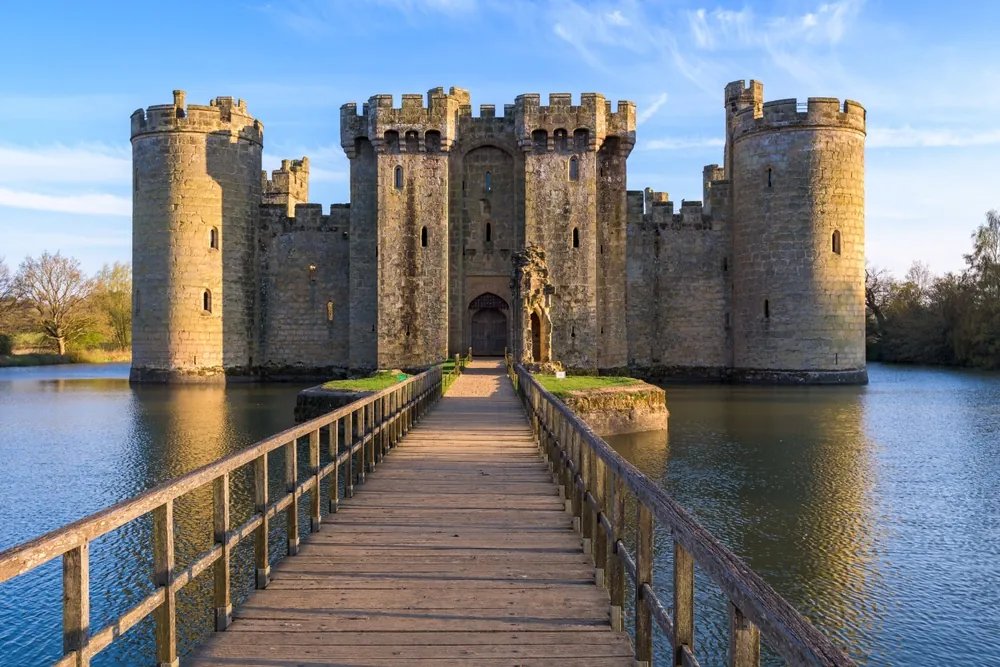
Heritage cover is widely available even at the trophy tier. We track six specialist carriers across the European broker market (Ecclesiastical, Hiscox, Allianz Cornhill, Generali Patrimoine and the Italian and Iberian equivalents) that will underwrite essentially any standing structure given complete documentation.
| Property tier | Replacement cost | Annual premium (unmitigated) | Annual premium (mitigated) |
|---|---|---|---|
| Small castle / fortified manor | €1m | €4,000–€8,000 | €2,500–€5,000 |
| Mid-tier castle | €5m | €20,000–€40,000 | €12,500–€25,000 |
| Large castle / castle hotel | €10m | €40,000–€80,000 | €25,000–€50,000 |
| Trophy castle / UNESCO-tier | €25m+ | €100,000–€200,000+ | €60,000–€130,000+ |
Why heritage insurance premiums sit above standard residential rates
Sevieri et al's 2020 framework, published in Natural Hazards and Earth System Sciences, sets out the structural reason. Heritage buildings are more vulnerable than modern ones because masonry condition and age both push insurance premiums above standard residential rates.[3] The Sevieri framework also makes the methodological point. Heritage stock needs multi-hazard assessment, not single-hazard residential models.
The methodology was applied to 25 heritage buildings in Iloilo City, Philippines in the 2020 paper. It showed that combined seismic and wind risk indices can be calibrated specifically for cultural heritage assets, with the analytic hierarchy process feeding intangible cultural significance into pricing.[3] The European castle market faces the same methodology gap. Standard residential insurance treats fire and flood as separate single-hazard exposures, which systematically under-prices the multi-hazard exposure of substantial historic structures.
Worth saying upfront, three structural drivers do most of the work behind the premium tier. The first is masonry condition and age. Pre-1800 stone masonry has different failure modes from modern masonry. Point loading on dry-jointed stone behaves differently under seismic and water-ingress stress, and the repair cost when failure occurs is materially higher because heritage-grade specialist labour is required. Aysar Orbasli's Architectural Conservation: Principles and Practice documents the methodology that heritage-grade insurers expect to see referenced in survey reports.[4]

The second is replacement cost methodology. Heritage insurance is underwritten on like-for-like replacement, using sourced original materials and traditional techniques. James Davey's Building Conservation Contracts and Grant Aid documents that heritage-grade specifications typically add 20 to 40% to baseline restoration cost for materials, methods and specialist labour.[5] On a 1,500 m² castle valued at €4.5 million market price, the heritage replacement cost can run €6.0 to €7.5 million.
The third is multi-hazard correlation. Castles concentrate risk geographically. A single weather event, fire, or seismic episode can trigger several covered claims at once: structural damage, contents loss, fixtures and fittings, business interruption on hotels and event venues. Heritage insurers price for that correlation explicitly, through higher base premium tiers and lower individual-claim sub-limits.
Specialist heritage brokers: the European shortlist
Standard residential brokers either decline heritage castle cover or apply models so generic the premium comes back uncompetitive. The specialist heritage market is small but well-developed across the major European jurisdictions.
In the UK, Ecclesiastical Insurance has been a heritage market specialist since 1887 and remains the Church of England's leading commercial heritage carrier. Hiscox Heritage, Allianz Cornhill, Aviva Heritage, NFU Mutual (the rural and country-estate specialist) and Lloyds of London syndicates round out the high-value heritage market. In France, Generali Patrimoine handles Monument Historique-tier property, with Allianz France Patrimoine, AXA Heritage and MMA Patrimoine also writing the segment. In Germany, Allianz Privatkunden Heritage, R+V Schloss-Versicherung and AXA Deutschland Patrimonialversicherung operate around the Denkmalschutz tax structure (§7i EStG, 100% over 12 years) which creates substantial demand for documented insurance positions. Italy has Generali Patrimoniale Italiana, Cattolica Assicurazioni Patrimonio and Reale Mutua Patrimonio. Spain and Portugal sit with Mapfre Patrimonio, Allianz Iberia Patrimonio and Generali Patrimonio.
UHNW buyers transacting across multiple European jurisdictions often appoint Lockton Heritage, Marsh Heritage or AON Heritage as cross-jurisdiction broker of record, with these firms placing the underlying cover with specialist heritage carriers in each market.
The application process follows the same pattern across markets. It starts pre-application with a complete structural condition survey from a heritage-grade specialist. The fee runs €5,000 to €15,000, but underwriters will not write credible cover without it. Then comes the documentation pack: heritage status confirmation (listed building consent, Monument Historique inscription, BIC declaration), fire protection installation history, security installation history, and a recent maintenance record. Then a survey by the insurer's appointed surveyor. Most heritage carriers maintain a panel of accredited heritage surveyors. Then quote and binding negotiation, which typically runs 4 to 8 weeks from initial application to bound cover.
We treat that survey as the gating step, not a tick-box. The cleaner read on these properties is that what looks like cosmetic damp on a viewing visit is often signalling something the consent regime will eventually force you to fix, and the insurer will price.
What mitigation actually cuts off the premium
Arrighi et al's 2022 multi-risk assessment of Florence's UNESCO World Heritage city centre, published in Natural Hazards, is the most useful reference for what mitigation actually does to the premium tier. The Florence baseline expected annual loss across the historic core was €3.15 million per year. Targeted mitigation (basement floodproofing and steel tie-rod retrofits for seismic resistance) cut expected annual loss to €1.55 million per year, a 51% reduction.[2]
The Florence case study runs across an integrated city-centre risk profile, but the per-building economics translate directly to individual castle insurance. Across the case record we have read so far, five mitigation categories materially reduce the premium tier.
Fire protection and detection comes first. Bernard Feilden's Conservation of Historic Buildings, the standard international heritage conservation textbook, sets the framework. Every historic building should have a fire audit at regular intervals, at minimum every five years as part of the architect's quinquennial report.[6] UK Building Regulations cited by Feilden require fire resistance of half an hour for single-storey buildings under 3,000 m², rising to ninety minutes for buildings over 28m height and over 7,000 m² area. Distance to the nearest protected escape route should not exceed 20m. Major castle-fire history (York Minster, Hampton Court, Uppark, Windsor Castle) drives insurer pricing on this category specifically.
Flood mitigation comes second. Basement floodproofing (Arrighi et al specifies it directly), perimeter drainage upgrades, and ground-level barrier installation. Rural castle sites are disproportionately exposed to inland flood and storm-surge events. Coastal Welsh, Atlantic Irish, Scottish west-coast and southern Italian castles all face elevated baseline flood risk that mitigation can substantially reduce.
Third, seismic retrofitting where regional seismic risk is meaningful. Steel tie-rod installation, masonry consolidation, foundation strengthening. Italian, Greek, Portuguese and Turkish castles face the highest European seismic risk profile. The mitigation cost is material at €500 to €2,000 per square metre depending on baseline structural condition, but the premium reduction is similarly material.
Fourth, security installation: modern alarm systems, CCTV, monitored response, perimeter lighting, safe rooms for portable valuables. Heritage insurance carriers price security mitigation explicitly into the contents and fixtures-and-fittings premium components. The Hemsley Castle (Yorkshire, 2012) and Norfolk Castle (2012) lead-stripping cases, plus the COVID-era Arundel Castle break-in (a $1.4 million loss reported in the popular press), drive insurer pricing on the broader security category.
Fifth, structural maintenance documentation. Insurers price discounts for documented continuous maintenance. The annual quinquennial inspection report Feilden recommends, completed by an architect or surveyor with heritage qualifications, is the standard documentation underwriters look for.
What to ask the broker before signing
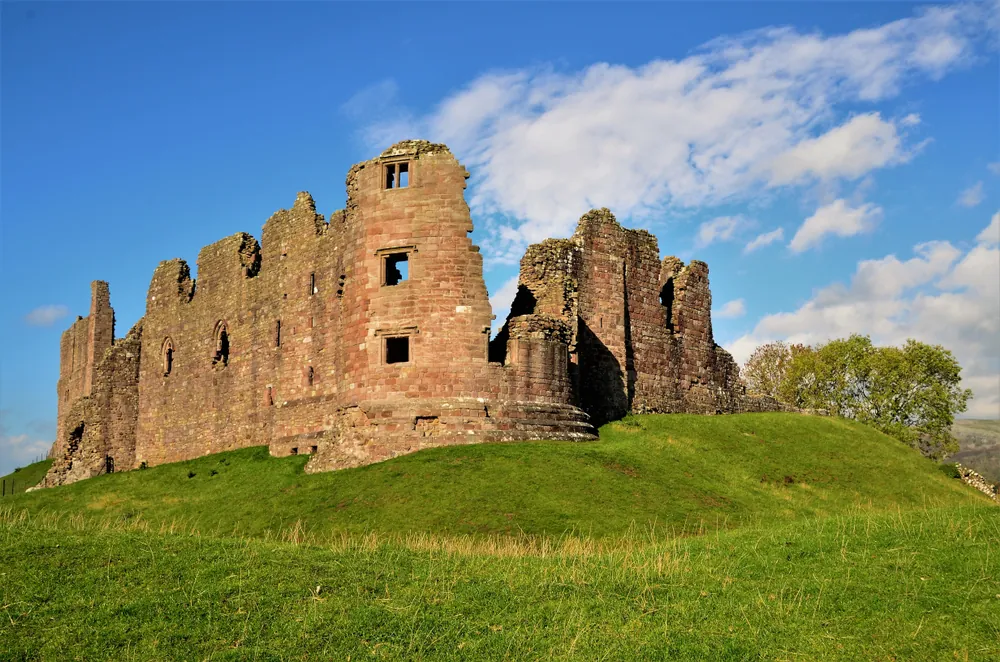
Six questions materially change the buyer's position. Now the harder one to surface first: is the cover heritage-replacement-cost or market-value-based? Heritage replacement cost is the standard heritage broker offering, with like-for-like reconstruction using original materials and traditional techniques. Market-value cover is cheaper at premium tier but inadequate at claim time, and it is the trap that ordinary residential brokers fall into.
What is the contents and fixtures-and-fittings sub-limit per claim? Standard residential policies often cap contents at €100,000 to €250,000, well below the value of working castle interiors. Heritage carriers can write contents at €1 million to €5 million sub-limit for substantial properties, with appropriate documentation.
Is business interruption included for commercial use? Castle hotels, wedding venues, event spaces and visitor attractions all need business interruption cover. The standard residential policy excludes commercial use entirely. Heritage commercial insurance is available, but it is underwritten differently from residential.
What mitigation discounts are on the schedule? Most heritage carriers maintain published mitigation schedules: fire protection X% off, flood mitigation Y% off, seismic retrofit Z% off, security installation W% off. Knowing the schedule before exchange of contracts lets you plan the post-acquisition mitigation programme to maximum effect.
Who handles claims, and what is the response timeline on water-ingress or storm damage? Heritage carriers maintain panels of accredited heritage building surveyors and conservation architects for claim response. Standard residential carriers do not, and the resulting claim experience on a heritage property is materially worse.
What is the renewal pricing trajectory? Heritage insurance pricing has been rising at 5 to 15% per year across the major European markets through 2023 to 2025. The cleaner read on the trend is that it likely reflects climate-related claim frequency increases plus reinsurance market firming, in roughly equal measure. Multi-year policy structures with capped renewal escalation can be available for substantial UHNW buyers.
What I keep coming back to is how often insurance gets scoped after exchange rather than alongside the survey. The structural argument for engaging heritage cover early is straightforward. Insurance is a running-cost line item (€20,000 to €80,000+ for substantial properties), and the mitigation programme that cuts the premium tier (Florence-style 51% reduction) needs to be designed in alongside the restoration work, not added retroactively. Buyers who scope insurance during pre-acquisition diligence end up with materially better operating economics than buyers who treat it as a post-completion task. Anyone considering castle ownership should be asking the broker the six questions above before they ask the agent for a viewing.
References
1. Castle Collector, Castle Price Index, March 2026.
2. Arrighi, C. et al. Multi-risk assessment in a historical city, Natural Hazards (Springer, 2022).
4. Orbasli, A. Architectural Conservation: Principles and Practice, Wiley-Blackwell, 2007.
5. Davey, J. Building Conservation Contracts and Grant Aid: A Practical Guide, RICS / Spon Press, 2003.
6. Feilden, B. M. Conservation of Historic Buildings, Architectural Press (Elsevier), 3rd ed., 2003.