
Castle Wedding Venue: How to Make Money from a Castle
Castle hotels in England and Ireland run at 79–80.7% occupancy. The revenue models, costs, grants and permits for hotel, weddings, events and vineyard.
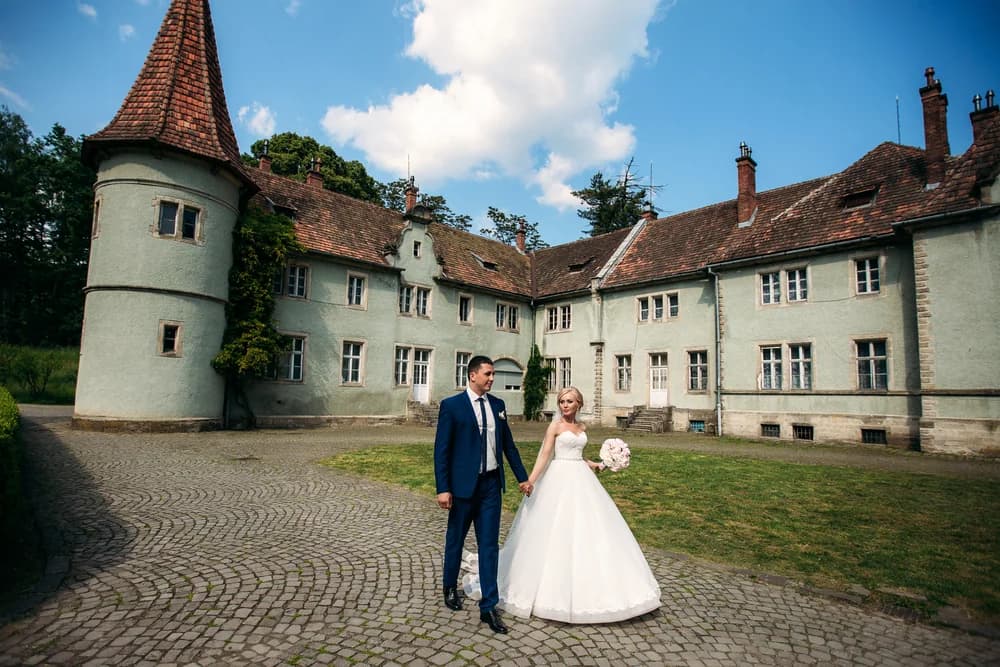
The Strawbridges paid £280,000 for Château de la Motte-Husson in 2015. Ten years later, after building a wedding venue and the Channel 4 series on top of it, the property is worth roughly £2 million.[1][5]
Ribbesford House in Worcestershire took the opposite path. Bought for £810,000 in 2018, around £3 million sunk into restoration, sold for £450,000 by 2025/26.[1] A 44% loss despite the spend.
The pattern across the case record is consistent. Revenue-generating use creates equity. Passive restoration usually does not recoup its cost. Castle hotels in England ran at 79% occupancy in 2024, and Ireland averaged 80.7% across January to August 2025, so the income side of that pattern is structurally available to operators who can secure the right consents.[1] What follows is the five revenue paths castle owners actually pursue (hotel, events and weddings, vacation rental, filming, and estate-based food and wine), what each costs to set up, what the real return looks like, and the permits, grants and tax incentives that change the maths.
Is running a castle as a business profitable?
The honest answer depends on which exit you measure. As an income business, well-located castle hotels in Ireland and the UK trade at the same occupancy band as the broader hotel sector: Ireland 80.7% (Jan–Aug 2025), England 79% (full-year 2024), France up 5.2% year-on-year through Q2 2025.[1] We apply 75% occupancy to audited 2026 direct-booking median rates and the indicative revenue model is straightforward. Ashford Castle (83 rooms, €1,105/night median) models at around €25.1m gross/year. Dromoland Castle (97 rooms, €1,851) at around €49.2m. Peckforton in England (48 rooms, £150) at around £1.97m. Dalhousie in Midlothian (29 rooms, £455) at around £3.6m.[1]
As a capital business, the appreciation record is uneven. We track verified Scottish transactions through Land Registry data: Dalhousie Castle from £2.5m (April 2012) to £5.6m (October 2023), a 124% gain over 11 years against the backdrop of an active hotel.[1] Ayton Castle moved £2.4m to £3.25m over 12 years, a 35% gain. The cautionary case is Ribbesford House: bought for £810,000 in 2018, around £3m of restoration sunk in, sold for £450,000 by 2025/26 — a 44% loss.[1] The Strawbridges' Château de la Motte-Husson is the standout in the opposite direction. £280,000 (2015) to roughly £2m current value through a wedding-venue plus television model, a 6× appreciation across 10 years.[1] The Young family château in Pays de la Loire, restored at £500,000+ but operated as a passive interior conversion, listed below its £900,000 purchase price after a decade.[1]
Two patterns hold across the case record. First, revenue-generating use creates equity, and passive restoration usually does not recoup its cost. Adaptive-reuse research from the Ontario heritage market reaches the same conclusion at scale: the financial return on heritage rehabilitation tracks closely with whether a viable income use is built into the project from the outset.[2] Second, large heritage estates need a portfolio of revenue streams, not a single use. Highclere Castle, run by Lady Fiona Carnarvon as the Downton Abbey location and a working country estate, layers hospitality, public tours, filming, farming and seasonal events. Lady Carnarvon employs roughly 60 full-time staff year-round plus around 150 part-time in summer, feeds 1,200 visitors a day across 60 to 70 open days, and after a Blenheim Palace trustee told her half of Blenheim's profits came from Christmas, she launched a dedicated Christmas programme.[3]
Worth saying upfront, the income side and the capital side often pull in different directions. Owners who optimise purely for resale tend to under-invest in revenue use. Owners who optimise purely for revenue often defer fabric work the consent regime will eventually catch up with. The cleaner read is that the two have to be planned together from day one.
Boutique hotel
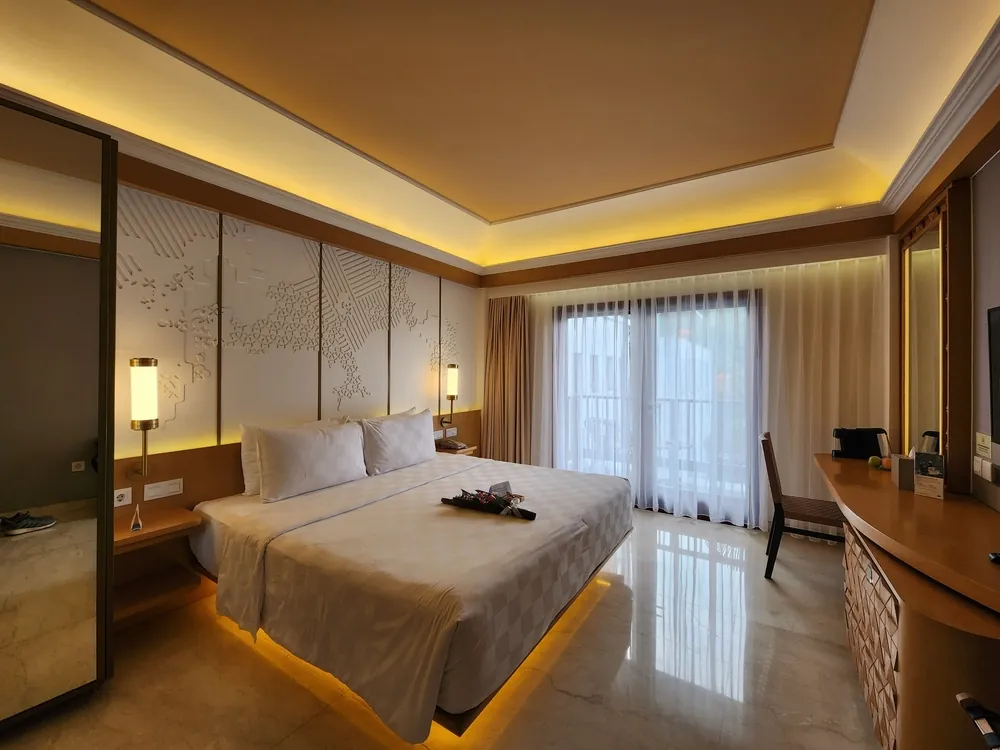
The boutique-hotel model trades premium nightly rates against a small, characterful room count. Castles at the high end of the market price accordingly: Ashford Castle at an audited median of €1,105/night, Dromoland €1,851, Hedingham Castle in Essex £595. Rates climb materially for suites and exclusive use.[1] Smaller operators like Walworth Castle (Durham) or Coombe Abbey (Warwickshire) sit at the bottom of the band at around £75 to £80/night room only.[1] What you actually charge after launch will track the building's authenticity, location relative to a market, and whether the hotel can credibly offer destination dining or a spa.
The conversion economics are unforgiving. Château du Theil in Corrèze was acquired for $170,000 in derelict condition with a $2 million renovation budget. That figure roughly doubled to nearly $4 million as foundation, wall and roof issues surfaced. The owners financed the gap by opening the venture to public investment via crowdfunding, then opened the restaurant first and the hotel later in a staged rollout.[4] That sequencing, with a revenue-generating restaurant before the rooms come online, is now common. Dick and Angel Strawbridge made the deliberate opposite call at Motte-Husson and capped the chambre d'hôte at five suites to remain below the threshold at which French hotel regulations bite.[5]
Among completed conversions, the Fonab Castle Hotel in Highland Perthshire reopened in 2013 as a 26-room luxury property. Thornbury Castle trades on its Tudor period interiors in Gloucestershire. The Parador de Alcañiz sits within Spain's national parador network, repurposing a 12th-century Templar fortress as a state-supported heritage hotel. The pattern across all three is the same. Cap room count to preserve heritage character. Route mechanical, electrical and fire-protection services through fabric without visible alteration. Price for the experience, not the bed-night. Heritage-hotel work is also operationally distinct from conventional hospitality. Staff workflow, guest expectations and even what counts as a "fix" all bend around the building, as research on staff experience in heritage hotels has documented.[6]
The historical precedent is useful context. Cannadine traces the modern stately-home commercial era to the 6th Marquess of Bath's 1949 opening of Longleat, the first English country house to admit paying visitors regularly, after he inherited the property with £700,000 in death duties in 1946.[7] Tinniswood's continuation puts Longleat at roughly 135,000 visitors a year by 1964, behind only Woburn, Chatsworth, Blenheim and Beaulieu in the commercial-stately-home league.[8] The playbook for heritage commercial conversion has had three-quarters of a century to mature. There are no greenfield questions left.
Events, weddings and chateau wedding venues
Events use is the single highest-leverage revenue model for owners who want commercial income without converting the building into a 365-day hospitality operation. The Strawbridges' Motte-Husson business model bundles a wedding venue, themed Food Lovers weekends, and the five-suite chambre d'hôte under the regulated threshold. It generated bookings before the Channel 4 series was commissioned, and the property's roughly 6× value appreciation tracks directly to that recurring events revenue.[1][5] Angel Strawbridge's prior background, twenty years in events with The Vintage Patisserie hospitality business in London, is the kind of operating experience the case record consistently rewards.[5]
Castle wedding venues
A castle wedding venue trades exclusivity and atmosphere against logistical complexity. Capacity is the throttle. Château de Blancafort (15th century, Centre-Val de Loire) attracts 5,000 to 11,000 paying tour visitors per year and books only 5 to 10 weddings per year. That is a deliberate constraint, with significant upside for an owner willing to scale that number.[9] The opposite end of the volume range is Château de Lesigny (Beau Château / Château Impossible), where the current operators tripled the inherited wedding business to roughly 80 weddings per year and stack that with revenue from over 50 French film and TV productions filmed on site.[10] Their model bundles four streams (weddings, media production, owner DIY labour, and a US HGTV media deal) as the funding architecture for the restoration itself.[10]
The economics translate. A wedding-day booking clears 2 to 4× the income of an equivalent night as a short-let, which is why operators sacrifice calendar dates to lock weddings in.[11] Purpose-built US venues like The Midnight Gem in Iowa book Saturdays at $6,500, with lower Friday rates, and pre-sold roughly 100 weddings off renderings alone on 50% deposits.[12] For owners not interested in operating directly, the same network confirms revenue and profit-share arrangements with property owners who supply the venue and outsource booking and event management. That is a viable model for absentee castle owners.[12]
The seasonal upside is real. After Lady Carnarvon was told that roughly half of Blenheim Palace's profits came from Christmas, she launched a dedicated Christmas programme at Highclere. Events density at the right calendar windows is where margin lives.[3] On the planning side, sustained wedding-venue use almost always triggers change-of-use consent in the UK, an event licence with capacity and noise conditions, and in heritage-protected jurisdictions ABF or Soprintendenza sign-off on temporary marquee installations.
Worth knowing: among fully-developed venues, Lympne Castle in Kent, Castell d'Empordà in Catalonia (paired with hotel rooms), and Schloss Herdringen in North Rhine-Westphalia all run weddings, concerts and conferences across Gothic-revival rooms and parkland. The Bánffy Castle restoration in Romania has been part-funded for years through the Electric Castle music festival, which draws roughly 200,000 attendees and channels licensing revenue into the conservation budget. The festival-as-restoration-engine model now repeats across post-socialist Central European castles.
Vacation rental
Vacation rentals are the lowest-friction commercial use a castle can support. Capital intensity is lower than a hotel, services demand is lower than an events venue, and a single full-property booking can generate hotel-grade revenue without hotel-grade operations. The model works best when the building can be subdivided into logical units (towers, gatehouses, service wings) with minimal structural intervention, or rented in its entirety to private groups.
The cost picture is set by the buyer's spending pattern. CNBC's case study of an American couple who bought and renovated a French château put the all-in spend at roughly $1.1 million (purchase plus restoration) for a property they now operate as a part-rental, part-residence.[13] At the other end of the cost spectrum, French case-study evidence on full interior renovation to luxury rental standard puts the figure at around €500,000 over three years, which the property recovers through approximately €10,500/week in season rental income, against around €13,500 in annual operating costs (guardians €18,000, cleaning at €750/turnover, property tax, electricity).[1]
Two operational considerations dominate. Heating is the biggest single ongoing cost: even on a well-insulated 800m² French château, oil heating runs €15,000 to €32,000 per year before any seasonal commercial use compounds the bill.[1] Fire compartmentalisation, alarm coverage and accessible escape routing are the items most often raised by both insurers and heritage authorities for short-term-let conversion of historic fabric. The Strawbridges' decision to cap their chambre d'hôte at five suites is a structural workaround. Keep the operation below the threshold at which French national hotel regulation engages, and the operating burden looks materially different.[5]
Successful examples include the Château de la Mothe on Airbnb (15th century, full-property bookings), and units within Burg Nideggen in the Eifel region rented as short-term stays. Rates for whole-property exclusive-use rentals on Airbnb's castle category span €500 to €3,000+ per night across the French market depending on bedroom count, region and season, confirming the premium-rate dynamic without delivering hotel-style nightly turnover.
Filming and photography location
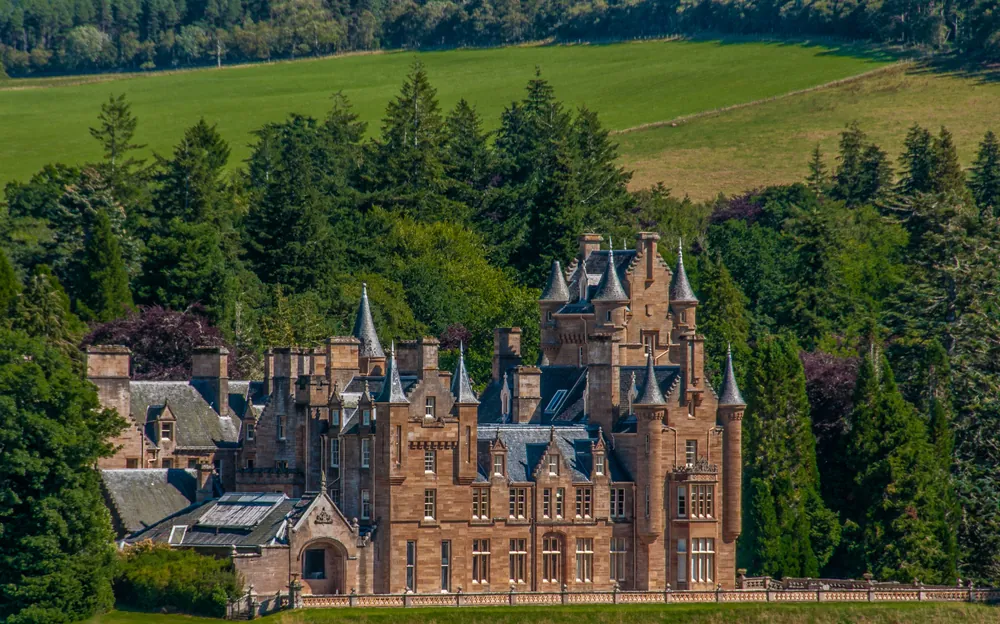
Castles work as filming locations because authentic patina is expensive to fake. Productions pay daily location fees for grand halls, courtyards, battlements and intact period interiors, and they pay extra for set-ready properties that do not require dressing. The case record is long. Tinniswood records the Duke of Rutland renting Belvoir Castle to an Italian film company in 1966 for £2,000 over ten days, with additional charges every time the director borrowed family heirlooms as props.[8] Highclere Castle's filming income now spans Downton Abbey (the property is the show's primary location) and earlier productions including The Secret Garden, a stream that meaningfully supplements the heritage-tour and events revenue.[14]
Modern operators have built deeper portfolios. Château de Lesigny / Beau Château has hosted more than 50 French film and TV productions, layering production income on top of an 80-wedding-per-year venue business as one funding architecture for the restoration.[10] Visibility is the gate. Castles need to be registered with film commissions and specialist location agencies, with high-quality production photography, accurate access notes and clear pricing. Productions shortlist on images alone.
Two physical characteristics matter for filming readiness. Large uncluttered rooms with intact natural light and minimal contemporary fixtures come first; the modernisation impulse most owners feel during restoration is the single most common reason a property loses location appeal. The second is practical access: vehicle parking, equipment unloading, temporary power capacity, and crew facilities separated from sensitive historic spaces. Modern productions arrive with substantial logistical demands, and they will not film a property that cannot accommodate them safely. Working examples include Ardross Castle in Easter Ross, used for both UK and US editions of The Traitors, and Orava Castle in Slovakia, which doubled as Count Orlok's castle in the 1922 Nosferatu and later in Dragonheart and Dracula adaptations.
Vineyards, breweries and farms
Estate-based food and wine production is the most resilient income stream a historic property can hold. It is uncorrelated to tourism seasonality, it converts otherwise-unused agricultural land into branded direct-to-consumer revenue, and in most European jurisdictions agricultural use is the easiest planning category to secure. Properties already carrying historic vineyards, cellars or working barns have an immediate restart path. Properties without need to commit to a multi-year build-out before first commercial harvest.
Two leading examples illustrate the model. Schloss Gobelsburg in Lower Austria's Kamptal wine region operates as a working winery on heritage estate, specialising in Riesling and Grüner Veltliner with cellar tours and tastings as a paired tourism revenue stream. Domäne Schloss Johannisberg in Germany's Rheingau has documented Riesling production stretching back over 1,200 years and runs the same combined heritage-plus-viniculture model. Both work because the estate already had functional buildings and a regional appellation that carried the brand.
Breweries and small distilleries scale more incrementally. Owners can launch from restored outbuildings or former service wings, sell on-site through tastings and tours, and expand capacity as demand grows. Operating margins are tighter than wine, but the capital intensity is lower and the time-to-revenue is faster. Whether estate production is worth pursuing depends almost entirely on integration. A vineyard linked to weddings, tastings and filming creates compound revenue. A vineyard sitting alone on the estate balance sheet rarely justifies the capital. The financial case for adaptive heritage reuse is materially stronger when revenue uses are layered, not run as standalones.[2]
Permissions and licences
Three categories of approval cover almost every commercial castle project. Change-of-use planning consent is required when shifting from residential or agricultural zoning to commercial use; England's Planning Portal sets out the UK process. Heritage or listed-building consent runs in parallel for any physical alteration affecting protected fabric. Operating licences cover business registration, food and beverage permits, alcohol licences, short-term-rental registration where applicable, agricultural certifications for wine and food production, and event licences with capacity and noise conditions for venues. The terminology varies by country: UK Listed Building Consent or Scheduled Monument Consent for protected sites, France DRAC plus ABF, Italy Soprintendenza, Spain regional BIC authority, Germany state Denkmalschutzbehörde.
The enforcement risk is real and asymmetric. Operating without the correct consents exposes owners to fines, mandatory reversal of unauthorised work, revocation of business licences and in some jurisdictions criminal sanction. Pre-application discussions with the local heritage officer are routinely decisive in shaping acceptable proposals. Start there, not at full submission. Worth pairing this work with castle insurance cover that recognises commercial use, because heritage policies written for private residence rarely extend cleanly to public-facing operations.
Grants, tax incentives and tourism boards
Public and quasi-public funding meaningfully changes the maths on commercial conversion. France's DRAC subsidies cover up to 40 to 50% of approved restoration costs on classified Monuments Historiques, with a parallel up-to-20% line through the Fondation du Patrimoine on labelled projects.[1] The Loto du Patrimoine has channelled €155 million to 950 restoration projects between 2018 and 2024, and France's national heritage budget runs at €326 million per year.[1]
Germany's Denkmal-AfA tax depreciation under §7i EStG allows owners (including investors and owner-occupiers) to deduct up to 9% per year for nine years of certified restoration costs, totalling 81% of qualifying spend written against income tax.[1] The Sanierungsoffensive 2026 programme commits €360 million per year over 2026–2030 at up to 30% of eligible costs.[1] Ireland's Built Heritage Investment Scheme and Historic Structures Fund both fund 50 to 80% of eligible work on Protected Structures, with Section 482 tax relief on maintenance for buildings open to the public.[1] In Italy, the Art Bonus tax credit covers private philanthropic contributions to heritage conservation, and the Czech Program záchrany architektonického dědictví allocated CZK 245.6 million across 266 grants in 2024.[1]
EU-level instruments (the European Regional Development Fund, Creative Europe, and the LIFE programme) sit on top of national schemes for projects aligned with sustainability, cultural activation or rural revitalisation. They are typically accessed through partnership with public or community bodies rather than direct application. National tourism boards (UK VisitBritain, France Atout France, Italy ENIT, Spain Turespaña, Germany's Landesmarketing boards, and the European Travel Commission) place castle venues into promotional itineraries and trade-channel marketing. The practical step for a new operator is registering for trade-listing inclusion and a PR contact, not generic promotional partnerships.
What I keep coming back to is that almost every grant scheme carries the same three preconditions: heritage designation in good standing, pre-approved restoration plans, and some form of public access or heritage-benefit commitment. Owners optimising for purely private use have a narrower funding universe than those building hospitality, education or events into the project from the outset. The grants don't follow the building. They follow the way the building is going to be used.
FAQ
Can a castle be a profitable business?
Yes. The verified hotel occupancy benchmarks support it (England 79%, Ireland 80.7%) and the indicative revenue model on Dromoland Castle (97 rooms, around €49.2m gross/year at 75% occupancy) shows the upper bound at scale. Smaller operators like Dalhousie Castle (29 rooms, around £3.6m/year) sit lower but still profitable. The Strawbridges achieved 6× value appreciation in ten years on Motte-Husson through the wedding venue plus television model. Passive restoration without commercial use rarely recovers cost.[1][5]
How much does a castle hotel make?
The CPI revenue model applies 75% occupancy to audited 2026 direct-booking median rates: Ashford around €25.1m, Dromoland around €49.2m, Peckforton around £1.97m, Dalhousie around £3.6m, Château Jeanne (119 rooms, France) around €7.2m. These are gross revenue figures. Operating costs, debt service and refurbishment reserves have not been deducted, so real net margins are materially lower.[1] Staffing a heritage property is one of the larger items inside that gap.
What permissions are needed to run events at a castle?
Change-of-use planning consent for shifting from residential or agricultural zoning, listed-building or equivalent heritage consent for any physical alteration, and an operating licence covering events, alcohol, food, and capacity-limited noise consent at municipal level. In France an ABF review applies for any temporary structure on Monument Historique sites. In Italy the Soprintendenza signs off on the same. Pre-application meetings with the local heritage officer save time downstream.
What is the best business use for a castle?
A hotel-plus-events combination produces the highest revenue-per-square-metre at properties with sufficient room count (typically 25+). Below that scale, a wedding-venue plus chambre d'hôte plus filming portfolio produces the strongest cash-on-cash returns. The Beau Château / Lesigny case (80 weddings, 50+ productions, media deal) and the Highclere model (60 full-time staff across hospitality, tours, filming, farming, events) both demonstrate the same architecture. Layered revenue streams against a single capital base.[3][10]
The cleanest way into all of this is to read the case record on its own terms. We have tracked the operators who got to the 6× outcome and the ones who lost half their capital, and the difference is rarely the building itself. It is whether commercial use was built into the project from day one, whether the consent regime was treated as a partner rather than a hurdle, and whether the owners built a portfolio of revenue streams rather than betting on one. Anyone considering castle ownership as a business should plan for all three before signing a contract, because the gap between the Strawbridge route and the Ribbesford route opens early and widens fast.
References
1. Castle Collector, Castle Price Index, March 2026.
3. Reed — Behind the doors of Downton Abbey: Managing the 1,300-year-old Highclere Castle.
4. Quantum Makers — How Two Friends Turned Abandoned CASTLE into a 4-Star Hotel.
5. Strawbridge, D. & A. A Year at the Chateau, Seven Dials / Orion Publishing, 2020.
6. Mowforth, M. & Munt, I. et al. Heritage hotels: An exploration of staff experiences.
7. Cannadine, D. The Decline and Fall of the British Aristocracy, Yale University Press, 1990 / Vintage, 1999.
8. Tinniswood, A. Noble Ambitions: The Fall and Rise of the English Country House After World War II, Basic Books, 2021.
9. William McIntosh — Château de Blancafort revenue Potential.
10. Home Garden Forums — How Two Americans Saved a Crumbling French Castle.
11. Kylee & Steven — One Year Since Buying a Wedding Venue with NO EXPERIENCE.
12. Chris Koerner on The Koerner Office Podcast — How He Started a $72,000/Month Event Venue Business.
13. CNBC Make It — We Spent $1.1 Million Buying & Renovating Our French Chateau.
14. Carnarvon, F., the 8th Countess of. Seasons at Highclere, Hodder & Stoughton (Century), 2021.