
Castles as Luxury Real Estate: The Frontier the UHNW Market Just Discovered
While 80 of 100 prime real estate markets sat flat in 2025, the trophy castle market diverged: fixed supply, rising demand, irreplaceable assets.
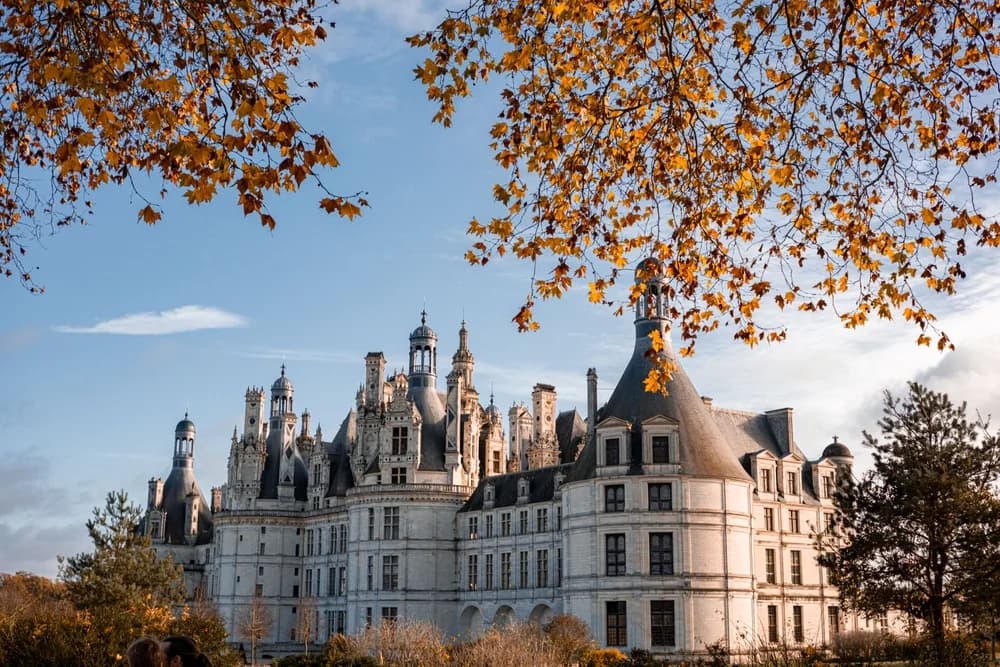
Prime city property has gone flat. The market for top-end castles hasn't. The reason is simple: nobody can build a new castle, the supply is fixed, and a new generation of very wealthy buyers is moving south. The harder question, if you're thinking about buying one, is what the price spread, slow market and staff bill actually mean for you.
The Bel Air mansion that sold for $90 million in September 2024 was paid in Bitcoin. Christie's Southern California's crypto-transaction group alone handled $150 million in crypto-paid property in 2024.[1] The under-50 wealthy generation moves money differently from the one before, and the European castle market is feeling the same shift at the very top.
The thesis
The castle market has supply that's fixed (heritage protection rules out new construction), demand moving south, and a per-square-metre price range (€191 to €19,551) wider than any other major property category. That combination behaves nothing like a prime city apartment.
Knight Frank's annual review of 100 prime city markets found 80 of them held steady or rose in 2023, despite earlier predictions of a correction.[2] Christie's State of Luxury 2025 calls London "the hub of Europe's luxury real estate market".[3] Savills' 2026 Southern Europe report puts regional property investment at €35 billion in 2025, growing twice as fast as the rest of Europe.[4]
Knight Frank PIRI 100. Top European prime price growth 2023 | YoY change |
|---|---|
Algarve | +12.3% |
Athens | +12.0% |
Ibiza | +12.0% |
Marbella | +7.2% |
Mallorca | +7.0% |
Madrid | +6.4% |
Lake Como | +6.2% |
Edinburgh | −3.2% |
Frankfurt | −3.9% |
London | −2.1% |
Source: Knight Frank PIRI 100, 2024 release.[2]
Where the money is going: south

Northern European hotspots fell in the same period: Saint-Jean-Cap-Ferrat −5.0%, Cannes −7.0%, Oxford −8.4%.[2] The geography flipped.
Savills' 2026 report shows the bigger picture. European property investment hit a decade-low €151 billion in 2023, down by half on the year before. By 2025 Southern Europe (Spain, Italy, Portugal, Greece) had recovered 70% of that drop, the strongest comeback in Europe. The big core markets (UK, Germany, France) only recovered 30%. Greece grew 58% in 2025 alone.[4]
Castle prices follow with a lag. The data we track shows Southern European castle markets still selling at moderate prices: Italy around €1,750 per square metre, Spain €2,368, Belgium €2,200.[5] The Algarve, Mallorca and Andalusia sit between the cheap Eastern European tier and the expensive Swiss top tier.
Knight Frank's Attitudes Survey 2024 finds 19% of very wealthy clients plan to apply for a second passport, and the appetite is highest outside Europe.[2] Italy, Greece, Portugal, Cyprus and Turkey all accept heritage property as a qualifying investment under their citizenship-by-investment schemes, which puts direct upward pressure on Southern European castle prices.
Top-end deals confirm the recovery
Christie's State of Luxury 2025 broker survey gives the latest read on how the wealthy are moving. 74% of brokers in the Americas expect luxury demand to grow in 2025; in Europe and Asia-Pacific, 58% expect growth.[3]
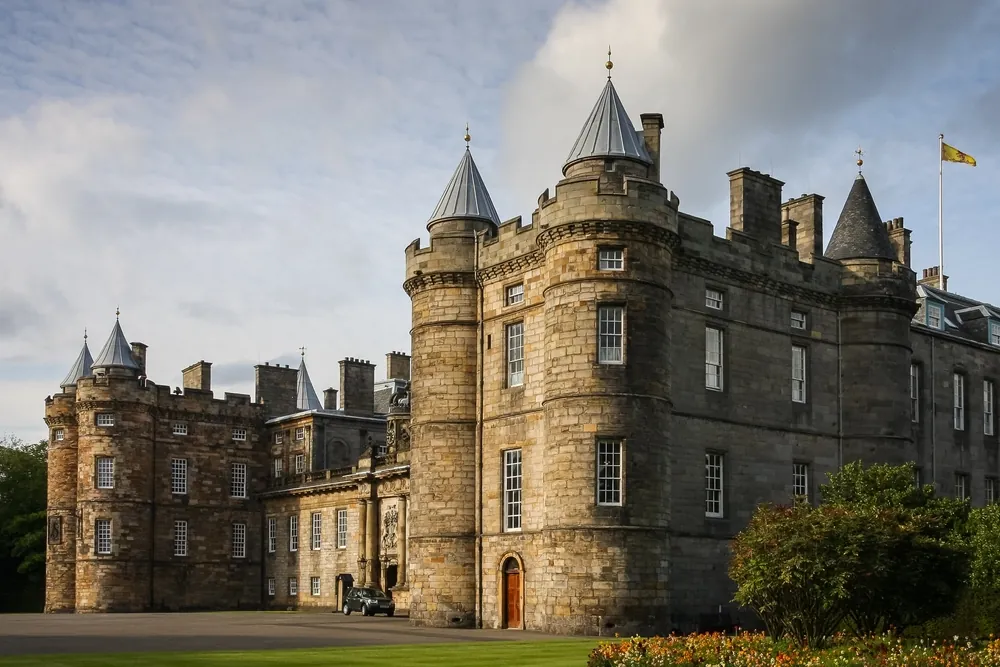
Top-end European castle deals sit on the same curve. Schloss Salem in Baden-Württemberg sold at €25.8 million, the largest postwar castle deal in Germany. La Fortalesa de Albercutx in Mallorca trades at €15,450 per square metre, almost double the wider Andratx benchmark. Castello San Giorgio di Portofino sold at €55,350 per square metre, more than twice prime Portofino, but that's coastal scarcity rather than a typical castle price.[5]
Christie's Munich affiliate reported sales over $1 million up 30% in 2024, evidence of a multi-year up-cycle in southern Bavaria. Tight prime city markets keep underwriting Schloss prices within commuting range of those cities.[3]
Why castle prices vary 100x between Romania and Switzerland
Romania's Castle of Zlatna at €191 per square metre is the cheapest verified castle in Europe. Switzerland's typical castle at €19,551 per square metre is the most expensive. The range across the continent is roughly 100x, against 30 to 50x for normal homes across the same countries.[5]
Three reasons explain the wider gap:
- Heritage rules vary by country. Switzerland's Lex Koller restrictions on foreign buyers tighten supply in an already-wealthy country, which pushes prices up. Eastern European castles still working through decay from the state-ownership era push prices down in Poland, Romania, Hungary and the wider region.
- Restoration costs vary by country. Specialist heritage tradespeople in Switzerland or Liechtenstein cost 5 to 10 times their equivalents in Romania or Bulgaria. That compounds the gap at the point of buying.
- Demand depth varies by country. Switzerland has exceptionally deep demand at the top end: concentrated global wealth, generous tax rates for qualifying residents, political stability. Eastern Europe has much thinner demand at the top end, since most of the regional wealthy buy west.
Inside Europe, size affects per-square-metre price more dramatically for castles than for normal homes.
Size of castle | Typical price per m² | Number tracked |
|---|---|---|
100 to 500 m² | €3,000 | 281 |
500 to 1,000 m² | €2,253 | 469 |
1,000 to 2,000 m² | €1,833 | 247 |
2,000 to 5,000 m² | €1,273 | 93 |
5,000 m² and above | €515 | 28 |
Source: Castle Collector CPI, March 2026 (1,118 listings).[5]
A 6,000 m² castle in rural France sells at roughly one-fifth the per-square-metre price of a 300 m² tower in the same market. Across our data, size predicts per-square-metre price better than which country it's in.
What the staff actually cost
Morgan & Mallet's 2025/26 Beyond The Butler survey is the most current benchmark for what wealthy households pay their staff. A fully-staffed European castle (estate manager, butler, private chef, head housekeeper, two housekeepers, head gardener, two gardeners, maintenance, nanny, driver) runs €350,000 to €600,000+ a year in salaries in France or Belgium, CHF 750,000 to CHF 1,200,000 in Switzerland, and significantly more in the US.[6]
The US pays the highest salary for 17 of 28 tracked household roles. Switzerland pays the most for caregivers (CHF 120,000 to 160,000, around $179,200), gardeners and family cooks. France pays markedly less than the UK, Switzerland or the US: most household roles there fall in the €45,000 to €60,000 range.
UK rural estate staff (Greycoat Lumleys, 2024-25):
Role | Live-In | Live-Out |
|---|---|---|
House Manager | £45–55k | £60–70k |
Butler | £40–50k | £50–60k |
Estate Manager | £45–50k | £50–60k |
Couples (combined) | £70–85k | n/a |
Head Gardener | £38–45k | £40–50k |
Head Housekeeper | £45–55k | £50–65k |
Source: Greycoat Lumleys Salary Survey 2024-25.[7]
A bare-minimum running team for a UK rural castle (estate manager, head housekeeper, a live-in couple, head gardener) costs around £198,000 a year in salaries, before national insurance, accommodation, food and benefits. Hiring is harder since Brexit: Greycoat reports that UK estate recruiters now actively look for candidates with both EU and UK citizenship.
The new Renters' Rights Act adds a wrinkle for owners who let cottages, gatehouses, lodges or income-producing wings of the castle. From 1 May 2026, all new tenancies become open-ended by default and "no-fault" eviction is abolished. Existing tenants need a government information sheet by 31 May 2026.[8]
Why castles take so long to sell
Across the 14 countries we track, with roughly 46,000 protected castle-type properties, the visible market is just 200 to 400 sales a year, a turnover rate of 0.4 to 0.9%. Normal city homes in most European markets turn over at 2 to 4%. Castles are three to seven times slower to sell, and a typical buyer should expect 2 to 10 years to find a buyer if they ever need to.[5]
For the wealthy buyer, three things follow:
- Size the bet to your appetite for a slow market. Knight Frank's 2024 data shows the very wealthy keep an average of 29% of their wealth in primary and secondary homes.[2] Castles should typically sit at 5 to 15% of that. Big enough to matter, small enough that you can wear the long sale process.
- Plan to hold it for at least a decade. A 7 to 15 year hold is the realistic baseline. Selling inside 5 years generally means taking a 20 to 40% discount against asking, which usually wipes out any value gains.
- Build a way to earn from it from day one. Dalhousie Castle's run from £2.5m to £5.6m, a +124% gain across 11 years, came alongside an active 29-room hotel. Buyers who don't want to run a business should plan to transfer the property to a heritage body (National Trust, English Heritage, Historic Royal Palaces, a regional foundation) rather than sell it on the open market.[5]
Bottom line
The castle market behaves like luxury property, but with the slow sale process of a long-term private investment. Right size band, decade-plus hold, a way to earn from it from day one: get those right and the rare-supply premium does the work. Skip them and the slow market sets the price when you sell, not the gains you were counting on.
Common questions
Why is the price range so much wider for castles than for normal homes?
Three reasons stack up: heritage rules that vary by country, specialist tradespeople who cost 5 to 10 times more in Western than Eastern Europe, and top-end demand that's concentrated in Switzerland, the UK and a handful of Mediterranean coastal markets.
How long should I plan to hold?
7 to 15 years for the value gains to outweigh the costs of buying and selling and the slow market. Selling inside 5 years generally means taking a 20 to 40% discount.
Do citizenship-by-investment schemes accept castle purchases?
Italy, Greece, Portugal, Cyprus and Turkey all accept qualifying heritage property. Minimum values and what counts vary; check the current rules before signing anything.
Is the Southern European bump already priced in?
Not yet at the castle level. Our data shows Italy, Spain and Portugal castles still selling at moderate prices (€1,750 to €2,400 per square metre), suggesting more room to rise as Southern European luxury homes continue to outpace the rest.
What should I budget for running costs each year?
Staff alone runs €350,000 to €600,000+ in Western Europe and CHF 750,000 to CHF 1,200,000 in Switzerland, fully staffed. Add maintenance, heritage repairs, insurance and grounds. A safe all-in figure for a mid-size European castle is 3 to 5% of the property's value each year.
Is there another way to sell other than the open market?
Yes. Transferring the property to a national heritage body (National Trust, English Heritage, Historic Royal Palaces, a regional foundation) is the standard route for owners without someone to run it.
What's the single biggest mistake buyers make?
Counting on the value going up without setting up a way for the property to earn money. Dalhousie is the clearest counterexample: the gains came alongside the hotel, not despite it.
Sources
1. Christie's International Real Estate, Global Luxury Real Estate Forecast 2025.
2. Knight Frank, The Wealth Report 2024 and 2026.
3. Christie's International Real Estate, The State of Luxury 2025 Regional Market Outlook.
4. Savills Research, Spotlight: Southern Europe Investment 2026.
5. Castle Collector, Castle Price Index, March 2026.
6. Morgan & Mallet International, Beyond The Butler 2025/26.
7. Greycoat Lumleys, Salary Survey 2024-25.
8. Quintessentially Estates, Renters' Rights Act 2026 Guide.