MENU
Castle Collector Logo
Guides

How to Buy a Castle in Europe as a Foreigner

A practical guide to buying a castle in Europe as a foreigner—where you can buy, visas vs. ownership, taxes and fees, legal steps, and funding considerations.

BY CASTLECOLLECTOR
How to Buy a Castle in Europe as a Foreigner

Buying a castle in Europe is a very reachable dream that just requires planning. For international buyers, historic castles across the UK and continental Europe are very much accessible, whether as a private residence, a long-term investment, or a heritage-led business opportunity. From fortified estates in France and Italy to romantic towers in Spain, Germany, and Czechia, Europe offers a diverse and active market where foreign ownership is both common and legally supported.

While the idea of purchasing a castle may feel complex, the process is far more structured than many buyers expect. Most European countries allow foreign nationals to purchase historic property, provided local legal requirements are followed. However, rules around residency, taxation, financing, and heritage protection vary significantly by country. Understanding these differences early is essential to making a confident and informed purchase.

This article will guide foreign buyers through the practical realities of acquiring a castle in Europe. It explains which countries permit foreign ownership, how visa and residency rules may affect long-term use, what taxes and legal steps to expect, and how funding and currency considerations can influence overall costs

With the right preparation and expert support, buying a castle abroad is not only possible, it can be a rewarding way to combine lifestyle, heritage preservation, and long-term value. 

What Countries Allow Foreign Ownership of Castles and Historic Properties?

Glenarm Castle, Glenarm, Co. Antrim, Northern Ireland, UK
Glenarm Castle, Northern Ireland
Across much of the UK and the European Union, property law is designed to allow foreign ownership, including castles, châteaux, palaces, and other protected buildings. However, while ownership itself is usually permitted, the conditions attached to buying, using, renovating, and occupying historic properties can vary significantly by country.

While most of Western and Central Europe is open, a few countries impose stronger controls. Switzerland has severe restrictions on foreign property purchases, Austria requires regional approval, especially for non-EU buyers, and in Scandinavian countries local residency or approval rules may apply.

However, across Europe, foreign buyers must distinguish between the right to own property, the right to reside long-term, the obligations tied to heritage protection, and any additional approvals or reporting requirements. It is also important to consider the goal in buying these properties as the right to buy does not mean the right to run a business.

Since each country has different rules, we’ll look into what nations require and allow when it comes to foreign ownership. 

United Kingdom

The UK places no restrictions on foreign nationals purchasing property, including listed buildings, castles, and estates. Buyers do not need residency or citizenship to own property.

However, it is important to note that ownership does not grant residency rights, which means owners should look into visa needs if the property is going to be a second home, or other legal matters if they plan to turn the property into a business. 

In the UK, foreigners are also allowed to run businesses in the property they own. 

France

France actively allows and historically welcomes foreign ownership of châteaux and heritage properties. There are no nationality or residency requirements to buy, but ownership does not confer residency rights.

Foreigners can also operate hotels, chambres d’hôtes, wedding venues, and Airbnb-style rentals in these properties. 

Spain

Spain allows foreigners to buy historic properties, including castles, without residency. However, they must first obtain an NIE (Número de Identidad de Extranjero), a personal identification number required for almost all legal and financial activities in Spain. 

Running a business is also allowed, but regulated regionally. Buying property or starting a business does not automatically grant a visa, residency, or Spanish nationality.

Italy

Italy allows foreign ownership under a principle of reciprocity: citizens of countries that allow Italians to buy property may purchase in Italy. This means most EU, UK, US, Canadian, and Australian buyers qualify. 

As with other countries, ownership does not provide residency rights in Italy. 

Running a business is also allowed.

Germany

Germany places no restrictions on foreign ownership of property, including protected buildings. There are no residency requirements and foreigners can also run businesses in the country without restrictions. 

Czechia (Czech Republic)

Czechia allows foreign nationals to purchase property, including castles, with minimal restrictions. There are no residency requirements and foreigners can also run businesses without restrictions. 

Visa & Residency Considerations When Buying Property

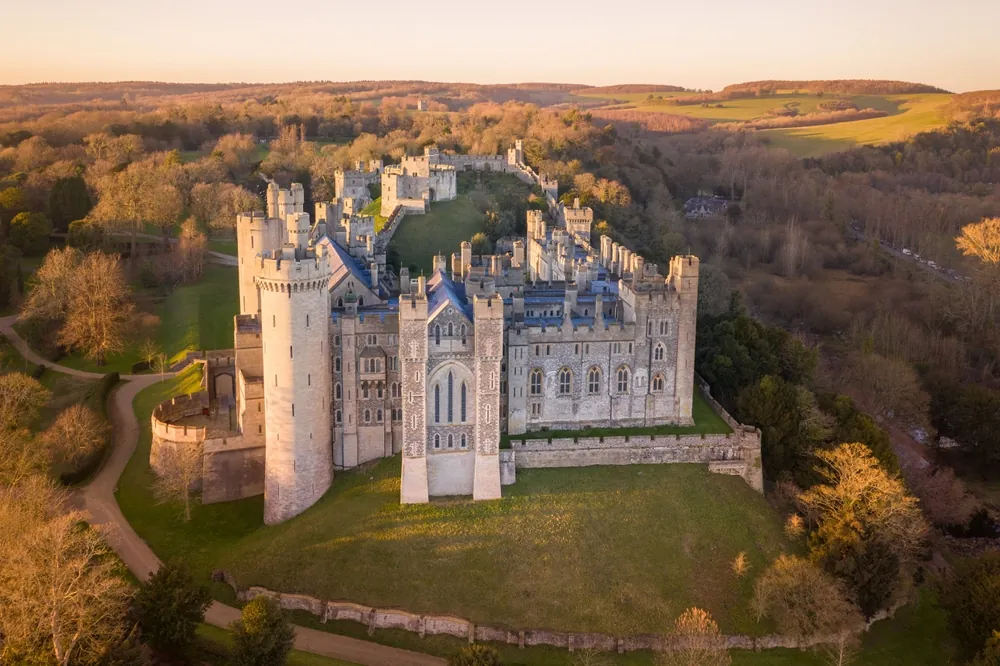
Arundel Castle, Arundel, West Sussex, England, United Kingdom. Bird Eye View. Beautiful Sunset Light
Arundel Castle, England
Buying a historic property in Europe is legally distinct from the right to live, work, or operate a business in that country. Many foreign buyers underestimate this distinction and assume ownership confers residency rights, but it does not. Visa and residency rules are governed by immigration law, while property ownership is governed by civil and land law. Understanding how these two systems interact is essential when planning a purchase, renovation, or commercial use of a historic building.

As seen previously, in nearly all European countries and the UK you can own property without having the right to live there, but buying a castle or a historical property does not grant you a visa. This means, when buying property outside their home country, foreigners must plan ownership and immigration strategy in parallel, not sequentially.

For European Union citizens, freedom of movement within EU countries and the right to reside, work, and run businesses make it easier to buy property and turn it into a source of income. However, for other nationalities, running a hotel or venue in a property requires work rights. Therefore, it is important to find the visa or permit that best applies to each case.

When buying a historic property abroad, visas generally fall into four functional categories: visiting, living without working, working/running a business, and investing. Understanding which category applies to your intentions is essential before committing to a purchase, as it can influence how long you can stay in the country during renovations and if you can manage works personally. For historic properties, where planning, approvals, and restoration can take years, visa duration and renewal conditions are just as important as property law.

Short-Stay / Visitor Visas

Visitor visas allow holders to view properties and attend notary signings or inspections. In the Schengen area, visitors can stay for up to 90 days. In the UK, depending on nationality, visitors are allowed to stay for up to 6 months

Although this type of visa can work for people considering buying property or briefly analysing land, it is not the best permit to oversee renovations, manage staff or effectively run the business, as these require the right to work.  

Passive Income / Non-Lucrative Visas

This type of visa allows holders to stay in the country of choice for longer periods, living in the property they buy. However, it does not allow holders to work or run a business.

In order to acquire this document, holders need to provide proof of stable income (such as investments or pensions), health insurance, and a clean criminal record. It is a visa available in countries such as Spain, Italy, France, and Portugal. 

This is a visa that can work for retirees looking for a permanent residence abroad, lifestyle buyers, and people using the property privately. 

Self-Employment / Business Visas

Self-employment visas allow holders to live in the country and actively manage or work in a business such as a hotel or events venue.

The process for applying and getting this type of document depends on each country, but immigration offices usually require an approved business plan, proof of financial viability, and tax registration. Self-employment visas are available in the UK, Spain, Italy, Germany, and France.

It is important to note that although this type of visa might be suited for buyers planning to operate the property as a business, heritage projects can often take longer than visa approvals and business models may be rejected if not “economically beneficial”. 

Investor / Golden Visas

Investor visas require holders to invest in the country and own property. In Spain, it is possible to acquire one by investing over €500,000 and buying real estate. Italy and Greece also offer this visa as a possibility, but have more specific requirements. 

The value of renovations do not count as part of the investment and ownership alone does not guarantee citizenship. This is an appropriate visa for high-net-worth buyers who are seeking flexibility. 

Skilled Worker / Employment-Based Visas

Skilled worker visas allow holders to live and work in the desired country, as long as they are employed by a registered entity. In this case, owning property or running your own business does not qualify as employment. For this reason, this is a type of document that suits buyers with separate employment or spouses of primary visa holders.

Taxes, Fees & Legal Steps Required to Buying Castles as a Foreigner

Edinburgh, Scotland - 16 July 2025: Edinburgh Castle under a vibrant cloudy sky, showcasing historic architecture in Scotland, UK
Edinburgh Castle
As with any big purchasing decision, buying a historic property or castle in Europe involves more than negotiating the price. Foreign buyers must navigate a layered framework of transaction taxes, legal fees, registration costs, ongoing property taxes, and business and tourism taxes. While most European countries allow foreign ownership, the cost structure and legal process vary significantly by jurisdiction.

Understanding these costs upfront is essential, as historic properties often carry higher acquisition costs, longer timelines, and additional compliance obligations compared to modern residential real estate.

Although terminology differs, the buying process across Europe usually includes a phase of offer and preliminary agreement, then due diligence and title checks, heritage and planning verification, signing before a notary or solicitor, payment of purchase taxes and fees, registration of ownership, and post-completion tax and reporting obligations.

Foreign buyers will almost always need to work with a local lawyer or notary, have a local tax number and a bank account in the country they are buying in.

Specific taxes, fees and purchasing and processes can be very different from country to country. 

United Kingdom

The legal system in the UK is solicitor-led rather than notary-based, meaning buyers appoint their own solicitor to conduct due diligence, manage contracts and register ownership. The UK benefits from a transparent Land Registry system, and there are no restrictions on foreign ownership of property, whether residential or commercial.

When purchasing property in the UK, buyers must pay Stamp Duty Land Tax (SDLT). This tax is calculated on a progressive scale based on the purchase price. Foreign buyers are subject to an additional 2% non-resident surcharge, and further surcharges may apply if the property is bought as a second home or through a corporate structure. For high-value historic estates or castles, SDLT can represent a substantial upfront cost.

Beyond tax, buyers should budget for legal and professional fees. Solicitor costs typically range from 1–2% of the purchase price. For listed buildings, specialist heritage surveys, structural assessments and conservation advice are essential and often mandatory. Land Registry fees are relatively minor but still form part of the overall transaction.

Once ownership is established, ongoing taxation applies. Residential properties are subject to Council Tax, while commercial or mixed-use historic properties fall under Business Rates. Any rental income is taxable in the UK, and non-resident owners face Capital Gains Tax on resale, often at higher rates than UK residents.

If the historic property is to be operated as a hotel, venue or holiday rental, additional requirements apply. Owners must obtain planning permission for any change of use, register for VAT if turnover exceeds the threshold, comply with employment and PAYE obligations, and meet strict fire safety, health and licensing regulations. Listed status does not remove these obligations: it often intensifies them.

France

All property purchases in France are overseen by a notaire, a state-appointed legal professional who acts impartially for both buyer and seller. This system offers strong legal protection but also means buyers cannot bypass formal procedures.

One of the most significant costs when buying property in France is what are commonly called “notaire fees.” Despite the name, these are largely composed of transfer taxes and registration duties, with the notaire’s actual fee being only a small portion. For older properties, including most historic buildings, these costs typically amount to 7–8% of the purchase price. Historic or listed status does not reduce these taxes, although it may later provide access to tax reliefs.

French law requires a comprehensive set of technical diagnostics before sale, covering energy performance, asbestos, lead, termites and other risks. For protected buildings, buyers must also verify whether the property is classified as a Monument Historique or subject to heritage protection zones, which directly affect renovation rights and obligations.

Ongoing ownership costs include taxe foncière, an annual property ownership tax, and in some cases taxe d’habitation, although this has been reduced for many owners. Rental income is taxable, and high-net-worth buyers may face limited exposure to wealth tax depending on asset structure.

For those intending to operate a business, such as a château hotel or event venue, France requires business registration, tourism classification, VAT (TVA) compliance, and payment of social charges. Payroll taxes can be substantial if staff are employed. France is well known for offering generous tax deductions for the restoration of protected historic buildings, but these benefits come with rigorous compliance, documentation and long approval timelines.

Spain

The legal process of buying property in Spain involves both a notary and the Land Registry, ensuring public record of ownership. Foreign buyers must obtain a NIE (Número de Identidad de Extranjero) before completing any transaction.

Most historic properties fall under the Transfer Tax (ITP) regime, which typically ranges from 6% to 10% depending on the autonomous community. Newer properties may instead be subject to VAT (IVA) and stamp duty. Notary and registry fees are regulated but unavoidable, and most buyers also hire an independent lawyer, usually costing around 1% of the purchase price.

Ownership brings annual obligations such as IBI, Spain’s municipal property tax. Non-resident owners must also pay income tax even if the property is not rented, based on a deemed rental value. Wealth tax may apply depending on the region and asset value, and rental income is taxed separately.

Turning a historic property into a business in Spain introduces further complexity. Owners may need a tourist rental licence, which can be difficult or impossible to obtain in certain cities or regions. VAT registration, social security contributions and compliance with regional hospitality regulations are required. Enforcement is particularly strict in popular tourist destinations. Additionally, historic properties may trigger archaeological studies or conservation levies before renovation work can proceed.

Italy

Italy’s property system is notary-led and highly formalised, particularly for historic buildings. The documentation process is extensive, and in some cases, the Italian state may have pre-emption rights on heritage properties, allowing it to match the purchase price and acquire the property instead of the buyer.

Purchase taxes depend on whether the seller is a private individual or a developer and whether the buyer qualifies for primary residence benefits, something most foreign buyers do not. Standard registration tax is typically 9%, while VAT may apply to new or restored properties sold by developers. Notary fees vary but are often higher for complex historic transactions.

Ongoing taxes include IMU, the municipal property tax, which applies to most non-primary residences. Rental income is taxable, and additional regional and municipal surtaxes may apply. Italy’s tax system can be intricate, making local tax advice essential.

Operating a business from a historic property requires VAT registration, formal business establishment, compliance with labour laws and payment of social security contributions. Tourism and occupancy taxes are common. Italy offers restoration incentives for heritage buildings, but approvals are slow and subject to strict oversight by cultural authorities.

Germany

Germany is known for its formal and predictable property system. A notary is mandatory, and no property transaction can proceed without notarisation. This provides legal certainty but also removes flexibility.

Buyers must pay Property Transfer Tax, which ranges from approximately 3.5% to 6.5%, depending on the federal state. Notary fees generally amount to 1–1.5% of the purchase price, with additional Land Registry costs.

Owners are subject to Grundsteuer, Germany’s annual property tax, as well as income tax on rental earnings. Capital gains tax may apply if the property is sold within certain holding periods.

For business use, owners must register a trade, comply with VAT rules, and pay either corporate or income tax depending on ownership structure. Safety, accessibility and building compliance standards are strictly enforced. Germany does offer tax depreciation benefits for listed buildings, but renovation costs must meet specific criteria to qualify.

Czechia

Czechia has become increasingly attractive to foreign buyers seeking castles and historic properties, particularly for hospitality projects. The system is lawyer-led, with oversight from the Cadastral Registry, and transparency has improved significantly in recent years.

One major advantage is that property transfer tax has been abolished, reducing upfront costs. Buyers are responsible for legal fees, typically around 1–2%, and cadastral registration costs. Due diligence is essential when dealing with protected cultural monuments.

Ongoing taxes are relatively low compared to Western Europe, with modest annual property tax rates. Rental income is taxed, but capital gains tax exemptions may apply after a defined holding period.

For business operations, owners must obtain a trade licence, register for VAT if required, and pay local tourism taxes. Labour costs are generally lower than in Western Europe, making Czechia a popular choice for converting historic estates into hotels or event venues.

Funding & Currency Considerations 

In most European countries, foreign buyers can access local mortgage financing, but lending criteria are stricter for historic properties. Castles and listed buildings are often classified as non-standard assets, meaning banks may reduce loan-to-value (LTV) ratios or refuse financing altogether.

Typical LTV ratios for foreign buyers purchasing historic properties range between 40% and 60%, compared to 70–80% for standard residential homes. In some cases, particularly for heavily protected castles or properties requiring major restoration, banks will require buyers to fund the purchase entirely with cash.

In the United Kingdom, specialist private banks and wealth lenders may finance historic properties, but listed buildings often require higher deposits and extensive surveys. French banks may also lend to non-residents, but Monument Historique properties can trigger additional risk assessments.

In Italy and Spain, financing is possible, but heritage status and rural location often reduce bank appetite. In Germany, conservative lending practices favor buyers with strong EU banking relationships. And in Czechia, financing is improving but still limited for foreign buyers of cultural monuments.

Many international buyers therefore rely on private wealth financing, international banks, or cross-border lending structures, particularly when purchasing at higher price points.

Currency

Currency fluctuation is one of the most underestimated risks when buying property abroad. Purchase prices, taxes, renovation costs, and staff salaries are paid in local currency, while the buyer’s capital may be held in USD, GBP, CHF, or another foreign currency.

Even small exchange rate movements can materially affect total acquisition cost. For high-value historic properties, a 5–10% currency shift can translate into hundreds of thousands of euros gained or lost. For this reason, buyers might want to consider locking in exchange rates through forward contracts, using specialist currency brokers rather than retail banks, staggering payments strategically to reduce exposure, and maintaining renovation reserves in local currency.

Currency planning is particularly important in countries such as the UK (GBP exposure), Czechia (CZK exposure), and non-euro buyers operating in eurozone countries like France, Spain, Italy, and Germany.

Banking, Account Setup and Capital Controls

Most countries require buyers to open a local bank account to complete a property purchase, pay taxes, and manage ongoing costs. For historic properties, this account is often also used to receive grants, pay contractors, and manage staff payroll.

Foreign buyers should expect enhanced anti-money laundering (AML) and source-of-funds checks, requests for translated documents, longer onboarding timelines for non-EU residents, and additional scrutiny for high-value or heritage assets.

Countries like France, Italy and Spain are particularly thorough in verifying the origin of funds, especially when properties fall under cultural protection regimes.

Funding Renovation, Restoration and Compliance Costs

One of the most critical funding considerations is that purchase price and renovation costs are rarely financed together, especially for listed buildings. Banks typically release funds only after approved works are completed and inspected, leaving buyers to front restoration costs themselves.

Buyers should budget 20–50% of the purchase price for restoration and upgrades, depending on condition and legal constraints. In some countries, such as France, Italy and Germany, grant funding or tax relief may be available, but these benefits are usually reimbursed after works are completed and approved, not upfront.

Cross-Border Tax and Financial Structuring

Foreign buyers often purchase historic properties through corporate structures, family offices, or trusts. While this can offer tax efficiency, asset protection or succession planning advantages, it may also trigger higher purchase taxes or restrict residential use.

Professional cross-border tax advice is essential before structuring ownership, particularly when the property is intended to generate income through hotels, events, or short-term rentals.

Historic properties are capital-intensive assets, and undercapitalisation is one of the most common causes of failed projects. A well-funded buyer with conservative assumptions is far better positioned to preserve value and unlock long-term potential.

Related Articles

Loading...