
Castles in Belgium: 7 to visit, from Gravensteen to Bouillon
Castles in Belgium can be purchased for around €1.5 million. The most famous castles in Belgium are Gravensteen, Gaasbeek, and Château de Bouillon.
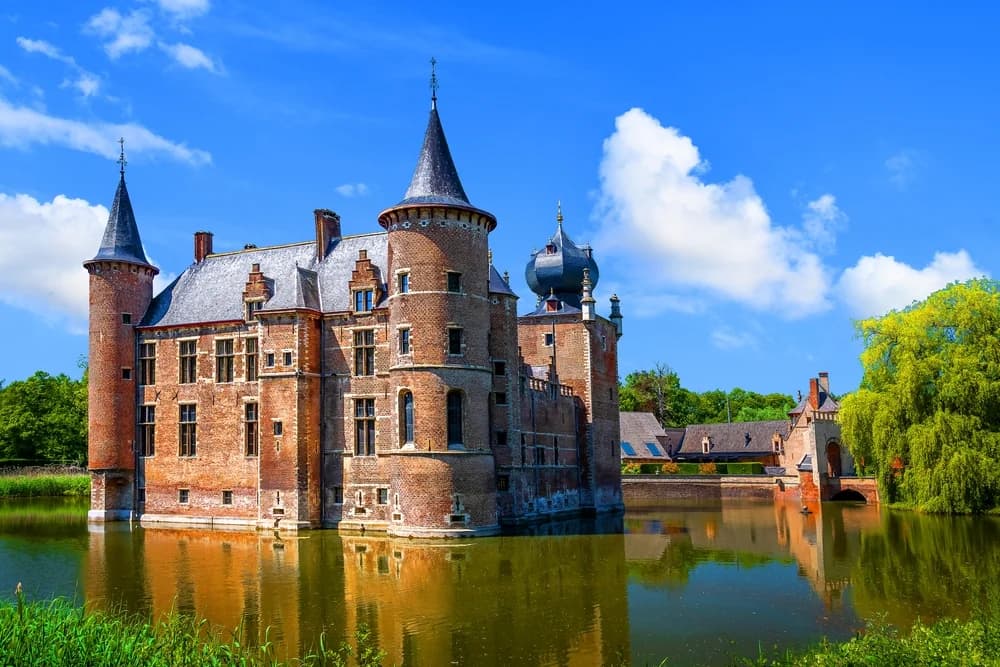
Belgium carries Europe's densest castle landscape: a Counts of Flanders' urban fortress in Ghent, Godfrey of Bouillon's clifftop eyrie in the Ardennes, and a family-held storybook tower in the Lesse valley.
Belgium sits on contested borderland that ran for nearly a millennium between French royal influence, Holy Roman Empire territory, the Burgundian Low Countries, then Habsburg Spain, the United Provinces, France and the post-1815 United Kingdom of the Netherlands. The pan-European fortification surveyor Jean-Denis Lepage frames the country as the medieval contested ground between French royal, Imperial and Burgundian influence, the structural driver behind the densest concentration of fortified residences north of the Alps.[1]
The visible castle stock splits regionally. Flanders holds the moated kasteel tradition (Gravensteen at Ghent, Gaasbeek and Beersel just outside Brussels), where the moat itself frequently functioned as the primary defensive feature rather than a decorative element.[1] The Walloon south follows the broader Western European hilltop pattern, with Bouillon Castle on its rocky spur above the Semois the canonical example. The Lesse, Famenne and Liège valleys carry the family-held estates: Vêves, Lavaux-Sainte-Anne and Modave.
Each entry covers what to see, when to go, what it costs, and how to get there.
1. Gravensteen
Flanders (Ghent) Daily, year-round Counts of Flanders' fortress Map
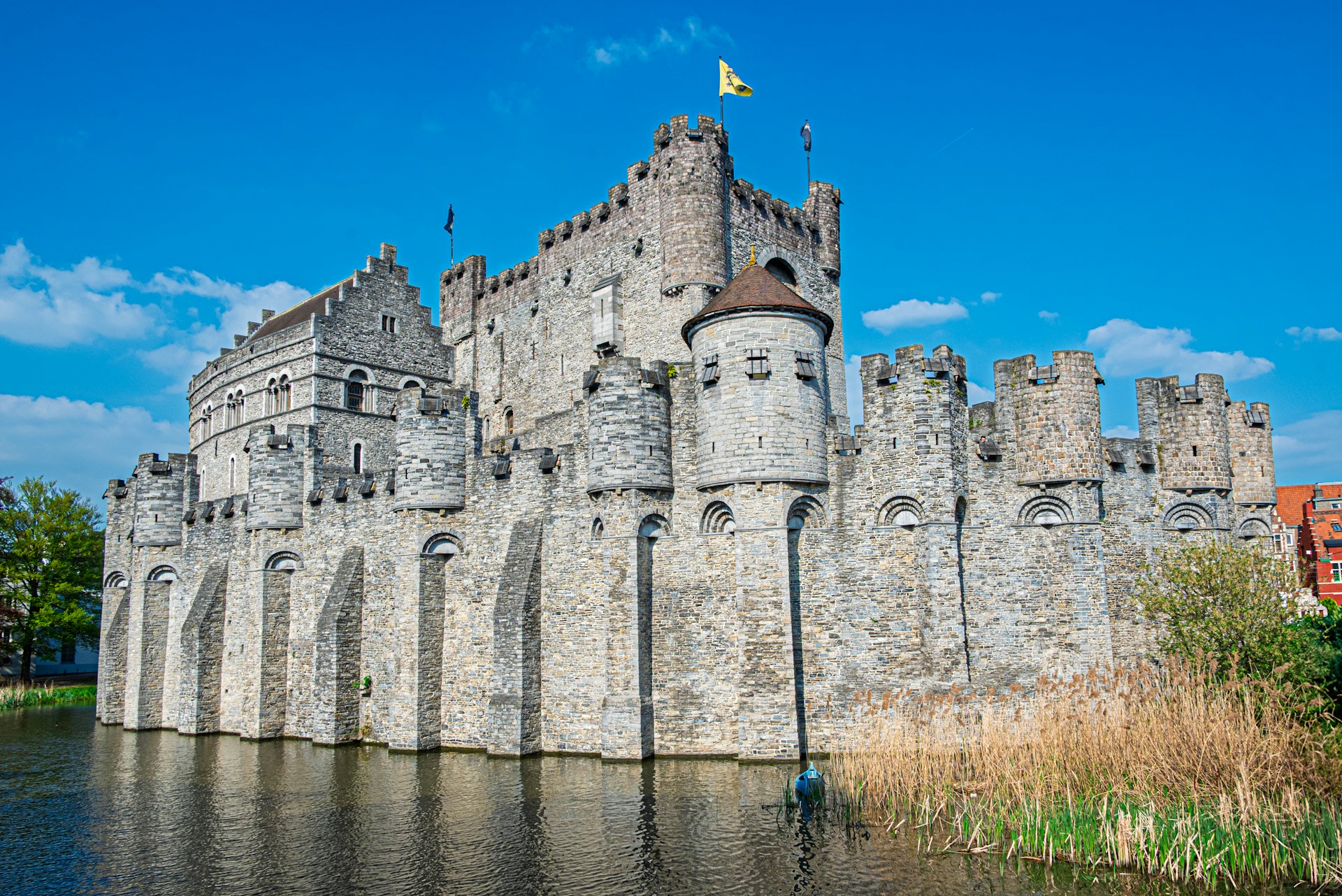
Gravensteen is the Counts of Flanders' urban castle, built in stone in 1180 by Philip of Alsace over an earlier wooden Viking-era predecessor at the heart of medieval Ghent. The full medieval layout still reads on the ground: gatehouse, ringwall, donjon, hall and chapel inside a moat that follows the line of the Lieve canal. The building has cycled through use as a comital seat, a courthouse and prison, a 19th-century cotton-spinning factory, and (since the early 20th century) the museum visitors see today.[2]
The Royal Armoury collection inside the keep is the canonical visit alongside the rampart walk and the views over Sint-Veerleplein and the Patershol. The 1949 student occupation of the castle, a celebrated prank protesting the price of beer, is part of local civic memory and now framed as part of the museum interpretation.
Practical: open daily 10:00–18:00, last admission 16:40; closed 24, 25 and 31 December and 1 January. Adult €15, EEA-resident concession €10.50, ages 13–18 €3, under 12 free. Audio guide included. From Gent-Sint-Pieters station, tram 1 to the Gravensteen stop. Plan your visit.[2]
2. Bouillon Castle
Wallonia (Luxembourg) Daily, year-round Godfrey of Bouillon's eyrie Map
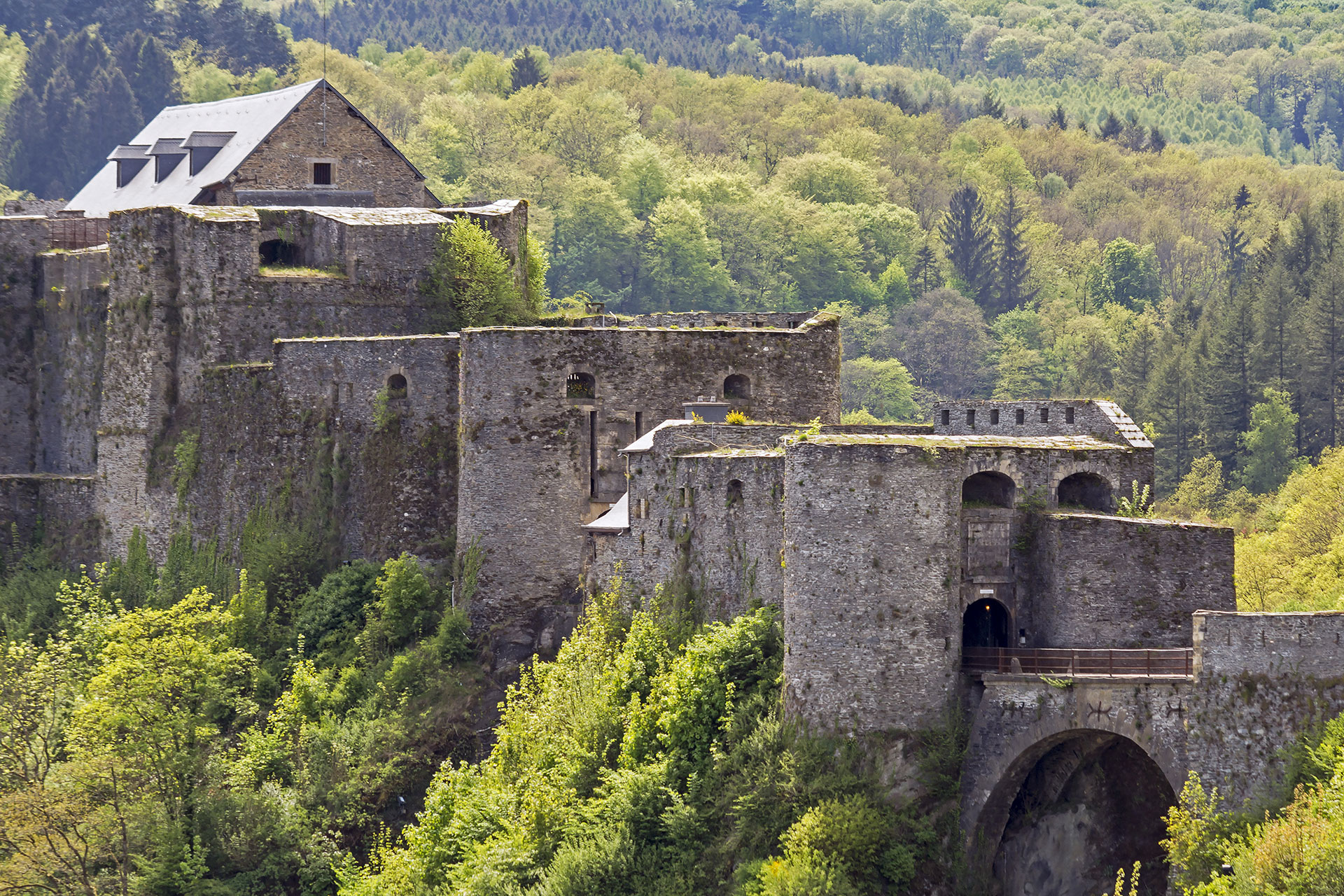
Bouillon Castle defines the Walloon hilltop tradition: a fortified spur above the meander of the Semois, fortified since at least the 9th century and built up across the 11th to 18th. Godfrey of Bouillon, the First Crusade leader who became Defender of the Holy Sepulchre in 1099, was Lord of Bouillon and used the castle as his Crusader-recruitment base before mortgaging it to Albert III, Bishop of Liège, in 1095 to fund the campaign. The Vauban-era bastions and the underground galleries on the lower terraces date to Louis XIV's military engineers.[3]
The visit climbs from the town through three sets of fortified gates to the upper courtyards, the Tour d'Autriche (the highest tower) and the falconry mews. The Esplanade Godefroid de Bouillon at the entrance carries the equestrian statue of the Crusader; the rampart walk gives the long view down the Semois toward the French border.
Practical: open year-round with seasonal hours, typically 10:00–18:00 in summer, shorter in winter; last ticket 45 minutes before close. The single-castle entry has been replaced by a Bouillon City Pass: from €12 adult low season (Jan–Mar, Nov–Dec), from €16 adult Apr–Nov, covering the castle plus the Ducal Museum, Scriptura, the Medieval Experience and (Apr–Nov) the Odyssée de Lumière night show. From Brussels, drive via the E411 (~2h); rail to Libramont, then TEC bus to Bouillon (~30 km). Plan your visit.[3]
3. Gaasbeek Castle
Flemish Brabant Closed Mondays Flemish-Brabant moated castle Map
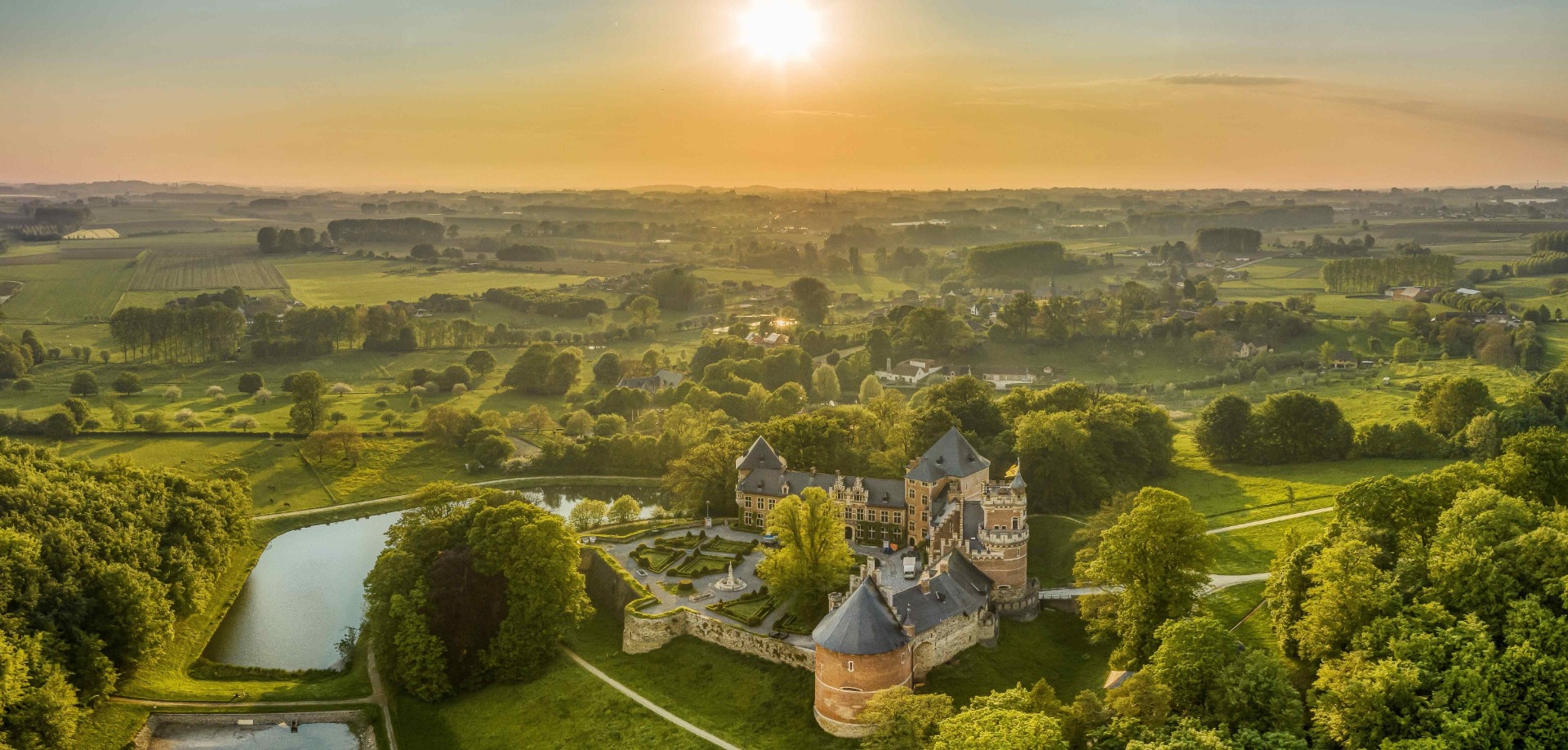
Gaasbeek combines a 13th-century medieval core with a 19th-century romantic restoration that the Flemish state museum now foregrounds. Marquise Arconati-Visconti, the last private owner, refurbished the castle in the 1880s as a deliberately theatrical Renaissance-revival interior, then bequeathed it to the Belgian state in 1921. That makes Gaasbeek one of the more interesting properties for understanding the 19th-century European castle-restoration movement, as much a monument to the Marquise's aesthetic as to the medieval fabric beneath it.[4]
The visit covers the state apartments, the armoury, the picture gallery (Rubens, Brueghel, Van Dyck) and the museum garden behind the castle: a working historical-vegetable enclosure that runs a Sculptiva sculpture exhibition from mid-May. The wider park is free year-round and runs to the line of the Pajottenland hills outside Brussels.
Practical: open Tuesday–Sunday 10:00–18:00, closed Mondays; last entry 16:00 (winter) / 17:00 (summer). Castle €12 adult, €10 concession (65+), under 18 free; Museum Garden €7 adult, under 18 free; combined castle and garden ticket €15. Park 8:00–20:00 (Apr–Sep) / 8:00–18:00 (Oct–Mar), free. From central Brussels, regional bus or car to Lennik (Pajottenland), about 25 minutes. Plan your visit.[4]
4. Vêves Castle
Wallonia (Namur) Mostly weekends Storybook turrets of the Lesse Map
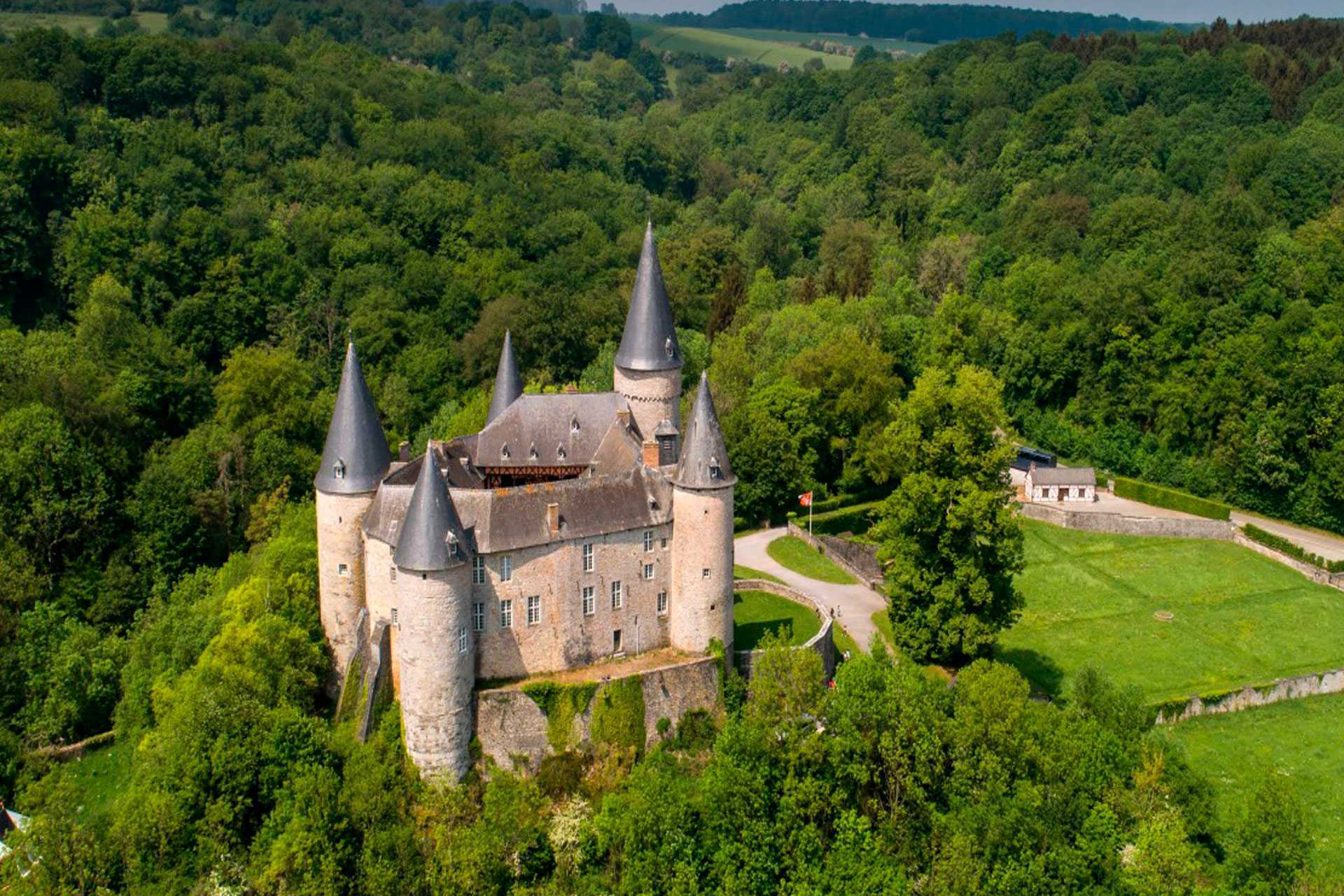
Vêves is the longest continuously family-owned castle in Belgium: the Liedekerke-Beaufort family has held it since 1410, more than six centuries on a single property.[5] The 14th-century concentric layout (a tight cluster of round towers around an inner courtyard) is among the best preserved in the country. The current building rests on earlier foundations attributed to Pippin of Herstal in the 7th century. The chestnut-shingle roofs, the half-timbered courtyard galleries and the storybook turret silhouette over the Lesse valley make it one of the most recognisable castles in Wallonia.
The interior visit covers the family rooms, the medieval kitchens, a small armoury and the ducal apartments. Vêves is listed as exceptional heritage of Wallonia. Children's tickets include a period-costume rental, which is the visit if you've come with kids.
Practical: open 30 March–1 November, weekends and public holidays 10:00–17:00; daily 6 July–23 August (last entry 16:30); Carnival break 16–27 February 2026, Wednesday–Sunday. From €10 adult, reduced rates for seniors, students and children; group discounts available. Free parking. From Brussels, drive via the E411 to Dinant, then the Lesse valley (~25 km southeast); train to Houyet, then taxi. Plan your visit.[5]
5. Lavaux-Sainte-Anne Castle
Wallonia (Namur) Wed–Sun, all year Three-tower Famenne icon Map
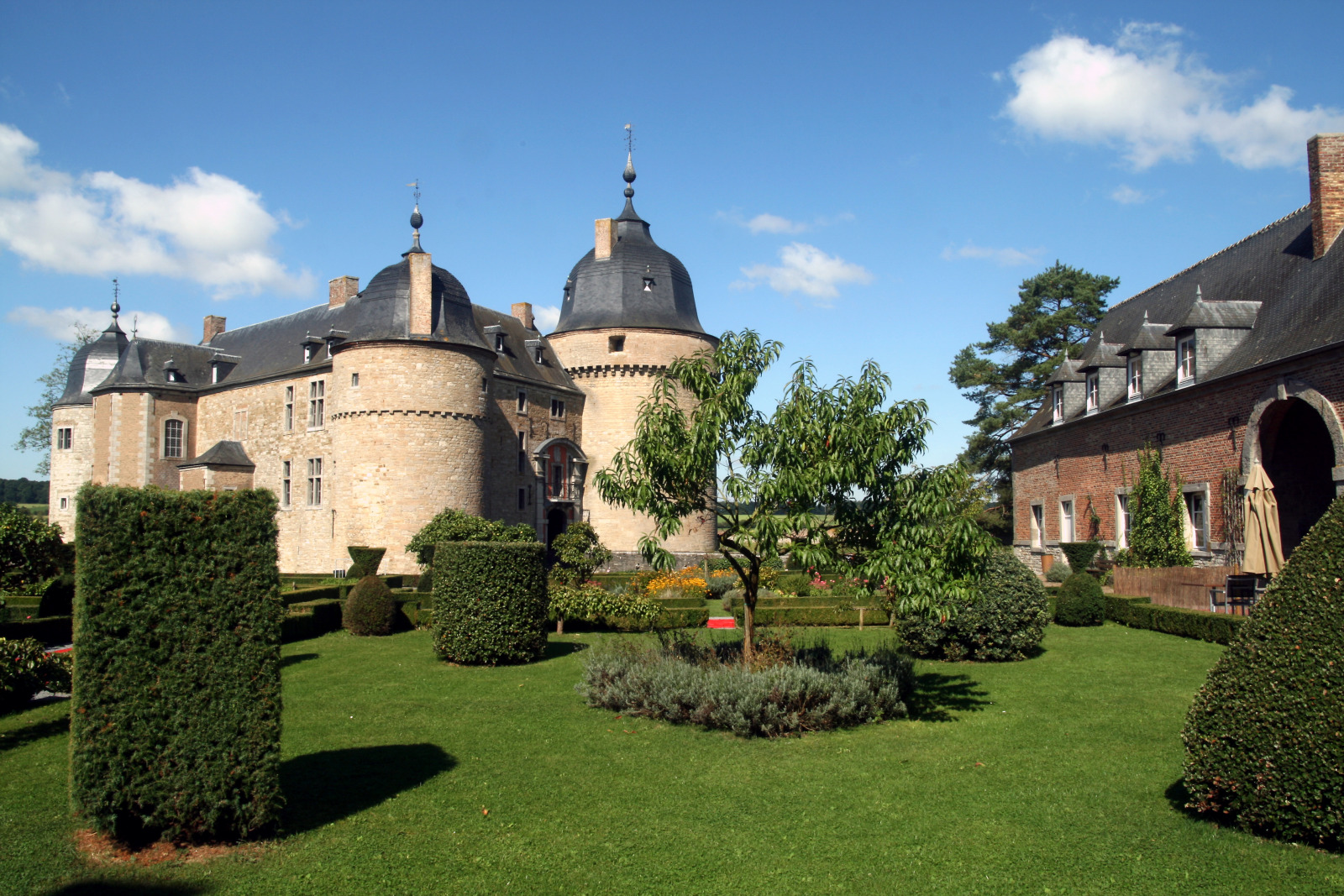
Lavaux-Sainte-Anne is a moated three-tower castle on the southern edge of the Famenne, with a 13th-century medieval core, a 16th-century Renaissance residential block added by the Berlo family, and a 17th-century classical extension. The current shape (a stone keep flanked by two cylindrical towers, all set in a wide moat fed by the Wimbe stream) is the postcard view of a Belgian water-castle in the Walloon south.[6]
The interior runs as three thematic museums under one roof: a medieval-life cabinet, a hunting and falconry collection, and a Famenne natural-environment exhibit on the wetlands and birdlife around the moat. Family programming, costume-dressing for children and a falconry display make it one of the more child-friendly day visits in the region.
Practical: open Wednesday–Sunday 10:00–18:00 year-round (last entry 16:45); seven days during Belgian school holidays. Closed Christmas Day, New Year's Day and select autumn dates. From €9.50 adult, concessions: senior 65+ and students €8.50, child 3–12 €6 (includes period-costume rental). Annual pass €35 adult, €20 child. Group 15+ rates available. By car via the N86 from Rochefort; nearest rail station Jemelle, then taxi or bus. Plan your visit.[6]
6. Modave Castle
Wallonia (Liège) Apr–Nov, Tue–Sun Louis XIV ceiling masterpiece Map
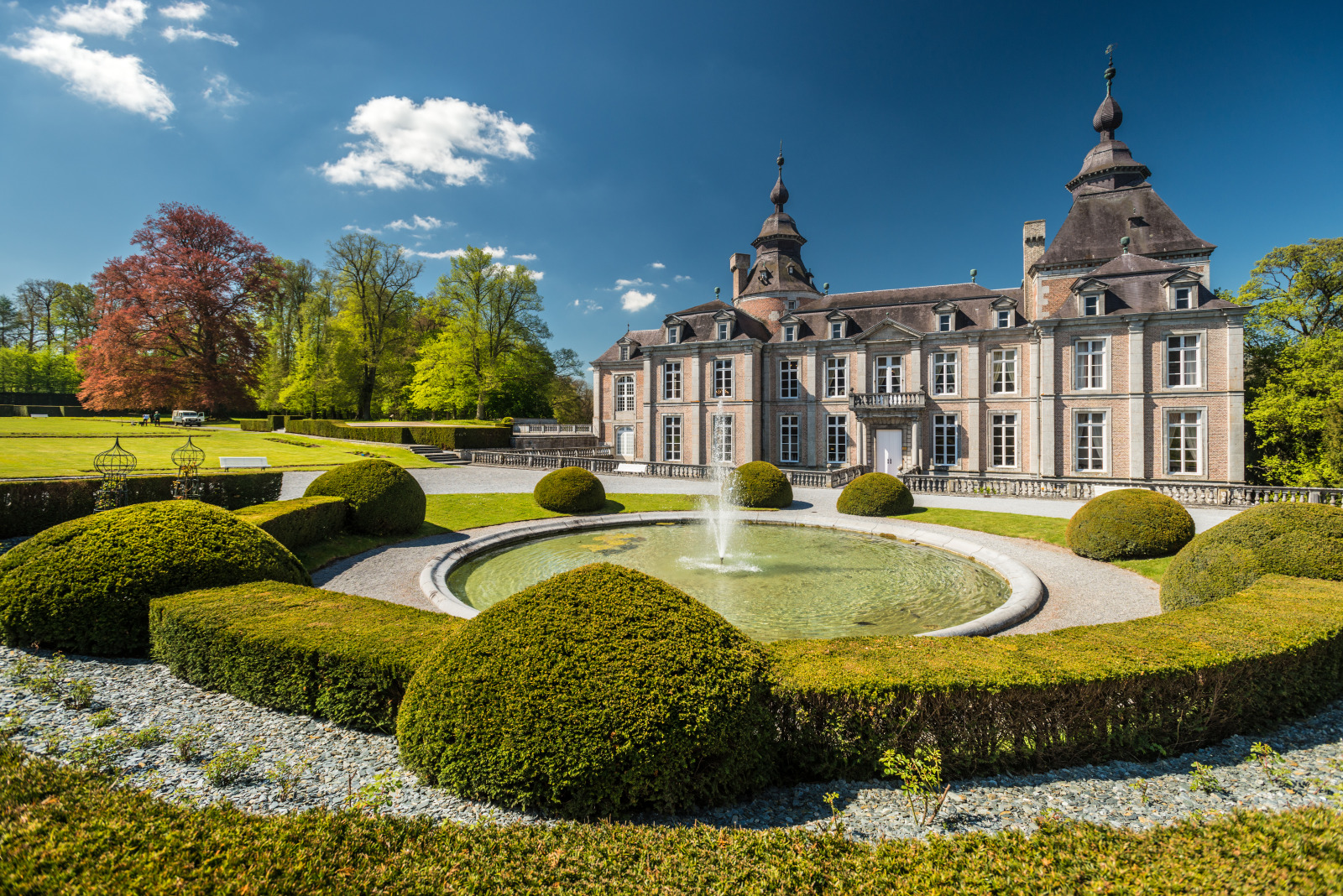
Modave is a 17th-century cliff-top château above the Hoyoux valley, built by Jean-Gaspard-Ferdinand de Marchin in the 1660s and 1670s on the foundations of an earlier medieval stronghold. The interior carries one of the strongest sequences of late-Louis XIV stucco ceilings in the Low Countries, including the much-photographed Hercules ceiling in the Salle des Gardes. Modave's other claim is hydraulic: the Rennequin Sualem water-lifting machine installed at the castle in 1668 was the prototype for Versailles's later Marly Machine, lifting water from the Hoyoux up to the cliff.[7]
The Brussels-Capital water utility, Vivaqua, owns Modave today and runs it as a heritage site. The 50-minute audioguide walks the state rooms, the kitchens, the chapel and the cliff terrace; the surrounding nature reserve runs out into the broader Hoyoux nature park.
Practical: open 1 April–15 November, Tuesday–Sunday 10:00–18:00 (last entry 16:45); daily in July–August (no Monday closure). Limited winter opening 1 November–31 December at reduced rates. From €9.50 adult, senior 60+ €8, student under 26 €5, under 12 free with parents. Audioguide included. From Liège, drive via the E42 (exit 7 toward Huy), about 40 minutes; rail to Huy, then TEC bus 126A. Plan your visit.[7]
7. Beersel Castle
Flemish Brabant Closed Mondays Moated Brabant fortress Map
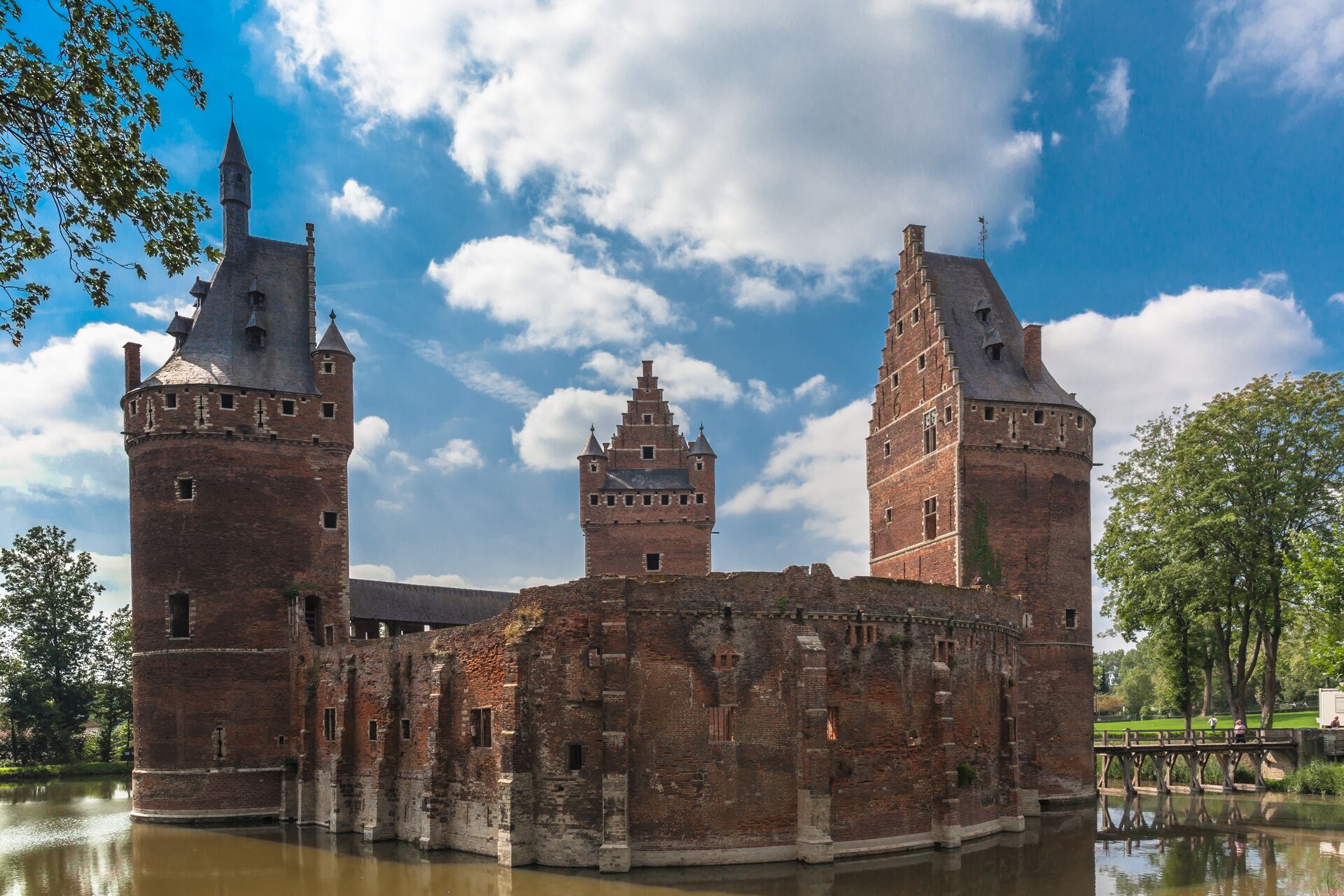
Beersel is a moated brick fortress dating to around 1300, with three round corner towers, a triangular curtain wall and a wooden hourd reconstructed on the rampart walk. It is probably the most photographed silhouette of any fortress near the Belgian capital and reads on the ground as a textbook small-format Brabant water-castle: the moat is the primary defensive feature, the towers carry machicolations, and the brick is the local clay rather than imported stone.[8]
The interior is unfurnished and pared back to the medieval shell, which is the appeal: a working medieval defensive fortress without 19th-century romantic overlay. Climb the towers, walk the curtain wall, cross the wooden bridge over the moat. A 30-minute visit suits most travellers; combine with a half-day in the Pajottenland villages south of Brussels.
Practical: open 1 March–15 November, Tuesday–Sunday 10:00–12:00 and 14:00–18:00; weekends only 16 November–end February. Closed Mondays and public holidays. From €8 adult, €6 senior (65+), €5 child (reduced rate). Group 10+ discounts available. Confirm 2026 schedule before travelling: the castle is owned by Beersel municipality and managed by a heritage association, with a less stable digital presence than the larger state museums. From central Brussels, train from Brussels-Luxembourg or Brussels-South to Beersel/Lot (~25 minutes), then a short walk. Plan your visit.[8]
At a glance
| Castle | Region | When to go | |
|---|---|---|---|
| GravensteenCounts of Flanders' fortress | Flanders (Ghent) | Daily, year-round |
| Bouillon CastleGodfrey of Bouillon's eyrie | Wallonia (Luxembourg) | Daily, year-round |
| Gaasbeek CastleFlemish-Brabant moated castle | Flemish Brabant | Closed Mondays |
| Vêves CastleStorybook turrets of the Lesse | Wallonia (Namur) | Mostly weekends |
| Lavaux-Sainte-Anne CastleThree-tower Famenne icon | Wallonia (Namur) | Wed–Sun, all year |
| Modave CastleLouis XIV ceiling masterpiece | Wallonia (Liège) | Apr–Nov, Tue–Sun |
| Beersel CastleMoated Brabant fortress | Flemish Brabant | Closed Mondays |
How many castles are in Belgium?
The Belgian regional heritage registers list around 3,000 castle-type structures across the country's 30,528 km², the densest castle stock per square kilometre in Europe.[9] Of those, roughly 400 are open to visitors as ticketed sites or by appointment; the rest are working private residences, estate buildings, ruins or working farms.
Heritage protection runs at regional rather than federal level. Onroerend Erfgoed administers the Flemish regime; the Agence Wallonne du Patrimoine (AWaP) covers Wallonia; the Direction des Monuments et Sites handles Brussels-Capital. The 400 open-to-visitors properties span the spread between the named landmarks and the smaller manor castles (kasteeltjes on a few hectares of grounds, often family-owned for several generations, sometimes opened on European Heritage Days or by appointment for groups). Around 2,600 are not standing visitor attractions, even when visible from the road.
Famous, medieval, Gothic and largest
Famous. Gravensteen and Bouillon lead by visitor numbers and international recognition: the Counts of Flanders' urban fortress at Ghent, and Godfrey of Bouillon's Crusader stronghold in the Ardennes. Gaasbeek and Vêves follow on the regional circuit, with Vêves the most photographed family-held castle in the country.
Medieval. Gravensteen (1180) and Beersel (c. 1300) are the strongest medieval-fabric survivors in Flanders. In Wallonia, Bouillon's lower bailey and the 13th-century cores of Lavaux-Sainte-Anne and Vêves anchor a medieval itinerary. Lepage's pan-European fortification survey treats the Belgian water-castle, waterburchten in Dutch, châteaux à eau in French, as one of the two regionally distinct medieval European castle adaptations, alongside the German Rhine-corridor toll castle.[1]
Gothic. Belgium's Gothic-period castle fabric reads strongest on the urban fortifications and ecclesiastical complexes adjacent to the castles: the Counts' chapel inside Gravensteen, and the late-Gothic remodelling at Gaasbeek before Arconati-Visconti's 19th-century Renaissance overlay. For pure Gothic fabric, the country's churches and town halls outpace the castle stock.
Largest. Bouillon, on its rocky spur above the Semois, runs the largest single fortified footprint open to the public. The Modave estate carries the largest contiguous parkland of the seven listed here, with the 17th-century château set inside a working nature reserve.
If you're looking to buy
Belgium's private-château market is small but tightly priced. Castle Collector's Castle Price Index (March 2026) puts the Belgian median at €1,795,000 for around 880 m² (€2,200 per square metre), modestly below the European median of €2,250/m².[10] The structural arbitrage is regional tax: Wallonia charges 3% registration tax for primary-residence buyers against 12.5% in Flanders and Brussels-Capital, a swing of roughly €190,000 on a €2 million purchase. That gap concentrates most foreign-buyer transactions for residential ownership on the Walloon side. Foreign buyers face no purchase restrictions on heritage property; closing typically runs three to four months. The castles for sale in Belgium page tracks current listings against this benchmark; for the operational side (heritage consent, restoration scoping, foreign-buyer mechanics) see our guide to buying a castle.
Sources
1. Lepage, J.-D. G. G. Castles and Fortified Cities of Medieval Europe: An Illustrated History. McFarland, 2002; Low Countries chapter, pp. 180–220.
2. Gravensteen / Historische Huizen Gent, City of Ghent operator.
3. Château de Bouillon, official site.
4. Kasteel van Gaasbeek, official Flemish Government / Erfgoed site.
5. Château de Vêves, official site.
6. Château de Lavaux-Sainte-Anne, official site.
7. Château de Modave, official site (Vivaqua).
8. Kasteel van Beersel, municipal heritage site.
9. Belgian regional heritage registers: Onroerend Erfgoed (Flanders),
10. Castle Collector, Castle Price Index, March 2026 edition.