
Castles in Germany: 12 burgs and schlösser to visit, from Neuschwanstein to Eltz
Neuschwanstein inspired Disney's Sleeping Beauty Castle. Burg Eltz has been in the same family for 33 generations. The 12 storybook German castles to know.
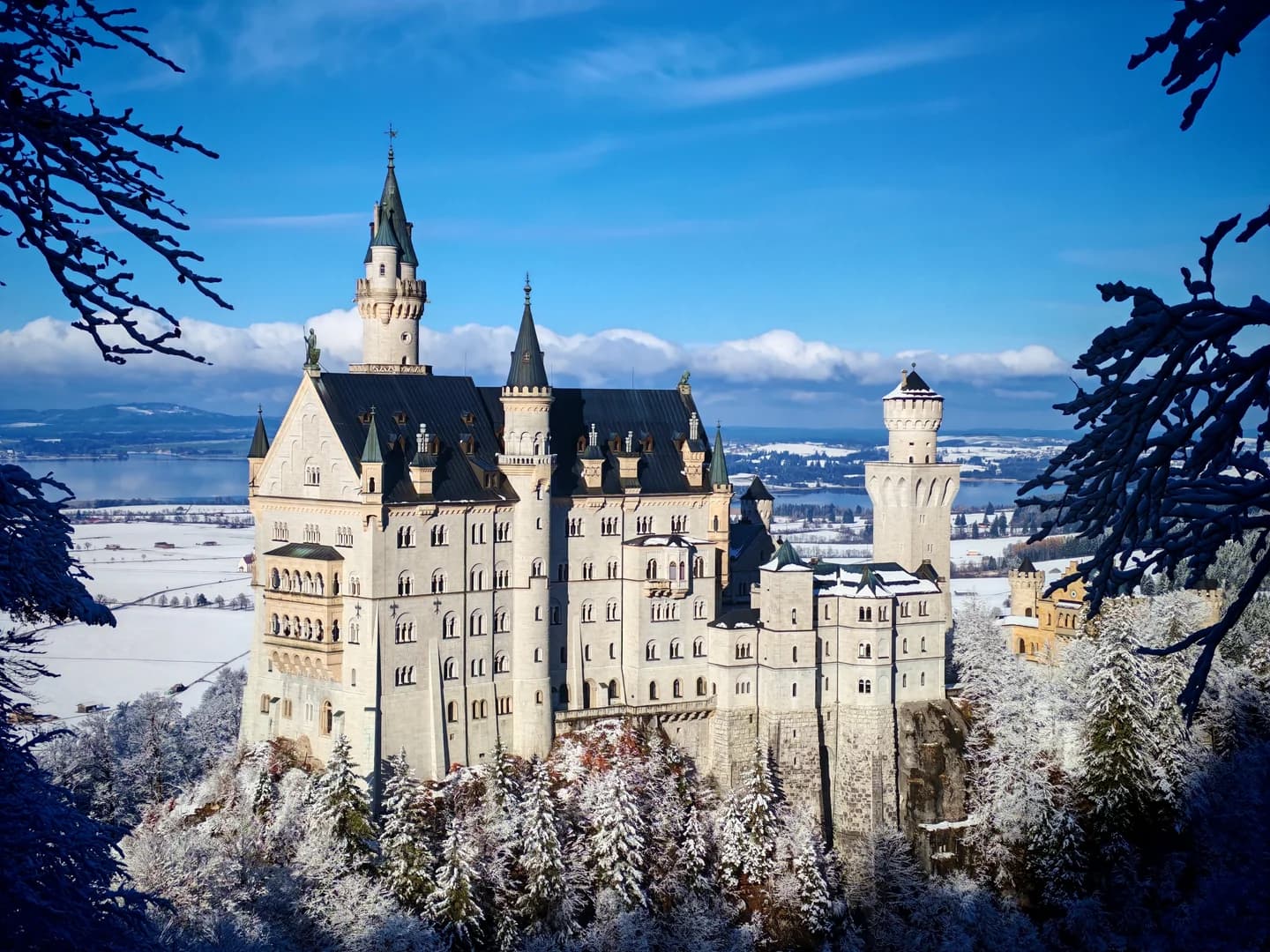
Bavarian Romantic-era fantasies, Rhine medieval Burgen, and Hohenzollern royal palaces. Twelve castles that carry a serious German itinerary, with the practical detail to plan around 2026 hours and renovation closures.
Germany distinguishes its castles by type before scale. A Burg is a medieval military fortress with thick walls and a Bergfried (donjon), often perched on a hilltop or above a river bend. A Schloss is a post-medieval palatial residence, ornamental rather than defensive, generally 16th to 19th century. The Rhine corridor between Bingen and Koblenz, the densest medieval river-fortification line in Europe, holds the Burgen.[1] Bavaria, Berlin-Brandenburg and Baden-Württemberg hold the Schlösser.
The twelve below cover both categories, plus the 19th-century Romantic-era reconstructions (Burg Stolzenfels, Burg Hohenzollern, Schloss Drachenburg) that produced the silhouette most travellers picture when they think of a German castle. Several sit inside UNESCO inscriptions: Wartburg (1999), the Middle Rhine Valley (2002), Sanssouci's Potsdam ensemble (1990), and the Royal Bavarian Castles around Neuschwanstein and Linderhof (added in 2025).
Each entry covers what to see, when to go, what it costs, and how to get there.
1. Schloss Neuschwanstein
Bavaria Tour by reservation Fairy-tale castle Map
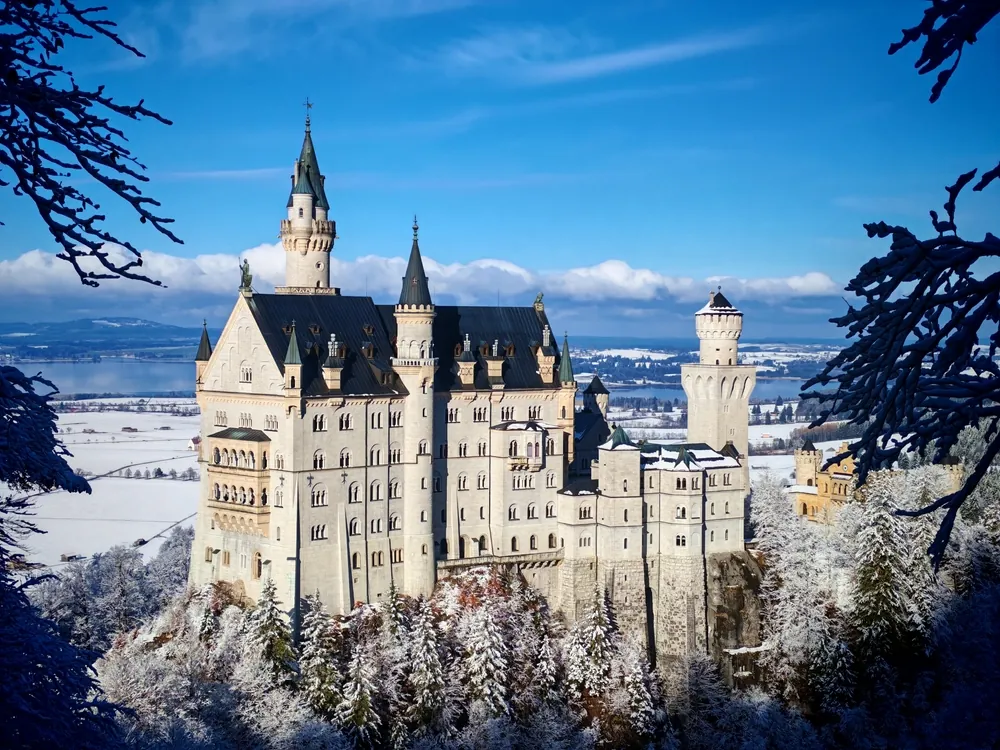
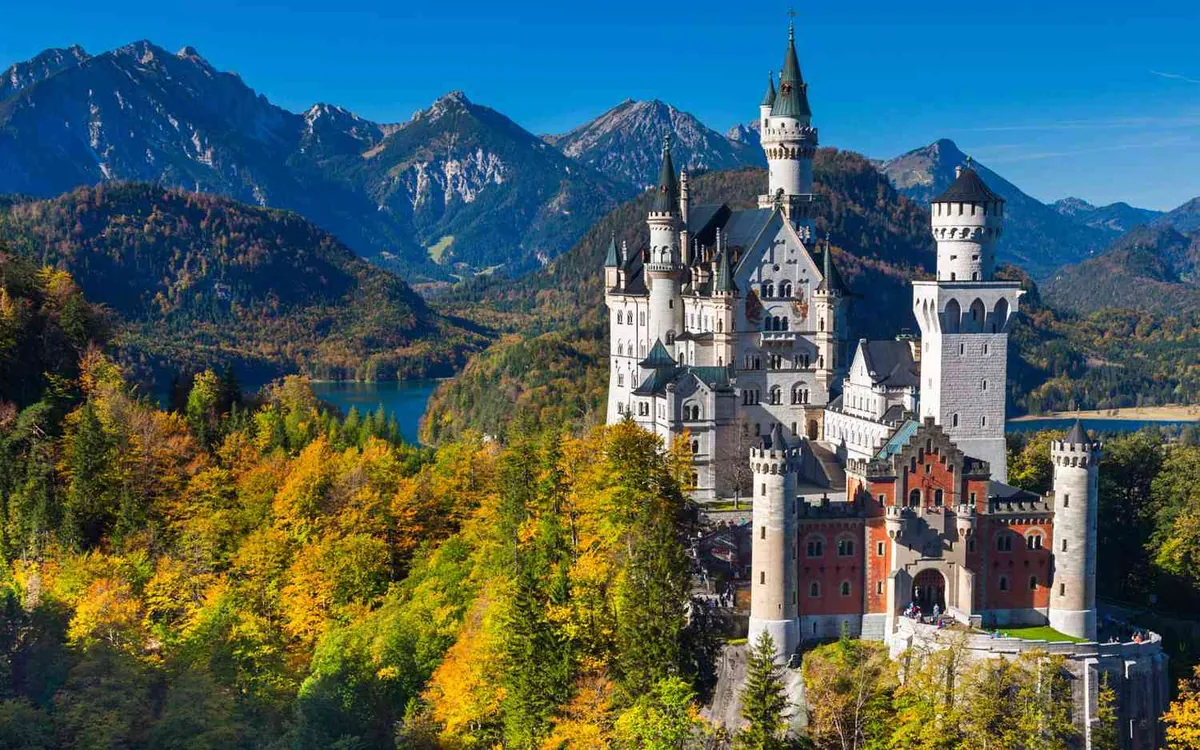
Neuschwanstein is Ludwig II of Bavaria's hilltop Romantic-era fantasy above the village of Hohenschwangau. Construction ran from 1869 until Ludwig's death in 1886, by which point only a fraction of the planned interiors had been finished. The castle never functioned as a meaningful residence and opened to the public almost immediately after Ludwig's death. The state rooms reopened in 2024 after a multi-year restoration; the Throne Hall and Venus Grotto are accessible again on the standard tour route.[2]
Visit by guided tour only, with timed admission and limited daily slots: pre-booking through hohenschwangau.de is essential. The walk up from Hohenschwangau village is around 30 to 40 minutes; a shuttle bus and horse-drawn carriages run uphill in season. Pair Neuschwanstein with neighbouring Schloss Hohenschwangau, Ludwig's childhood home, on the same trip.
Practical: open daily, year-round (closed 1 Jan, 24/25/31 Dec). Apr 28 to Oct 15: 09:00 to 18:00; Oct 16 to Mar 27: 10:00 to 16:00. Adult €21; concession €20; free under 18 and for students with ID; online booking fee €2.50 per ticket. From Munich, regional rail to Füssen (about 2 hours), then bus 73/78 to Hohenschwangau. Plan your visit.[2]
2. Burg Eltz
Rhineland-Palatinate Daily, late Mar to Nov Untouched Mosel fairytale Map
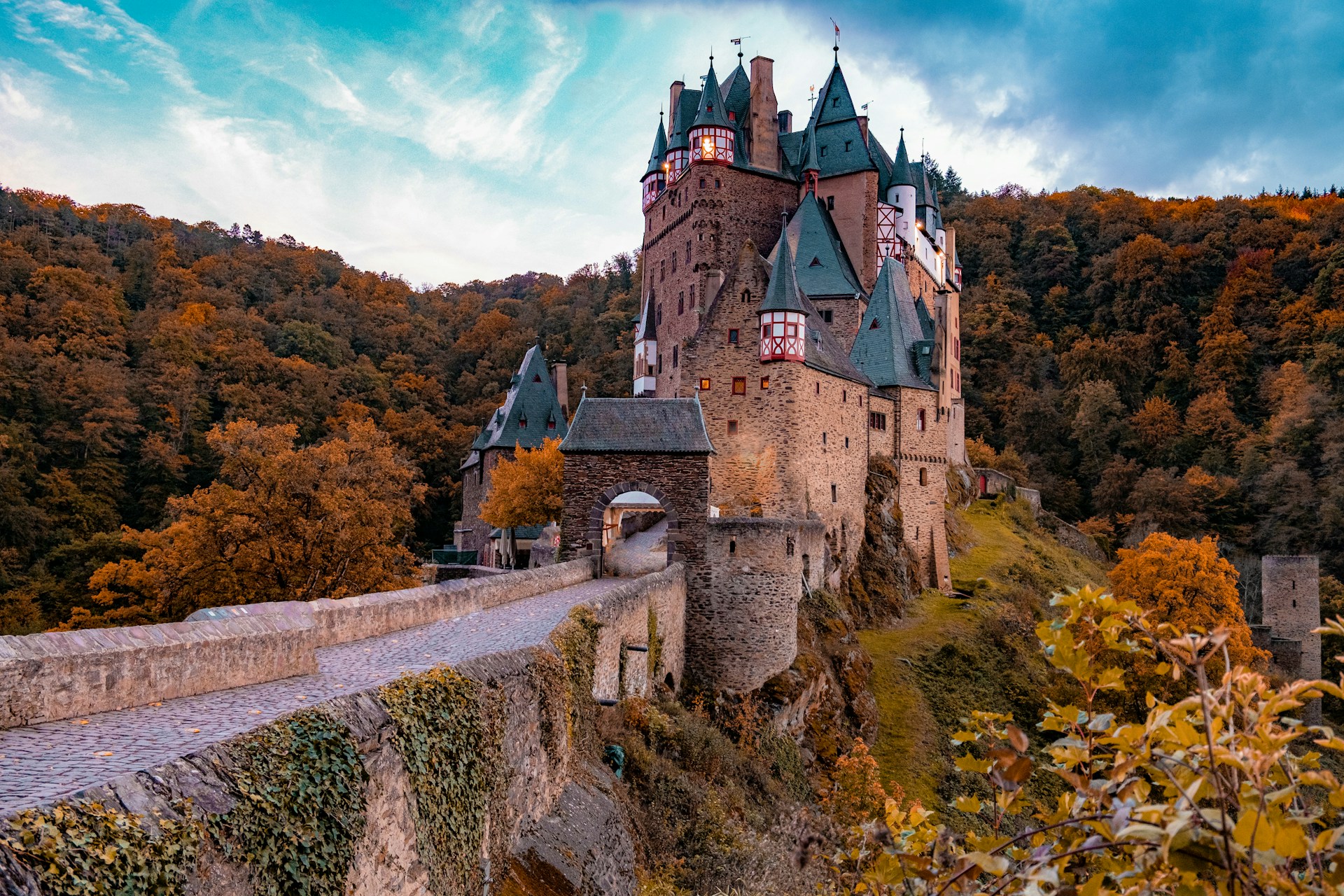
Hidden in a wooded side-valley above the Mosel near Wierschem, Burg Eltz is the rare Rhine-region castle that was never destroyed and never modernised out of its medieval form. The Eltz family has held the building in continuous succession since the 12th century. The current Graf zu Eltz lives in the castle and treats it as a working home; a recent DW Travel feature documented his day-to-day occupation of the building.[3] The visit is by guided tour through the family's Rübenach and Rodendorf wings, with the Treasury accessible on the standard ticket.
The approach is part of the experience. The castle is invisible from the road; you park about a kilometre away and walk down through the forest until the keep and turreted wings appear in the gorge below. This is the silhouette that anchors the German Romantic-era image of a medieval castle untouched by time.
Practical: open daily 29 Mar to 1 Nov 2026, 09:30 to 17:00 (last admission); closed in winter. Adult €14; child €7; family pack (2 adults plus 2 children) €34. From the Mosel rail line, train to Hatzenport then bus 365 to the castle car park; €4 parking plus €2 shuttle from the lower car park. Plan your visit.[4]
3. Burg Hohenzollern
Baden-Württemberg 1850 to 1867 (third version) Open daily, peak season Ancestral seat of Prussian kings Map
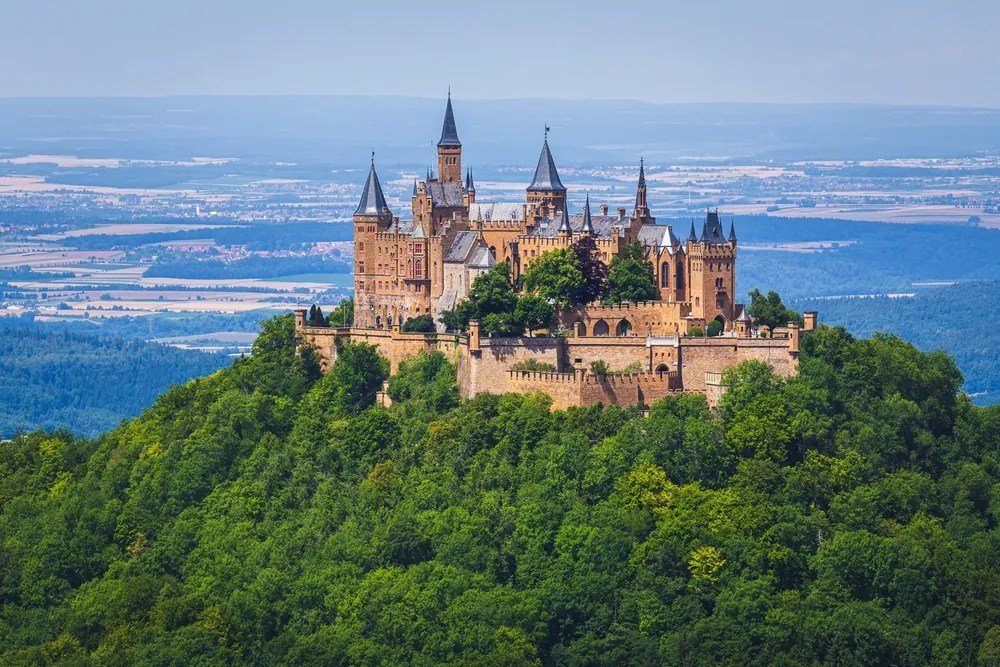
The current Burg Hohenzollern is the third castle on the site above Hechingen. The medieval original, founded in the 11th century, was destroyed in 1423; a 16th-century reconstruction fell into ruin; the present neo-Gothic building was raised between 1850 and 1867 by the architect Friedrich August Stüler for King Frederick William IV of Prussia, in the same Romantic-historicist register that produced Burg Stolzenfels and the Rhine reconstructions a generation earlier.[1] The Hohenzollern family still owns the building.
The Crown of Wilhelm II, Frederick the Great's flute, and the family treasury are the canonical interior visit. The hilltop position above the Swabian Alb and the tiered fortification rings reading downward from the keep do most of the visual work outside.
Practical: open daily, with an extended peak season 28 Mar to 1 Nov 2026, 10:00 to 18:30 (showrooms 10:00 to 18:00); reduced winter hours. Online prices: adult €26; concession (students, pupils 12+, disabled) €16; child 4 to 11 €6; child 0 to 3 €1. Cash desk prices are €3 higher across the board. The Flex Ticket (valid through Oct 2026) is €55 adult / €35 under-17 and includes parking and the shuttle bus. From Stuttgart, train to Hechingen (about 50 km south), then car park plus included shuttle. Plan your visit.[5]
4. Heidelberger Schloss
Baden-Württemberg Open daily, year-round Synonymous with Romanticism Map
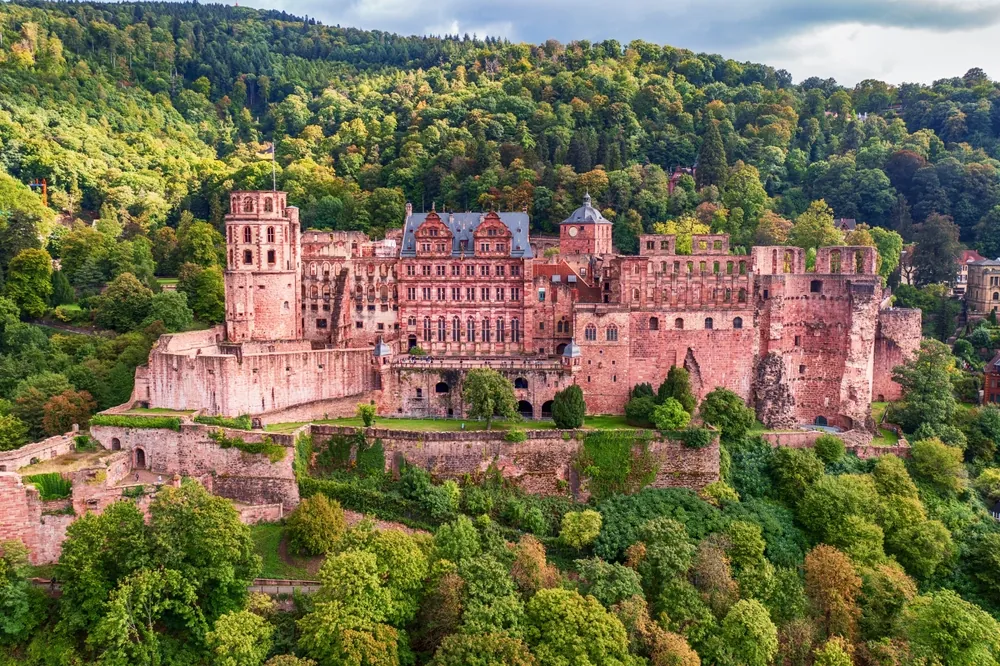
The red-sandstone ruin above the city of Heidelberg is the most visited castle in Baden-Württemberg and one of the canonical sites of European Romanticism. The Electors Palatine built up the complex from the 13th century into a Renaissance palace; French troops under Louis XIV destroyed it in 1693 during the War of the Grand Alliance, and the restoration debate of the 19th century established the modern conservation principle that ruins should be conserved rather than reconstructed. The Friedrichsbau and Ottheinrichsbau facades, the Heidelberg Tun (a wine vat holding around 220,000 litres) and the German Pharmacy Museum sit inside the surviving fabric.
The Bergbahn funicular from the Kornmarkt up to the castle is itself part of the visit; the lower section dates from 1890. The castle gardens and terraces, free to wander, give the long view downstream over the old town and the Neckar.
Practical: castle grounds open daily 08:00 to 18:00; Pharmacy Museum 10:00 to 17:00; funicular runs roughly 09:00 to 17:30. Combined ticket (funicular round-trip plus courtyard, the Tun and the Pharmacy Museum) adult €9.50; child 6 to 14 €5.30; under 6 free. From Heidelberg Hbf, bus or short walk to the Kornmarkt funicular base. Operator site.[6]
5. Wartburg
Thuringia 1067 onwards Open daily, year-round UNESCO Luther refuge Map
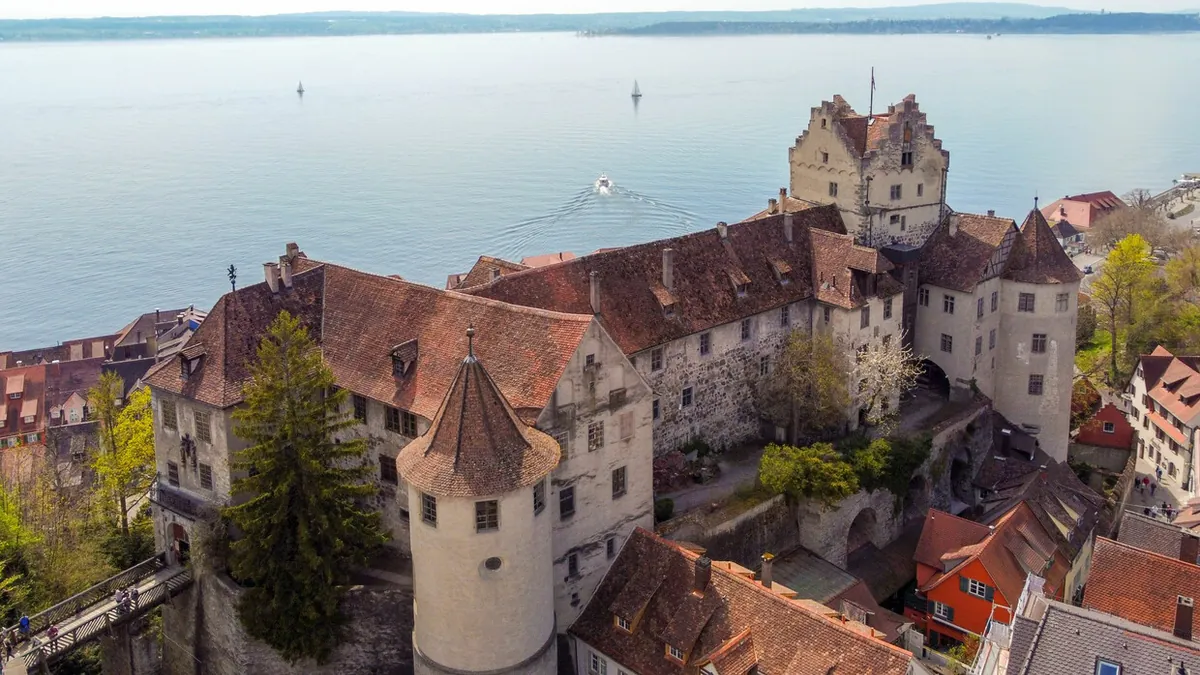
The Wartburg above Eisenach was founded by Ludwig der Springer in 1067 and inscribed by UNESCO in 1999 for its central place in German cultural history. Martin Luther sheltered here as Junker Jörg between 1521 and 1522 after the Diet of Worms, translating the New Testament into German in a single small study still visible on the visitor route. The castle also served as a model for the Romantic-era German imagination of the medieval past, and the 1817 Wartburgfest is a foundational event in modern German political history.
The Romanesque palas, the Luther Room, the Elisabeth Chapel and the Festsaal where the 1817 student fraternities assembled are the canonical interior tour. The South Tower (€1 surcharge) gives the long view across the Thuringian Forest.
Practical: open daily, year-round; approximate hours 08:30 to 17:00 (Apr to Oct), 09:00 to 15:30 (Nov to Mar), with guided tours through to about 16:00 in summer. Adult €13; concession (disability/social/student) €9; child 7 to 18 €5; under 7 free; family (2 adults plus up to 5 children) €31. Photo permit €2; South Tower €1; shuttle bus €3. From Eisenach Hbf, bus 10 or shuttle, or walk up the Wartburg path (about 30 minutes). Plan your visit.[7]
6. Sanssouci
Potsdam (Brandenburg) Closed Mondays Frederick the Great's vineyard retreat Map
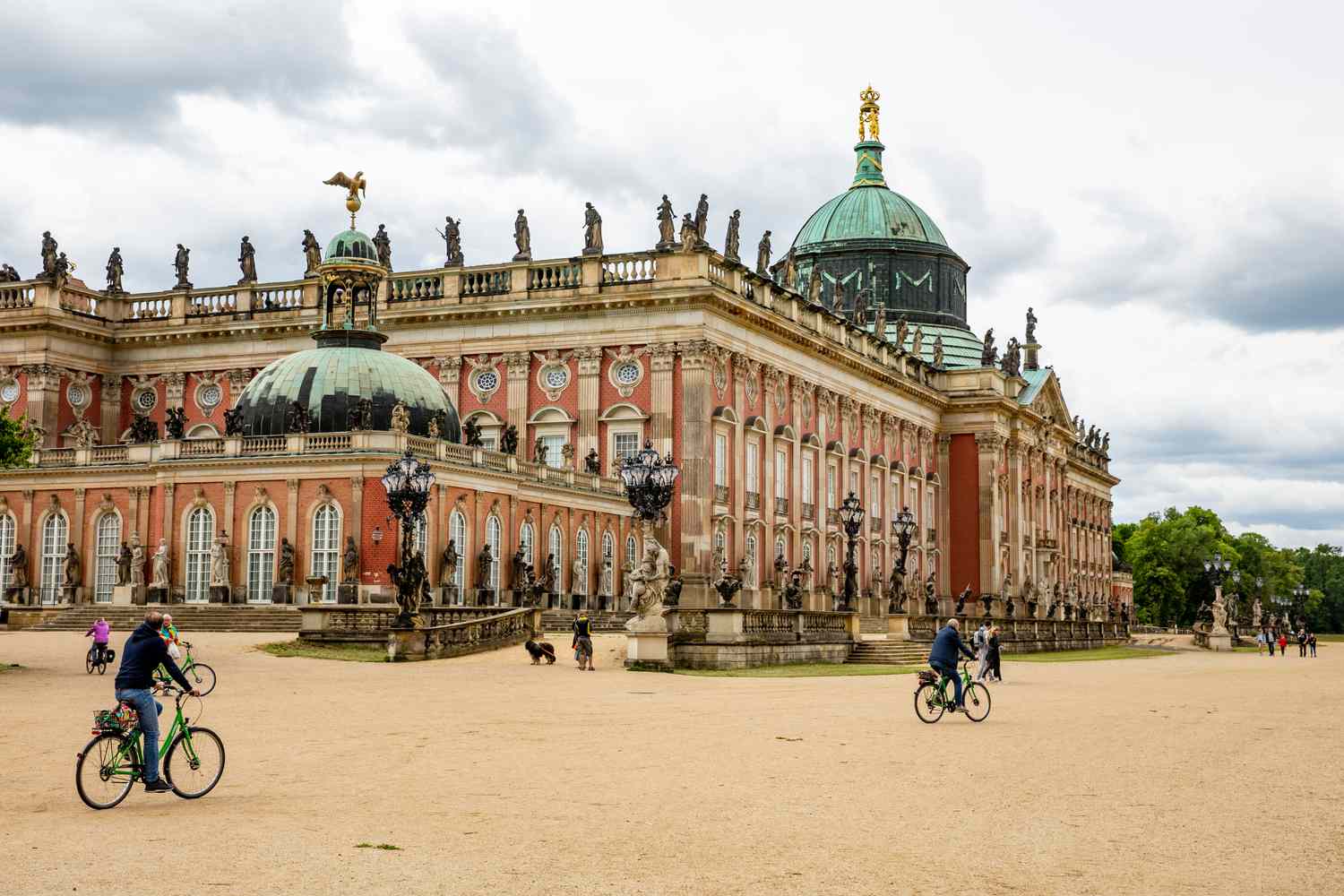
Frederick the Great's summer palace, built between 1745 and 1747 on a south-facing terraced vineyard above Potsdam, is the architectural anchor of the Berlin-Brandenburg royal palace network. The Stiftung Preußische Schlösser und Gärten (SPSG), the federal-and-state foundation that operates Sanssouci, recorded more than 1.4 million visits across its full network in 2024, up roughly 10% on 2023.[8] The single-storey Rococo palace (Knobelsdorff's "vineyard Schloss") is small for a royal residence; the visit is built around the terraced gardens, the Bildergalerie, the Neue Kammern and the Chinese House dispersed across the park.
The wider Sanssouci Park is free to enter and accessible on foot from Potsdam Hauptbahnhof. The Neues Palais at the western end of the park, built 1763 to 1769, is the larger ceremonial building and best paired with Sanssouci on a full day.
Practical: open Tuesday to Sunday 10:00 to 17:30 (Apr to Oct), 10:00 to 16:30 typical (Nov to Mar); closed Mondays. Closed 02 September 2026 for an internal works meeting. Sanssouci Palace single ticket adult €14, concession €10; the sanssouci+ combined ticket (all SPSG palaces in Potsdam, valid 1 day) is adult €22, concession €17; family up to 2 adults plus 4 children €49. Timed-slot admission, no strollers in palace rooms. From Berlin, S-Bahn S7 to Potsdam Hbf then bus 695 or X15 to "Schloss Sanssouci". Plan your visit.[9]
7. Marksburg
Rhineland-Palatinate Tours only, daily Rhine's only unconquered castle Map
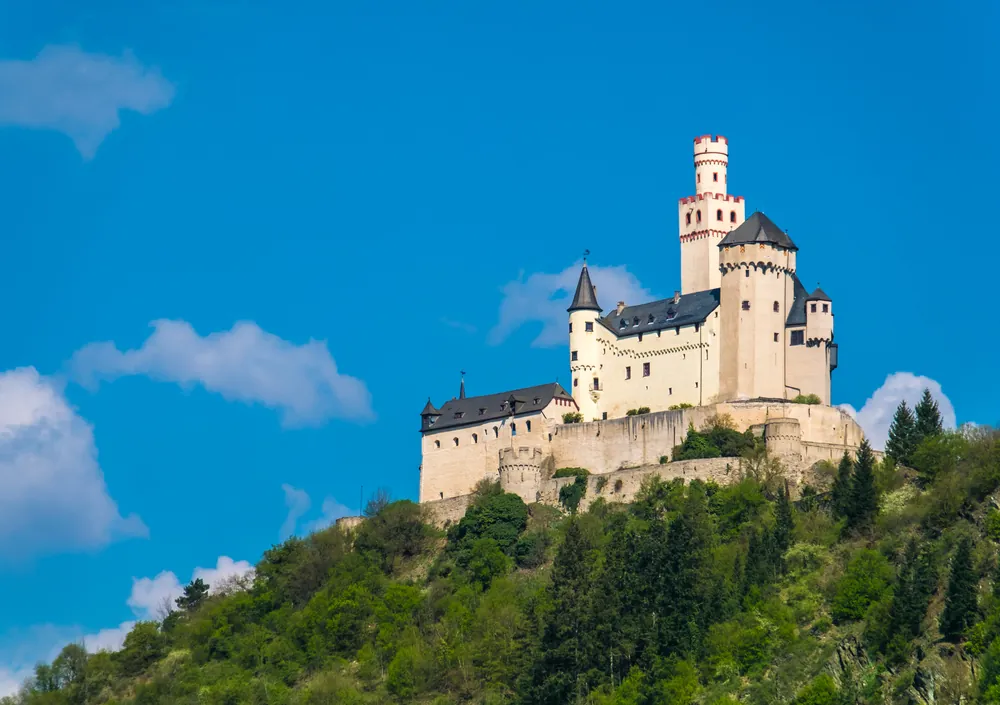
Marksburg sits 150 metres above the Rhine on the east bank near Braubach. Robert Taylor's Castles of the Rhine records it as "the oldest Middle Rhine castle which approximates the look of a medieval stronghold," and the only Rhine castle never destroyed in any of the Rhine wars.[1] The outer defences, including the moat and drawbridge, date from the 14th century. The Deutsche Burgenvereinigung (German Castle Association) operates the building as the standard-setting interpretation site for medieval castle architecture in Germany.
Interior access is by guided tour only, roughly every 30 minutes. The Knights' Hall, Gothic chapel, kitchen, wine cellar and battery emplacement are the visit; English-language tours run in the summer season. The Middle Rhine Valley, including Marksburg, was inscribed as a UNESCO World Heritage Site in 2002.
Practical: open daily; tours every roughly 30 minutes. 3 Apr to 31 Oct: 10:00 to 17:00; 1 Feb to 2 Apr: 11:00 to 16:00. Closed 24/25/31 Dec and 1 Jan. Adult €11; child (school age) €8; under 6 free; family rate €24. From Koblenz, regional train to Braubach (about 15 km), then a 20-minute uphill walk; KD Rhine cruise from Koblenz is the slower scenic alternative. Plan your visit.[10]
8. Schloss Herrenchiemsee
Bavaria 1878 to 1886 (incomplete) Daily; tour-only New Palace Ludwig II's Versailles Map
Ludwig II of Bavaria's third great Romantic-era project, after Neuschwanstein and Linderhof, was a deliberate attempt to recreate Versailles on a Bavarian island in the Chiemsee. Construction began in 1878 and stopped at Ludwig's death in 1886; only the central section of the planned palace, including the Hall of Mirrors and the State Bedroom, was completed. The unfinished interiors, deliberately left as building-site backdrops, are part of the visit.
The Augustinian Monastery at the southern end of the island, where the 1948 constitutional convention drafted the West German Grundgesetz, and the King Ludwig II Museum complete the day. The boat from Prien am Chiemsee to Herreninsel, then the 15-minute walk through woodland to the palace, set the experience.
Practical: open daily year-round (closed 1 Jan, Shrove Tuesday, 24/25/31 Dec); New Palace by guided tour only. Apr to 24 Oct: 09:00 to 18:00; 25 Oct to Mar: 10:00 to 16:45. Combination Ticket (New Palace tour, King Ludwig II Museum, Augustinian Monastery): adult €11, concession €10 in low season; €14/€13 during the special exhibition window 18 May to 18 Oct 2026; under 18 free. From Munich, train to Prien am Chiemsee, then 15 to 20-minute boat to Herreninsel. Plan your visit.[11]
9. Schloss Linderhof
Bavaria Daily, year-round Ludwig II's villa Map
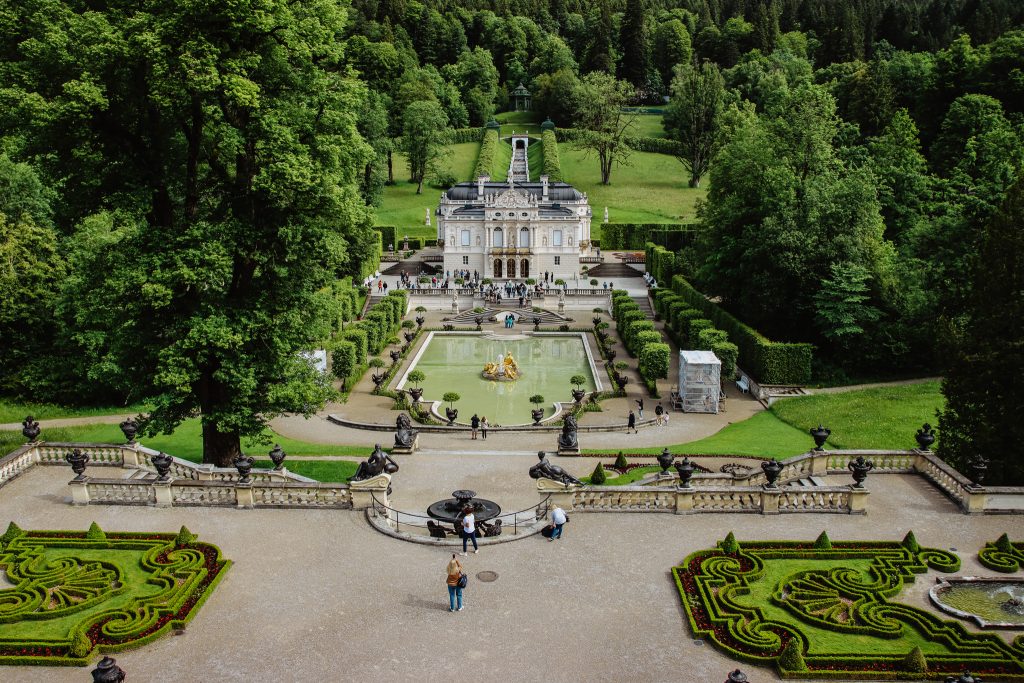
The smallest and only completed of Ludwig II's three Romantic-era palaces. Linderhof sits in a Graswang valley clearing, framed by the Ammergau Alps, and is the closest Bavarian Schloss to a working royal residence: Ludwig spent significant time here. Castle visits are guided tour only, around 25 minutes, with departures every 5 to 10 minutes in season. The Hall of Mirrors, the dining room with its sinking Tischlein-deck-dich table that descended through the floor, and the Royal Bedroom are the standard route.
The park buildings are the second half of the visit. The Venus Grotto, an artificial cave with stalactites, dressing-room boats and a wave machine, is open April to October only; the Moroccan Kiosk and Hunding's Hut are scattered through the gardens. Linderhof was added to the UNESCO Royal Bavarian Castles inscription in 2025.
Practical: open daily 09:00 to 18:00 (15 Apr to 15 Oct, ticket sales 08:30 to 17:30); 10:00 to 16:30 (16 Oct to 14 Apr, ticket sales 09:30 to 16:00). Closed 1 Jan, Shrove Tuesday, 24/25/31 Dec. Adult €11, concession €10; combination ticket (Castle plus Venus Grotto, summer only) €18 / €16; under 18 free. Königshäuschen €2 / €1. From Munich, train to Murnau, change for Oberammergau (about 2 hours), then bus 9622 to Linderhof (25 to 30 minutes). Plan your visit.[12]
10. Schloss Drachenburg
North Rhine-Westphalia (Königswinter) Daily, year-round Rhine's Disney-style castle Map
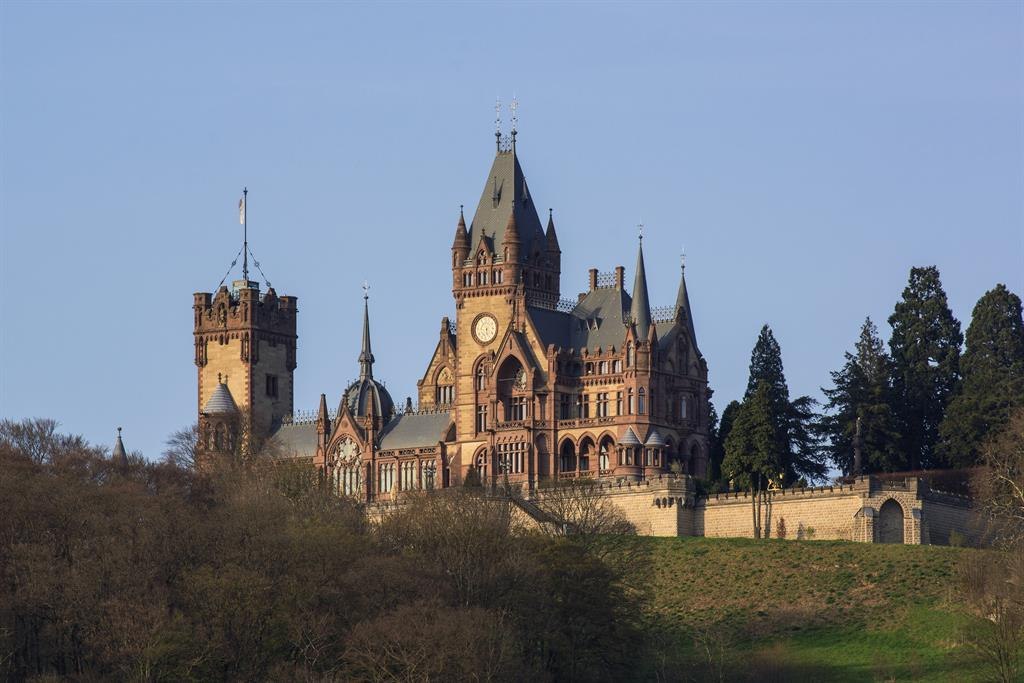
Schloss Drachenburg above Königswinter is the canonical example of what Robert Taylor classifies as a Traumschloss, an entirely new neo-Gothic pseudo-castle rather than a defensive site. It was built between 1879 and 1883 for the stockbroker Stephan Sarter (1830 to 1902), a self-made bourgeois financier who never moved in.[1] The building reads as a 19th-century interpretation of what a medieval castle should have looked like, with crenellated towers, stained glass and Romantic-era murals throughout.
The Drachenfels cog railway from Königswinter is the standard approach. The terraces above the Rhine, the staircase hall and the formal dining hall are the canonical visit. The grounds are now owned by the NRW-Stiftung, which restored the building to museum standard after late-20th-century neglect.
Practical: open daily, year-round. Hours vary: Mar to Jun and Sep 11:00 to 18:00; Jul to Aug 11:00 to 19:00; Jan to Feb 12:00 to 17:00. Adult €7; family card (2 adults plus 2 children aged 6 to 17) €25; special-event pricing differs (e.g. Schlossleuchten). From Königswinter S-Bahn station, the Drachenfelsbahn cog railway runs up the hill. Plan your visit.[13]
11. Burg zu Burghausen
Bavaria Daily, year-round Longest castle in the world Map
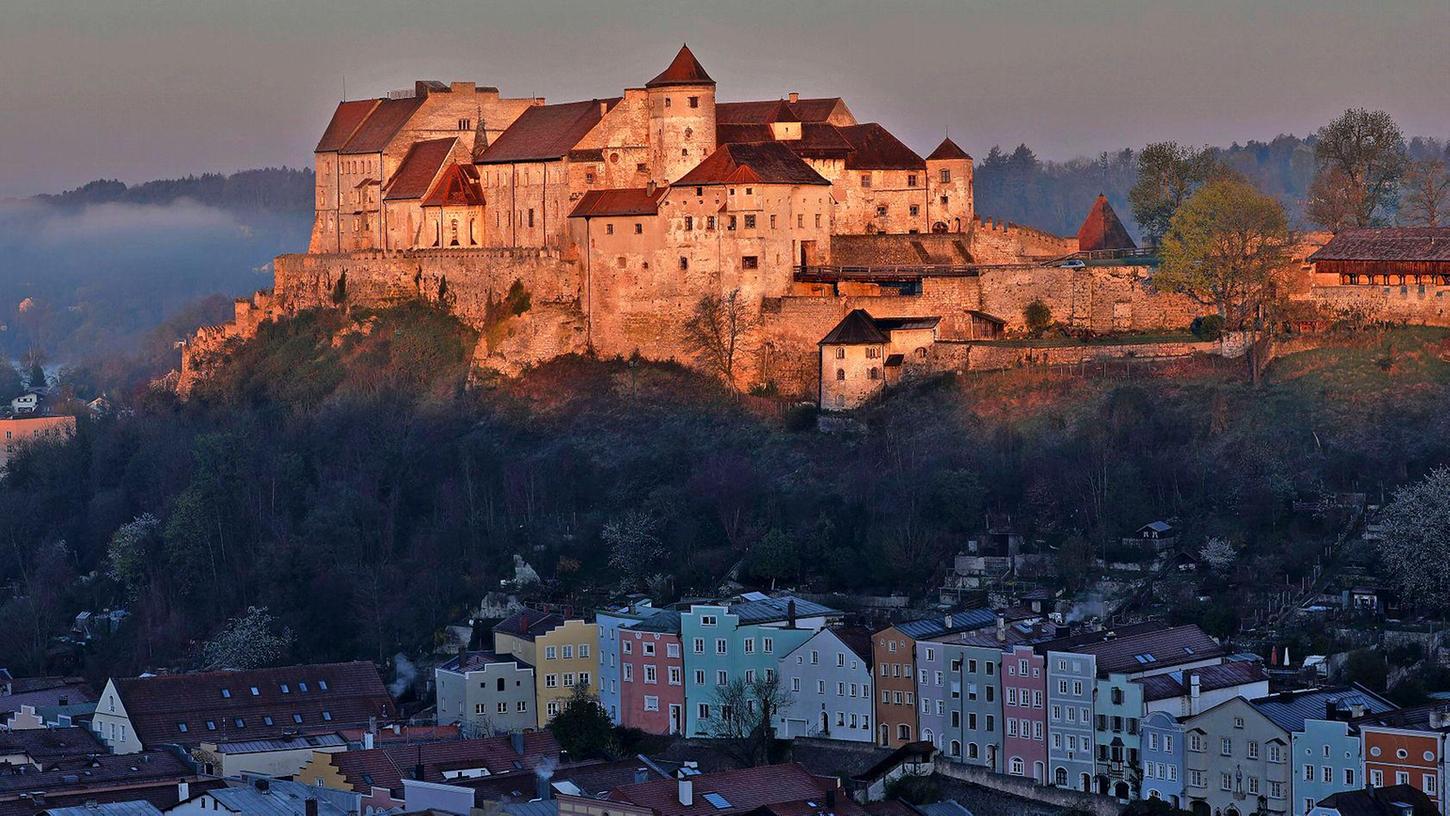
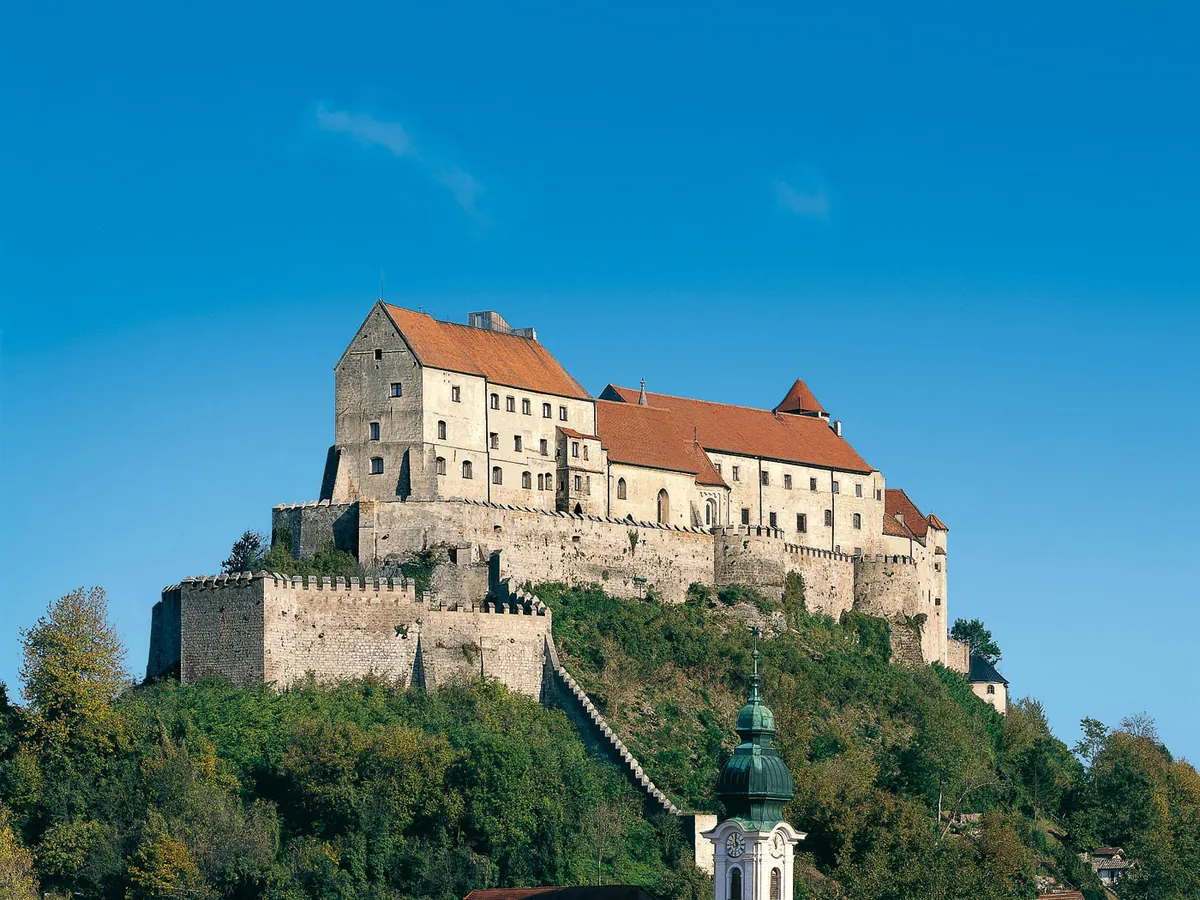
Burghausen sits above the Salzach river on the Austrian border, about 110 km east of Munich. The complex stretches 1,051 metres along a narrow ridge between the Old Town and the Wöhrsee, which the Bayerische Schlösserverwaltung records as the longest castle in the world (Guinness-recognised); it pulled 81,090 visitors in 2025.[14] The fabric runs from the 11th-century main castle outward through five outer baileys built up across the 12th to 16th centuries by successive Bavarian dukes.
The State Castle Museum and State Gallery sit in the main castle; the grounds run free outside special events and are the longer of the two visits. The view over the medieval town below and the Salzach gorge is the postcard.
Practical: open daily; museum hours 9:00 to 18:00 (28 Mar to Sep), 10:00 to 16:00 (Oct to 27 Mar). Closed 1 Jan, Shrove Tuesday, 24/25/31 Dec. Castle grounds always free outside special events. State Castle Museum plus State Gallery: adult €6, concession €5, free under 18. From Munich, train via Mühldorf to Burghausen (about 2 hours); car via A94. Plan your visit.[15]
12. Burg Rheinfels
Rhineland-Palatinate (St. Goar) Year-round, summer daily Rhine's mighty ruin Map
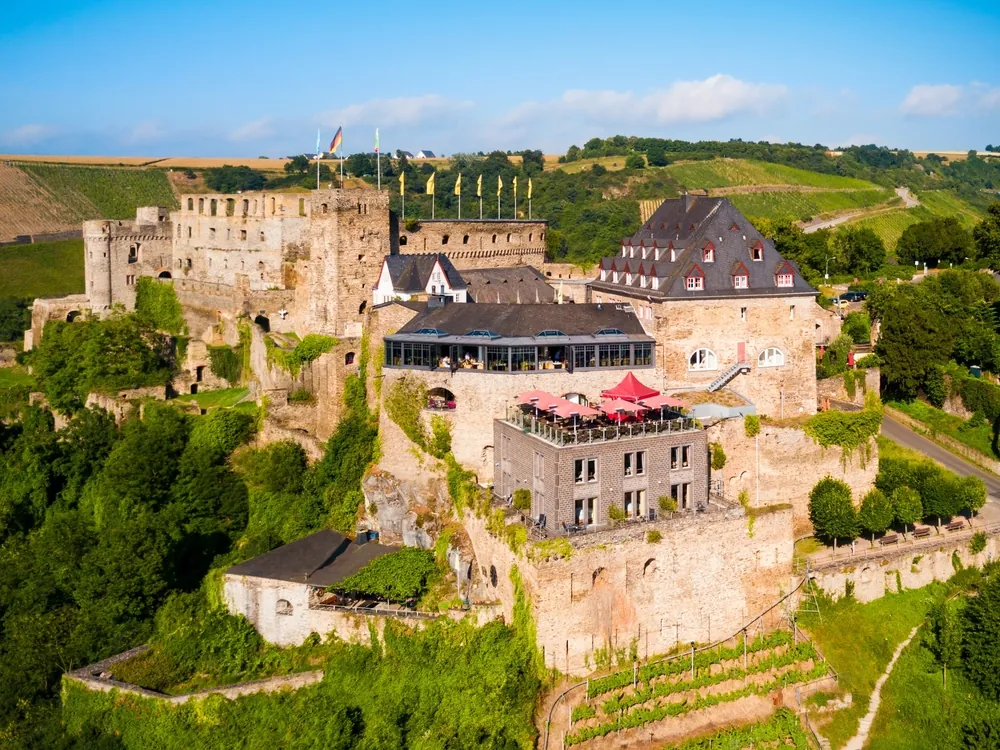
Above St. Goar on the west bank, Burg Rheinfels was the largest castle on the Middle Rhine. In 1255 the Rhenish cities besieged it for nearly twelve months and failed to take it.[1] French troops blew up the working sections in 1797, leaving the substantial ruin that the City of St. Goar operates today. The labyrinth of tunnels under the outer bailey, the surviving cellars and the reconstructed model in the small site museum carry most of the visit.
Rheinfels is the closest of the Middle Rhine castles to St. Goar town centre, and the easiest base for exploring the Bingen-to-Koblenz UNESCO corridor by rail. Pair with a Rhine-cruise leg downstream to Marksburg or Burg Maus on the same day.
Practical: open daily in summer (Apr to 30 Oct), 09:00 to 18:00 (closing 17:00); reduced winter hours Fri to Sun only, 10:00 to 15:00, 31 Oct to late Mar; closes during snowy or icy conditions. Adult €6; concession €4; child 6 to 14 €3; under 5 free; students €4.50; family €13. Guided tours weekends and holidays at 11:00, 13:00, 15:00. From St. Goar regional rail station, 15-minute walk via the nature path or shuttle bus 699 every 30 minutes. Plan your visit.[16]
At a glance
| Castle | Region | When to go | |
|---|---|---|---|
| Schloss NeuschwansteinFairy-tale castle | Bavaria | Tour by reservation |
| Burg EltzUntouched Mosel fairytale | Rhineland-Palatinate | Daily, late Mar to Nov |
| Burg HohenzollernAncestral seat of Prussian kings | Baden-Württemberg | Open daily, peak season |
| Heidelberger SchlossSynonymous with Romanticism | Baden-Württemberg | Open daily, year-round |
| WartburgUNESCO Luther refuge | Thuringia | Open daily, year-round |
| SanssouciFrederick the Great's vineyard retreat | Potsdam (Brandenburg) | Closed Mondays |
| MarksburgRhine's only unconquered castle | Rhineland-Palatinate | Tours only, daily |
| Schloss HerrenchiemseeLudwig II's Versailles | Bavaria | Daily; tour-only New Palace |
| Schloss LinderhofLudwig II's villa | Bavaria | Daily, year-round |
| Schloss DrachenburgRhine's Disney-style castle | North Rhine-Westphalia (Königswinter) | Daily, year-round |
| Burg zu BurghausenLongest castle in the world | Bavaria | Daily, year-round |
| Burg RheinfelsRhine's mighty ruin | Rhineland-Palatinate (St. Goar) | Year-round, summer daily |
How many castles are in Germany?
Germany is one of the densest castle landscapes in Europe. The EBIDAT database at Philipps-Universität Marburg, the standard medieval-castle research register, lists roughly 8,500 medieval castle sites, the majority surviving as ruins. Under the broader heritage definition that includes post-medieval Schlösser and Festungen, the figure runs over 20,000 surviving fortified structures.
Heritage protection runs at Länder (state) level rather than federally; the practical reference for any specific property is the state-level Landesdenkmalliste. Bavaria, Baden-Württemberg and Rhineland-Palatinate dominate the visitable supply by volume. The Berlin-Brandenburg royal palace network alone, operated by SPSG, comprises Sanssouci, Schloss Charlottenburg, Cecilienhof, Pfaueninsel and over thirty other sites, with €108 million in 2024 income against more than 1.4 million annual visits.[8] Saxony, Thuringia and Brandenburg dominate the distressed-auction tier where post-1990 reunification stock is still working through the market.
Famous, medieval, Gothic and largest
Famous. Neuschwanstein leads by visitor numbers (around 1.07 million in 2024 per the Bayerische Schlösserverwaltung), followed by Heidelberger Schloss, Burg Hohenzollern and Wartburg.[17] Burg Eltz carries an outsized cultural weight relative to its visitor count, on the strength of its uninterrupted family ownership and untouched medieval form.
Medieval. Marksburg, Burg Eltz and Wartburg are the strongest medieval survivors as standalone visits. The Middle Rhine corridor between Bingen and Koblenz holds the densest cluster: around 1500, at least 20 castles on the east bank and over 17 on the west bank were exacting tolls from river merchants.[1] Burg Rheinfels, Burg Pfalzgrafenstein (the only Rhine castle never taken by force, mid-river at Kaub) and Burg Lahneck at Lahnstein round out a Rhine-only itinerary.
Gothic. German Gothic castle architecture is best read in the brick-Gothic tradition of the Baltic Ordensstaat (now mostly in modern Poland), but Wartburg's Romanesque-Gothic palas and the Marienburg keep above Hannover stand in for the form within Germany itself. Note that Schloss Marienburg in Lower Saxony is currently closed for major restoration through about 2031 and accessible only via the ANNOTOPIA festival window in May 2026; standard tours are suspended.
Largest. Burg zu Burghausen runs 1,051 metres along the Salzach ridge, the longest castle complex in the world per Bayerische Schlösserverwaltung records.[14] Sanssouci's wider Potsdam ensemble, including the Neues Palais and the New Garden, is the largest contiguous royal-palace landscape in Germany and the most-visited operator's network at over 1.4 million annual visits.[8] Berlin's Schloss Charlottenburg, the city's largest surviving palace complex, completed an eleven-year envelope renovation in May 2024.[18]
If you're looking to buy
Germany is one of the deeper European castle markets, with the Castle Price Index tracking 42 indexed listings at a median of €1.5m for around 446 m² (€1,971/m²), against a European all-market median of €2,250/m².[19] Verified named transactions span from €170,000 at the auction floor (Schloss Weigsdorf, Saxony 2022) to €25.8 million at the trophy end (Schloss Salem, Baden-Württemberg). The structural advantage is the §7i EStG Denkmal-AfA tax regime: owner-occupiers can deduct certified restoration costs at 9% per year for 8 years and 7% per year for the next 4 years, totalling 100% over 12 years, with mandatory pre-approval by the local Denkmalschutzbehörde.[19]
Transaction costs add 5.5 to 8.5%: Grunderwerbsteuer at 3.5 to 6.5% (state-by-state), notary and registry fees roughly 2%. Closing typically runs four to eight months. For current listings see castles for sale in Germany; for the operational side (surveys, restoration budgeting, foreign-buyer mechanics) see our guide to buying a castle.
Sources
1. Taylor, R. R. Castles of the Rhine: Recreating the Middle Ages in Modern Germany. Wilfrid Laurier University Press, 1998 (pp. 24, 33, 113-114, 137, 206-208, 229-232).
2. Schloss Neuschwanstein, official site (Bayerische Schlösserverwaltung). Opening hours and tickets:
3. DW Travel: Eltz Castle in Germany, Would you like to live here?
4. Burg Eltz, official site.
5. Burg Hohenzollern, official site.
6. Schloss Heidelberg, Staatliche Schlösser und Gärten Baden-Württemberg.
7. Wartburg, official site.
8. SPSG. Jahresbericht 2024: Stiftung Preußische Schlösser und Gärten Berlin-Brandenburg. Potsdam, 2024 (pp. 6, 13).
9. Schloss Sanssouci, SPSG.
10. Marksburg, Deutsche Burgenvereinigung.
11. Schloss Herrenchiemsee, Bayerische Schlösserverwaltung.
12. Schloss Linderhof, Bayerische Schlösserverwaltung.
13. Schloss Drachenburg, NRW-Stiftung.
14. Bayerische Verwaltung der staatlichen Schlösser, Gärten und Seen. Besucherbilanz 2025. Bayerisches Staatsministerium der Finanzen und für Heimat, 2026.
15. Burg zu Burghausen, Bayerische Schlösserverwaltung.
16. Burg Rheinfels, Stadt St. Goar.
17. Bayerische Schlösserverwaltung 2024 visitor announcement.
18. SPSG. Jahresbericht 2024, p. 31 (Schloss Charlottenburg envelope renovation completion, May 2024).
19. Castle Collector. Castle Price Index, March 2026 edition.