
Castles near Berlin: 10 Hohenzollern palaces from Sanssouci to Spandau
Frederick the Great's Sanssouci, Charlottenburg's Hohenzollern halls, Cecilienhof of the 1945 Potsdam Conference, plus Spandau Citadel and 4 more within reach.
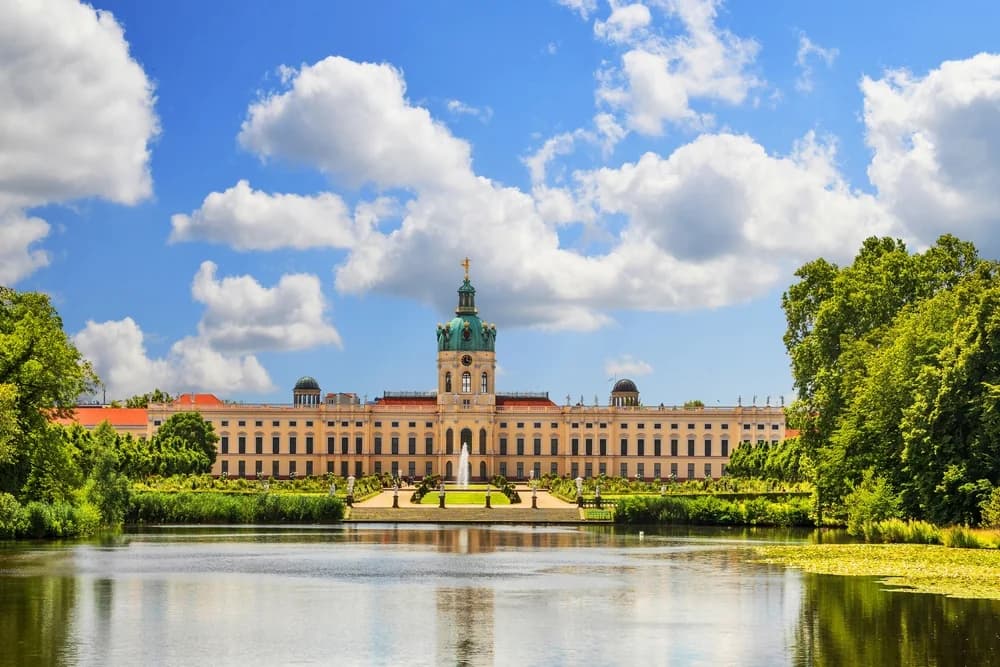
Berlin sits inside the densest concentration of Hohenzollern palaces in Europe. Ten residences, citadels and country retreats within a day of the city, from a vine-terraced rococo summer palace in Potsdam to a Renaissance star fort on the Havel.
Berlin and the surrounding state of Brandenburg form the historical core of the former Kingdom of Prussia (1701 to 1918). The Stiftung Preußische Schlösser und Gärten Berlin-Brandenburg (SPSG) is the federal-and-state foundation that operates around 30 of those Hohenzollern palaces and gardens today. SPSG recorded more than 1.4 million visits across the network in 2024, with Berlin sites alone up roughly 19% on the prior year.[1]
The flagships cluster in two rings. The Potsdam ring (Sanssouci, Cecilienhof, the Neues Palais, Babelsberg, Glienicke) sits 30 to 40 minutes south-west of central Berlin and forms Germany's largest single UNESCO World Heritage inscription, the Palaces and Parks of Potsdam and Berlin.[2] The in-city ring (Charlottenburg, Spandau, Köpenick) is reachable by U-Bahn or S-Bahn. Two further palaces (Oranienburg and Rheinsberg) extend the radius into the Brandenburg countryside, both worth half a day on their own.
One operational note matters above all others. Cecilienhof, the 1945 Potsdam Conference site, has been closed since 1 November 2024 for a multi-year restoration; visitors can currently access the building only via a digital tour. The Royal Apartment of the Crown Prince at the Neues Palais closed at the same time.[3] Each entry below covers what to see, when to go, what it costs, and how to get there from central Berlin.
1. Sanssouci Palace
~30 km ~40 min Closed Mondays Frederick the Great's vineyard retreat Map
Frederick the Great built Sanssouci between 1745 and 1747 as his personal summer retreat, a single-storey rococo pavilion on a vine-terraced hillside above Potsdam. The name (sans souci, "without care") declared the brief: a refuge from the formal court life of Berlin and the Neues Palais. Frederick designed parts of the building himself, working with the architect Georg Wenzeslaus von Knobelsdorff. His tomb sits on the upper vine terrace below the palace, where his remains were finally returned in 1991 after the long postwar interment elsewhere.
The wider Sanssouci Park spans roughly 290 hectares and reads as a single composition of Frederick's enthusiasms. The Bildergalerie of 1755 to 1763 is the oldest purpose-built museum building in Germany. The Chinese House, the New Chambers and the Neues Palais cluster across the grounds. Each August the park hosts the Potsdamer Schlössernacht; the 25th edition on 9 and 10 August 2024 drew about 30,000 guests, with the Chinesisches Haus, Bildergalerie and Neue Kammern opened for the night.[3] The UNESCO inscription (1990, extended 1992 and 1999) covers Sanssouci together with Cecilienhof, Babelsberg, Glienicke, the Pfaueninsel and the Neuer Garten.[2]
Practical: Tuesday to Sunday 10:00 to 17:30 (April to October), 10:00 to 16:30 (November to March), closed Mondays. Strict timed admission. Adult €14, concession €10; the sanssouci+ combined ticket (all SPSG palaces in Potsdam, valid one day) is €22 / €17. Park itself is free. From Berlin Hauptbahnhof, S-Bahn S7 to Potsdam Hauptbahnhof (~25 min) then bus 695 or X15 to Schloss Sanssouci. Plan your visit.[4]
2. Charlottenburg Palace
~5 km ~20 min Closed Mondays Berlin's grandest baroque palace Map
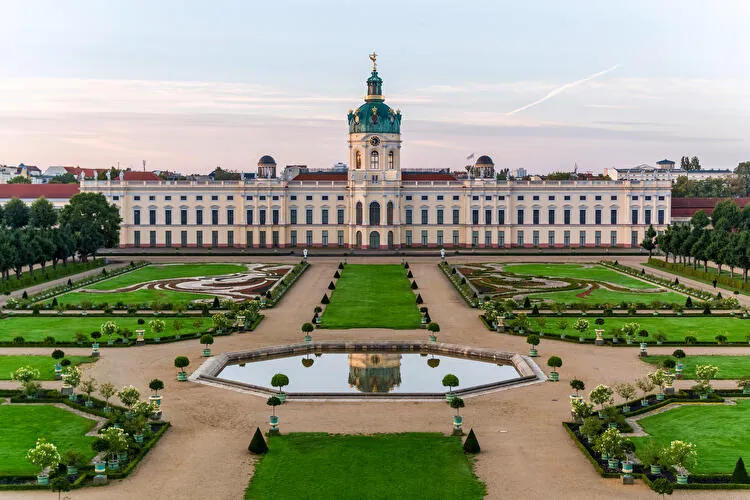
Charlottenburg is the largest surviving palace complex in Berlin and the principal in-city SPSG property.[5] The core (Altes Schloss) was built at the end of the 17th century as Sophie Charlotte's summer residence Lietzenburg. Her widower Friedrich I, the first King in Prussia, granted the surrounding village city rights and the name Charlottenburg in 1705 in her memory after she died at Hannover on 1 February that year.[5] Frederick the Great's New Wing (Neuer Flügel) of 1740 to 1746, designed by Knobelsdorff, added the east-wing apartments where Frederick hosted Voltaire and other Enlightenment correspondents during the early years of his reign.
The wartime damage was severe: the palace was 60% destroyed in a major Allied air raid on Berlin in 1943, and securing of the ruins began only in 1946. The postwar reconstruction was led by Margarete Kühn, the first postwar director, and continued under her successors Martin Sperlich and Jürgen Julier; many of the principal interiors visible today are reconstructions completed between the 1950s and 1990s.[5] The eleven-year envelope renovation of the façades and roofs, started 2013 under the SPSG Masterplan, was completed in May 2024 with the final section, the Theaterbau (built 1788 to 1791 under Friedrich Wilhelm II at the western end of the Große Orangerie). 2026 is the second full year with the façade scaffolding-free.[3]
Practical: Tuesday to Sunday 10:00 to 17:30 (April to October), 10:00 to 16:30 (November to March), closed Mondays. Old Palace adult €12, concession €8; charlottenburg+ (all SPSG sites at Charlottenburg) €19 / €14, family €45. Under 18 free. From Berlin Hauptbahnhof, U-Bahn U7 to Richard-Wagner-Platz or S-Bahn to Westend, then a short walk. Plan your visit.[6]
3. Cecilienhof Palace
~30 km ~50 min Closed to 2027/28 1945 Potsdam Conference Map
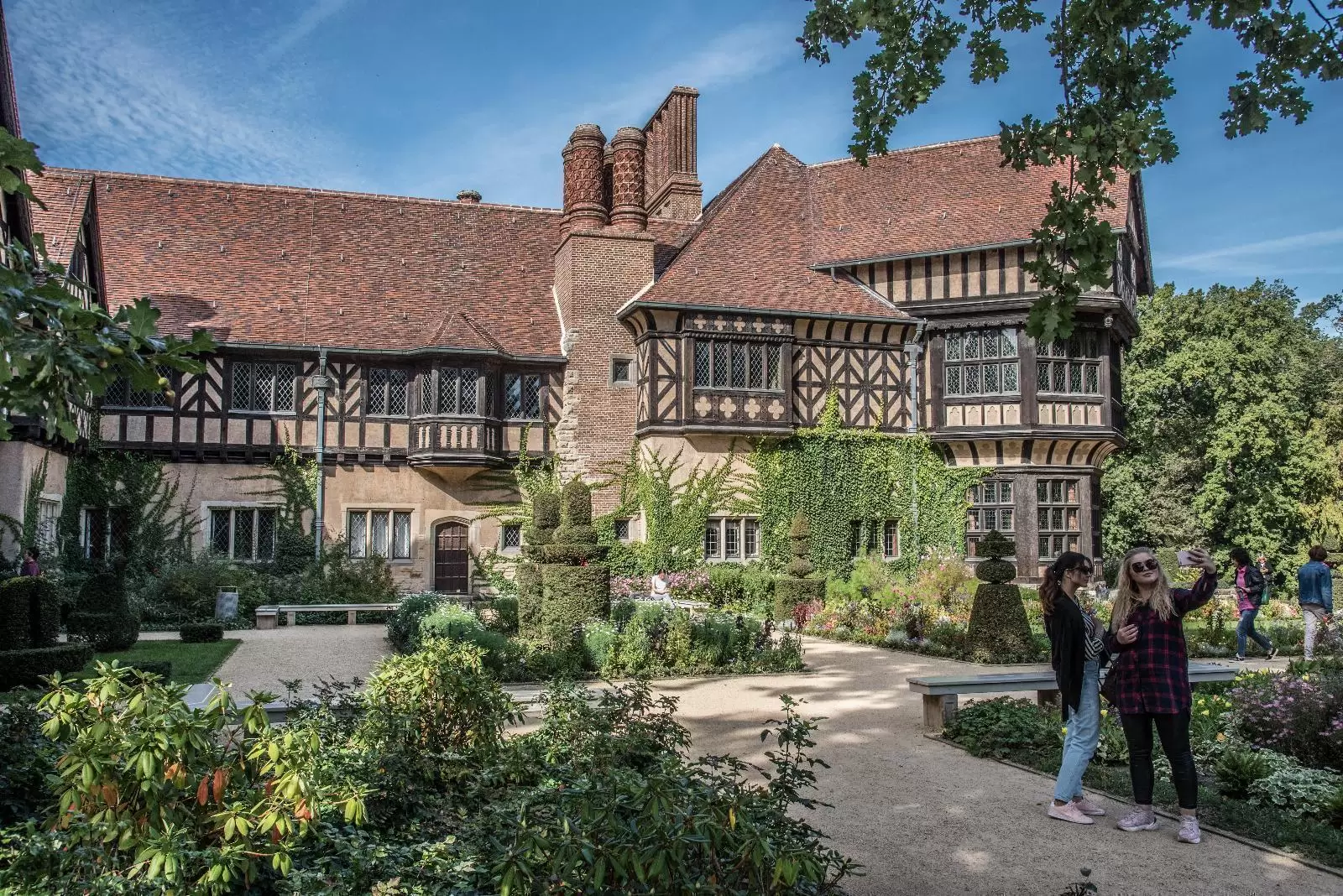
Cecilienhof, in Potsdam's Neuer Garten, was the last palace the Hohenzollerns ever built. Crown Prince Wilhelm and Crown Princess Cecilie commissioned it between 1914 and 1917 in an English country-house style, three years before the abdication ended the Prussian monarchy. What gives the building its global weight is what happened inside it after the German collapse. From 17 July to 2 August 1945, Truman, Stalin and Churchill (with Attlee replacing Churchill mid-conference) sat at the round table here and decided the shape of postwar Europe. The decisions taken at Cecilienhof set the occupation zones across Germany, redrew European borders and produced the Potsdam Declaration to Japan that preceded the atomic bombings of Hiroshima and Nagasaki.
Operational caveat first. Cecilienhof has been closed since 1 November 2024 for a comprehensive renovation of the hotel section and adjoining building fabric; the current SPSG timeline runs through 2027 to 2028.[3][7] Until reopening the house is accessible only via a digital tour. The surrounding Neuer Garten remains open and free, and the conference table can still be glimpsed through the windows on a quiet day. For 2026 itineraries, pair Sanssouci with the Charlottenburg in-city loop rather than building the day around Cecilienhof.
Practical: closed for restoration; reopening targeted 2027 to 2028. Surrounding Neuer Garten open daily, free. From Berlin, S7 to Potsdam Hauptbahnhof, then bus 603 to Schloss Cecilienhof. Closure details and digital visit.[7]
4. Neues Palais
~30 km ~45 min Closed Tuesdays Frederick the Great's victory monument Map
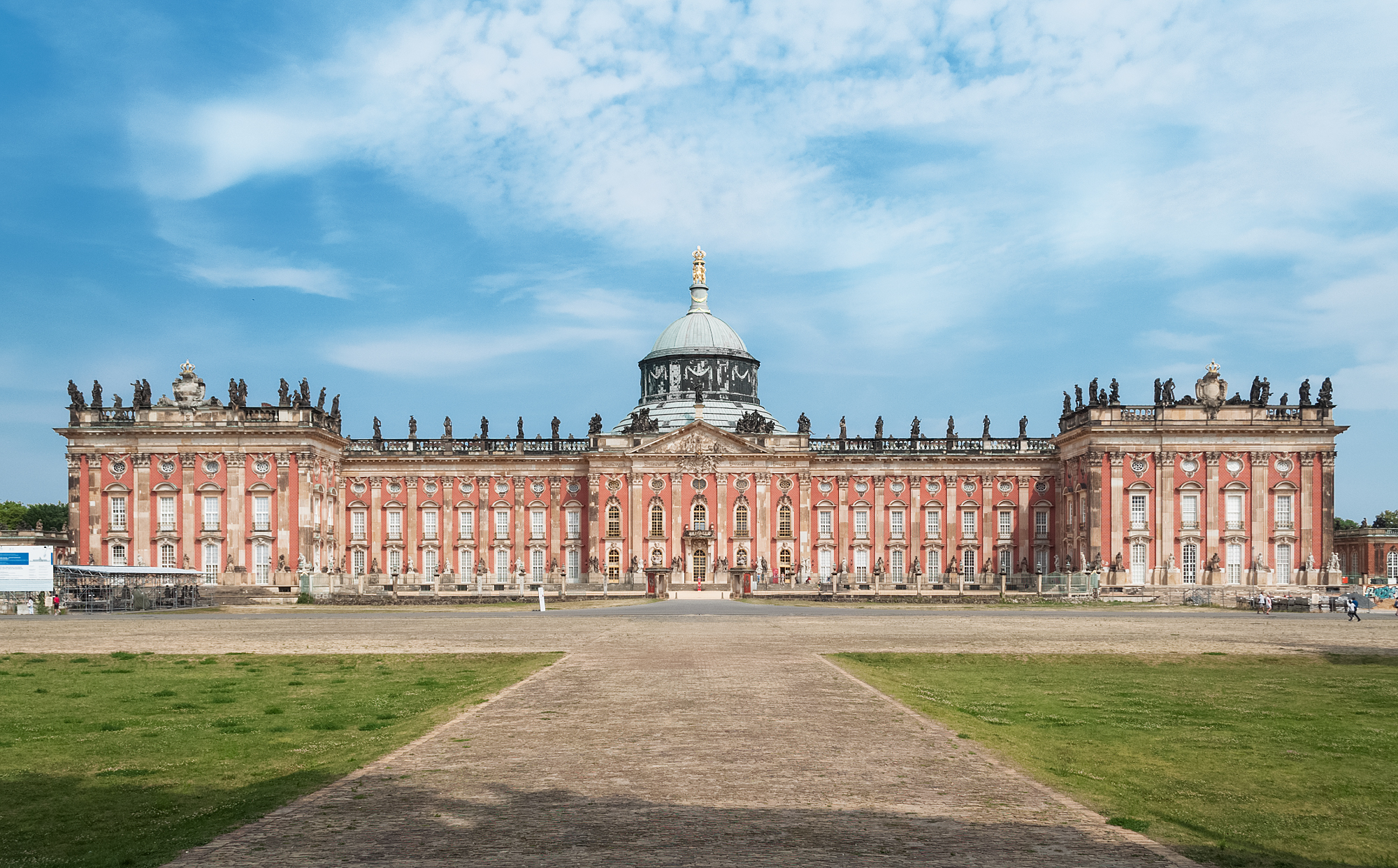
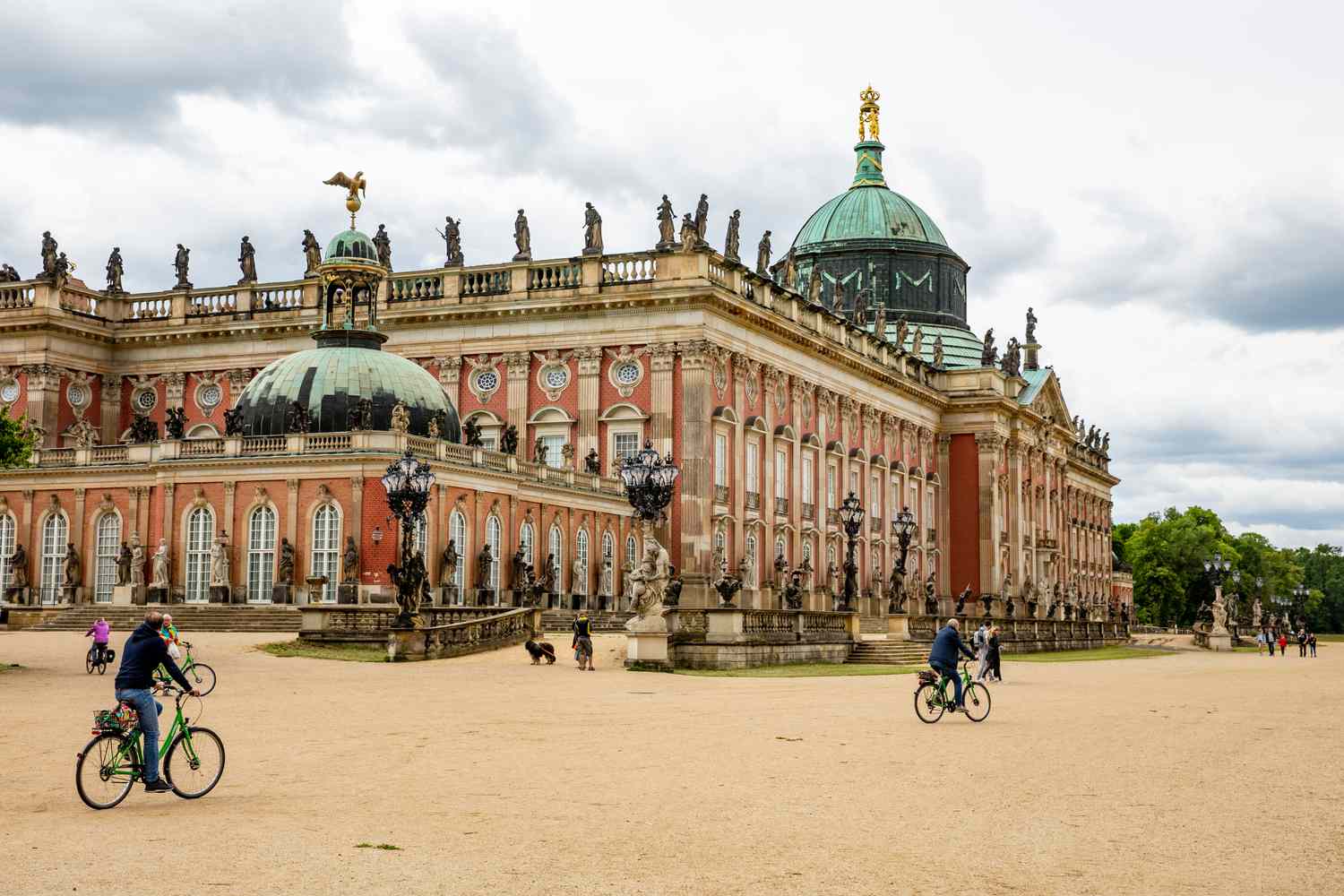
Frederick the Great commissioned the Neues Palais at the western end of Sanssouci Park between 1763 and 1769, immediately after the Seven Years' War, as a victory monument and guest palace. It is the dominant architectural mass of the park, deliberately scaled to dwarf Sanssouci itself. Frederick's stated motive was less ostentation than political signalling: a demonstration to European courts that the Prussian state had emerged from the war financially intact. The Marble Hall and the Grottensaal (a banqueting hall lined with shells, semi-precious stones and minerals) are the canonical interiors.
The Neues Palais is one of the SPSG sites that has been continuously rolling under the Special Investment Programme. The second SIP, running through 2030, paid out €28.7 million in 2024 across the network and is currently funding work at the Neues Palais alongside the Römische Bäder, the Orangerieschloss and the Kleines Schloss in Park Babelsberg.[3] The Royal Apartment of the Crown Prince (Königswohnung) closed on 1 November 2024 for several years' work and is not currently visitable.[7]
Practical: Wednesday to Monday 10:00 to 17:30 (April to October), 10:00 to 16:30 (November to March, German-language guided tours only), closed Tuesdays. Palace Grand Tour adult €14, concession €10; combined New Palace ticket (Grand Tour plus Prince Henry's Apartment) €16 / €14; sanssouci+ €22 / €17. Same transport as Sanssouci: bus 605/606 or tram 91/X1 from Potsdam Hauptbahnhof, or a free seasonal shuttle from Grünes Gitter (April to October). Plan your visit.[8]
5. Spandau Citadel
~12 km ~20 min Daily, year-round Renaissance fortress in Berlin Map
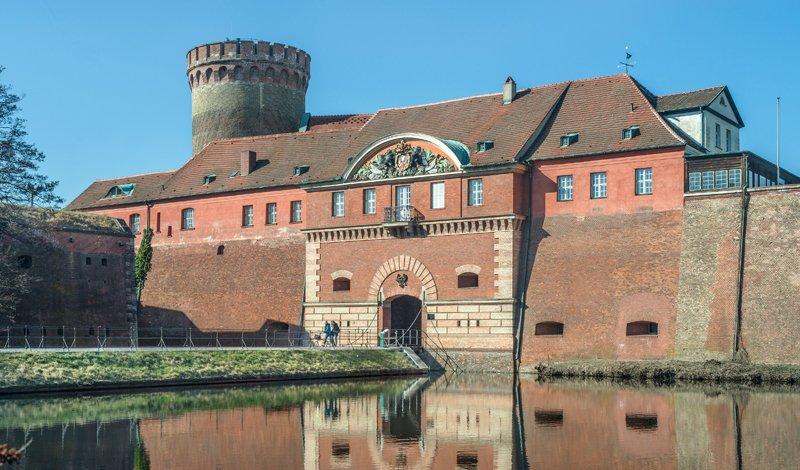
Spandau Citadel is one of the best-preserved Renaissance fortresses in central Europe. It was built between 1559 and 1594 at the confluence of the Havel and the Spree to defend the medieval town of Spandau, then the western approach to Berlin. The plan is a textbook Italian-style star fort: four bastions, ravelins and an outer waterway, with the central Julius Tower at the heart of the complex. The Julius Tower itself is the oldest secular building in Berlin: a 12th-century medieval bergfried that pre-dates the surrounding Renaissance walls by roughly 400 years.[9]
The citadel today is run by the Berlin Senate as a museum of urban and military history, with the bastions, casemates and the Italian-Renaissance gatehouse all walkable. Outside the museum schedule it doubles as a music venue: the Citadel Music Festival has staged Bob Dylan, Sting, Simply Red and Norah Jones on the inner parade ground across recent seasons. The Zeughaus exhibit space is closed for renovation through late summer 2026; the rest of the site stays open during the works.
Practical: open daily 10:00 to 17:00 year-round, last entry 16:30. Adult €4.50, concession €2.50, family (2 adults + up to 3 children) €10, under 6 free; audio guide €2 extra. From central Berlin, U7 directly to Zitadelle. Zeughaus closed June to late August 2026. Plan your visit.[10]
6. Glienicke Palace
~20 km ~45 min Tue–Sun, Apr–Oct Schinkel's Italian villa Map
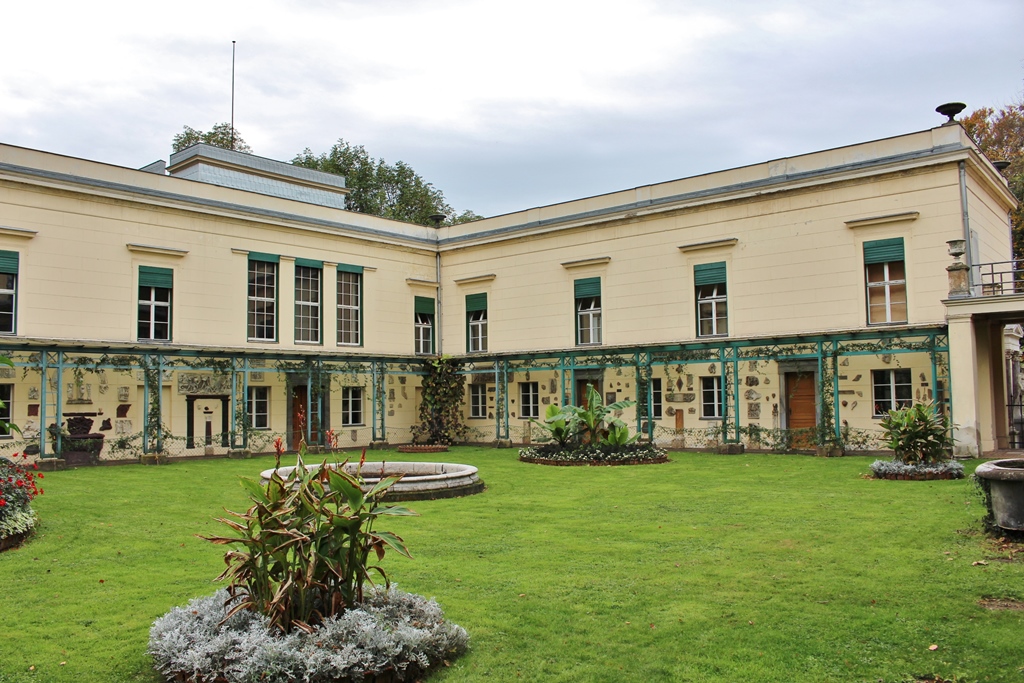
Glienicke Palace, on the western edge of Berlin in the Wannsee district, was built in 1825 by Karl Friedrich Schinkel, the dominant Berlin neoclassical architect of the 19th century, for Prince Karl of Prussia. The Italian-villa form is a direct reference to Schinkel's earlier journeys through Italy, and the design became an influential model for European country-house architecture across the rest of the century. The house and its garden buildings (Casino, Große Neugierde, Kleine Neugierde) form one of the most coherent surviving Schinkel ensembles in Germany.
The setting is the other reason to come. The palace stands above the Glienicke Bridge, the Cold War "Bridge of Spies" that connected West Berlin to East German Potsdam, where the 1962 Powers/Abel exchange (later dramatised in Spielberg's 2015 film) took place. Glienicke is part of the UNESCO Palaces and Parks of Potsdam and Berlin inscription.[2]
Practical: Tuesday to Sunday 10:00 to 17:30 (April to October); November to March, weekend guided tours only at fixed slots; closed January and February. Adult €8, concession €6, family €16. From Berlin, S-Bahn S7 to Wannsee, then bus 316 to Schloss Glienicke (Berlin). Plan your visit.[11]
7. Köpenick Palace
~18 km ~35 min Wed–Sun, SMB Baroque Kunstgewerbemuseum Map
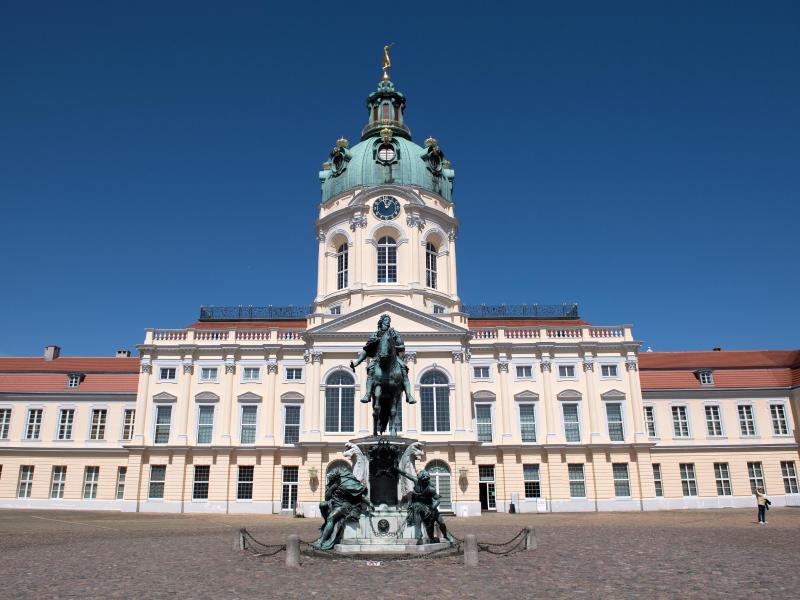
Köpenick Palace stands on a small island in the Dahme, where the river joins the Spree on Berlin's south-eastern edge. The current building is a 1670s Hohenzollern residence built for Crown Prince Friedrich, later Friedrich III and the first King in Prussia. The original 17th-century stucco work and panelling survive across most of the principal rooms, which is why the palace is now used by the Staatliche Museen zu Berlin as the location for the decorative arts collection of the Kunstgewerbemuseum: Renaissance and Baroque silver, glass, ceramics and furniture displayed in the rooms they were originally made for.
This is the quietest of the in-city royal palaces and arguably the best for anyone who wants the SMB's decorative-arts holdings without the crowds of the Kulturforum. The setting (a bridge across the Dahme to a wooded island, a small baroque park, a working pleasure-craft mooring) is part of the appeal.
Practical: Wednesday to Friday 11:00 to 17:00, Saturday and Sunday 11:00 to 18:00 (April to September); Thursday to Sunday 11:00 to 17:00 (October to March); closed Mondays and Tuesdays. Adult €8, concession €4, under 18 free. Museum Pass Berlin (3-day, multi-museum) €32 / €16 covers entry. From Berlin, S-Bahn S3 to Köpenick, then tram 60, 61, 62 or 68 to Schlossplatz Köpenick. Plan your visit.[12]
8. Babelsberg Palace
~25 km ~35 min Park free; palace closed Tudor-revival royal retreat Map
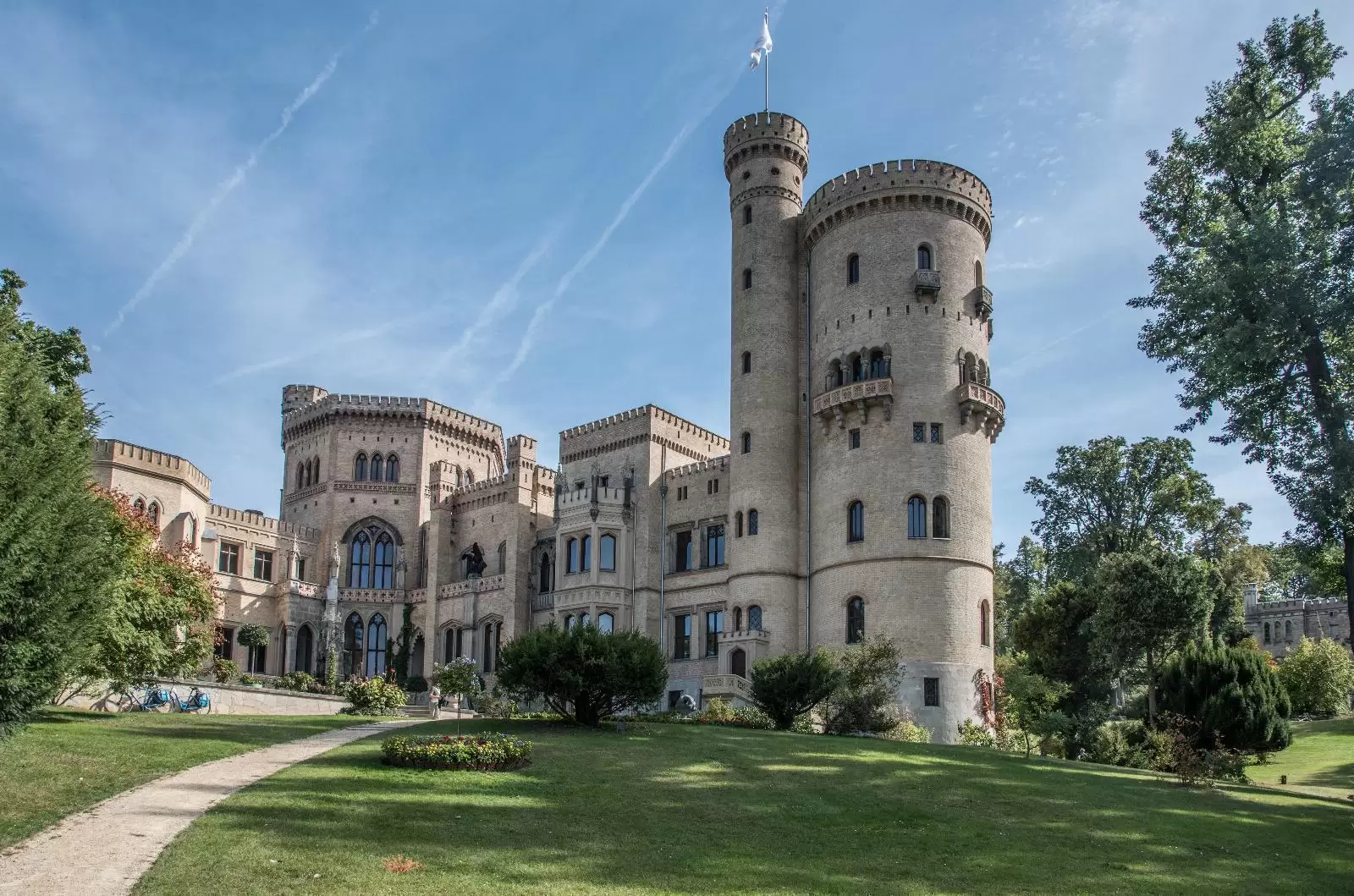
Babelsberg Palace, on the eastern flank of Potsdam above the Havel, was built between 1833 and 1849 by Karl Friedrich Schinkel and Ludwig Persius for Prince (later Emperor) Wilhelm I. The brief was a deliberate counterpoint to the dominant French and Italian classical traditions of the Hohenzollern palace inheritance: Tudor Revival turrets and Gothic Revival pinnacles, English picturesque massing, asymmetric silhouette. Wilhelm and his wife Augusta used the palace as a private summer residence for over 50 years, and the rooms preserve much of their personal layout. Wilhelm signed his proclamation as Emperor of a unified Germany here in January 1871.
The 114-hectare landscape garden by Hermann von Pückler-Muskau and Peter Joseph Lenné is one of the most influential 19th-century English-landscape compositions in Germany and is freely accessible from dawn. The palace interior itself is currently closed for an open-ended master-plan refurbishment, with no 2026 reopening date confirmed; the smaller Kleines Schloss in the same park is also under restoration as part of the second SPSG Special Investment Programme.[3] The park, the views over the Havel and the Schinkel-Persius silhouette remain the reason to come during the works.
Practical: palace interior closed; opens for special exhibitions only, no public schedule. Babelsberg Park open daily 08:00 to dusk, free. From central Berlin, S-Bahn S7 to Potsdam Babelsberg, then bus 690 to Alt Nowawes. Closure status.[13]
9. Oranienburg Palace
~35 km ~30 min Tue–Sun, Apr–Oct Brandenburg baroque jewel Map
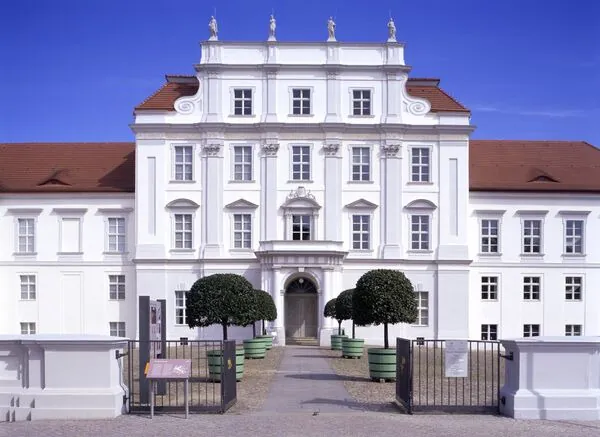
Oranienburg Palace is the oldest baroque palace in Brandenburg and the easiest of the outer-ring properties to fold into a Berlin trip. Electress Louise Henriette of Orange-Nassau (the Dutch wife of the Great Elector Friedrich Wilhelm) commissioned the original country residence in 1651; the major rebuilding to its current grand form took place around 1700 under her son Friedrich, then Elector and shortly to be the first King in Prussia. The town of Oranienburg takes its name from her family. The interiors today display Dutch-Prussian art, surviving 17th-century Orange-family rooms, and a small but well-curated baroque painting collection.
The wider context matters. The Hohenzollern dynasty's 19th-century reconstruction programme (Frederick William IV's rebuilding of Hohenzollern Castle, William II's restoration of Hohkönigsburg in Alsace) was the structural shaper of Brandenburg's modern castle inheritance, and Oranienburg sits at the older baroque end of that lineage.[14] The palace is the only surviving piece of the Orange dynastic presence in Brandenburg.
Practical: Tuesday to Sunday 10:00 to 17:30 (April to October); November to March, German guided tours by advance booking only; closed Mondays. Adult €8, concession €6; Mark Brandenburg family ticket €16 (up to 2 adults + 4 children under 18). From Berlin Hauptbahnhof, S-Bahn S1 directly to Oranienburg (~30 minutes), then a 5-minute walk. Plan your visit.[15]
10. Rheinsberg Palace
~90 km ~2 hr 25 Tue–Sun, Apr–Oct Frederick the Great's idyll Map
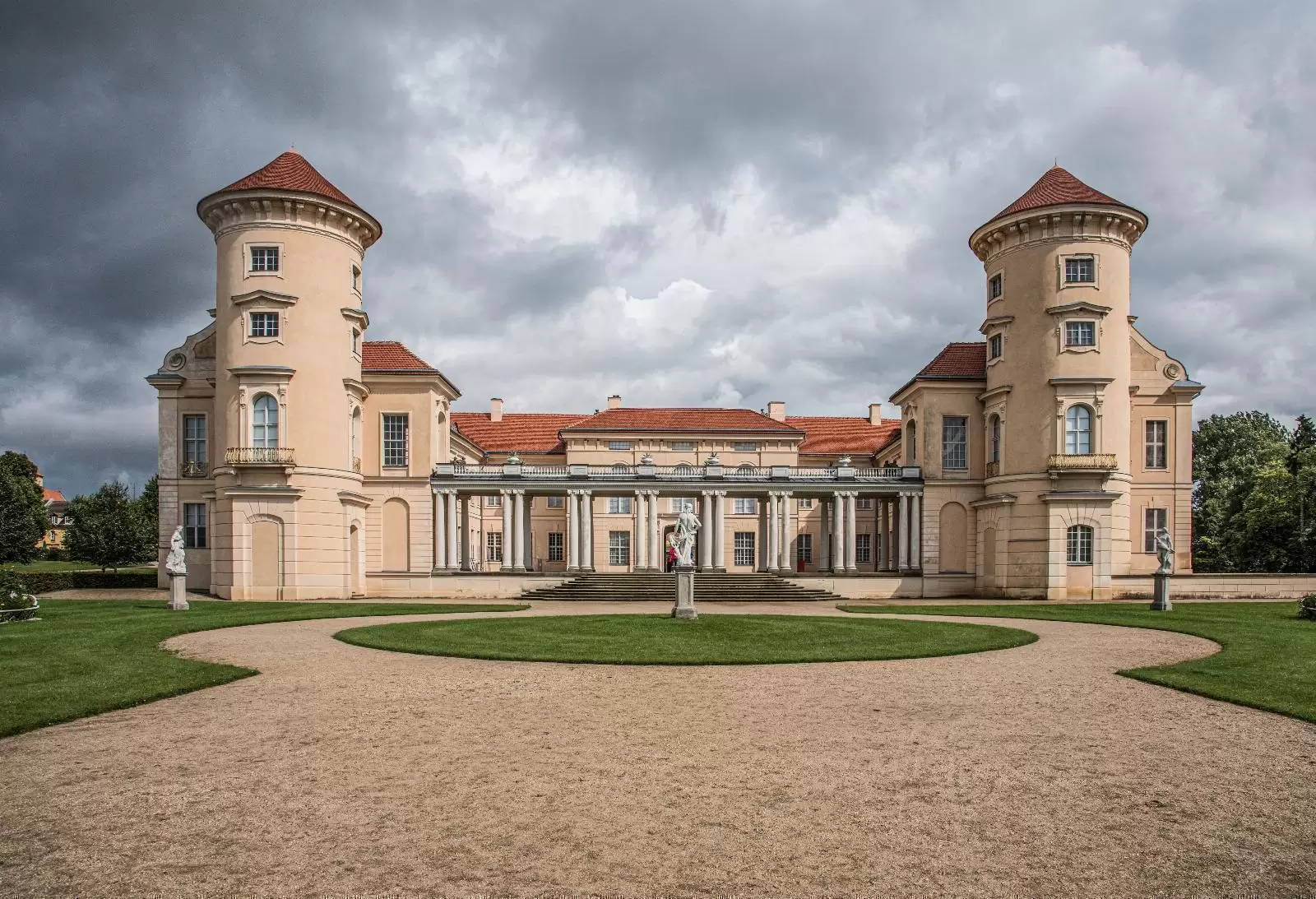
Rheinsberg, on a small lake in northern Brandenburg, is the early-Frederick-the-Great property where the future king lived as Crown Prince from 1736 to 1740 before his accession. The four years at Rheinsberg are the formative cultural-intellectual period of his life: extensive reading, the music evenings with the Quantz court flute group, intensive correspondence with Voltaire, the development of the political philosophy that would shape Prussian state-building over the rest of the century. After his accession Frederick gave the palace to his younger brother Prince Heinrich, who substantially extended it through the 1750s and 1760s and is buried in the park.
The visit covers the Grand Tour rooms, Prince Henry's Summer Apartment (in summer only), and the Kurt Tucholsky Literaturmuseum in the south wing, which holds the personal archive of the Weimar-era satirist who wrote his 1912 novel Rheinsberg: Ein Bilderbuch für Verliebte set in this town. The lakeside park, the Pomonatempel and the long view across the Grienericksee back to the palace make a half-day on their own.
Practical: Tuesday to Sunday 10:00 to 17:30 (April to October); November to March, guided tours only; closed Mondays. Summer adult €14, concession €10, family €20; winter adult €10, concession €7. Includes Grand Tour, Prince Henry's Summer Apartment (summer only) and the Tucholsky Museum. From Berlin Gesundbrunnen, regional train to Neuruppin Rheinsberger Tor, then connecting service to Rheinsberg, Schloss (~2h 25). Plan your visit.[16]
At a glance
| Castle | Distance | How to get there | |
|---|---|---|---|
| Sanssouci PalaceFrederick the Great's vineyard retreat | ~30 km | ~40 min |
| Charlottenburg PalaceBerlin's grandest baroque palace | ~5 km | ~20 min |
| Cecilienhof Palace1945 Potsdam Conference | ~30 km | ~50 min |
| Neues PalaisFrederick the Great's victory monument | ~30 km | ~45 min |
| Spandau CitadelRenaissance fortress in Berlin | ~12 km | ~20 min |
| Glienicke PalaceSchinkel's Italian villa | ~20 km | ~45 min |
| Köpenick PalaceBaroque Kunstgewerbemuseum | ~18 km | ~35 min |
| Babelsberg PalaceTudor-revival royal retreat | ~25 km | ~35 min |
| Oranienburg PalaceBrandenburg baroque jewel | ~35 km | ~30 min |
| Rheinsberg PalaceFrederick the Great's idyll | ~90 km | ~2 hr 25 |
How many castles are near Berlin?
The integrated Berlin-Brandenburg royal-palace network operated by SPSG covers roughly 30 palaces and 140 buildings across about 800 hectares of historic gardens, all within day-trip reach of central Berlin.[1] Add in privately-owned country houses (Schlösser) across Brandenburg and the working figure rises into the low hundreds, though most are private homes or seasonal venues rather than ticketed museums. SPSG itself is the single dominant operator: in 2024 it took €108 million in total income, including €52.9 million in base operating funding split three ways between the federal government (€21.8M), Brandenburg (€18.9M) and Berlin (€12.2M), plus €28.7 million from the second Special Investment Programme that runs through 2030.[3]
For a traveller, the practical number is closer to fifteen properties worth a focused half- or full-day visit: the Potsdam UNESCO ring (Sanssouci, Cecilienhof when open, Neues Palais, Babelsberg, Glienicke, Pfaueninsel), the in-city palaces (Charlottenburg, Spandau Citadel, Köpenick, Schönhausen), and the outer Brandenburg ring (Oranienburg, Rheinsberg, Caputh, Königs Wusterhausen, Paretz). Three days covers the principal spine: Day 1 the in-city loop, Day 2 the Potsdam ring, Day 3 either Oranienburg or Rheinsberg.
Famous, medieval, Gothic and largest
Famous. Sanssouci, Charlottenburg and Cecilienhof carry the bulk of the search demand. Sanssouci is Frederick the Great's signature; Charlottenburg the largest surviving palace within Berlin proper;[5] Cecilienhof the 1945 Potsdam Conference site (closed for renovation through 2027 to 2028).[7] Spandau Citadel is the best-preserved Renaissance fortress on the visitor circuit.
Medieval. Brandenburg's medieval inheritance is thinner than the southern German Burgenland: most of the surviving fabric is Renaissance or later, the older castles either lost to the Thirty Years' War or rebuilt in 19th-century Romantic mode. The Julius Tower at Spandau Citadel (12th century) is the oldest secular building in Berlin and the most accessible medieval survival in the city.
Gothic. The dominant Gothic survival in the wider region is ecclesiastical rather than military: the Marienkirche in Berlin-Mitte, the Nikolaikirche in Potsdam, the brick-Gothic churches of the Hanseatic Brandenburg towns. Of the SPSG network, the Tudor Revival and Gothic Revival massing of Babelsberg Palace is a 19th-century reimagining rather than a true survival.
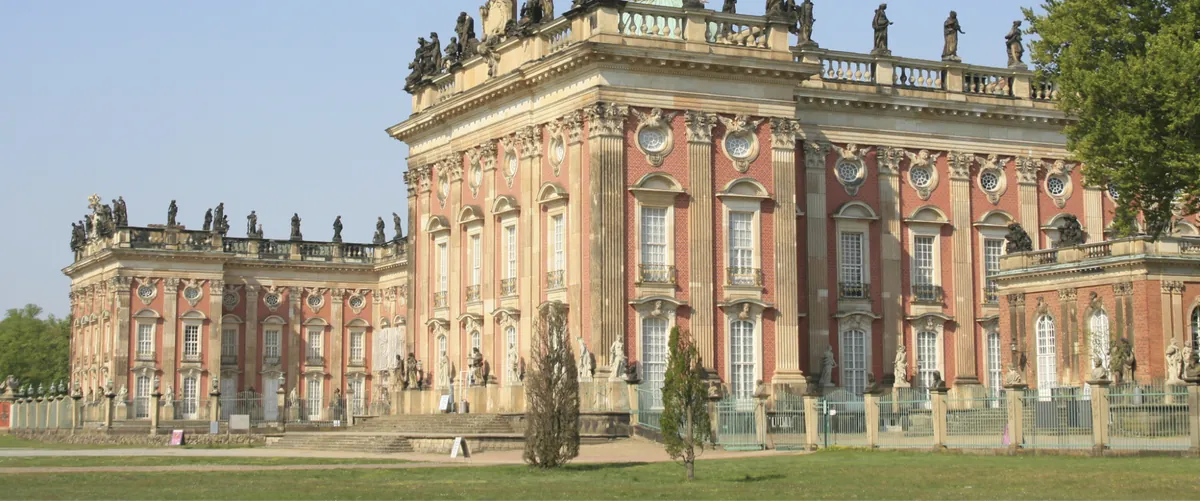
Largest. The SPSG yearbook describes Charlottenburg directly as "der größte noch vorhandene Schlosskomplex in Berlin", the largest surviving palace complex in Berlin.[5] Sanssouci Park is the largest Hohenzollern park ensemble at roughly 290 hectares. Spandau Citadel is the largest fortified site in the city by ground area.
If you're looking to buy
The Berlin and Brandenburg private-castle market is smaller and cheaper than Bavaria. Most of the headline royal residences are state-owned and inalienable: SPSG flagships cannot be bought at any price. The active market is in country Schlösser and Gutshäuser across the Brandenburg ring, often sold in mid-restoration condition, with regional asking prices well below the Bavarian benchmark. For current Brandenburg listings see castles for sale in Germany, tracked against Castle Collector's Castle Price Index.[17] Foreign buyers face no purchase restrictions in Germany; transaction costs add roughly 6% to 10% (notary, Grunderwerbsteuer land transfer tax at 6.5% in Brandenburg, agent fees split). For the operational side, see our guide to buying a castle.
Sources
1. Stiftung Preußische Schlösser und Gärten Berlin-Brandenburg (SPSG) network overview.
2. UNESCO World Heritage List, ref. 532, Palaces and Parks of Potsdam and Berlin.
3. SPSG, Jahresbericht 2024. Visitor totals (p. 13), Cecilienhof and Neues Palais closure (Vorwort, p. 2), Charlottenburg envelope renovation completion May 2024 (p. 31), 2024 income breakdown and Special Investment Programme payouts (p. 6), 25th Schlössernacht attendance 9–10 August 2024 (p. 29).
4. SPSG, Sanssouci Palace official page.
5. SPSG Jahrbuch Band 7 (2007), Schloss Charlottenburg in Berlin. Im Wandel denkmalpflegerischer Auffassungen, eds. Petra Colm, Gabriele Horn, Britta von Rettberg, Akademie Verlag, Berlin. Founding date and Sophie Charlotte context pp. IX, XIX; 1943 destruction and postwar reconstruction lineage p. XVII; "der größte noch vorhandene Schlosskomplex in Berlin" p. XVII.
6. SPSG, Charlottenburg Palace official page.
7. SPSG, Cecilienhof Palace closure announcement (4 July 2024).
8. SPSG, Neues Palais official page.
9. Zitadelle Berlin official site, Julius Tower history.
10. Zitadelle Berlin, hours and admission.
11. SPSG, Schloss Glienicke official page.
12. Staatliche Museen zu Berlin, Schloss Köpenick.
13. SPSG, Babelsberg Palace official page.
14. Taylor, R. R. Castles of the Rhine: Recreating the Middle Ages in Modern Germany. Wilfrid Laurier University Press, 1998; Chapter 5 (Hohenzollern Dreams), p. 131.
15. SPSG, Oranienburg Palace Museum.
16. SPSG, Rheinsberg Palace.
17. Castle Collector, Castle Price Index, March 2026 edition.