
Most Famous Castles in the World: The Top 15 by Visitors
The most famous castle in the world is Versailles, drawing 8.4 million visitors a year. The Tower of London, Mont-Saint-Michel and 12 more by visitor count.
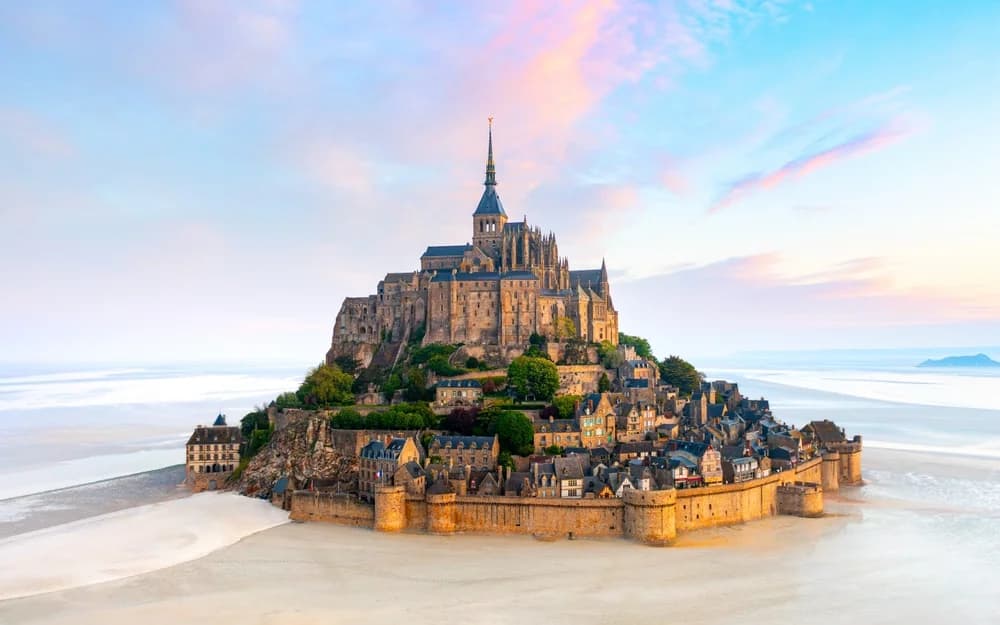
Fifteen castles the world has agreed to call famous, ranked by who actually walks through the gates. From Louis XIV's marble seat to a Carpathian crag chained to Bram Stoker's imagination.
"Most famous" is messier than the rankings suggest. Three signals tend to overlap: visitor numbers (the figure hardest to argue with), cultural recognition (Disney, Hamlet, the Crown Jewels) and historical weight (UNESCO inscription, a coronation seat, the prison of a king). The fifteen below score on at least two of the three.
The list leans European because the public-castle infrastructure is densest there, and because the world's most-visited heritage sites cluster on the continent. Versailles draws 8.4 million visitors a year, more than any other historic palace on earth.[1] The Tower of London, Mont-Saint-Michel, Carcassonne, the Alhambra and Edinburgh Castle each pull between two and three million annually. Beyond Europe, Himeji in Japan and Bran in Romania carry their own gravitational pull, alongside Bavaria's Neuschwanstein, the silhouette Walt Disney borrowed for Sleeping Beauty Castle.
Each entry below has been cross-checked against the operator's published figures. Where official numbers don't exist, we say so. Each covers what to see, when to go, what it costs, and how to get there.
1. Château de Versailles
Île-de-France, France Closed Mondays Sun King's seat Map
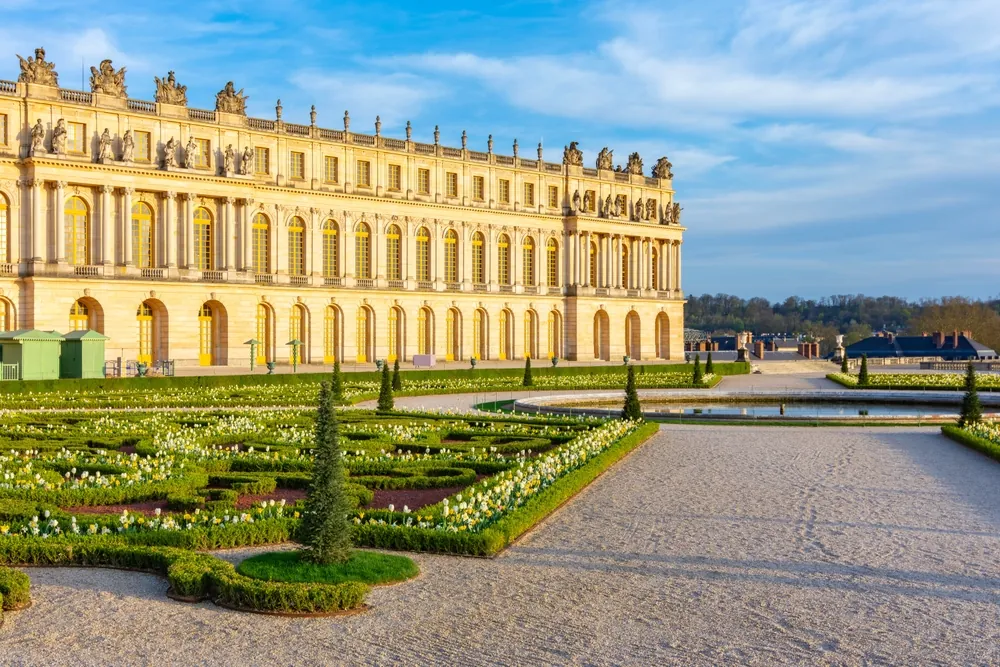
Strictly, Versailles is a palace rather than a defensive castle: Louis XIV transformed his father's hunting lodge from 1661 onwards, recruiting Louis Le Vau, Charles Le Brun and André Le Nôtre. The official 2024 Rapport annuel records 8.4 million visitors across the estate, with 4.4 million through the Palace itself, making it the most-visited historic residence in the world.[1]
The Hall of Mirrors, the King's State Apartments and the Le Nôtre gardens are the canonical interior visit. The Estate covers more than 800 hectares and includes the Trianon palaces and Marie-Antoinette's Hameau, both worth a half-day of their own. Versailles is one of the domaines nationaux under Article L621-36 of the Code du patrimoine: state property, inalienable, never to be sold.[2]
Practical: Tuesday to Sunday 09:00–18:30, closed Mondays. Passport (full estate) €35; €32 EEA residents; Trianon-only €15. Free under 18 and EEA under 26. Time-slot booking mandatory, including for free categories. RER C from central Paris to Versailles Château–Rive Gauche (around 40 minutes). Plan your visit.[1]
2. Mont-Saint-Michel
Normandy, France Daily, year-round Tidal-island abbey Map
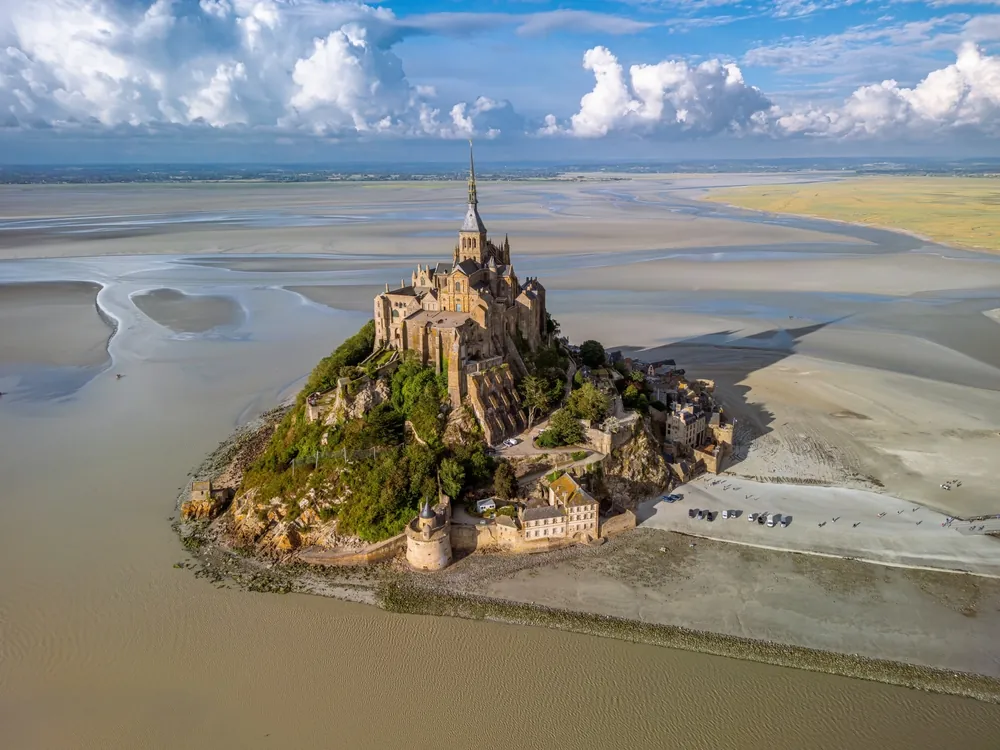
The granite islet off the Norman coast became a place of Christian pilgrimage from the 8th century, when Bishop Aubert of Avranches founded the sanctuary. The Romanesque abbey church and the Gothic Merveille monastic complex were added between the 11th and 13th centuries. Tides isolate the Mount from the mainland twice daily, giving it a defensive role through the Hundred Years' War: English forces besieged it repeatedly between 1424 and 1434 and never broke through. UNESCO inscribed the abbey, the bay and the village in 1979.[3]
The Mount (village, ramparts, bay) is free and open to the public; only the abbey is ticketed. The visit climbs the Grande Rue to the abbey at the summit. The abbey church, the Knights' Hall, the cloister and the refectory are the key interiors. The walk back at low tide, with the bay opening to the horizon, tends to fix the visit in memory.
Practical: open daily year-round (closed 1 January, 1 May, 25 December). Adult €16 high season (April–September), €13 low season; free under 18 and EU 18–25. Free first Sunday of January, February, March, November, December. From Paris Montparnasse, TGV to Pontorson via Rennes (around 3 hours), then Keolis shuttle (around 20 minutes). Plan your visit.[3]
3. Tower of London
London, England Daily, year-round Crown Jewels & ravens Map
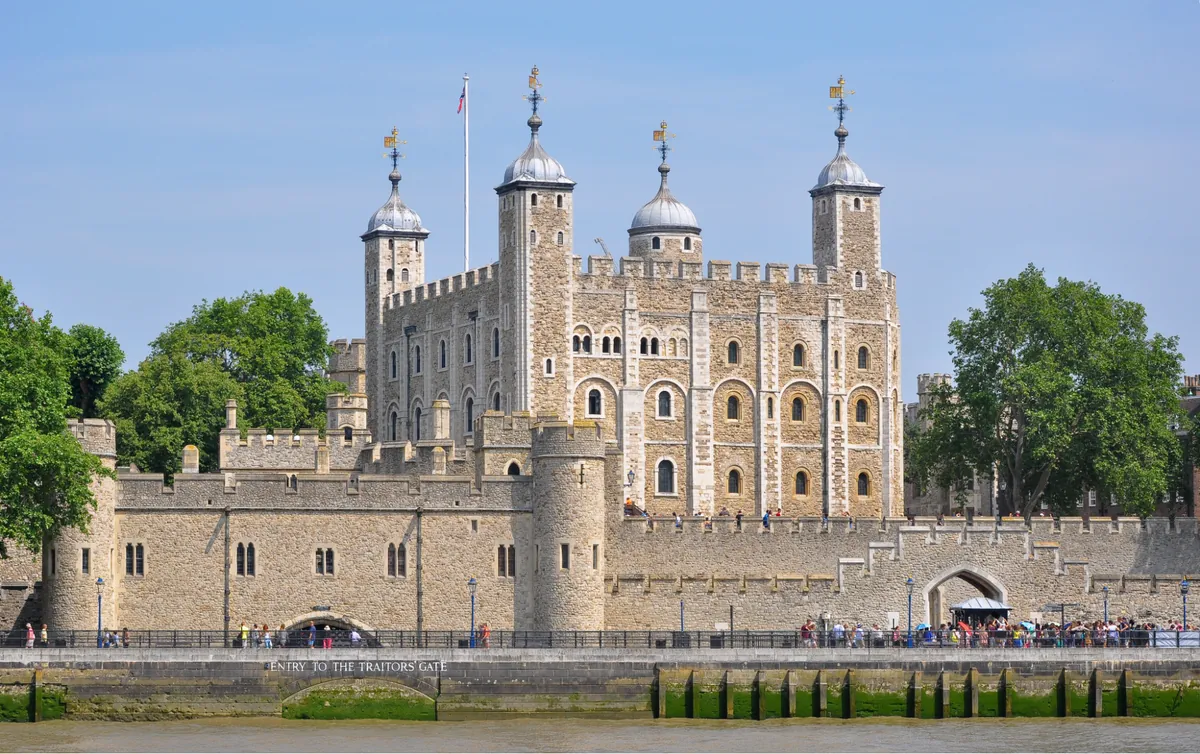
Construction of the White Tower at the centre of the complex began in the 1070s under William the Conqueror and was largely complete by 1100. Marc Morris records the keep at 107 by 118 feet at the base and 90 feet high, the largest English keep of its era.[4] Successive monarchs added the curtain walls and the moat. UNESCO inscribed the Tower in 1988; ALVA's 2024 data ranks it as the most-visited paid heritage attraction in England, with around 2.9 million admissions.[5]
Visitors come for the Crown Jewels (still in working royal use, displayed under armed guard in the Jewel House), the Yeoman Warder tours that run every 30 minutes, the resident ravens, and the Royal Mint, prison and execution histories layered through the complex. The site is run by Historic Royal Palaces, a self-funded charity with no UK government operating subsidy.
Practical: daily from 09:00, last admission 15:30. Closed 24–26 December and 1 January. Adult £34.80 advance; £27.80 concession; £17.40 child (5–15); £96.50 family. £1 tickets for UK benefit recipients. Middle Tower closed for conservation until mid-June 2026. Tube to Tower Hill, 5 minutes' walk. Plan your visit.[5]
4. Cité de Carcassonne
Occitanie, France Daily, year-round Largest fortified medieval city in Europe Map
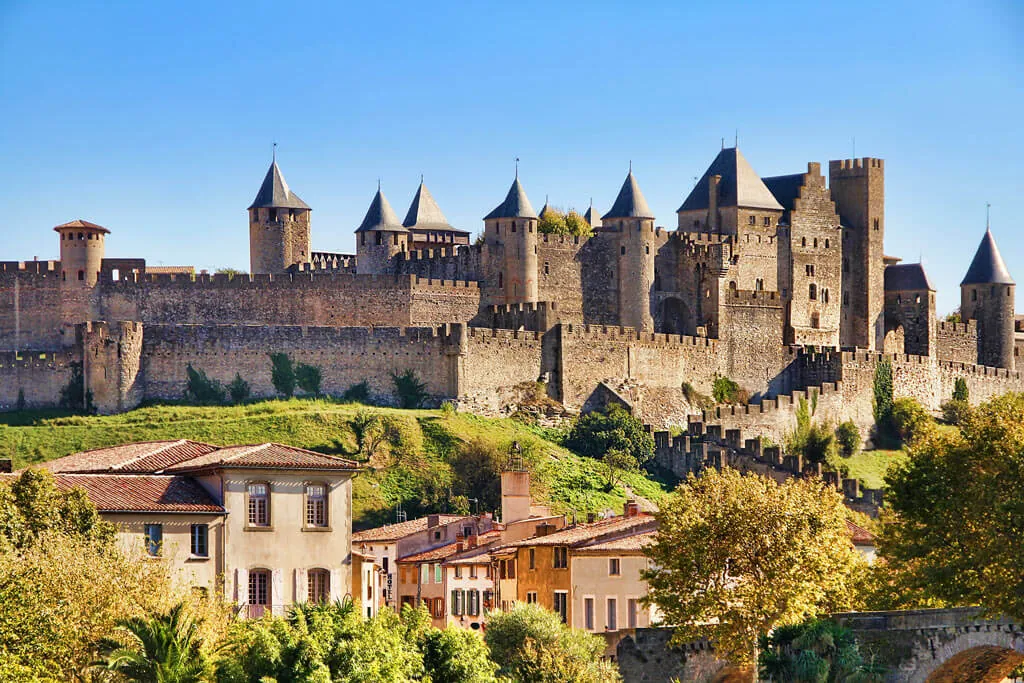
The double-walled medieval citadel above the modern town of Carcassonne is the largest fortified city in Europe: around 52 towers across two concentric ramparts spanning roughly 3 kilometres. The site was a Roman castrum before the Cathar wars; under Louis IX and his son Philippe III, the inner walls and the Comtal Castle were rebuilt in the 13th century as a southern bulwark of the kingdom. Eugène Viollet-le-Duc led the 1853–1879 restoration that gave the towers their conical roofs. UNESCO inscribed the Cité in 1997.[6]
The Cité is a living town: about 50 residents, plus shops, hotels and restaurants inside the walls. The streets, the basilica and the views over the lower town are free; the Comtal Castle and the ramparts walk are ticketed.
Practical: Comtal Castle daily 09:30–17:00 (October–March) / 10:00–18:30 (April–September); closed 1 January, 1 May, 25 December. Adult €13 off-peak, €19 peak (1 June–30 September); free under 18 and EU 18–25. TGV from Paris Gare de Lyon to Carcassonne (around 5h30 direct or via Montpellier). Plan your visit.[6]
5. Alhambra
Granada, Spain Daily, advance booking Nasrid palace city Map
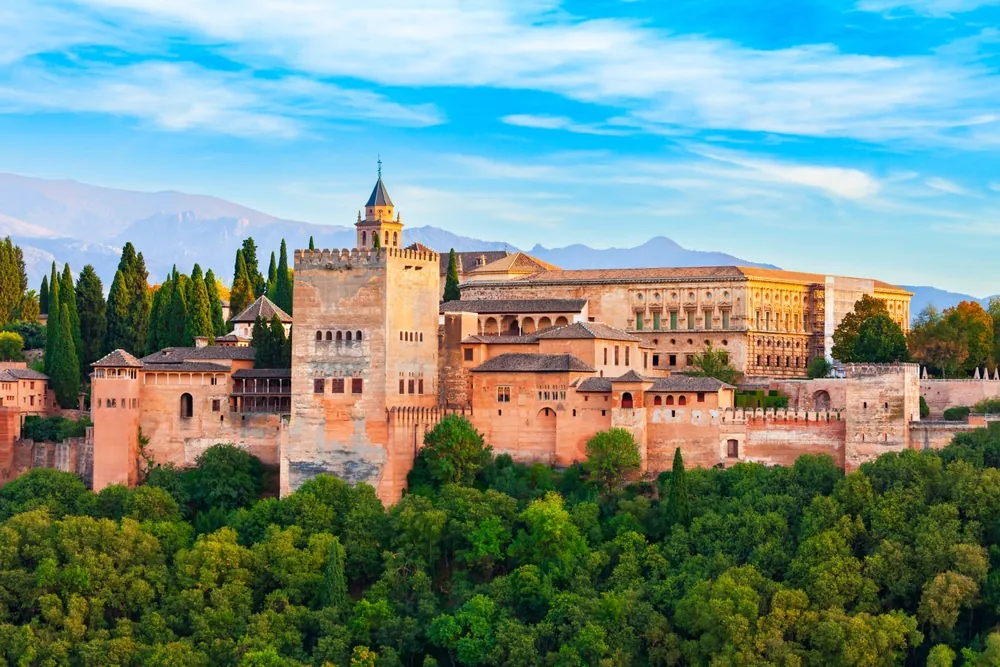
The Alhambra drew around 2.7 million visitors in 2024 per the Patronato de la Alhambra y Generalife's published Memoria, placing it at the very top tier of paid heritage attendance in Europe alongside the Tower of London and Edinburgh Castle.[7] The complex spans 142,000 square metres of monumental zone. It began as the 9th-century Alcazaba military fortress; the 13th and 14th-century Nasrid Palaces are the artistic core, with the post-Reconquista Charles V Palace (1527) and the Generalife gardens added later. UNESCO inscribed it in 1984.
Daily admissions to the Nasrid Palaces are capped for conservation, and tickets carry a fixed time slot for entry. They sell out weeks ahead in summer. The Charles V Palace, Alhambra Museum and Mosque baths are free entry; the Nasrid Palaces, Alcazaba and Generalife are on the general ticket.
Practical: daily 08:30–20:00 (April–October) / 08:30–18:00 (November–March); closed 25 December and 1 January. General ticket €21.27 online; Gardens and Generalife €10; night visits to the Nasrid Palaces €11 (Tuesday–Saturday in season). Free under 12. From Granada, city buses C30/C32 from Plaza Isabel, or 15–20 minutes uphill on foot from Plaza Nueva. Plan your visit.[7]
6. Edinburgh Castle
Scotland Daily, year-round Honours of Scotland Map
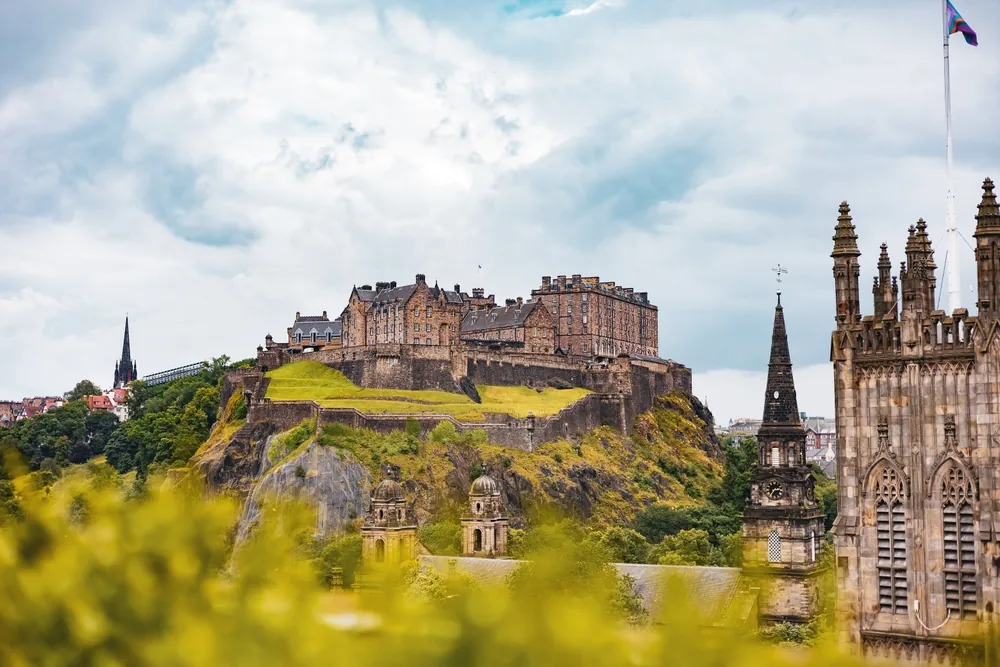
Edinburgh Castle, perched on Castle Rock above the Old Town, is Scotland's most-visited paid attraction. ALVA's 2024 figures put admissions at 1.98 million, up about 4% year-on-year.[8] Inside are the Honours of Scotland (the Scottish Crown Jewels, locked in a forgotten chamber for 111 years before their 1818 rediscovery), the Royal Apartments where Mary, Queen of Scots gave birth to the future James VI in 1566, and the National War Museum. The Stone of Destiny was permanently moved to Perth Museum in 2024 after 28 years on display at the Castle.
The esplanade hosts the Royal Edinburgh Military Tattoo each August. The operator's broadcast reach is placed at more than 100 million viewers worldwide.[9]
Practical: daily 09:30–18:00 (April–September) / 09:30–17:00 (October–March). Closed 25–26 December. Adult £23.50 online (£26.00 on the gate); concession £19.00; child (7–15) £14.00; under 7 free. Family from £48.50. Crown Room closed 12 January–April 2026 for refurbishment. From Waverley station, walk up the Royal Mile (15–20 minutes); buses 23, 27, 41 to George IV Bridge. Plan your visit.[8]
7. Royal Alcázar of Seville
Andalusia, Spain Daily, year-round Mudéjar royal palace Map
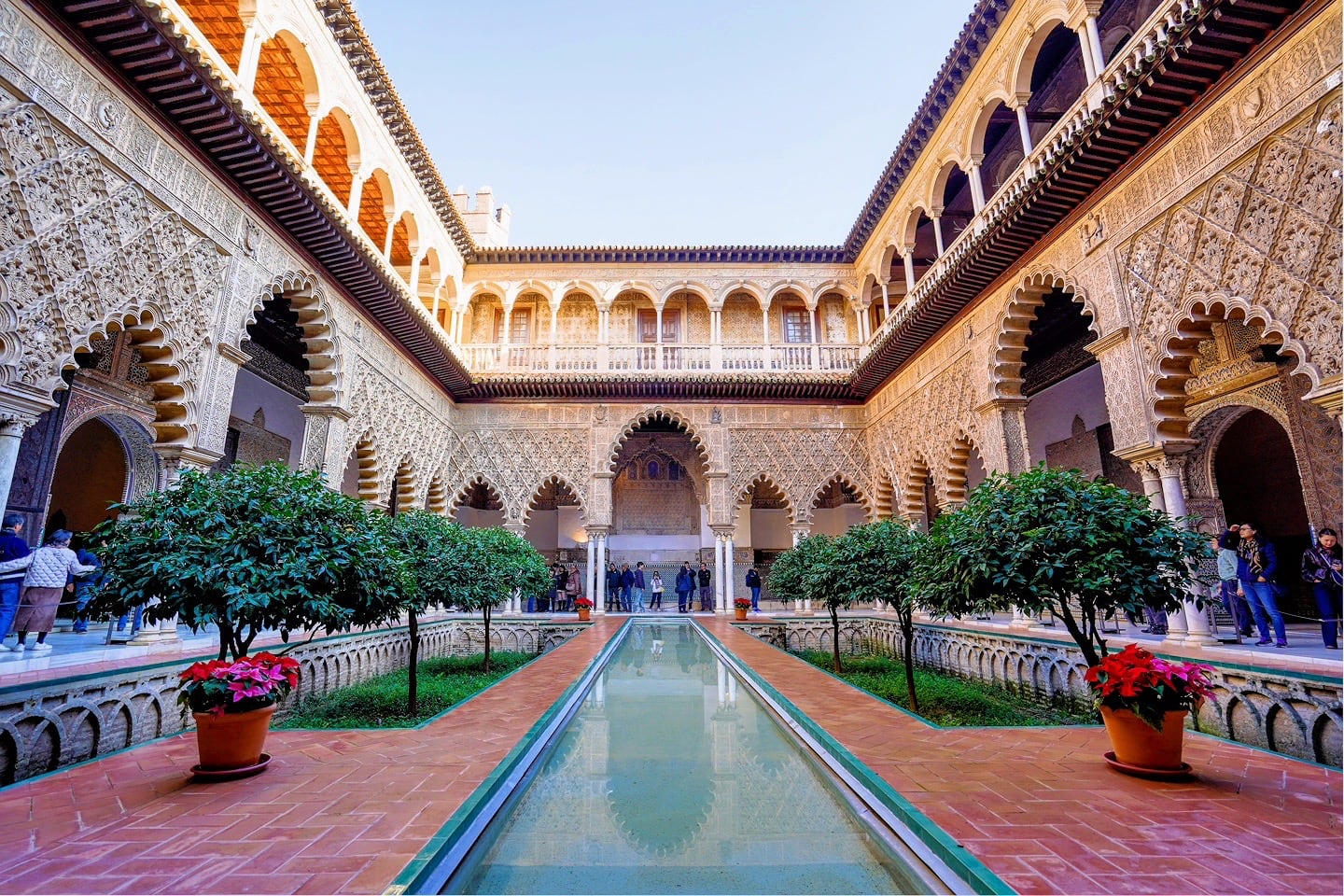
The Royal Alcázar is the oldest royal palace still in active use anywhere in Europe, occupied continuously since the Umayyads founded it in 913. Pedro I rebuilt much of it in the 1360s in the Mudéjar style, and successive Spanish royals kept extending it across the next six centuries. The reigning Spanish monarch still uses the upper floors as an official residence in Seville. UNESCO inscribed the palace, the cathedral and the Archivo de Indias as a single ensemble in 1987.
The palace doubled as a primary filming location for Game of Thrones: the gardens and the Patio de las Doncellas appeared as the Water Gardens of Dorne in Seasons 5 and 6. Most visitors come for the Hall of the Ambassadors, the Patio de las Doncellas, the Galería del Grutesco and the gardens themselves. Seville-born and Seville-resident visitors enter free with documentation.
Practical: daily 09:30–19:00 (April–September) / 09:30–17:00 (October–March). General entrance €15.50; Upper Royal Quarter (Cuarto Real Alto) €5.50 separate. Booking online is strongly advised in spring and autumn. From central Seville, walk from the cathedral, or Metro Centro tram to Archivo de Indias. Plan your visit.[10]
8. Windsor Castle
Berkshire, England Closed Tue & Wed Oldest occupied castle Map
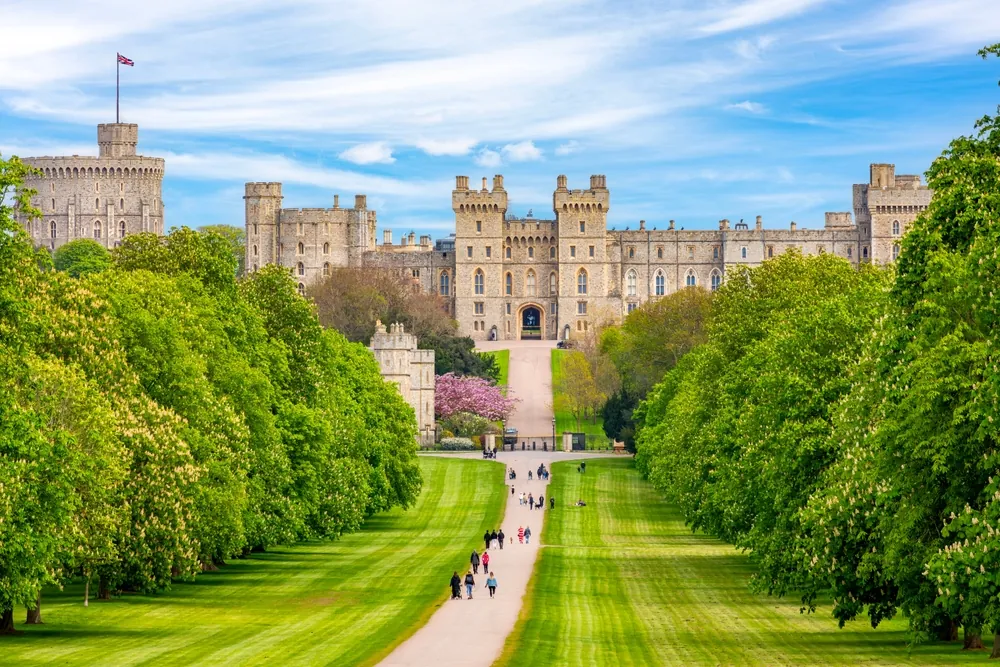
Windsor has been a continuously occupied royal residence for over 950 years, the longest tenure in Europe. William the Conqueror founded the castle around 1070; Henry II, Henry III, Edward III and Henry VIII each contributed to its expansion.[11] It is the largest inhabited castle in the world by floor area. The 1992 fire damaged 115 rooms and burned for around 15 hours; the £37 million restoration involved 1,500 contractors and craftsmen and took five years to complete.[12]
The visit takes in the State Apartments, St George's Chapel (where Henry VIII, Charles I and Queen Elizabeth II are buried), Queen Mary's Dolls' House and (in summer) the Semi-State Rooms used for state visits. The Changing of the Guard happens at 11:00 on most days the castle is open.
Practical: open Thursday to Monday year-round; closed Tuesday and Wednesday. Adult £21.00 advance (£25.00 on the day); under 5 free; £1 tickets for UK benefit recipients. The Castle can close at short notice for working royal duties; Semi-State Rooms reopen autumn 2026. South Western Railway from Waterloo to Windsor & Eton Riverside (around 55 minutes), or GWR from Paddington via Slough to Windsor & Eton Central (30–40 minutes). Plan your visit.[13]
9. Sanssouci Palace
Potsdam, Germany Closed Mondays Frederick the Great's vineyard retreat Map
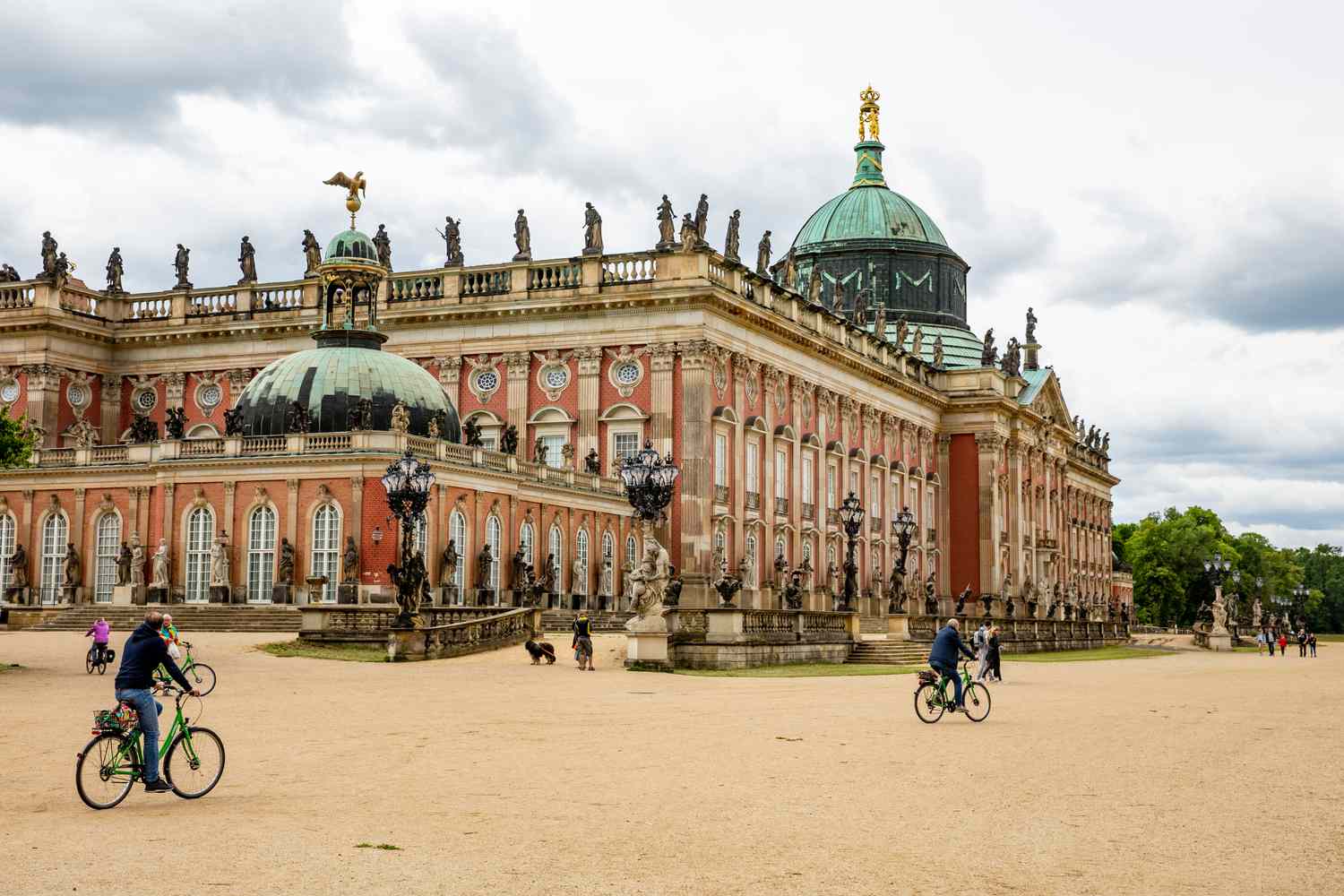
Sanssouci was Frederick the Great's personal summer retreat at Potsdam, built in 1745–47 by Georg Wenzeslaus von Knobelsdorff to a sketch the king himself supplied. The single-storey rococo maison de plaisance, terraced into a vineyard hillside, was designed for retreat from court (the name borrows from the French sans souci, "without cares"). Frederick was buried here, his tomb under a flagstone next to the dogs he had loved. The palace is the flagship of the Stiftung Preußische Schlösser und Gärten Berlin-Brandenburg, which runs around thirty Hohenzollern properties. UNESCO inscribed the Palaces and Parks of Potsdam and Berlin in 1990.
The state rooms include the Marble Hall, the Concert Room and the Library; visits are by timed-entry slot. The 290-hectare park itself is free, and a half-day among the New Palace, Charlottenhof and the Chinese House makes the most of the visit.
Practical: Tuesday to Sunday 10:00–17:30 (April–October) / 10:00–16:30 (November–March), closed Mondays. Sanssouci Palace single €14 adult, €10 concession; sanssouci+ combined ticket (all Potsdam SPSG palaces, one day) €22 / €17; family €49. Closed 2 September 2026 for a works meeting. S-Bahn S7 from Berlin to Potsdam Hauptbahnhof, then bus 695 or X15 to "Schloss Sanssouci". Plan your visit.[14]
10. Wawel Royal Castle
Kraków, Poland Timed entry per exhibit Polish coronation seat Map
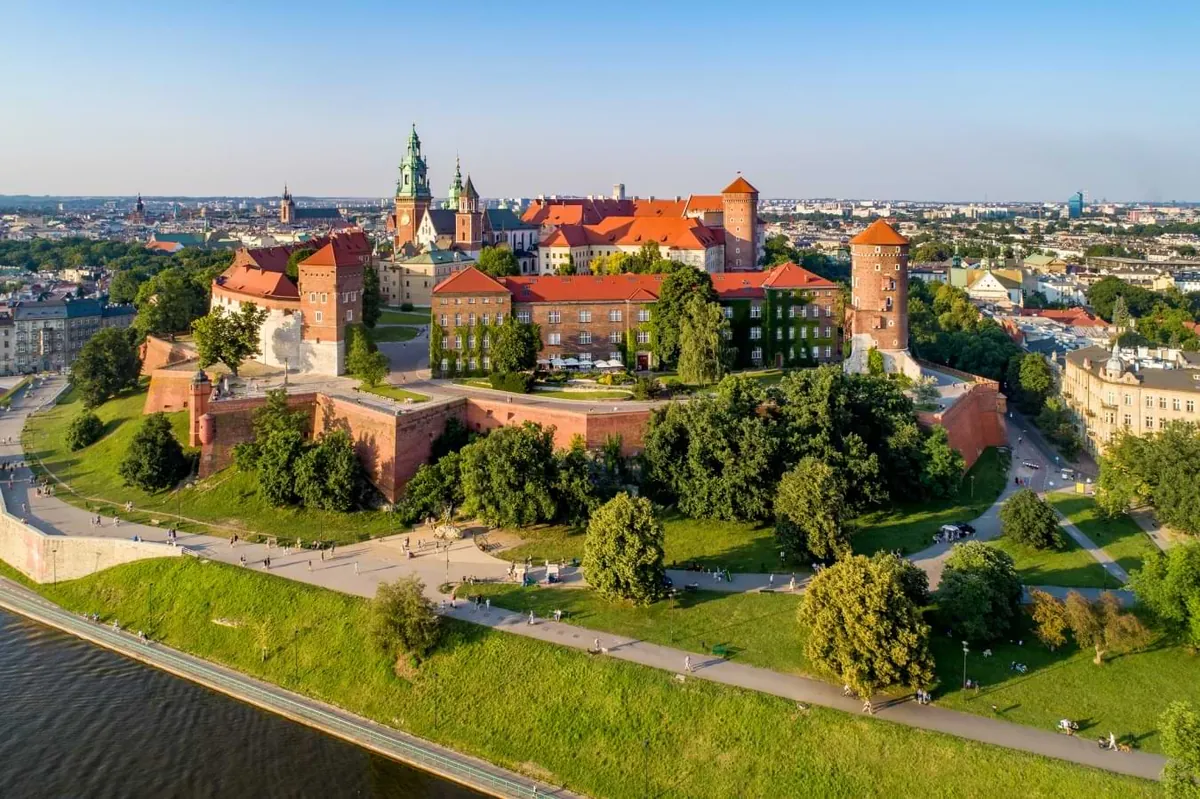
Wawel Hill above the Vistula was the seat of the Polish monarchy for five centuries and the coronation venue for nearly every Polish king from Władysław I in 1320 onwards. The castle layers eight centuries of architectural change: Romanesque foundations, a Gothic core, a Renaissance courtyard added under Sigismund I in the 1530s by the Italian architects Francesco Fiorentino and Bartolomeo Berrecci, and Baroque and 19th-century reconstruction work on top. The complex sits within the Kraków Old Town, inscribed as one of the first twelve UNESCO World Heritage Sites in 1978.
Wawel is a complex of multiple ticketed exhibitions rather than a single museum. The State Rooms, the Crown Treasury and Armoury, the Castle Underground (Lost Wawel), the Royal Gardens and the Dragon's Den all carry separate admission. The hilltop courtyards and the cathedral exterior are free.
Practical: Monday 09:00–14:00 (limited); Tuesday to Sunday 09:00–16:00 (timed entry per exhibition). State Rooms PLN 53 / 40; Crown Treasury and Armoury PLN 43 / 32; Castle Underground PLN 43 / 32; Royal Gardens PLN 11 / 9; Dragon's Den PLN 35 / 26. Sandomierska Tower closed for conservation from 25 March 2026. Closed 1 January, Holy Saturday, Easter Sunday, Easter Monday, 1 November, 11 November, 24–25 December. Tram 8/10/13/18 to Wawel or Stradom; 10 minutes on foot from Rynek Główny. Plan your visit.[15]
11. Schloss Neuschwanstein
Bavaria, Germany Tour by reservation Fairy-tale castle Map
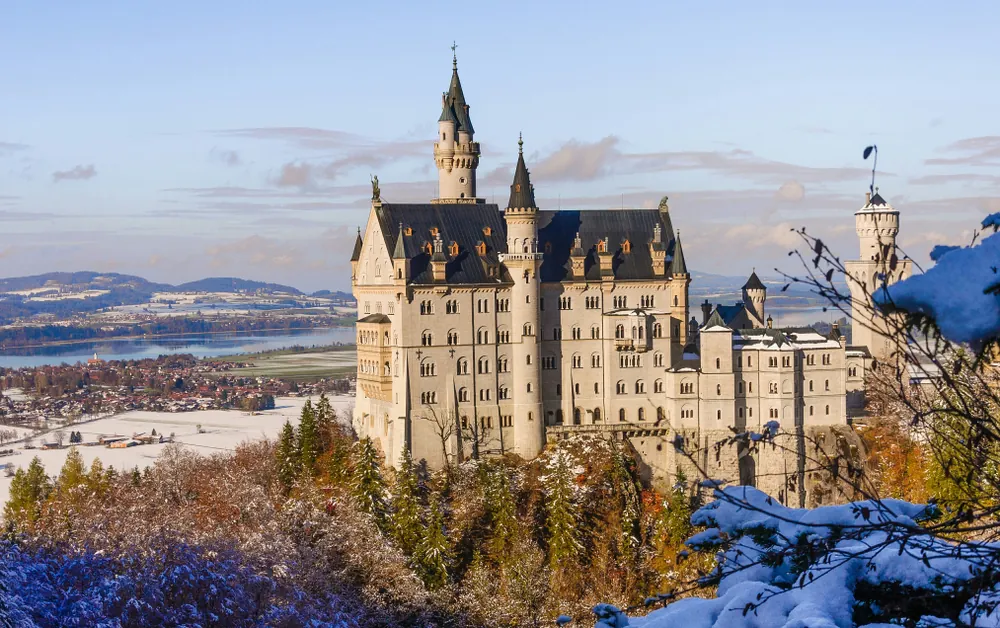
Neuschwanstein in Bavaria carries the strongest international visual recognition of any castle on this list. Walt Disney came across the castle around 1950, and the Sleeping Beauty Castle silhouette in the original Disneyland (1955) and at Walt Disney World was modelled on Neuschwanstein's roofline.[16] Ludwig II of Bavaria had the schloss built between 1869 and 1886 as a Romantic-era hilltop fantasy, modelled on the Wartburg and on the literary imagination of medieval Germany. Ludwig died in 1886 with the castle still unfinished; he had spent only 172 nights inside. UNESCO inscribed Neuschwanstein and the other Royal Bavarian Castles in 2025. The Bayerische Schlösserverwaltung records around 1.07 million visitors in 2024, down from 1.27 million in 2023 before partial closures for restoration.[16]
The visit is guided-tour-only with a strict timed slot. Restoration of the state rooms, Throne Hall and Venus Grotto reopened in 2024. Pre-booking is essential: same-day tickets sell out by mid-morning even in shoulder season.
Practical: daily 09:00–18:00 (28 March–15 October 2026) / 10:00–16:00 (16 October 2026–27 March 2027). Closed 1 January, 24, 25 and 31 December. Adult €21, concession €20; free under 18 and for students with ID. Online booking fee €2.50. Regional train Munich to Füssen (around 2 hours, hourly), bus 73/78 to Hohenschwangau (around 10 minutes), then 30–40 minutes uphill on foot or shuttle bus (€3 up / €2 down). Plan your visit.[16]
12. Castel Sant'Angelo
Rome, Italy Closed Mondays Hadrian's mausoleum Map
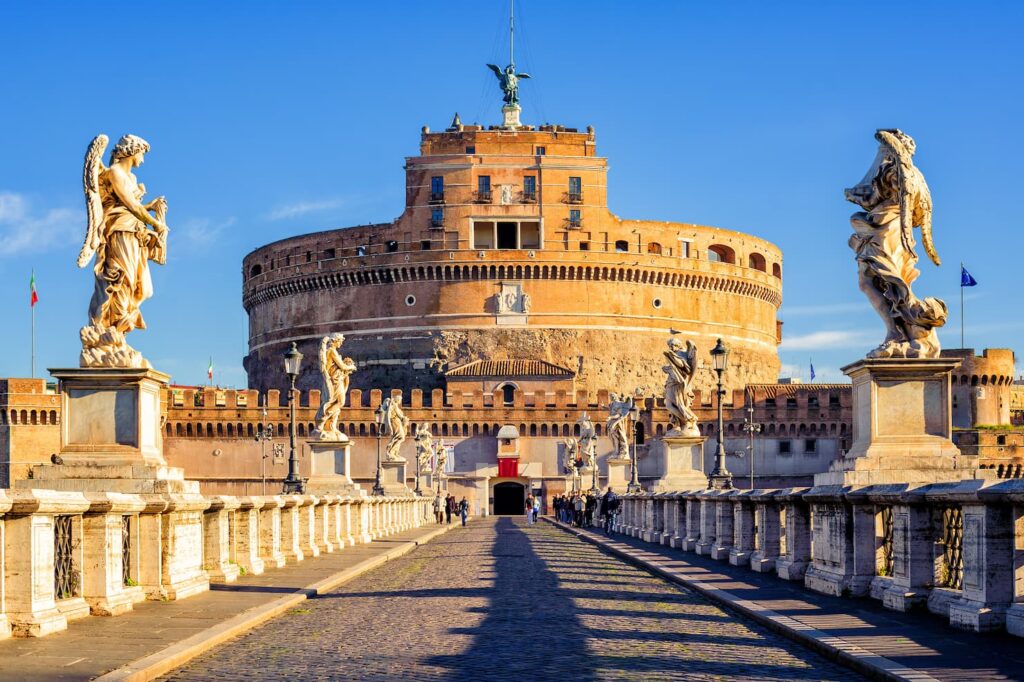
Castel Sant'Angelo on the Tiber's right bank started as a tomb. Emperor Hadrian had the cylindrical mass built between 134 and 139 CE as his mausoleum; the Roman drum and helical access ramp survive in the lower levels. Successive popes converted it into a fortress, papal residence and prison from the 14th century onwards. The Passetto di Borgo, a fortified raised corridor, runs from the castle to the Vatican Palace as an emergency escape route, used by Pope Clement VII during the 1527 Sack of Rome. The upper terrace carries Bernini's marble Angel with the Sword, the silhouette that gives the castle its name.
The Castle is run as a state museum by the Italian Ministry of Culture. The visit covers the Roman drum, the papal apartments, the Sala Paolina frescoes and the upper terrace.
Practical: Tuesday to Sunday 09:00–19:30, last admission 18:30; closed Mondays, 1 January, 25 December. Adult €16; reduced €2 for EU citizens 18–25 with ID; free under 18. Free first Sunday of each month. Metro A to Lepanto (12-minute walk) or Ottaviano (15-minute walk); bus 23, 40, 271, 982 to Piazza Pia. Plan your visit.[17]
13. Malbork Castle
Pomerania, Poland Daily; free Mondays World's largest brick castle Map
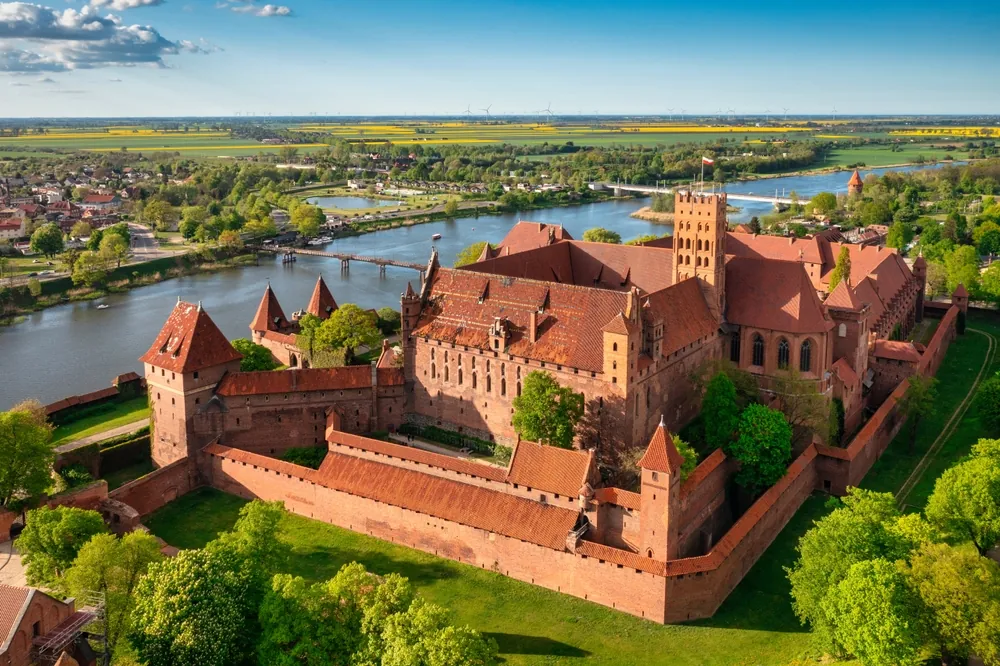
Malbork closes out the European list at a smaller visitor count, but it holds the architectural superlative most likely to come up in a pub quiz: the largest castle in the world by built floor area, around 143,591 square metres of integrated structure inside an 18-hectare UNESCO-protected zone. The Teutonic Order moved its headquarters to Marienburg in 1309, after construction had begun in 1274; the complex grew across the 14th century into the largest brick castle in the world. UNESCO inscribed Malbork in 1997.[18]
The visit splits across two route tickets: the Historical Castle Route (Grand Master's Palace, refectory, knights' chambers, treasury) and the Castle Grounds Route (moats, outer walls, courtyards). Audio guide included with the Historical Route. The grounds route is free on Mondays.
Practical: Monday 09:00–20:00, Tuesday to Sunday 09:00–19:00 in high season. Hours shorten in low season. Historical Castle Route PLN 80 / 60; Castle Grounds Route PLN 35 / 25 (free Mondays). Children up to 7 free. Train from Gdańsk Główny to Malbork station (around 50 minutes), then 15-minute walk. Plan your visit.[18]
14. Himeji Castle
Hyōgo Prefecture, Japan Daily, year-round White Heron Castle Map
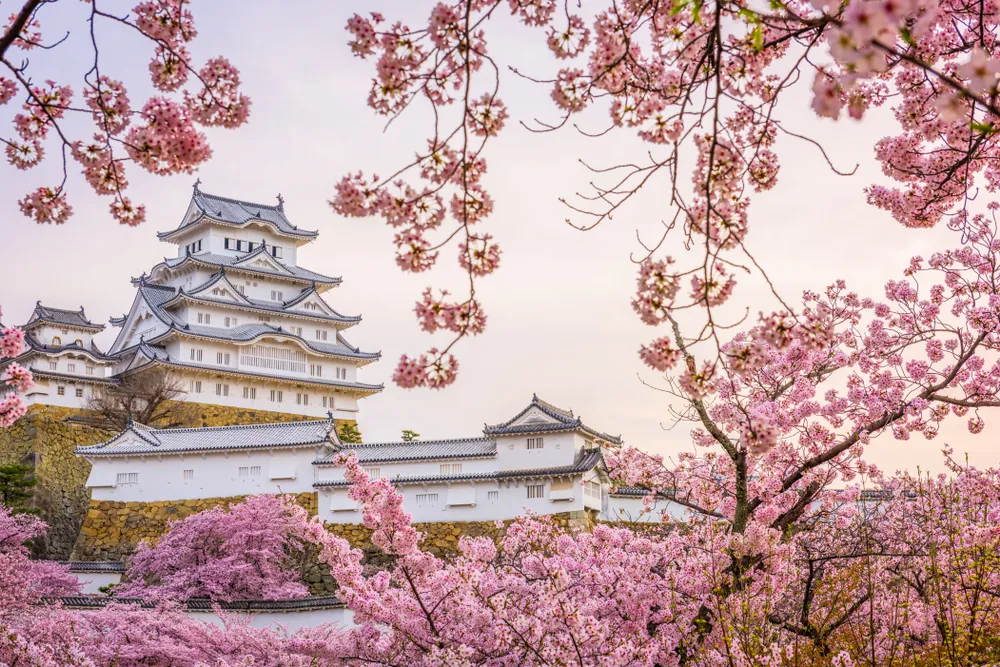
Himeji is the most-visited castle in Japan, with annual admissions sustained above two million in good years (the Visit Himeji record cites 2,860,000 visitors in 2015).[19] First established in 1333 by Akamatsu Norimura, expanded by Toyotomi Hideyoshi in the 1580s, and given its current six-storey main keep by Ikeda Terumasa between 1601 and 1609 (with later additions completed by Honda Tadamasa by 1617), the castle is the largest and best-preserved Japanese hilltop castle of the early Edo period. White-plastered walls and tiered roofs above the city give it the nickname Shirasagi-jō (White Heron Castle). UNESCO inscribed Himeji in 1993 as one of Japan's first World Heritage Sites, alongside Hōryū-ji.[20]
The defensive layout is the substance of the visit: arrow slits, stone-dropping mechanisms, baffled gates and a deliberately confusing maze of passages designed to slow an invader. The main keep restoration completed in 2015 and the white plasterwork is at its most striking. The Kokoen Garden adjoins the castle on a combined ticket.
Practical: daily 09:00–17:00 (last entry 16:00); closed 29–30 December. Adult ¥2,500 (effective March 2026); under 18 free; combined ticket with Kokoen Garden ¥2,600; annual pass ¥5,000. From JR Himeji or Sanyō Himeji station, 20 minutes on foot via Otemon-dōri, or 5 minutes by Shinki bus to "Otemon-mae". Plan your visit.[21]
15. Bran Castle
Transylvania, Romania Daily, year-round "Dracula's castle" Map
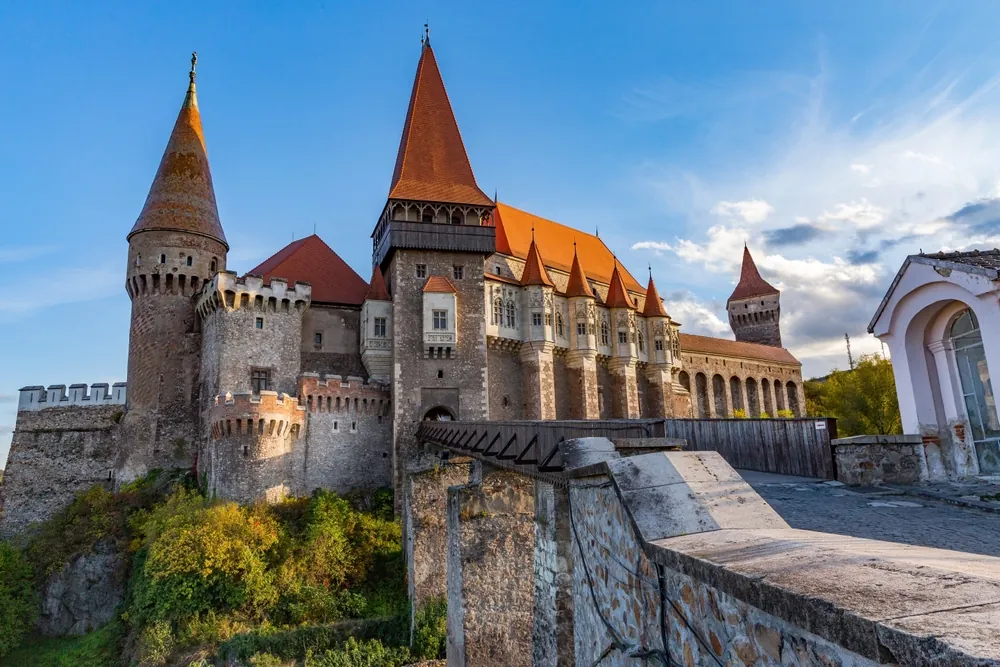
Bran is the Carpathian crag fortified by the burghers of Brașov (then Kronstadt) under a 1377 charter from Louis I of Hungary, held the Bran Pass against Ottoman incursions through the 15th and 16th centuries, and was given by the citizens of Brașov to Queen Marie of Romania in 1920 as a personal residence. Marie transformed the castle from a customs post into a royal summer home; the contemporary visit traces her reorganisation of the interiors. The Dracula association is essentially literary tourism: Bram Stoker never visited Romania, but his 1897 description of his fictional Count's residence aligned closely enough with Bran's silhouette that the connection became fixed by the late 20th century. The castle's own exhibition explores Vlad III Țepeș, the Wallachian voivode who inspired the Dracula name, alongside the Romanian royal history.[22]
The visit covers the medieval keep, Queen Marie's apartments and gardens, the Time Tunnel and (a separate ticket) the Torture Rooms exhibit. Bran is one of Romania's most-visited heritage sites, though the castle administration has not published a recent annual visitor figure.
Practical: Monday 12:00–18:00 (last entry); Tuesday to Sunday 09:00–18:00. Adjusted hours around public holidays. Adult 90 lei standard (around €18); senior 60 lei; student 50 lei; child (5–17) 30 lei; under 5 free. Royal Tour Plus Fast Pass (with Torture Rooms and Time Tunnel) 150 lei. From Brașov (around 30 km), bus from Autogara 2 or organised day-trip transfers. Plan your visit.[22]
At a glance
| Castle | Region | When to go | |
|---|---|---|---|
| Château de VersaillesSun King's seat | Île-de-France, France | Closed Mondays |
| Mont-Saint-MichelTidal-island abbey | Normandy, France | Daily, year-round |
| Tower of LondonCrown Jewels & ravens | London, England | Daily, year-round |
| Cité de CarcassonneLargest fortified medieval city in Europe | Occitanie, France | Daily, year-round |
| AlhambraNasrid palace city | Granada, Spain | Daily, advance booking |
| Edinburgh CastleHonours of Scotland | — | Daily, year-round |
| Royal Alcázar of SevilleMudéjar royal palace | Andalusia, Spain | Daily, year-round |
| Windsor CastleOldest occupied castle | Berkshire, England | Closed Tue & Wed |
| Sanssouci PalaceFrederick the Great's vineyard retreat | Potsdam, Germany | Closed Mondays |
| Wawel Royal CastlePolish coronation seat | Kraków, Poland | Timed entry per exhibit |
| Schloss NeuschwansteinFairy-tale castle | — | Tour by reservation |
| Castel Sant'AngeloHadrian's mausoleum | Rome, Italy | Closed Mondays |
| Malbork CastleWorld's largest brick castle | — | Daily; free Mondays |
| Himeji CastleWhite Heron Castle | Hyōgo Prefecture, Japan | Daily, year-round |
| Bran Castle"Dracula's castle" | Transylvania, Romania | Daily, year-round |
What counts as the most famous castle?
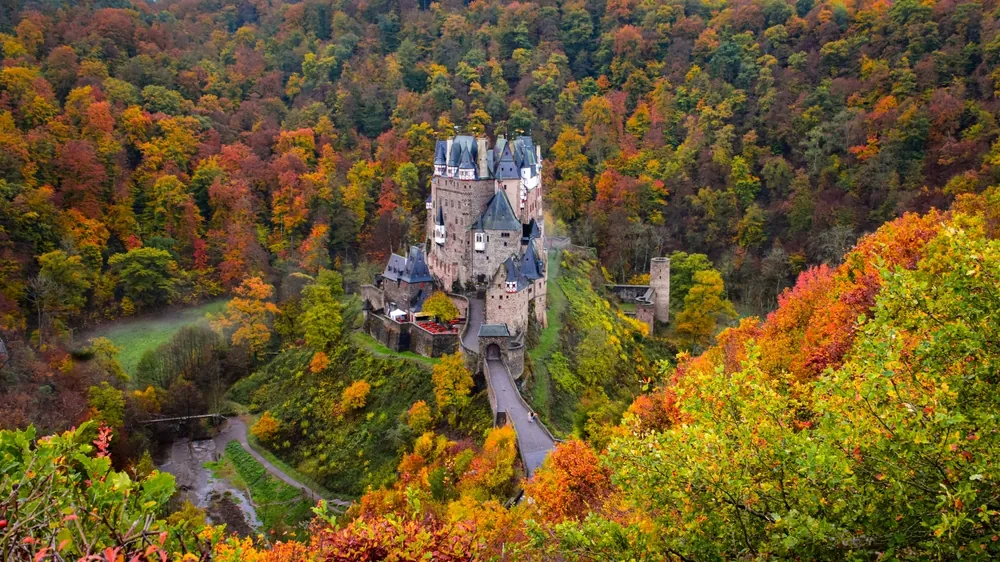
Visitor numbers are the hardest external check (an audited annual report is harder to spin than a search-volume curve), and at the very top the picture is consistent: Versailles at around 8.4 million, the Tower of London at around 2.9 million, the Alhambra at around 2.7 million, Edinburgh Castle at around 2.0 million.[1][5][7][8] Cultural recognition is the second axis: Neuschwanstein carries Disney, Kronborg carries Hamlet, Bran carries Dracula, Edinburgh carries the Tattoo, and the Alhambra carries Washington Irving's Tales of the Alhambra. Historical weight is the third: UNESCO inscription, a coronation seat, the prison of a king, the headquarters of a crusading order. Most of the fifteen above hit at least two of the three; the very top hits all three.
Notable absences include Heidelberg, the canonical European castle ruin; the Castello Sforzesco in Milan, with around two million through its civic museums; and Kronborg in Helsingør, the Renaissance citadel UNESCO inscribed in 2000 specifically for its Shakespeare association.[23] Each carries a strong cultural pull, even where the visitor figure sits below the entries above.
Sources
1. Château de Versailles, Rapport annuel 2024 (PDF).
2. Code du patrimoine, Partie législative, Articles L621-36, L621-41 (consolidated text). Légifrance / Journal officiel.
3. Mont-Saint-Michel, Centre des monuments nationaux official site.
4. Morris, M. Castles: Their History and Evolution in Medieval Britain. Pegasus Books, 2017, chs. 2–3 (White Tower dimensions).
5. Historic Royal Palaces, Tower of London visitor information.
6. Centre des monuments nationaux, Cité de Carcassonne / Remparts.
7. Patronato de la Alhambra y Generalife, Memoria 2024.
8. Edinburgh Castle, Historic Environment Scotland.
9. Royal Edinburgh Military Tattoo, official site.
10. Real Alcázar de Sevilla, official site.
11. Lepage, J.-D. G.G. Castles and Fortified Cities of Medieval Europe: An Illustrated History. McFarland, 2002, p. 176.
12. Goodall, J. The Castle: A History. Yale University Press, 2022, pp. 350–352.
13. Royal Collection Trust, Windsor Castle.
14. Stiftung Preußische Schlösser und Gärten Berlin-Brandenburg, Sanssouci Palace.
15. Wawel Royal Castle State Art Collection, official site.
16. Bayerische Schlösserverwaltung, Schloss Neuschwanstein.
17. Direzione Musei nazionali della città di Roma, Castel Sant'Angelo.
18. Muzeum Zamkowe w Malborku, official site.
19. Visit Himeji Official Travel Guide (City of Himeji).
20. Japan National Tourism Organization, Himeji-jō UNESCO listing.
21. Himeji Castle, official site (Himeji City Cultural Heritage Division).
22. Bran Castle, official site.
23. Slots- og Kulturstyrelsen, Kronborg (UNESCO Verdensarvsfaktaark), 2025.