
The Oldest Castles in the World: 10 Surviving Fortresses Ranked
The oldest castle in the world is the Citadel of Aleppo, fortified since 3000 BCE. Reichenburg, Windsor and 7 more ranked by survival across millennia.
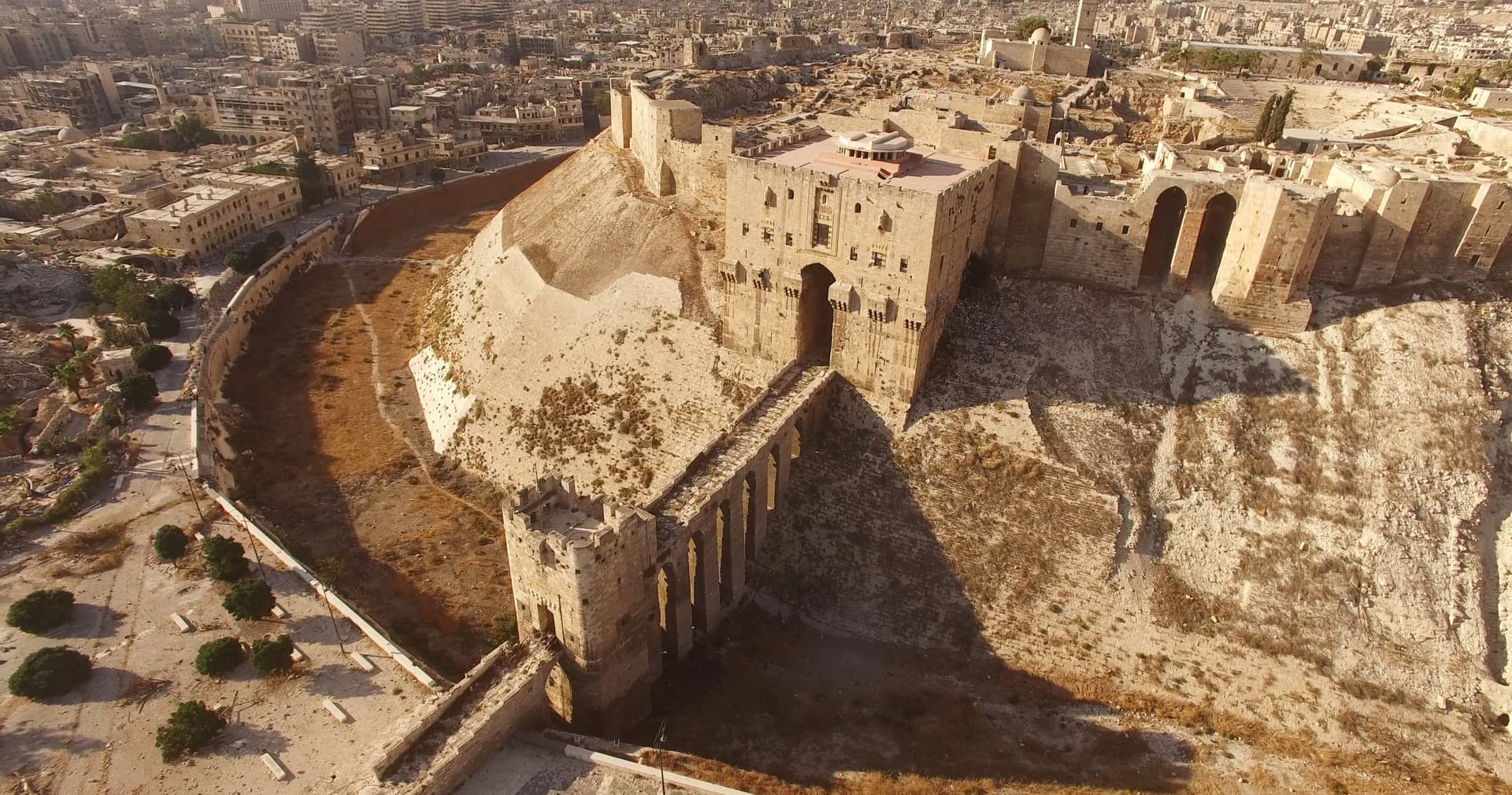
From a tell on the Syrian plain occupied for five millennia to a Norman keep still held by descendants of the family that built it: twelve fortresses ranked by founding date, with the caveats any "oldest" claim depends on.
The hardest question in castle history is what counts as "the oldest." Three definitions give three answers. Earliest fortified site on the same ground takes you to the Bronze Age (the Citadel of Aleppo sits on a tell built up by 5,000 years of layered occupation). Earliest standing fabric on a still-recognised castle puts you in the late 10th and 11th centuries, when stone keeps replaced earth-and-timber across western Europe. Longest continuous occupation as a residence belongs to Windsor, where the English (later British) crown has held the same site since 1070.[1]
The list below ranks twelve fortresses by their earliest substantial construction date. Aleppo and Krak des Chevaliers sit inside Syria's protected zones on the World Heritage in Danger list and are not visitable in 2026; both are kept on the list because their stone fabric is older than any visitable European peer. The rest are open, with caveats per entry.
1. Citadel of Aleppo
Syria 3rd millennium BCE site, 12th-c. fortifications Closed (war damage) Longest continuously fortified site Map
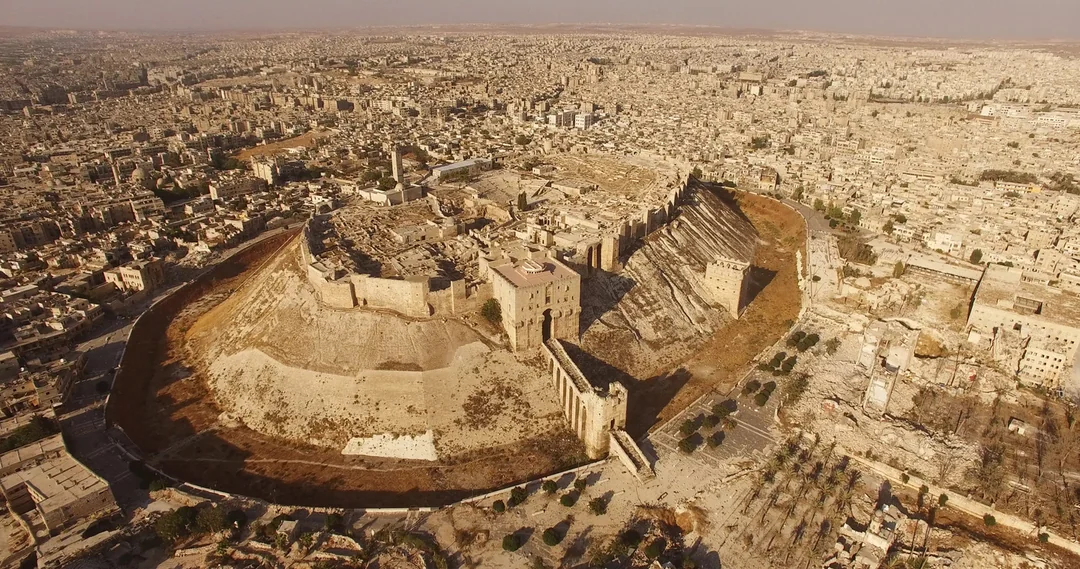
The Citadel of Aleppo (Qal'at Halab) sits on a 50-metre tell at the centre of the old walled city. Archaeology has documented use across roughly fourteen periods, running from the Bronze Age through Hittite, Aramean, Assyrian, Persian, Greek, Roman, Byzantine, Arab, Mongol, Mamluk and Ottoman phases. UNESCO's inscription describes the fortifications as the focal point of "an outstanding example of an Ayyubid 12th-century city" built after Saladin's victories over the Crusaders.[2]
The monumental gateway, the multi-bend entrance bridge, the stone-faced glacis and the inner palace structures are Ayyubid work, completed by Az-Zahir Ghazi (governor of Aleppo and son of Saladin) between 1193 and 1215. UNESCO inscribed the Ancient City in 1986 and added it to the List of World Heritage in Danger in 2013 after severe damage during the Syrian war; experts cited by UNESCO have estimated 70% of the core zone affected by destruction, with comparisons drawn to Berlin and Warsaw after 1945.[2]
Practical: not currently a tourist destination. Aleppo sits within an active conservation perimeter overseen by Syrian authorities and UNESCO and is not on the visitable list for 2026. UNESCO file.[2]
2. Reichsburg Cochem
Germany (Rhineland-Palatinate) c.1000, 19th-c. reconstruction Daily, year-round Moselle valley imperial castle Map
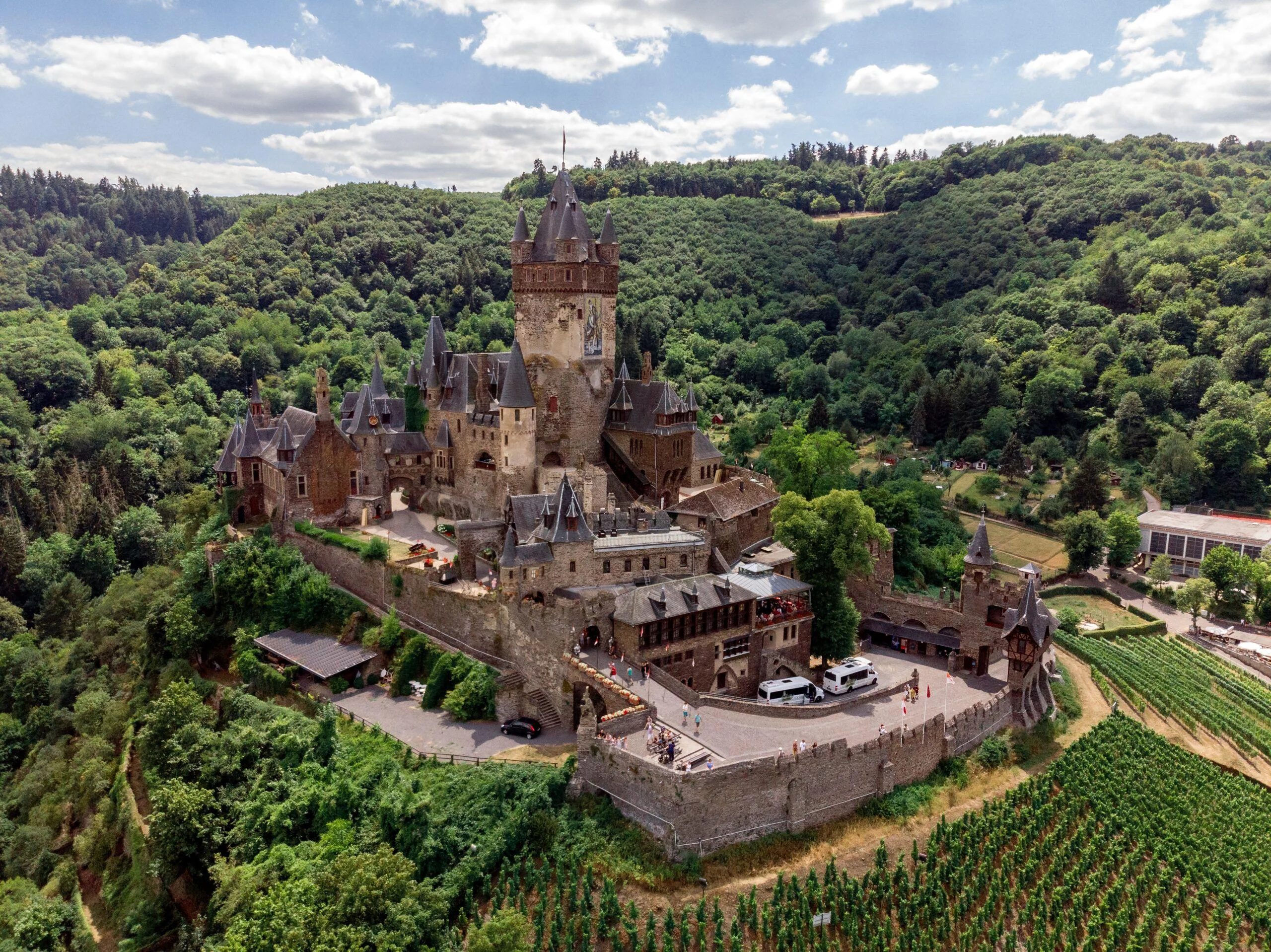
Tradition attributes the original castle to Palatinate Count Ezzo around the year 1000, and the earliest documentary mention dates to 1051, when Ezzo's daughter Richeza (former Queen of Poland) gave the castle to her nephew, Count Palatine Henry I. King Konrad III seized it in 1151 and made it an imperial fief, the moment from which it took the title Reichsburg.[3] French forces under Louis XIV undermined and burnt the castle on 19 May 1689 during the Nine Years' War; it stood ruined for almost two centuries.
Berlin businessman Louis Ravené bought the ruins in 1868 and commissioned architects Hermann Ende and Julius Carl Raschdorff to rebuild in Neo-Gothic style around the surviving late-Gothic fragments. The castle reopened in 1877; Cochem has owned it since 1978. The fabric you visit today is largely 19th-century romantic reconstruction over a medieval footprint, a useful test case for how readers think about authenticity in castle survival.[3]
Practical: open daily for guided tours from 09:30, last tour 17:00. Adult €10; child 6 to 17 €5; student over 18 €9; family €26. No parking at the castle: footpath from town or shuttle bus. Plan your visit.[3]
3. Krak des Chevaliers
Syria 1031, Hospitaller rebuild 1142–1271 Closed (war damage) Best-preserved Crusader castle Map
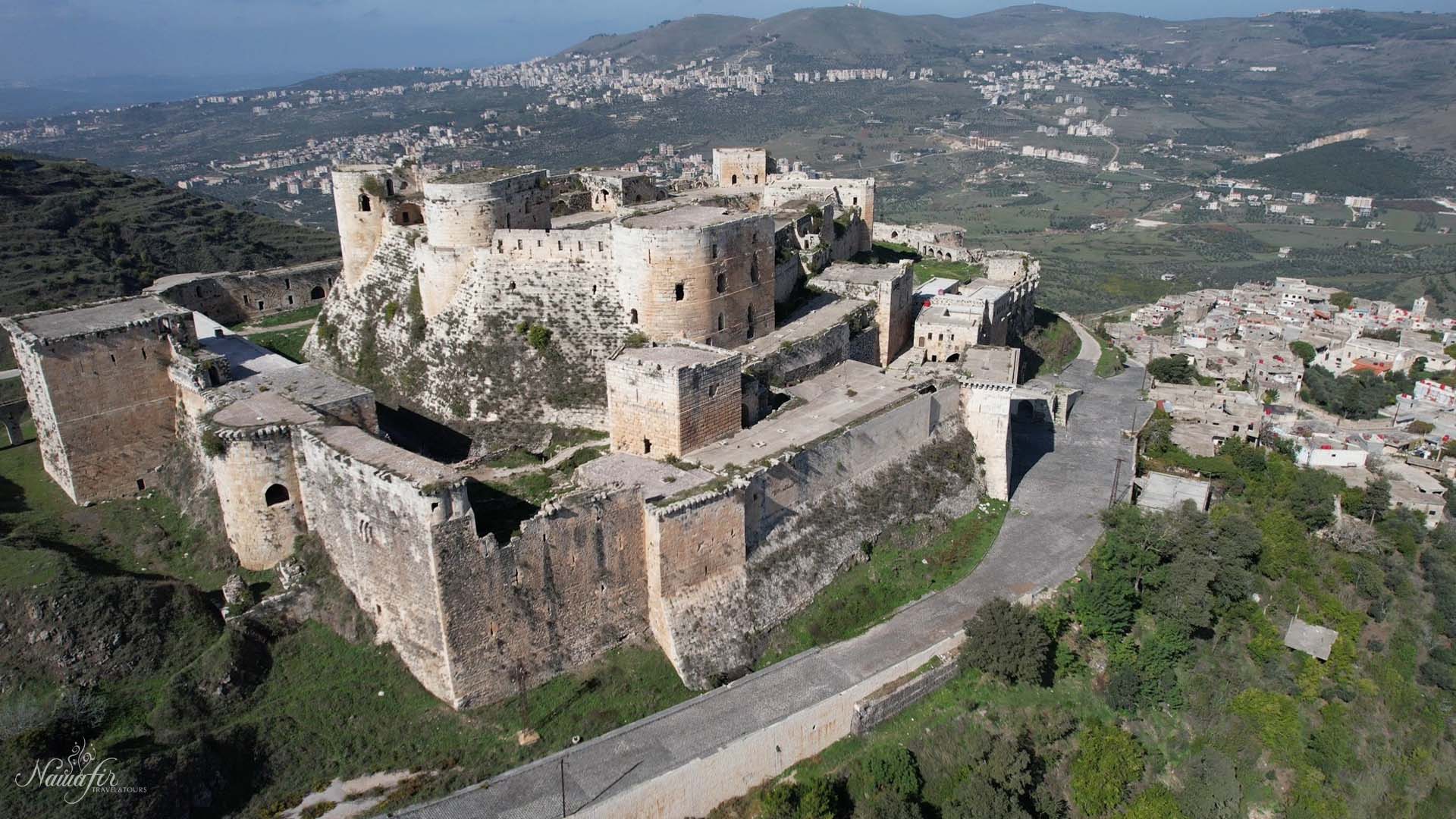
Built originally as a Kurdish garrison in 1031, the site was granted to the Knights Hospitaller in 1142 and rebuilt by them between 1142 and 1271 into the canonical concentric Crusader castle. UNESCO's inscription describes Krak as one of the best-preserved examples of Crusader military architecture, with further building work added by the Mamluks in the late 13th century.[4] T. E. Lawrence called it "perhaps the best preserved and most wholly admirable castle in the world." UNESCO inscribed Krak des Chevaliers (with Qal'at Salah El-Din) in 2006 and added it to the List of World Heritage in Danger in 2013, after damage from shelling and occupation during the Syrian civil war. Emergency consolidation has continued since under the Syrian Directorate-General of Antiquities and Museums.[4]
Practical: not currently a tourist destination. The site sits within a managed conservation perimeter and visits are not advised in 2026. UNESCO file.[4]
4. Wartburg Castle
Germany (Thuringia) Open daily, year-round Luther's translation refuge Map
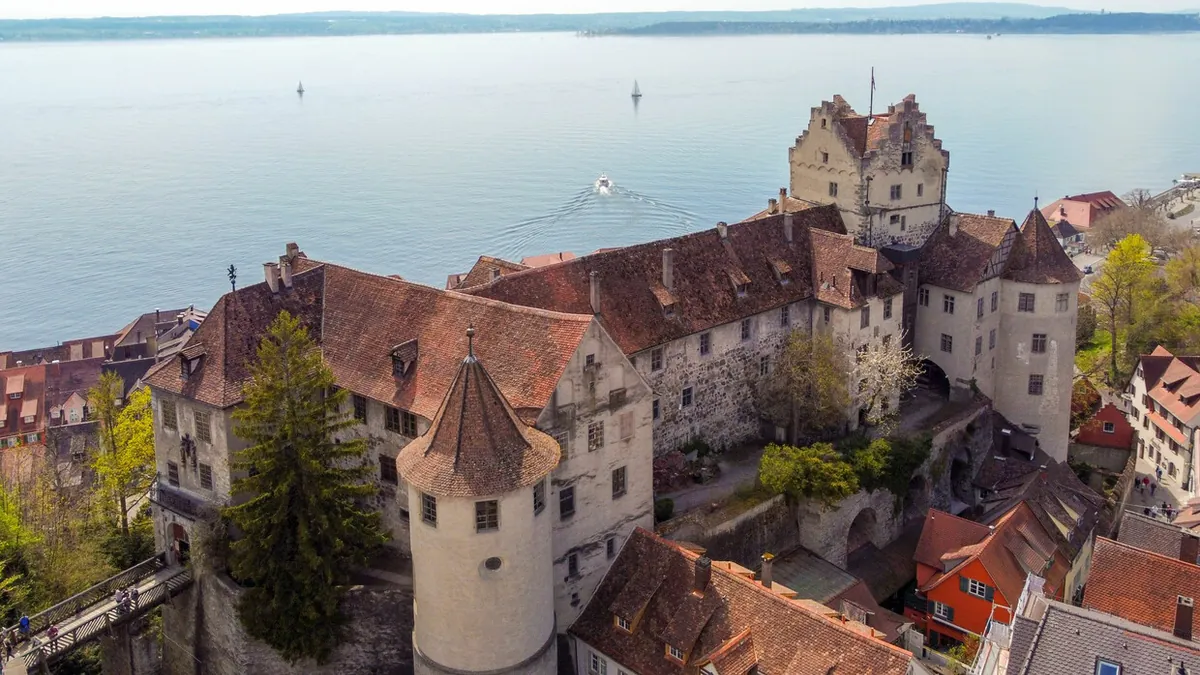
Wartburg, on a 410-metre ridge above Eisenach, was begun in 1067 by Count Ludwig der Springer and developed by the Ludowingian and later Thuringian landgraves across the 12th and 13th centuries. The Romanesque great hall (Palas) survives largely intact from c.1156–1170 and is considered the best-preserved secular Romanesque building north of the Alps. UNESCO inscribed Wartburg in 1999 as the first German castle on the World Heritage list, citing its "outstanding monument of the feudal period in Central Europe."[5]
Martin Luther was hidden at Wartburg from May 1521 to March 1522 under the alias Junker Jörg after his excommunication and refusal to recant at the Diet of Worms; he translated the New Testament from Greek into German in roughly ten weeks. The Luther room (Lutherstube) forms part of the standard tour. The castle also features in 19th-century German romanticism through Wagner's Tannhäuser and the 1817 Wartburg student festival.
Practical: open daily year-round; summer roughly 08:30 to 17:00, winter 09:00 to 15:30. Adult €13; concession €9; child 7 to 18 €5; under 7 free; family from €31. Eisenach Hauptbahnhof is a 30-minute uphill walk or short taxi; bus 10 and a paid shuttle run to the castle. Plan your visit.[5]
5. Windsor Castle
England (Berkshire) Closed Tue & Wed Oldest occupied castle Map
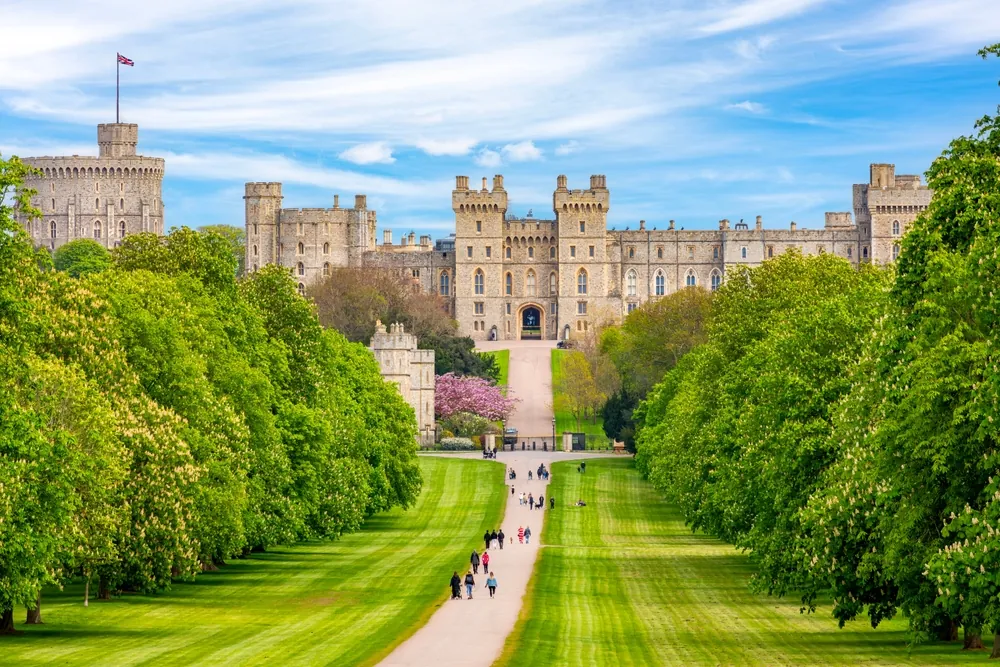
William the Conqueror founded Windsor around 1070 as a timber motte-and-bailey, the westernmost of a ring of nine castles thrown around London after the Conquest. The Round Tower still sits on his original motte. Henry II built the first stone keep in the 1170s; Edward III extended the castle in the 14th century after founding the Order of the Garter here in 1348. Lepage's Castles and Fortified Cities of Medieval Europe identifies it as a continuous royal residence "since its creation in 1070 by William the Conqueror," extended in turn by Henry II, Henry III, Edward III and Henry VIII.[6]
The castle is widely cited as the oldest continuously occupied castle and the largest inhabited castle by floor area. The State Apartments, the Albert Memorial Chapel and St George's Chapel make up most of what's open to the public. St George's hosted the wedding of Harry and Meghan in 2018 and the funeral of Queen Elizabeth II in 2022. A 1992 fire destroyed about a hundred rooms in the State Apartments; restoration finished in 1997.
Practical: open Thursday to Monday; closed Tuesday and Wednesday as a working royal palace. Adult £21 advance / £25 on the day; £1 tickets for Universal Credit recipients. Closures at short notice for royal duties; the Semi-State Rooms reopen autumn 2026. Train from London Waterloo to Windsor & Eton Riverside, around 55 minutes. Plan your visit.[7]
6. Old Sarum
England (Wiltshire) 1070s Norman castle, Iron Age earthworks Open daily Norman ruin on prehistoric ramparts Map
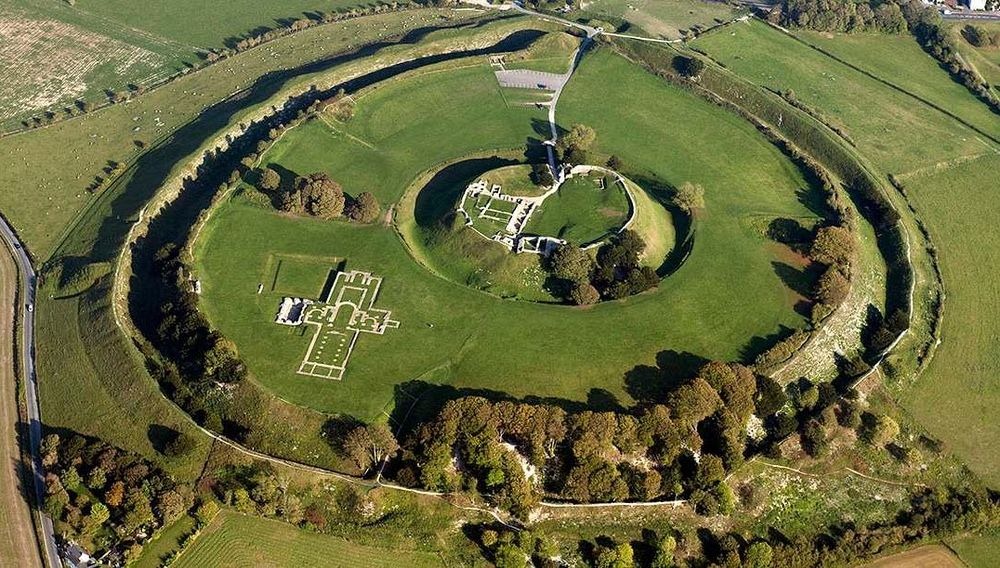
The hilltop two miles north of modern Salisbury holds two stacked layers of fortification. The outer ramparts are Iron Age, dating to roughly 400 BCE; William the Conqueror built a substantial Norman castle on the inner mound in the early 1070s, and a thriving cathedral city grew up around it across the 12th century. The settlement migrated downhill to the new Salisbury cathedral, founded in 1220, and Old Sarum was abandoned by Tudor times.[8]
What survives is among the most complete sets of Norman castle earthworks in England: the inner ringwork, the outer bailey ditches, foundations of the Norman cathedral and the footprint of the royal palace. English Heritage runs the site as an open-air ruin; the walk around the outer rampart at sunset is the experience that justifies the trip from Salisbury.
Practical: open daily 10:00 to 17:00, last entry 16:30. Adult around £12.70 (10% advance online discount); free for English Heritage members. From Salisbury, regular bus or a 30-minute walk along the Avon. Plan your visit.[8]
7. Tower of London
England (London) White Tower c.1078 Daily, year-round Crown Jewels and ravens Map
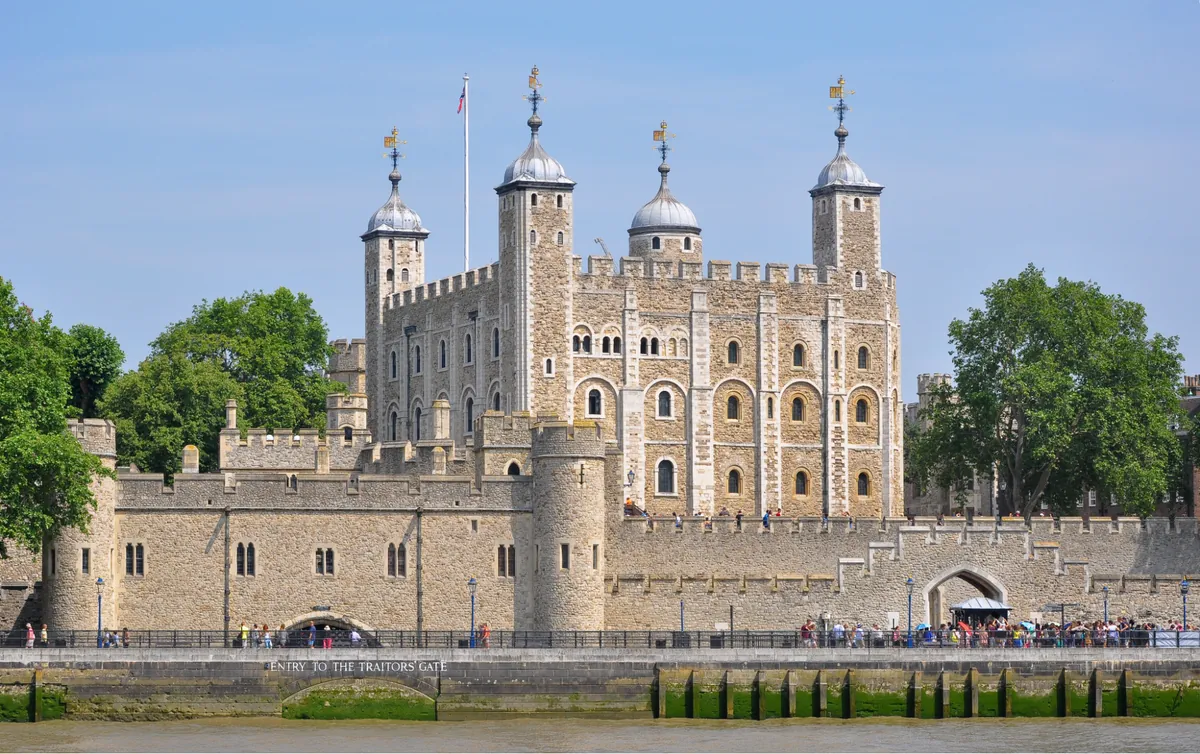
The White Tower, the Norman royal stone keep at the heart of the compound, was begun under Bishop Gundulf of Rochester sometime after 1077, was certainly under way by 1081, and was probably only completed around 1100. Goodall reads it as the prototype Anglo-Norman great tower; Toy's Castles: Their Construction and History confirms it as "the earliest rectangular stone keep in England," with Canterbury and Colchester following about 1080.[1][9] The Tower has been a royal palace, mint, menagerie, prison, armoury and treasury across nine centuries.
UNESCO inscribed the wider Tower of London compound in 1988. Historic Royal Palaces operates the site, which drew 2.9 million visitors in 2024 per ALVA, the most-visited paid heritage castle in the world. The standard visit covers the Crown Jewels, the White Tower, the medieval palace, the ravens and a Yeoman Warder tour included in the ticket.[7]
Practical: open daily from 09:00, last admission 15:30; closed 24 to 26 December and 1 January. Adult £34.80 advance online; £27.80 student or 60+; £17.40 child 5 to 15; under 5 free; family £96.50. £1 tickets for UK benefit recipients. The Middle Tower is closed for conservation until mid-June 2026. Tube to Tower Hill, 5-minute walk. Plan your visit.[7]
8. Rochester Castle
England (Kent) 1080s foundation, c.1127 keep Closed Mondays Norman square keep Map
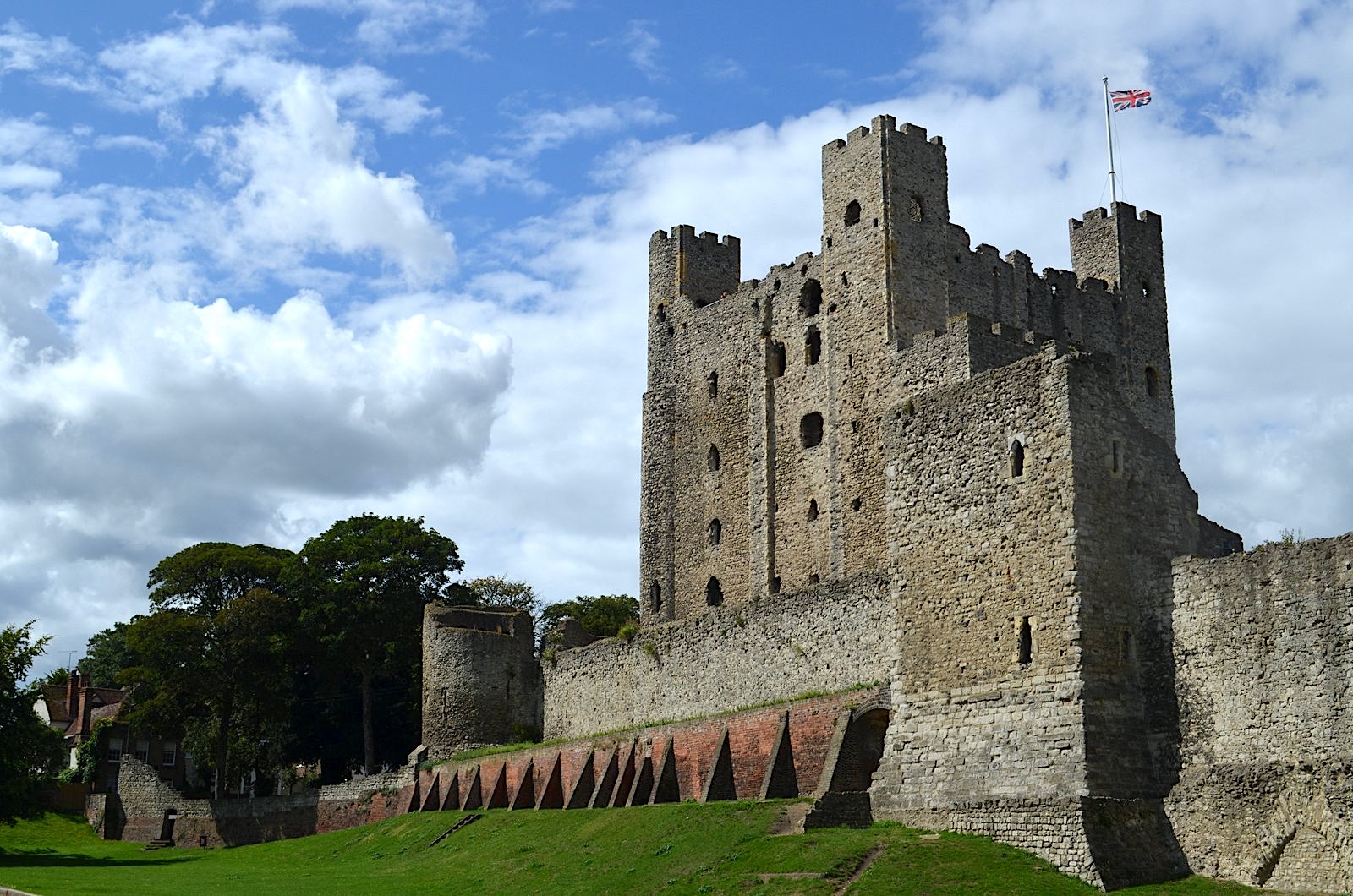
Bishop Gundulf (the same architect-bishop responsible for the White Tower) raised the original castle at Rochester in the 1080s. The dramatic square keep that defines the site today was added around 1127 by William of Corbeil, Archbishop of Canterbury, in Kentish ragstone; at 113 feet (about 35 metres) it is one of the tallest surviving Norman keeps in England. King John besieged it in 1215 during the First Barons' War; his miners undermined a corner using fat from "40 of the largest pigs" to fire the timber props, and the south-east corner collapsed. Defenders held out for two months before starvation forced surrender. The corner was rebuilt as a round tower under Henry III.[10]
The keep is a substantial standing ruin today, run by Medway Council on behalf of English Heritage. The interior is gutted to a shell, but the staircase, gallery and battlements give a clear read of how a Norman royal keep functioned. The cathedral next door (also Gundulf's work) is the second-oldest cathedral in England.
Practical: open Tuesday to Sunday plus Bank Holidays, 10:00 to 18:00 (last admission 17:15). Closed Mondays except Bank Holidays, plus 3 to 5 July 2026 for Castle Concerts. From April 2026: adult £9.50, concession £6.50, child (5 to 17) £4.50, family (2 adults + 3 children) £24.50. English Heritage members and under-5s free. Southeastern train to Rochester, 5-minute walk. Plan your visit.[10]
9. Hedingham Castle
England (Essex) Selected days, Mar–Jul Best-preserved Norman keep Map
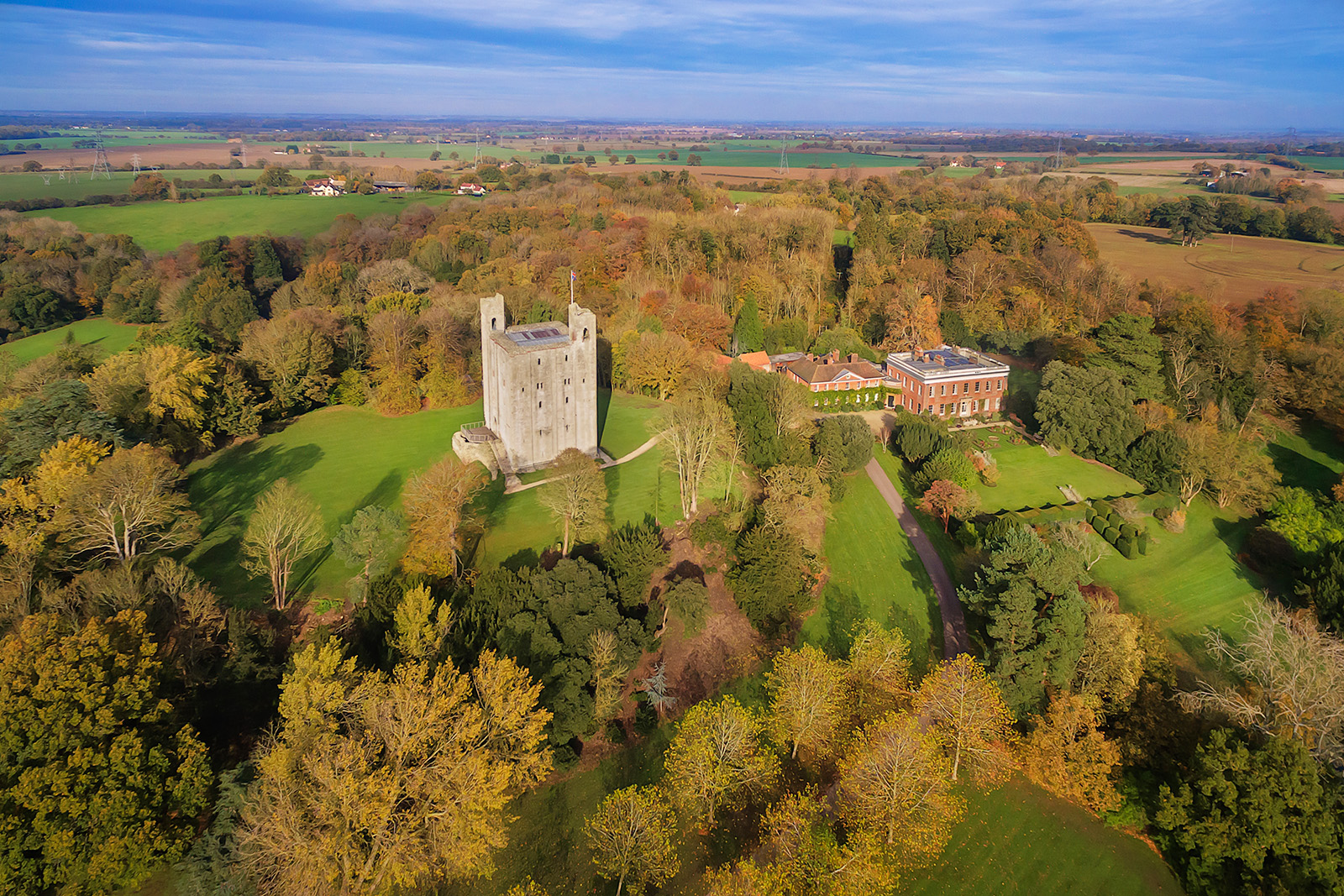
The de Vere family raised Hedingham around 1140, and their descendants through the female line (the present Lindsay family) have held the castle continuously since, the longest unbroken family ownership of any English castle.[7] The square Norman keep stands roughly 33 metres tall and survives substantially intact in stone fabric, with its banqueting hall and gallery (a single arch spanning 8.5 metres, the widest Norman arch in England) particularly well-preserved.
The keep is a four-storey textbook in Norman residential planning: ground-floor storage, first-floor reception, second-floor great hall and gallery, third-floor private chambers. King John besieged it in 1216 (the year after Rochester) and Henry VII visited in 1498. The grounds run to formal gardens, a Tudor bridge, lakes and woodland over 165 acres.
Practical: general admission limited to selected days mid-March to end of July, closing 16:00; the rest of the year is reserved for weddings and events. Adult £12; senior £11; child 4 to 16 £10; family from £28; local residents £5 with proof. Card payment only. About an hour from London by car or Greater Anglia rail to Braintree then taxi. Plan your visit.[7]
10. Castel del Monte
Italy (Apulia) Daily, reservation required Frederick II's octagonal enigma Map
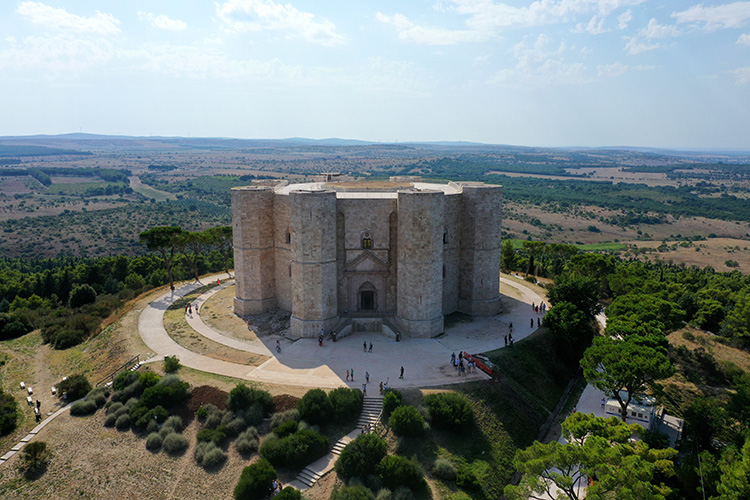
Built around 1240 for Frederick II Hohenstaufen, Castel del Monte stands on a low hill in Apulia and reads as the most architecturally distinctive surviving 13th-century castle in Europe. The plan is a perfect octagon with eight identical octagonal towers; the interior runs two storeys of eight trapezoidal rooms around a central octagonal courtyard. The mathematical proportions have been read as Crusader-influenced, Cistercian-influenced and astrological, and continue to provoke disagreement. UNESCO listed it in 1996. The €0.01 Italian euro coin features Castel del Monte on the reverse.[7]
The castle is unfurnished and reads as a meditation on geometry rather than a residential interior. The octagonal courtyard, the marble portal and the views over the Apulian countryside make the day. The octagon's place in Frederick II's wider Mediterranean court culture (Arab mathematics, Norman administration, classical revival) sets it apart from the rest of this list.
Practical: open daily; summer 10:00 to 18:45, winter 09:00 to 17:45. Reservation required. Adult €10; reduced (EU citizens 18 to 25) €2; under-18s free. Combined ticket with Castello di Trani €15 / €4 reduced. Park in the valley square (€5) then walk or take the €2 shuttle. Train to Andria then bus or taxi. Plan your visit.[7]
11. Malbork Castle
Poland (Pomerania) Open daily; free Mondays (grounds) World's largest brick castle Map
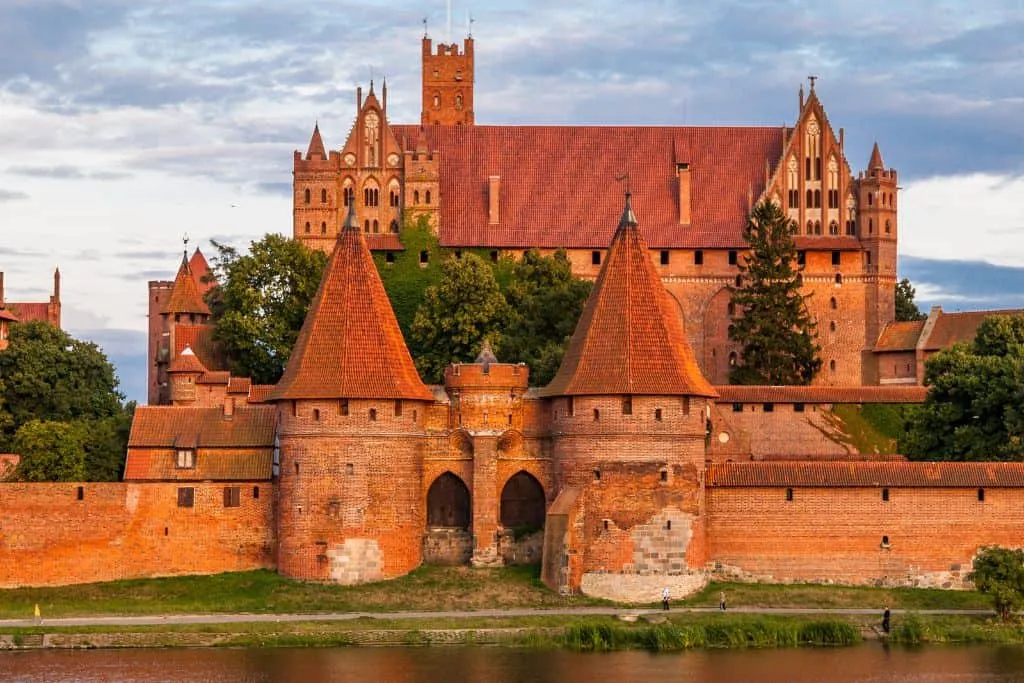
The Teutonic Order began construction at Marienburg in 1274 on the east bank of the Nogat and moved their headquarters there from Venice in 1309 after the loss of Acre. Pluskowski's Archaeology of the Prussian Crusade places Malbork at the centre of a network of subsidiary Order castles across Prussia, Pomerania and Lithuania, "among Europe's earliest large-scale planned brick-built crusade-era castle clusters."[11] At a built floor area of 143,591 m², it is the largest brick castle in the world. UNESCO inscribed Malbork in 1997 across an 18-hectare protected zone.[7]
The complex divides into the High Castle (Order convent, treasury, chapel), the Middle Castle (Grand Master's palace, refectories) and the Lower Castle (workshops, infirmary). The Grand Master's Palace is the architectural centrepiece. Substantial reconstruction followed near-total destruction in 1945.
Practical: open daily; Monday 09:00 to 20:00, Tuesday to Sunday 09:00 to 19:00 in high season. Castle Grounds Route is free Mondays. Historical Castle Route adult PLN 80, reduced PLN 60, audio guide included. Castle Grounds Route adult PLN 35, reduced PLN 25. Train from Gdańsk Główny to Malbork (~50 min), 15-minute walk. Plan your visit.[7]
12. Caernarfon Castle
Wales (Gwynedd) 1283–c.1330 Daily, year-round Edward I's polygonal towers Map
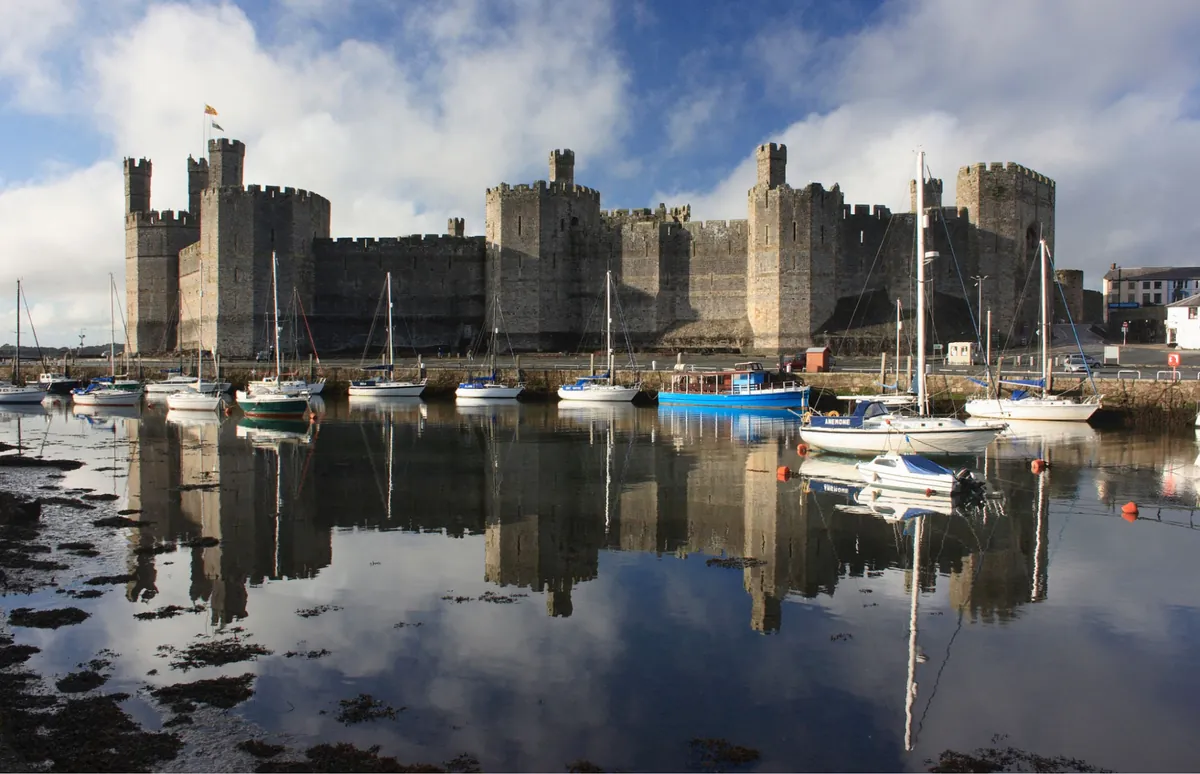
Edward I began Caernarfon in 1283 immediately after defeating Llywelyn ap Gruffudd, intending it as the symbolic capital of conquered Wales and the birthplace of his son (the future Edward II), the first English Prince of Wales. The polygonal towers and banded masonry imitate the Theodosian walls of Constantinople, a deliberate piece of imperial reference unusual in a 13th-century English castle. Construction continued until around 1330. Arnold Taylor's The Welsh Castles of Edward I, drawn from royal Wardrobe accounts, remains the foundational source on the building chronology and costs.[12]
Caernarfon is one of four Edwardian castles in the UNESCO inscription "Castles and Town Walls of King Edward in Gwynedd" (1986). The investiture of the Prince of Wales took place here in 1969. The Eagle Tower, the King's Gate and the polygonal corner towers remain near-complete in external structural form.
Practical: daily, year-round; 09:30 to 17:00 (Mar–Jun, Sep–Oct), 09:30 to 18:00 (Jul–Aug), 10:00 to 16:00 (Nov–Feb); closed 24 to 26 December and 1 January. Adult £14.90; senior £13.40; child / student £10.40; under 5 free; family £47.70. Cadw £1 ticket for Universal Credit recipients; 5% online discount. Bus from Bangor or Welsh Highland Railway from Porthmadog. Plan your visit.[7]
At a glance
| Castle | Region | When to go | |
|---|---|---|---|
| Citadel of AleppoLongest continuously fortified site | Syria | Closed (war damage) |
| Reichsburg CochemMoselle valley imperial castle | Germany (Rhineland-Palatinate) | Daily, year-round |
| Krak des ChevaliersBest-preserved Crusader castle | Syria | Closed (war damage) |
| Wartburg CastleLuther's translation refuge | Germany (Thuringia) | Open daily, year-round |
| Windsor CastleOldest occupied castle | England (Berkshire) | Closed Tue & Wed |
| Old SarumNorman ruin on prehistoric ramparts | England (Wiltshire) | Open daily |
| Tower of LondonCrown Jewels and ravens | England (London) | Daily, year-round |
| Rochester CastleNorman square keep | England (Kent) | Closed Mondays |
| Hedingham CastleBest-preserved Norman keep | England (Essex) | Selected days, Mar–Jul |
| Castel del MonteFrederick II's octagonal enigma | Italy (Apulia) | Daily, reservation required |
| Malbork CastleWorld's largest brick castle | Poland (Pomerania) | Open daily; free Mondays (grounds) |
| Caernarfon CastleEdward I's polygonal towers | Wales (Gwynedd) | Daily, year-round |
What counts as the oldest?
Three definitions divide the field. Earliest fortified site on the same ground: Aleppo wins outright, with continuous use across 5,000 years documented archaeologically.[2] Earliest substantial standing fabric on a still-functioning castle: the late 10th and 11th centuries are the deep-time horizon for visitable European castles, with Reichsburg Cochem (c.1000), Krak (1031), Wartburg (1067), Windsor (c.1070), Old Sarum (1070s), the Tower of London (c.1078) and Rochester (1080s) clustered together. The earliest stone keep in Europe, per Marc Morris, is at Langeais on the Loire, "built around the year 1000," with stone construction at that date flagged as "highly exceptional."[13] Longest continuous occupation as a residence belongs to Windsor (950+ years of royal use), with the Tower of London close behind for state guardianship. Hedingham is held continuously by descendants of the family that built it (de Vere through the present-day Lindsay family).[7]
The trickiest question is what continuous occupation actually means. Is the present Romanesque Tower of London really "the same" castle as the 11th-century earthwork it replaced on the same ground? Same site, same name, different building. For deeper investigation the canonical academic sources are Goodall, Toy, Lepage, Pluskowski, Taylor and Morris, cited below.
Sources
1. Goodall, J. The Castle: A History. Yale University Press, 2022. Pages 23–25 (Bamburgh and Penda's siege), p. 34 (Tower of London great tower under Gundulf, "Work to this great tower or keep began sometime after 1077…certainly under way by 1081").
2. UNESCO World Heritage Centre, Ancient City of Aleppo. Inscription 1986; List of World Heritage in Danger 2013.
3. Reichsburg Cochem, official site, The Castle. Founding c.1000, first documented 1051, imperial 1151, destroyed 1689, rebuilt by Louis Ravené from 1868.
4. UNESCO World Heritage Centre, Crac des Chevaliers and Qal'at Salah El-Din. Inscription 2006; List of World Heritage in Danger 2013.
5. Wartburg-Stiftung Eisenach, official site. Founded 1067 by Ludwig der Springer; Luther's stay May 1521 – March 1522; UNESCO 1999.
6. Lepage, J.-D. G. G. Castles and Fortified Cities of Medieval Europe: An Illustrated History. McFarland & Company, 2002, p. 176 ("Windsor…has been the royal residence since its creation in 1070 by William the Conqueror").
7. Operator sites: Royal Collection Trust / Windsor Castle
8. English Heritage, Old Sarum.
9. Toy, S. Castles: Their Construction and History. Dover Publications, 1984 (1939 reprint), Ch. VII ("The White Tower at the Tower of London was begun about 1070, and the keeps at Canterbury and Colchester both about 1080").
10. English Heritage, Rochester Castle.
11. Pluskowski, A. The Archaeology of the Prussian Crusade: Holy War and Colonisation. Routledge, 2013, pp. 158–184. Marienburg construction begun 1274; Order HQ moved 1309.
12. Taylor, A. The Welsh Castles of Edward I. The Hambledon Press, 1986; building chronology drawn from royal Wardrobe accounts. UNESCO Castles and Town Walls of King Edward in Gwynedd, 1986,
13. Morris, M. Castles: Their History and Evolution in Medieval Britain. Pegasus Books, 2017, Ch. 1 ("In the small town of Langeais…are the remains of a stone tower, built around the year 1000. Stone castles, however, were highly exceptional at such an early date").