
9 of Wales's mightiest castles, from Caernarfon to Conwy
Wales has more castles per person than any country in Europe. Caernarfon, Conwy, Beaumaris and Harlech form Edward I's Welsh ring, plus 5 more.
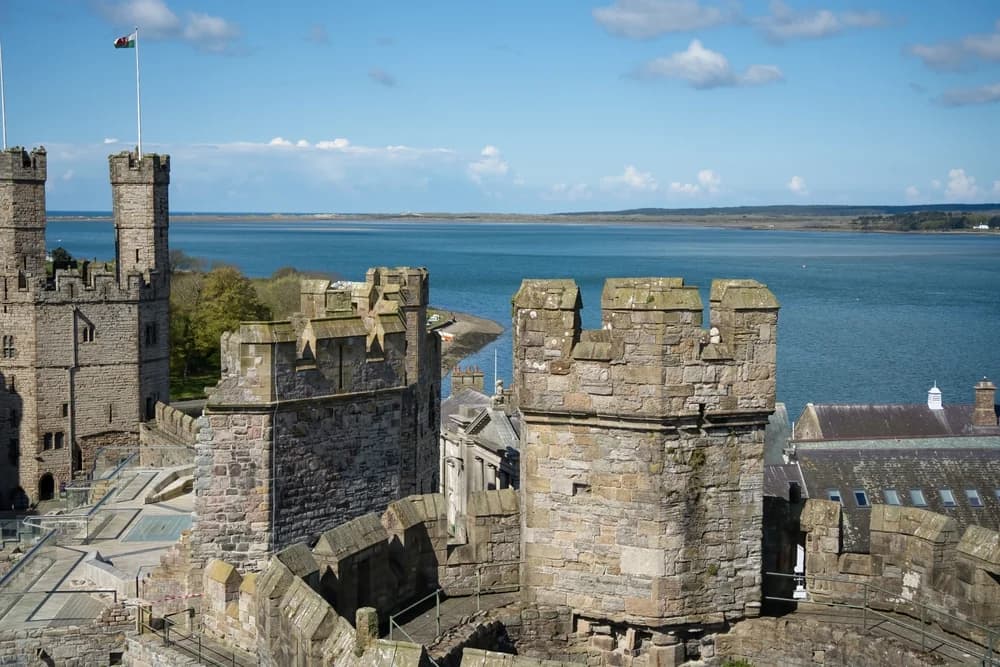
Wales has more castles per person than any country in Europe. From Edward I's UNESCO-inscribed Welsh ring to the largest concentric castle in Britain, nine fortresses that anchor a serious itinerary.
Cadw, the Welsh Government's historic environment service, manages 293 protected castles directly; broader surveys that count motte-and-bailey sites and substantial fortified residences put the total over 600.[1] The dominant heritage asset is Edward I's post-1283 Welsh ring (Caernarfon, Conwy, Beaumaris and Harlech, plus the town walls of Caernarfon and Conwy), inscribed in 1986 by UNESCO as a unified medieval-fortification system.[2] Building those four castles cost about £80,000 in 1280s pounds; the 1294-95 Madog ap Llywelyn revolt then added £55,000 of campaign expenditure plus more than £16,000 in Caernarfon repairs, a financial pressure that contributed to the crisis overwhelming Edward I in the late 1290s.[3]
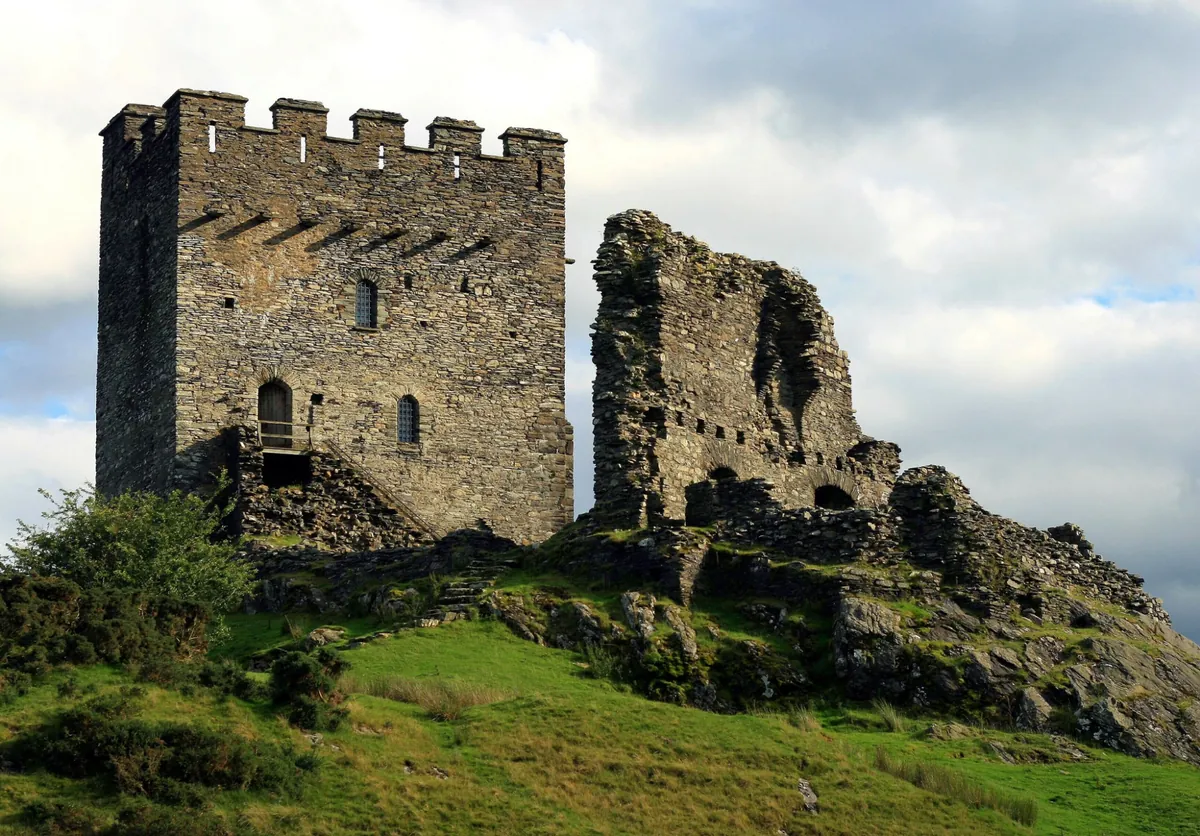
The Welsh castle landscape sits in three layers: native Welsh princely castles (Dolwyddelan, Castell-y-Bere, Dolbadarn) built by Llywelyn the Great and his grandson Llywelyn ap Gruffudd before 1282; Anglo-Norman frontier castles in the Welsh Marches (Chepstow, Pembroke, Caerphilly) built from 1067 onwards; and the Edwardian conquest ring of the 1280s and 90s. Most are state-managed by Cadw, with the National Trust holding Powis and Cardiff City Council operating Cardiff. Heritage tourism contributes roughly 2% of Welsh regional gross value added, among the highest heritage-tourism economic dependence in the UK.[4]
The nine below are the ones that warrant the day. Each entry covers what to see, when to go, what it costs, and how to get there.
1. Caernarfon Castle
Gwynedd Daily, year-round Edward I's polygonal towers Map
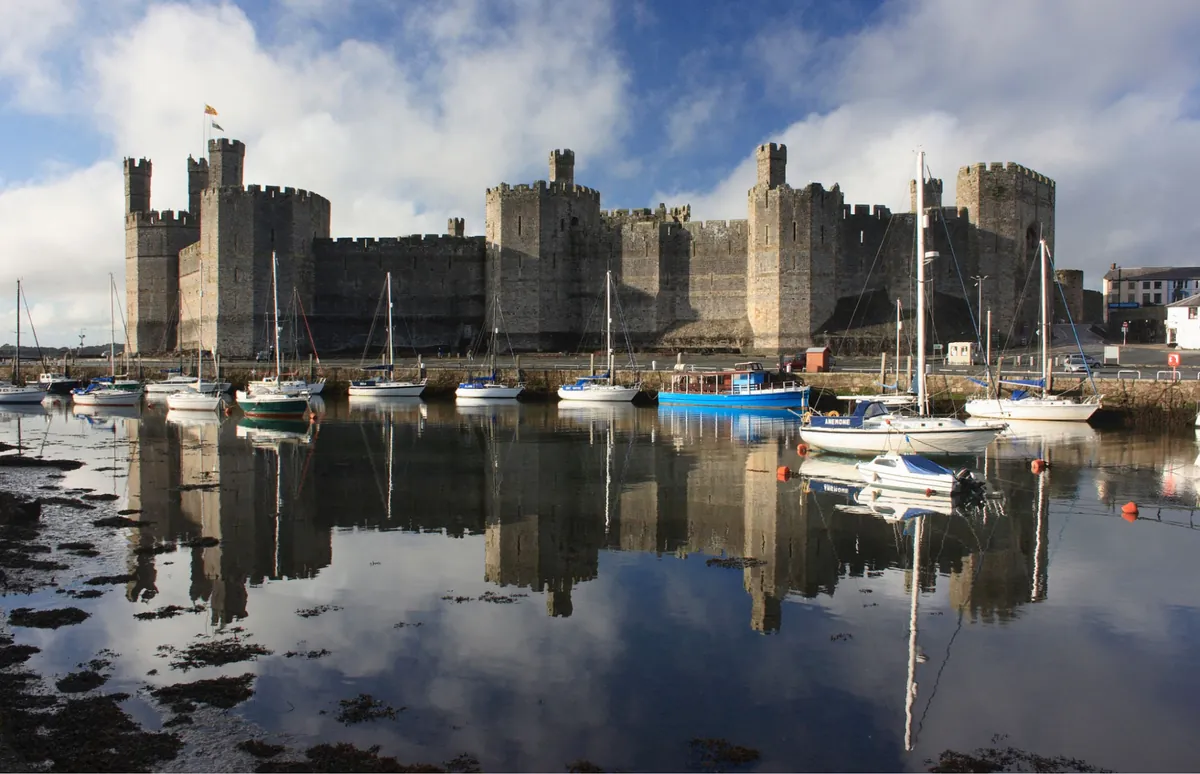
Caernarfon was begun in 1283 on the Menai Strait. Edward I had discovered the remains of Magnus Maximus near the site of the Roman town of Segontium, and the chronicler John Goodall reads the choice of location as deliberate appropriation of the legendary association: "immediately began to build a new capital of Wales nearby at Caernarfon".[5] The polygonal towers, the banded coursed masonry and the imperial-symbolic vocabulary all set Caernarfon apart from the concentric circular geometry of Conwy and Beaumaris; the building references the walls of Constantinople, then a recent Byzantine memory. Construction continued until 1330, with the eastern towers never completed. At peak in February 1296, the master mason James of St George requested £250 a week to pay 400 masons, 200 quarrymen, 30 smiths and 3,000 others.[6] The total cost was at least £27,000 by Arnold Taylor's estimate, the most expensive single Welsh castle.[7] The site has been the investiture place of the Princes of Wales since the 14th century; Charles III was invested here in 1969.
The visit climbs the Eagle Tower for views over the Strait, takes in the polygonal towers, the King's Gate and the Royal Welch Fusiliers Museum.
Practical: open daily, year-round. Mar-Jun and Sep-Oct 09:30-17:00; Jul-Aug 09:30-18:00; Nov-Feb 10:00-16:00. Closed 24-26 December and 1 January; last entry 30 minutes before close. Adult £14.90, senior £13.40, child (5-17) £10.40, family (2A+3C) £47.70; £1 ticket on Universal Credit; 5% online discount. Cadw members free. Train to Bangor (~9 miles) then bus or taxi; Welsh Highland Railway from Porthmadog. Plan your visit.[8]
2. Conwy Castle
Conwy Daily, year-round Walls and eight towers Map
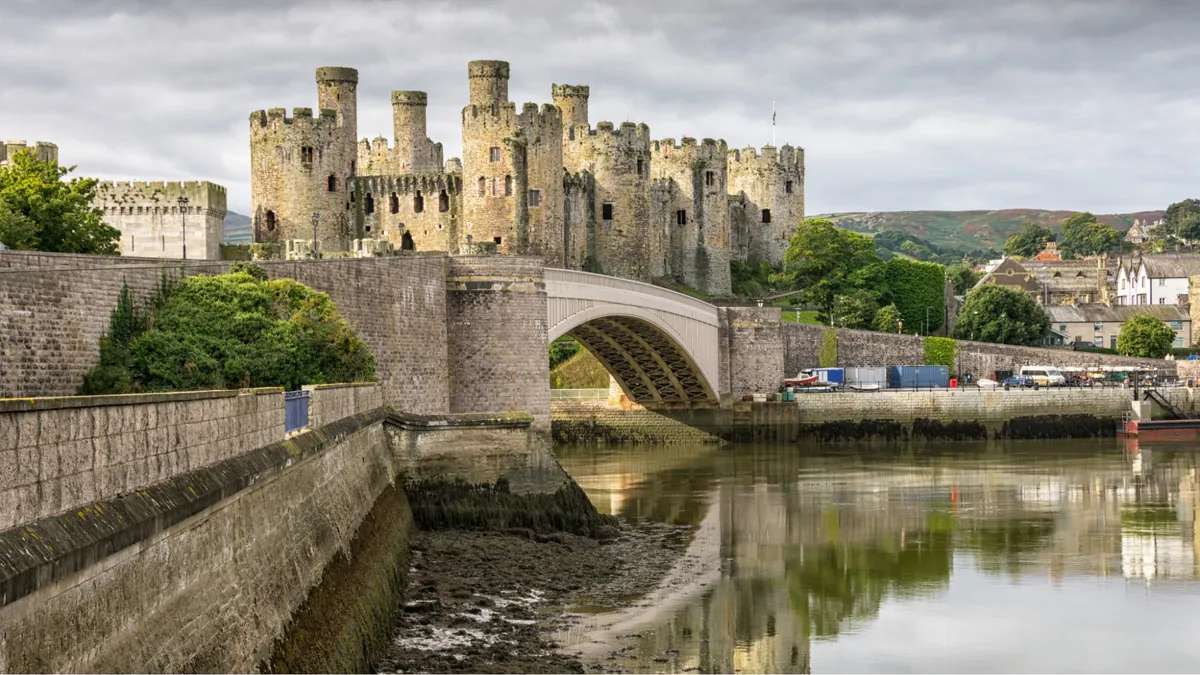
Conwy stands on a spur of bedrock above the estuary, built on the site of Llywelyn ap Gruffudd's razed seat and largely completed in just five years (1283-1287) at a cost of £14,086, around 97% of the £14,500 round figure recorded for the works.[9] Goodall calls it the "vast cost" achieved through "an incredible £15,000".[5] Construction was directed by James of St George; the documentary record names 1,500 men marching from Chester for the build phase. The eight massive drum towers and the linear bailey plan are the architectural signature; the walled town beside it survives as a 1.3 km circuit with 21 towers and three original gateways, the most complete medieval town fortification in the United Kingdom. The castle plus walls together carry the UNESCO inscription of 1986.
The visit climbs the towers for views down to the harbour and along the walls, and takes in the King's and Queen's apartments at the eastern end. A joint ticket with Plas Mawr (an Elizabethan town house in Conwy) is the standard combination.
Practical: open daily, year-round. Mar-Jun and Sep-Oct 09:30-17:00; Jul-Aug 09:30-18:00; Nov-Feb 10:00-16:00. Closed 15-24 May 2026 for filming; also closed 24-26 December and 1 January. Adult £12.90 online, child (5-17) £9.00, family £41.30. Train to Conwy (5-minute walk) on the North Wales coast line. Plan your visit.[10]
3. Beaumaris Castle
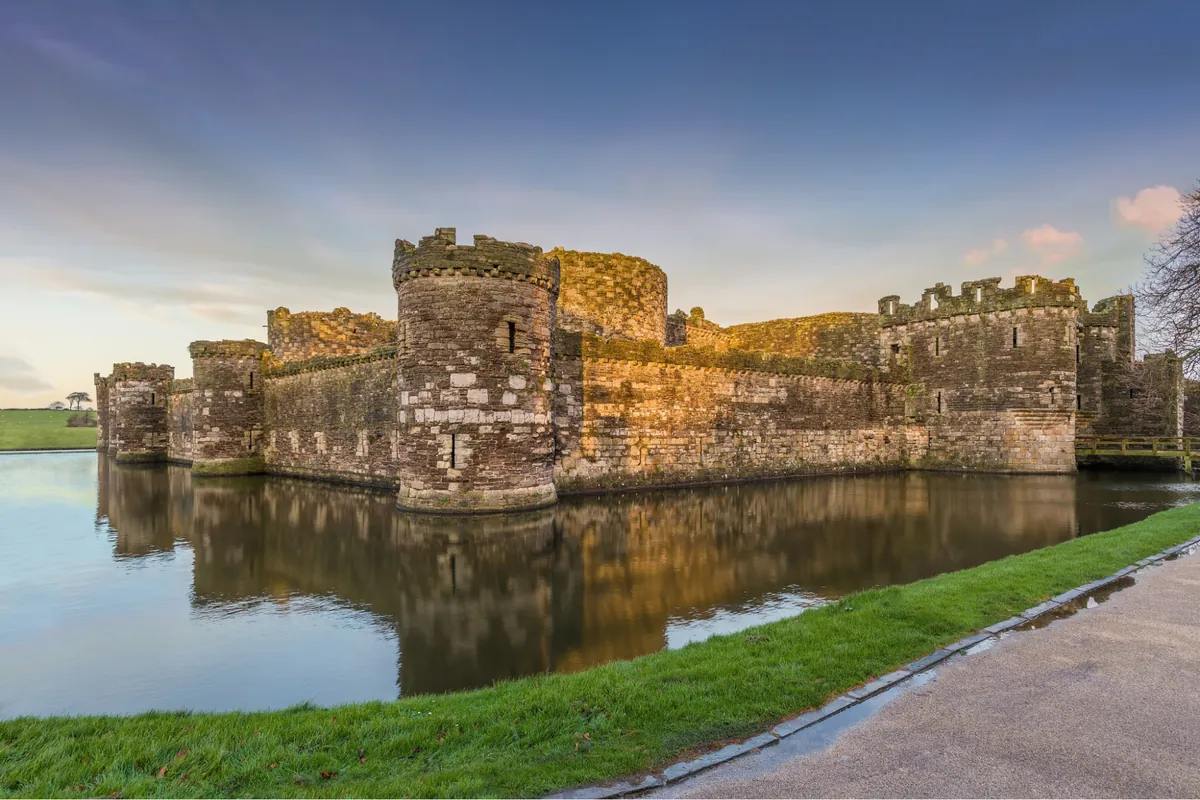
Anglesey 1295 (incomplete) Daily, year-round Edward I's perfect ring Map
Beaumaris is the last and most architecturally pure of the Edwardian Welsh castles: a perfect concentric design with no compromise to existing topography, on a site levelled before construction began in April 1295 as the secure landing point on Anglesey after the 1294 Madog revolt. James of St George's letter records that "within six months alone an incredible £6,000 was spent on the project".[11] At peak in 1296, the works required 400 masons and 2,000 labourers. Funding ran out before completion: Arnold Taylor estimated the eventual cost at £93,300 to £100,000, of which 80% was spent in the first 24 years, and the planned upper storeys of the inner curtain were never built.[7] The castle was, in Taylor's phrase, "the last and most geometrically perfect" of the Edwardian Welsh castles.
The visit takes in the inner ward, the chapel tower and the wall-walk, with the moat (still water-filled) and the dock through which sea-going ships could berth at high tide.
Practical: open daily, year-round. Same Cadw seasonal pattern as Caernarfon and Conwy. Closed 24-26 December and 1 January. Adult £10.40 online, senior £9.30, child (5-17) £7.20, family (2A+3C) £33.30. Bus from Bangor (53/57); car via A545 from Menai Bridge. Plan your visit.[12]
4. Harlech Castle
Gwynedd Open daily, year-round Edward I's coastal fortress Map
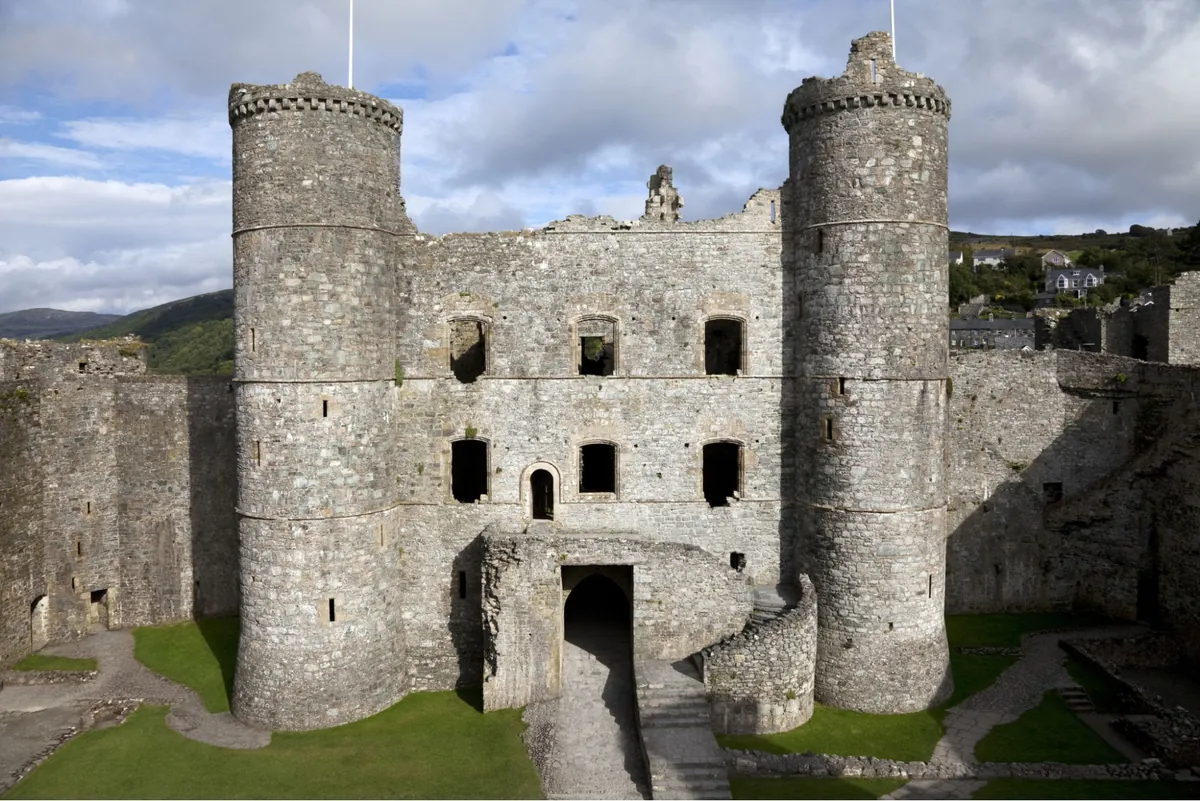
Harlech was begun in summer 1283, within days of Edward I's army arriving in north-west Wales, on a 200-foot rocky crag above what was then the coast (the sea has since retreated about half a mile).[13] At peak in July 1286 the workforce comprised 225 masons and 550 labourers.[7] The concentric plan with twin-towered gatehouse remains the canonical Edwardian design. The castle endured the longest siege in British history during the Civil War, holding for the Royalists from 1644 until 1647. In 1404 Owain Glyndŵr captured it and used it for four years as the temporary administrative capital of the Welsh national revolt, the only major Welsh-administered castle in the entire post-1283 period; he held a Welsh parliament here in 1405.
The visit takes in the gatehouse (the most heavily defended Edwardian gatehouse), the inner ward and the long walk to "Way from the Sea" stairway down the cliff. The view over Cardigan Bay to Snowdonia is the experience that makes the trip.
Practical: open daily; closed 24-26 December and 1 January. Mar-Jun and Sep-Oct 09:30-17:00; Jul-Aug 09:30-18:00; Nov-Feb 10:00-16:00. Adult £10.40, senior £9.30, child (5-17) £7.20, family (2A+3C) £33.30. Cadw members free; 5% online discount. Train to Harlech (200 m from the gate) on the Cambrian Coast line. Plan your visit.[14]
5. Caerphilly Castle
Caerphilly Daily, year-round Britain's largest concentric castle Map
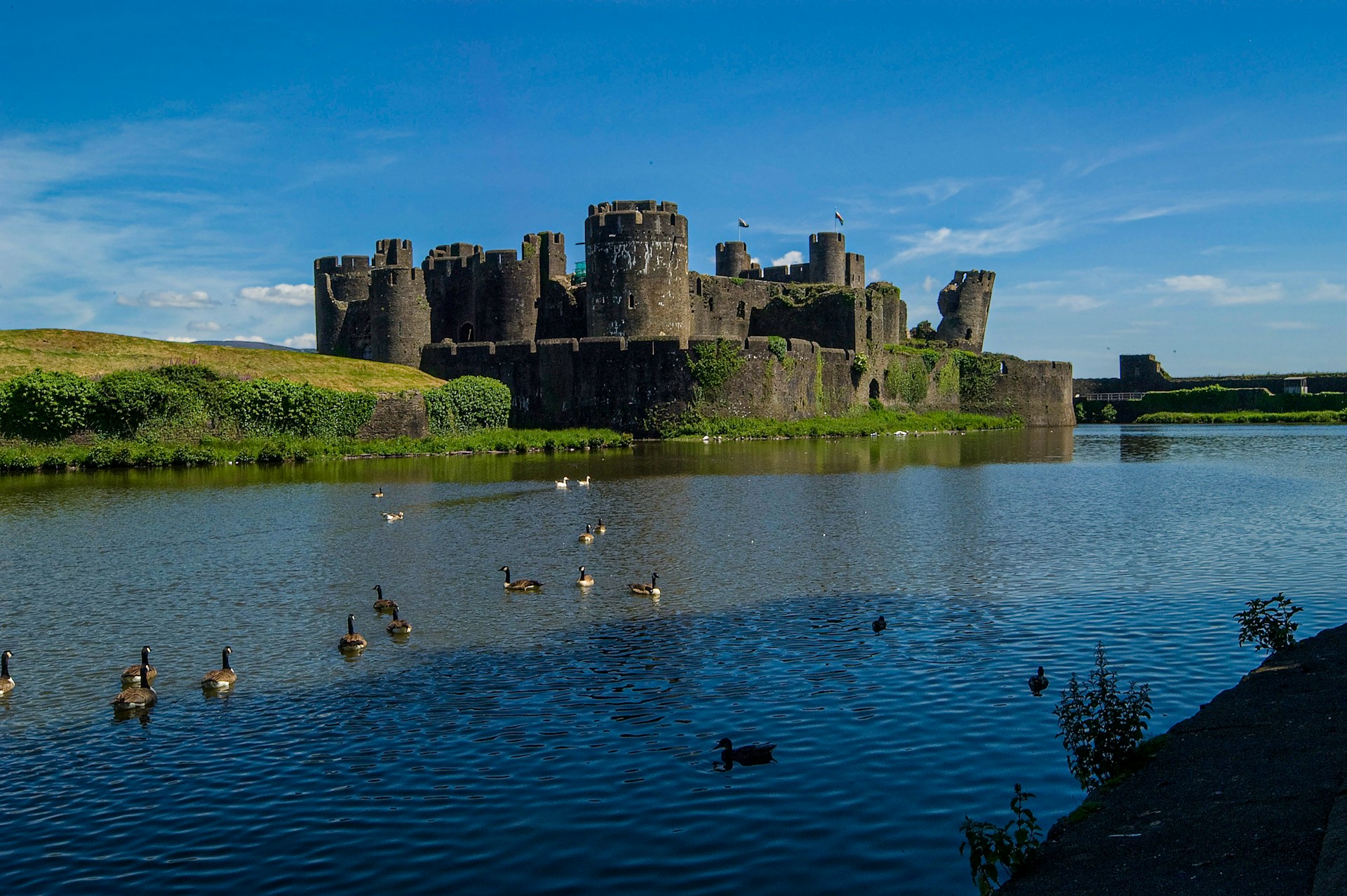
Caerphilly is the second-largest castle in Britain after Windsor by total enclosed area, around 30 acres of integrated structure. It was built between 1268 and 1271 by the Anglo-Norman magnate Gilbert de Clare ("Red Gilbert") to control the rebellious Welsh Marches against Llywelyn ap Gruffudd: by 1274, "much to Llywelyn's chagrin", the castle was nearly complete.[6] The concentric design (inner ward enclosed by a lower outer curtain) predates the Edwardian Welsh ring by more than a decade and shows that the Anglo-Norman magnate castle-building tradition had matured to similar sophistication independent of royal commission. The leaning south-east tower (more pronounced than the lean of Pisa's tower) is the standout visual feature, the result of subsidence and Civil War slighting in 1648.
The visit takes in the Great Hall (recently reopened after a two-year conservation programme), the inner ward, the elaborate water defences, and the working trebuchet displays Cadw runs in season.
Practical: open daily, year-round; standard Cadw seasonal hours. Closed 24-26 December and 1 January. Adult £12.90, senior/concession £11.60, child £9.00, family (2A+3C) £41.30. Joint ticket with Castell Coch from £16.30 adult. Train to Caerphilly (1 km from the castle) on the Cardiff-Rhymney line. Plan your visit.[15]
6. Pembroke Castle
Pembrokeshire Open daily, charity trust Birthplace of Henry VII Map
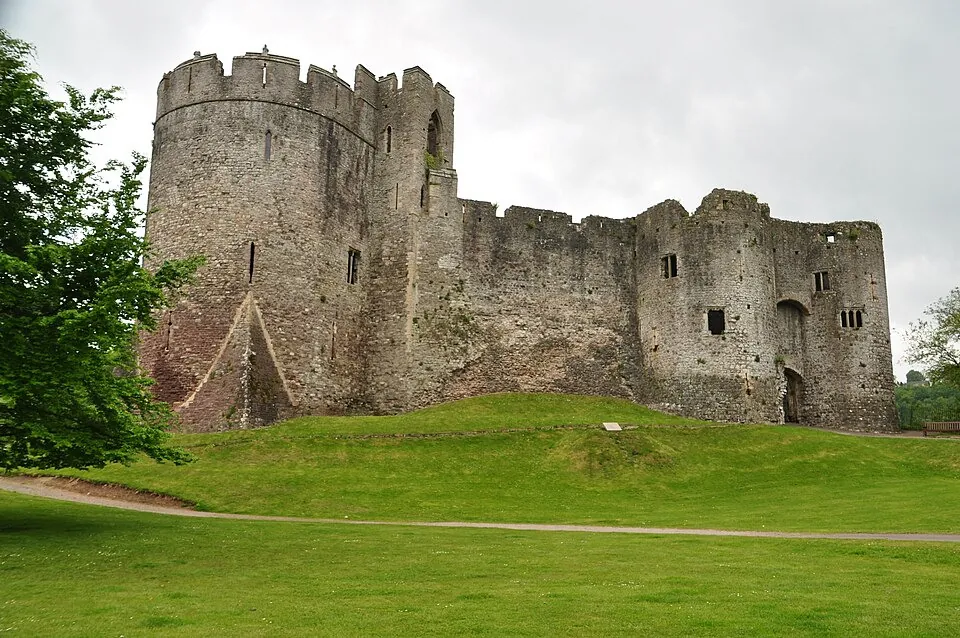
Pembroke was founded in 1093 by Roger of Montgomery as a Norman ringwork on the limestone bluff above the Pembroke River, then rebuilt in stone from around 1200 by William Marshal and his sons.[16] The 75-foot circular Great Tower, with its five-storey beehive interior, is the most complete keep of its date in Britain. Pembroke is the birthplace of Henry Tudor (Henry VII), born to the 14-year-old Margaret Beaufort in January 1457 in a chamber off the inner ward; the dynasty he founded ruled England for 118 years. The castle is privately operated by the Pembroke Castle Trust, not Cadw.
The visit climbs the Great Tower for views down the river, takes in the Wogan Cavern (a natural limestone cave beneath the castle, originally used as a boat dock), and the medieval town walls. Free guided tours run hourly from 11:00 to 15:00.
Practical: open daily, 09:30-17:30 (last admission 16:30) in the main season. Adult £6.00, senior/student/child (3-15) £5.00, under-3s free; Gift Aid prices £6.60/£5.50. Pembroke rail station (0.5 mile) on the West Wales line from Swansea. Plan your visit.[17]
7. Cardiff Castle
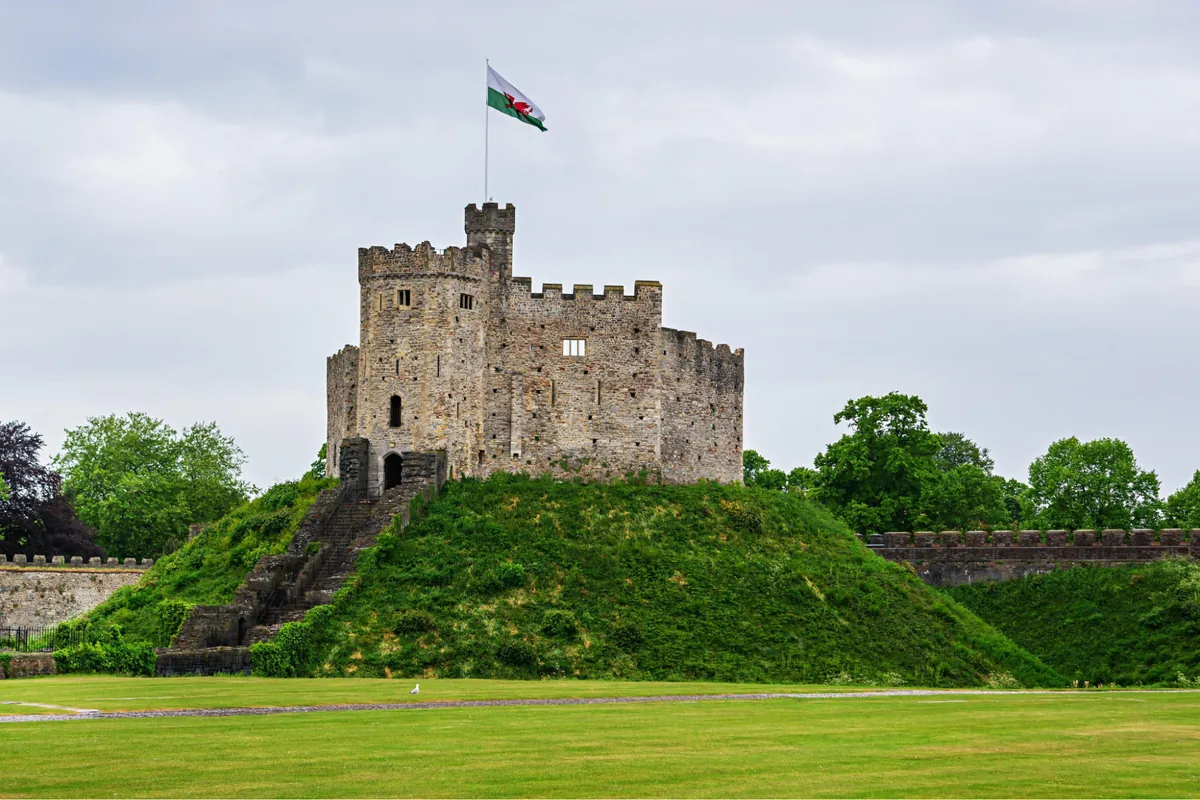
Cardiff Daily, year-round Roman walls to Bute fantasy Map
Cardiff Castle stacks 2,000 years of fortification on a single site: a Roman fort wall (about AD 75-80, with the surviving stone visible at the base), an 11th-century Norman motte and shell keep raised by Robert Fitzhamon around 1081, and the spectacular 19th-century Burges interiors commissioned by John Crichton-Stuart, 3rd Marquess of Bute. David Cannadine puts the Bute remodelling in the small group of late-Victorian aristocratic projects (alongside the Duke of Norfolk at Arundel and the Duke of Portland at Welbeck) that were "the last examples of aristocrats building and restoring at the pre-war scale".[18] William Burges's Clock Tower, the Arab Room, the Banqueting Hall and the Library carry an extravagance of Gothic Revival decoration that few European interiors match.
The visit takes in the Norman keep (the climb of the motte gives the best view across central Cardiff), the Bute apartments, the wartime air-raid tunnels in the walls and the Roman wall stretches.
Practical: open daily, year-round; closed 25-26 December and 1 January. Mon-Fri 10:00-18:00 (Mar-Oct) / 10:00-17:00 (Nov-Feb); Sat-Sun 09:00-18:00 / 09:00-17:00. Castle ticket adult £16.50, senior/student/disabled £13, child (5-16 with adult) £11; family (2A+2C) £44; Cardiff residents free with the Castle Key. 10-minute walk from Cardiff Central station. Plan your visit.[19]
8. Powis Castle
Powys Limited castle hours Clive of India treasures Map
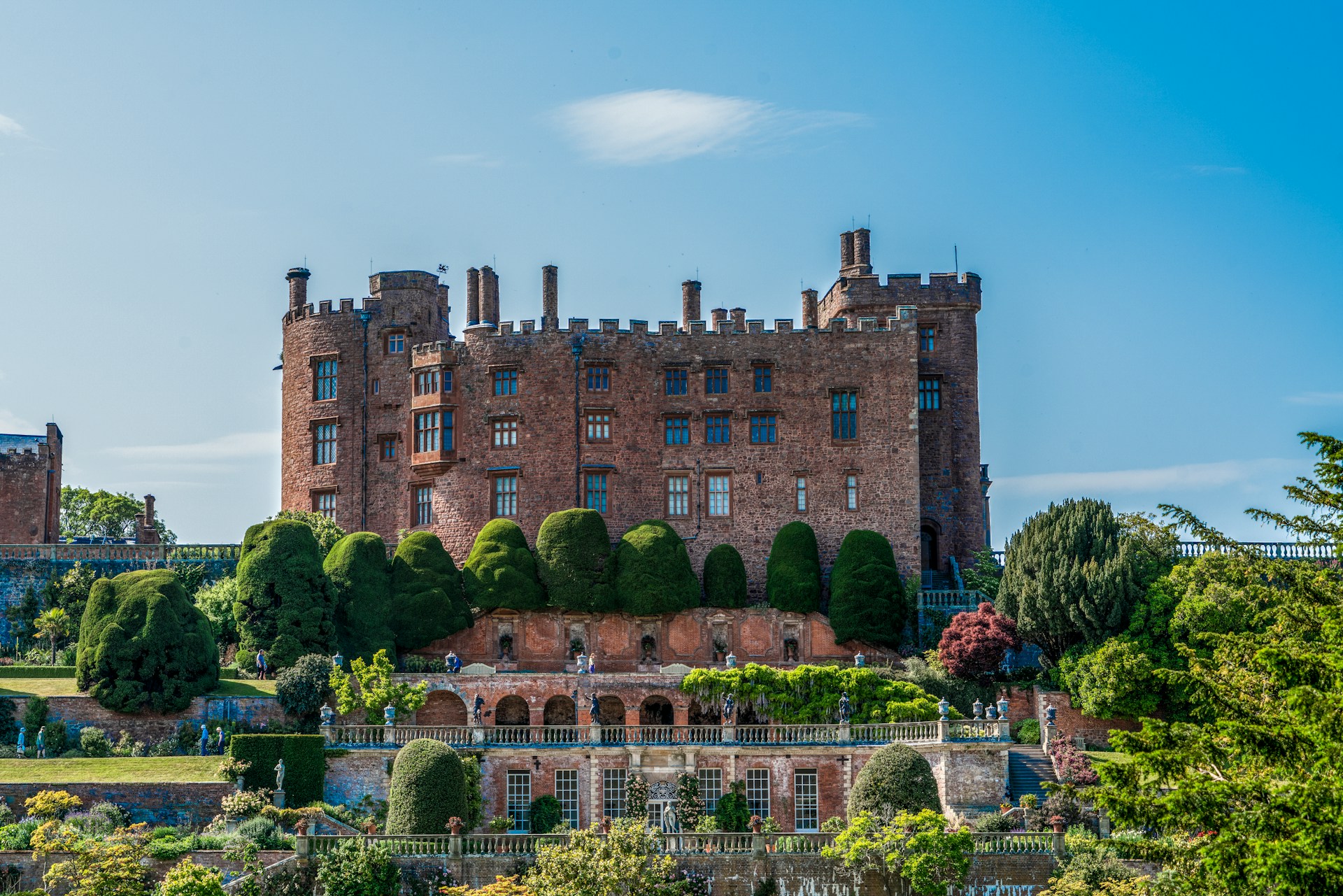
Powis is the principal surviving Welsh aristocratic country residence. The 13th-century stronghold of the Princes of Powys was rebuilt in the late 16th and 17th centuries by the Herbert family (Earls of Powis) in a confident Elizabethan-Jacobean register, with subsequent work into the 18th and 19th centuries. The terraced Italianate garden, laid out around 1690, is one of the finest surviving European Renaissance terrace gardens, with yew hedges shaped over three centuries. The Clive Museum, in the castle, holds the Indian collection of Robert Clive ("Clive of India") and his son Edward, the first Earl of Powis, whose acquisitions (some controversial in modern repatriation debate) make the most significant collection of South and East Asian artefacts in any National Trust property.
The visit covers the State Rooms, the Long Gallery, the Clive Museum and the terraced gardens. The gardens are the bigger draw and stay open longer than the castle itself.
Practical: open Mar-Oct; reduced winter days. Garden 10:00-17:00; Castle 11:00-15:30 (last entry 14:50). Castle & Garden peak adult £18 (£19.80 with Gift Aid), child £9; family (2A+3C) £45. Off-peak adult £13. NT members free. Train to Welshpool (1 mile, then 25-minute walk or taxi); car via A483. Plan your visit.[20]
9. Chepstow Castle
Monmouthshire Open daily, Cadw Britain's oldest stone keep Map
Chepstow stands on a limestone cliff above the River Wye on the Welsh-English border, begun in 1067 by William FitzOsbern, William the Conqueror's deputy in the conquest of England, immediately after Hastings. It is the earliest surviving stone-built castle in Britain.[16] Sidney Toy's 1939 typology placed Chepstow's hall (around 1070) at the start of a sequence running through Château Gaillard (1196-1198), Pembroke (around 1200) and Beeston Castle (around 1225) toward the outer-bailey concentric design.[21] The four baileys stretch in a long line along the clifftop, separated by curtain walls and a chain of gateways and towers added by the Marshal earls in the 13th century.
The visit moves through the four baileys end to end, with the Great Tower (FitzOsbern's hall) at the heart. The 12th-century timber doors of the upper gatehouse, in their nail-studded original ironwork, are among the oldest castle doors in Europe.
Practical: open daily, year-round. Same Cadw seasonal pattern: Jul-Aug 09:30-18:00; Mar-Jun and Sep-Oct 09:30-17:00; Nov-Feb 10:00-16:00. Adult £10.40, senior £9.30, child (5-17) £7.20, family (2A+3C) £33.30. Train to Chepstow (0.6 mile) on the Cardiff-Gloucester-Birmingham line; car via M48 J2. Plan your visit.[22]
At a glance
| Castle | Region | When to go | |
|---|---|---|---|
| Caernarfon CastleEdward I's polygonal towers | Gwynedd | Daily, year-round |
| Conwy CastleWalls and eight towers | Conwy | Daily, year-round |
| Beaumaris CastleEdward I's perfect ring | Anglesey | Daily, year-round |
| Harlech CastleEdward I's coastal fortress | Gwynedd | Open daily, year-round |
| Caerphilly CastleBritain's largest concentric castle | Caerphilly | Daily, year-round |
| Pembroke CastleBirthplace of Henry VII | Pembrokeshire | Open daily, charity trust |
| Cardiff CastleRoman walls to Bute fantasy | Cardiff | Daily, year-round |
| Powis CastleClive of India treasures | Powys | Limited castle hours |
| Chepstow CastleBritain's oldest stone keep | Monmouthshire | Open daily, Cadw |
How many castles are in Wales?
Wales has more castles per capita than any country in Europe. Cadw's strict register counts 293 protected castles; broader surveys including motte-and-bailey sites and substantial fortified residences put the total over 600.[1] John R. Kenyon's The Medieval Castles of Wales (2010) catalogues the full medieval inventory: native Welsh princely sites (Dolwyddelan, Castell-y-Bere, Dolbadarn, Carreg Cennen), Anglo-Norman frontier castles (Chepstow, Pembroke, Manorbier, Cydweli, Carmarthen) and Edwardian conquest sites.[23]
Public access splits roughly three ways. Cadw runs the headline state-managed castles including the four UNESCO sites, Caerphilly, Chepstow, Criccieth and Dolwyddelan. The National Trust holds Powis and a handful of smaller properties. The remainder are privately operated (Pembroke, by the Pembroke Castle Trust), municipally run (Cardiff Castle, by Cardiff City Council), or open-access ruins. The Planning (Listed Buildings and Conservation Areas) Act 1990 places Welsh castle owners under the same listed-building consent regime as England, with Welsh Ministers exercising the powers.[24]
Famous, medieval, Gothic and largest
Famous. The four UNESCO-inscribed Edwardian castles (Caernarfon, Conwy, Beaumaris, Harlech) lead by international recognition. Cardiff and Caerphilly are the most-visited urban sites; Pembroke is the canonical Pembrokeshire heritage anchor.
Medieval. Edward I's ring of the 1280s defines the Welsh medieval visit, alongside the earlier Anglo-Norman frontier castles (Chepstow 1067, Pembroke 1093, Caerphilly 1268-1271). Native Welsh princely sites (Dolwyddelan, Castell-y-Bere, Dolbadarn) survive as smaller stone keeps on commanding sites. Marc Morris notes that all three of Edward I's first-wave castles, Conwy, Caernarfon and Harlech, are concentric with no keep, started simultaneously in summer 1283 within days of the army's arrival.[6] Raglan Castle, in Monmouthshire, was begun by William ap Thomas in 1432 for £666; its hexagonal towers and bascule drawbridges share architectural DNA with castles in Brittany and the Loire.[6]
Gothic. Cardiff is the canonical Welsh example, William Burges's Gothic Revival apartments commissioned by the 3rd Marquess of Bute. Castell Coch, also Burges-designed and on the northern edge of Cardiff, is the smaller-scale Gothic Revival fantasy paired with Cardiff on the joint ticket. Caernarfon's 13th-century polygonal masonry sits in a different (earlier, imperial-Byzantine) register.
Largest. Caerphilly is the largest concentric castle in Britain at around 30 acres, second-largest castle in Britain after Windsor. Beaumaris is the most architecturally pure of the Edwardian ring. Caernarfon was the most expensive: at least £27,000 to build, on Arnold Taylor's estimate.[7]
If you're looking to buy
The Welsh private castle market is small but distinctive, with active for-sale listings typically running 5-15 properties at any time and the buyer entry tier exceptionally accessible by UK standards.[25] Mid-market Welsh castles run £500,000 to £1.5 million for substantial restored properties; the upper tier reaches £2-3 million. Land Transaction Tax (LTT, the Welsh equivalent of English SDLT) runs 0-12% on a sliding scale, with a 4% non-resident surcharge that is the highest in the UK; on a £1 million Welsh castle that's roughly £91,000 in LTT before the surcharge. Foreign buyers face no purchase restrictions on heritage property; typical timeline three to six months. Cadw operates listed-building consent and offers grants for conservation works on protected properties.
For current listings see castles for sale in Wales. For the operational side, surveys, restoration budgeting and foreign-buyer mechanics, see our guide to buying a castle.
Sources
1. Cadw, the Welsh Government's historic environment service.
2. UNESCO World Heritage List, ref. 374, Castles and Town Walls of King Edward in Gwynedd.
3. Davies, R. R. The Age of Conquest: Wales, 1063-1415. Oxford University Press, 1991, p. 400.
4. Oxford Economics, The impact of heritage tourism for the UK economy, 2016.
5. Goodall, J. The Castle: A History. Yale University Press, 2022, p. 82.
6. Morris, M. Castles: Their History and Evolution in Medieval Britain. Pegasus Books, 2017, ch. 3 and ch. 6.
7. Taylor, A. The Welsh Castles of Edward I. Hambledon Press, 1986, pp. 94-95, 103-115, 119-120.
8. Cadw, Caernarfon Castle.
9. Taylor, op. cit., p. 65.
10. Cadw, Conwy Castle.
11. Goodall, op. cit., pp. 87-89.
12. Cadw, Beaumaris Castle.
13. Davies, op. cit., pp. 350, 467-487.
14. Cadw, Harlech Castle.
15. Cadw, Caerphilly Castle.
16. Pounds, N. J. G. The Castle in England and Wales: An Interpretive History. Routledge / Leicester University Press, 1990.
17. Pembroke Castle, official site.
18. Cannadine, D. The Decline and Fall of the British Aristocracy. Yale University Press, 1990, p. 99.
19. Cardiff Castle, tickets.
20. National Trust, Powis Castle and Garden.
21. Toy, S. Castles: Their Construction and History. Dover Publications, 1984 (1939), Ch. XI.
22. Cadw, Chepstow Castle.
23. Kenyon, J. R. The Medieval Castles of Wales. University of Wales Press, 2010.
24. Planning (Listed Buildings and Conservation Areas) Act 1990. legislation.gov.uk.
25. Castle Collector, Castle Price Index, March 2026 edition.