
Castles in Poland: 10 zamki to visit, from Malbork to Wawel
Malbork is the largest castle on earth at 143,591 m². Royal Wawel above Kraków and Książ in Lower Silesia complete Poland's most stunning castle list.
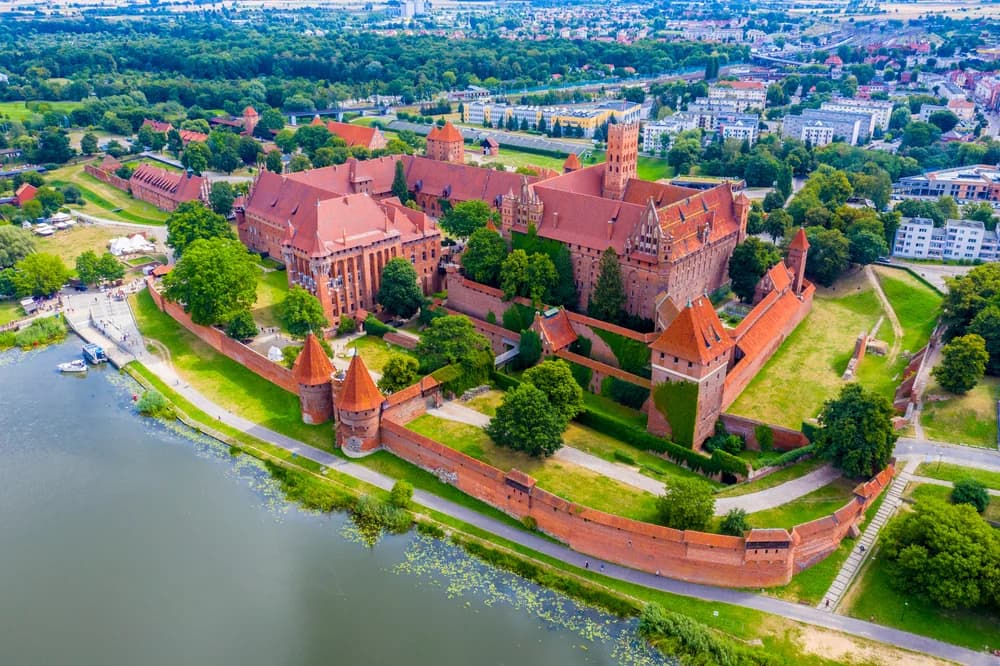
Malbork is the largest brick castle in the world. Wawel above Kraków is the coronation seat of Polish kings. Ten castles that anchor a serious Polish itinerary, with the medieval ruins of the Trail of Eagles' Nests and the 99-turret Moszna palace in between.
Poland's castle landscape splits cleanly along regional and chronological lines. Pomerania holds the Teutonic Order's brick-Gothic fortresses (Malbork, Bytów, the Marienburg-network sites Pluskowski documents in The Archaeology of the Prussian Crusade).[1] Lesser Poland and the Krakow-Częstochowa Upland concentrate the medieval zamki, including the Trail of Eagles' Nests (Szlak Orlich Gniazd), which Lepage places at "the densest cluster of medieval castle ruins in central Europe".[2] Lower Silesia holds the German-tradition Schlösser turned Polish pałace after 1945 (Książ is the headline). Opole and Mazovia carry the post-medieval magnate residences.
The 19th-century Polish-Lithuanian castle tradition that Lepage identifies blended Western European Gothic with Renaissance forms distinct from the Western mainstream.[2] That hybrid is what most travellers come for, alongside the brick-Gothic monumentality of Malbork itself.
Each entry covers what to see, when to go, what it costs, and how to get there.
1. Malbork Castle
Pomerania Open daily; free Mondays World's largest brick castle Map
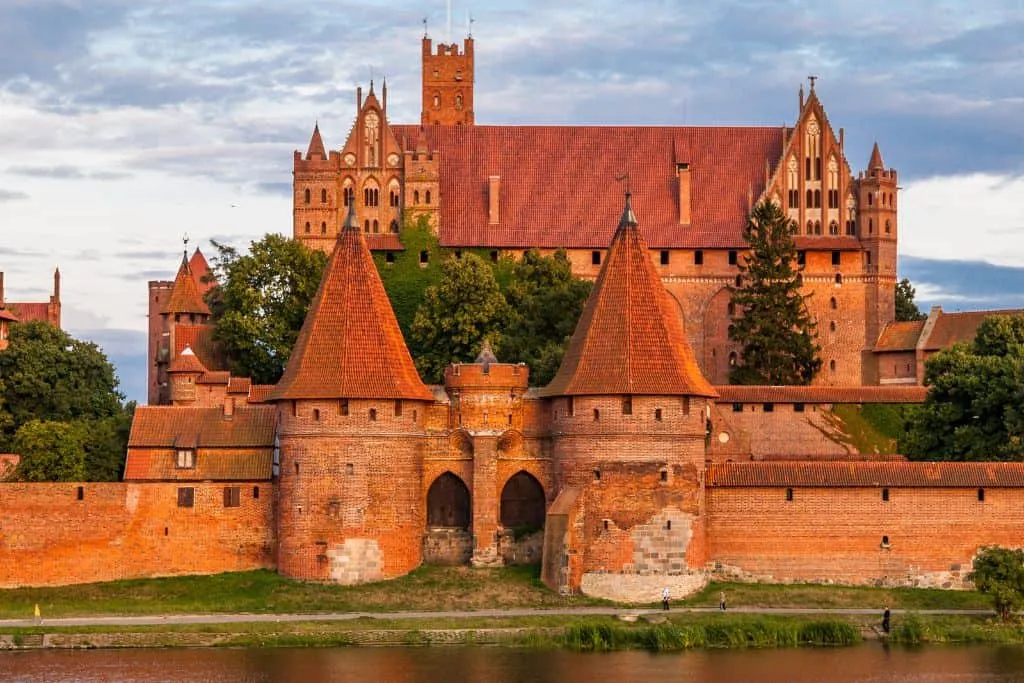
The Teutonic Order moved its headquarters to Marienburg (modern Malbork) in 1309 after construction had begun in 1274. Pluskowski documents Marienburg across more than 60 page-references in The Archaeology of the Prussian Crusade as the political and ceremonial centre of the Ordensstaat and the anchor of a network of subsidiary Order castles including Lochstedt (Pavlovo), Lauenburg (Lębork), Lyck (Ełk), Lötzen (Giżycko), Löbau (Lubawa) and Leipe (Lipienek).[1] The complex grew across the 14th century into the largest brick castle in the world, with the High Castle, Middle Castle and Outer Bailey arranged around concentric defensive lines. UNESCO inscribed it in 1997.[3]
The Historical Castle Route is the canonical visit, taking in the Grand Master's Palace, the Refectory, the Knights' Hall and the chapter house. The Castle Grounds Route is a shorter alternative, with free admission on Mondays. Malbork is operated by Muzeum Zamkowe w Malborku as a state museum.
Practical: open daily; Mon 09:00 to 20:00, Tue to Sun 09:00 to 19:00 in high season; hours shorten in low season. Mondays free admission (Castle Grounds Route only). Historical Castle Route: adult PLN 80, reduced PLN 60, family adult PLN 70, family child PLN 60, children up to 7 free; audio guide included. Castle Grounds Route: adult PLN 35, reduced PLN 25. From Gdańsk Główny, train to Malbork station (about 50 minutes), then a 15-minute walk. Plan your visit.[4]
2. Wawel Royal Castle
Lesser Poland (Kraków) Timed entry per exhibit Polish coronation seat Map
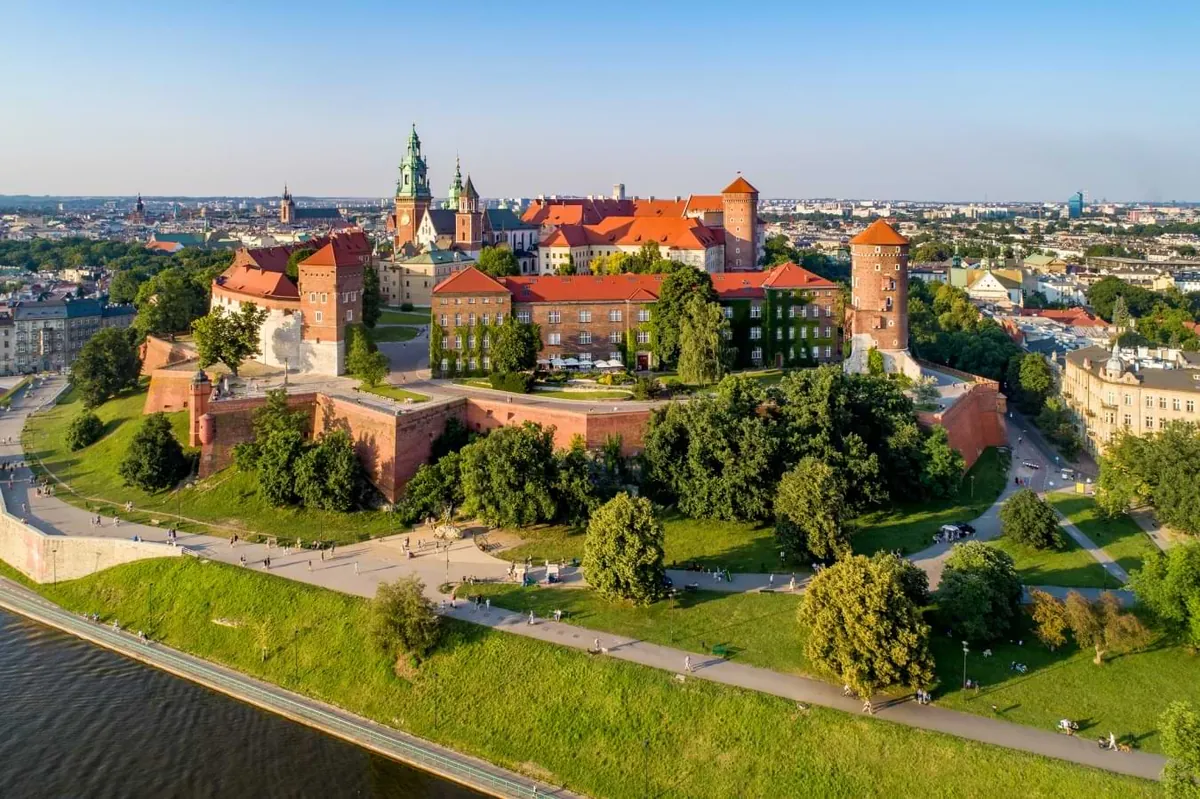
Wawel is the second pole of Polish castle heritage and operates very differently from Malbork. A royal seat from the 11th century, the surviving complex compresses Romanesque, Gothic, Renaissance, Baroque and 19th-century-restored fabric into a single hilltop site overlooking the Vistula. Kraków's Old Town, including Wawel Hill, was inscribed by UNESCO in 1978. Multiple Polish monarchs are buried in Wawel Cathedral on the same hilltop.
The site runs as a federation of separately ticketed exhibitions rather than a single visit: State Rooms (Castle II), the Crown Treasury and Armoury, the Castle Underground (Lost Wawel), the Royal Gardens and the Dragon's Den each carry their own admission. Hill grounds and courtyards are free. The Sandomierska Tower is closed for conservation from 25 March 2026; the Crown Treasury hosts a "Treasures from Łowicz" temporary exhibition March to June 2026.
Practical: Mon 09:00 to 14:00 (limited); Tue to Sun 09:00 to 16:00 (varies by exhibition); closed 1 Jan, Holy Saturday, Easter Sunday, Easter Monday, 1 Nov, 11 Nov, 24 to 25 Dec. Wawel Hill grounds are free, open from 06:00 to late evening. Headline ticket prices: State Rooms adult PLN 53 / reduced PLN 40; Crown Treasury and Armoury PLN 43 / 32; Castle Underground PLN 43 / 32; Royal Gardens PLN 11 / 9; Dragon's Den PLN 35 / 26. From Kraków Główny, tram 8, 10, 13 or 18 to Wawel or Stradom (5 to 10 min walk uphill); 10-minute walk from the Main Market Square. Plan your visit.[5]
3. Książ Castle
Lower Silesia Daily, year-round Silesia's biggest castle Map
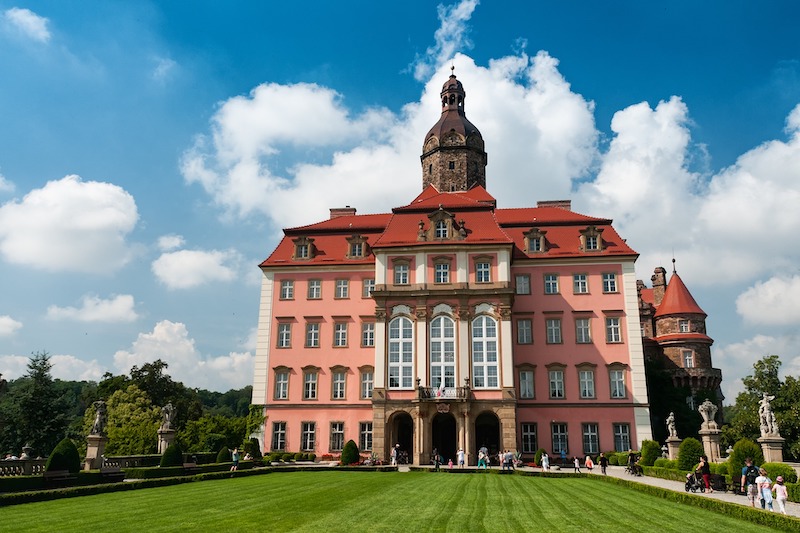
Książ near Wałbrzych is the third-largest castle in Poland by floor area, after Malbork and Wawel. The site has been built up across roughly eight centuries: a 13th-century stronghold of the Piast dukes of Świdnica, a Renaissance and Baroque expansion under the Hochberg family from the 16th century, and a major neo-Renaissance enlargement in the late 19th century. It sits in the Lower Silesia cluster that defines most of the live private pałac market, with German Schloss-building tradition before 1945 layered under post-1945 Polish administration.
The visit is exhibition-modular: castle plus Palm House, castle plus Underground plus Palm House, or the full complex. The Underground was excavated by forced labour during WWII for a never-completed Nazi installation; that history is part of the modern interpretation. Foundation-operated since reunification of the property in the 1970s.
Practical: open daily, year-round. Apr to Sep: Mon to Fri 09:00 to 18:00, Sat to Sun 09:00 to 19:00; Nov to Mar: Mon to Fri 10:00 to 15:00, Sat to Sun 10:00 to 16:00. Castle plus Palm House PLN 49 (reduced 39); plus Underground PLN 69 (reduced 59); full complex PLN 85 (reduced 75); night sightseeing PLN 60. From Wrocław, about 2.5 hours by car; bus from Wałbrzych Główny station to Książ. Plan your visit.[6]
4. Ogrodzieniec Castle
Silesia (Trail of Eagles' Nests) Daily, year-round Witcher filming ruin Map
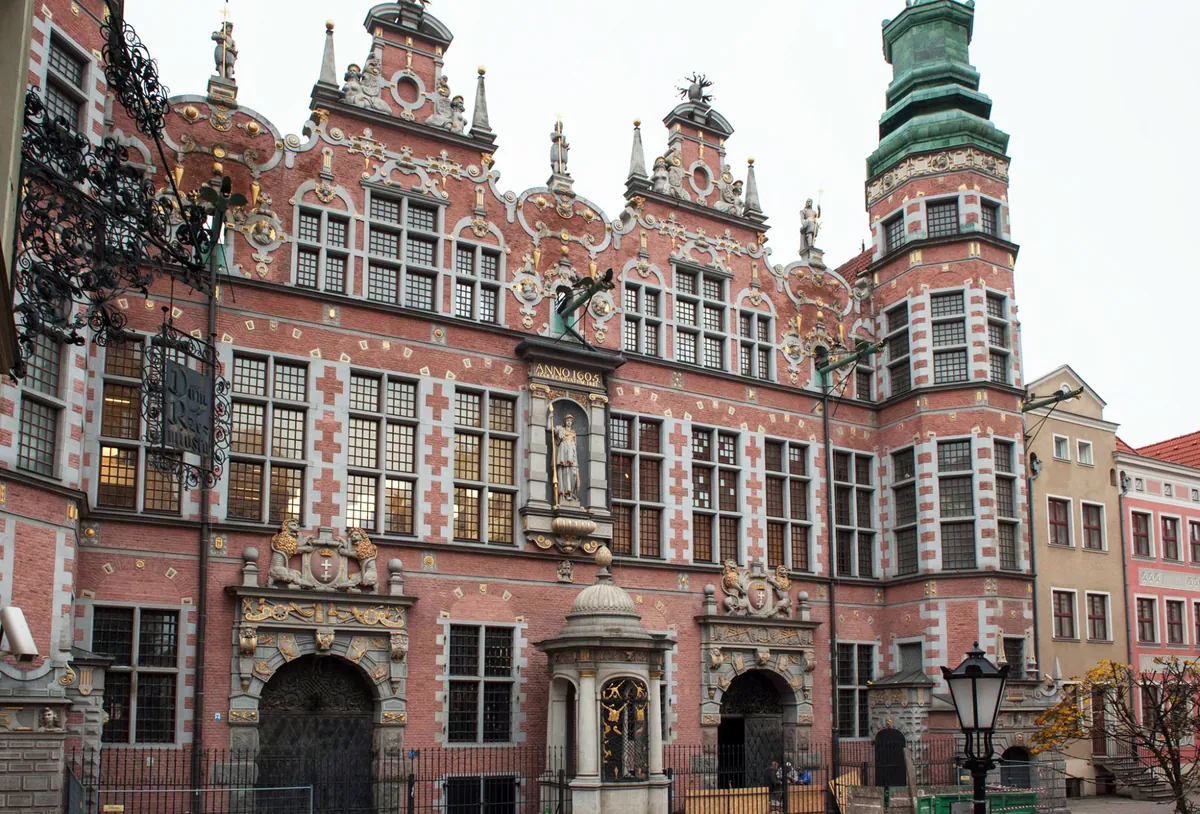
Ogrodzieniec is the largest castle ruin on the Trail of Eagles' Nests and the most photographed Polish castle ruin overall. The 14th-century limestone-rock site fuses the natural rock outcrops of the Polish Jura into the wall structure: the curtain rises directly out of the bedrock. The castle was built up in the Renaissance period by the Boner family of Kraków patricians and destroyed during the 17th-century Swedish "Deluge". It has been a conserved ruin since.
Netflix's The Witcher used Ogrodzieniec as a filming location, which has shifted its visitor profile noticeably toward younger international travellers. The site sits along the broader Szlak Orlich Gniazd trail running 163 km from Kraków north toward Częstochowa, which Lepage records as the densest cluster of medieval castle ruins in central Europe.[2]
Practical: open daily 09:00 to 20:00 (high season); reduced winter hours. Adult PLN 26; reduced PLN 18; free under 3 and for wheelchair users. From Kraków, about 60 km by car; bus from Kraków or Katowice to Ogrodzieniec. Nearest station Zawiercie (about 15 km). Operator site.[7]
5. Moszna Castle
Opole Voivodeship Daily, year-round 99 turrets fairytale Map
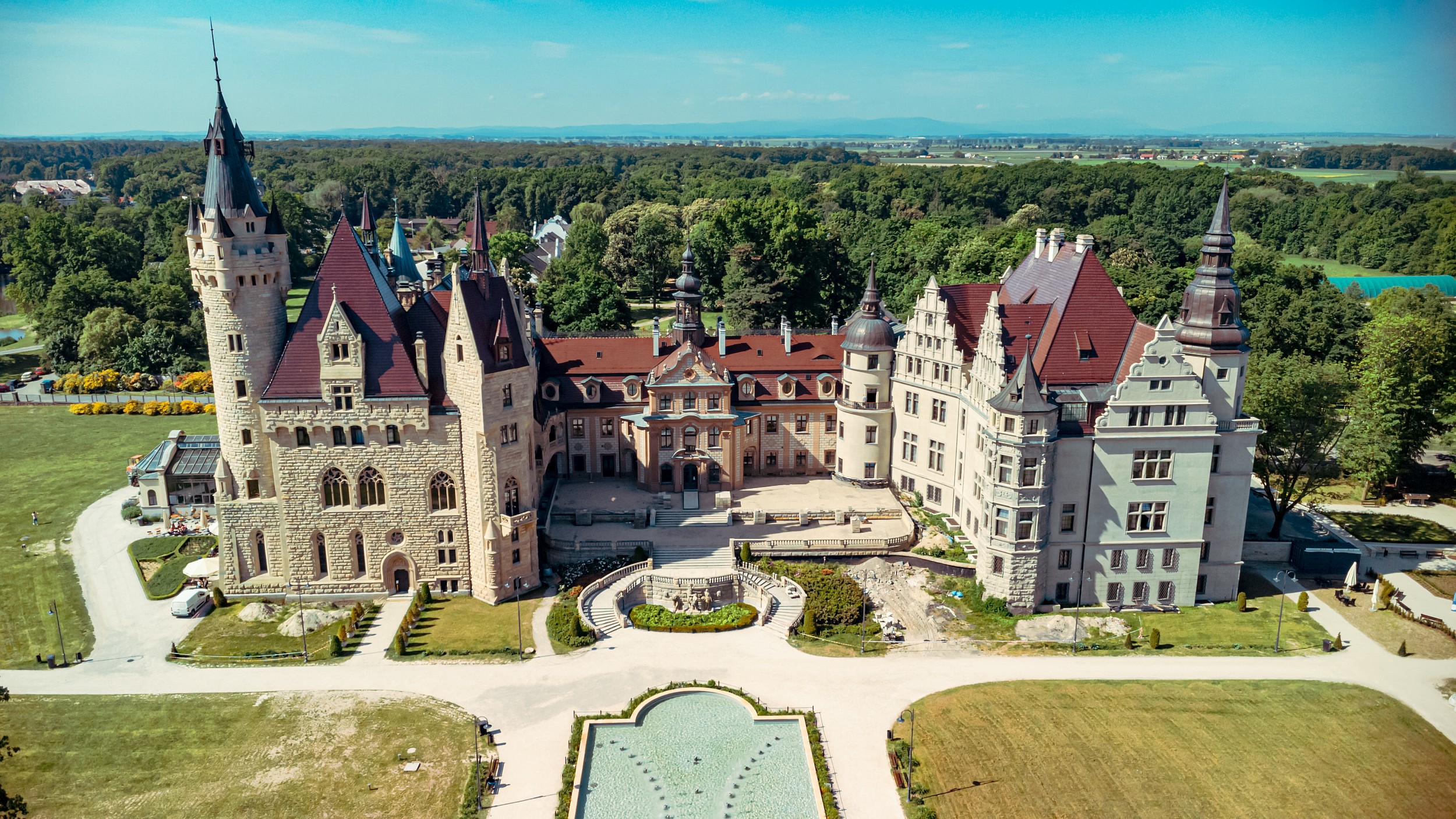
Moszna runs 99 turrets across a Baroque, Romantic and neo-Gothic ensemble, the result of a 19th-century enlargement on a 17th-century base by the Tiele-Winckler family of Silesian industrialists. The castle is famously claimed to have 99 turrets and 365 rooms, although the exact tally varies by source. It operates today as a hotel and cultural centre, with chamber tours through the historic interiors separately ticketed in season.
The pairing with the surrounding park (free in low season) and the working hotel use makes Moszna the canonical Polish wedding-and-conference zamek, and a useful reference for what restored heritage hotel use looks like at this scale of property.
Practical: Apr to Oct: Mon to Fri 09:00 to 18:00 plus weekends; Nov to Mar: Sat, Sun and holidays only 09:00 to 18:00 (chamber tours). Park free in low season; extra ticket for palace area in high season. Adult around PLN 40; reduced rates available. From Opole, about 40 minutes by car via DK40/A4; bus from Krapkowice or Strzelce Opolskie. Plan your visit.[8]
6. Pieskowa Skała
Lesser Poland Tuesday to Sunday, multi-route Renaissance Eagle's Nest Map
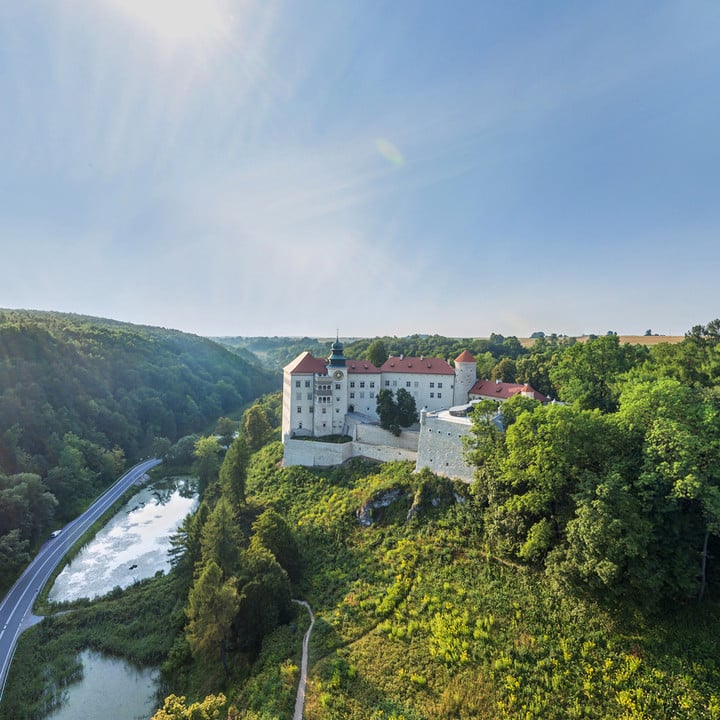
Pieskowa Skała sits within Ojców National Park about 27 km north-west of Kraków, on a limestone outcrop that puts it firmly within the Eagles' Nests trail. A 14th-century Casimir-the-Great defensive site rebuilt in the 16th century into a Renaissance residence. The "Hercules' Mace" rock pillar in front of the castle is one of the most photographed landscape features in Poland; the castle's Renaissance courtyard is the architectural centrepiece. Operated as a branch of Wawel Royal Castle since the 1970s.
The site runs as a multi-route property: the full castle (rooms plus exhibitions) takes about 2 hours; the shorter Noble Times route covers the Renaissance interiors in about 60 minutes; the Welcome to the Castle exterior route runs 30 minutes. Custodian-led group tours are available with advance booking.
Practical: open Tue to Sun 10:00 to 18:00 (May to Oct, last entries vary by route); reduced winter access, primarily Sat to Sun. Closed Mondays and on specified 2026 dates (1 Jan, 3 to 6 Mar, 10 to 13 Mar, 3 to 5 Apr, 24 to 25 Dec). Castle (rooms and exhibitions): PLN 45 (reduced 35); Noble Times route PLN 35 (29); Welcome to the Castle PLN 21 (18); custodian-led tour PLN 55 (45) plus PLN 350 for foreign-language guide. From Kraków, bus from the central station. Plan your visit.[9]
7. Krzyżtopór Castle
Świętokrzyskie Daily, year-round Once Europe's largest palace Map
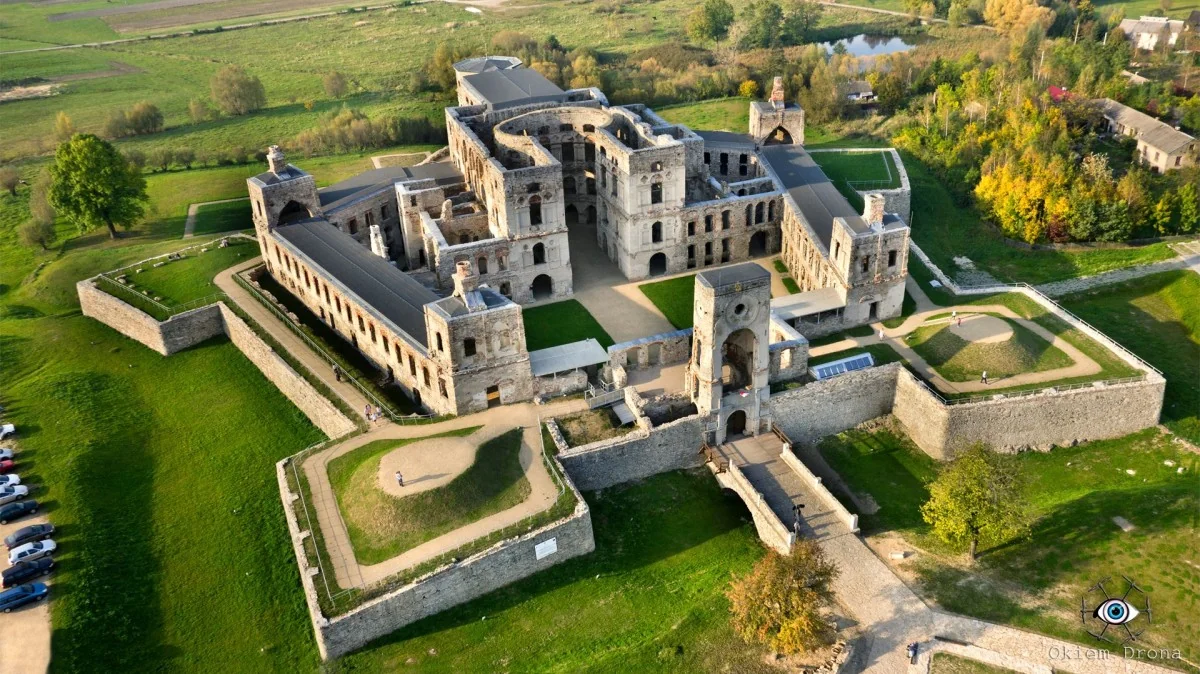
Krzyżtopór was built in 1644 by the Krzysztof Ossoliński, voivode of Sandomierz, to a calendar-coded layout: 365 windows, 52 rooms, 12 great halls and 4 towers, mapping the year. The Swedish "Deluge" of 1655 destroyed the structure within eleven years of completion. It has been a conserved ruin since. At its 1644 peak it was reportedly one of the largest palatial structures in Europe by built area, though the architectural form fits an Italianate palazzo in fortezza model rather than a defensive castle proper.
Five different tour routes work through the surviving fabric. Night tours run April to August 21:00 to 23:00 and September to November 20:00 to 22:00. Some areas are closed for ongoing conservation; check on the day.
Practical: open daily; summer (Apr to Aug) 08:00 to 20:00; September to October and March 08:00 to 18:00; winter (Nov to Feb) 08:00 to 16:00. Adult (high season) PLN 15; reduced PLN 13; off-season PLN 13 / 10. From Sandomierz, about 50 km by car; nearest rail station Opatów. Plan your visit.[10]
8. Bobolice Castle
Silesia (Trail of Eagles' Nests) Daily, varies Eagles' Nests reborn keep Map
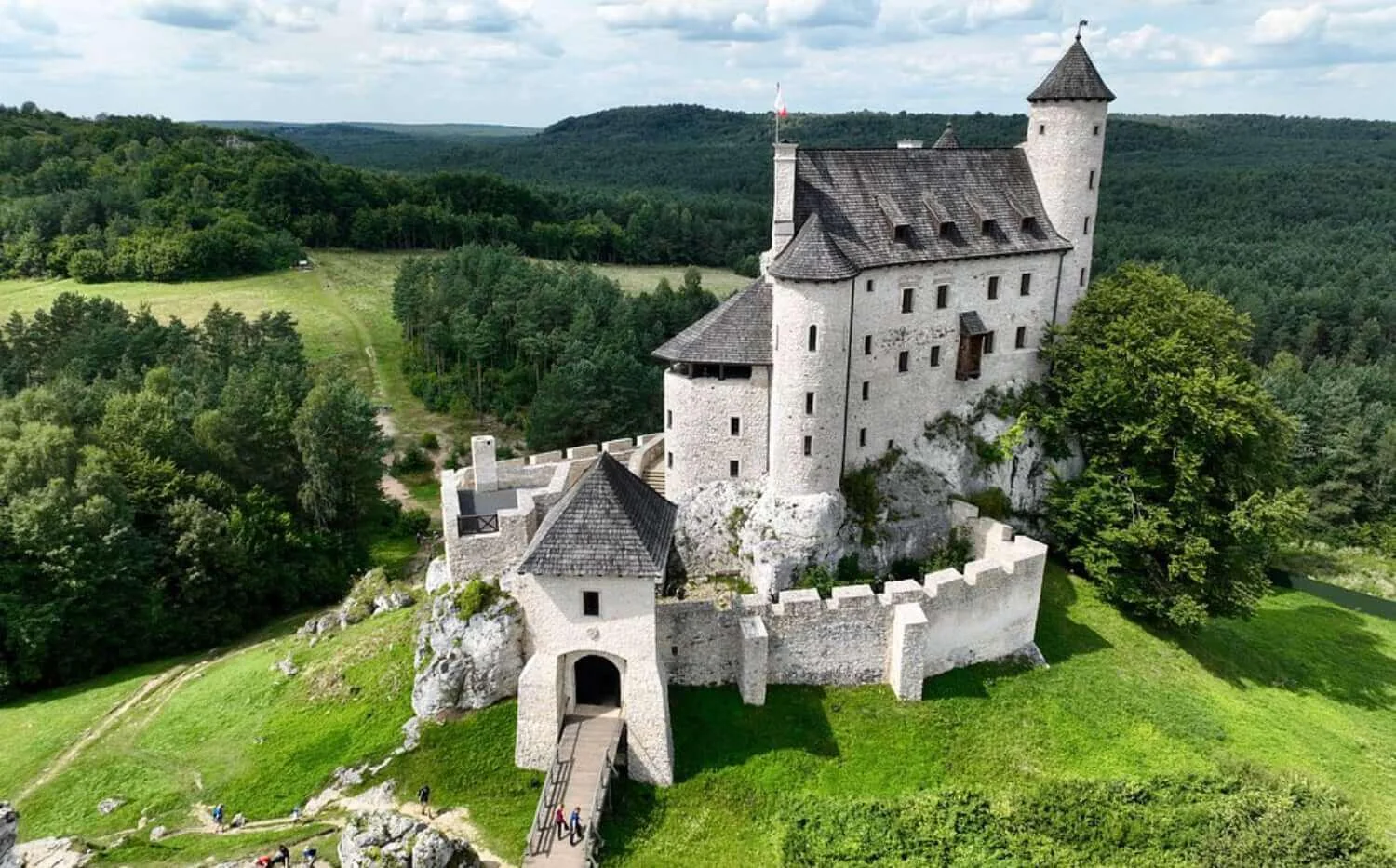
Bobolice is a 14th-century Casimir-the-Great defensive site that sat as a ruin for centuries before the Lasecki family acquired it in the 1990s and reconstructed it across the 2000s and 2010s. The result is one of the few Eagles' Nests sites visitable as an inhabitable medieval-style castle rather than a stabilised ruin, and it pairs naturally with neighbouring Mirów Castle (a few hundred metres away) on a single trail walk.
The reconstruction has been controversial in heritage circles; the practical effect is that a traveller can walk in and see what an Eagles' Nests site looked like when occupied. Tour duration is about 30 minutes; combined Bobolice plus Mirów grounds tickets are available at PLN 40.
Practical: open daily; opens around 10:30 with extended summer hours, reduced in winter. Castle entry PLN 15 (reduced 13); combined Bobolice plus Mirów grounds PLN 40; parking PLN 10. From Katowice, about 50 km by car via DK46/A1; bus to Niegowa from Częstochowa or Myszków. Nearest rail station Myszków (about 15 km). Plan your visit.[11]
9. Mirów Castle
Silesia (Trail of Eagles' Nests) Twin-castle ticket Casimir the Great's eyrie Map
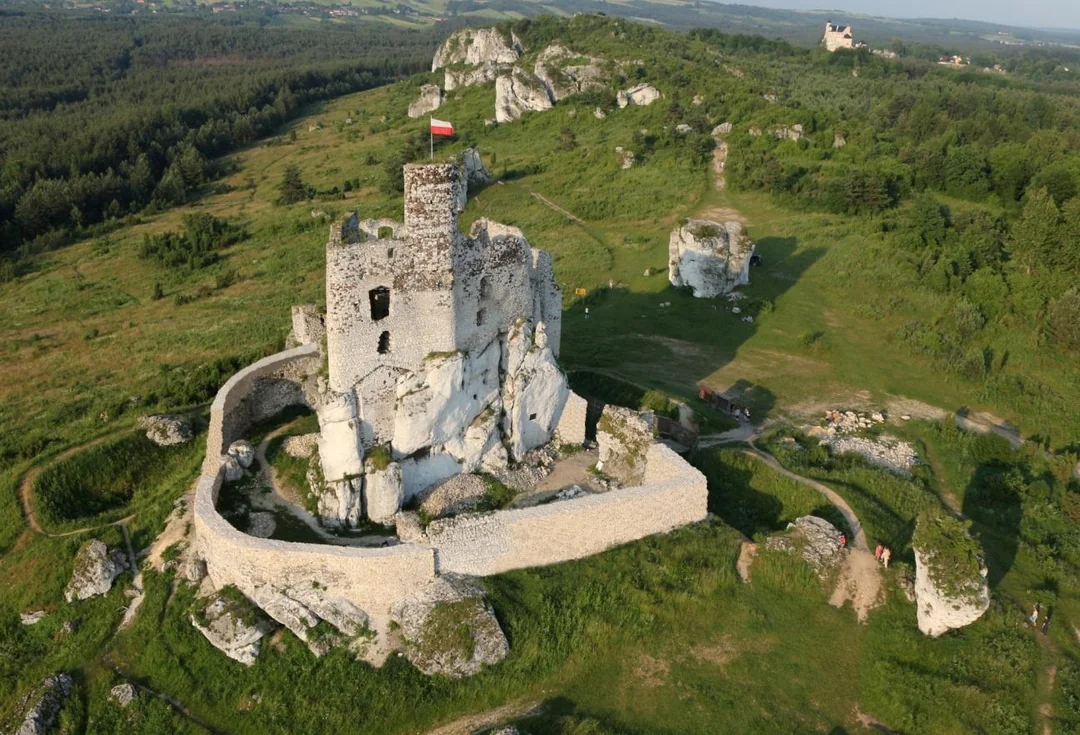
Mirów is Bobolice's twin: another Casimir-the-Great fortress on a limestone ridge, a few hundred metres along the trail. Unlike Bobolice it remains a stabilised ruin rather than a reconstruction, which gives a useful comparative reading of what the Eagles' Nests sites look like under each conservation philosophy. The castle interior opens only in summer or on select weekends; the courtyard is accessible weekends only; the surrounding grounds (błonia) are open year-round.
The Mirów-Bobolice walk is one of the canonical short routes on the Szlak Orlich Gniazd, and a useful day-trip pairing with Ogrodzieniec further north on the same trail.
Practical: castle grounds open 10:00 to 16:00 (varies by season); courtyard weekends only; interior summer or select weekends with extra fee. Castle grounds (Bobolice plus Mirów) PLN 20 (reduced 18); Mirów grounds plus courtyard plus interior PLN 30 (26); combined ticket (Mirów grounds plus courtyard plus Bobolice tour) PLN 40 (34). From Kraków about 50 km north by car; nearest rail station Częstochowa (then bus or taxi). Operator listing.[12]
10. Bytów Castle
Pomerania Daily; free Mondays Teutonic Order fortress Map
The Teutonic Order built Bytów in the late 14th century as one of the regional commandery castles in the network Pluskowski documents around the Marienburg headquarters at Malbork.[1] The castle sits in central Pomerania about 50 km from Słupsk, and now houses the Western Kashubian Museum (Muzeum Zachodniokaszubskie). The fabric covers the original Order period plus Renaissance modifications under later Pomeranian dukes; the inner courtyard, the Zamek Wysoki keep and the curtain walls are the principal interior visit.
Free Monday admission applies to the permanent exhibitions only. The site is a useful Pomeranian alternative or addition to Malbork on a longer northern itinerary, and one of the few castles in this list operating on a museum-by-default rather than a tour-by-default model.
Practical: open daily year-round. Mon 10:00 to 16:00 (free, permanent exhibitions only); Tue to Sun 10:00 to 18:00; off-season 10:00 to 16:00 daily. Adult PLN 20; reduced PLN 15; guided tour fee PLN 100 plus tickets. From Gdańsk or Słupsk, PKS bus to Bytów; rail services to Bytów are limited (use Słupsk, about 50 km). Plan your visit.[13]
At a glance
| Castle | Region | When to go | |
|---|---|---|---|
| Malbork CastleWorld's largest brick castle | Pomerania | Open daily; free Mondays |
| Wawel Royal CastlePolish coronation seat | Lesser Poland (Kraków) | Timed entry per exhibit |
| Książ CastleSilesia's biggest castle | Lower Silesia | Daily, year-round |
| Ogrodzieniec CastleWitcher filming ruin | Silesia (Trail of Eagles' Nests) | Daily, year-round |
| Moszna Castle99 turrets fairytale | Opole Voivodeship | Daily, year-round |
| Pieskowa SkałaRenaissance Eagle's Nest | Lesser Poland | Tuesday to Sunday, multi-route |
| Krzyżtopór CastleOnce Europe's largest palace | Świętokrzyskie | Daily, year-round |
| Bobolice CastleEagles' Nests reborn keep | Silesia (Trail of Eagles' Nests) | Daily, varies |
| Mirów CastleCasimir the Great's eyrie | Silesia (Trail of Eagles' Nests) | Twin-castle ticket |
| Bytów CastleTeutonic Order fortress | Pomerania | Daily; free Mondays |
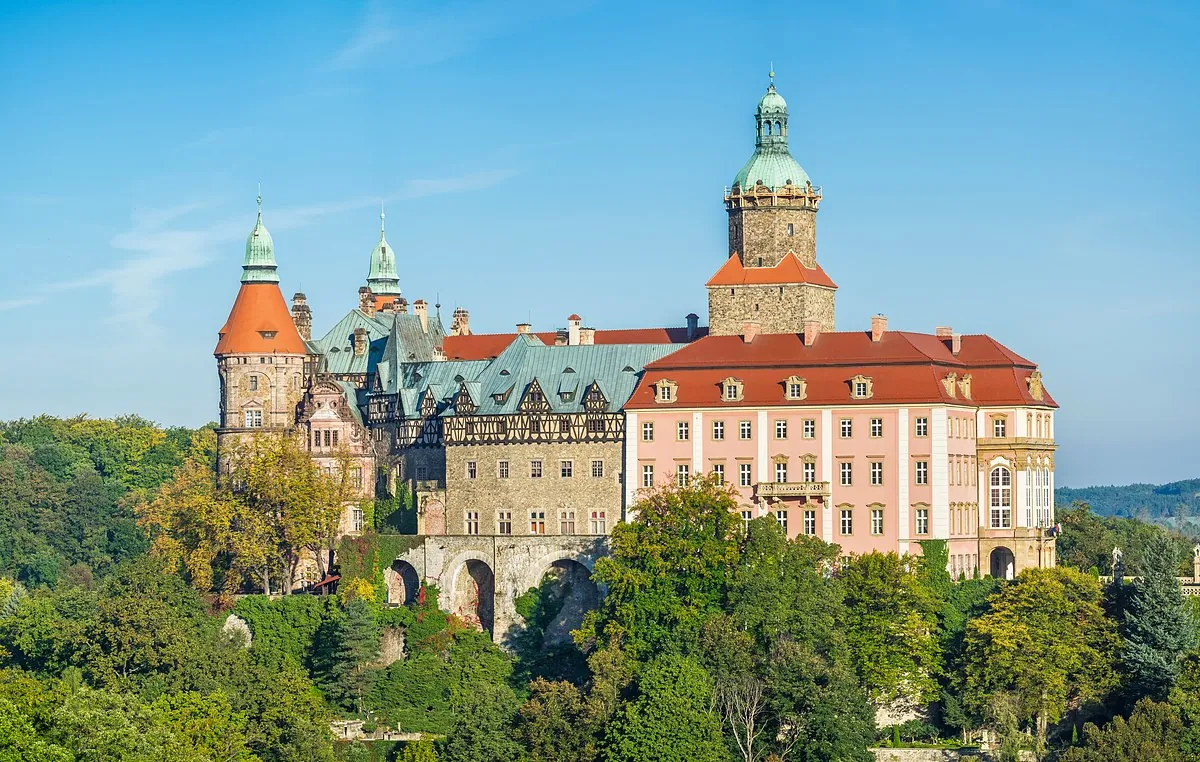
How many castles are in Poland?
Poland holds roughly 400 surviving medieval castles by the strict definition, and 5,224 protected zamki, pałace and dwory (castles, palaces and manor houses) on the NID heritage register run by the Narodowy Instytut Dziedzictwa.[14] Heritage protection runs through the 2003 Ustawa o ochronie zabytków i opiece nad zabytkami (Heritage Act), with provincial conservators (Wojewódzcy Konserwatorzy Zabytków) handling operational consent. The administrative timeline on standard interventions runs 2 to 6 months, meaningfully faster than the French Monument Historique regime (4 to 12 months) or the Italian Soprintendenza (6 to 18 months).
Public access is the smaller question. State museums (Wawel, Malbork, the Pieskowa Skała branch) plus foundation-operated sites (Książ) and free-access ruins (Ogrodzieniec, the Eagles' Nests trail) cover most visitor demand. The Krakow-Częstochowa Upland concentrates the densest medieval-castle cluster, which Lepage identifies as the densest in central Europe; the Trail of Eagles' Nests runs roughly 25 ruins along a 163 km route from Kraków north toward Częstochowa.[2]
Famous, medieval, Gothic and largest
Famous. Malbork and Wawel carry the bulk of international demand. Książ is the third pole, leveraging its Lower Silesia position and the WWII underground story. Ogrodzieniec, Moszna and Krzyżtopór each carry distinctive cultural profiles (Witcher filming, the 99-turret claim, the calendar coding) that drive travel demand at scale.
Medieval. Malbork is the architectural high point of the Polish-Teutonic medieval tradition. Wawel preserves Romanesque and Gothic fabric within its compressed Renaissance shell; the cathedral and the Lost Wawel underground exhibition are the standalone medieval visits within the complex. Bytów, Lębork, Człuchów and Tczew round out the Order-castle network in Pomerania. The Eagles' Nests trail sites (Ogrodzieniec, Mirów, Bobolice, Olsztyn, Smoleń, Pieskowa Skała) carry the medieval zamek tradition in Lesser Poland.
Gothic. Malbork is the canonical example of brick-Gothic monumentality in Europe. Wawel Cathedral on the same hilltop reads partly as Gothic underneath later additions. The smaller Pomeranian Order castles share the same brick-Gothic vocabulary in reduced form.
Largest. Malbork at 143,591 m² of integrated structure is the largest castle in the world by built floor area; UNESCO records the protected zone at 18.038 hectares.[3] Krzyżtopór at its 1644 peak was claimed to be one of the largest palatial structures in Europe, though as a palazzo in fortezza the comparison stretches the conventional castle category.
If you're looking to buy
Poland is the cheapest castle market in Europe by Castle Price Index measure. The indexed sample clears at a Polish median asking €1,104,000 for around 2,070 m² of floor area, or €632/m² across 12 listings, against a European all-market median of €2,250/m².[15] Three structural factors hold the floor down: exceptional supply density (5,224 protected properties on the NID register), heavy restoration scope on most listings (especially the post-German Lower Silesian pałace) and constrained foreign-buyer financing (Polish banks lend selectively on heritage property, with LTVs typically below 50% on cultural monuments).
Transaction costs run 4 to 5%: PCC tax at 2%, plus notary and registry fees of around 1.5 to 2.5%. EU citizens face fewer restrictions than non-EU buyers; closing typically runs three to six months. National-line grants through the Ministry of Culture cover up to 50% of approved restoration costs on registered monuments, with EU structural funds (ERDF, EAFRD) supplementing for rural development. For current listings see castles for sale in Poland; for the operational side see our guide to buying a castle.
Sources
1. Pluskowski, A. The Archaeology of the Prussian Crusade: Holy War and Colonisation. Routledge, 2013 (esp. pp. 158-184; index reference 447).
2. Lepage, J.-D. G. G. Castles and Fortified Cities of Medieval Europe: An Illustrated History. McFarland, 2002 (pp. 350-400, Central/Eastern Europe chapter).
3. UNESCO World Heritage List, ref. 847 (Castle of the Teutonic Order in Malbork).
4. Malbork Castle, Muzeum Zamkowe w Malborku.
5. Wawel Royal Castle, official site.
6. Książ Castle, official site (operator: Przedsiębiorstwo Zamek Książ).
7. Ogrodzieniec Castle, operator and tourism listings.
8. Moszna Castle, official site.
9. Pieskowa Skała (branch of Wawel Royal Castle), official site.
10. Krzyżtopór Castle, official site.
11. Bobolice Castle, official site.
12. Mirów Castle, Trail of the Eagles' Nests association listing.
13. Bytów Castle / Western Kashubian Museum, official site.
14. NID, Narodowy Instytut Dziedzictwa (National Heritage Board of Poland).
15. Castle Collector. Castle Price Index, March 2026 edition.