
Castles in Italy: 10 castles to visit, from Castel Sant'Angelo to Castel del Monte
Castel del Monte's octagonal mystery, Castello Sforzesco's Milan ramparts and the Aragonese fortresses of the south: 8 magnificent Italian castles to visit.
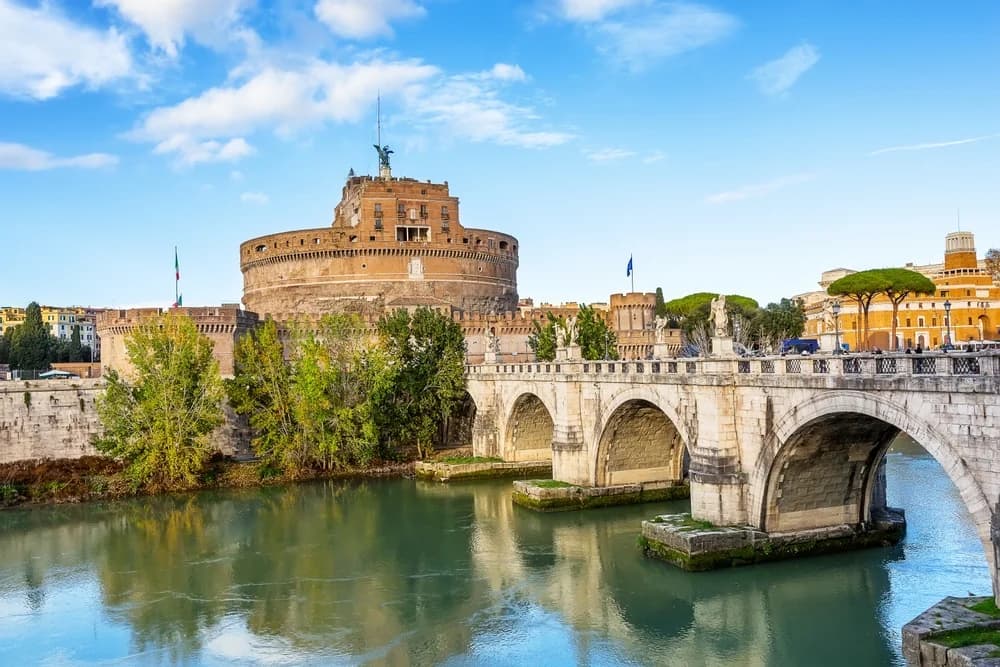
Italy's castle landscape runs from Hadrian's Roman mausoleum to a Habsburg cliff-top villa on the Adriatic. Ten castles, across Apulia, Sicily, Tuscany, Lombardy and the Tyrolean Alps.
Italy holds around 3,000 documented castle sites in the Ministero della Cultura register, with broader fortified-architecture surveys pushing the count substantially higher once towers, citadels and substantial ruins are folded in.[1] The geography of survival reflects the country's medieval politics. Frederick II's 13th-century Hohenstaufen network sits across Apulia, anchored by the octagonal Castel del Monte, his mathematical masterpiece on the Murge plateau. Norman, Hohenstaufen and Aragonese fortifications layer across Sicily, with Maniace at Ortigia among the cleanest 13th-century survivors. The Visconti and Sforza castles of Lombardy define the late-medieval north, with the Castello Sforzesco at the centre of Milan now a public museum complex.
The traveller's circuit is narrower. Castel Sant'Angelo, Hadrian's 134 to 139 CE mausoleum repurposed as a papal fortress, runs as the most-visited castle in Italy out of the Italian Ministry of Culture's Roman museum portfolio. The northern alpine castles cluster in Trentino-Alto Adige, where Castello del Buonconsiglio's prince-bishop's seat in Trento and Castel Tirolo's perched fortress above Merano frame the Italian-German bilingual cultural border. Add Miramare on the Trieste cliff-top for the late-Habsburg romantic style, Castello del Catajo in the Veneto for the largest private residence in Italy by floor area, and Castello di Sammezzano in Tuscany as the most striking 19th-century Moorish-revival fantasy in the country, restoration permitting.
The ten below are the castles that warrant the day. Each entry covers what to see, when to go, what it costs, and how to get there.
1. Castel Sant'Angelo
Lazio (Rome) 134 to 139 CE, refortified medieval and Renaissance Closed Mondays Hadrian's mausoleum Map
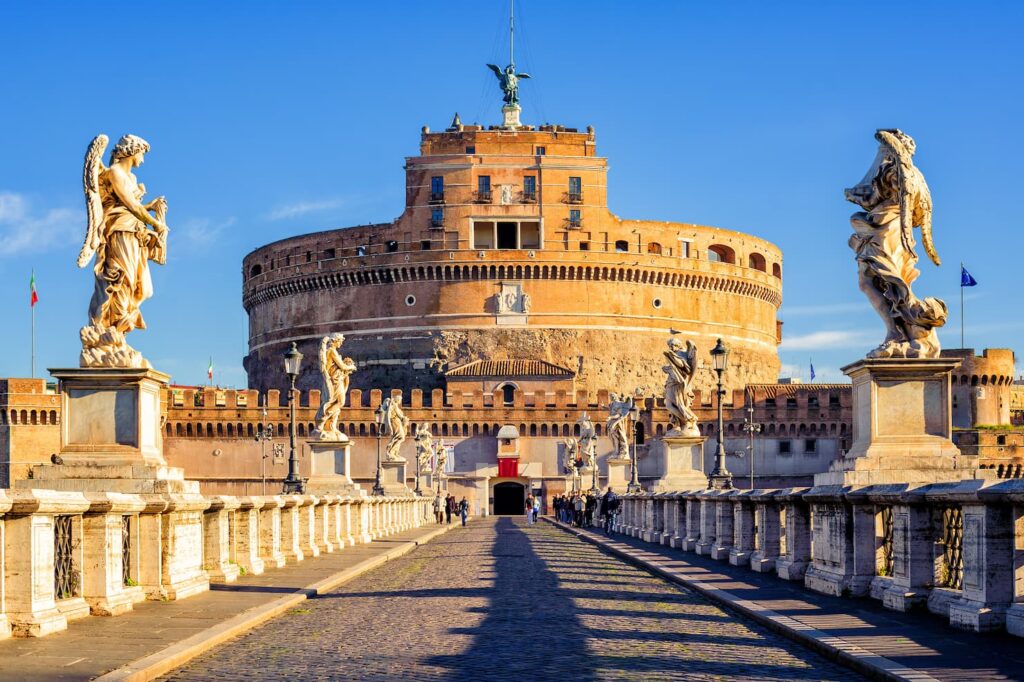
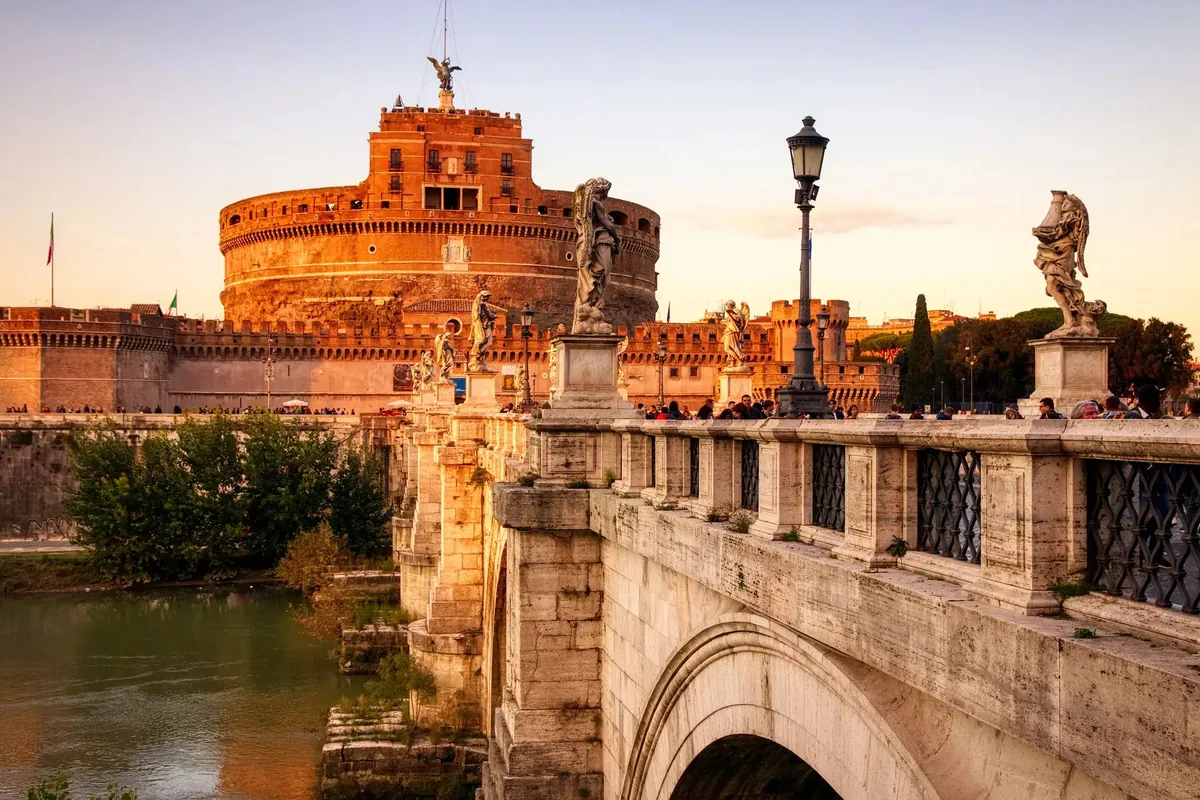
The cylindrical core of Castel Sant'Angelo was built between 134 and 139 CE as Emperor Hadrian's mausoleum, on the right bank of the Tiber across from the Campus Martius. The conversion to a papal fortress, with the Passetto di Borgo corridor running directly into the Vatican Palace as an emergency escape route, came in the early Middle Ages. Lepage's Castles and Fortified Cities of Medieval Europe records that the structure was enclosed by five bastions designed by Antonio da San Gallo the Elder and embellished by Popes Clement VII and Paul III between 1492 and 1569, calling Castel Sant'Angelo "one of the great glories of Rome".[2]
The ramped corridor circling up through the original Roman drum, the papal apartments at the upper levels, the Sala Paolina with its mythological frescoes, and the rooftop terrace with the bronze archangel Michael are the visit. The view across the Tiber to St Peter's, especially in late afternoon, is the standard photograph.
Practical: Tuesday to Sunday 09:00 to 19:30, last admission 18:30; closed Mondays, 1 January and 25 December. Adult €16, EU citizens 18 to 25 €2 with ID, free under 18. First Sunday of each month free admission, no booking. Metro A to Lepanto (~12 min walk) or Ottaviano (~15 min walk); bus 23, 40, 271 or 982 to Piazza Pia. Plan your visit.[3]
2. Castello Sforzesco
Lombardy (Milan) Closed Mondays Pietà Rondanini and Leonardo Map
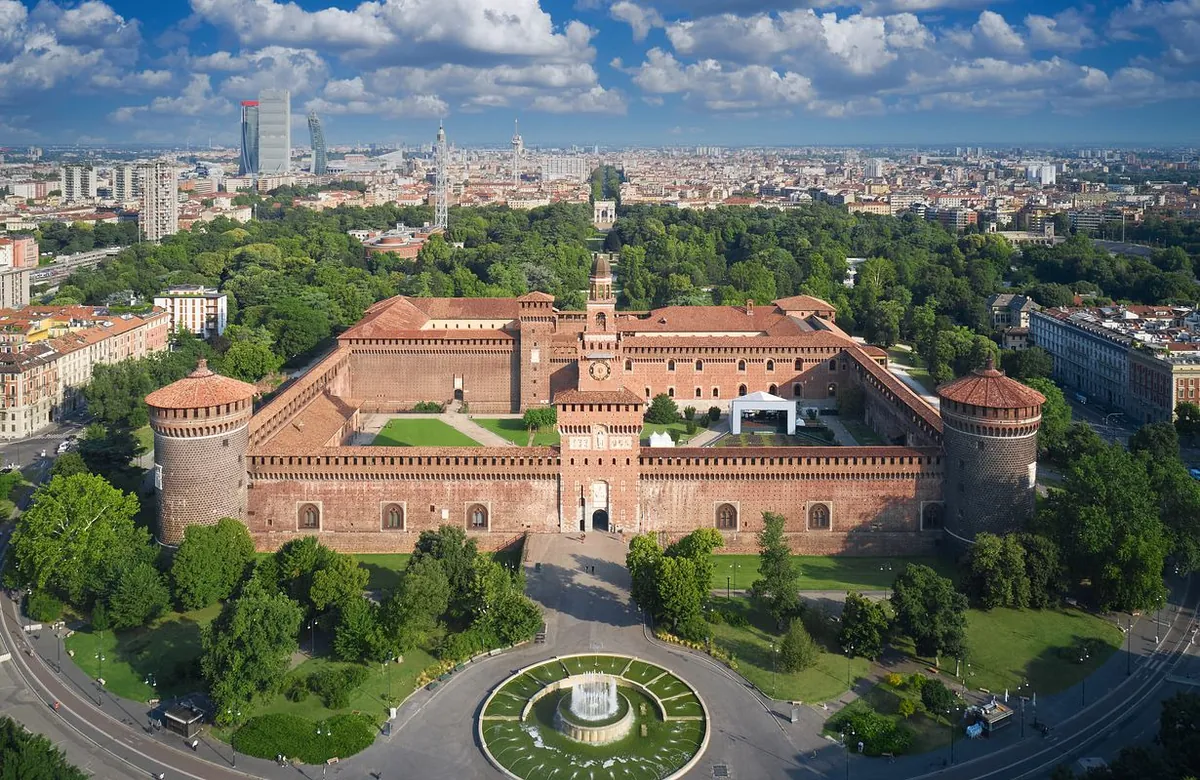
The Castello di Porta Giovia site held a first outward fortified wall built in the first half of the 14th century by Galeazzo Visconti; Gian Galeazzo Visconti later built a citadel outside the city walls, where he received the ducal crown in 1395.[4] In 1447 the Ambrosian Republic ordered the demolition of the castle as a symbol of Viscontean power, and materials (wood, iron, stone) were contracted out and partly redirected to the Veneranda Fabbrica del Duomo.[4] When Francesco Sforza took the project upon himself in 1450, after marrying into the Visconti dynasty, he gave specific construction instructions either ad bocham in person or by letter from the field, and rebuilt the quadrangular nucleus with outer walls around 15 metres high, corner towers and a main entrance protected by a ravelin.[4]
The castle complex now houses Milan's principal civic museum group, including the Pietà Rondanini (Michelangelo's last sculpture), the Sala delle Asse decorated by Leonardo da Vinci (currently closed for restoration), the Egyptian Museum, and the Pinacoteca. The Parco Sempione behind the castle was laid out in the late 19th century as the city's main public park.
Practical: courtyards open daily 07:00 to 19:30, free; museums Tuesday to Sunday 10:00 to 17:30 (last entry 16:30), closed Mondays, 1 January, 1 May and 25 December. Single combined museum ticket adult €5, concession €3 (18 to 25 and over 65), free under 18. Free first Sunday of the month and first/third Tuesday after 14:00. The Sala delle Asse and the Prehistory and Protohistory section are currently closed for restoration. Metro M1 (Cairoli) or M2 (Lanza/Cadorna). Plan your visit.[5]
3. Castel del Monte
Apulia (Andria) 1240s Reservation required Frederick II's octagonal enigma Map
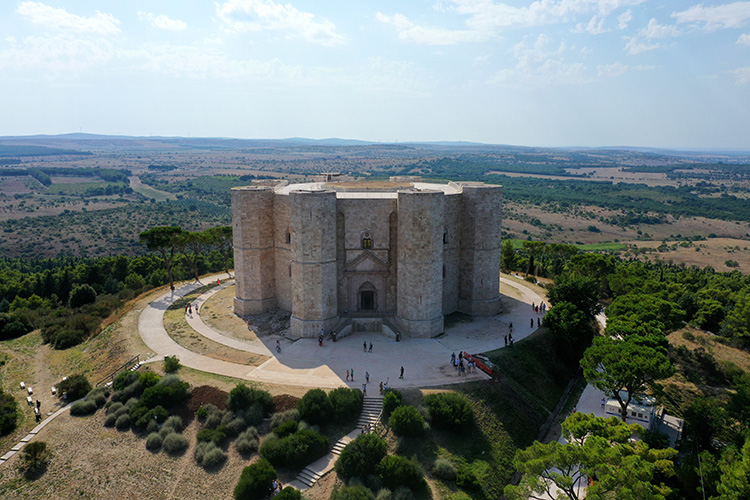
Castel del Monte sits on the Murge plateau in Apulia, built for Frederick II of Hohenstaufen in the 1240s on a strict octagonal plan with eight identical octagonal towers at the corners. UNESCO inscribed it in 1996. The €0.01 Italian euro coin features the castle on the reverse, on a count of architectural significance and geometric singularity. The function of the building is still debated: there is no surrounding settlement, no chapel and no stable accommodation for a permanent garrison, suggesting a hunting lodge or an architectural manifesto rather than a working military fortress.
The visit is short: a single octagonal courtyard surrounded by eight rooms on each of two floors, with the geometric ratios (the eight towers, the octagonal plan, the octagonal courtyard) the principal interest. Most visitors pair it with Trani Castle on the Adriatic coast, served by a combined ticket.
Practical: open daily, year-round, with reservation required. Summer (April to September) 10:00 to 18:45 (last entry 18:00); winter (October to March) 09:00 to 17:45 (last entry 17:00). Adult €10, EU citizens 18 to 25 €2 with ID, under 18 free. Combined Castel del Monte plus Castello di Trani: €15 adult / €4 reduced. Park €5 in the valley square then walk ~10 minutes or take the €2 round-trip shuttle. Train to Andria, then local bus or taxi. Plan your visit.[6]
4. Castello del Buonconsiglio
Trentino Closed Mondays Prince-bishops' Trentino seat Map
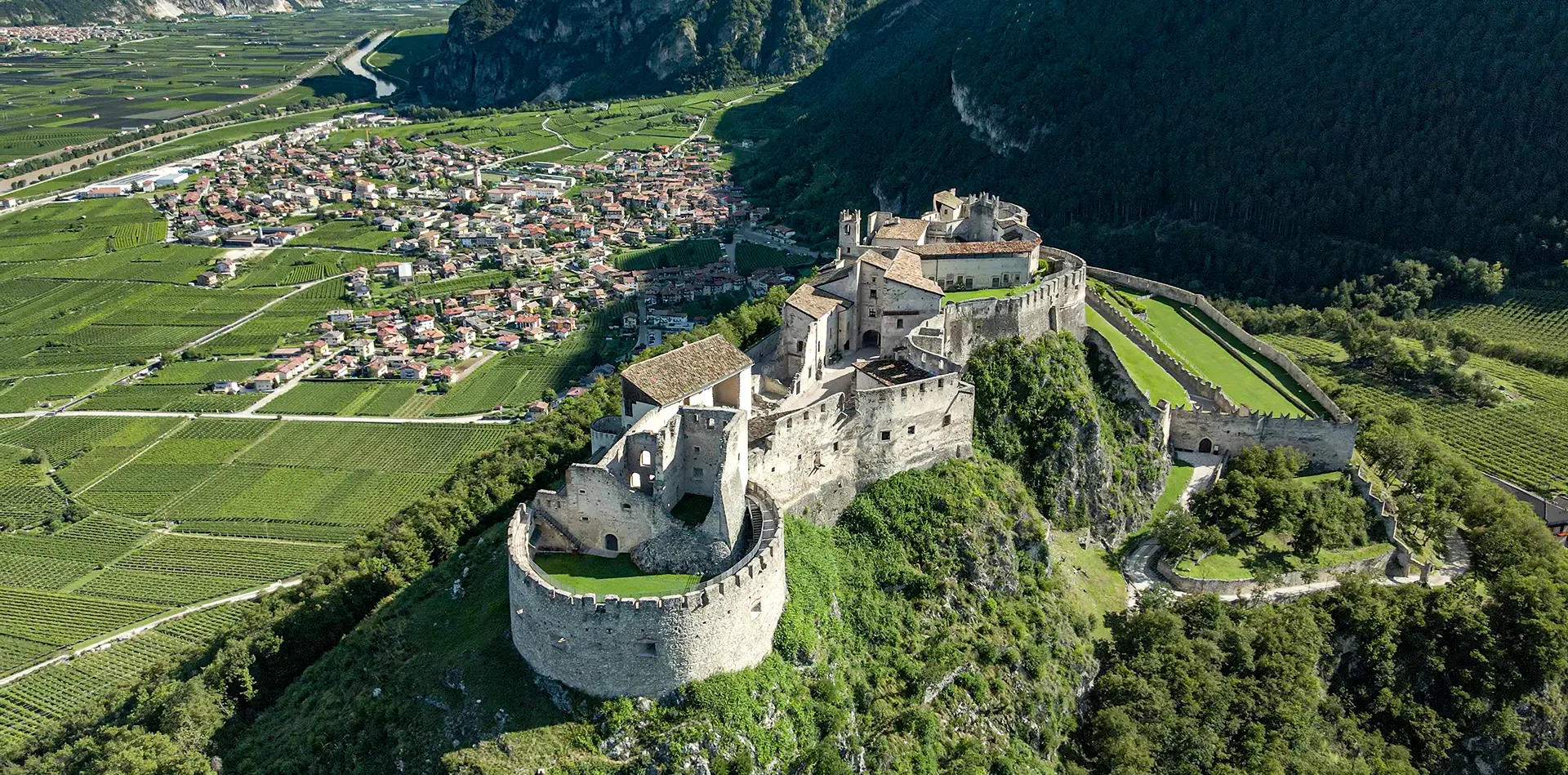
Buonconsiglio was the seat of the prince-bishops of Trent for almost six centuries, from the 13th century to the secularisation of the principality in 1803. The medieval Castelvecchio core sits at the centre, with the Renaissance Magno Palazzo (built between 1528 and 1536 under Cardinal Bernardo Cles) wrapping around it and the Giunta Albertiana of the early 18th century closing the ensemble. The Council of Trent (1545 to 1563) met in part within the castle precinct. The Torre Aquila tower holds the Cycle of the Months frescoes, an early 15th-century survival of secular Gothic painting on a calendar theme.
The Magno Palazzo's second-floor rooms are the visit's high point, with frescoes by Dosso and Battista Dossi, Romanino and Marcello Fogolino across the principal apartments. Note that the second floor is currently affected by ongoing renovation works through to 31 March 2026, with reduced ticket pricing during that period.
Practical: open Tuesday to Sunday 09:30 to 18:00; closed Mondays (non-holiday) and 25 December. Adult €10, concession €8 (65+ and groups of 15+), young (15 to 26) €6, under 14 free, family (2 adults + under 18) €20. Torre Aquila add-on €2.50. About a 10-minute walk from Trento railway station. Active works: second floor of the Magno Palazzo closed for renovation to 31 March 2026; reduced ticket pricing applies during the works. Plan your visit.[7]
5. Castello di Miramare
Friuli (Trieste) Daily, year-round Habsburg seaside villa Map
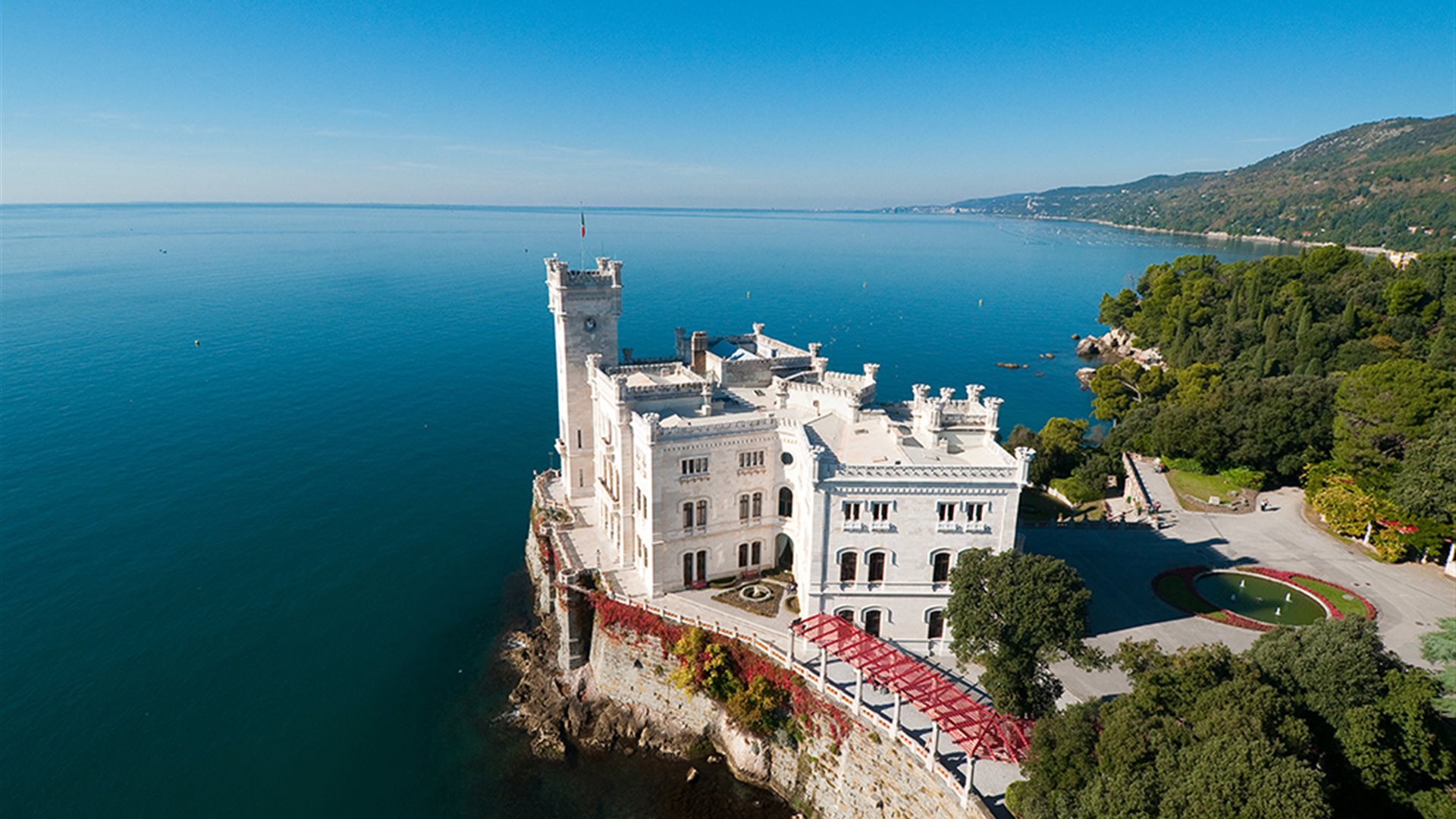
Miramare was built between 1856 and 1860 for Archduke Maximilian of Habsburg and his wife Charlotte of Belgium, on a limestone promontory just north of Trieste. Maximilian commissioned the building before his Mexican adventure, where he was crowned Emperor of Mexico in 1864 and executed by Republican forces in 1867. The interior survives largely as the couple left it, including the Throne Room, the bedrooms and Maximilian's wood-panelled study modelled on a ship's cabin.
The 22-hectare park, free to enter year-round, is laid out as a 19th-century romantic garden with palms, sequoias and Mediterranean planting that Maximilian collected from his naval voyages. The marine reserve below the castle protects 30 hectares of Adriatic seabed.
Practical: castle open daily 09:00 to 19:00 (ticket office to 18:30); park free, with seasonal hours from 08:00 to 16:00 (Jan, Nov, Dec) up to 08:00 to 19:00 (Apr to Sep). Closed 1 January and 25 December. Castle plus Egyptian Collections exhibition adult €17, EU 18 to 25 €7, free under 18. First Sunday of each month free admission. Active works: construction on the Grignano lift footbridge from 12 January 2026 may affect access from that side of the park. From Trieste Centrale, regional train to Miramare station (~9 min) plus a 150 m walk; or APT bus 6 or 36 to Bivio di Miramare (~13 min). Plan your visit.[8]
6. Castello Aragonese
Campania (Ischia) 474 BCE / refortified 1441 Daily, sunset closing Ischia's medieval islet citadel Map
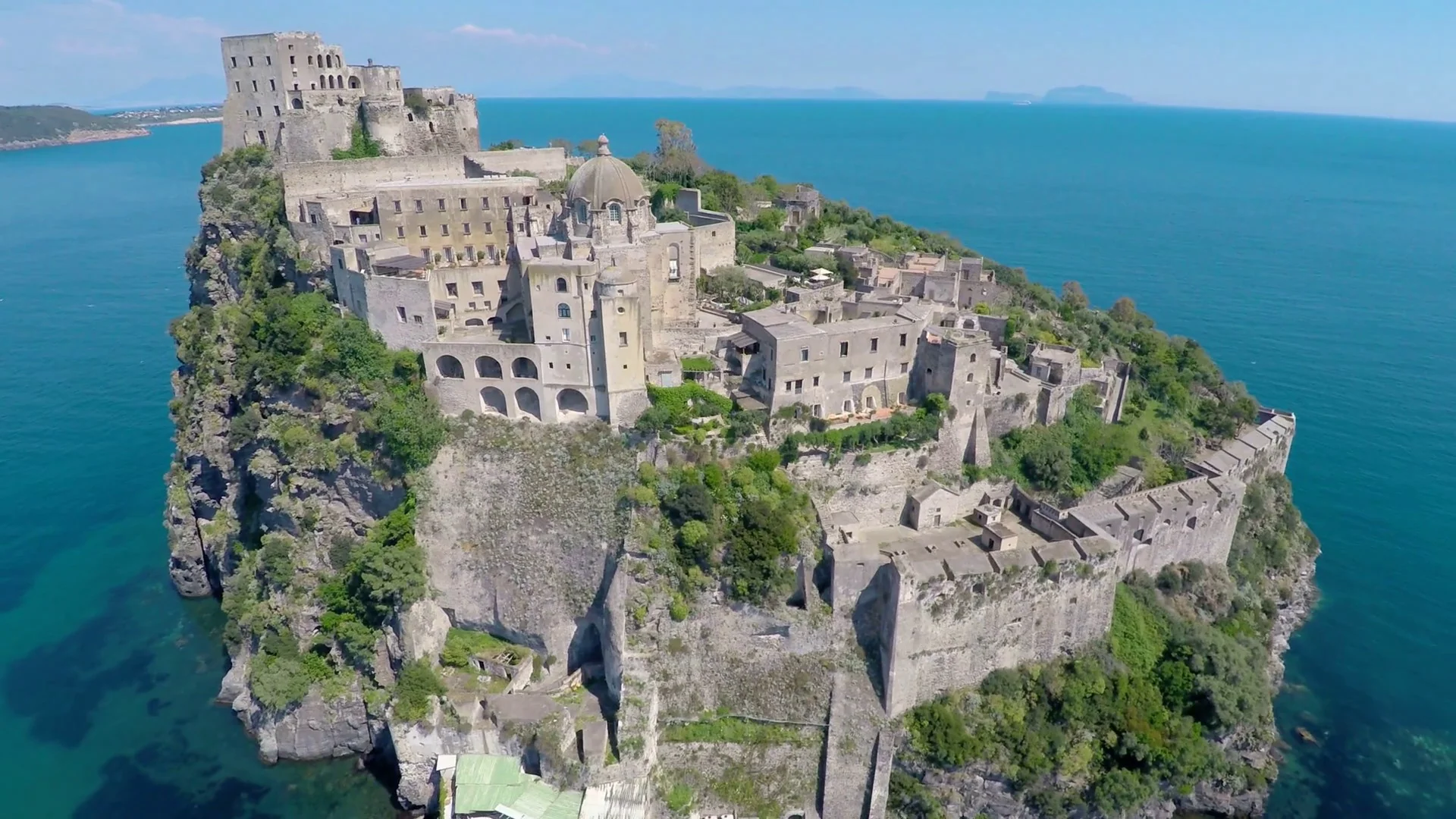
The Aragonese castle stands on a small volcanic islet linked to Ischia by a stone causeway built by Alfonso V of Aragon in 1441. The fortification of the rock runs continuously from 474 BCE, when the Greek tyrant Hiero I of Syracuse first fortified it, through Roman, Byzantine and Norman occupations to the 15th-century Aragonese rebuild that defines the surviving structure. Renato Mattera bought the castle in 1912 from the Italian state and his family still operates it as a private tourist attraction.
The visit climbs the causeway to the Cathedral of the Assumption (largely ruined after the 19th-century earthquake), the Convent of the Clarisses with its open-air cemetery, the Church of the Immaculate, and the upper terraces with views across the Bay of Naples. Allow two to three hours to walk it end to end.
Practical: open daily, 09:00 to sunset (ticket window closes 90 minutes before sunset). Annual closure for maintenance from 7 January to early March. Adult €15, over 70s €12, ages 10 to 18 €6, under 10 free, Ischia residents €6. Ferry or hydrofoil from Naples or Pozzuoli to Ischia, then bus or walk to Ischia Ponte. Plan your visit.[9]
7. Maniace Castle
Sicily (Ortigia) Open Tuesday to Sunday (split hours) Frederick II's sea fortress Map
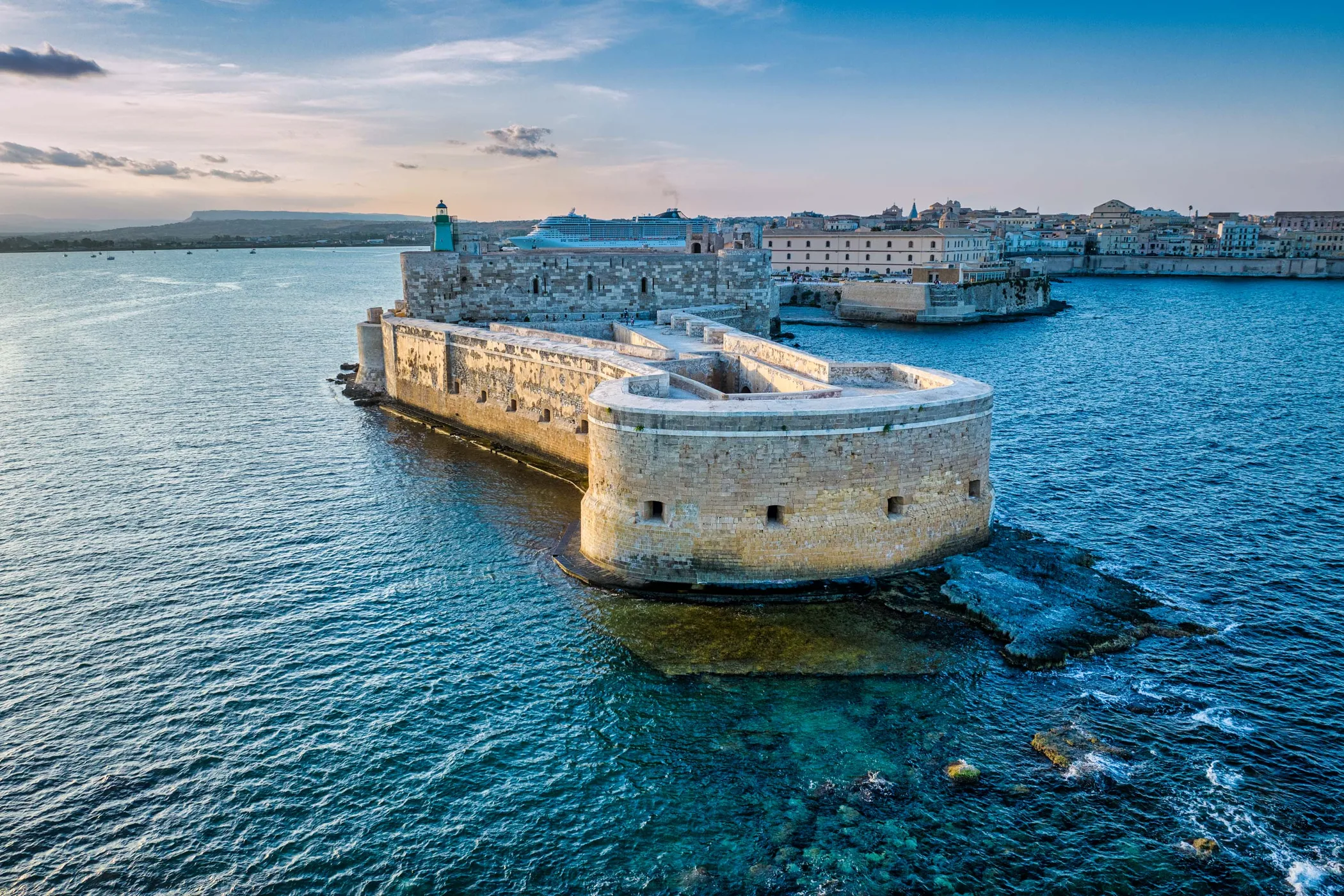
Maniace sits at the southern tip of Ortigia island, the historic core of Syracuse. Frederick II of Hohenstaufen built the castle between 1232 and 1240 on the foundations of a Byzantine fortification associated with the 11th-century general George Maniakes (the source of the name). The square plan, with corner towers and a central hall covered by an ogival vault carried on slim columns, is one of Frederick's signature architectural moves, sharing geometric DNA with Castel del Monte across the Adriatic in Apulia.
The vaulted hall, the surviving 13th-century portal, and the views across the harbour and the open Ionian Sea are the visit. The site is managed by the Sicilian regional cultural heritage authority (Soprintendenza di Siracusa) and is small in scale: an hour walks it.
Practical: open Tuesday to Sunday on a split-shift schedule. Tuesday to Friday 08:30 to 13:00; Saturday 08:30 to 18:00; Sunday 08:30 to 13:00; Monday 13:00 to 18:00 only. Hours may change, so confirm with the Soprintendenza Siracusa. Adult €6, under 18 free. Tickets via TicketOne or on-site. Walkable from anywhere in Ortigia's historic centre. Plan your visit.[10]
8. Castel Tirolo
Trentino-Alto Adige (above Merano) Mid-March to early November Cradle of Tyrol's history Map
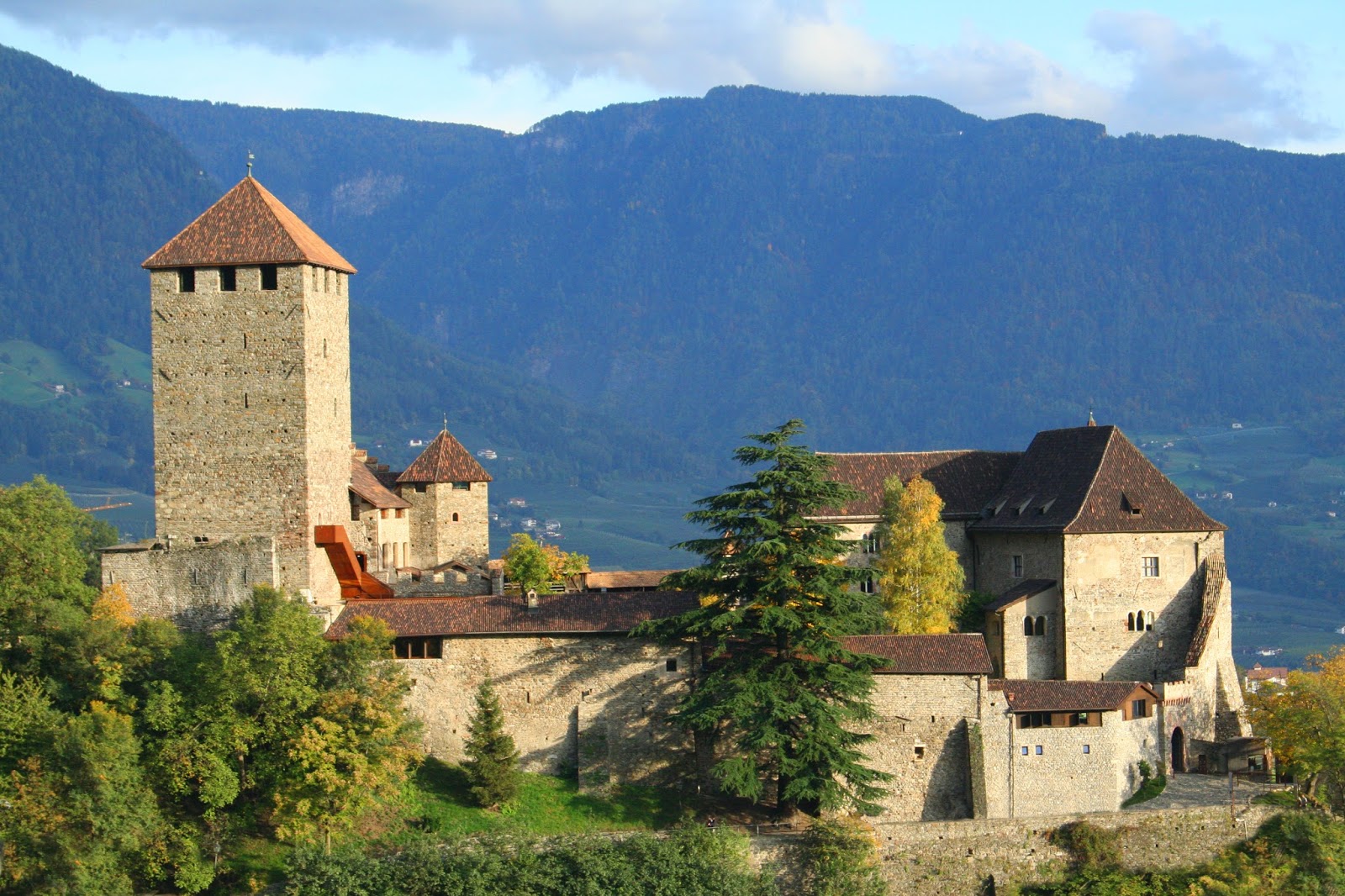
Castel Tirolo sits on a rocky spur above the village of Tirolo, north of Merano, and was the seat of the Counts of Tyrol from the 12th century until they relocated to Innsbruck in the late Middle Ages. The castle gives its name to the entire historical region of Tyrol on both sides of the modern Italian-Austrian border. The Romanesque chapel, with its 13th-century portal carved by Lombard masters, and the Mushaus hall with its painted Gothic ceiling are the principal medieval survivals.
The South Tyrolean Museum of Culture and Provincial History runs the castle as the regional history museum for South Tyrol, with displays running from medieval lordship and Tyrolean dynastic history through to the 1920s annexation of South Tyrol by Italy. The walk up from Tirolo village takes 25 to 30 minutes through vineyards and orchards on the Knottnkino panoramic trail.
Practical: open 15 March to 8 November 2026, Tuesday to Sunday 10:00 to 17:00; closed Mondays. Closed in winter (9 November to 14 March). Adult €10, concession €7.50, under 6 free, family (2 adults + children under 16) €20, mini family (1 adult + children under 16) €10. Audioguide €4. From Merano railway station, shuttle bus to Tirolo village then walk up. Plan your visit.[11]
9. Castello del Catajo
Veneto (Battaglia Terme) Friday to Sunday, March to November Frescoed Veneto stronghold Map
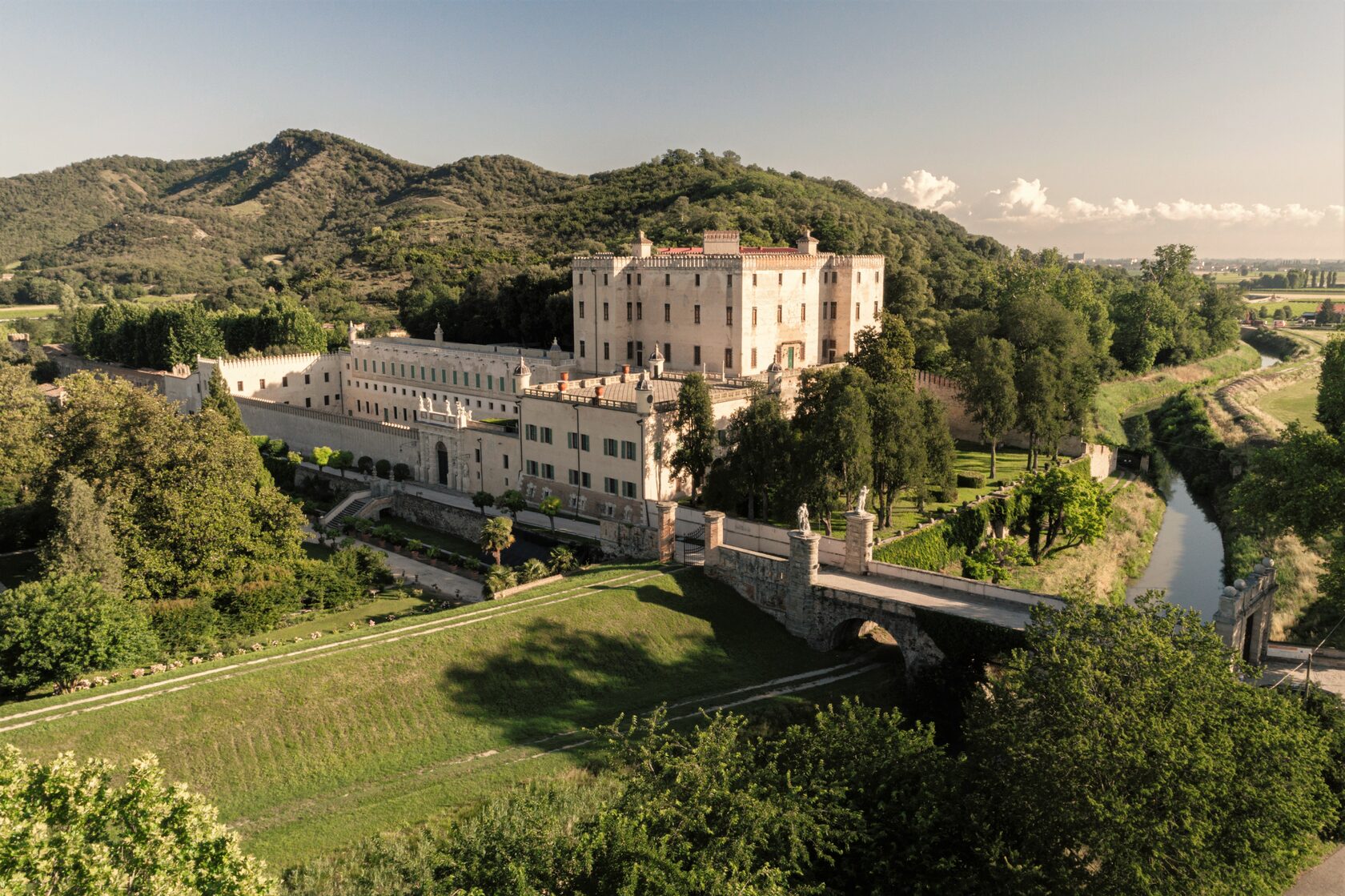
Castello del Catajo was built from 1570 by the Obizzi family on a hill above Battaglia Terme in the Veneto, sized to function simultaneously as a fortified residence, a hunting lodge and a princely-court reception complex. At around 20,000 m² of internal area it remains the largest private residence in Italy by floor area. The Cortile dei Giganti (Giants' Courtyard), the long fresco cycle by Giovanni Battista Zelotti depicting the Obizzi family's military exploits across 40 frescoed rooms, and the formal water gardens are the visit.
The castle was acquired at distressed auction in 2016 and has been progressively restored since. It now operates as a paid visitor attraction on a Friday-to-Sunday schedule from March to November, with bookable guided and self-guided tours and a combined "Excellence Ticket" that adds Villa dei Vescovi and the Valsanzibio gardens.
Practical: open March to November, Friday, Saturday, Sunday and holidays; closed Monday to Thursday. Closed December to February (private tours by appointment). Last access 60 minutes before close. Guided tour Piano Nobile €15 adult, €7 child (6 to 13); self-guided €11 adult, €5 child; Il Catajo mai visto €18 adult / €13 child; Excellence Ticket (Catajo + Villa dei Vescovi + Valsanzibio) €27 adult. Extraordinary closures 12 and 19 June 2026. From Battaglia Terme station, 15-minute walk via the Passeggiata degli Obizzi. Plan your visit.[12]
10. Castello di Sammezzano
Tuscany (Reggello) Closed (special openings only) Moorish-revival fantasy Map
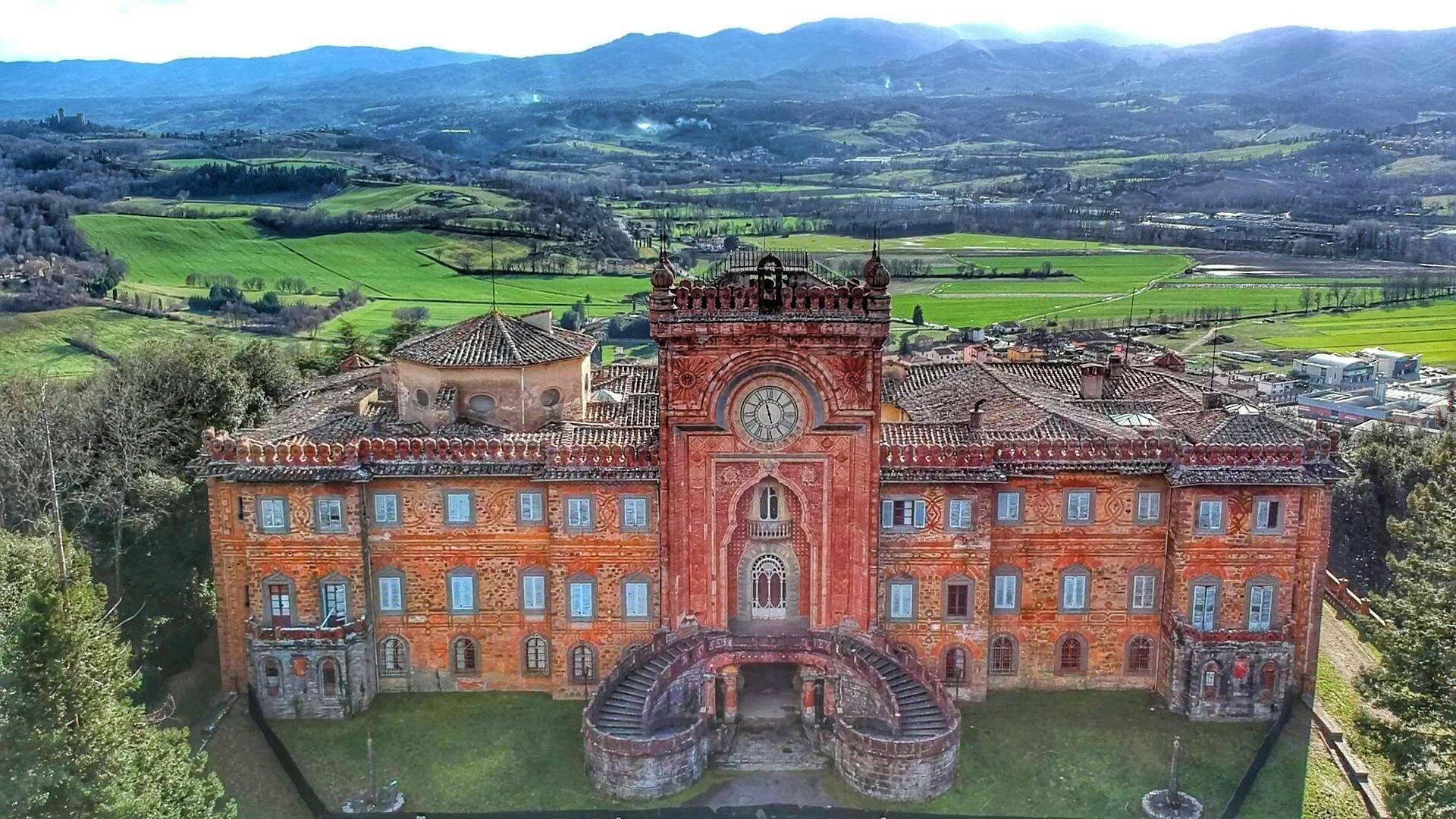
Sammezzano is the most striking 19th-century Moorish-revival building in Italy, rebuilt between 1853 and 1889 by the Marquis Ferdinando Panciatichi Ximenes d'Aragona on the foundations of a 17th-century Medici-era villa. The interior runs through the Hall of Mirrors, the Peacock Room, the Lovers' Hall and a series of brilliantly tiled rooms that have no parallel in Italian palace architecture. The exterior, also Orientalist, is set in a 450-acre park of historic and exotic plantings.
Sammezzano has been closed to the general public since the 1990s, with rare special openings via FAI (Fondo Ambiente Italiano) days and ad-hoc guided group tours. The Fondazione Castello di Sammezzano announced a multi-year restoration project, with emergency conservation on the roof underway through late 2025; safety reasons (no toilets, water or heating) preclude regular opening for now. The surrounding park is sometimes accessible; check with the Comune di Reggello.
Practical: closed to the general public; reservations and waitlists for occasional special openings only. Variable pricing on those rare days. Active works: roof emergency conservation late 2025; multi-year restoration via Fondazione Castello di Sammezzano. From the A1 motorway take the Incisa-Reggello exit, or regional rail to Leccio-Reggello (~3 km from the castle). More information.[13]
At a glance
| Castle | Region | When to go | |
|---|---|---|---|
| Castel Sant'AngeloHadrian's mausoleum | Lazio (Rome) | Closed Mondays |
| Castello SforzescoPietà Rondanini and Leonardo | Lombardy (Milan) | Closed Mondays |
| Castel del MonteFrederick II's octagonal enigma | Apulia (Andria) | Reservation required |
| Castello del BuonconsiglioPrince-bishops' Trentino seat | Trentino | Closed Mondays |
| Castello di MiramareHabsburg seaside villa | Friuli (Trieste) | Daily, year-round |
| Castello AragoneseIschia's medieval islet citadel | Campania (Ischia) | Daily, sunset closing |
| Maniace CastleFrederick II's sea fortress | Sicily (Ortigia) | Open Tuesday to Sunday (split hours) |
| Castel TiroloCradle of Tyrol's history | Trentino-Alto Adige (above Merano) | Mid-March to early November |
| Castello del CatajoFrescoed Veneto stronghold | Veneto (Battaglia Terme) | Friday to Sunday, March to November |
| Castello di SammezzanoMoorish-revival fantasy | Tuscany (Reggello) | Closed (special openings only) |
How many castles are in Italy?
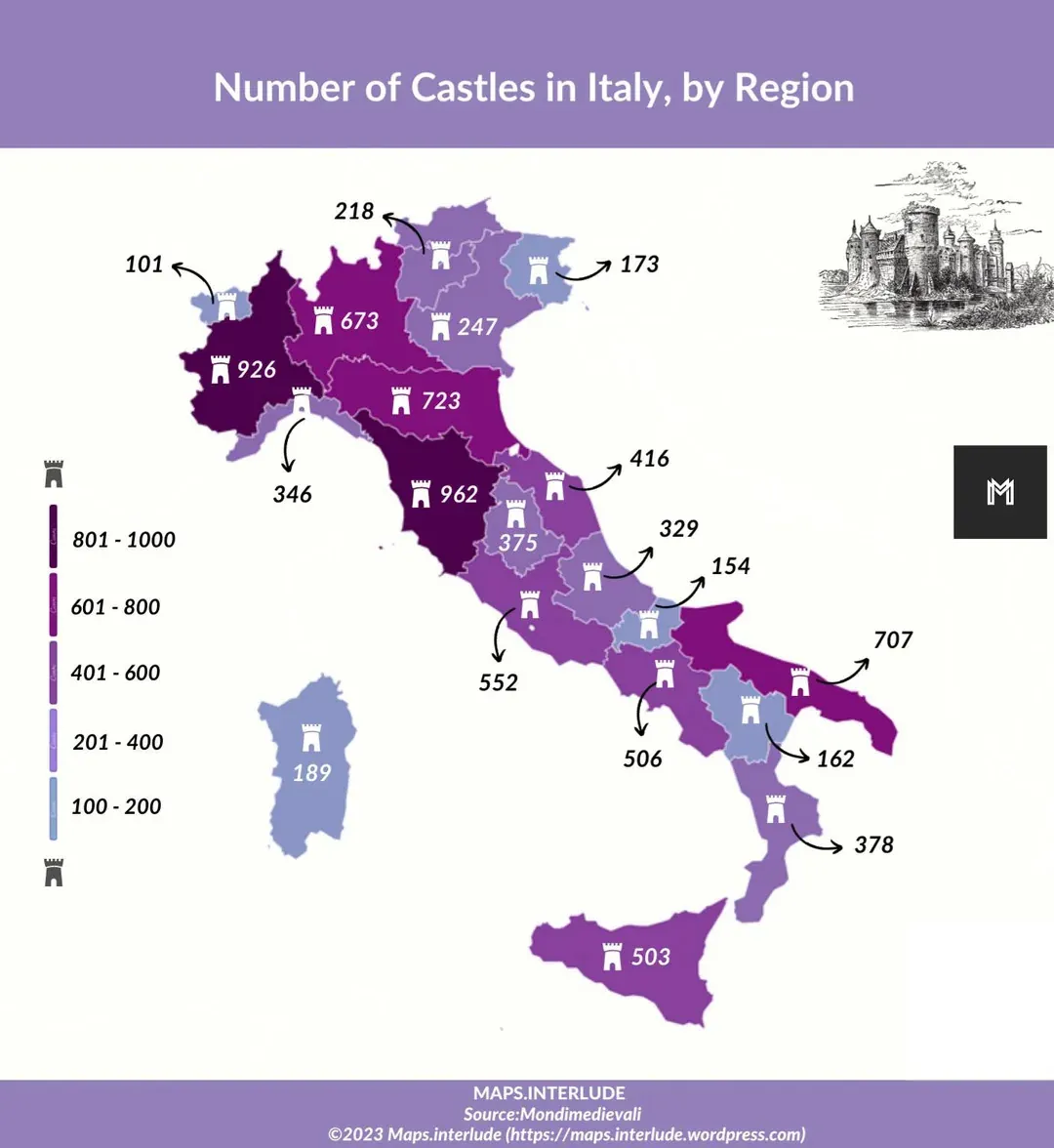
The figure most often cited is around 3,000 documented castle sites in the Ministero della Cultura register, with broader fortified-architecture surveys counting several thousand more once towers, citadels and substantial ruins are folded in.[1] The protected stock sits under the Codice dei beni culturali e del paesaggio (Legislative Decree 42/2004), Italy's principal heritage statute. Article 10 of the Code defines villas, parks and gardens of artistic or historic interest as cultural goods alongside the more obvious fortified buildings, and Article 32 allows the Ministry to compel a private owner to carry out necessary conservation works (and to execute them directly if the owner does not).[14]
Public access is uneven. The Direzione Musei della cultura runs the leading state-managed sites: Castel Sant'Angelo, Miramare, Castel del Monte and a long list of regional museums under the Direzioni Regionali. Several castles are run by comuni, including Castello Sforzesco (Comune di Milano) and Castello Ursino in Catania. The bulk of surviving castles, however, remain in private hands, often as wine-estate castelli in Tuscany and Apulia, or as functioning agricultural and viticultural concerns. Restoration on a vincolo storico-protected property requires prior authorisation from the regional Soprintendenza Archeologia, Belle Arti e Paesaggio under Article 21 of the Code; unauthorised work attracts criminal sanction.[14]
Famous, medieval, Gothic and largest
Famous. The ten above account for the bulk of search demand. Castel Sant'Angelo and the Castello Sforzesco lead by museum footfall, both anchoring central Rome and Milan respectively. Castel del Monte's UNESCO inscription and image on the €0.01 coin make it the most-recognised Apulian fortress. Castello Aragonese's dramatic islet setting on Ischia is the most-photographed castle on the Bay of Naples.
Medieval. Castel del Monte, Maniace, Buonconsiglio and Castel Tirolo are the strongest medieval survivors as standalone visits. Frederick II's 13th-century Hohenstaufen network across Apulia and Sicily includes Castel del Monte, Maniace, Bari Castle and Lucera Fortress, all roughly contemporary with the king's reign (1198 to 1250). Lepage records San Gimignano in Tuscany as a notable medieval fortified town with surviving private urban towers, the canonical Italian tower-house example, though it is a townscape rather than a single castle.[2]
Gothic. Italian secular Gothic is rarer than its French or English equivalent, with the early Renaissance form taking hold from the mid-15th century. The Magno Palazzo at Buonconsiglio, transitional between late-Gothic and Renaissance, and the Torre Aquila's Cycle of the Months frescoes (early 15th century) sit on that boundary. The Castello Visconteo at Pavia (rebuilt 1360 by Galeazzo II Visconti) and the early phases of Sforzesco hold the strongest Gothic-into-Renaissance transition further north.
Largest. Castello del Catajo (Veneto) at around 20,000 m² of internal area is the largest private castle residence in Italy by floor area. The Castello Sforzesco's quadrangular nucleus, with outer walls around 15 metres high and the surrounding Parco Sempione, makes it the largest urban castle complex in the country.[4] At the southern end, Maniace's harbour-corner site at Ortigia and Bari Castle's port-side enclosure define the largest of the Frederick II-era southern strongholds.
If you're looking to buy
Italy is one of the deepest castle markets in Europe, but also one of the least transparent. Castle Collector's Castle Price Index (March 2026) tracks a visible Italian median asking of around €2.95 million for typical properties at around 1,500 m², working out to a visible €1,750/m².[15] The headline figure understates the real market: roughly 24 to 35% of Italian listings are price-on-request, against under 5% in France, and the disclosed listings skew lower-condition, dragging the visible median down. Cross-referenced against the Agenzia delle Entrate OMI Ville e Villini benchmarks, the true Italian castle median is closer to €2,500 to €3,000/m².[15]
Foreign buyers face no purchase restrictions, but the workflow runs through three Italian-specific steps: a codice fiscale tax code, a local bank account, and the state's prelazione pre-emption right on certified culturally significant transactions, which gives the state 60 days from contract notification to step in at the agreed price. Italian banks lend selectively at 40 to 60% LTV, with a strong preference for restored stock. The Bonus Ristrutturazioni provides multi-year income-tax deductions on approved restoration spend, and the Art Bonus tax credit (introduced 2014) provides 65% credit for private philanthropic contributions to public heritage conservation.[16] For the operational side (Soprintendenza consent, restoration costs, foreign-buyer mechanics) see the castles for sale in Italy page and the guide to buying a castle.
Sources
1. Ministero della Cultura, Italian heritage catalogue.
2. Lepage, J. D. G. G. Castles and Fortified Cities of Medieval Europe: An Illustrated History. McFarland & Company, Jefferson, North Carolina, 2002; pp. 256, 260, 275.
3. Museo Nazionale di Castel Sant'Angelo, Direzione Musei nazionali della città di Roma (Italian Ministry of Culture).
4. Beltramo, S., Cantatore, F. and Folin, M. (eds.). A Renaissance Architecture of Power: Princely Palaces in the Italian Quattrocento. Brill, Leiden / Boston, 2016; Chapter 6 (Castello Sforzesco), pp. 134 to 136.
5. Castello Sforzesco, Comune di Milano.
6. Castel del Monte, Direzione Regionale Musei Puglia.
7. Castello del Buonconsiglio, Provincia Autonoma di Trento.
8. Museo Storico e Parco del Castello di Miramare (Italian Ministry of Culture).
9. Castello Aragonese di Ischia, official site.
10. Castello Maniace, Comune di Siracusa / Soprintendenza Siracusa.
11. Schloss Tirol / Castel Tirolo, South Tyrolean Museum of Culture and Provincial History.
12. Castello del Catajo, official site.
13. Castello di Sammezzano, Visit Tuscany (Toscana Promozione Turistica).
14. Repubblica Italiana. Codice dei beni culturali e del paesaggio (Decreto Legislativo 22 gennaio 2004, n. 42), Articles 2, 10, 21 and 32.
15. Castle Collector, Castle Price Index, March 2026 edition.
16. Savills Research, Spotlight: Southern Europe Investment 2026.