
Castles in Denmark: 8 to visit, from Kronborg to Egeskov
Christian IV built most of the Danish castles visitors come to see: Kronborg of Hamlet fame, Rosenborg's Crown Jewels, and the Renaissance Frederiksborg.
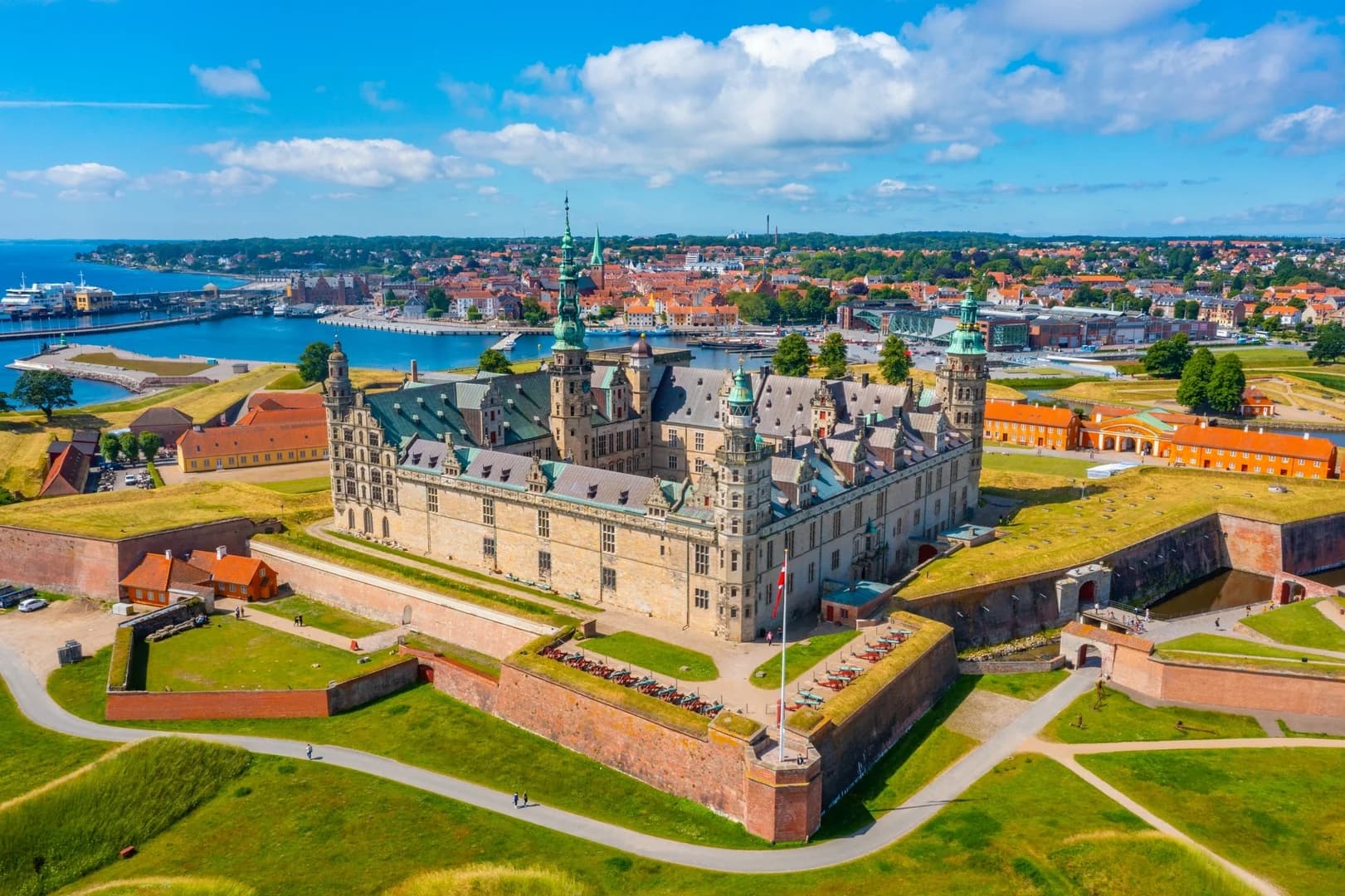
Most of the Danish castles travellers come to see were built by one man. Christian IV reigned for sixty years (1588–1648) and his construction campaign produced Rosenborg, Frederiksborg, the original Christiansborg, the Round Tower in central Copenhagen and the major reconstruction of Kronborg.
Denmark's castle inheritance concentrates on Sjælland (Zealand). The four major royal sites (Kronborg in Helsingør, Rosenborg and Christiansborg in Copenhagen, Frederiksborg in Hillerød) all sit within an hour's radius of central Copenhagen, which allows a credible three-day itinerary across the full royal heritage circuit.[1] Funen and Jutland add Egeskov and Koldinghus respectively as standalone day-trip headliners; Amalienborg's four palaces in central Copenhagen and Fredensborg as the autumn royal residence round out the Baroque sequence.
The architectural vocabulary is consistent. Christian IV picked up his style watching contemporary architecture in Antwerp and Amsterdam, and what he brought home was Dutch Renaissance: red brick, sandstone dressings, copper-clad spires, decorative gables. Most travellers still picture that combination first when they imagine a Danish castle.
Each entry covers what to see, when to go, what it costs, and how to get there from Copenhagen.
1. Kronborg
Helsingør Closed Mon (Nov–Mar) Hamlet's Elsinore Map
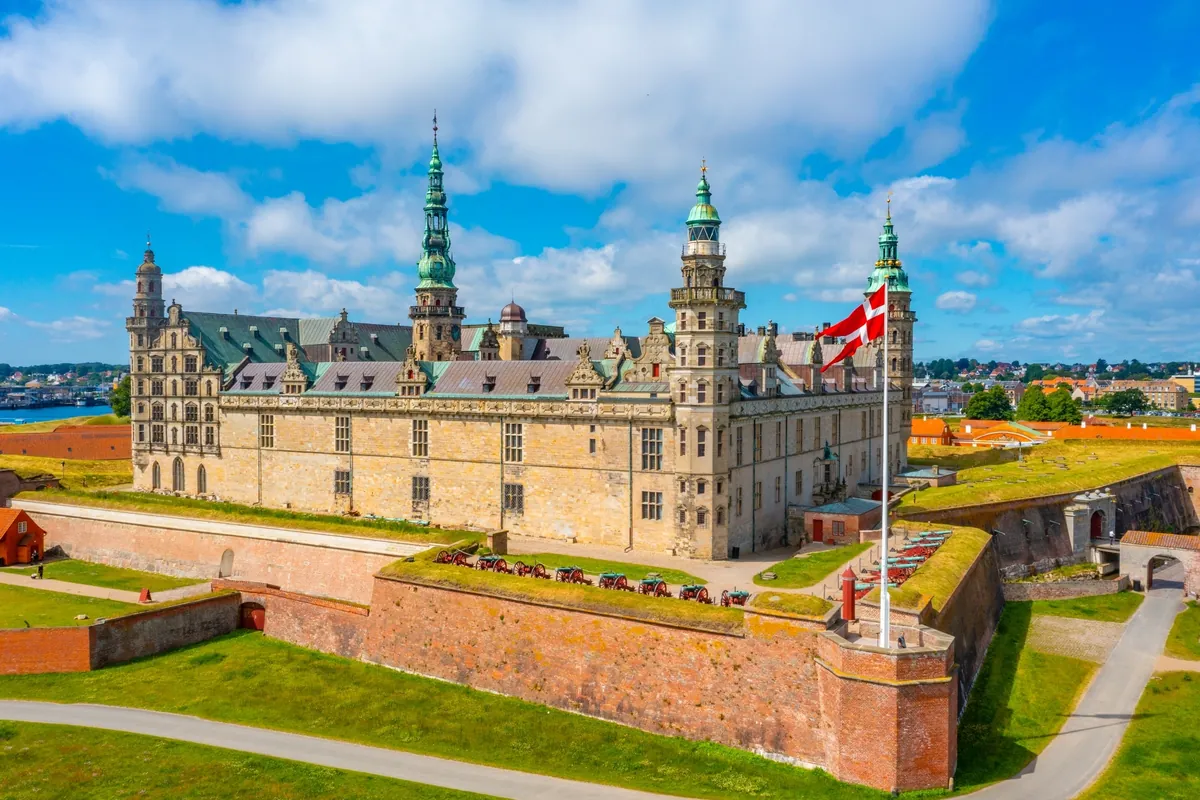
Kronborg controls the narrow Øresund crossing between Denmark and Sweden, the strategic geography that put it on the UNESCO World Heritage List in 2000. The fortress was first built in the early 1400s by Erik of Pomerania as the original castle "Krogen", a strong fortification with a 2 to 4 metre thick ring wall, 79 by 79 metres in plan, in red brick.[2] Krogen's purpose was concrete: enforce Sound Dues, the toll levied on every ship passing through the Øresund into the Baltic, which funded the Danish state from 1429 until the toll's abolition in 1857. The current Kronborg structure dates to Frederik II's 1574–1585 reconstruction in Dutch Renaissance style, after a long war with Sweden ended in 1572 and royal finances allowed a comprehensive modernisation.[2]
Shakespeare set Hamlet at "Elsinore" (the Anglicised name for Helsingør) without ever visiting Denmark. The play was first performed at Kronborg itself in 1816, the 200th anniversary of Shakespeare's death, by soldiers from the castle's garrison; productions inside the fortress have continued at intervals ever since.[3] The 20th-century restoration history matters for what visitors see today: J. Magdahl Nielsen led the 1925–1937 restoration after the garrison departed in 1924, choosing to strip later barracks-era layers and expose the original Frederik II Renaissance fabric. That is the philosophical opposite of the full Renaissance recreation that Frederiksborg underwent after its 1859 fire.[3]
Practical: Apr–Oct daily 10:00–17:00 (Jun–Aug to 18:00); Nov–Mar Tue–Fri 10:00–16:00, Sat–Sun 10:00–17:00, closed Mondays. Closed 24–25 December, 31 December and 1 January. From DKK 145 adult in summer (DKK 95 off-peak), student concession DKK 135, free under 18; 10% discount online; annual pass DKK 270. Copenhagen Card free entry. From Copenhagen Central, train to Helsingør (~45 minutes), then a 15-minute walk along the harbour. Plan your visit.[4]
2. Rosenborg
Copenhagen Daily, year-round Crown jewels and treasury Map
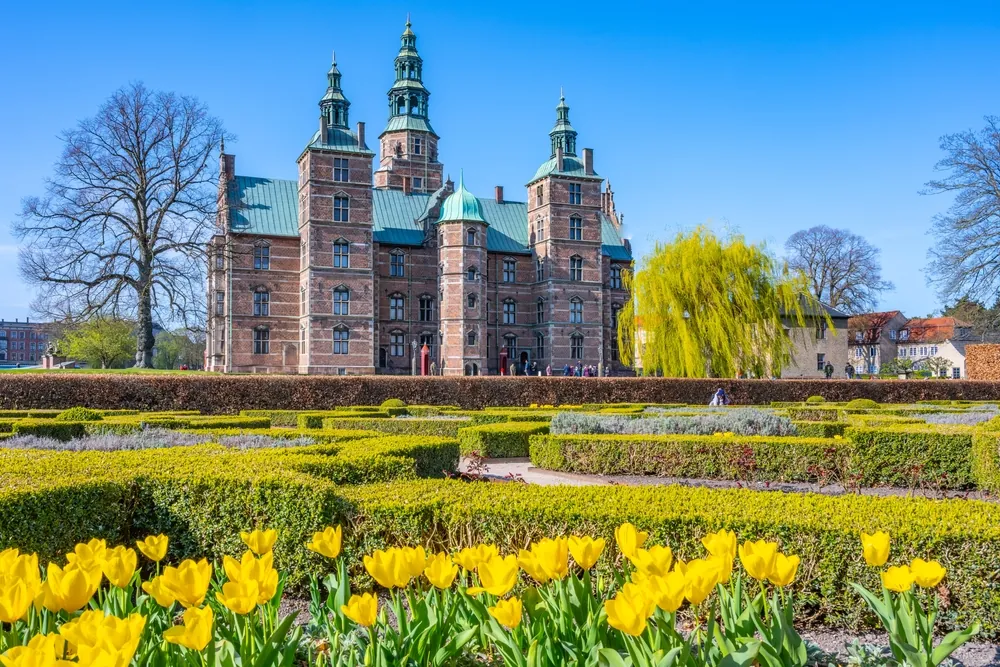
Rosenborg sits in the middle of Copenhagen and is the most domestically famous of the three royal landmark castles. Christian IV built it between 1606 and 1633 as a summer residence; the Dutch Renaissance brickwork, the gilded roofs and the spire-topped towers all date to that single building campaign. The Royal Danish Collections have been housed here since 1838, and the Danish Crown Jewels and regalia have sat in the basement treasury since the early 19th century.[5]
The visit climbs three storeys of state rooms, each preserved to a different reign: Christian IV's bedchamber and writing closet on the ground floor, the Long Hall with its silver lions and coronation thrones on the third, the cellars holding the regalia. The King's Garden (Kongens Have) wrapping the castle is the most-visited urban park in Copenhagen and free to enter.
Practical: open daily year-round; typical hours 10:00–17:00 in summer with reduced winter hours (confirm before travelling). From DKK 125 adult, free under 18; online booking saves DKK 10 per ticket. A combined Rosenborg and Amalienborg pass is available. Copenhagen Card free entry. Metro M1/M2 or S-train to Nørreport, then a 5-minute walk. Plan your visit.[5]
3. Frederiksborg
Hillerød Daily, year-round Museum of National History Map
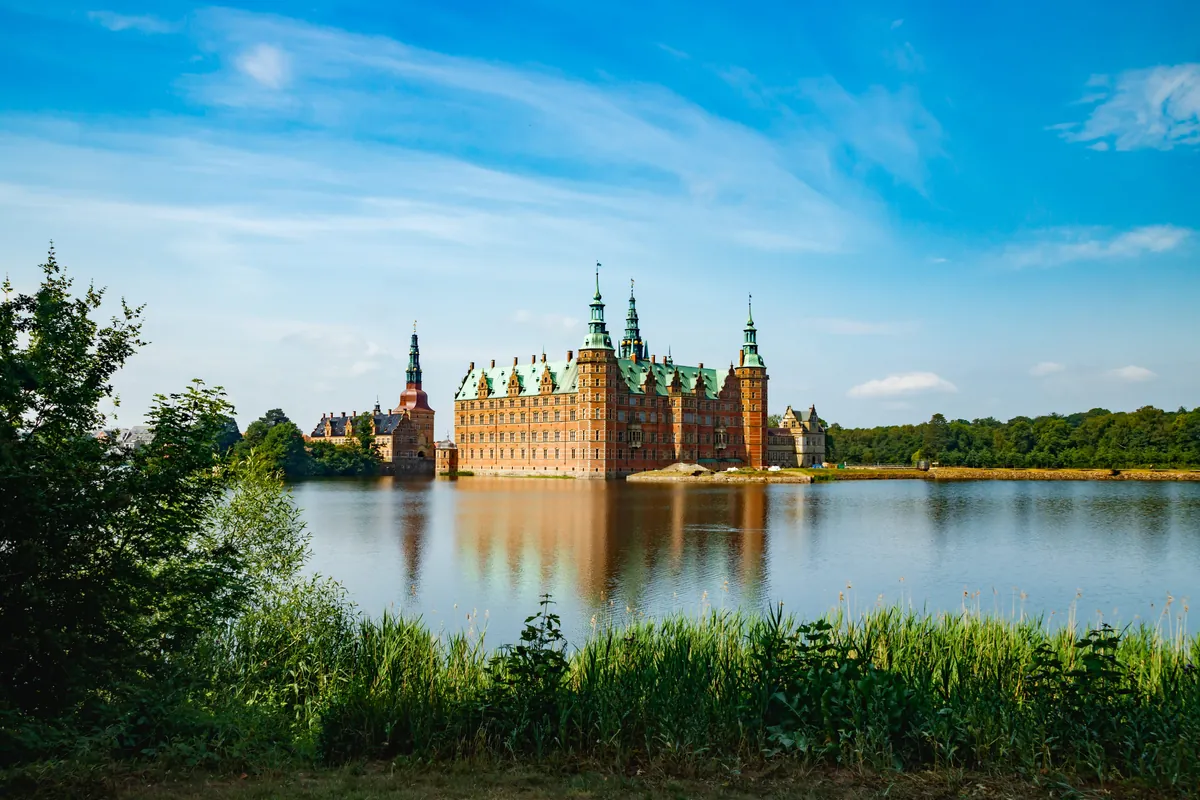
Frederiksborg is the largest Renaissance castle in Scandinavia, built by Christian IV between 1599 and 1620 across three islets in the Slotssø lake at Hillerød. The Slotsherrens Hus (Castellan's House) inside the complex was begun in 1612 and completed in 1616 as part of the broader Frederiksborg expansion in Dutch Renaissance idiom; it was repurposed in 1965–1968 as further museum space for Det Nationalhistoriske Museum.[6] The original interiors were largely destroyed in the 1859 fire and rebuilt within four years; brewer J. C. Jacobsen of Carlsberg funded the restoration and used the rebuilt building to establish the Museum of National History (the Danish national museum of cultural history) in 1878.[7]
The visit covers the Audience Chamber, the Knights' Hall (the longest room in the castle, with its restored coffered ceiling), the chapel (where Danish kings were anointed for two centuries) and the lakeside Baroque gardens beyond. The museum interpretation runs the full sweep of Danish history through portraiture and historical painting.
Practical: open daily, year-round. Apr–Oct 10:00–17:00; Nov–Mar 11:00–15:00. From DKK 125 adult, senior 65+ / student / group of 10+ DKK 105, under 18 free. Includes special exhibitions; Copenhagen Card accepted; online tickets non-refundable, valid three months from selected date. From Copenhagen Central, S-train Line A to Hillerød (~45 minutes), then a 15-minute walk or local bus. Plan your visit.[7]
4. Christiansborg
Copenhagen 1907–1928 (current building) Closed Mondays Queen's Tapestries Map
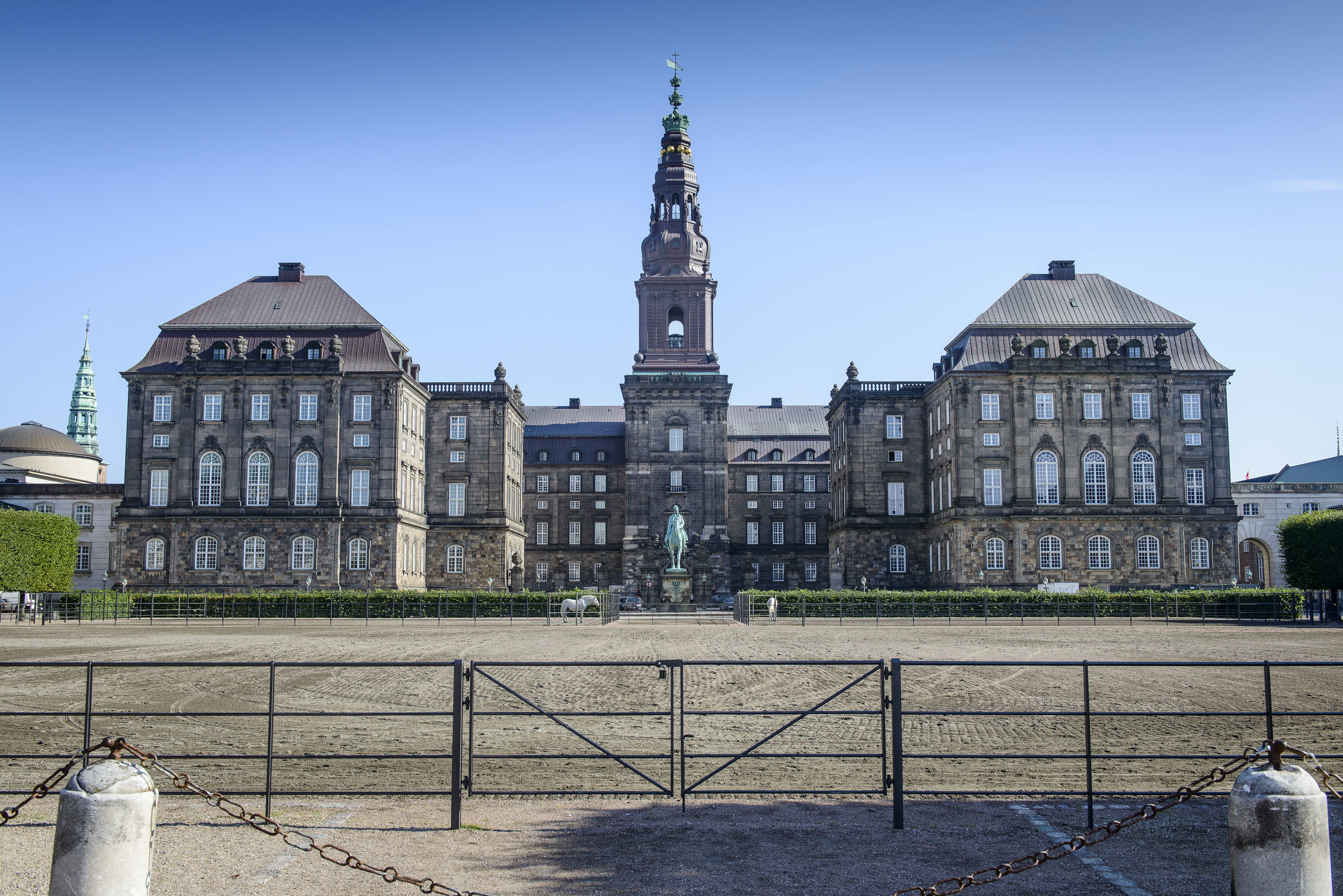
Christiansborg, the seat of the Danish Parliament (Folketinget), is the most-visited castle site in Denmark, drawing roughly 620,000 visitors a year between the Royal Reception Rooms, the medieval ruins under the building, the Royal Stables, the Royal Kitchen and the Palace Chapel. Bishop Absalon's fortress at Havn (the original name for Copenhagen) was the first structure on the site, built in 1167; eight centuries of continuous royal-and-state castle on a single Slotsholmen island have followed. The current building is the third Christiansborg, constructed between 1907 and 1928 after two earlier fires.
The set-piece interior is the Great Hall with the seventeen Queen's Tapestries, commissioned for Queen Margrethe II's 50th birthday and woven across a decade in Aubusson and at Det Danske Kunstvæveri, narrating the full sweep of Danish history. The Royal Reception Rooms, the Audience Chamber and the Throne Room remain in active use for state ceremonies, which means the palace closes without notice for royal events.
Practical: Reception Rooms, Ruins and Royal Kitchen Tue–Sun 10:00–17:00; Royal Stables Tue–Sun 13:30–16:00; closed Mondays and during state ceremonies. Royal Reception Rooms from DKK 105 adult, DKK 95 students, free under 18; combined ticket for all five sites at a higher tier (see operator). Copenhagen Card free entry. Metro M3/M4 to Gammel Strand, or harbour bus to Det Kgl. Bibliotek. Plan your visit.[8]
5. Egeskov
Funen Late Mar–Oct, daily Renaissance moated castle Map
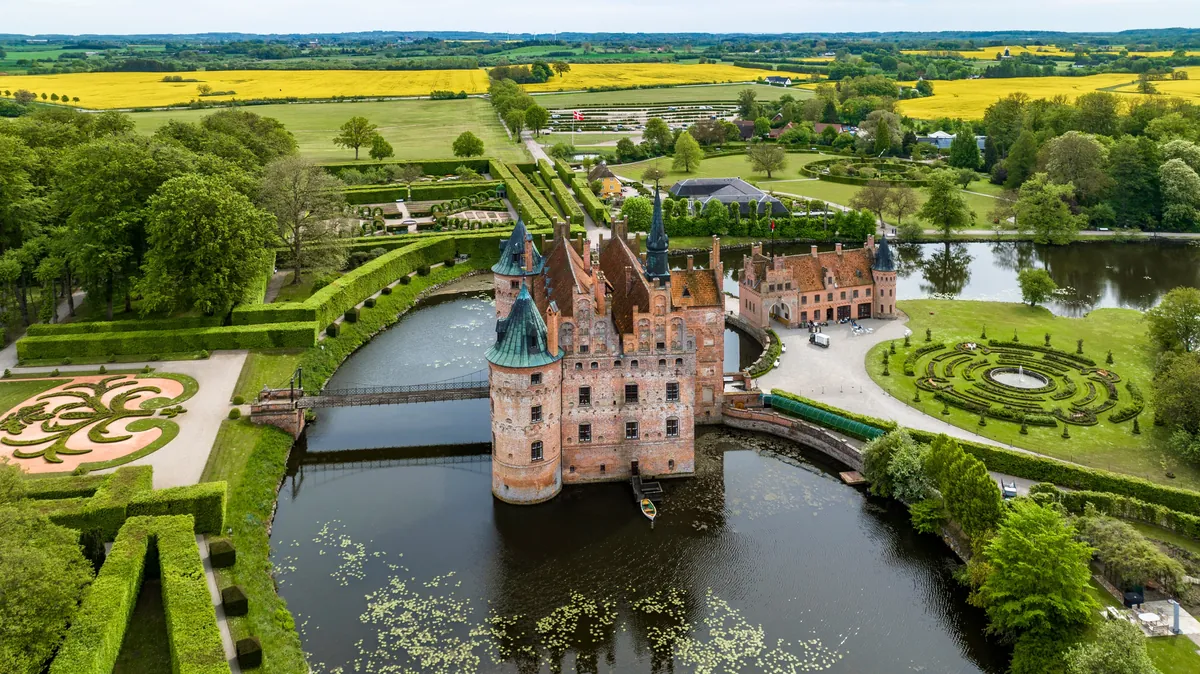
Egeskov on central Funen is the canonical surviving example of the Renaissance Danish herregård: a 1554 double-house moated castle held by the Ahlefeldt-Laurvig-Bille family, set on oak piles driven into a small lake. The Danish heritage taxonomy treats the herregård (the noble manor castle) as a sub-type of slot, and Egeskov is the most complete surviving example with both the medieval defensive layout and the Renaissance domestic architecture intact.[9]
Egeskov runs as a working family seat with one of the broadest visitor offers of any Danish castle: the castle interiors, formal Renaissance gardens and a maze, a vintage motor museum (one of the largest in Northern Europe), aircraft and motorcycle collections, a treetop walk and a children's adventure area. Allow a full day if you've come with a family.
Practical: open daily 28 March–25 October 2026, 10:00–17:00 (extended hours in peak summer); closed all winter. From DKK 265 adult online (DKK 285 on the day) for the full Castle, Garden, Play and Exhibition ticket; child 4–12 from DKK 160 (DKK 180 on the day); under 4 free. Garden, Play and Exhibition only from DKK 225 adult online. Annual pass DKK 440 adult. From Copenhagen, train to Kvaerndrup (~2h via Odense), or drive ~1h45 across the Storebælt bridge. Plan your visit.[9]
6. Amalienborg
Copenhagen Closed Mondays Royal residence still in use Map
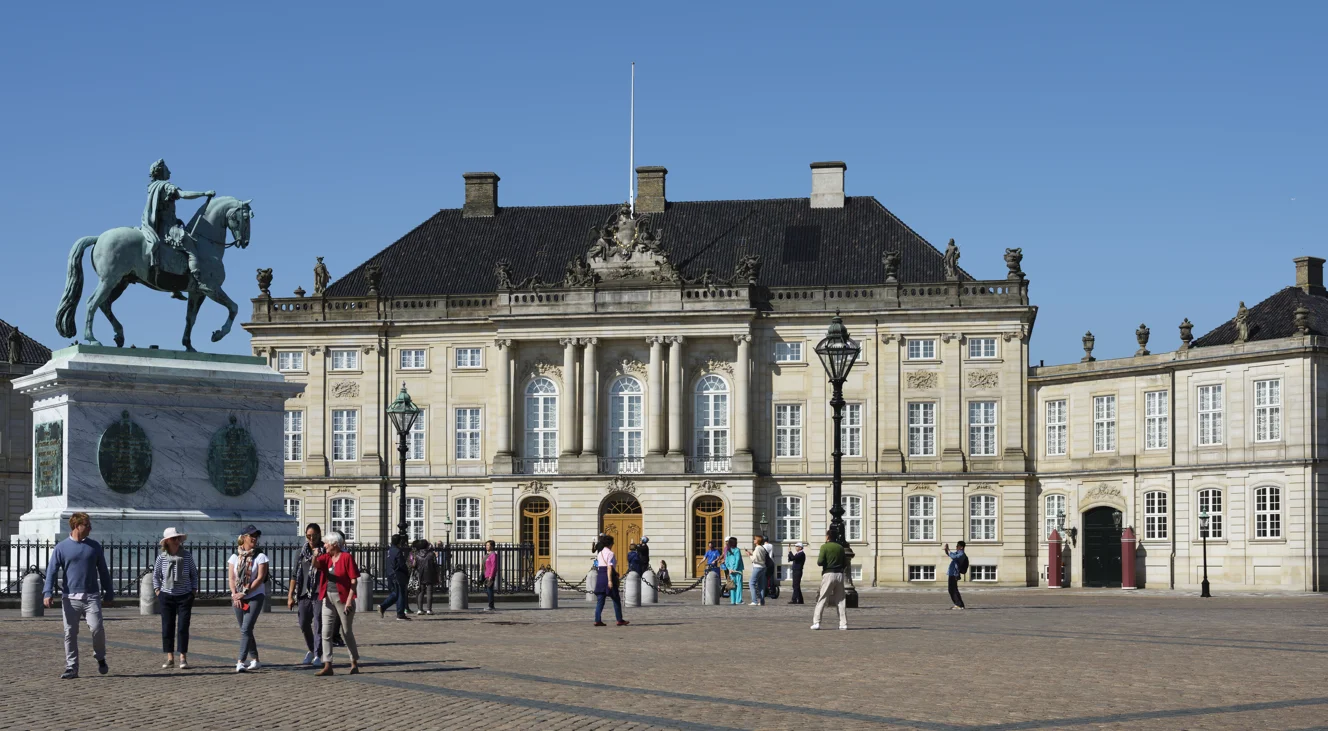
Amalienborg is the working royal residence: four matched Rococo palaces grouped around an octagonal courtyard in central Copenhagen, built between 1750 and 1760 by architect Nicolai Eigtved as part of the Frederiksstaden quarter, originally for four noble families. The Danish royal family moved in after the 1794 Christiansborg fire and has lived there ever since. Only one of the four palaces (Christian VIII's, on the rear-left when you face the equestrian statue of Frederik V) houses the public museum; the others remain in active use as royal residences.
The Changing of the Guard happens daily at noon in the courtyard, marching across town from Rosenborg with the Royal Life Guards' band when the King is in residence (the regimental flag flies from Christian IX's palace to signal it). The museum interior covers the private apartments of three monarchs from Christian IX to Frederik IX, including Christian IX's study, kept as it was at his death in 1906.
Practical: Tue–Fri 10:00–15:00, Sat–Sun 10:00–17:00, closed Mondays; closed during selected royal events. From DKK 125 adult online (DKK 135 at the door), DKK 80 student online (DKK 90 door), free under 18; group 10+ DKK 116 per person. Royal Palace Pass DKK 345 covers three palaces over three days. Copenhagen Card free entry. Metro M3 to Marmorkirken or bus 1A. Plan your visit.[10]
7. Koldinghus
Jutland (Kolding) Daily, year-round Last royal castle of Jutland Map
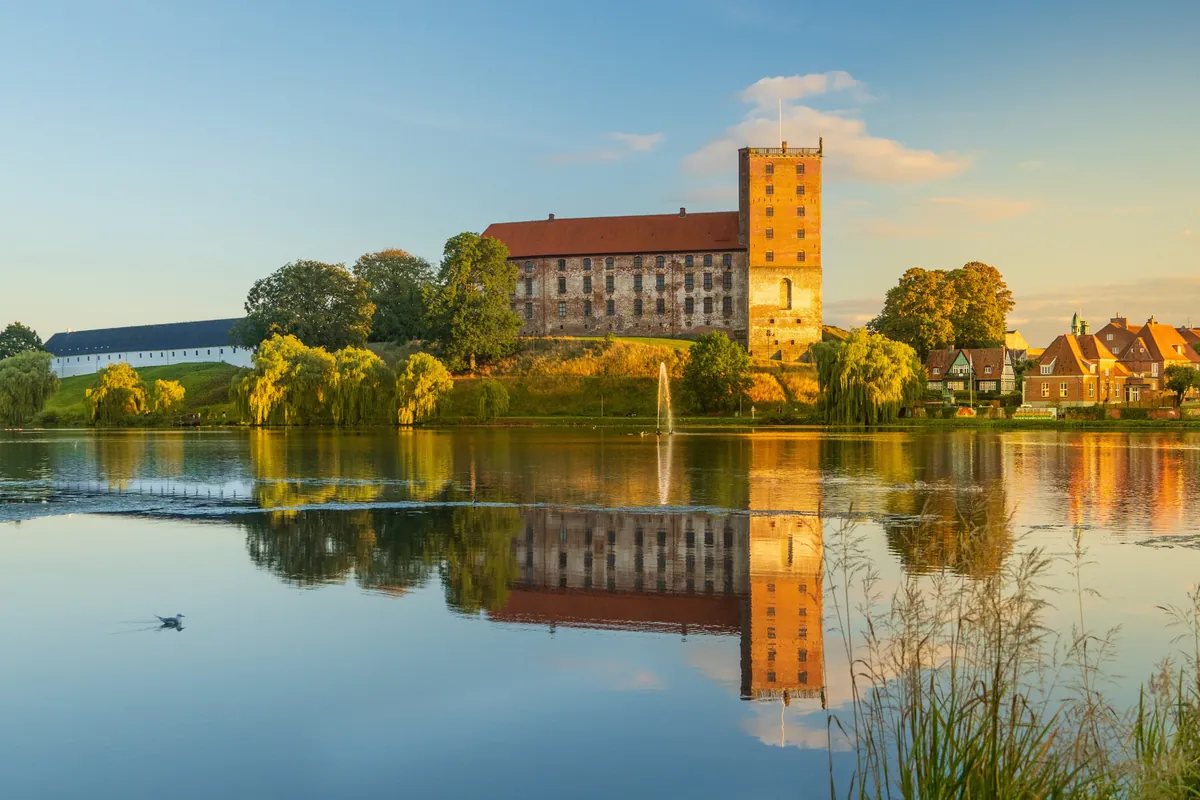
Koldinghus on the Jutland mainland was originally a 13th-century border castle, built to mark the southern edge of the medieval Danish kingdom against the Duchy of Schleswig. Christian III rebuilt it in Renaissance form in the 1530s as the most important royal residence in Jutland, and Christian IV added the Giants' Tower in the early 17th century. A Spanish-Napoleonic-allied garrison accidentally burned the castle to the ground in 1808; it stood as a roofless ruin for nearly two centuries until the celebrated Inger and Johannes Exner restoration of the 1970s and 1990s, which combined preserved medieval fabric with new exposed-laminated-timber roofs and steel walkways through the ruined halls. The contemporary intervention is now a benchmark in modern Scandinavian heritage architecture.
The museum, run by Museum Kolding under the Royal Danish Collection, holds period interiors, the silver and ceramic collections, and rotating exhibitions across the restored upper floors. The hybrid old-and-new walk through the building is the visit.
Practical: open daily 10:00–17:00. Closed 27–28 April, 24, 25 and 31 December 2026, and 1 January 2027. Adult DKK 110–125 depending on season (save DKK 10 online); group 10+ DKK 90 per person; free under 18 year-round. From Copenhagen, train to Kolding (~2h30), then a 15-minute walk. Plan your visit.[11]
8. Fredensborg
Sjælland July–August only, guided Royal family's summer seat Map
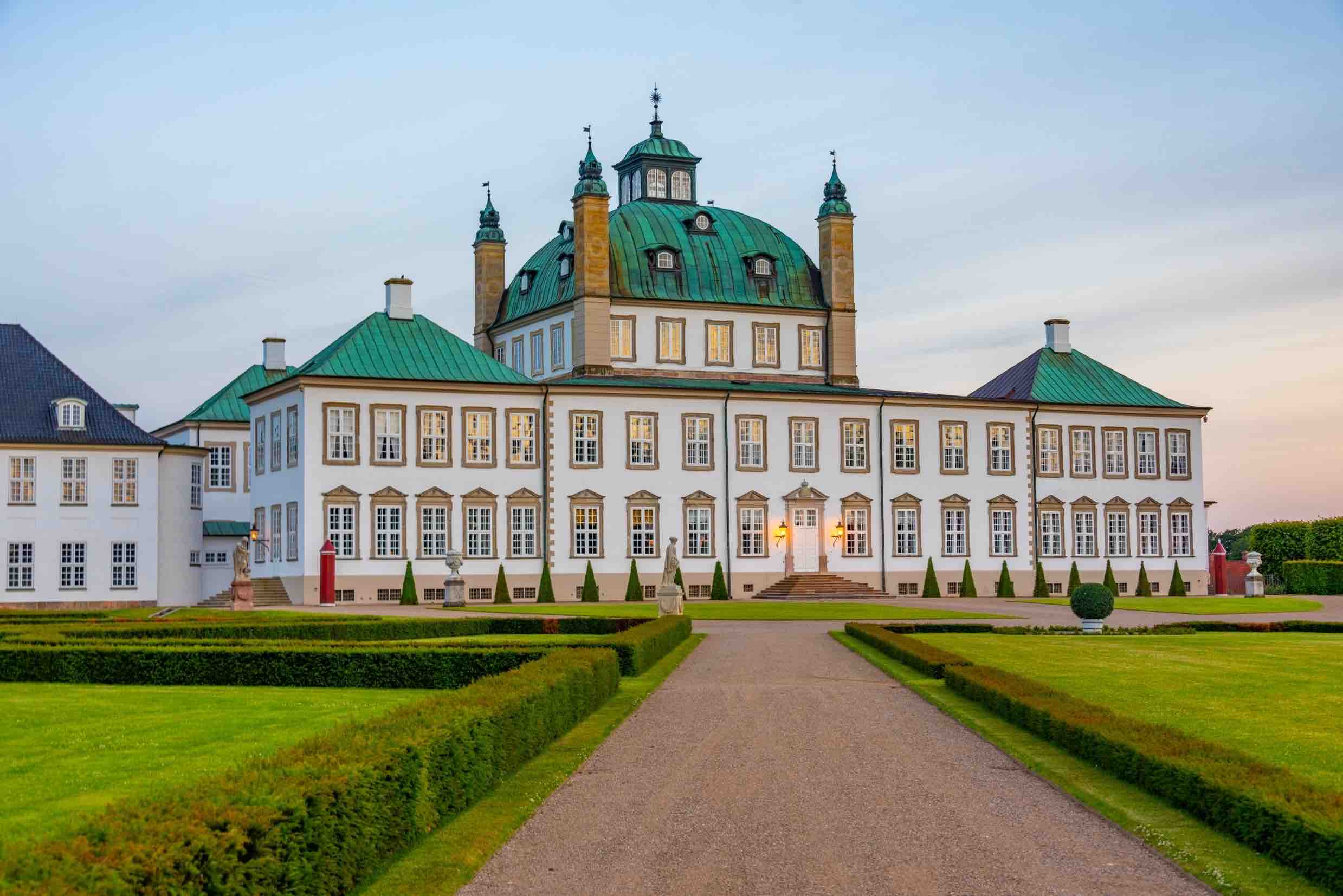
Fredensborg is the royal family's autumn residence, an Italian-influenced Baroque palace built for Frederik IV between 1719 and 1722 to commemorate the Treaty of Frederiksborg that ended the Great Northern War (the name Fredensborg means "peace castle"). Architect J. C. Krieger's central domed hall and the radiating courts were modelled on Italian villa precedent rather than the Dutch Renaissance idiom that defines the rest of the Christian IV inheritance.
The interior opens to the public for a five-week window each summer and only by guided tour (95 minutes), which covers the domed hall, the Garden Hall and the Reserved Garden. The wider 120-hectare landscape garden, with its terraced parterres and bronze figures from the Nordmandsdalen, stays open year-round, free of charge.
Practical: palace interior open by guided tour 1 July–7 August only; tours run multiple times daily, online booking only. The Reserved Garden is open free 09:00–17:00 during the palace public season; the wider gardens stay open year-round. Tour pricing applies equally to all visitors over 3; student discounts not applicable. From Copenhagen Central, train to Fredensborg (~45 minutes), then a 10-minute walk. Plan your visit.[12]
At a glance
| Castle | Region | When to go | |
|---|---|---|---|
| KronborgHamlet's Elsinore | Helsingør | Closed Mon (Nov–Mar) |
| RosenborgCrown jewels and treasury | Copenhagen | Daily, year-round |
| FrederiksborgMuseum of National History | Hillerød | Daily, year-round |
| ChristiansborgQueen's Tapestries | Copenhagen | Closed Mondays |
| EgeskovRenaissance moated castle | Funen | Late Mar–Oct, daily |
| AmalienborgRoyal residence still in use | Copenhagen | Closed Mondays |
| KoldinghusLast royal castle of Jutland | Jutland (Kolding) | Daily, year-round |
| FredensborgRoyal family's summer seat | Sjælland | July–August only, guided |
How many castles are in Denmark?
Denmark's protected castle stock runs to roughly 168 recognised castle-type structures, far below France's heritage register or Poland's, but tightly held and substantially state-stewarded.[13] The classification covers everything from the medieval royal fortresses (Vordingborg on the Møn coast, Kalundborg above the Great Belt, Søborg in northern Sjælland) through the Christian IV Renaissance group to the herregård tradition: several hundred substantial moated houses and 19th-century Romantic-Gothic restorations on private estates.
Heritage protection runs through Slots- og Kulturstyrelsen (the Agency for Culture and Palaces) at national level, with municipal planning authorities handling the local-permission tier. The agency's Årsrapport 2024 records continued state stewardship of the royal palace portfolio, with multi-billion-DKK appropriations across cultural institutions including palaces, museums, libraries and the arts.[14] That public-sector backbone is the structural support behind a private market that is too thin on its own to sustain professional heritage trades at scale.
Famous, medieval, Gothic and largest
Famous. Kronborg leads internationally on the Hamlet association and the UNESCO inscription. Rosenborg leads domestically, with the Crown Jewels and the most-visited urban park in Copenhagen wrapping it. Christiansborg leads on raw visitor numbers (about 620,000 a year) thanks to its parliamentary function.
Medieval. The strongest medieval-fabric survivors are partial: Kronborg's Krogen ring wall (early 1400s, Erik of Pomerania) underneath Frederik II's Renaissance reconstruction; Koldinghus's 13th-century base under the Exner restoration; the medieval ruins under Christiansborg, including the foundations of Bishop Absalon's 1167 Havn fortress. Three earlier royal fortresses (Vordingborg, Kalundborg and Søborg) survive mostly as partial structures and formal ruins.
Renaissance. This is the period the Danish circuit is built around. Frederiksborg is the largest Renaissance castle in Scandinavia. Rosenborg and the Slotsherrens Hus at Frederiksborg sit on the same Christian IV building campaign, in the same Dutch Renaissance idiom of red brick, sandstone dressings and copper-clad spires. Egeskov on Funen is the Renaissance herregård at its purest, on a 1554 double-house plan still moated against the original lake.
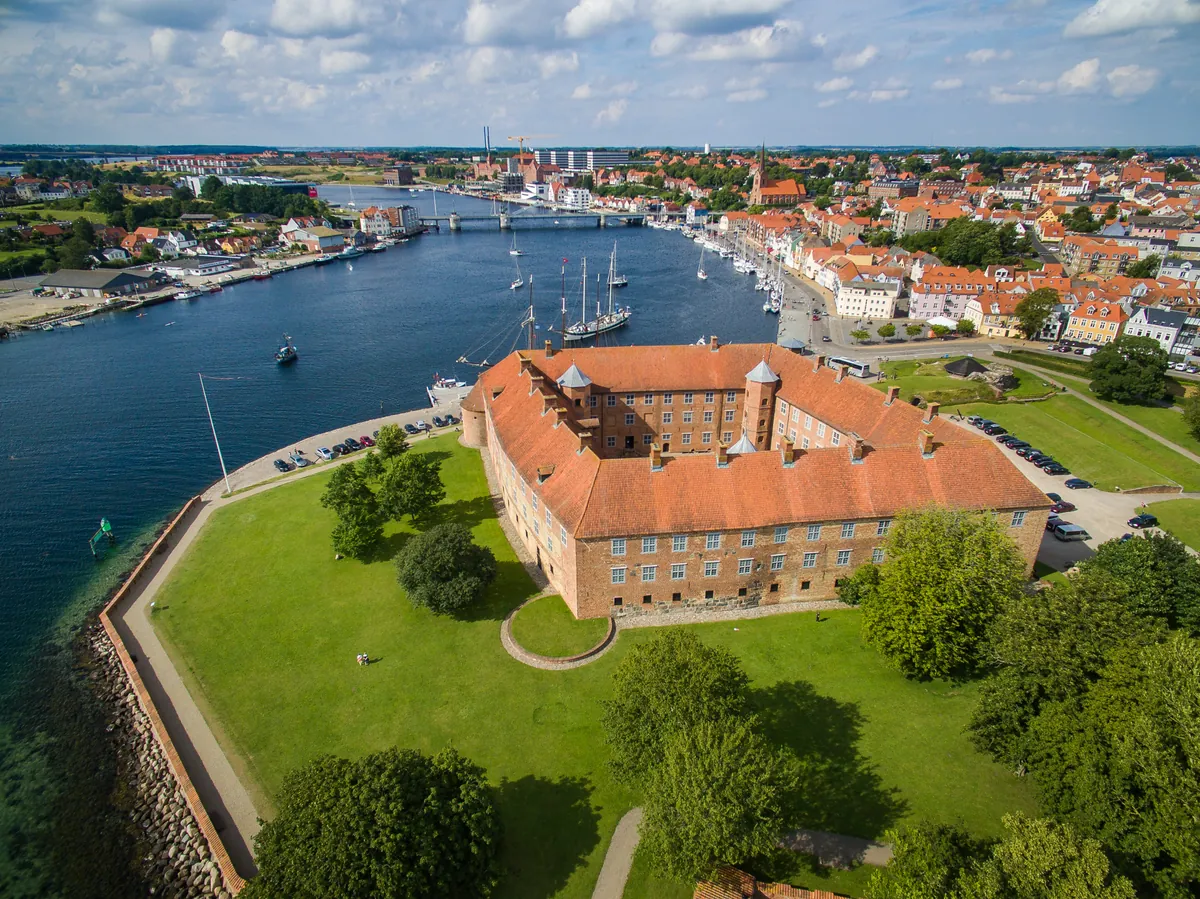
Largest. Frederiksborg occupies three islets in the Slotssø and is the largest Renaissance castle in Scandinavia. Christiansborg's combined footprint (palace, parliament wings, stables, ruins and chapel on Slotsholmen) is the largest active state-and-royal complex on a single site. Egeskov runs the largest visitor estate, with the museum collections, the gardens, the maze, the motor museum and the children's facilities adding up to a full day on the ground.
If you're looking to buy
Denmark is a small castle market by European standards, with a thin active for-sale tier (typically 5 to 15 castle and herregård listings active across all platforms at any given time) concentrated on Sjælland and Funen.[13] There is no Denmark-specific entry in the Castle Price Index median table due to insufficient indexed listings; visible asking prices for restored herregårde with substantial grounds typically run €2 million to €15 million depending on heritage status and proximity to Copenhagen, with restoration projects sitting lower. Transaction costs are among the lowest in Europe: the standard tinglysningsafgift registration fee runs roughly 0.6% of transaction value, plus 0.6% of any mortgage amount, plus notarial and legal fees, for a typical total of 2–3% on top of the headline price. Non-EU foreign buyers need permission from the Danish Ministry of Justice to acquire residential property unless they have established Danish residence first; EU buyers face no such restriction, and most applications proceed once the buyer demonstrates intent to use the property residentially.[15] The castles for sale in Denmark page tracks current listings; for the operational side, see our guide to buying a castle.
Sources
1. Lepage, J.-D. G. G. Castles and Fortified Cities of Medieval Europe: An Illustrated History. McFarland, 2002; Scandinavia chapter, pp. 290–310.
2. Kronborg (UNESCO Verdensarvsfaktaark), Slots- og Kulturstyrelsen factsheet on Kronborg's UNESCO World Heritage status (inscribed 2000); UNESCO World Heritage List, ref. 371.
3. Kronborg, Trap Danmark / Slots- og Kulturstyrelsen entry.
4. Kronborg official site, tickets and opening hours.
5. Det Kongelige Hus / De Danske Kongers Kronologiske Samling, Rosenborg, official site.
6. Frederiksborg Slot, Trap Danmark / Slots- og Kulturstyrelsen entry.
7. Det Nationalhistoriske Museum / Frederiksborg Castle, official site.
8. Christiansborg Palace, Slots- og Kulturstyrelsen / Kongelige Slotte.
9. Egeskov, official castle site.
10. Amalienborg Museum, De Kongelige Samlinger.
11. Koldinghus, De Kongelige Samlinger.
12. Fredensborg Palace, De Kongelige Samlinger.
13. Castle Collector, Castle Price Index, March 2026 edition.
14. Slots- og Kulturstyrelsen Årsrapport 2024 and Årsrapport 2025, Danish Agency for Culture and Palaces.
15. Slots- og Kulturstyrelsen (Danish Agency for Culture and Palaces), heritage and acquisition framework.