
How to Assess a Castle's Condition Before You Buy
A castle pre-purchase needs four specialist reports: structural, moisture, heritage and utilities. Combined £10,000–£40,000 from six professionals.
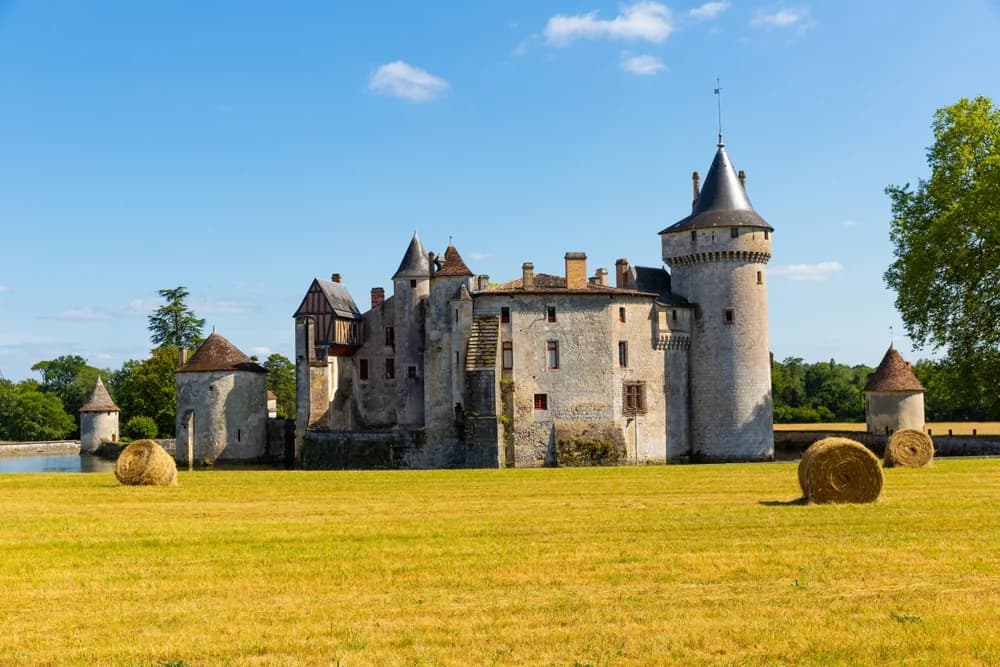
If you are seriously thinking about a castle, you need at minimum four specialist reports before any deposit goes down. A structural survey, a moisture and drainage assessment, a heritage impact assessment, and a utilities audit. Each one comes from a different professional, and combined pre-purchase costs run £10,000 to £40,000 for a substantial castle.
What those reports tell you sets the renovation budget. The condition tier maps directly onto the Castle Price Index per-m² renovation ranges, which run from €800/m² for light interior work up to €5,000/m² and beyond for Monument Historique-grade restoration.
Below: what each survey covers, the red flags to spot on a viewing, what the work actually costs, and which professionals you will need on the team.
Castle condition red flags: quick reference
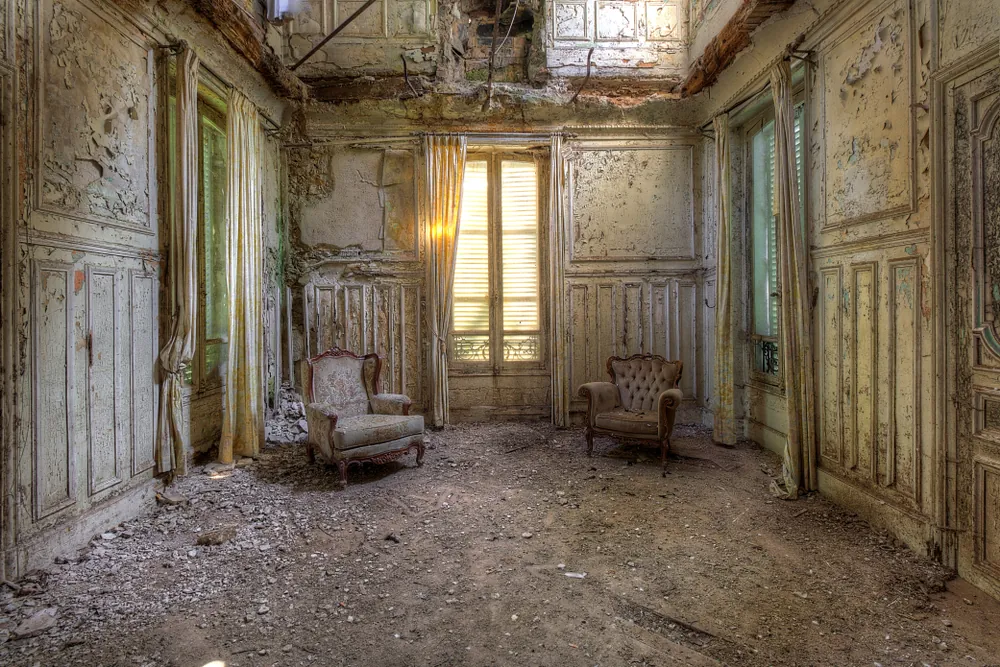
What to look for on a viewing, grouped by what is likely going wrong underneath. None of these are diagnoses on their own. They are flags that tell a specialist where to dig in.
Foundation and structural movement. Diagonal cracking through masonry usually means foundations have shifted, or one section has settled differently from another. Stepped cracks following the mortar joints can be settlement, or they can mean wall ties have failed. Walls that visibly bulge or bow are the more serious version of the same picture: roof spread pushing them outward, foundation movement pulling them, or wall tie corrosion letting them slip. Sagging or uneven internal floors often tell the same story at a different level.
Roof and timber. A sagging roof line, or visible roof spread, is timber truss failure or wall tie deterioration. Roof failure is the root cause of most other structural problems on a castle, which is why surveyors work top down.
Moisture, the single most common problem. White salt crystals (efflorescence) on stone mean moisture is carrying ground salts to the surface. Blistering or peeling plaster means trapped moisture sitting behind an impermeable finish that will not let it evaporate. Cement render or pointing on stone walls is the single most common diagnosable historic-fabric error, because modern materials trap moisture in the masonry and remediation is almost always needed. Green algae at the base of walls means ground moisture is rising, and persistent damp smells in cellars point to drainage failure.
Drainage and external water. Overflowing gutters or downpipes near walls send water into the masonry rather than away from it. Vegetation rooted in walls or close to foundations causes root damage and concentrates water exactly where you do not want it. Worth knowing: Scotland's growing season is now about five weeks longer than it used to be, which is meaningfully accelerating root damage on castles there.
Past repairs that did not fix anything. Corroded iron cramps in stonework can lead to wall delamination if untreated. Multiple layers of failed previous repairs almost always mean the underlying problem was never addressed at the root.
Structural assessment
You will commission the structural assessment from a structural engineer or conservation surveyor with documented heritage experience, not a generic residential surveyor. The professional framework comes from English Heritage's published conservation principles, summarised in David Watt's building pathology textbook. The principle is restraint: repair is meant to slow decay without damaging character, intervention should be the minimum necessary, and existing materials and methods are matched to preserve appearance and historic integrity.[1] Before any detailed design of repairs, you need a survey that maps the structural defects and works back to what the materials are doing and why they are failing.[1]
Five elements drive the structural picture. Load-bearing walls and masonry come first: cracking patterns and direction, bulging or bowing walls, erosion and mortar decay, and past repairs in incompatible materials. The decisive distinction the engineer is making is whether damage is historic and stable, or active and progressive. Towers and turrets carry disproportionate restoration cost when problems are present, and vertical alignment, stress fractures and load transfer all need checking. Roof structure comes next: trusses, beams and rafters checked for rot, insect damage and deflection, plus roof spread and the condition of coverings. Floors and internal structure follow. Foundations are read indirectly from differential settlement, stepped cracking, leaning walls and distorted openings.
Bernard Feilden's foundational text codifies the seven degrees of conservation intervention, from prevention of deterioration through to reconstruction. The structural assessment determines which tier the property requires.[2] Feilden also notes that inefficient cost-control systems can increase conservation project costs by as much as 300%, which is why the structural survey is the document against which any cost overrun is measured.[2]
For load-bearing assessment of historic buildings, the appropriate credentials are AABC (Architects Accredited in Building Conservation), RICS Building Conservation Accreditation, or IStructE conservation-experienced structural engineers. Generic residential surveyors are not the right category, and we have seen buyers come unstuck assuming otherwise.
Moisture, drainage and foundations
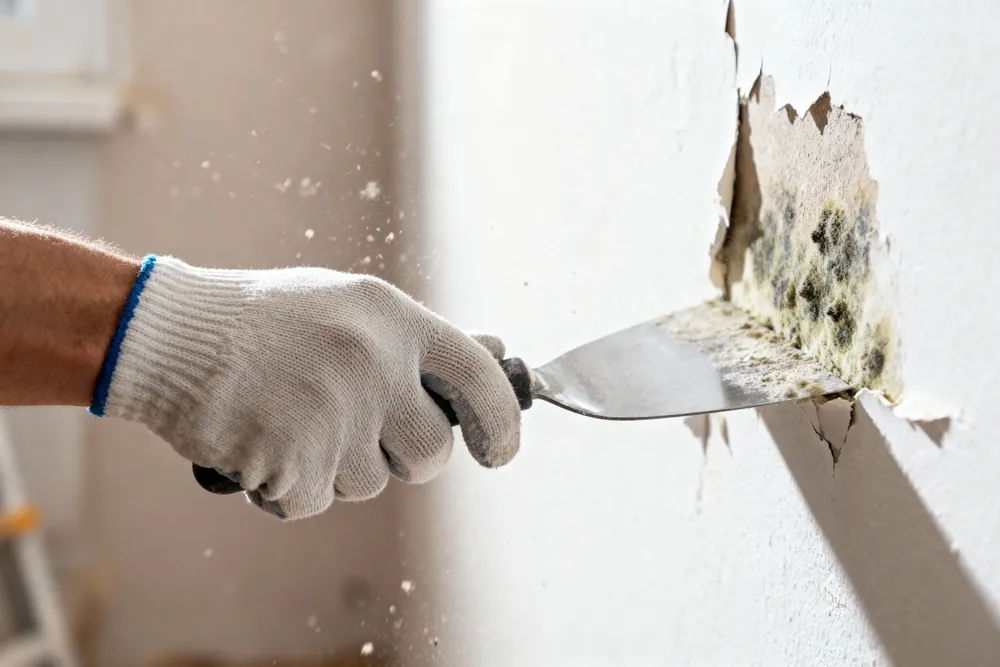
Moisture is the single most common diagnosable problem we see on castle and heritage purchases. Stone, brick and lime mortar are porous. They absorb moisture in wet conditions and release it through evaporation. Problems arise when ingress exceeds the building's natural capacity to expel water, or when modern impermeable materials (cement render, gypsum plaster, plastic membranes) prevent evaporation and trap moisture inside the masonry. The goal is not a "dry" building in modern terms. It is a controlled-moisture building where water enters and leaves without damage.
Aylin Orbaşlı's conservation methodology textbook formalises the operating rules. Lime mortar should not be applied below 3°C, and hastened work in cold conditions can fail an intervention several seasons later. The Venice Charter's maintenance principle, that monuments must be maintained on a permanent basis, sits behind every credible repair specification.[3] The Dutch Monumentenwacht programme, started in 1973, provides annual or biennial condition surveys for owners with limited heritage experience. It is the model for catching moisture deterioration early.[3]
The diagnostic sequence on a viewing starts outside, with roof drainage, ground levels and falls, vegetation proximity, the condition of pointing and render, visible salt deposits, and moss or algae on lower courses. Inside, look for patterns of staining and salt deposit, blistering plaster, recurring mould, friable stone or mortar, damp smells in cellars and vaults, and the condition of timber at floor level. Historic features come next, with wells, moats, underground channels and old drainage runs that may be partially collapsed. Foundations are read indirectly from uneven floors and stepped cracking, because moisture-related ground movement is one of the most common foundation issues on historic stock.
Watt's building pathology framework identifies the recurring failure mode. General damp-proofing contractors are rarely suitable for castles, and many modern damp solutions (injected chemical barriers, impermeable coatings) make problems worse by trapping moisture inside thick masonry. Conservation specialists with documented heritage experience are the appropriate professionals.[1] On complex cases a multidisciplinary brief is standard, with a conservation surveyor diagnosing moisture sources, a structural engineer assessing foundation stability, and a drainage specialist designing sympathetic water management.
Utilities and modern infrastructure
Older electrical installations frequently lack capacity for modern residential or commercial use: outdated wiring, inadequate distribution boards, missing earthing, exposed connections. A full electrical condition report (EICR in the UK) is mandatory before any consequential renovation work, and before any insurance underwriting on the property.
Plumbing and drainage in castles routinely combine systems from multiple eras: Victorian lead pipework, mid-twentieth-century copper, late-twentieth-century plastic, none of them necessarily compliant with current standards. Lead needs replacement on health grounds. Sewage systems on rural castles are often septic with no mains connection, and capacity, condition and discharge consents all need verification. The Strawbridges' Château de la Motte-Husson illustrates the extreme. At purchase, sewage was going directly into the moat with no septic tank or holding tank.[4]
Heating is typically the largest operational decision on a castle. Pre-1945 stone castles in the UK EPC dataset run 519 to 800 kWh/m²/year, two to three times a modern home. On oil, costs run roughly £39 to £64/m²/year, and a 1,500 m² castle hits £58,000 to £96,000 a year on heating alone. A community biomass scheme cuts that by roughly 70%.[5] The utilities audit should establish heating system condition, fuel type, age, capacity, and EPC rating. An expired EPC is itself a marketing and lettability issue under UK MEES regulations.
Insulation upgrades on listed castles require breathable materials only (sheep's wool, hemp, wood fibre, lime plaster, calcium silicate, cork composites) designed by conservation specialists. Modern non-breathable systems will be refused by conservation officers and will damage the fabric if installed. Rural digital connectivity is worth verifying too: limited fibre availability is common, and routing modern services through historic walls requires consent.
Heritage elements and specialist reports
The pre-purchase package on any listed property should include a Statement of Heritage Significance and a Heritage Impact Assessment scoping any planned changes. Stephen Bond and Derek Worthing's UK textbook codifies the four-part framework conservation officers now apply: identification of values, identification of attributes carrying those values, assessment of change against significance, and a formal management policy.[6] An HIA prepared against this framework predicts what conservation officers will accept. One prepared against the buyer's preferences without reference to significance routinely fails at consent.
Building recording is increasingly produced by 3D laser scanning alongside traditional measured-survey work. Swallow, Dallas, Jackson and Watt's manual sets out the standard, and the brief is typically agreed with the local planning authority before work begins. The same record then serves the consent application, the long-term conservation strategy, and the legal record before any alteration is made.[7]
Archaeological assessment is mandatory where ground disturbance is anticipated. Ken Davey's standard reference on heritage conservation contracts notes that conservation work routinely starts with a two-stage approach: investigative or opening-up works run under prime cost or approximate Bills of Quantities, followed by a firm-price contract once the full scope is visible. This is precisely because on a castle the survey cannot anticipate everything.[8] Davey recommends 10% or more contingency on conservation contracts, materially above new-build figures.
Past restoration history matters as much as current condition. John Goodall's The Castle: A History records Lord Curzon's 1919 to 1921 work at Bodiam, where a year of research and excavations by a staff of 25 dredged the moats, repaired the fabric and produced detailed recording: exemplary by any modern standard, and a useful reference point when you are evaluating what previous owners did.[9] Restorations of the late-Victorian state-management variety, which the architect Harold Peto called "deplorable", leave inherited problems for future buyers. Quality of past intervention affects both consent appetite and renovation cost.
What does a castle survey cost?
The published fee guidance from RICS and IHBC, plus practitioner-grade ranges for castle-scale work:
| Survey | Typical fee (UK) |
|---|---|
| RICS Level 3 Building Survey (large historic property) | £2,000 to £8,000 |
| Specialist heritage / conservation condition survey | £5,000 to £20,000 |
| Structural engineer assessment | £1,000 to £4,000 |
| Heritage Impact Assessment | £2,000 to £5,000 (small listed); £15,000 to £50,000+ (castle scale) |
| Archaeological assessment (where ground disturbance anticipated) | £3,000 to £15,000 |
| Full pre-purchase specialist team (surveyor + structural engineer + heritage consultant) | £10,000 to £40,000 for a substantial castle |
These are pre-purchase costs. They should sit in the acquisition budget before exchange, not after. On a Monument Historique-classified château in France, the equivalent fee structure includes obligatory ACMH (Architecte en Chef des Monuments Historiques) involvement on classé monuments. Only around 34 architects in France hold this accreditation, which constrains both availability and cost. Davey notes that professional fees themselves can qualify for grant aid up to prescribed limits on grant-funded heritage projects, which is worth checking when an Architectural Heritage Fund or Historic England grant is in scope.[8]
From condition to budget
The structural and moisture assessments determine which renovation tier the property falls into. The Castle Price Index per-country benchmarks (Section 4.1) translate that condition tier into a budget range:[5]
| Condition tier | Renovation cost (France benchmark) | Notes |
|---|---|---|
| Well-maintained, light cosmetic | €800/m² | Interior refresh, minor works only |
| Standard renovation (full interior) | €1,500 to €2,500/m² | Bathrooms, kitchens, internal redecoration, services upgrade |
| Structural intervention required | €3,000 to €5,000/m² | Foundation, masonry, roof or significant structural repair |
| Monument Historique grade | €5,000+/m² | ACMH-supervised work, traditional materials, full conservation specification |
For derelict properties, renovation cost commonly runs five to ten times the purchase price on the documented case record. Schloss Weigsdorf in Saxony was bought at €170,000, with restoration of its 2,269 m² estimated at €2.7m to €8.5m: a 16 to 50 times ratio at the extreme end.[5] CPI Section 4.4 named case studies define the time risk. Every project ran longer than the original schedule, with a spread of three to twelve-plus years, and Château de Gudanes (Class I Monument Historique) is past twelve years and still ongoing.[5] We treat 25 to 30% contingency on top of the assessment-derived estimate as the floor on derelict projects, not the ceiling.
What I keep coming back to is that the survey is the gating step in the acquisition, not a tick-box. The buyers who get this right scope the team before they fall in love with a property. The ones who get it wrong view the survey as expense rather than as the cleanest piece of intelligence they will get on the asset.
Guidelines and standards
Conservation practice across Europe follows the ICOMOS Venice Charter principle of minimum intervention with maximum reversibility. The five national systems most buyers encounter are the UK, France, Italy, Spain and Germany, and the procedural names diverge while the principle stays identical.
In the United Kingdom, Historic England, Historic Environment Scotland, Cadw and the Department for Communities run consent regionally. Listed Building Consent under the Planning (Listed Buildings and Conservation Areas) Act 1990 governs all alterations to listed buildings, and the 1990 Act has no enforcement time bar.[10] In France, Monument Historique authorisation runs through the regional DRAC, with the Architecte des Bâtiments de France reviewing design, and ACMH involvement on classé monuments. Italy uses Soprintendenza authorisation under the Codice dei beni culturali e del paesaggio (Decree 42/2004). Spain requires regional heritage authority approval on Bien de Interés Cultural properties alongside municipal planning consent, and Germany operates through Denkmalschutzbehörde approval at Länder level, with strong emphasis on material authenticity and reversibility.
Full procedural detail and grant-aid frameworks are covered in our historic property legal requirements guide. For cross-border buyers, the operating note on foreign-buyer rules sits alongside this one.
The pre-purchase team
The minimum specialist team on any castle pre-purchase pulls in six professionals. First, a heritage-experienced structural engineer, IStructE-registered. Second, a conservation-accredited surveyor (AABC, RICS Building Conservation Accreditation, or IHBC-recognised practice). Third, a conservation architect for any property where consent for alteration is anticipated within five years. Fourth, a building pathologist or moisture specialist where visible damp signs or unfamiliar drainage history are present. Fifth, an archaeologist for any property with anticipated ground disturbance. Sixth, a heritage planning consultant or conservation-experienced solicitor to coordinate consent submissions and review the legal heritage obligations attaching to the title.
Engage the team before exchange, not after. Tom Soane's overview of buying a Grade II listed building makes the operational point clear for the UK market. Many routine renovation tasks that would be trivial on an unlisted property need formal consent on a listed one, and the consent appetite of the local conservation officer is a property-specific variable the team needs to scope.[11] For Monument Historique restoration in France, the Château de Purnon documentation records what working with the Architecte des Bâtiments de France actually looks like. The relationship is collaborative, but the design authority is significant.[12]
The cleaner read on assembling the team: brief them in parallel, not in series. The structural engineer flags issues the moisture specialist needs to scope. The heritage consultant flags consent obligations the architect needs to design around. Run them sequentially and you pay for two of them to repeat work the first one already did.
FAQ
How much does a castle survey cost?
£10,000 to £40,000 for a substantial castle covering the full pre-purchase specialist team. Component costs sit at £2,000 to £8,000 for a RICS Level 3 building survey, £5,000 to £20,000 for a specialist heritage condition survey, £1,000 to £4,000 for the structural engineer, £15,000 to £50,000 and beyond for an HIA on castle scale, and £3,000 to £15,000 for archaeological assessment.
What surveys do I need before buying a castle?
At minimum four: a structural survey, a moisture and drainage assessment, a heritage impact assessment with statement of significance, and a utilities audit covering electrical, plumbing, sewage, heating and EPC. A measured building record using laser scanning is increasingly standard, and an archaeological assessment is required on most properties with anticipated ground disturbance.
Do I need a structural engineer for a listed building?
Yes, for any pre-purchase due diligence on a castle or substantial listed building. A residential homebuyer's report or RICS Level 2 survey is insufficient on heritage stock. The structural engineer should hold IStructE registration with documented historic-buildings experience.
What is a Heritage Impact Assessment?
A formal document required by every European heritage authority before consent for alteration. It identifies the values that make the building significant, the attributes that carry those values, and the impact of any proposed change against significance. The four-part framework from Bond and Worthing is the modern UK reference, and equivalent methodologies apply across European jurisdictions.[6]
What are the red flags when buying a castle?
The top six to flag for specialist follow-up are active diagonal cracking in masonry (foundation movement); cement render or pointing on stone walls (modern repair trapping moisture); a sagging roof line (timber failure or roof spread); white salt crystals on stone (moisture ingress); blistering or peeling plaster (trapped moisture); and overflowing gutters or downpipes near walls (water directed into rather than away from the masonry). The full quick-reference set at the top of this guide covers fifteen.
For where this fits in a wider acquisition, the survey work sits alongside the country market picture in our guide on how to buy a castle, and the operating-cost numbers it feeds into are covered in the cost of castle ownership.
References
1. Watt, D. S. Building Pathology: Principles and Practice, 2nd ed., Wiley-Blackwell, 2009.
2. Feilden, B. M. Conservation of Historic Buildings, 3rd ed., Architectural Press, 2003.
3. Orbaşlı, A. Architectural Conservation: Principles and Practice, Wiley-Blackwell, 2008.
4. Strawbridge, D. & A. A Year at the Chateau, Seven Dials / Orion Publishing, 2020.
5. Castle Collector, Castle Price Index, March 2026.
6. Bond, S. & Worthing, D. Managing Built Heritage: The Role of Cultural Values and Significance, 2nd ed., Wiley-Blackwell, 2016.
7. Swallow, P., Dallas, R., Jackson, S. & Watt, D. Measurement and Recording of Historic Buildings, 2nd ed., Routledge, 2017.
8. Davey, K. Building Conservation Contracts and Grant Aid: A Practical Guide, E. & F.N. Spon, 2003 (orig. 1991).
9. Goodall, J. The Castle: A History, Yale University Press, 2022.
10. Planning (Listed Buildings and Conservation Areas) Act 1990.