
Best Regions in Europe to Buy a Castle (And Why Location Matters More Than the Property)
Dreaming of castle ownership? France, Scotland, Italy, Spain, and Eastern Europe compared. Find your ideal region.
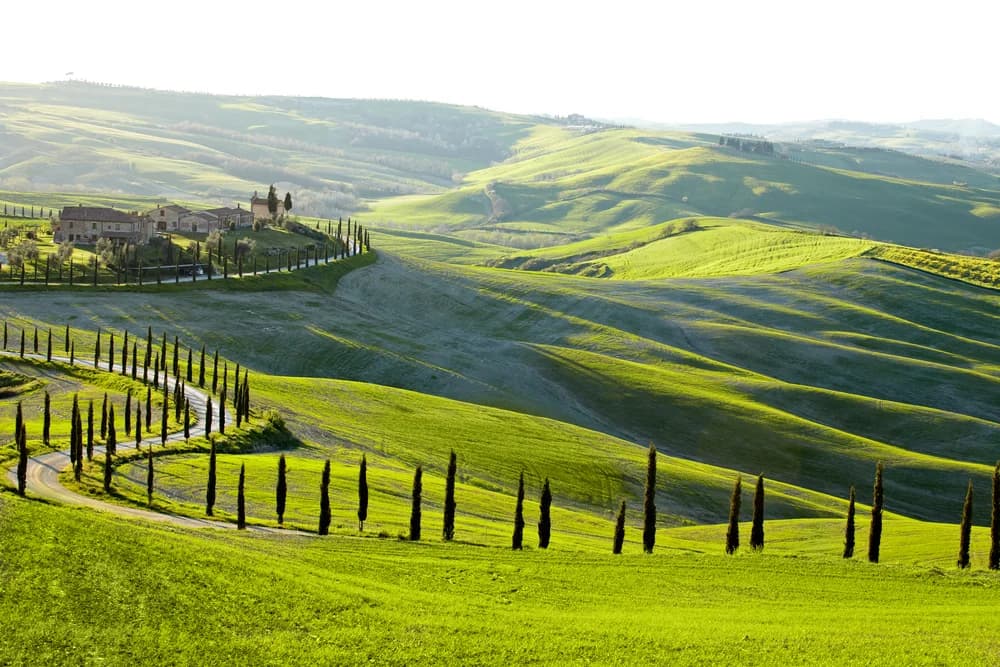
A million euros buys 1,580 m² of castle in Poland, 700 m² in Germany, 440 m² in France, or about 50 m² in Switzerland. Where you buy matters more than almost any other choice. Here's what the real sales data says.
The price spread runs roughly 32 times, from €191/m² in Romania (Castle of Zlatna) to €19,551/m² in Switzerland, across 14 indexed countries.[1]
The right region depends on what you want from it. France carries 67% of the European for-sale market by listing volume. Germany's tax framework lets owners write off 100% of certified restoration over 12 years. Belgium's Wallonia charges 3% registration tax on a primary residence; Flanders charges 12.5%. Switzerland sits behind foreign-buyer rules. Italy's heritage approvals run 6 to 18 months on major work.[1][2]
The country-by-country picture
Region/Country | Median €/m² | Listings | Best for | Worst for |
|---|---|---|---|---|
France (Loire) | €2,285 | 945 | Most listings, easiest to buy and sell | Long heritage consent (4 to 12 months) |
Poland (Lower Silesia) | €632 | 12 | Cheapest entry, skilled trades | Heavy restoration burden, mortgages hard for non-EU |
Germany (Saxony, Bavaria) | €1,971 | 42 | Tax shield (100% over 12 years), Sanierungsoffensive grants | High purchase tax (3.5 to 6.5%) |
Belgium (Wallonia) | €2,200 | 29 | 3% primary-residence tax (vs 12.5% Flanders) | Smaller pool of listings |
Italy (Tuscany, Apulia) | €1,750 / €2,500 to €3,000 adjusted | 100 | Largest typical floor area, climate, food | 6 to 18 month consent, 35% price-on-request |
Spain (Andalusia, Castile) | €2,368 | 61 | Reconquista heritage, ~2,550 protected castles | 17 separate regional consent rules |
Ireland (Cork, Wicklow) | €3,358 | 12 | 1% stamp duty, BHIS grants 50 to 80% | Highest €/m² in Europe; fragmented register |
United Kingdom | €2,614 | 8 | Specialist mortgage market, 92% consent rate | Stamp duty plus 2% non-resident surcharge |
Switzerland (Vaud, Ticino) | €19,551 | 6 | Premium top-end environment, alpine scarcity | Foreign-buyer restrictions (Lex Koller) |
Source: Castle Collector Castle Price Index, March 2026.[1]
Rule of thumb
Pick the region that fits what you're buying for, not the cheapest €/m². A €632/m² Polish castle isn't a bargain if the rebuild triples the price tag, and a €19,551/m² Swiss castle isn't expensive if the foreign-buyer scarcity is what holds the value. Match the region to your reason for buying.
France has the deepest market; Poland and Romania set the floor
France's depth reflects sheer supply (45,000 castles and châteaux combined) and a culture comfortable with private château ownership, so property keeps changing hands. The regional split favours three areas: the Dordogne and Périgord (€1.5 million to €3 million typical entry), the Loire Valley (UNESCO cultural landscape, top-end châteaux trade above market), and Burgundy (mid-tier châteaux with working wine estates). The Mansfield surveys of 1906 (Loire) and 1909 (Burgundy) remain the best English-language references.[3]
Poland at €632/m² is the European floor. The country has 5,224 protected zamki, pałace and dwory, which keep the lower end oversupplied. Lower Silesia holds the densest pool of restorable properties, a legacy of pre-1945 German Schloss-building and the post-1990 ownership cycle still working through. Romania sold the Castle of Zlatna at €191/m²; Hungary's Zichy Castle came in at €283/m²; the Czech Republic at €1,750/m² sits above the floor but well below Western European medians.
Watch out
Cheap entry prices in Poland, Romania and Hungary almost always come with rebuild costs many times the purchase price. The €632/m² Polish median assumes a property that needs serious work. Budget the rebuild before the headline number tempts you.
Germany's heritage tax break is the most generous in Europe
Germany at €1,971/m² across 42 listings sits below the European all-market median of €2,250/m², and pairs reasonable entry pricing with the most generous heritage tax framework in Europe.[4]
The §7i EStG framework lets owner-occupiers deduct certified restoration at 9% per year for eight years and 7% for the next four, totalling 100% over 12 years against income tax. Pre-approval by the local Denkmalschutzbehörde is mandatory; skip it and you forfeit the deduction entirely. The federal Sanierungsoffensive 2026 programme commits €360 million a year over 2026 to 2030 at up to 30% of eligible costs, and the Deutsche Stiftung Denkmalschutz runs additional grants.
Buying costs run 5.5% to 8.5% on top of the headline price (purchase tax 3.5% to 6.5% by federal state, plus around 2% notary and registry). German auctions set the cheapest entry point in Western Europe: Schloss Weigsdorf sold for €170,000 in a 2022 Saxony auction, working out to €75/m².
Belgium's Wallonia tax break is the single best regional saving in Europe
Belgium's most useful market fact is the regional tax setup. Flanders and Brussels-Capital both charge 12.5% registration tax. Wallonia charges 3% if the buyer commits to the property as a primary residence.[5]
A €2 million Walloon château bought as a primary residence carries €60,000 in registration tax; the same purchase in Flanders or Brussels carries €250,000. That €190,000 swing is why most foreign-buyer transactions for residential castle ownership in Belgium concentrate on the Walloon side.
Italy, Spain, Ireland, the UK and Switzerland
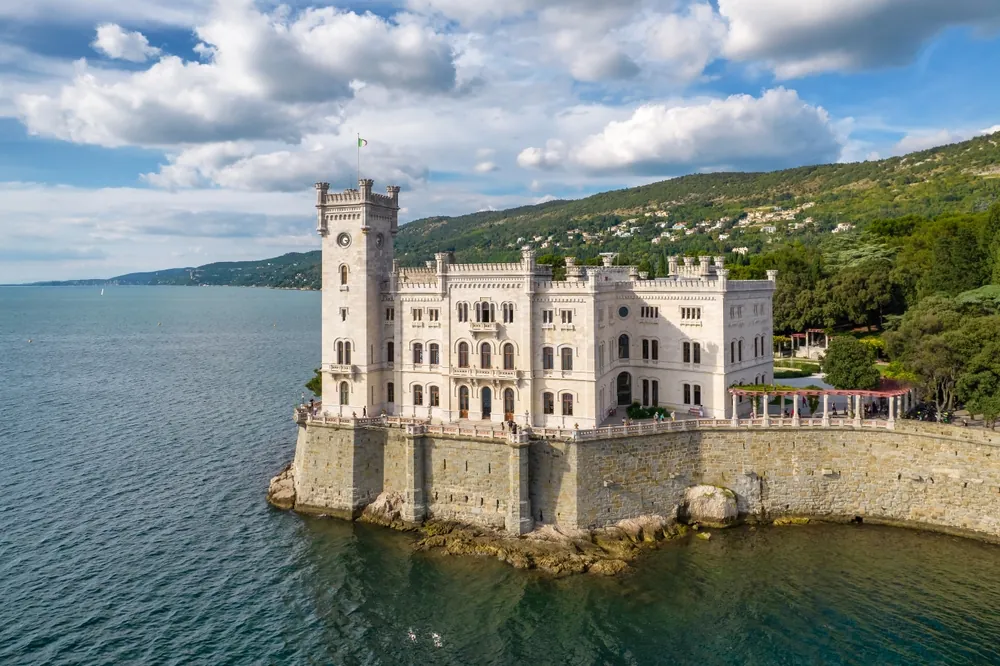
Italy at €1,750/m² visible (€2,500 to €3,000/m² adjusted for the 24% to 35% price-on-request rate, where sellers list "POR" instead of a public price) offers Mediterranean climate, food, the deepest castle-hotel market outside France, and lower restoration costs. The catch is Soprintendenza approval at 6 to 18 months on major work. Time, not money, kills Italian deals.
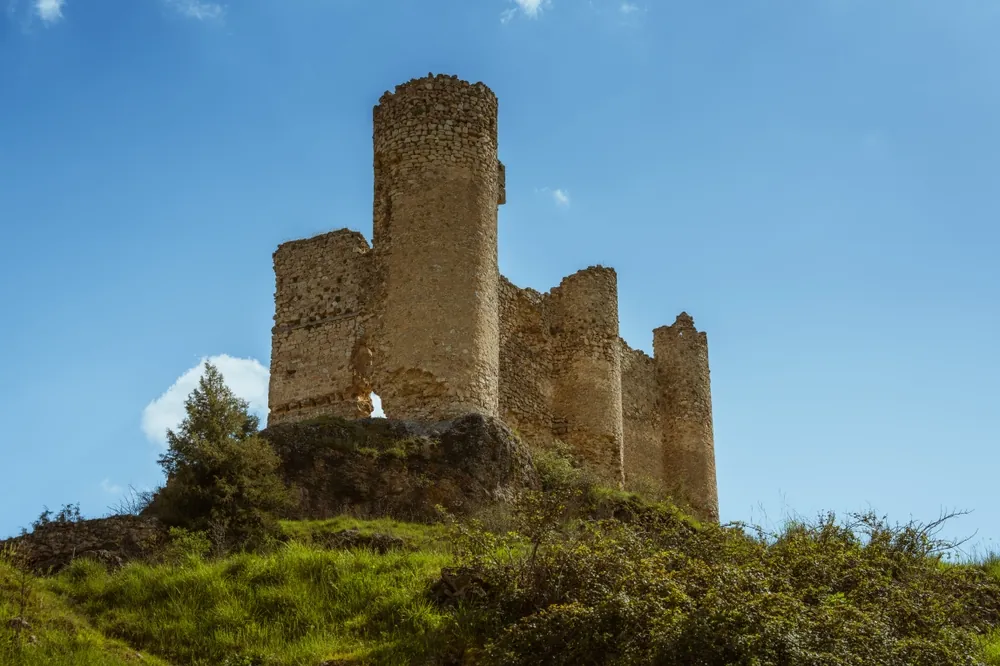
Spain at €2,368/m² across 61 listings, with 2,550 protected castles, offers Reconquista frontier heritage across Castilla, Extremadura and Aragon. The 17 separate regional consent rules add complexity for buyers working across more than one Spanish region.
Ireland at €3,358/m² is the highest in Europe but pairs with the lowest Western European buying costs (1% stamp duty) and the most generous grants: BHIS at 50% to 80% on Protected Structures, plus Section 482 tax relief on properties open to the public. Ashford Castle (Mayo, 83 rooms, €1,105+ a night) leads the Irish hotel category.
Switzerland at €19,551/m² pairs a premium top-end environment with restrictive access: non-residents generally need cantonal authorisation with annual quotas. Lex Koller keeps the Swiss market tighter than any other in Europe.
Bottom line
France for choice, Germany for tax, Wallonia for buying costs, Poland for cheapest entry, Switzerland for top-end scarcity. Italy and Spain are wildcards: great climate, slow approvals. Pick one factor that matters most and the region picks itself.
What buyer fits which region
For maximum choice and a market that's easy to buy and sell into, France: 945 listings, buying costs around 7% to 8%, mortgages through specialist French private banks.
For the cheapest credible entry, Poland or Romania, with heavy restoration overhead but the lowest purchase prices in Europe. Polish heritage consent runs 2 to 6 months, faster than French, Italian or Spanish equivalents.
For the best after-tax economics, Germany. The 100% deduction over 12 years, plus Sanierungsoffensive 2026 grants and DSD funding, delivers materially better after-tax returns than any other country.
The Belgian Wallonia primary-residence buyer captures the 3% versus 12.5% tax break, the biggest single-jurisdiction saving in the European castle market. And for a top-end buyer who wants premium environment with low foreign-buyer friction, Switzerland fits despite the high entry price: Lex Koller-restricted supply and Swiss top-end infrastructure support values long-term.
Common questions
What's the cheapest country in Europe to buy a castle?
Poland at €632/m² median, with Romania lower at €191/m² on the Castle of Zlatna sale. Both come with rebuild costs that often run several times the purchase price.[1]
Where do most European castles sell?
France, by a wide margin: 67% of the for-sale market by listing volume, with 945 of 1,118 European listings.[1]
Which country has the best heritage tax break?
Germany. §7i EStG writes off 100% of certified restoration over 12 years (9% a year for eight, 7% for four). Pre-approval is mandatory.[4]
Why is Wallonia a tax sweet spot?
Wallonia charges 3% registration tax on a primary residence; Flanders and Brussels-Capital charge 12.5%. On a €2 million purchase that's €190,000 saved.[5]
How long does heritage consent take?
Poland 2 to 6 months. France 4 to 12 months. Italy 6 to 18 months on major restoration. The UK has a 92% consent rate but variable timelines.
Can foreign buyers buy castles in Switzerland?
Generally not without cantonal authorisation, rationed by annual quota. Lex Koller keeps the Swiss market tighter than any other in Europe.
Where's the best entry price in Western Europe?
Germany. A 2022 Saxony auction sold Schloss Weigsdorf for €170,000 (€75/m²), the cheapest verified Western European castle in the data.[1]
Sources
1. Castle Collector, Castle Price Index, March 2026.
2. Knight Frank, The Wealth Report 2024 and 2026.
4. Bayerische Schlösserverwaltung; Castle Collector CPI Section 6.
5. Castle Collector, Belgium regional registration tax framework, CPI Section 8.1.