
Castles in the United States: 10 to visit, from Hearst to Biltmore
Hearst on California's coast, Biltmore's 250 rooms in North Carolina, Boldt's St Lawrence island folly: America's most famous Gilded Age castles you can visit.
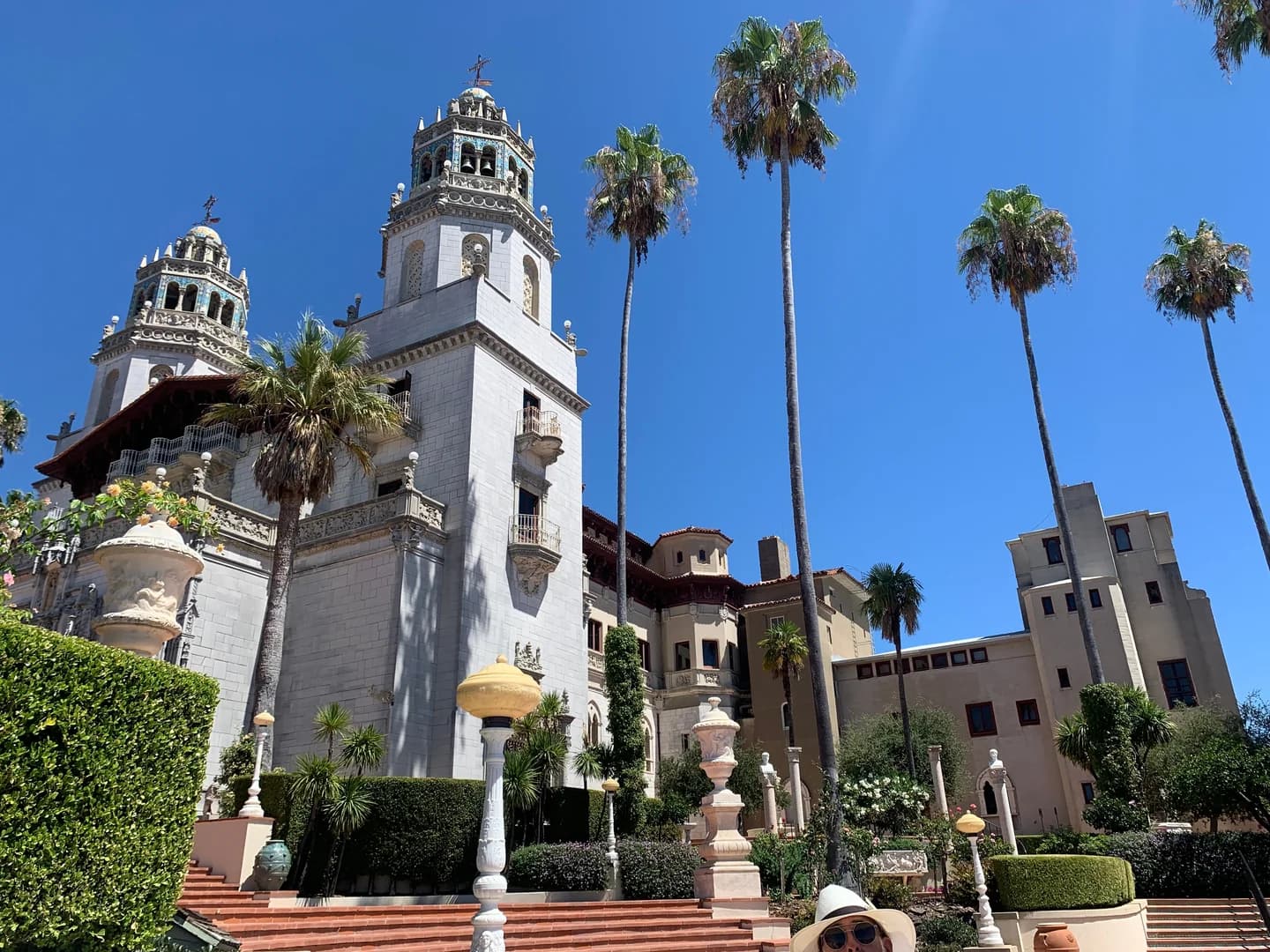
The country has no medieval castles, but it has Spanish-colonial fortifications older than any New World structure of their kind, a Hawaiian royal palace, and the Gilded Age industrialists' answer to Chambord. Ten worth the trip.
The United States has no authentic medieval castles. European settlement began two centuries after the Middle Ages ended, so the 11th- to 15th-century building tradition the term properly belongs to never crossed the Atlantic. What the country does have is the largest collection of castellated properties in the New World: country houses built in Châteauesque, Gothic Revival, Romanesque or Tudor Revival styles by Gilded Age industrialists between roughly 1880 and 1925. Biltmore Estate in North Carolina, the Vanderbilt family's 250-room Châteauesque seat directly modelled on Chambord, is the largest privately owned house in America. Hearst Castle on the California coast is its Mediterranean-revival counterpart.
Older than either are the Spanish colonial fortifications of Florida and Puerto Rico. Castillo de San Marcos in St Augustine was begun in 1672 and is the oldest masonry fort in the continental United States. Castillo San Felipe del Morro and Castillo de San Cristóbal in San Juan together cover 27 acres of UNESCO World Heritage-inscribed Spanish military architecture, the largest such complex in the New World. The only royal palace on US soil is Iolani in Honolulu, built 1879–1882 as the official residence of King Kalākaua and Queen Kapiʻolani.
The ten below are the ones that warrant the journey. Each entry covers what to see, when to go, what it costs, and how to get there.
1. Biltmore Estate
North Carolina (Asheville) Daily, year-round America's largest home Map
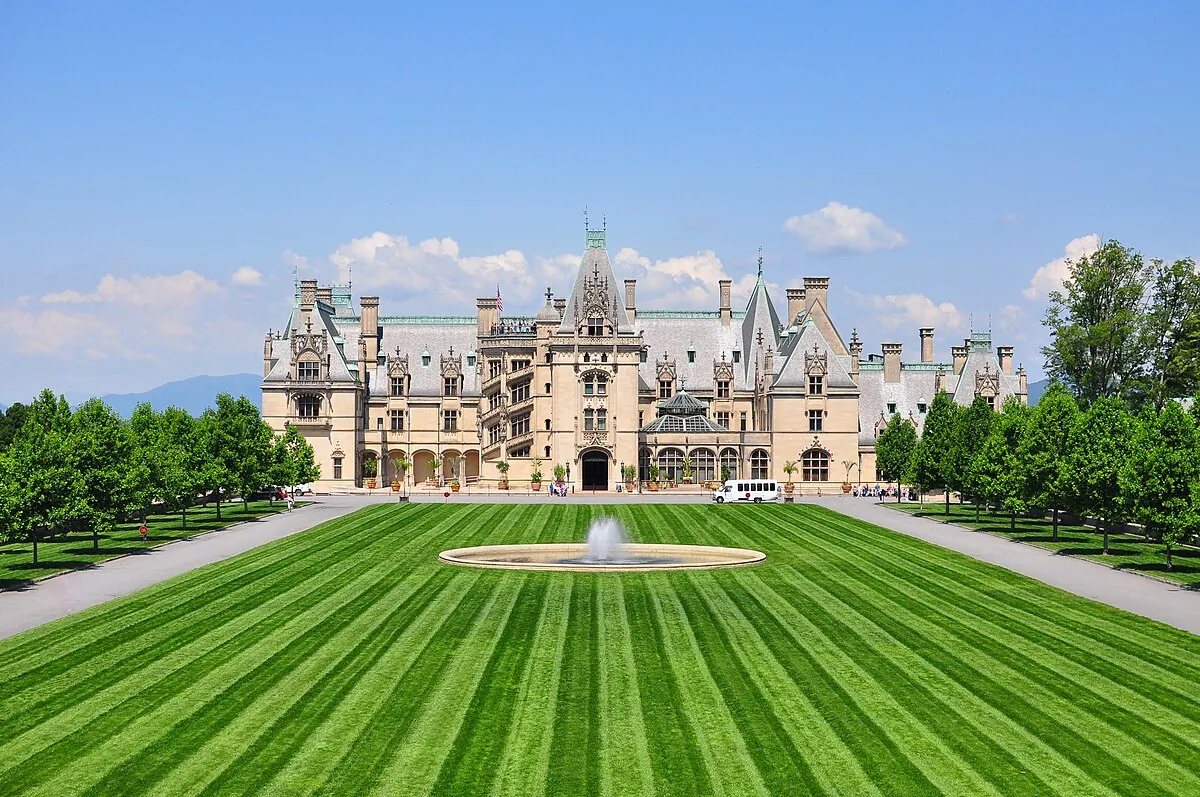
Biltmore is the 178,926-square-foot Châteauesque country house commissioned by George Washington Vanderbilt II from the architect Richard Morris Hunt, built between 1889 and 1895. Hunt visited the Loire Valley repeatedly during the design phase; the model was Château de Chambord, and the chimneys, the spires, the limestone facade and the integrated garden plan all reference it explicitly. The house remains in continuous private ownership by Vanderbilt's descendants, the Cecil family, and is the largest privately owned home in the United States.[1] The original 125,000-acre estate has been reduced over the decades but the family still owns roughly 8,000 acres around the house.
The visit covers the Banquet Hall (with its 70-foot ceiling and Flemish tapestries), the Library (10,000 volumes, ceiling painted by Pellegrini), the Tapestry Gallery, the indoor pool and bowling alley, and 65 fireplaces across 35 bedrooms. Outside, Frederick Law Olmsted's gardens and the working winery (the most-visited in the United States) are the second-day attractions.
Practical: open daily, year-round; reservation required for Biltmore House every day. Biltmore House and Grounds from $90 adult (online; $10 saving versus gate); children 16 and under free with adult through 7 September 2026. Grounds-only ticket from $65; combined Lumière-and-house ticket from $140; Candlelight Christmas evening tour from $110 (November–January). From Asheville, exit 50/50B off I-40 directly into the estate; no passenger rail to Asheville. Plan your visit.[1]
2. Hearst Castle
California (San Simeon) Tours daily, year-round Hilltop palace by the sea Map
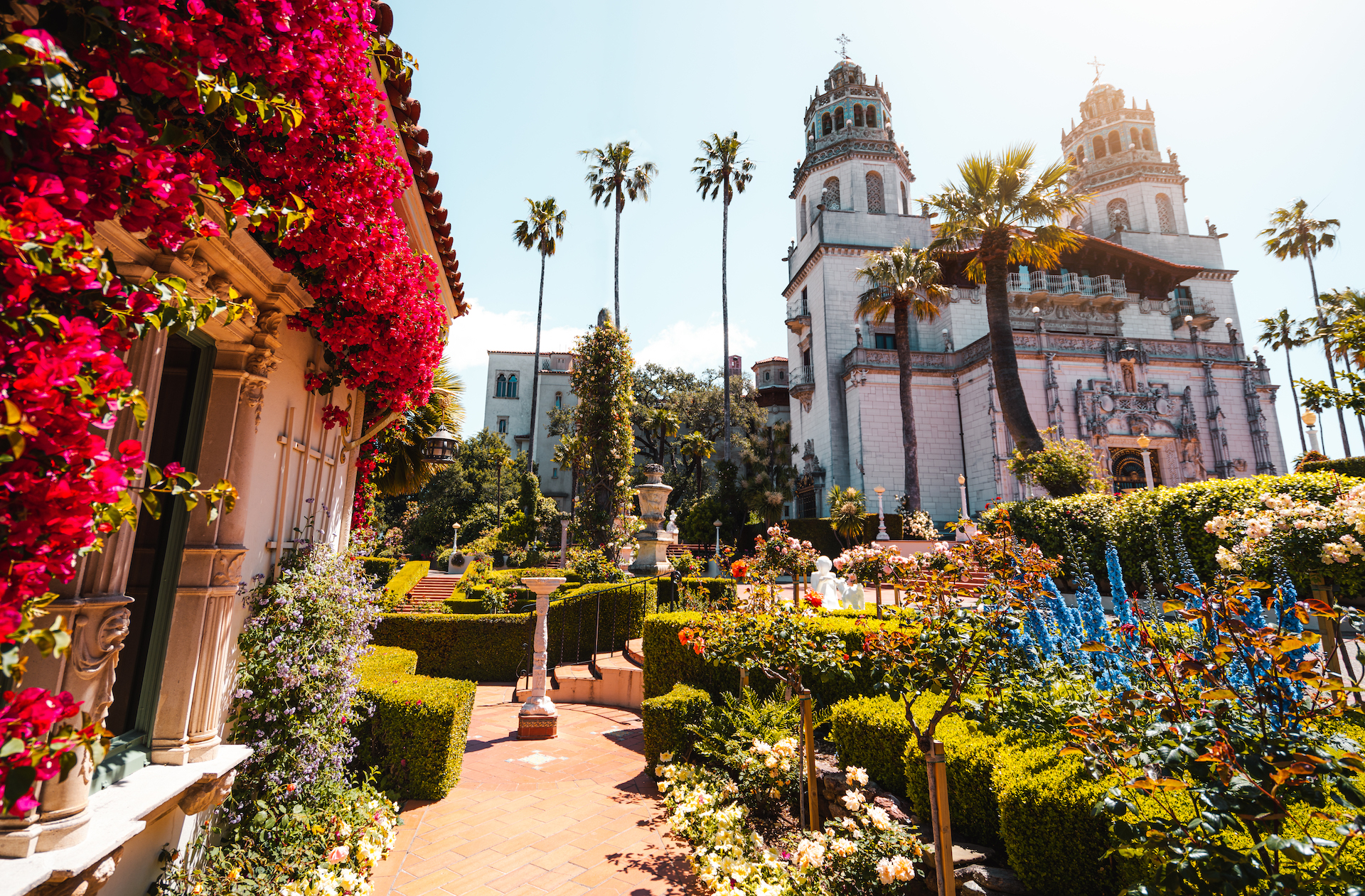
William Randolph Hearst, the newspaper magnate and the model for Orson Welles's Citizen Kane, commissioned the architect Julia Morgan to build "La Cuesta Encantada" on a hilltop above San Simeon between 1919 and 1947. Construction was effectively continuous across nearly thirty years. The estate covers 165 rooms across the main Casa Grande and three outlying guest houses (Casa del Mar, Casa del Monte and Casa del Sol), all in a Mediterranean Revival idiom that pulls from Spanish colonial, Italian Renaissance and ancient Roman sources. The Neptune Pool, with its Greco-Roman temple facade reassembled from genuine antiquities, and the indoor Roman Pool, lined with gold and Murano glass tiles, are the two architectural set-pieces.
Hearst donated the property to the State of California in 1957. Today the castle operates as a California State Park and visits are by guided tour only; visitors take a shuttle bus from the visitor centre at the foot of the hill up to the castle.
Practical: open daily from 09:00, year-round, by guided tour only (closed Thanksgiving, 25 December and 1 January). Adult $35 per tour, child (5–12) $18, under 5 free; specialty and evening tours priced higher. Advance reservations recommended via ReserveCalifornia. From San Francisco or Los Angeles, drive on Highway 1 (around four hours from each); nearest train at San Luis Obispo, 80 miles south. Plan your visit.[2]
3. Castillo San Felipe del Morro
Puerto Rico (San Juan) Daily, year-round Caribbean's iconic Spanish fort Map
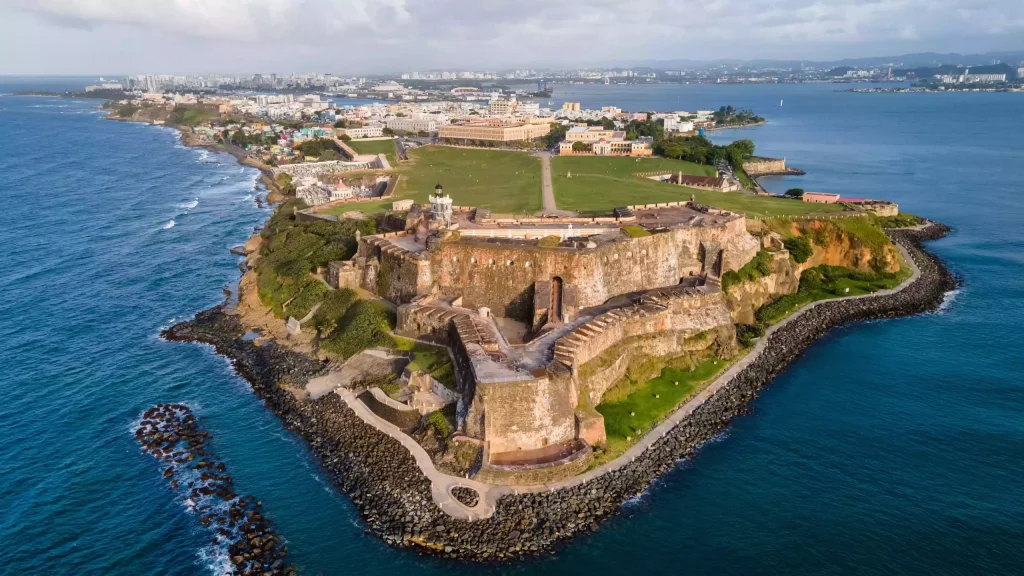
The six-level Spanish fortress at the tip of the Old San Juan promontory was begun in 1539 and continuously expanded for two and a half centuries, the principal seaward defence of Spain's Caribbean empire. El Morro guards the entrance to San Juan Bay; its 18- to 25-foot-thick walls successfully repulsed major attacks by Sir Francis Drake in 1595, the Dutch in 1625 and the United States Navy in 1898. The fort and its sister fortification, Castillo de San Cristóbal, were inscribed jointly by UNESCO in 1983 as one of the most thoroughly preserved Spanish military complexes in the New World.[3]
The visit takes in the six tiered batteries, the underground dungeons, the lighthouse on the upper level (built by the US Army in 1908 to replace the earlier Spanish lantern), the Plaza de Armas and the long grass esplanade now used as kite-flying ground by San Juan families. The view from the top level across the harbour and out to the Atlantic is the photograph people travel for.
Practical: open daily, year-round, 09:00–18:00 (last entry 16:30); closed Thanksgiving, 25 December and 1 January. Standard daily pass $10 per adult (covers both El Morro and Castillo de San Cristóbal, valid 24 hours); children 15 and under free; San Juan NHS annual pass $35. Card payment only, no cash accepted. From cruise ports or central Old San Juan, walk (around ten minutes) or take the free Old San Juan trolley. Plan your visit.[4]
4. Castillo de San Cristóbal
Puerto Rico (San Juan) Daily, year-round Largest fort built in the New World Map
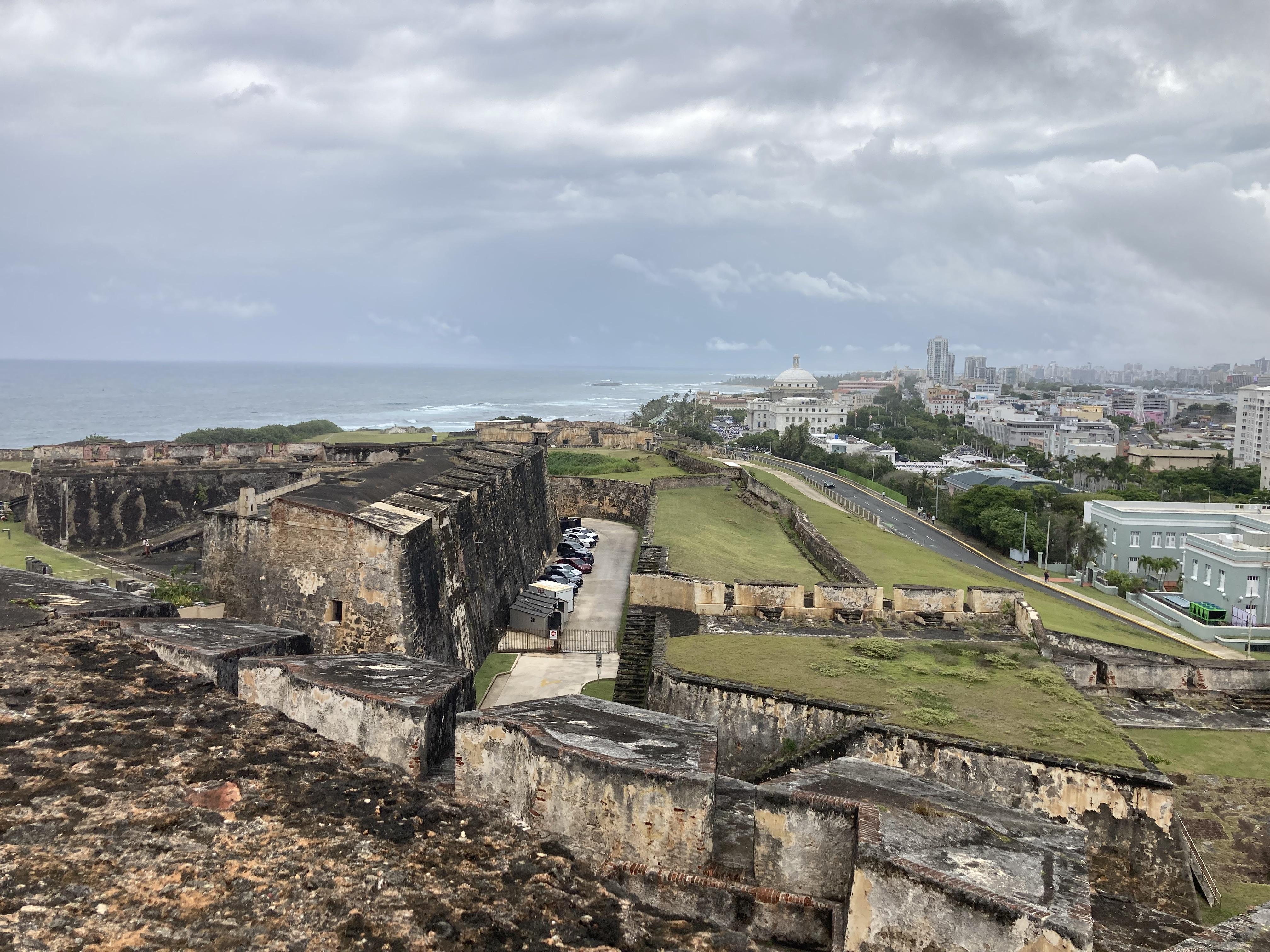
San Cristóbal is the largest Spanish-built fortification in the Americas, covering 27 acres on the landward side of Old San Juan as the city's eastern bulwark. Construction began in 1634 and the bulk of the surviving fabric was completed under the Spanish military engineers Tomás O'Daly and Juan Francisco Mestre between 1765 and 1790. The complex consists of five independent units linked by tunnels and dry moats, each capable of being defended in isolation if any of the others fell. It is the most ambitious Spanish military engineering project anywhere in the colonial Americas.
The visit covers the main plaza, the chapel, the dungeons (with their famous Spanish soldiers' graffiti of galleons), the network of tunnels, and the garitas (the rounded sentry boxes that have become Puerto Rico's unofficial national symbol). The Devil's Sentry Box (Garita del Diablo) at the base of the wall is the most-photographed of these.
Practical: open daily, year-round, 09:00–17:00; closed Thanksgiving, 25 December and 1 January. Standard daily pass $10 per adult (covers both San Cristóbal and El Morro, valid 24 hours); children 15 and under free. Card payment only. From Old San Juan, walk along Norzagaray Street (about ten minutes from El Morro). Plan your visit.[4]
5. Castillo de San Marcos
Florida (St Augustine) Daily, year-round America's oldest masonry fort Map
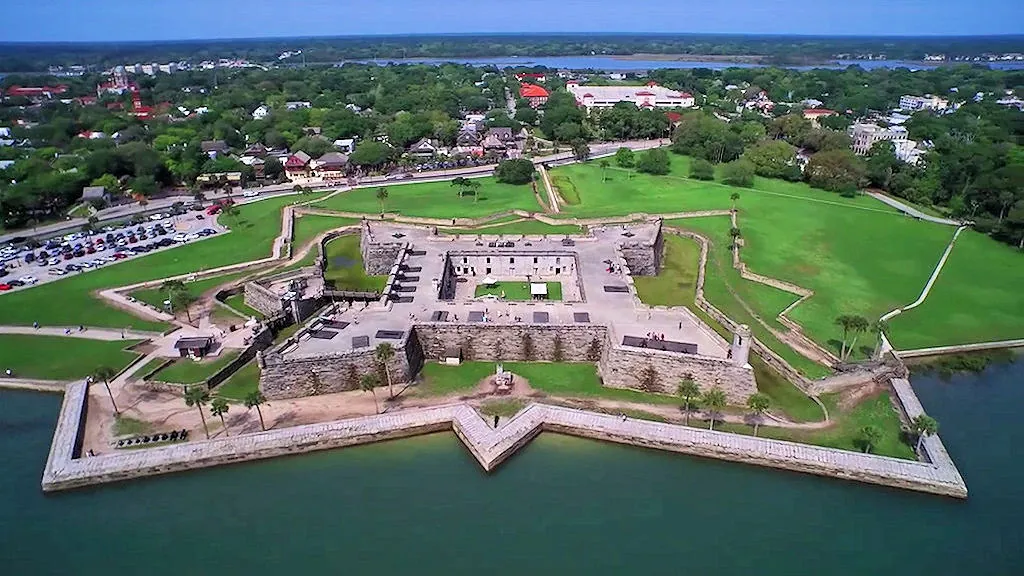
Castillo de San Marcos is the oldest masonry fort in the continental United States, built between 1672 and 1695 by the Spanish colonial government as the principal defensive fortification of Spanish Florida. The fort is built of coquina, a soft sedimentary limestone of compressed seashells quarried locally, which absorbed cannon-ball impacts rather than shattering. The four-pointed star plan with corner bastions made it impervious to siege: English forces under James Moore in 1702 and James Oglethorpe in 1740 both besieged the fort and both withdrew without taking it.[5]
The visit covers the four bastions, the gun deck, the chapel, the dungeons, the powder magazine and the parade ground. The fort overlooks Matanzas Bay and the Bridge of Lions, with views back across to the colonial old town of St Augustine.
Practical: open daily 09:00–17:15 (last admission 17:00), year-round; closed Thanksgiving and 25 December. Adult (16+) $15 standard pass, valid for seven consecutive days; under 16 free with adult; annual pass $45; America the Beautiful interagency pass accepted. Card payment only, no cash. The gun deck closes during thunderstorms. From St Augustine downtown, walk along the waterfront (around five minutes from the Plaza de la Constitución). Plan your visit.[5]
6. Boldt Castle
New York (Heart Island) May–Oct, boat access only Gilded Age love letter Map
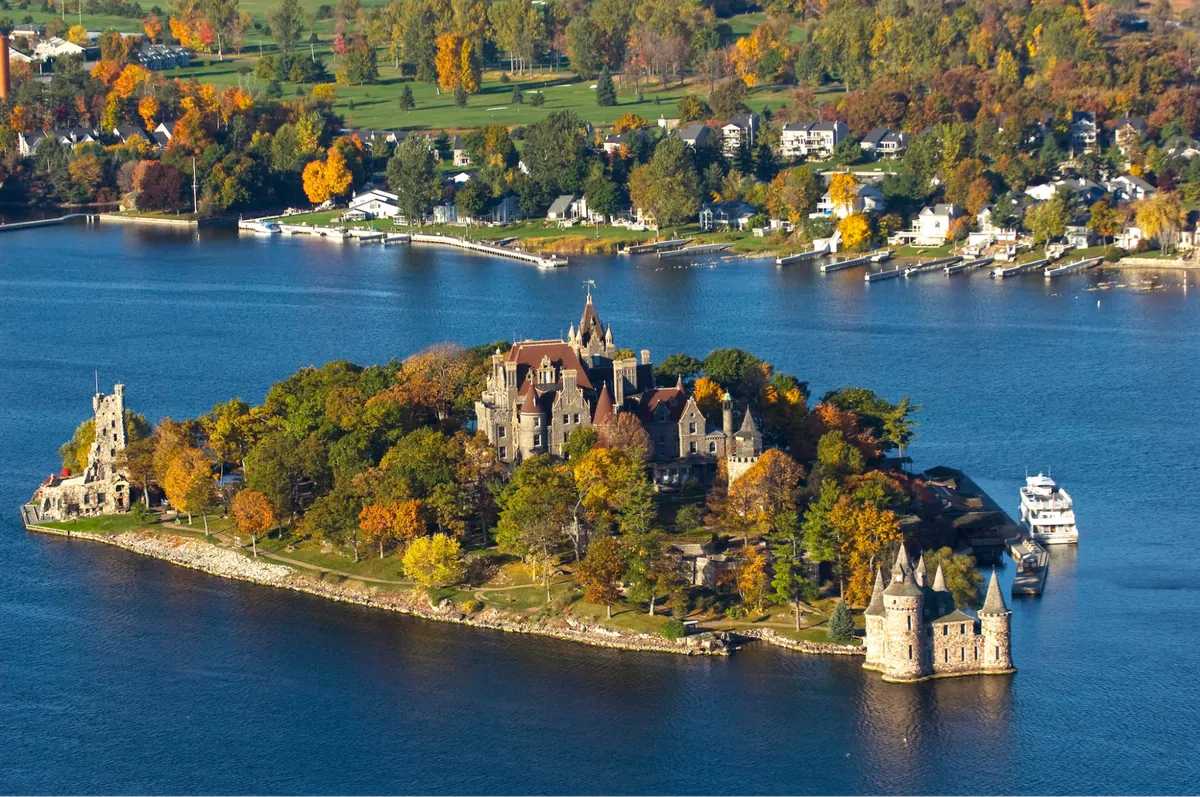
The hotelier George C. Boldt began construction in 1900 of a 120-room Rhineland-style castle on Heart Island in the Thousand Islands of the St Lawrence River, intended as a summer gift for his wife Louise. Construction halted abruptly in January 1904 when Louise died of a heart attack; Boldt ordered all work to stop and never returned to the island. The castle stood empty and progressively vandalised for 73 years until the Thousand Islands Bridge Authority acquired it in 1977 and began a multi-decade restoration that continues today.
The visit covers the main castle, the Power House, the Hennery (a stone-built dovecote and aviary), the Italian Garden and the separately ticketed Yacht House on neighbouring Wellesley Island. The castle is now substantially restored, with a portion deliberately preserved in its early-1970s "abandoned" state to show the contrast.
Practical: open daily 9 May to 12 October 2026, approximately 10:30–17:30 (call ahead for specific hours); closed mid-October to early May. Castle and Yacht House combo $17 adult, $10 child (5–12), under 4 free; Yacht House only $8.50 adult, $6 child. Boat fare additional, charged separately by tour operators. Boat access only: ferries run from Alexandria Bay or Clayton on the New York side, or from Gananoque on the Canadian side (passport required for the latter). Plan your visit.[6]
7. Iolani Palace
Hawaii (Honolulu) Tue–Sat, by booking Only royal palace on US soil Map
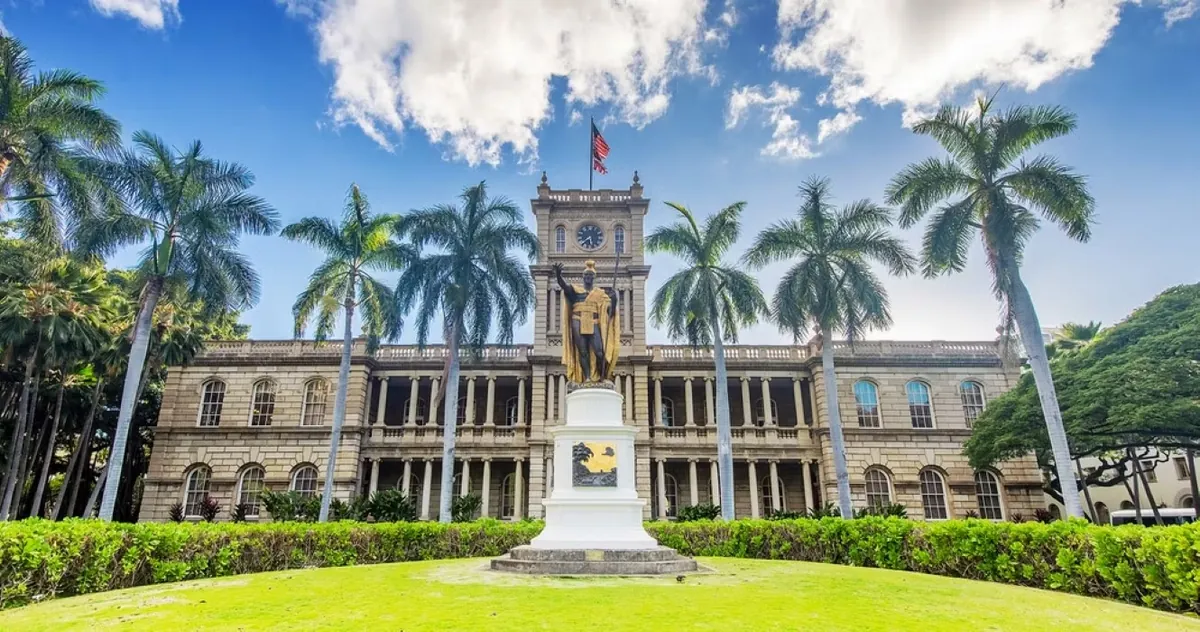
Iolani Palace is the only royal palace on American soil. The building was commissioned by King Kalākaua and Queen Kapiʻolani as the official residence of the Hawaiian Kingdom and constructed between 1879 and 1882 in an "American Florentine" idiom, a hybrid of Italian Renaissance and American Victorian styles. Iolani served as the seat of the Hawaiian Kingdom under Kalākaua and his sister Queen Liliʻuokalani, and continued as the seat of the briefly independent Republic of Hawaiʻi until annexation by the United States in 1898. Liliʻuokalani was held under house arrest in an upstairs bedroom of the palace for eight months in 1895 after a failed counter-coup.
The interior tour covers the Throne Room, the State Dining Room, the Blue Room, the King's Library, the private quarters and the imprisonment room. The grounds include the Coronation Pavilion, the Sacred Mound and the Iolani Barracks.
Practical: open Tuesday to Saturday (closed Sunday and Monday), tours by booking; ticket office 08:30–16:00. Docent-led guided tour $34 adult, teen (13–17) $31, child (5–12) $16, under 5 free; military adult $26; Kamaʻāina (Hawaii residents) adult $19.95. Self-led audio tour $26.95 adult. Reservations highly recommended. From Waikiki, take TheBus route 2, 13 or E (around 25 minutes), rideshare or drive (paid lots nearby). Plan your visit.[7]
8. Hammond Castle
Massachusetts (Gloucester) Daily, year-round Inventor's medieval folly Map
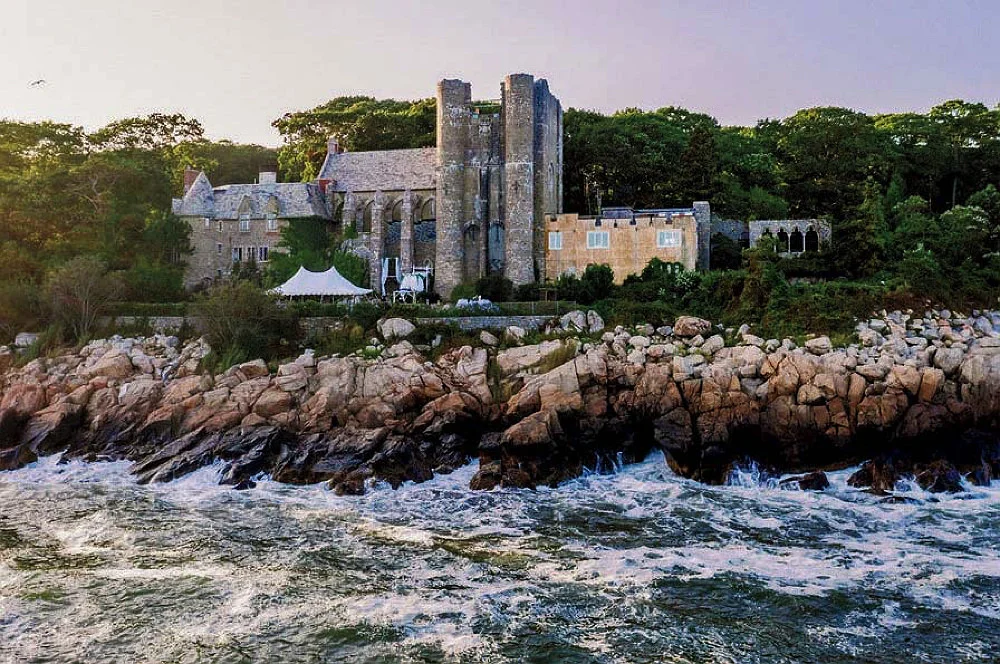
Hammond Castle is the medieval-folly residence and research laboratory built between 1926 and 1929 by the inventor John Hays Hammond Jr on a coastal cliff in Gloucester, Massachusetts. Hammond Jr was the prolific inventor of remote-control technology and held more than 800 patents in his lifetime; the castle was simultaneously his home, his research lab, and the display venue for his collection of medieval European architectural fragments, which he integrated into the fabric of the building. The Great Hall preserves an 8,200-pipe organ (one of the largest pipe organs in a private residence anywhere) and the indoor courtyard incorporates a façade rebuilt from a 15th-century French merchant's house.
The visit covers the Great Hall, the indoor courtyard, the inventor's bedroom, the chapel and the inventor's laboratory. The cliff-edge garden and the Atlantic views from the seaward terrace are the rest of the trip.
Practical: open daily 09:00–15:30 (last entrance 14:45), year-round; check before visiting for seasonal closures and special events. Adult $20 weekday, $25 weekend; senior $15; child (5–17) $10, under 4 free; veterans 10% off; Gloucester residents free self-guided tours on Tuesdays in season. Advance parking reservation strongly advised. From Boston, drive via MA-128 (around 45 minutes) or take MBTA commuter rail Rockport line to Gloucester station, then taxi. Plan your visit.[8]
9. Lyndhurst Mansion
New York (Tarrytown) Apr–Dec, seasonal America's finest Gothic Revival Map
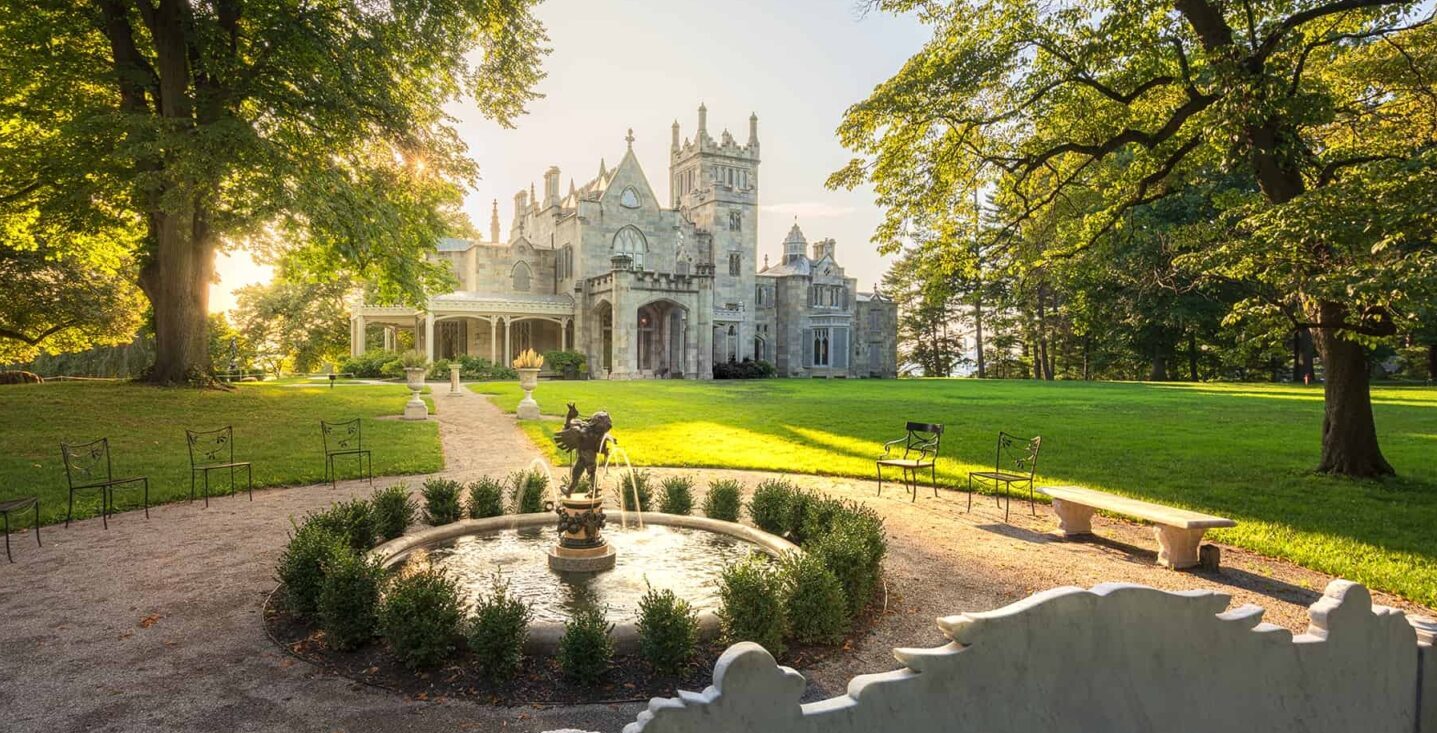
Lyndhurst is the canonical American Gothic Revival country house, designed by Alexander Jackson Davis for the former New York mayor William Paulding starting in 1838. The house was substantially expanded by Davis for the merchant George Merritt in 1864–1865, and acquired in 1880 by the railroad financier Jay Gould, who used it as a Hudson Valley summer residence. The asymmetrical pinnacled silhouette, the pointed-arch windows, the verandahs and the marble dining room are the architectural set pieces. Davis's design predates the broader Gilded Age industrial-castle wave by almost half a century and is widely cited as the finest surviving American Gothic Revival residence.
The visit covers the entrance hall, the State Reception Room, the dining room, the library, the bowling alley and the Gould-era family bedrooms. The grounds include the Rose Garden (a National Trust for Historic Preservation showpiece), the Carriage House and the Hudson River bluff path.
Practical: mansion tours run six days a week April–October 10:00–16:00, seven days late September to October, and six days a week for holiday tours late November to December; closed January to March (except special theatrical events) and Thanksgiving, Christmas and New Year's. Grounds open daily April–December 09:30–16:30. Classic Mansion Tour $26 adult; senior, AAA, military or student $24; youth (6–17) $19; under 6 $10; National Trust members $13. From Manhattan, Metro-North Hudson Line to Tarrytown (around 50 minutes), then 25-minute walk or short taxi. Plan your visit.[9]
10. Belvedere Castle
New York (Central Park) Daily, free entry Park's beautiful view Map
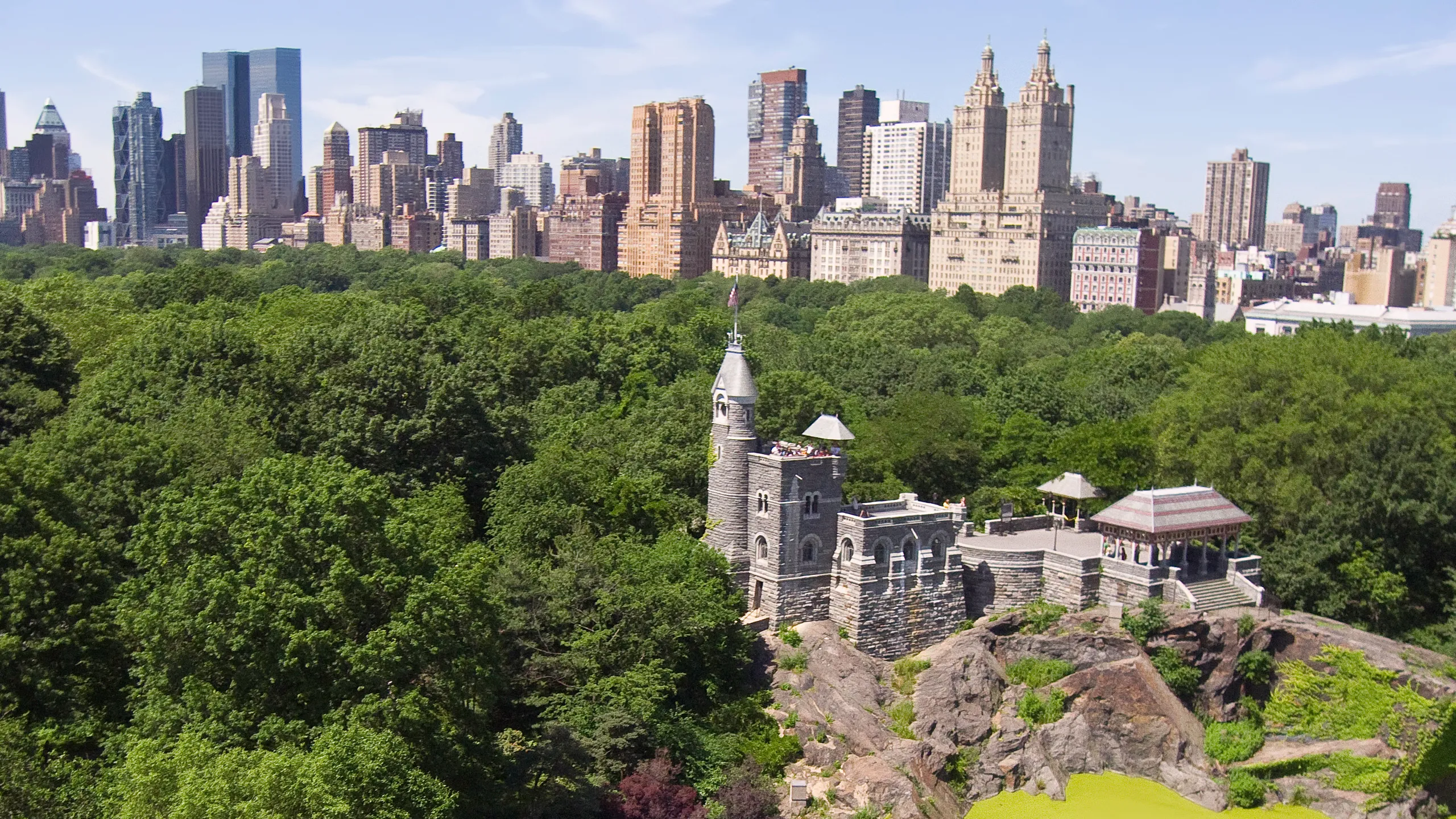
Belvedere is the small Romantic-era folly castle built by Frederick Law Olmsted and Calvert Vaux in 1869 as part of the original Central Park design. Vaux's intent was an architectural eye-catcher to terminate the long view down the park's central axis from the Mall, and the name (belvedere: "beautiful view" in Italian) reflects the function. The castle was designed as an unroofed shell with no specific use; it acquired walls and a roof in 1919 when the National Weather Bureau installed instruments here. Today the building doubles as the Henry Luce Nature Observatory, with a permanent exhibition on the natural history of Central Park.
The visit climbs to the open terrace at the top, with views southeast over the Great Lawn and Cleopatra's Needle, southwest to Turtle Pond and the Delacorte Theater (where Shakespeare in the Park stages each summer), and north up the Reservoir.
Practical: open daily 10:00–17:00 (terrace closes 16:55), year-round; closed Thanksgiving, Christmas Day and New Year's Day. Free entry; donations to the Central Park Conservancy welcomed. Wheelchair accessible. From Midtown Manhattan, take the B or C subway to 81st Street–Museum of Natural History, the 1 to 79th Street then crosstown bus, or the M79 crosstown bus. Plan your visit.[10]
At a glance
| Castle | Region | When to go | |
|---|---|---|---|
| Biltmore EstateAmerica's largest home | North Carolina (Asheville) | Daily, year-round |
| Hearst CastleHilltop palace by the sea | California (San Simeon) | Tours daily, year-round |
| Castillo San Felipe del MorroCaribbean's iconic Spanish fort | Puerto Rico (San Juan) | Daily, year-round |
| Castillo de San CristóbalLargest fort built in the New World | Puerto Rico (San Juan) | Daily, year-round |
| Castillo de San MarcosAmerica's oldest masonry fort | Florida (St Augustine) | Daily, year-round |
| Boldt CastleGilded Age love letter | New York (Heart Island) | May–Oct, boat access only |
| Iolani PalaceOnly royal palace on US soil | Hawaii (Honolulu) | Tue–Sat, by booking |
| Hammond CastleInventor's medieval folly | Massachusetts (Gloucester) | Daily, year-round |
| Lyndhurst MansionAmerica's finest Gothic Revival | New York (Tarrytown) | Apr–Dec, seasonal |
| Belvedere CastlePark's beautiful view | New York (Central Park) | Daily, free entry |
How many castles are in the United States?
The standard private register, the Dupont Castles Inventory, counts more than 700 castellated properties across the United States: substantial single-family residences and institutional buildings built in Gothic Revival, Romanesque Revival, Tudor Revival or Châteauesque styles with battlements, turrets and the wider castle architectural vocabulary. Most were Gilded Age industrial-magnate commissions (Vanderbilt's Biltmore, Hearst's San Simeon, Boldt's Heart Island, Hammond's Gloucester); a smaller cohort were institutional buildings, most often universities and asylums built in castle styles for symbolic gravitas (Smithsonian Castle in Washington, Yale's Sterling Memorial, the Old Main at the State University of New York).
Outside the Gilded Age category, two distinct period traditions matter. The Spanish colonial fortifications of Florida and Puerto Rico (Castillo de San Marcos in St Augustine, Castillo San Felipe del Morro and Castillo de San Cristóbal in San Juan, plus Fort Matanzas south of St Augustine) are the closest North America comes to authentic period castle building. The Hawaiian royal palaces (Iolani in Honolulu, plus Huliheʻe Palace in Kailua-Kona on the Big Island and Queen Emma Summer Palace in upper Honolulu, both operated by the Daughters of Hawaiʻi) are the only authentic royal residences anywhere on US soil.
Famous, medieval, Gothic and largest
Famous. Biltmore and Hearst account for the bulk of American castle search demand. The two San Juan castillos are the most-visited Spanish-colonial military sites in the American hemisphere and the only US castles with UNESCO inscription. Boldt is the most-photographed of the Gilded Age castles after Biltmore.
Medieval. There are no genuine medieval castles in the United States; European settlement postdates the medieval era by several centuries. The closest analogues are the Spanish colonial fortifications (San Marcos, San Felipe del Morro, San Cristóbal), which apply medieval and early-modern military architectural traditions to 17th- and 18th-century construction. The wider American interest in Anglo-Norman castle imagery flowed in the opposite direction: David Cannadine's Decline and Fall of the British Aristocracy notes that the American steel magnate Andrew Carnegie bought Skibo Castle in the Scottish Highlands and spent £100,000 on alterations, while the New York-born William Waldorf Astor moved to England in 1891, naturalised British in 1899, and bought Hever Castle in Kent in 1903; American capital flowing outward to acquire European medieval castles is the longer story than American medieval castle building.[11]
Gothic. Lyndhurst is the canonical American Gothic Revival country house. Smaller Gothic-Revival examples include Belvedere in Central Park (the 1869 Olmsted-and-Vaux folly), Hammond Castle in Gloucester (a hybrid Gothic-and-medieval-collage), and the Smithsonian "Castle" on the National Mall in Washington (designed by James Renwick Jr in 1855 in a Norman Gothic Revival idiom).
Largest. Biltmore, at 178,926 square feet across 250 rooms, is the largest privately owned residence in the United States. Hearst Castle, at 165 rooms across the main house and three guest cottages, is its closest peer in the early-20th-century commission tier. Castillo de San Cristóbal in San Juan, at 27 acres, is the largest Spanish-built fortification anywhere in the New World.
If you're looking to buy
The American castle-style market clears at materially lower per-square-metre prices than the European average. Castle Collector's Castle Price Index (March 2026 edition) tracks a US median of around USD 1,095 per square metre across 16 indexed castle-style properties, roughly half the European median.[12] The discount reflects the character of the supply: predominantly Victorian-era and 20th-century castle-inspired residences rather than medieval fortresses with heritage-designation constraints. Two prestige outliers (7400 Park Rd in Texas at USD 9,900/m² and Heiner Castle in Wyoming at USD 10,419/m²) reach European upper-tier rates. Foreign buyers face no federal restrictions on US residential property; transaction costs total 1.5–4% across most states; closings typically run 30–60 days versus 3–6 months in Europe. Knight Frank's Wealth Report 2026 counts 264,272 ultra-high-net-worth individuals in North America, around 37% of the global pool, the largest national reservoir of trophy-property buyers anywhere.[13]
If you're seriously looking, the castles for sale in the United States page tracks current listings against this benchmark. For the operational side (surveys, restoration budgeting, foreign-buyer mechanics) see our guide to buying a castle.
Sources
1. Biltmore Estate, official site (The Biltmore Company). Tickets and pricing at
2. Hearst Castle, California State Parks. Plan your visit at
3. San Juan National Historic Site, US National Park Service. UNESCO World Heritage inscription (1983) at
4. San Juan National Historic Site, US National Park Service. Fees at
5. Castillo de San Marcos National Monument, US National Park Service. Fees at
6. Boldt Castle, official site (Thousand Islands Bridge Authority). Hours of operation at
7. Iolani Palace, official site (Friends of Iolani Palace). Tours and admission at
8. Hammond Castle Museum, official site.
9. Lyndhurst Mansion, National Trust for Historic Preservation. Visit at
10. Belvedere Castle, Central Park Conservancy.
11. Cannadine, D. The Decline and Fall of the British Aristocracy. Yale University Press, 1990 (Vintage Books edition, 1999); p. 358.
12. Castle Collector, Castle Price Index, March 2026 edition.
13. Knight Frank Research, The Wealth Report 2026; North American UHNW (US$30m+) population 264,272, around 37% of the global total. Knight Frank LLP, 2026; pp. 76–77.