
Castles near Inverness: 10 Highland castles, from Loch Ness to Eilean Donan
Urquhart watching Loch Ness, Eilean Donan on its tidal island, Cawdor of Macbeth fame and Dunrobin's French silhouette: 6 Highland castles near Inverness.
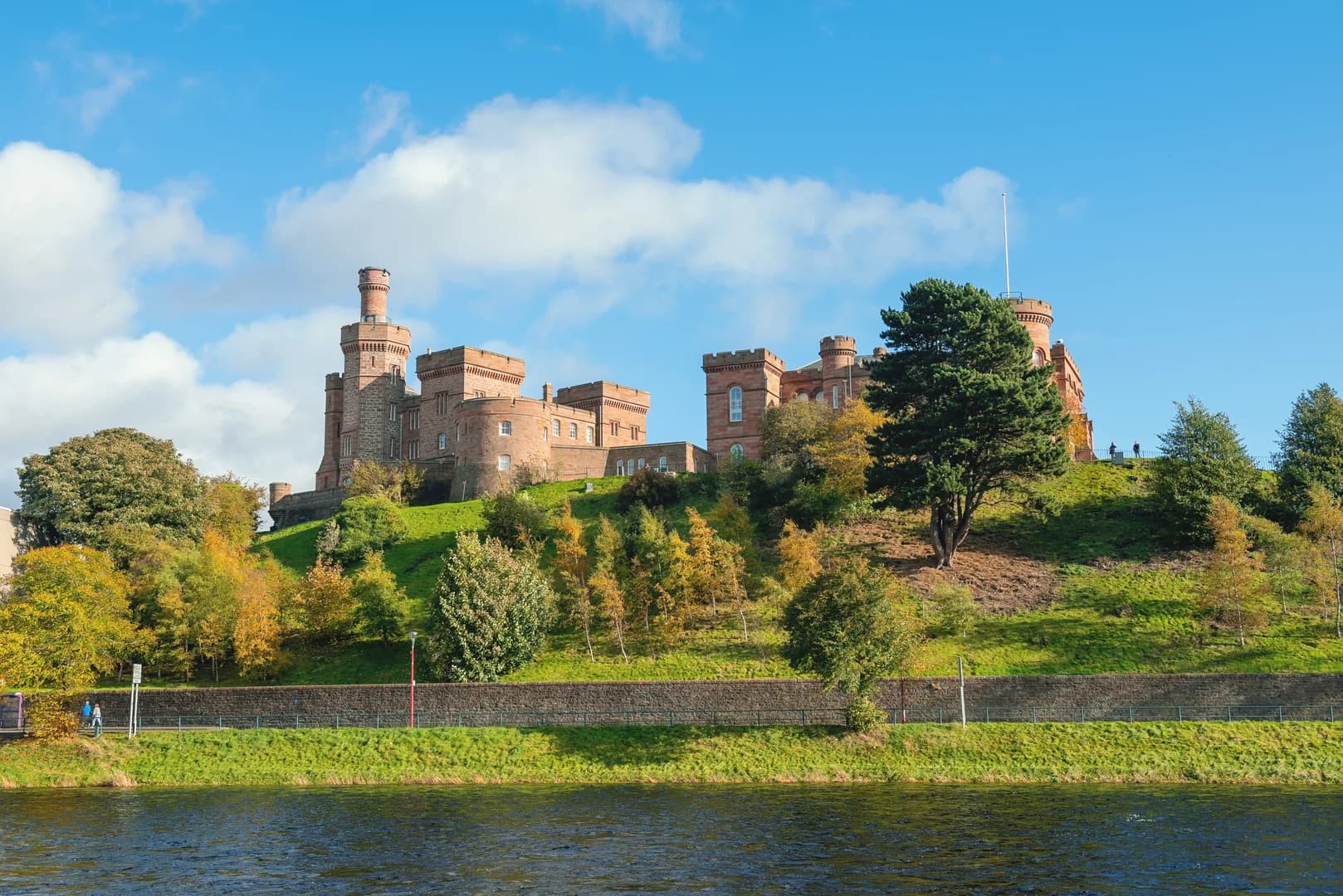
Inverness sits at the centre of the Highland castle network. Ten castles within day-trip range: Urquhart watching Loch Ness, Cawdor of Macbeth fame, Eilean Donan on its tidal island, Dunrobin's French chateau silhouette, plus Fort George, Brodie and the Queen Mother's Castle of Mey.
Drive south from Inverness for thirty minutes along the A82 and Loch Ness opens up on the right. Twenty-three miles long, up to 230 metres deep. On its western shore stands Urquhart Castle, the 13th-century ruin that draws around 500,000 visitors a year and ranks as one of the highest-grossing properties in the Historic Environment Scotland portfolio.[1] That's the structural visitor draw, but the headline castles fan out in three directions from the city. East along the Moray Firth: Fort George and Cawdor and (a little further) Brodie. North up the A9: Dunrobin, the Sutherland family seat. West through Glen Shiel: Eilean Donan, the most-photographed Scottish castle internationally.
The architecture of the Highland castles is the older Scottish tradition. The Victorian survey by MacGibbon and Ross documents Cawdor's 14th-century keep, with an entry in the Exchequer Rolls for 1398 referring to "Calder Castle", and Brodie and Castle Stuart as the surviving Highland tower houses within reach of Inverness.[2] Beyond them, Hubert Fenwick's 1976 Scotland's Castles picks up the Jacobite-era story (Urquhart blown up in 1692, Eilean Donan destroyed in 1719, Fort George built 1748–1769 as the Crown's response to the '45). The combination of intact Renaissance towers, Jacobite ruin and 18th-century artillery fortress is unusually rich for a single base.
The ten below cover the spread, from Inverness Castle in the city centre out to the Castle of Mey on the Caithness coast. Each entry covers what to see, when to go, what it costs, and how to get there from Inverness.
1. Urquhart Castle
26 km 30 min Daily, year-round Loch Ness viewpoint ruin Map
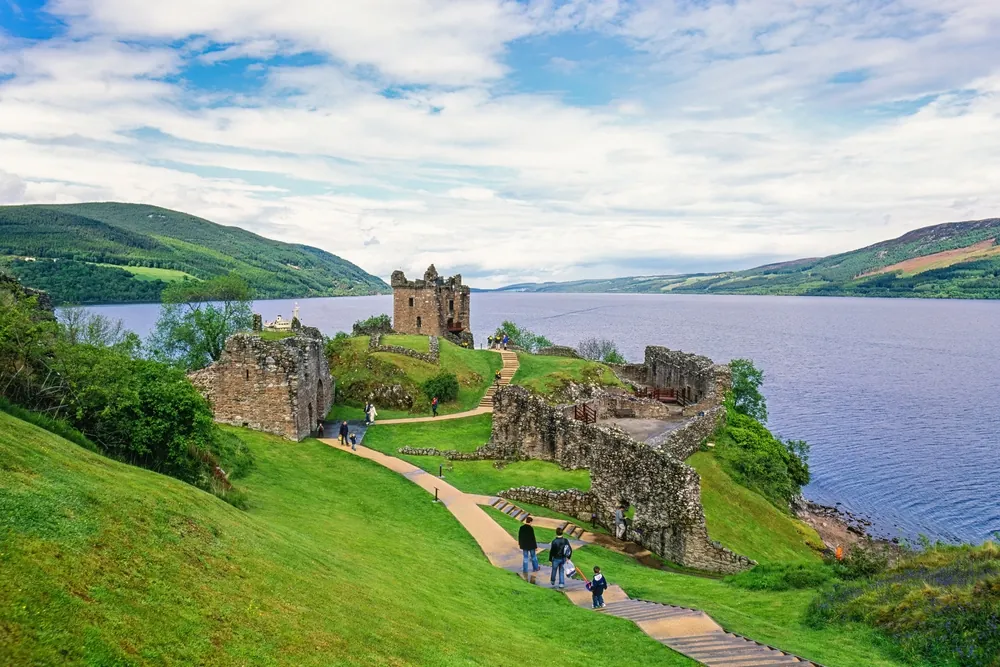
Urquhart sits on Strone Point, a rocky promontory jutting into the western shore of Loch Ness, and is the structural reason the loch and the castle are so often photographed together. The visible 13th-century ruin reflects a long history of capture and recapture during the Wars of Independence and the Jacobite uprisings; the castle was deliberately blown up in 1692 to prevent its further use by Jacobite forces, and was never rebuilt. The Grant family, who held the lordship from the 16th century onwards, allowed it to deteriorate, and the property entered state guardianship in 1913.
Urquhart is consistently among the highest-grossing properties in the Historic Environment Scotland portfolio, with around 500,000 visitors per year drawn through the wider Loch Ness tourism economy.[1] The visitor centre includes a substantial Loch Ness exhibition alongside the castle interpretation, plus a working trebuchet replica on the lakeside lawn. Pre-booking is recommended in summer because of capacity limits.
Practical: open daily year-round (closed 25–26 December; reduced hours 24 December and 1 January). Apr–Aug 09:30–20:15 (last entry 19:15); Sep 09:30–18:00; Oct 09:30–17:00; Nov–Mar 09:30–16:30. Online tickets adult £14, concession £11, child £8.50; walk-up adult £16; family from £40.50; HES members free. From Inverness by car, 30 minutes south-west on the A82 to Drumnadrochit; Stagecoach bus 19 stops at the gate. Plan your visit.[3]
2. Inverness Castle
In city 5 min walk Daily, year-round Reborn Highland storyteller Map
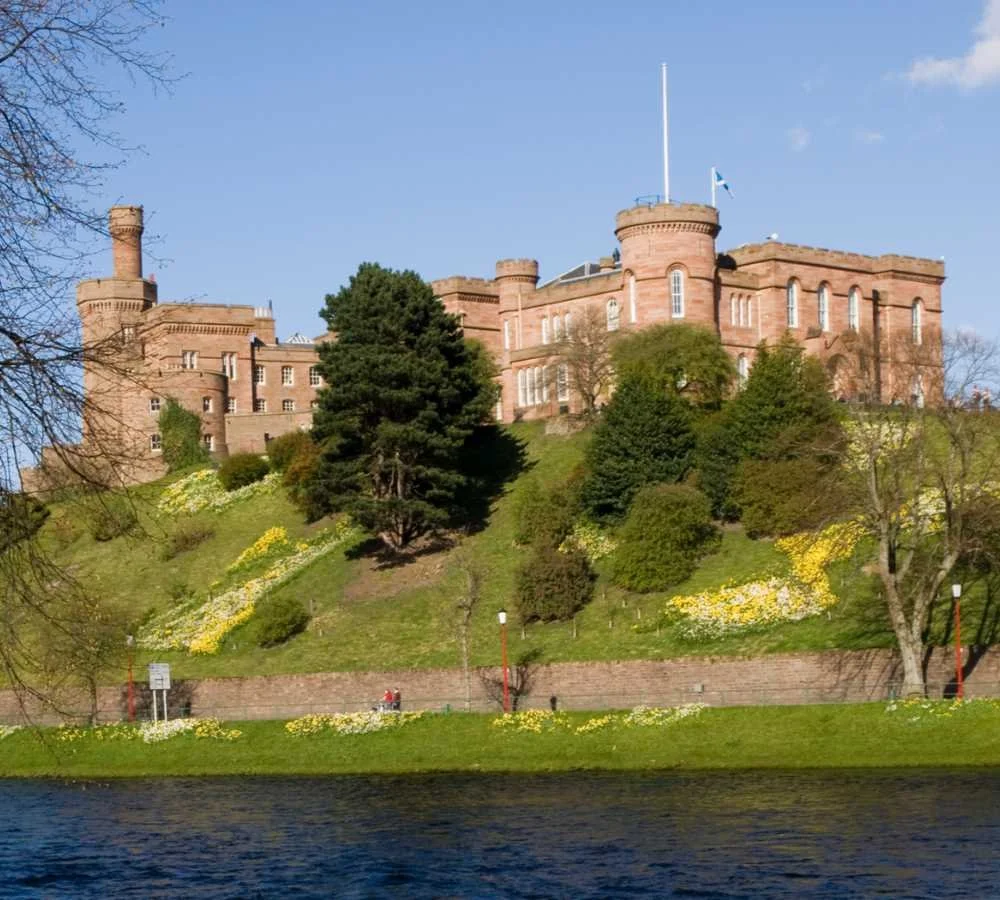
There has been some kind of fortification on Castle Hill since 1057, but what visitors see today is the William Burn building of 1836, in pink Tarradale sandstone, looking down over the River Ness in the centre of Inverness. The castle functioned as a working sheriff's court right up until 2020. After a four-year, £47 million refit it reopened on 9 February 2026 as the Inverness Castle Experience, an immersive visitor attraction designed by Bright White and Eventcommunications under the High Life Highland operator.
The visit moves through the South Tower views, the Rose Room, exhibitions on Highland identity and culture, and the Spirit Room finale. Visitors can listen to a Seanchaidh (a traditional Gaelic storyteller) share Highland legends, walk through sensory installations on the region's history, and stop in the Saltire Bistro and shop on the way out (both open without a ticket).
Practical: open daily 9:30–17:30 (last admission 16:30); closed 25 December only. Online tickets adult £20, concession £18, child £14; walk-up adult £22; family from £24; under 5s and carers free. Afternoon tea £40 per person by booking. From Inverness rail/bus station, 5 minutes on foot. Plan your visit.[4]
3. Cawdor Castle
20 km 25 min Apr–Oct, daily 5-star castle of Macbeth Map
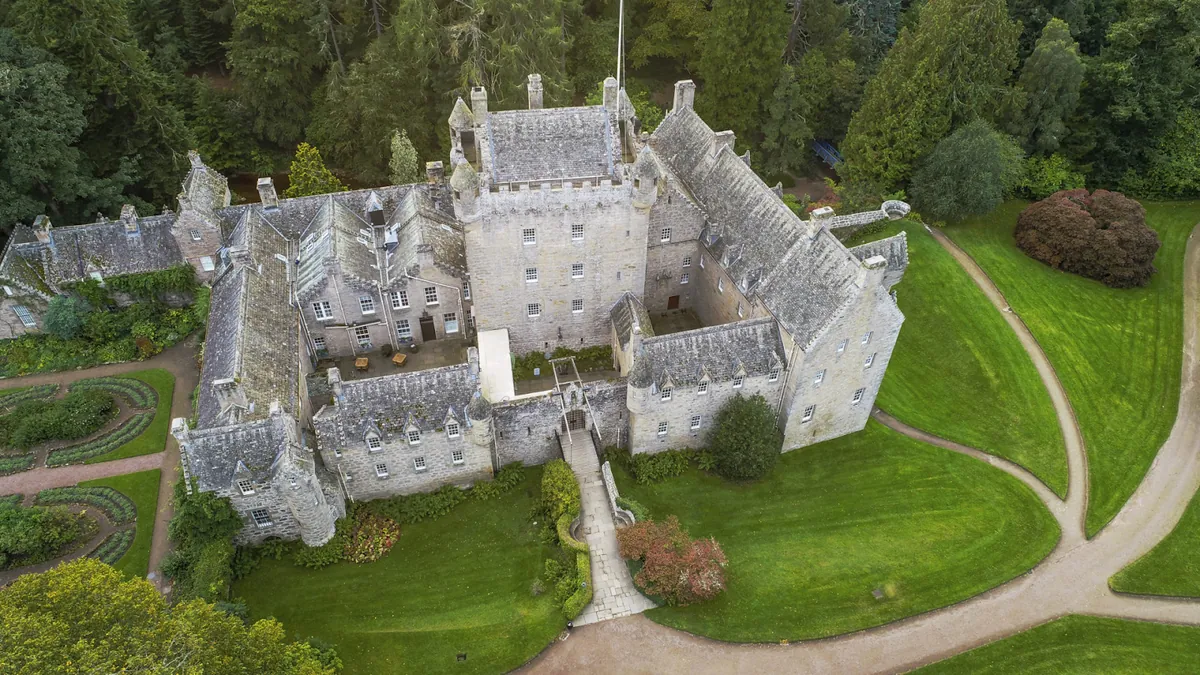
Cawdor is one of the most architecturally distinctive Scottish private-family castles. The MacGibbon and Ross survey points to an entry in the Exchequer Rolls for 1398 referring to "Calder Castle", and identifies the present keep as "probably begun about the time when the licence was obtained", with the older parts bearing "the character of work of the fifteenth century" in the thick walls.[2] Family tradition holds that the Cawdor family built the central tower house around an existing holly tree growing on the site, and the petrified remains of that 14th-century holly tree are still visible in the castle's vaulted basement. The Cawdor family has been continuously associated with the castle for some seven hundred years, one of the longest single-family successions in Scottish castle history.
Shakespeare's Macbeth references "Thane of Cawdor" as one of the titles Macbeth holds, though the historical Macbeth (King of Scots 1040–1057) predated the surviving keep by several centuries. The modern title (Earls Cawdor, created 1827) is a 19th-century elevation of the medieval Thane line. The visit covers the keep, the family rooms, three formal gardens (Walled, Flower, Wild), and a substantial gift shop and tearoom. Cawdor holds a 5-star VisitScotland rating.
Practical: open daily 25 April–4 October 2026, 10:00–17:00 (last entry 17:00); closed mid-October to late April. Adult £17, concession £15 (60+), child £8.50 (6–15), under 5s free; family £40. Gardens-only adult £10. From Inverness by car, 25 minutes east on the B9090 via Nairn; bus from Inverness to Nairn, then taxi. Plan your visit.[5]
4. Fort George
20 km 25 min Daily, year-round Garrisoned 18th-century fort Map
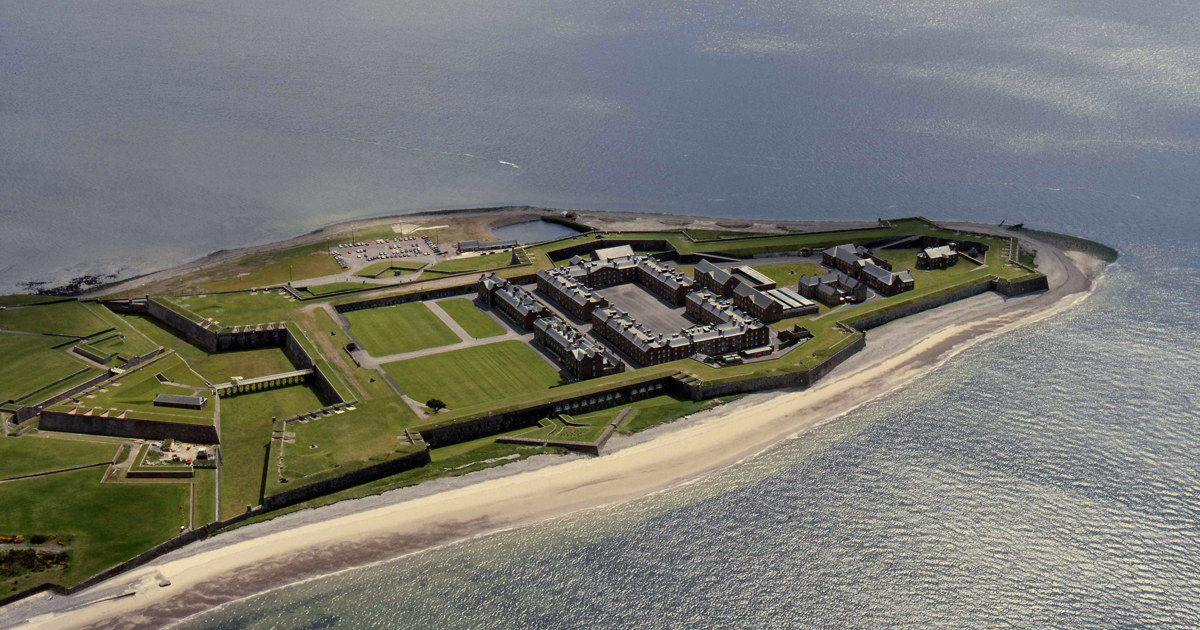
Fort George at Ardersier is the largest Hanoverian artillery fortress in Britain by extent, built 1748–1769 as the Crown's response to the 1745 Jacobite Rising. Designed by William Skinner and built by William Adam (father of the architect Robert Adam), the fort projects out into the Moray Firth on a low spit of land, with bastioned ramparts and the open sea on three sides. The fortifications were never tested in anger; by the time they were finished, the Jacobite threat was already extinct, which is partly why the structure survives so completely intact.
The fort is still an active British Army base, home to a serving regiment alongside its visitor function. The visitor route covers the artillery batteries, the chapel, the museum of the Highlanders, and the substantial parade ground, with the working barracks visible at distance. The combined visitor and military function makes Fort George structurally distinct from any other Scottish castle visitor site.
Practical: open daily, year-round (closed 25–26 December and 1–2 January). Apr–Sep 09:30–17:30 (last entry 16:30); Oct–Mar 10:00–16:00. Online tickets adult £10, concession £8, child £6; walk-up adult £11; family options £20–37.50; HES members and Armed Forces (with MOD90) free. From Inverness by car, 25 minutes east on the B9006 to Ardersier; Stagecoach 11/11A bus from Inverness. Plan your visit.[3]
5. Brodie Castle
37 km 40 min Guided tours, Apr–Oct Pink Tudor-style estate Map
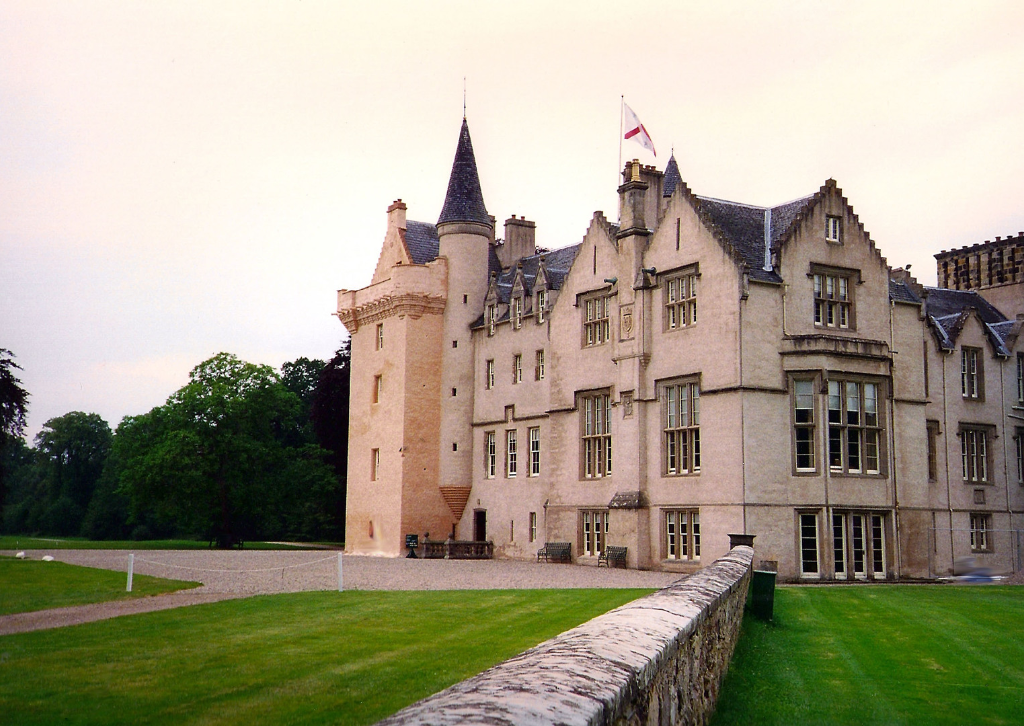
Brodie Castle in Forres is the Brodie family seat, with the family in continuous occupation since the 12th century. The current structure is a 16th-century Z-plan tower house with substantial 18th- and 19th-century extensions in pink-rendered Scottish Baronial. The library has more than 6,000 books, the dining room hangs the Brodie family portrait collection, and the walled garden carries an extensive daffodil collection (over 100 named varieties planted across the spring grounds), the working horticultural legacy of Major Ian Brodie of Brodie (1868–1943), the 24th Brodie of Brodie. The estate has been with the National Trust for Scotland since 1980.
Castle access is by guided tour only. The estate, grounds and adventure playground are open year-round and accessible without a castle ticket, which makes Brodie one of the better wet-day or family options in the region even outside the castle's open season.
Practical: castle open 20 April–31 October on guided-tour basis; daily during the Easter holidays; Wednesday–Sunday April–June; daily July–October; closed Monday–Tuesday in shoulder months. Castle hours 10:30–15:30. Castle closed November–February except for events; estate open year-round. Adult £16, concession £14, child £9; family £42.50; NTS members free; car park £5. From Inverness by car, ~40 minutes east on the A96; train to Forres railway station. Plan your visit.[6]
6. Castle Leod
30 km 30 min Select days Apr–Sep Clan Mackenzie seat Map
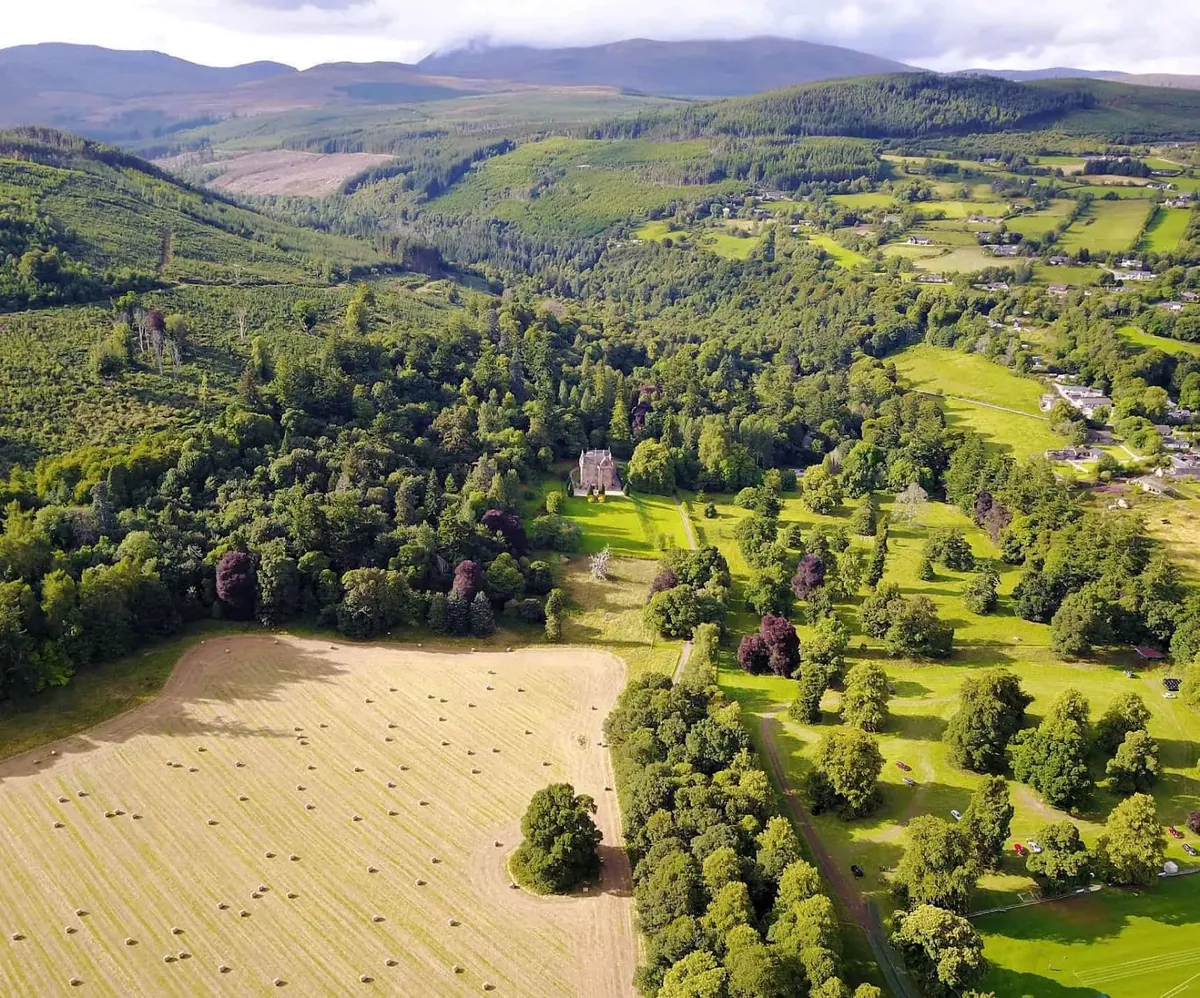
Castle Leod in Strathpeffer is the seat of Clan Mackenzie, built in 1606 by Sir Roderick Mackenzie of Coigeach, ancestor of the Earls of Cromartie. The castle remains a working family residence, currently held by the 5th Earl of Cromartie. Open days are limited to roughly 25 published dates a year, clustered into long weekends through the summer, which gives the visit an unusually private feel for a castle this scale. Diana Gabaldon's Outlander novels use Castle Leod as the visual reference for Castle Leoch, the fictional Mackenzie seat in the books, though the television adaptation actually filmed at Doune Castle further south.
The visit covers the principal family rooms, the great hall, and the parkland setting in a steep glen above Strathpeffer village. Private tours can be arranged by emailing the estate office at least two weeks in advance. First-floor wheelchair access is limited.
Practical: open select dates April–September on advertised days only; 14:00–18:00 (last entry 16:45). 2026 open dates include 23–26 April, 15–17 May, 25–28 June, 16–19 July, 13–16 and 20–23 August, 10–13 September. Adult £14, concession £12, free under 12; cash and card accepted at the gate. From Inverness by car, 30 minutes north-west on the A835; train to Dingwall (5 miles), then taxi. Plan your visit.[7]
7. Eilean Donan
135 km 2h Open Feb–Dec Most-photographed Scottish castle Map
Eilean Donan stands on a small tidal island at the meeting of three sea lochs (Loch Duich, Loch Long and Loch Alsh), connected to the mainland by a footbridge. The medieval castle on the site was destroyed by naval bombardment in 1719 during the Spanish-supported Jacobite landing of that year, then sat as a ruin for nearly 200 years. The structure visible today is a Romantic-era reconstruction by Lt. Col. John MacRae-Gilstrap, built between 1912 and 1932 on the original footings; some of it accurate, some of it deliberately picturesque. The Conchra Charitable Trust has run the property since the MacRae-Gilstrap family handed it over.
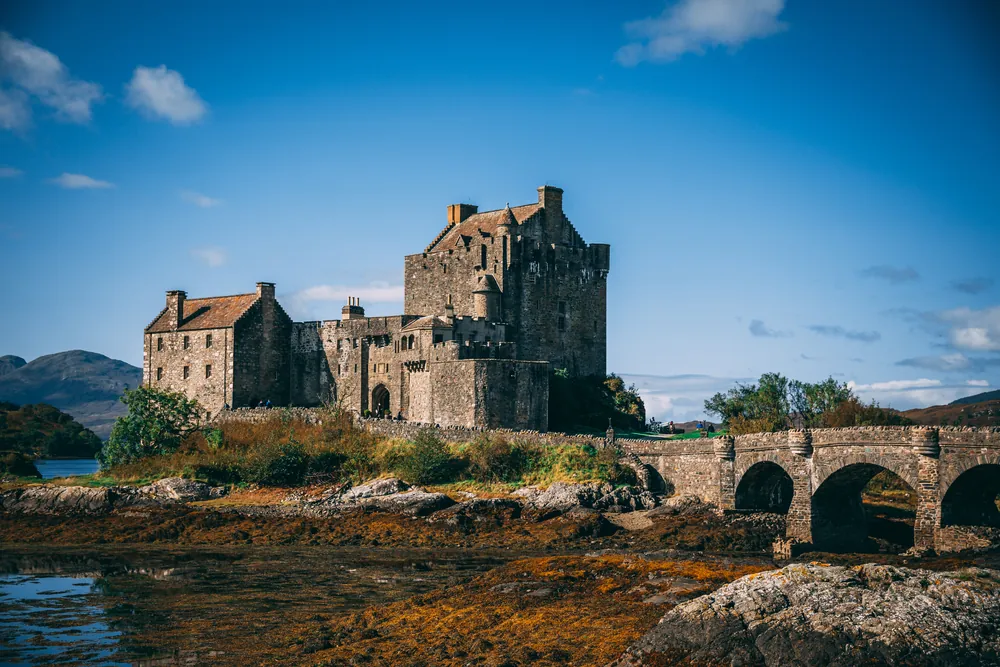
Eilean Donan is widely regarded as the most-photographed Scottish castle internationally, and has appeared in numerous films including Highlander (1986), The World Is Not Enough (1999) and Made of Honor (2008). About 350,000 visitors come through each year. The 2-hour drive west from Inverness via the A82 and A87 through Glen Shiel passes the Five Sisters of Kintail mountain range, and Eilean Donan combines naturally with a Skye crossing five miles further west for a full Highland day-trip.
Practical: open February to early December (closed 23 December–31 January). Hours vary: Feb–Mar and late Oct–Dec 10:00–16:00; Apr and early Oct 10:00–18:00; May and Sep 09:30–18:00; Jun–Aug 09:00–18:00. Adult £13, concession £12 (60+), child £6.50 (5–15); family (2 adults + 3 children) £38; tickets sold on-site only, no online advance booking. From Inverness by car, ~2 hours west via the A82 and A87; Citylink coach 915/916 stops at the castle. Plan your visit.[8]
8. Dunrobin Castle
85 km 1h 15min Apr–Oct only 189-room chateau Map
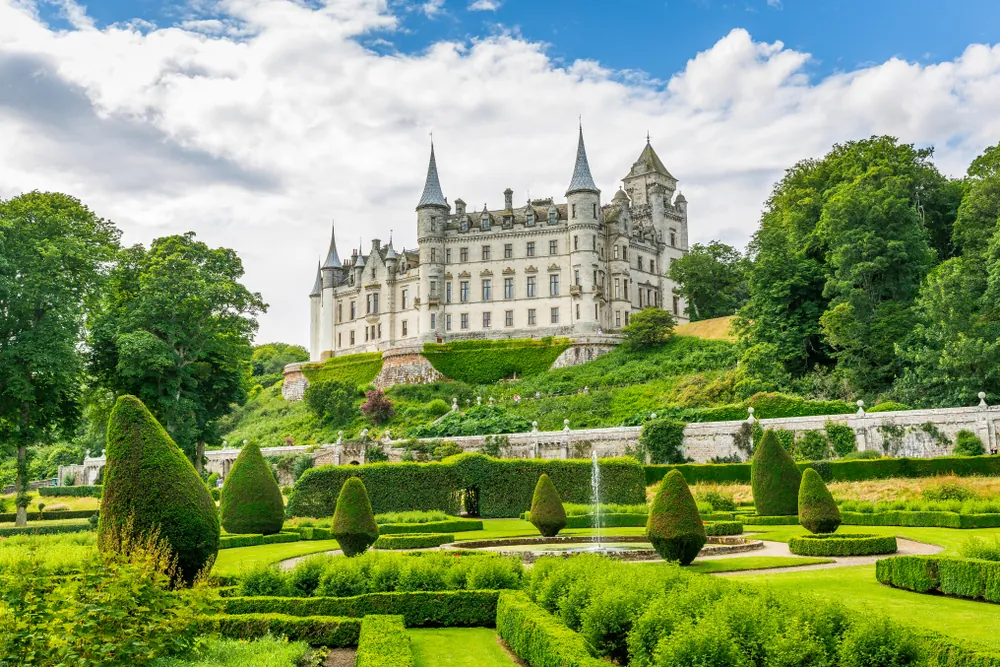
Dunrobin in Sutherland (60 miles north of Inverness via the A9 to Golspie) is the seat of the Sutherland family, Earls of Sutherland from the 13th century and Dukes from 1833. The current 189-room castle was substantially rebuilt in 1845 by Sir Charles Barry (the same architect who designed the Houses of Parliament in London) in the French Renaissance chateau style, with conical-roofed corner towers, formal parterres on the seaward terrace, and the Atlantic horizon as backdrop. The result is the largest house in the northern Highlands and one of the very few Scottish castles whose silhouette reads more like a Loire chateau than a tower house. David Cannadine's Decline and Fall of the British Aristocracy notes that the Duke of Sutherland built a museum in the castle grounds for his big-game collection, an example of late-Victorian aristocratic display.[9]
Dunrobin is one of the few Scottish castles that runs its own falconry display, with shows twice daily in the visitor season. The visit takes in the family rooms, the gardens, the dukes' museum and the falconry, and the scale of the gardens (laid out by Barry in parallel with the architecture) is considerable.
Practical: open 1 April–31 October only; April–September 10:00–17:30 (last entry 16:30); October 10:30–17:00 (last entry 16:00); closed November–March. Adult £16, concession £14 (senior/student), child £10; under 6 free; family (2 adults + 3 children) £47. All tickets include castle, museum and gardens; falconry seasonal. From Inverness by car, ~1h 15min north on the A9 to Golspie; the Far North Line train serves Dunrobin Castle station as a summer request stop, or Golspie year-round. Plan your visit.[10]
9. Ballindalloch Castle
95 km 1h 15min Easter–Sep, Sun–Thu Macpherson-Grant family seat Map
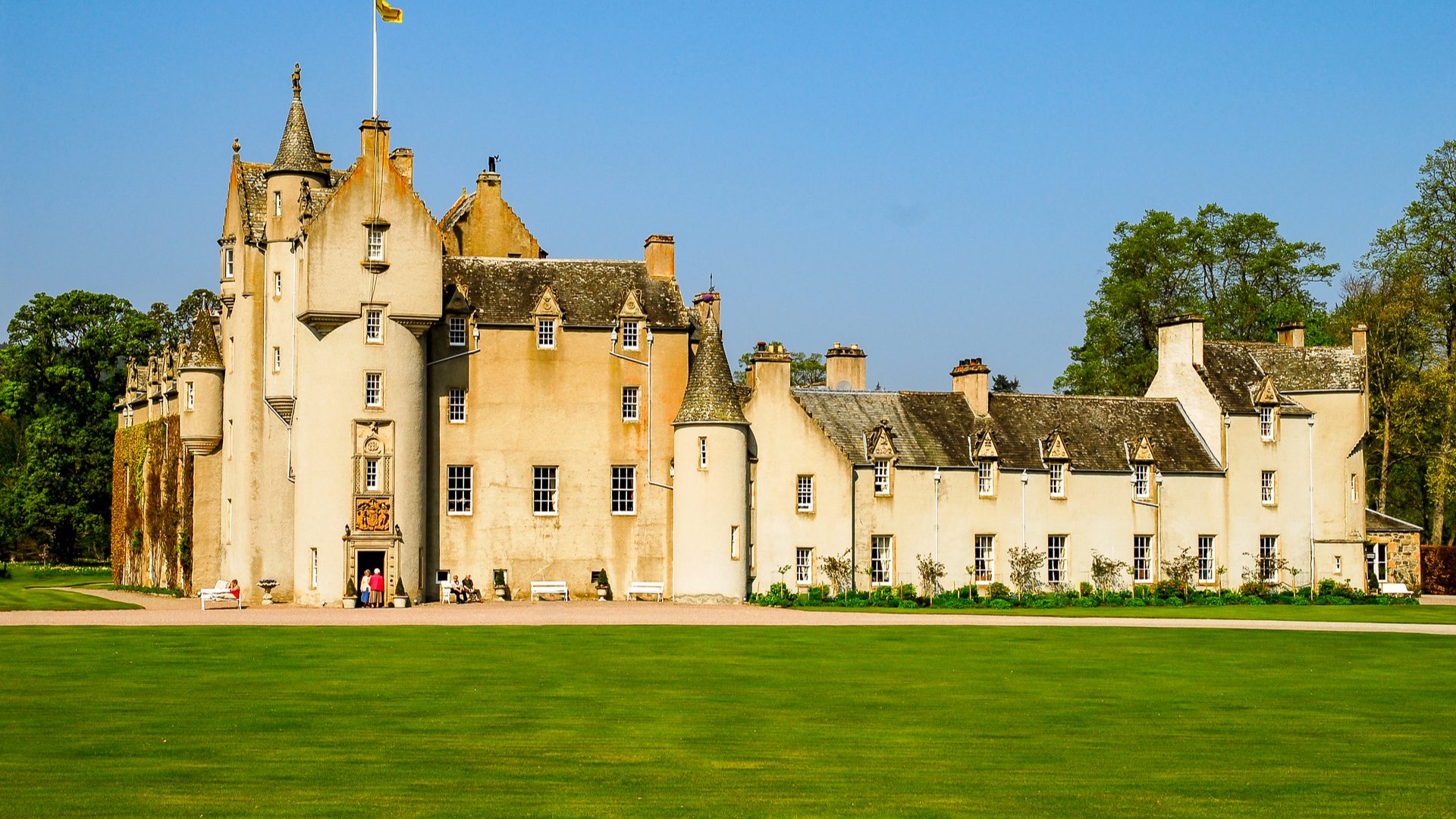
Ballindalloch on Speyside is one of the most distinctive privately-owned Scottish castles. The Macpherson-Grant family has held the property since 1546, an unbroken family ownership running just shy of five hundred years. The original 1546 Z-plan tower house is still legible at the core, with substantial 19th-century Scottish Baronial extensions wrapped around it. The castle sits in the heart of Speyside whisky country and combines naturally with distillery tours along the Spey, including the Ballindalloch family's own boutique single-malt operation in the grounds.
The visit covers the family rooms, the gardens, the rock garden, and (for an extra fee) the Aberdeen Angus pedigree herd that the family has maintained on the estate since the 19th century. Wood and pasture surround the building on three sides, with the Avon flowing along the fourth.
Practical: open Easter (31 March 2026) to 30 September; Sunday–Thursday 10:00–17:00 (last admission 16:00); closed Friday–Saturday and the entire winter season. Castle and grounds adult £17, concession £15 (65+), child £9 (5–16); family (2 adults + 3 children) £40. Grounds-only adult £10. Historic Houses members free. From Inverness by car, ~1h 15min east on the A95 between Grantown-on-Spey and Aberlour; Aviemore is the nearest railway station (~25 miles). Plan your visit.[11]
10. Castle of Mey
210 km 3h May–Sep, Wed–Sun Queen Mother's home Map
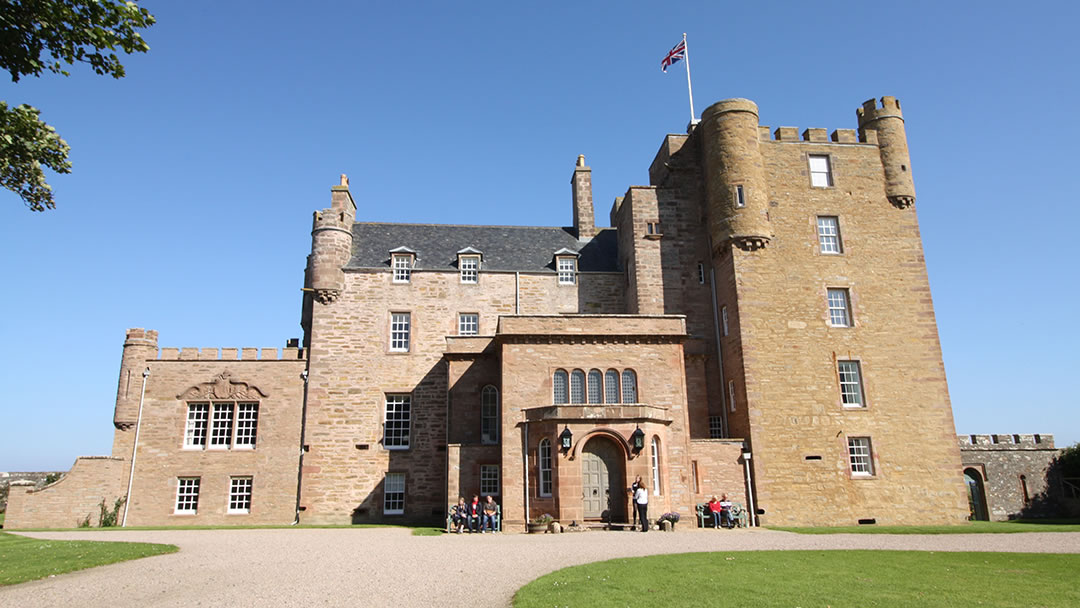
The Castle of Mey on the Caithness coast was the Queen Mother's private home for almost fifty years. She bought the run-down 16th-century Z-plan tower house in 1952 (the year of her husband George VI's death), restored it, laid out the walled gardens, and used it as her summer retreat until her death in 2002. The castle now operates under the Castle of Mey Trust, and the visitor experience is unusually intimate: family photographs in the rooms, the Queen Mother's racing-form annotations on the desk, the 1950s kitchen still set up as she left it, and the walled garden producing fruit, vegetables and cut flowers as it did in her lifetime.
The location, 6 miles west of John o'Groats with the Pentland Firth and the Orkney Islands visible from the seaward bedrooms, is the other reason to come. The royal family stays at the castle for a week or two each summer; during those dates, the property is closed to the public. Combined with Dunrobin further south on the A9, this makes a workable two-day Sutherland and Caithness loop from Inverness.
Practical: open 1 May–30 September 2026; Wednesday–Sunday only (closed Monday–Tuesday); closed 24 July–9 August during the royal stay. Castle 11:00–15:00 (last entry); gardens and grounds 10:30–16:00. Castle and gardens adult £17.60, concession £14, child £9 (under 5 free); family £46. Gardens-only adult £11. From Inverness by car, ~3 hours north on the A9 then A99 and A836; this is the longest day-trip in the set, and most visitors combine it with an overnight in Thurso or Wick. Plan your visit.[12]
At a glance
| Castle | Distance | How to get there | |
|---|---|---|---|
| Urquhart CastleLoch Ness viewpoint ruin | 26 km | 30 min |
| Inverness CastleReborn Highland storyteller | In city | 5 min walk |
| Cawdor Castle5-star castle of Macbeth | 20 km | 25 min |
| Fort GeorgeGarrisoned 18th-century fort | 20 km | 25 min |
| Brodie CastlePink Tudor-style estate | 37 km | 40 min |
| Castle LeodClan Mackenzie seat | 30 km | 30 min |
| Eilean DonanMost-photographed Scottish castle | 135 km | — | |
| Dunrobin Castle189-room chateau | 85 km | — |
| Ballindalloch CastleMacpherson-Grant family seat | 95 km | — |
| Castle of MeyQueen Mother's home | 210 km | — |
How many castles near Inverness?
The Highlands hold a substantial share of Scotland's roughly 3,000 castles, and Inverness is the natural base for visits across the central, western and northern Highland clusters. The Historic Environment Scotland 2024–25 annual report records continued visitor recovery at the principal Highland properties: Urquhart, Fort George, Ruthven Barracks (near Kingussie) and Castle Maol (Skye), within the wider portfolio's £53.1 million charitable activities income.[1] Beyond the ten featured here, the longer Inverness itinerary picks up Castle Stuart (16th-century tower house, family seat of the Earls of Moray, ~10 km east), Beaufort Castle (Lovat family seat, private), Inverlochy Castle near Fort William (now a hotel) and the substantial cluster of Caithness castles further north (Sinclair Girnigoe and the ruined Castle of Old Wick).
Public access splits across operators. Historic Environment Scotland holds Urquhart and Fort George. The National Trust for Scotland holds Brodie. The Conchra Trust, Castle of Mey Trust, Castle Leod, Cawdor, Dunrobin, Ballindalloch and the new Inverness Castle Experience all run independently or under family management. The longer Highland castle itineraries from Inverness fan out east via Speyside (Cawdor, Brodie, Ballindalloch), west via Glen Shiel (Eilean Donan and the Skye crossing), and north via the A9 (Dunrobin, Mey).
Famous, medieval, Renaissance and largest
Famous. Eilean Donan is the most-photographed Scottish castle internationally, on the back of Highlander, the Bond films and decades of postcards. Urquhart leads on Highland visitor numbers. Cawdor's Macbeth association keeps it in the cultural-tourism map.
Medieval. Cawdor's 14th-century keep is the oldest substantial fabric in the cluster, with the 1398 Exchequer Rolls reference setting an early documentary anchor.[2] Urquhart's surviving 13th-century footprint is the next oldest, even though most of what stands is the post-medieval reworking. Castle Maol (Skye) and the ruined Castle of Old Wick are the harder-to-reach medieval survivors.
Renaissance. Castle Leod (1606), Brodie (16th c. core) and Ballindalloch (1546) carry the Highland Renaissance tower-house tradition that MacGibbon and Ross documented as continuous with the wider Scottish form.[2] Cawdor's late-medieval structure was extended in the same period.
Largest. Dunrobin's 189 rooms make it the largest house in the northern Highlands and (by interior scale) the largest castle in the cluster. Fort George is the largest by ground area: the artillery fortress occupies a substantial peninsula of the Moray Firth and remains the largest such 18th-century fortification in Britain.
If you're looking to buy
The Highland castle market is part of the deeper Scottish picture, which is the standout European market for verified appreciation in Castle Collector's Castle Price Index (March 2026). The Dalhousie Castle benchmark (Midlothian, £2.5m to £5.6m across 11 years against a working hotel operation, Registers of Scotland verified) sets the upper-end appreciation case.[13] Highland-specific listings tend to cluster in two tiers: smaller restored tower houses and shooting-lodge castles in the £700k–£2m range, and the higher-end sporting estates with castle anchors at £5m and up. The Cannadine record on the post-WWI Highland estate-sale wave (Cameron of Lochiel sold 110,000 acres in Inverness in 1920–22; Sir Samuel Scott sold 60,000 acres in the same period) is part of the structural reason the market is unusually deep in older transferred stock.[9] Foreign buyers face no restrictions on ownership; Scottish Land and Buildings Transaction Tax with the Additional Dwelling Supplement applies to second-home purchases.
If you're seriously looking, the castles for sale in Scotland page tracks current listings against the CPI benchmark. For the operational side (surveys, listed-building consents, restoration budgeting) see our guide to buying a castle.
Sources
1. Historic Environment Scotland, Annual Report and Accounts 2024–25. Highland properties referenced at p. 46.
2. MacGibbon, D. and Ross, T. The Castellated and Domestic Architecture of Scotland from the Twelfth to the Eighteenth Century, Volume II. David Douglas, Edinburgh, 1887. Cawdor reference p. 332; Highland tower-house cluster discussed throughout.
3. Historic Environment Scotland property pages: Urquhart Castle,
4. Inverness Castle Experience, official site.
5. Cawdor Castle, official site.
6. Brodie Castle, National Trust for Scotland.
7. Castle Leod, official site.
8. Eilean Donan Castle, Conchra Charitable Trust.
9. Cannadine, D. The Decline and Fall of the British Aristocracy. Yale University Press, 1990 (Vintage Books edition, 1999), pp. 109, 375.
10. Dunrobin Castle, official site.
11. Ballindalloch Castle, official site.
12. Castle of Mey, official site.
13. Castle Collector, Castle Price Index, March 2026 edition.