
Castles for Sale: How Many Are on the Market Right Now?
200–400 castle transactions clear in Europe each year against 46,000 protected stock, a 0.4–0.9% turnover. France holds 67% of online listings.
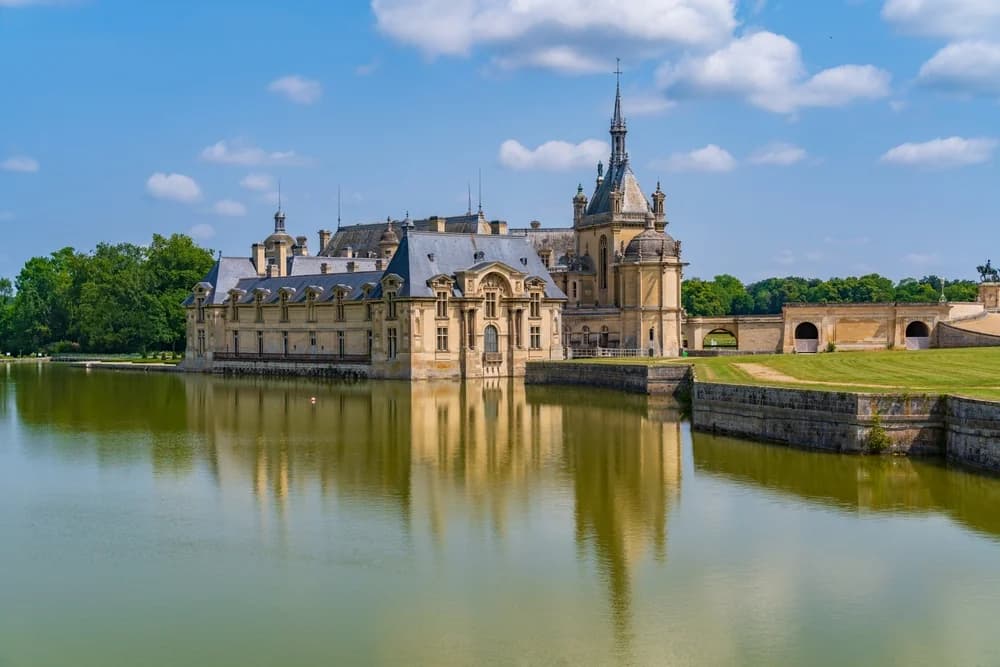
A snapshot of the live European castle market: 1,118 priced listings across 14 countries, 67% concentrated in France, and roughly 200–400 transactions clearing per year against a protected stock of 46,000 properties.
For a continent, the headline number is small. Open JamesEdition, filter Europe by "castle", and roughly a thousand priced properties show up at any moment. We cross-check that figure across 18 broker platforms in our Castle Price Index, and it's the closest thing the market has to a real-time read.[1] What sits underneath the number: where the listings cluster, where asking prices hide the truth, and how rarely castles actually change hands.
The country snapshot
| Country | Indexed listings | Median asking | Median m² | Median €/m² |
|---|---|---|---|---|
| France | 945 | €1,680,000 | 700 | €2,285 |
| Italy | 100 | €2,950,000 | 1,500 | €1,750 |
| Spain | 61 | €2,300,000 | 1,052 | €2,368 |
| Germany | 42 | €1,500,000 | 446 | €1,971 |
| Belgium | 29 | €1,795,000 | 880 | €2,200 |
| Poland | 12 | €1,104,000 | 2,070 | €632 |
| Ireland | 12 | €2,000,000 | 647 | €3,358 |
| United Kingdom | 8 | €1,038,000 | 452 | €2,614 |
| Switzerland | 6 | €16,008,000 | 900 | €19,551 |
| All Markets | 1,118 | €1,700,000 | 750 | €2,250 |
Source: Castle Price Index, March 2026.[1]
France carries 67% of what's listed
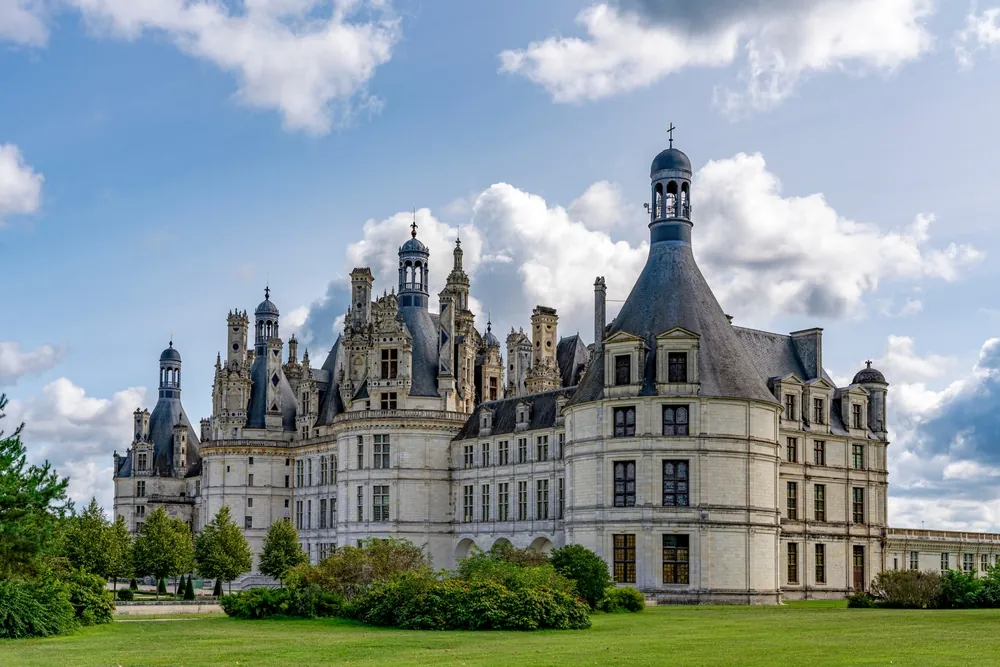
France's 945 listings make up 67% of the live for-sale market. Two reasons explain it. The country has the most castles to begin with (around 45,000 castles and châteaux on the broad definition), and French culture is comfortable with private château ownership and resale. Italy, Spain and Germany keep more of their equivalent stock in family or state hands.
Italy comes second with 100 listings, but the visible average undersells the market. 24 to 35% of Italian listings are "price on request", against under 5% in France. Cross-referenced against Italy's official Ville e Villini benchmarks, the true Italian castle average is closer to €2,500 to €3,000 per square metre than the visible €1,750.
Eastern Europe clusters at the bottom. Poland's 12 listings at €632 per square metre set the European floor; Romania's Castle of Zlatna at €191 is the cheapest castle in the data.
The market that actually changes hands is much smaller
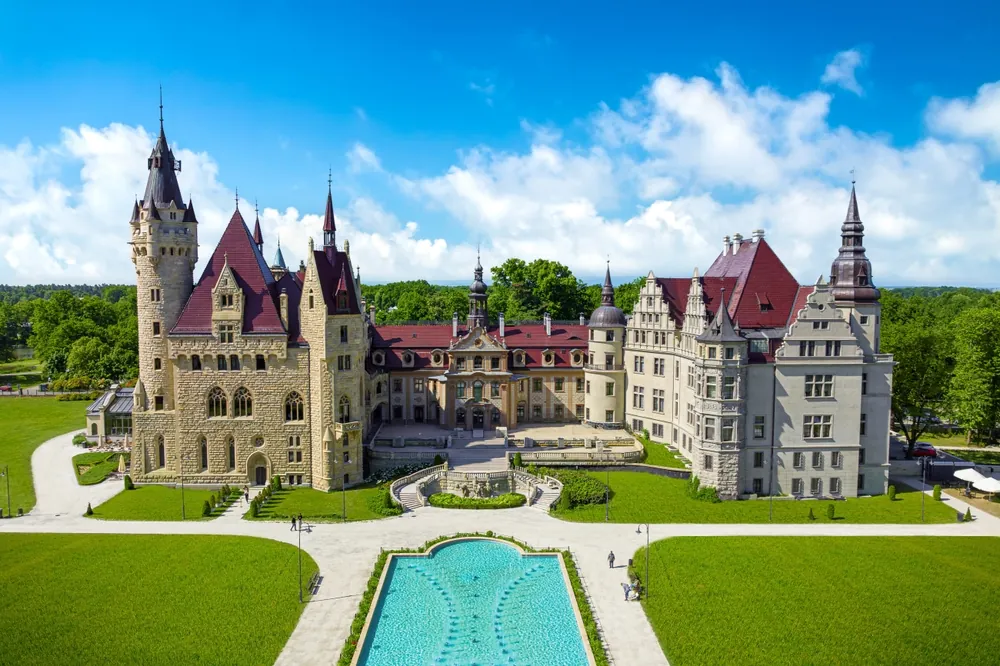
Against around 46,000 protected castle-type properties across the 14 countries we track, just 200 to 400 castles sell each year, a turnover rate of 0.4 to 0.9%.[1] Normal homes in most European markets turn over at 2 to 4% a year, so castles change hands three to seven times more slowly than ordinary property in the same country.
A typical seller should expect to wait 2 to 10 years to find a buyer. Selling within two years usually means taking a 20 to 40% discount on the asking price, which usually wipes out any value gains.
This is built into the market, not a temporary phase. The pool of buyers ready to take on a substantial castle at any given price is in the hundreds globally, not thousands. Italy's "price on request" share and the lack of disclosed prices at the top end also mean a lot of the real market clears out of public view.
Size affects price more than country does
| Size of castle | Number tracked | Average per m² |
|---|---|---|
| 100 to 500 m² | 281 | €3,000 |
| 500 to 1,000 m² | 469 | €2,253 |
| 1,000 to 2,000 m² | 247 | €1,833 |
| 2,000 to 5,000 m² | 93 | €1,273 |
| 5,000 m² and above | 28 | €515 |
Across the data, size predicts per-square-metre price more reliably than which country the castle is in. A 6,000 m² castle in rural France sells at roughly one-fifth the per-square-metre price of a 300 m² tower in the same market. The reason is the running cost. Staff, heating, security, insurance and maintenance all scale with floor area, and the pool of buyers for 6,000 m² is much smaller than for a 300 m² castle one couple can manage.
The 2024 to 2025 shift toward the Mediterranean

Knight Frank's annual review of 100 prime city markets in 2024 found 80 of them held steady or rose in 2023. The strongest performers in Europe were southern resort markets: Algarve +12.3%, Athens +12%, Ibiza +12%, Marbella +7.2%, Lake Como +6.2%. The weakest were northern capitals: London −2.1%, Frankfurt −3.9%, Cannes −7%, Oxford −8.4%.[2]
Savills' 2026 Southern Europe report tracks the wider shift. Southern Europe (Spain, Italy, Portugal, Greece) recovered around 70% from its 2023 lows by 2025, the strongest comeback in Europe, against just 30% in the big core markets (UK, Germany, France).[3] Growth in 2025 alone: Greece +58%, Spain +26%, Italy +17%, Portugal +16%.
Three tiers of stock changing hands
- Distressed (€100,000 to €500,000 to buy). Eastern European stock (Romania, Hungary, Czech Republic), German auction stock (Schloss Weigsdorf sold at €170,000 in 2022), Welsh ruined island forts (around £150,000), and the deepest-discount large French rural châteaux. Heavy restoration is a given; the total cost ends up €1 to €5 million depending on size.
- Mid-market, restored (€500,000 to €3 million). Most of the listings we track sit here: 800 to 1,500 m² of building with 5 to 50 hectares of grounds, spread across France (most volume), Italy (most visible stock), Belgium, Germany, Ireland and the smaller markets. The ready-to-live-in properties cluster at the top of the range.
- Top end (€3 million and up). Verified examples: Schloss Salem (€25.8 million, the largest postwar castle deal in Germany), Castello del Catajo (€3 million for 20,000 m² in 2016), Castello San Giorgio di Portofino at €55,350 per square metre.[1] The very top end (€20 million and up) rarely comes to the open market. Most family deals at that level clear quietly through specialist private banks and brokers.
Castle Collector maintains the live for-sale aggregation across all three tiers.[4]
Common questions
How many castles are for sale in Europe right now?
Roughly 1,118 priced listings on any given morning across 18 broker platforms in 14 countries. The figure moves daily but stays around 1,000 to 1,200.
Why is France so dominant?
It has the most castles to begin with (around 45,000 castles and châteaux on the broad definition), plus a culture that's comfortable with private château ownership and resale.
How many castles actually sell each year?
Around 200 to 400 across the 14 countries we track, against around 46,000 protected stock. That's 0.4 to 0.9% turnover, three to seven times slower than the normal property market.
Why does the Italian average look low?
24 to 35% of Italian listings are "price on request". The visible €1,750 per square metre undersells the true market by 30 to 40%; the official benchmarks put it closer to €2,500 to €3,000.
Why is Switzerland so much more expensive at €19,551 per square metre?
Foreign-buyer restrictions and a shortage of alpine land. Six listings against France's 945 tells you the supply story.
What's the cheapest verified European castle on record per square metre?
The Castle of Zlatna in Romania at €191. Polish stock more broadly sits at an average of €632.
How long does a castle take to sell?
Two to ten years on average. Selling in under two years usually means taking a 20 to 40% discount on the asking price.
Sources
1. Castle Collector, Castle Price Index, March 2026. CPI methodology aggregates priced listings from 18 broker platforms (JamesEdition, idealista, Sotheby's International Realty, Christie's International Real Estate, Le Figaro Properties, Belles Demeures, the major regional French/Italian/Spanish/German broker sites, and a handful of US comparators) across 14 countries. Listings are deduplicated and standardised to €/m² using stated floor area; price-on-request listings are excluded from medians.
2. Knight Frank, The Wealth Report 2024 / PIRI 100 Index.
3. Savills Research, Spotlight: Southern Europe Investment 2026.
4. Castle Collector, Castles for Sale.