FOR CASTLE COLLECTORS
Castle Collector InsightsExplore cheap castles on sale in Netherlands
Browse affordable castles for sale in Netherlands. Find budget-friendly historic properties, castle restoration projects, and cheap castles in Netherlands.
Average castle features in Netherlands
Showing avg. castle price in Netherlands
Key metrics for Netherlands
A Dutch castle looks unlike anything else in Europe. The flat, wet lowlands gave no high ground to build on, so defence came from water instead: the waterburcht, a moated brick castle set on an island in its own lake, with the moat doing the work that walls and hilltops do elsewhere. Muiderslot near Amsterdam, built around 1285, is the classic Dutch castle.
The Netherlands has around 60,000 protected monuments, but only 200 to 300 of them are castles, fortified manors or country estates, and most of the famous ones, Het Loo, De Haar, Muiderslot, are museums or foundation-run and are not for sale. The handful that do sell are usually in one of four provinces: Utrecht, Gelderland, Limburg and North-Brabant.
Foreign buyers are welcome. The catch here isn't access, it's tax. Dutch transfer tax is 2% on a main home but 10.4% on a second home or any non-primary purchase, which catches most overseas castle buyers. That's the highest non-primary rate in Western Europe, and it's the number to plan the whole deal around. For the wider process, see how to buy a castle.
There's no reliable price for a Dutch castle, and it's worth being straight about why: so few ever come up for sale, and so many of the famous ones are locked up as museums, that there simply isn't a dependable per-square-metre figure the way there is in France or Belgium.
So the numbers to plan around are the ones you can actually predict. The biggest is the transfer tax: 10.4% on a non-primary purchase, the highest in Western Europe, which on a seven-figure castle is a six-figure line on its own. Add notary fees of 1 to 2%, and the tax stack alone shapes what you can offer.
After that comes the restoration, which for a Dutch castle sits in the €1,500 to €3,500 per square metre range, toward the top end once heritage-grade brickwork and moat specialists are involved. A moated castle carries a water-management cost the rest of Europe mostly doesn't, which the cost of owning a castle has to account for from the start.
Dutch castles cluster in four provinces, and which one you choose sets the price more than it sets the style.
Utrecht is the most expensive, lifted by the commuter premium of the Randstad conurbation around Amsterdam. Kasteel de Haar is its landmark, the largest castle in the country, an ambitious neo-Gothic rebuild by Pierre Cuypers, the architect of the Rijksmuseum, with Slot Zuylen nearby.
Gelderland is the densest castle province by volume. Paleis Het Loo at Apeldoorn is the only royal palace in the country open to the public, and Slot Loevestein is the great story-castle, the prison the jurist Hugo Grotius escaped in 1621 hidden in a book chest. Most of this is heritage rather than for-sale stock, but it's where the density is.
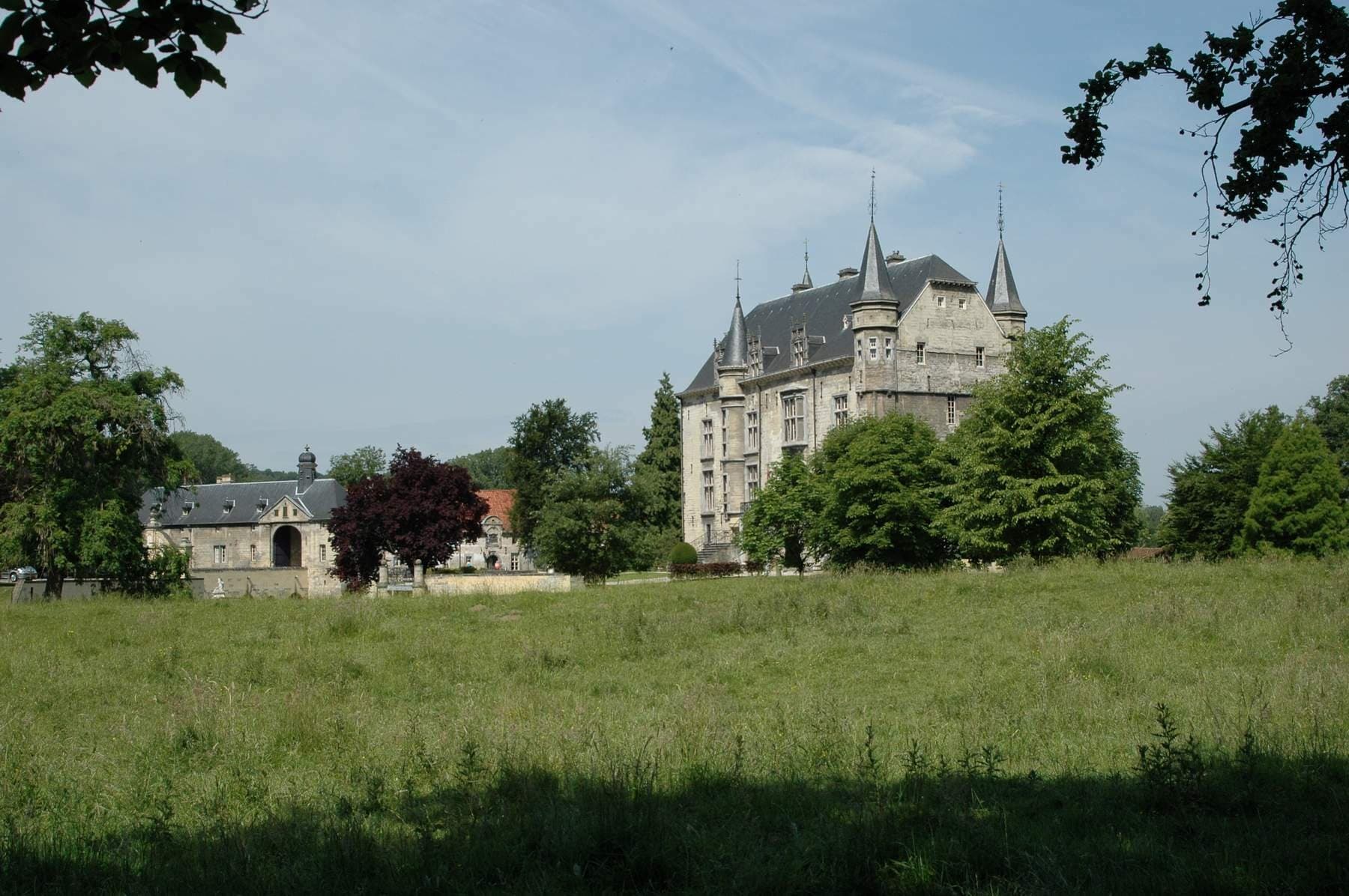
Limburg, in the south, holds a run of medieval castles along the Maas valley, culturally shared with Belgian Limburg and the German Rhineland next door. Kasteel Hoensbroek is the largest. Prices sit below Utrecht and Gelderland, and the cross-border setting is part of what you're buying, so it's worth looking at neighbouring Belgian and German listings alongside it. North-Holland rounds things out around Muiderslot, though most of its stock is post-medieval country estate rather than moated castle.
A Dutch castle is a kasteel, and at its most distinctive a waterburcht, the moated water castle. With no hills to build on, Dutch builders let the water do the defending: the castle sits on an island in a moat, which is why so many of them look like they're floating. Muiderslot, from around 1285, is the model.
The other Dutch tradition is the buitenplaats, the country estate built later for comfortable living rather than defence, with formal gardens rather than a moat and drawbridge. Between the two you get the range of what "Dutch castle" means: the medieval moated fortress at one end, the elegant country seat at the other.
Two things shape a Dutch castle restoration, and neither is obvious from the outside. The first is money. In 2019 the Netherlands scrapped the old tax deduction for monument owners and replaced it with a direct subsidy, the Sim, run by the national heritage agency. It's awarded property by property against an approved plan, and you have to apply before work starts, so any cost guide written before 2019 is out of date.
The second is the moat. A waterburcht needs its water table managed and its brickwork protected against constant damp; Castle Oostvoorne near Rotterdam was abandoned when humidity ruined its walls beyond saving. A moated castle without its moat is a different building, so the water is part of what you're preserving, not an optional extra. A cheap way to stay ahead of the damage is to subscribe to Monumentenwacht, the Dutch preventive-inspection service, which catches small problems before they become expensive ones.
With restoration in the €1,500 to €3,500 per square metre range and the water work pushing the upper end, the maths rewards buying something sound. Browse abandoned castles for sale across all markets, or read how to restore a castle for the full cost-and-grant framework.
Stay informed with curated insights on market trends, tax and legal developments, and new castle investment opportunities.
By subscribing you agree to receive emails from Castle Collector. We’ll send a confirmation email first (double opt-in) and you can unsubscribe anytime. Privacy Policy