
Castles near Dublin: 10 within day-trip range, from Dublin Castle to the Rock of Cashel
Dublin Castle, Malahide held by the Talbots for 800 years, Trim's Anglo-Norman ruin and Slane where U2 played in 1984: 10 castles within reach of the capital.
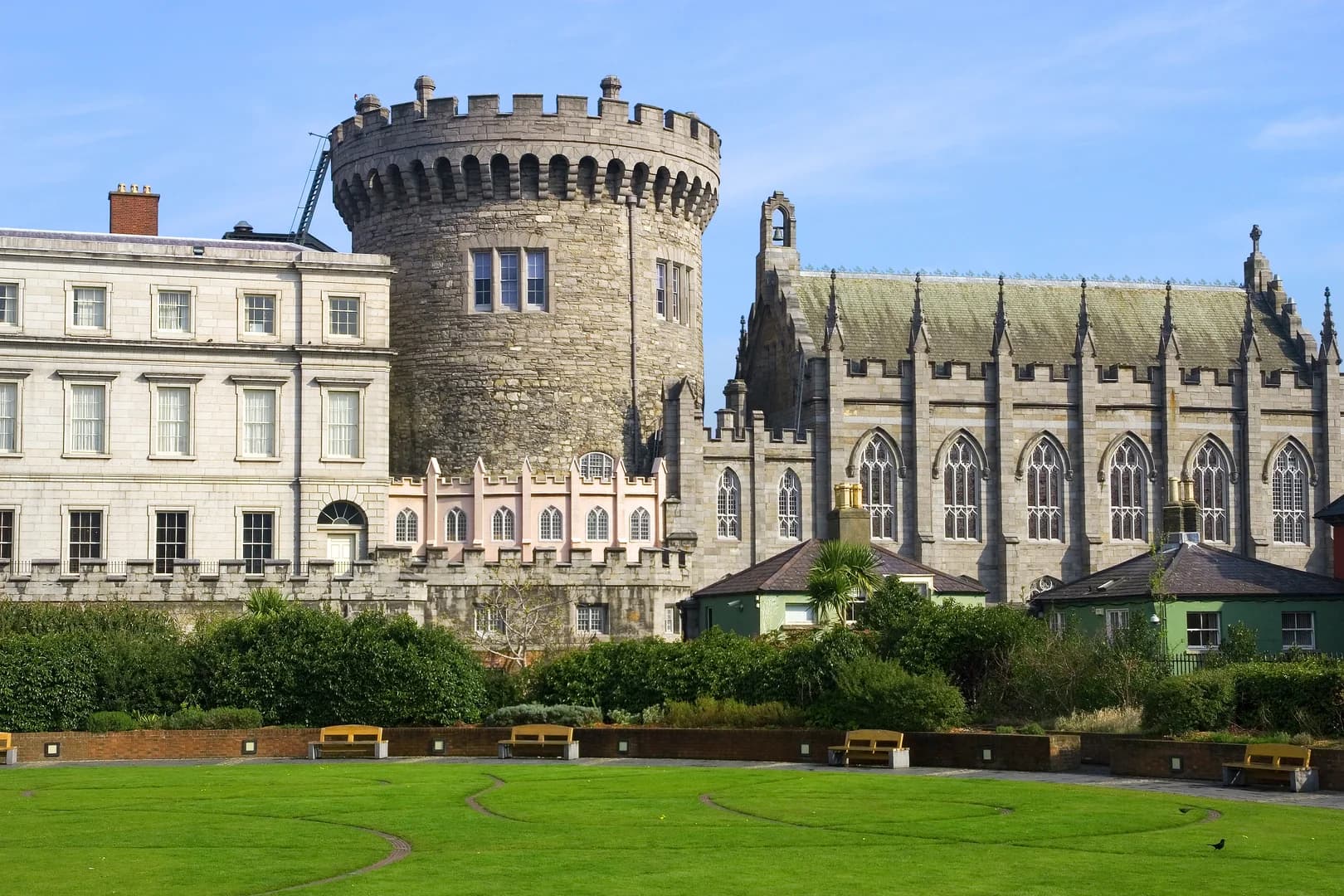
Two of Europe's longest single-family castle holdings sit on the DART line: Howth (1177 to 2019) and Malahide (1185 to 1973). Ten castles within day-trip range, from the seat of British rule on Dame Street to the seat of the Munster kings 110 minutes south.
Dublin is an unusually good base for castle-going. The Anglo-Norman lords who arrived with Strongbow in 1170 left a dense ring of stone fortifications across Leinster, of which the medieval archaeologist T. E. McNeill identifies Trim Castle in Meath as the largest in Ireland.[1] The city itself holds the seat of British administration, run as a state heritage site since the 1922 handover; the Boyne and Wicklow valleys hold the Anglo-Norman tower houses; the M9 corridor drops south to Kilkenny, the Rock of Cashel and the Munster heartland.
What gives the cluster its character is continuity of ownership. Two of the longest single-family castle holdings in European history sit on the DART line. Richard Talbot received the Malahide lands from Henry II in 1185, and the Talbot family held the castle until 1973: 788 years across 14 generations.[2] Howth Castle was held by the same family from 1177 to 2019, 842 years before its sale to Tetrarch Capital. Add Slane in Meath (where U2 recorded The Unforgettable Fire in 1984), Kilkenny (held by the Butler family for nearly 600 years before they sold it for £50 in 1967), and the Rock of Cashel above the Tipperary plain, and the day-trip catchment from Dublin is one of the most layered in Europe.
One important note for 2026: Dublin Castle is closed to the public from 5 May to 31 December 2026 for Ireland's EU Council Presidency.[3] Plan accordingly. Each entry below covers what to see, when to go, what it costs, and how to get there.
1. Dublin Castle
City centre Closed 5 May to 31 Dec 2026 Seat of British rule in Ireland Map
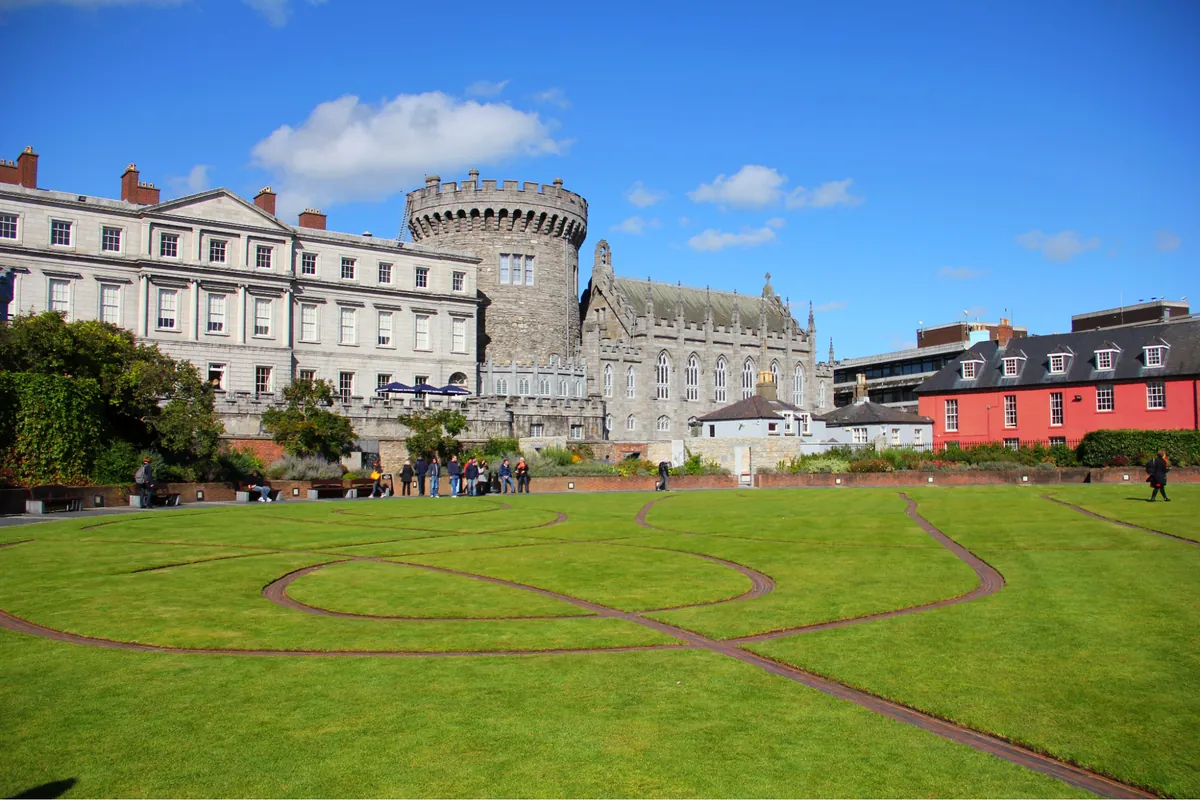
King John ordered the construction of a stone castle at Dublin in 1204, on the site of an earlier motte-and-bailey he had taken from Strongbow.[1] The castle was the seat of British administration in Ireland for the next seven centuries, until the formal handover to the Provisional Government on 16 January 1922. A 1684 fire destroyed much of the medieval fabric; the building was rebuilt as a Georgian palace, with the Chapel Royal added in 1814. What survives from the earlier era is selective: the 13th-century Record Tower, the medieval undercroft beneath the Lower Yard, and fragments of the Powder Tower.
The standard visit runs through the State Apartments (the rooms where the viceroy actually governed), the Chapel Royal and the medieval undercroft. The castle still functions as a working government building: Irish presidential inaugurations are held here, and the building hosts EU Council events when Ireland holds the rotating chair, which is the reason for the long 2026 closure.
Practical: closed to the public from 5 May to 31 December 2026 for the EU Presidency.[3] Pre-closure (and from 2027), open daily 09:45 to 17:45 with last admission 17:15. Guided tour from €12 adult; self-guided from €8. Concessions available; family ticket €30. Dame Street, Dublin 2; nearest stations Tara Street (DART) and Westmoreland (Luas Green Line). Plan your visit.[3]
2. Ashtown Castle
City, Phoenix Park (~5 km, 20 min by bus) Free tours Wed to Sun Hidden tower in Phoenix Park Map
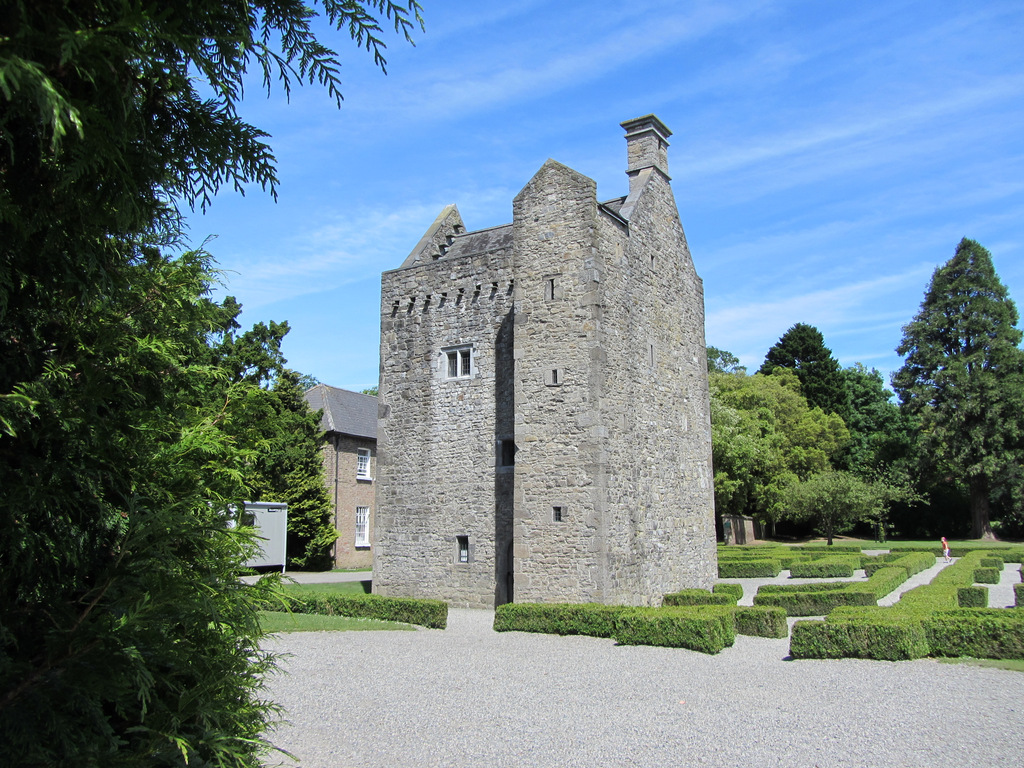
Ashtown Castle is a small Anglo-Norman tower house tucked inside the Phoenix Park visitor centre, the largest enclosed urban park in Europe. The tower had been encased inside a Georgian mansion (the Papal Nunciature) for more than a century, and was only revealed in 1978 when demolition work on the mansion exposed the medieval core. Some features may date as early as the 15th century. It is now a textbook case of medieval Irish heritage subsumed by post-medieval rebuilding then re-emerging during 20th-century reconstruction.
The tower is accessible only by free guided tour, run Wednesday to Sunday at 10:30, 12:00, 14:00 and 15:30 from the visitor centre.[4] The wider Phoenix Park, with the Wellington Monument, the President's residence (Áras an Uachtaráin) and the herd of fallow deer, is worth pairing with the tour.
Practical: free admission and free tower tours, Wednesday to Sunday. Visitor centre 09:30 to 17:30 mid-March to October; reduced winter hours.[4] Bus 37 from city centre, or a short walk from Ashtown rail station (Maynooth line). Plan your visit.[4]
3. Drimnagh Castle
City, Walkinstown (~6 km, 25 min by bus) Weekdays only Last moated castle in Dublin Map
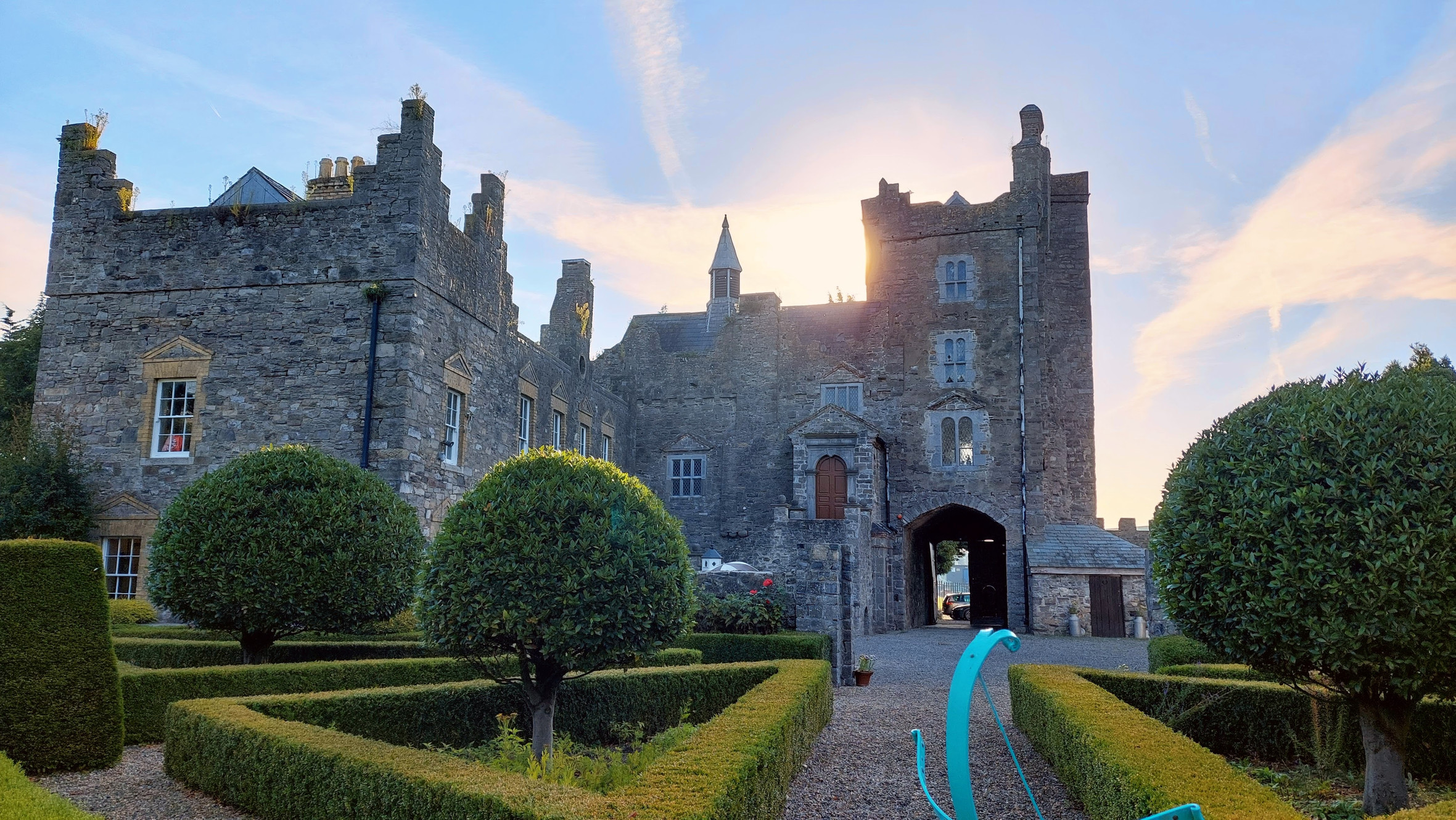
Drimnagh sits about three miles from Dublin between Crumlin and Clondalkin. The 1904 Adams survey of Irish castles records that the lands of Drimnagh were granted by King John to Hugh de Bernivall in 1215, who built the castle early in the same reign; the lands were confirmed to his brother in 1221, and remained in the descendants' hands for 400 years.[5] The 13th-century tower house remains substantially intact, with a Great Hall under an oak roof rebuilt in medieval techniques and the only working water-filled moat on a castle in Dublin. The site has been used as a filming location for The Tudors (Showtime, 2007 to 2010).
The castle is run by a small charitable trust attached to the adjoining Drimnagh Castle Schools. Visits are weekdays only and best pre-booked.
Practical: Monday to Thursday 10:00 to 16:00, Friday 10:00 to 13:00; closed weekends and public holidays. From €5 adult (cash only, Euro); guided tours by appointment. Long Mile Road, Dublin 12; Dublin Bus 13, 40 or 151 from the city centre. Plan your visit.[6]
4. Malahide Castle
~15 km, 30 min on the DART Daily, year-round 800-year Talbot stronghold Map
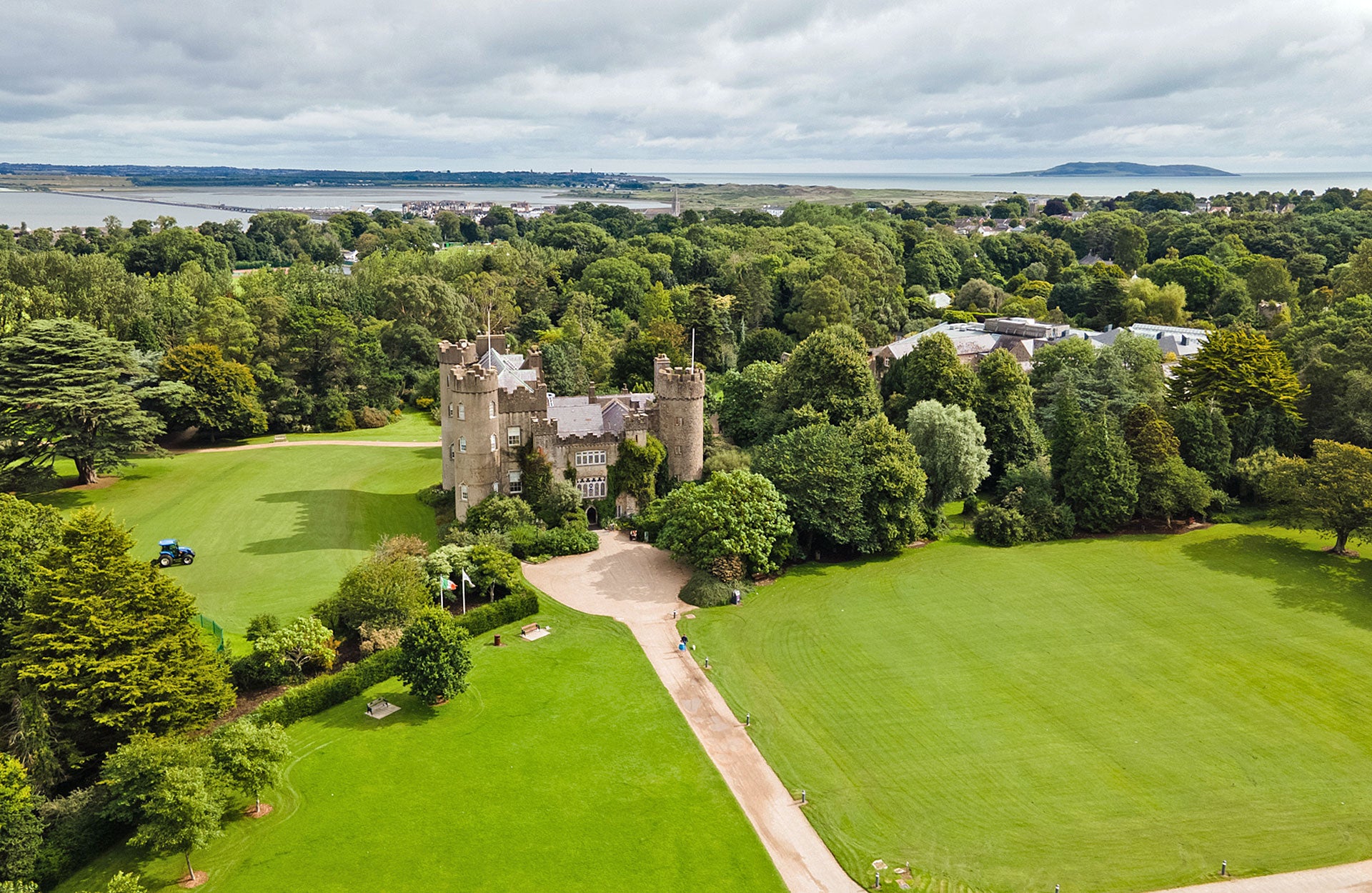
The Adams 1904 survey places Malahide "in the Barony of Coolock, about seven miles north-north-east of the City of Dublin", with the Talbot seat described as the ancient hall, flagged and vaulted, and the panels of the Oak Room "ebony black, richly carved in relief with scriptural subjects".[5] Richard Talbot received the lands from Henry II in 1185, and the family held the castle until the death of the 7th Lord Talbot of Malahide in 1973: 14 generations across 788 years, among the longest continuous family-castle ownerships ever documented in Europe.[2]
Fingal County Council operates Malahide today. The visit runs through the medieval great hall, the Oak Room, the Long Library and the Talbot family bedrooms, with curators tracing how the architectural styles shifted across the centuries. The grounds include a substantial botanic garden and the Malahide Castle butterfly house. Summer concerts on the lawn are a fixture: Nick Cave and the Bad Seeds played in June 2026.
Practical: open daily 09:30 to 17:30, year-round. Castle tour and gardens from €16 adult; family and senior options via online booking; combined castle, gardens and butterfly tickets available.[2] Take the DART to Malahide station (~30 min from Connolly), then a 10 min walk. Plan your visit.[2]
5. Howth Castle Estate
~14 km, 30 min on the DART Weekend tours, May to Sep 800 years of Howth lore Map
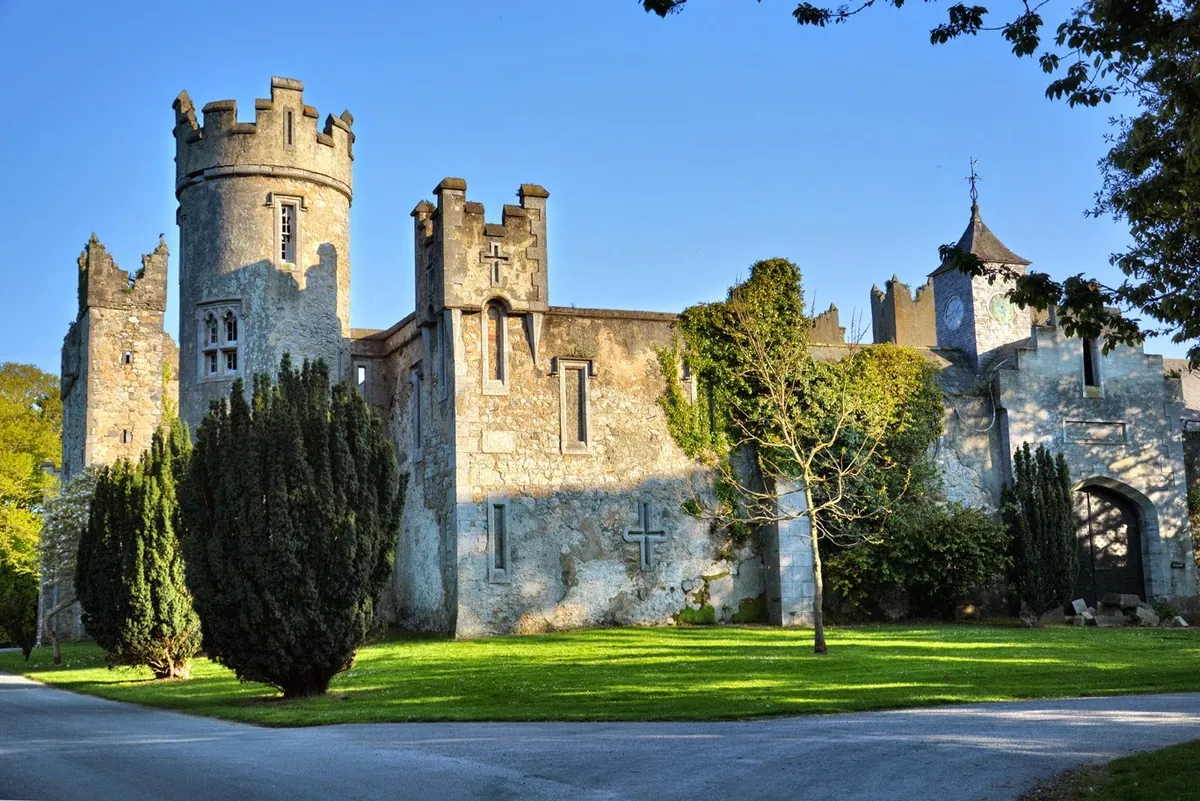
Howth was held by the Gaisford-St. Lawrence family from 1177 to 2019, 842 years of single-family ownership and one of the longest documented in Europe. The castle was sold in 2019 to Tetrarch Capital, which has redeveloped much of the estate. The grounds remain open: 472 acres of woodland walks, the rhododendron gardens (notable for their late-spring flower trusses) and an 18-hole golf course on the headland above Howth Harbour.
Public guided tours of the castle interior have resumed on weekends from May 2026 onwards, run as ~60-minute tours by the estate; private tours are available year-round on request. Note that the castle remains a working hospitality and events venue, so interior access is limited and slot-based.
Practical: grounds open dawn to dusk year-round, free. Public guided tours weekends May to September, €15 per person; private tours from €150 (up to 6 guests).[7] DART to Howth station (~30 min from Connolly), then 10 min walk. Plan your visit.[7]
6. Trim Castle
~50 km, 45 min by car (M3/N3) Daily, year-round Largest Anglo-Norman castle in Ireland Map
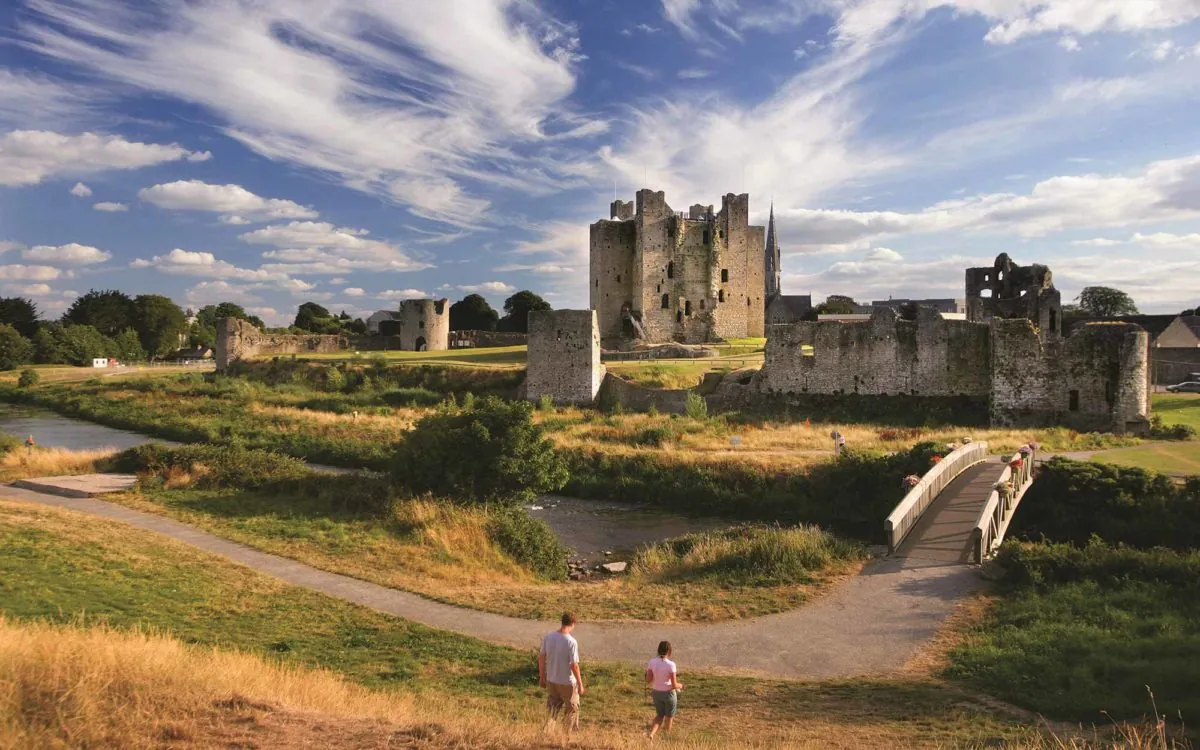
Trim is the largest Anglo-Norman fortification in Ireland. Hugh de Lacy, the lord granted the Lordship of Meath by Henry II, began building it in 1173.[1] The keep is built on a 20-sided plan, an irregular polygon rather than the standard square or circular form, and the south gate is more exotic still: a circular tower the medieval archaeologist T. E. McNeill identifies as imitating that of Coudray-Salbart in Poitou, France, evidence of direct architectural exchange between Anglo-Norman builders and contemporary French models.[1] The castle was the primary filming location for Mel Gibson's Braveheart (1995), which substantially raised its international profile.
The keep can only be visited on a guided tour; the grounds are free to walk year-round. The Office of Public Works runs both, alongside a small visitor centre in Trim town.
Practical: keep guided tour daily 17 March to 30 September, 10:00 to 17:00; reduced hours October, daily 09:00 to 16:00; weekends only November to January.[8] Closed 25, 26 and 31 December and 1 January. Adult tour from €5; concessions €4 (groups, seniors); child €3; family €13. Castle grounds free year-round. From Dublin, drive ~50 km via the M3/N3, or take Bus Éireann route 109/111 from Busáras (~75 min). Plan your visit.[8]
7. Dalkey Castle
~13 km, 45 min on the DART Daily except Tuesday Theatrical Living History tour Map
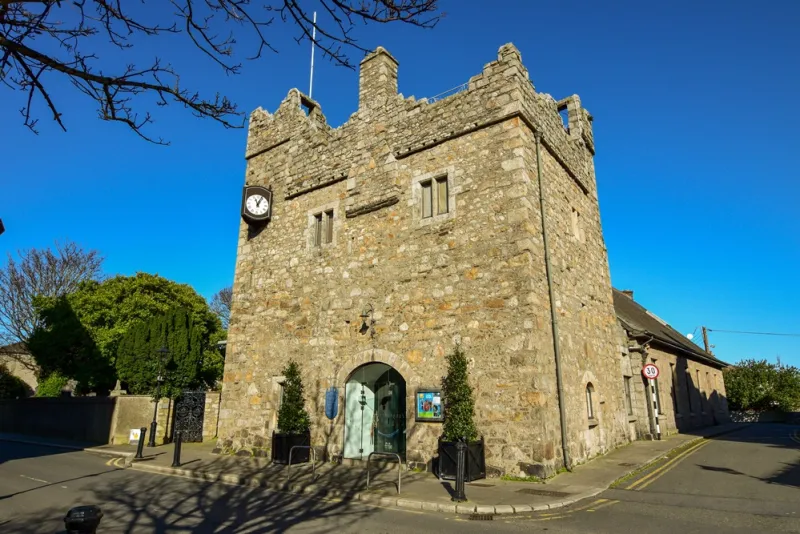
Dalkey Castle is a fortified merchant townhouse built around 1390, when Dalkey was the principal port for Dublin and merchants needed to defend their goods against pirates and raiders. It is one of two surviving castle houses on Castle Street; the visit threads through the original tower, including the rooftop battlements and the "murder hole" above the entrance through which defenders dropped stones on attackers.
The visit format here is unusual: actors in period costume guide visitors through the castle as a 70-minute Living History tour, with a roof-top viewing platform at the end. It is the most theatrical castle visit on the DART line, and one of the better options for families with children.
Practical: Living History tours run six days a week year-round, closed Tuesdays. Slot times start from 10:00 (weekdays) or 10:30 (weekends), running through to 16:30 (summer) or 16:00 (winter). Adult €18, senior/student €17, child under 12 €12; online booking gives best value.[9] DART from Connolly, Tara Street or Pearse to Dalkey (~45 min); the castle is on Castle Street, a short walk from the station. Plan your visit.[9]
8. Slane Castle
~50 km, 50 min by car (N51) Tours by booking Conyngham concert demesne Map
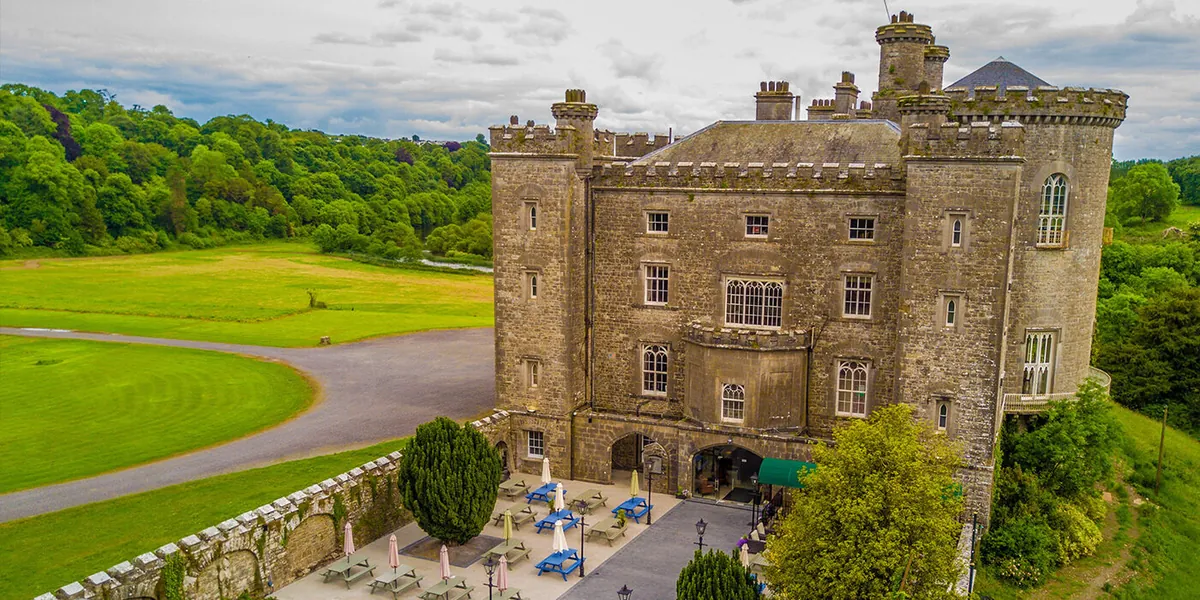
Slane Castle in County Meath is the residence of the Conyngham family, currently Henry Mount Charles, the 8th Marquess Conyngham. The Gothic Revival castle was rebuilt in 1785 by James Wyatt and Francis Johnston, on a site that had carried fortification since the 12th century. The estate's natural amphitheatre on the Boyne lawn has hosted Slane Concerts since 1981: Bob Dylan (1984), Bruce Springsteen (1985), U2 (multiple), Madonna, Bon Jovi, Eminem and others.
U2 recorded The Unforgettable Fire at Slane in 1984 with Brian Eno and Daniel Lanois, living at the castle during the sessions and using its corridors and great hall for the album's distinctive spatial sound. The estate now houses a working Slane Irish Whiskey distillery in the restored stables, opened in 2017, run as a separate ticketed visit.
Practical: the castle is a residential building and not open to walk-up visits. Heritage Week public tours run on select dates each August, adult €14, senior/student €12.50, youth (6 to 17) €8.40, child under 5 free; private tours €150 flat for up to 6 guests, with Slane events and concerts ticketed separately.[10] On the N51 in the Boyne Valley, ~35 min by car from Dublin Airport. Plan your visit.[10]
9. Kilkenny Castle
~120 km, 90 min by train (M9 corridor) Daily, year-round Butler dynasty seat Map
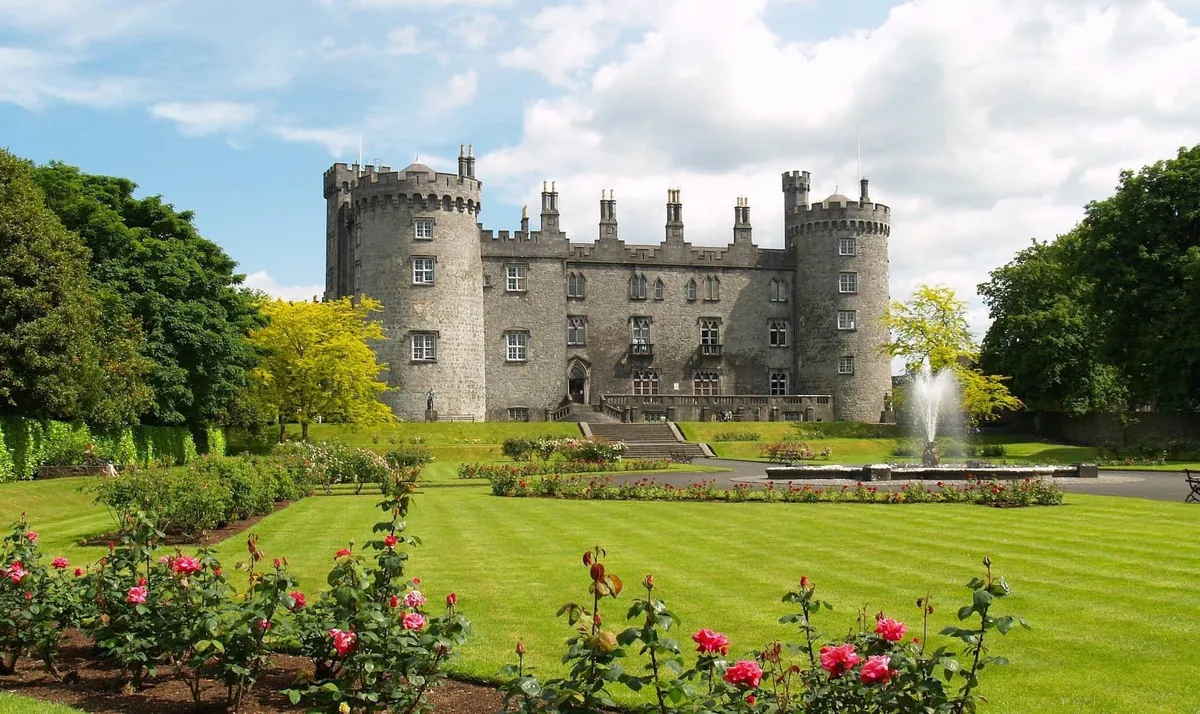
Kilkenny Castle sits at the centre of Kilkenny city, a Norman fortification rebuilt over the centuries into a Victorian Gothic palace. The Butler family (Earls of Ormond, then Marquesses of Ormonde) held the castle from 1391 until 1967, when the family sold it to the people of Kilkenny for the symbolic sum of £50. The Office of Public Works has operated it as a state heritage site since the transfer.
The Long Gallery in the East Wing, with the Butler family's substantial Picture Gallery, is the canonical visit. The 50-acre castle park spreads east from the front door across the River Nore. The OPW also runs the rose garden and tea rooms on the south terrace.
Practical: open daily year-round. April to September 09:15 to 17:30; October to March 09:30 to 17:00. Closed 25 to 27 December.[11] Self-guided from €8 adult, €6 concession (60+), €4 child (12 to 17, under 12 free); guided tour from €12 adult. Free admission on Friday 22 May 2026 (Bealtaine).[11] From Dublin, Iarnród Éireann Heuston to Kilkenny MacDonagh (~90 min), or drive ~90 min via the M9. Plan your visit.[11]
10. Rock of Cashel
~165 km, 110 min by car Daily, year-round Mythic seat of the Munster kings Map
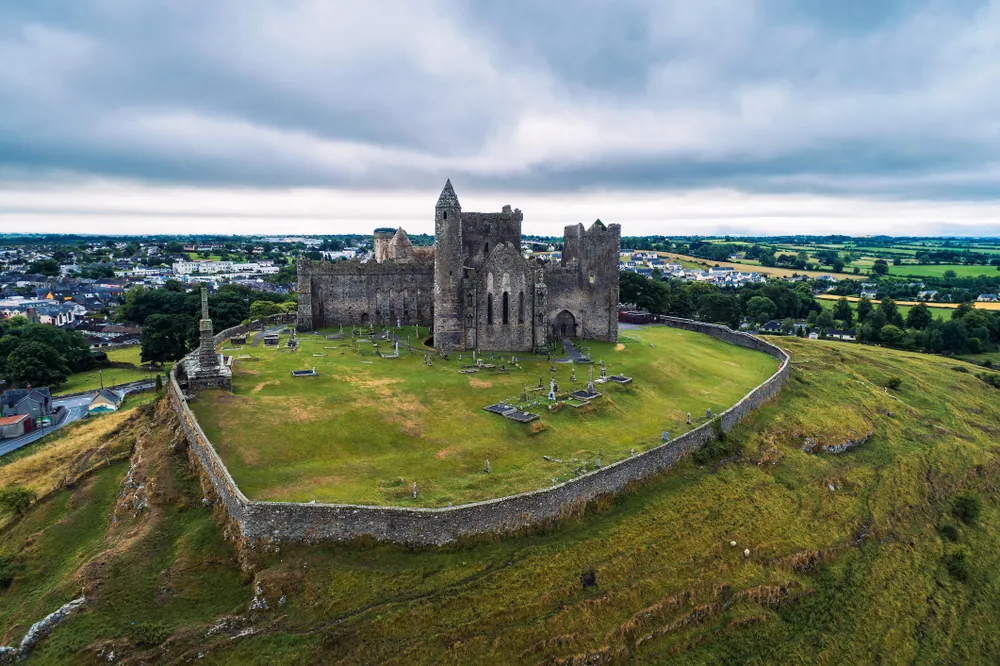
The Rock of Cashel rises out of the Tipperary plain as a limestone outcrop crowned by an integrated 12th- and 13th-century cathedral, round tower and Romanesque chapel. The site was the seat of the Kings of Munster from at least the 4th century, and was handed to the Church in 1101. Cormac's Chapel (consecrated 1134) is the finest surviving example of Hiberno-Romanesque architecture in Ireland, with German-influenced tympana and a pitched stone roof.
The Office of Public Works runs the site, with around 250,000 visitors a year placing it among the most-visited heritage sites outside Dublin. The cathedral interior, the round tower, the Hall of the Vicars Choral and Cormac's Chapel are the canonical visit; access to Cormac's Chapel interior is limited to small groups and booked on-site.
Practical: open daily year-round, closed 24 to 26 December. 17 March to 15 October 09:00 to 17:30 (last entry 16:45); 16 October to 16 March 09:00 to 16:30 (last entry 15:45).[12] Adult €8, senior €6, child/student €4, family €20. From Dublin, Bus Éireann X8 (~3 hr); by car ~110 min on the M7/M8. Plan your visit.[12]
At a glance
| Castle | Distance | How to get there | |
|---|---|---|---|
| Dublin CastleSeat of British rule in Ireland | City centre | — |
| Ashtown CastleHidden tower in Phoenix Park | City, Phoenix Park (~5 km, 20 min by bus) | — |
| Drimnagh CastleLast moated castle in Dublin | City, Walkinstown (~6 km, 25 min by bus) | — |
| Malahide Castle800-year Talbot stronghold | ~15 km, 30 min on the DART | — |
| Howth Castle Estate800 years of Howth lore | ~14 km, 30 min on the DART | — |
| Trim CastleLargest Anglo-Norman castle in Ireland | ~50 km, 45 min by car (M3/N3) | — |
| Dalkey CastleTheatrical Living History tour | ~13 km, 45 min on the DART | — |
| Slane CastleConyngham concert demesne | ~50 km, 50 min by car (N51) | — |
| Kilkenny CastleButler dynasty seat | ~120 km, 90 min by train (M9 corridor) | — |
| Rock of CashelMythic seat of the Munster kings | ~165 km, 110 min by car | — |
Three further options sit beyond the day-trip ring but appear on Dublin-out itineraries: Birr Castle in Co. Offaly (the Earls of Rosse, with the Great Telescope of Parsonstown), Johnstown Castle in Wexford (Gothic Revival lakeside seat), and Strokestown Park in Roscommon (the National Famine Museum). All three are operated by the Irish Heritage Trust or the OPW and run on standard ticketed visits.[13]
How many castles near Dublin?
There is no single tally, but the McNeill survey treats Leinster as the densest Anglo-Norman castle landscape in Ireland: hundreds of mottes, tower houses and stone castles built between 1170 and the late 14th century, of which the larger ones (Trim, Maynooth, Carlow, Ferns) cluster within a 90-minute drive of Dublin.[1] Constance Adams' 1904 survey of Irish castles records substantial Anglo-Irish strongholds along the Wicklow and Boyne valleys.[5] Fáilte Ireland's 2024 Key Tourism Facts confirm Dublin region as the dominant arrival point for international visitors to Ireland, supporting the cluster as the strongest visitor-volume catchment in the country.[14]
In practical terms the Office of Public Works runs about a dozen ticketed castle and abbey sites within a two-hour drive of Dublin, the Irish Heritage Trust runs a further three (Fota, Strokestown, Johnstown), and a smaller set are privately operated (Howth, Slane, Birr, Drimnagh). The result is a layered day-trip menu: city-centre, DART line, Boyne Valley, M9 corridor.
Famous, medieval, Gothic and largest
Famous. Dublin Castle, Malahide and the Rock of Cashel lead by visitor numbers and search interest. Trim is famous through Braveheart (1995), Slane through Bob Dylan, Bruce Springsteen and U2.
Medieval. Trim is the largest Anglo-Norman castle in Ireland (12th to 13th century).[1] The Rock of Cashel is the most coherent surviving 12th- and 13th-century cathedral-and-castle complex in the country.[12] Drimnagh's 13th-century tower house, with its still-functional water-filled moat, is the cleanest medieval survival inside the Dublin city limits. Carlow Castle, Maynooth Castle (a McNeill-documented great tower ascribed to around 1200) and Ferns Castle in Wexford complete the medieval-only itinerary.[1]
Gothic. Slane Castle (rebuilt 1785 by James Wyatt and Francis Johnston) and Johnstown Castle in Wexford are the canonical Gothic Revival examples within day-trip reach. The Chapel Royal at Dublin Castle (added 1814) is the most accessible piece of state Gothic Revival in the city.
Largest. Trim, by enclosed area, is the largest Anglo-Norman fortification in Ireland.[1] Kilkenny Castle's combined castle and 50-acre park is the largest urban castle estate. Phoenix Park, which holds Ashtown Castle, is the largest enclosed urban park in Europe at 707 hectares.
If you're looking to buy
The Irish private-castle market is small but distinctive. Castle Collector's Castle Price Index (March 2026) tracks Ireland alongside the UK, with the typical Irish castle and tower-house listing falling between Scottish Highland baronial and English moated-manor benchmarks. Most Irish stock is mid-size tower houses and estate properties; the largest castles tend to remain in long-family hands. If you're looking, the castles for sale in Ireland page tracks current listings; transaction costs add ~6% (legal fees, stamp duty), and EU/EEA buyers face no restrictions, with non-EEA buyers subject to standard residency considerations. For the operational side (surveys, restoration budgeting, heritage-grant access) see our guide to buying a castle.
Sources
1. McNeill, T. E. Castles in Ireland: Feudal Power in a Gaelic World. Routledge, London and New York, 1997; pp. 35, 45, 55-56.
2. Malahide Castle & Gardens, official site (Fingal County Council).
3. Dublin Castle, official site.
4. Phoenix Park Visitor Centre and Ashtown Castle, OPW Heritage Ireland.
5. Adams, Constance Louisa. Castles of Ireland: Some Fortress Histories and Legends. Sealy, Bryers & Walker, 1904 (digital reprint via Project Gutenberg, 2020); chapters 4 and 8.
6. Drimnagh Castle, official site.
7. Howth Castle Estate, official site.
8. Trim Castle, OPW Heritage Ireland.
9. Dalkey Castle and Heritage Centre, official site.
10. Slane Castle, official site.
11. Kilkenny Castle, OPW.
12. Rock of Cashel, OPW Heritage Ireland.
13. Irish Heritage Trust, Annual Report 2024. Operates Fota House Cork, Strokestown Park Roscommon and Johnstown Castle Wexford.
14. Fáilte Ireland, Key Tourism Facts 2024: National Summary.