
Castles in Austria: 8 Schlösser and Burgen, from Schönbrunn to Hochosterwitz
Austria's castle landscape is the surviving architecture of two empires: the Holy Roman Empire (1438–1806) and the Austro-Hungarian (1806–1918), with the…
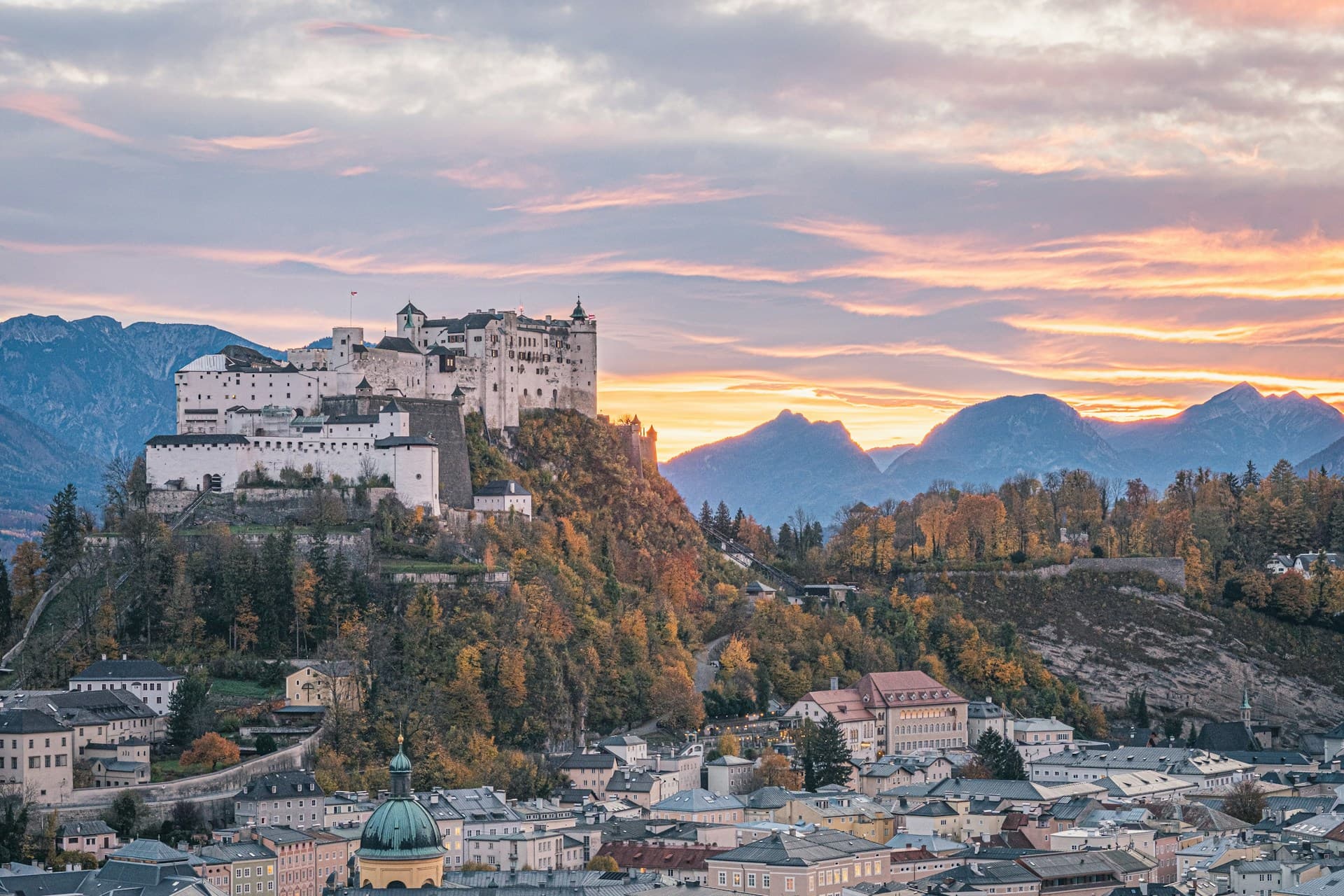
Austria is the surviving architecture of two empires, the Holy Roman and the Austro-Hungarian. Eight castles that frame a serious itinerary, from Vienna's baroque headline acts to the alpine fortresses that held the line against Ottoman pressure.
Austria is mostly a Schloss country, not a Burg country. English flattens three German words into one: Burg is the medieval defensive fortress; Schloss is the post-medieval palatial residence; Festung is the early-modern star fortress. Habsburg dynastic continuity, holding the imperial title from 1438 through 1806, meant the political function of the great residences shifted into ceremony and statecraft, not siege preparation. Austria abandoned medieval defensive architecture earlier than France or England.
The visible canon clusters in two cities and a periphery. Vienna and Salzburg hold the 17th–19th-century palatial headline names. The Burg tradition survives in the alpine periphery (Tyrol to Carinthia to Styria), where Ottoman pressure into the 16th and 17th centuries kept defensive logic alive. The Bundesdenkmalamt's province-level registers carry around 1,500 protected castles across the country.[4]
The eight below warrant the day. Each entry covers what to see, when to go, what it costs, and how to get there from Vienna or Salzburg.
1. Schloss Schönbrunn
Vienna Daily, year-round Habsburg imperial summer residence Map
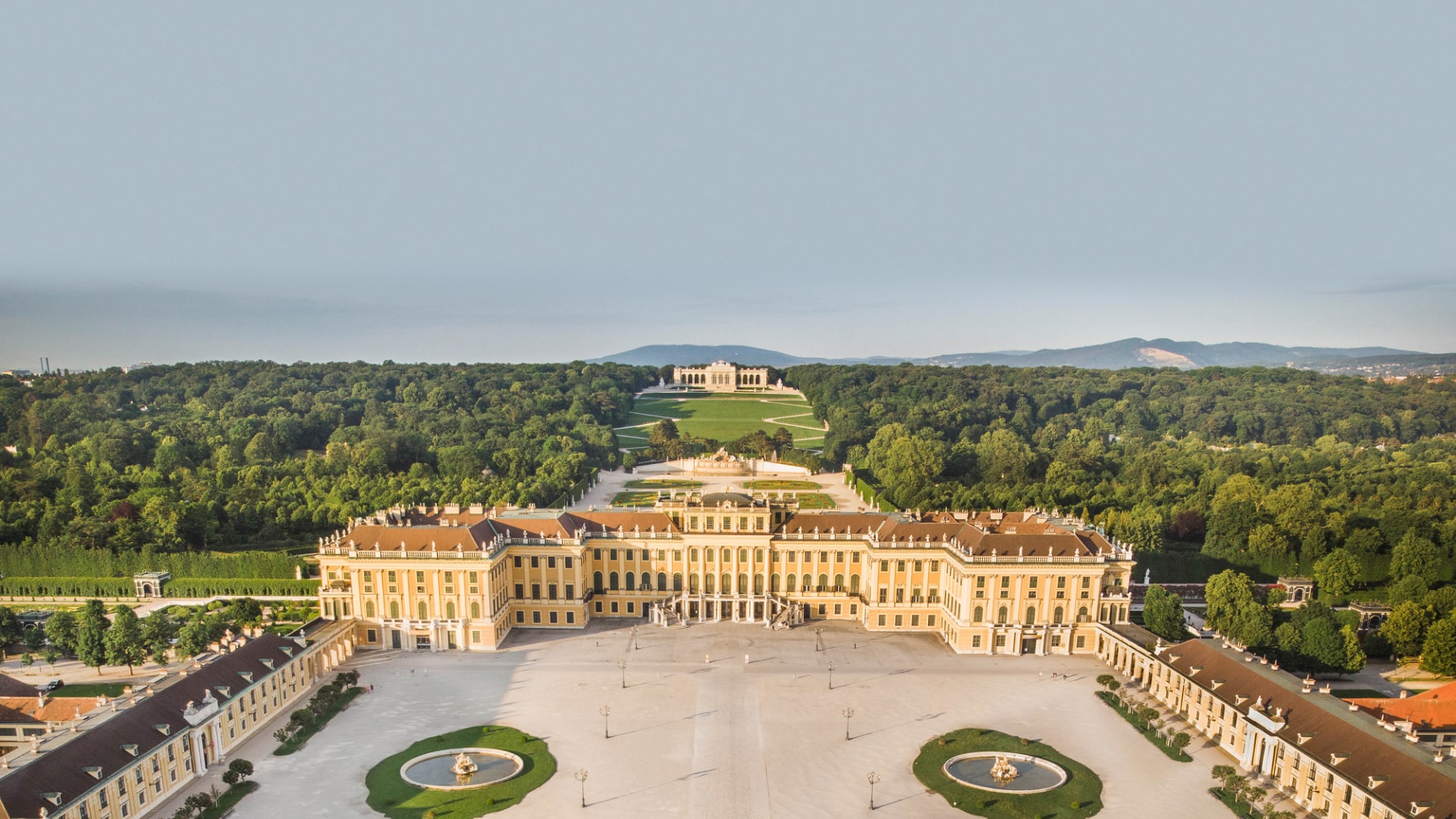
Schönbrunn is probably the world's most-visited single castle, drawing around 3.8 million visitors a year. The Habsburg imperial summer residence carries 1,441 rooms across one of the largest baroque palace complexes in Europe. Construction ran 1696 to 1713 under Empress Eleonora; Maria Theresia's Rococo refurbishment of the 1740s and 1760s set the dominant aesthetic visitors photograph today. The 1815 Congress of Vienna held its sessions here. Mozart played his first command performance for Maria Theresia at the age of six in 1762.
The Tiergarten Schönbrunn within the palace grounds, founded in 1752 as Maria Theresia's husband's private menagerie, is the world's oldest continuously operating zoo. UNESCO inscribed the complex in 1996.[5]
Practical: open daily, year-round. Imperial Tour (22 rooms) €27; Grand Tour (40 rooms) €31; gardens free. From central Vienna, U-Bahn U4 to Schönbrunn, ~15 minutes. Plan your visit.[5]
2. Hofburg
Vienna Daily, year-round Imperial seat for 700 years Map
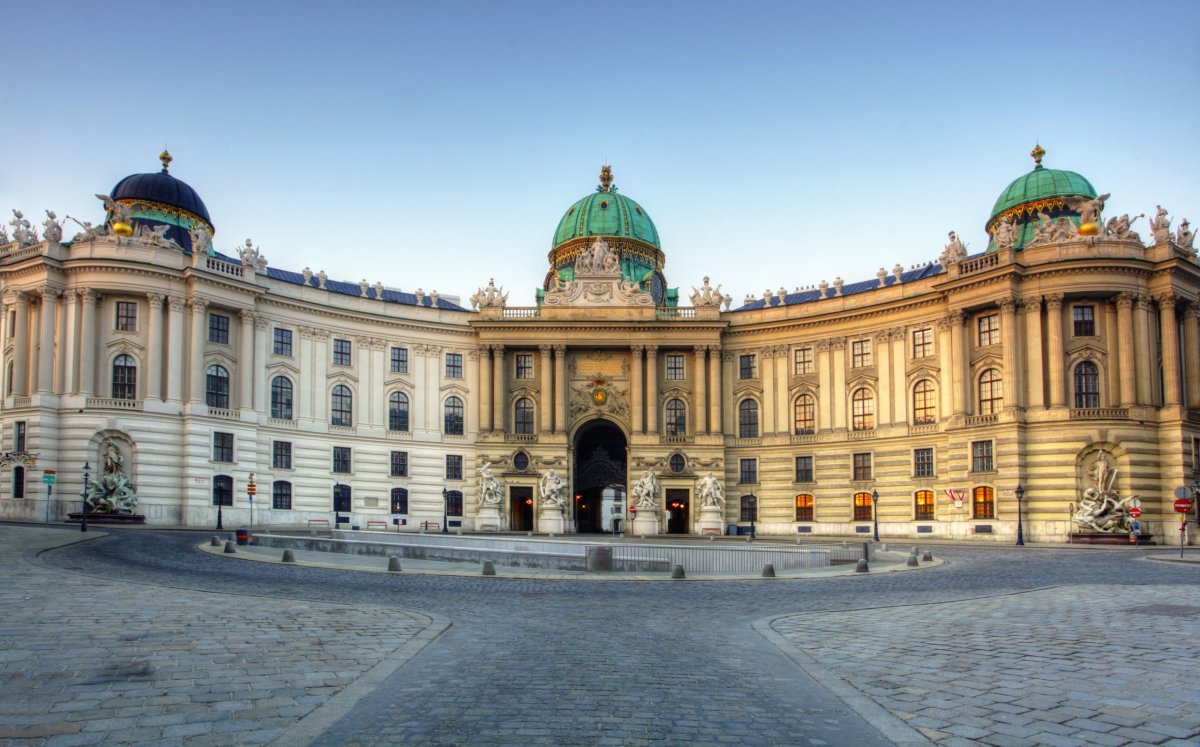
The Hofburg has been the seat of imperial or state authority for seven hundred years and now houses the office of the Austrian Federal President. The original 13th-century Babenberg fortress was expanded across the medieval, Renaissance, baroque and 19th-century periods, with the final Neue Burg wing completed only in 1913, five years before the Habsburg empire collapsed.
Inside sit the Imperial Apartments, the Sisi Museum, the Spanish Riding School with its Lipizzaner stallions, and the Imperial Treasury holding the regalia of the Holy Roman Empire including the 10th-century Imperial Crown of Otto I. UNESCO inscribed the broader Historic Centre of Vienna in 2001.
Practical: Imperial Apartments and Sisi Museum open daily 09:00–17:30. Combined ticket (Sisi, Apartments, Silver Collection) €19.50. Imperial Treasury (Schatzkammer) separate ticket €14, closed Tuesdays. From central Vienna, U-Bahn U3 to Herrengasse. Plan your visit.[6]
3. Schloss Belvedere
Vienna Daily, year-round Klimt's Kiss and Prince Eugene's villa Map
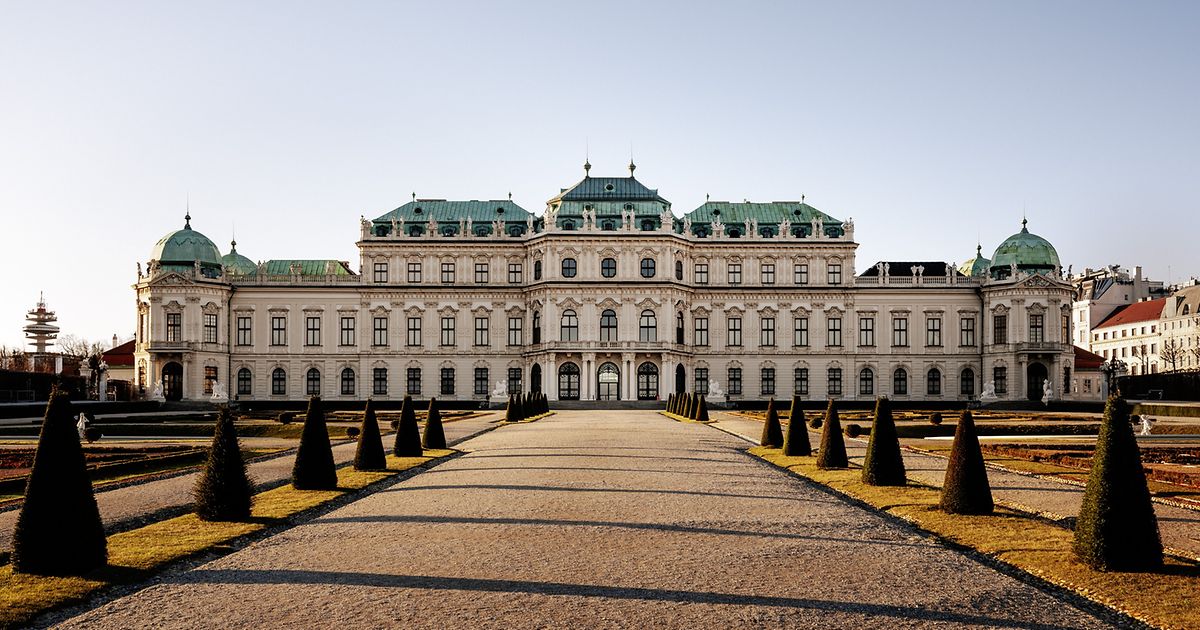
Belvedere draws around 1.4 million visitors annually and houses Klimt's The Kiss alongside the world's largest Klimt collection. Johann Lukas von Hildebrandt built it between 1697 and 1723 as a summer palace for Prince Eugene of Savoy, the imperial general who broke the Ottoman siege of Vienna. The Upper Belvedere south façade, with formal gardens descending toward the Lower Belvedere, is among the most photographed Vienna baroque ensembles. The Upper holds the Austrian art collection (Klimt, Schiele, Kokoschka); the Lower runs temporary exhibitions; the gardens between are free.
Practical: Upper Belvedere open daily 09:00–18:00. Adult €17.10 online (€19 at door); under 19 free. Combined Upper and Lower Belvedere ticket €27. From central Vienna, tram D to Schloss Belvedere. Plan your visit.[7]
4. Festung Hohensalzburg
Salzburg Daily, year-round Largest fully-preserved castle in central Europe Map
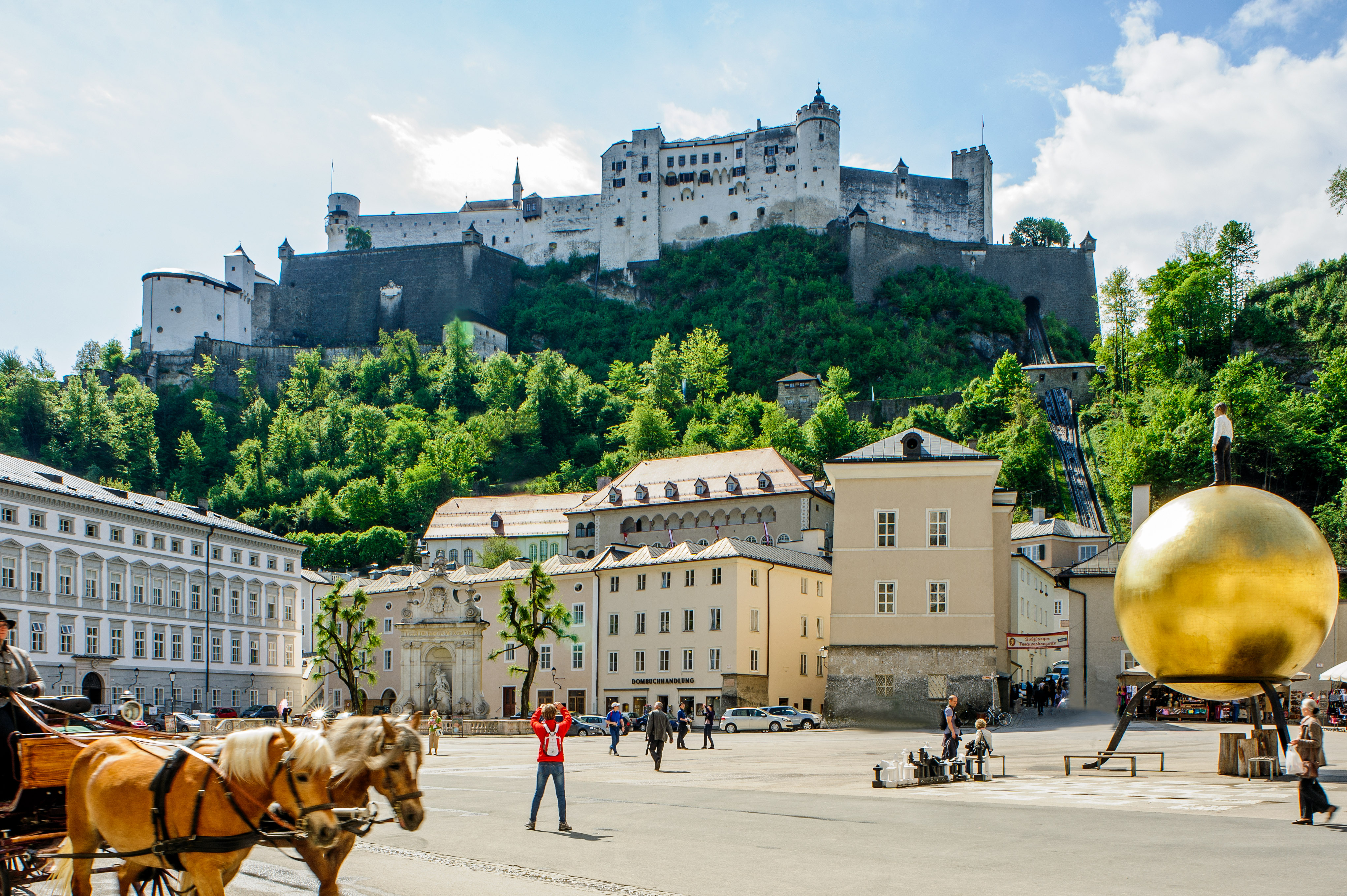
Hohensalzburg occupies 32,000 square metres of fortress on the rock above Salzburg's old town and is the largest fully-preserved castle in central Europe. Archbishop Gebhard von Helfenstein began construction in 1077 during the Investiture Controversy, and the fortress has never been taken by force in nearly a thousand years. The 1525 Peasants' War siege failed to breach the walls. Napoleon's troops in 1800 did not need to fire a shot: the Prince-Archbishop's garrison surrendered without one.
The Festungsbahn funicular has carried visitors up since 1892. Around a million visitors a year, plus the Salzburg Fortress Concerts every season inside the walls. Hohensalzburg also features in our list of the largest castles in the world.
Practical: open daily, year-round. Combined ticket (fortress, museums, funicular up and down) adult €17.40; child (6–14) €9.90; family €40.50. From Salzburg old town, walk to the Festungsbahn lower station. Plan your visit.[8]
5. Hellbrunn Palace
Salzburg Apr–Nov Prince-Archbishop's trick-fountain villa Map
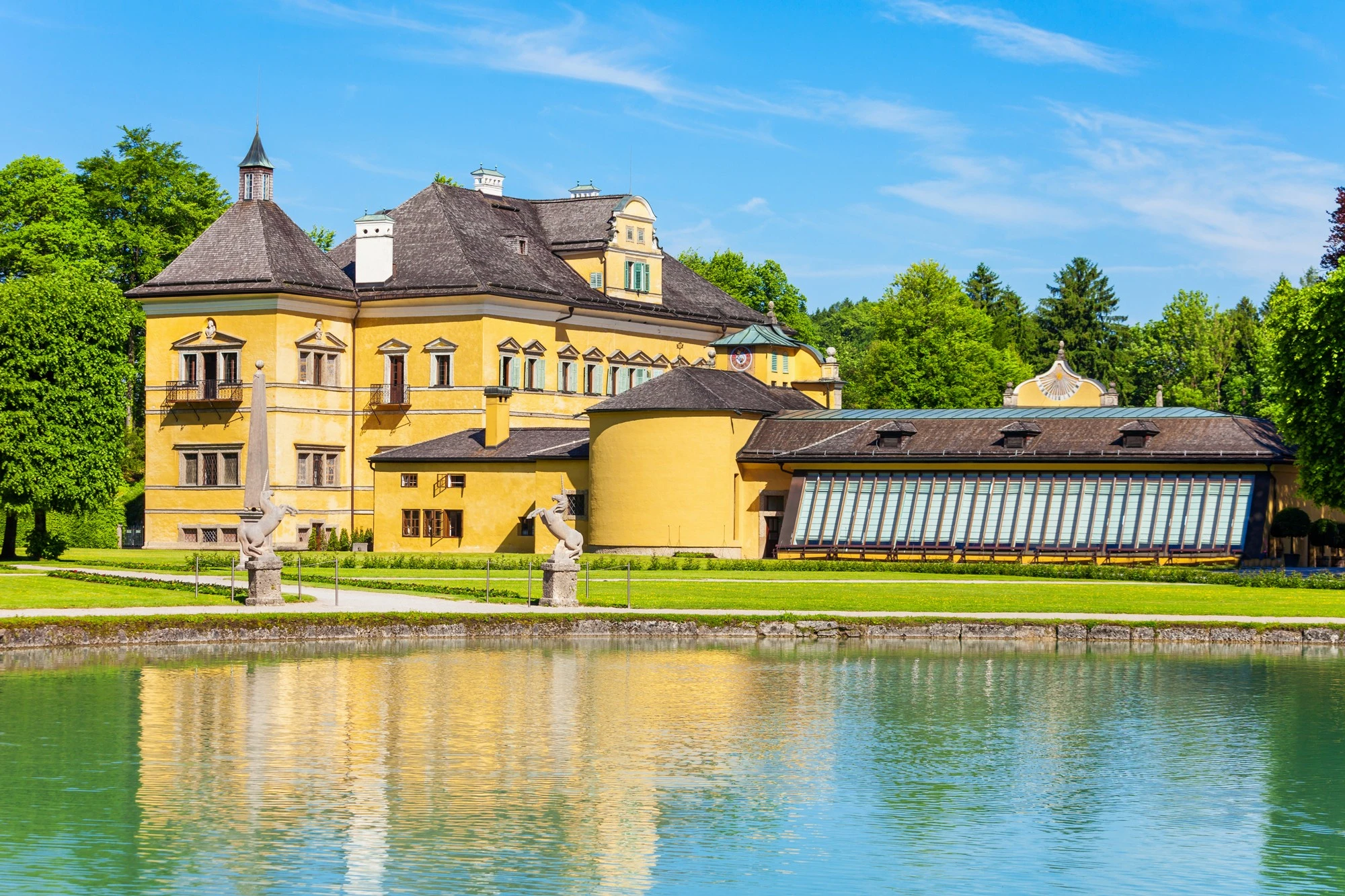
Hellbrunn, south of Salzburg, was Prince-Archbishop Markus Sittikus von Hohenems's pleasure villa, built between 1612 and 1615 with a set of Wasserspiele (trick water features) hidden in the gardens. Concealed jets in the seats around the stone dining table soak unsuspecting guests as a stylised expression of seigneurial whim. The 17th-century joke still works.
The villa, the formal gardens, the trick fountains and the Steintheater (an open-air theatre carved into the rock face) are the visit. Plan to get wet.
Practical: open April through November, daily 09:00–17:30 (extended hours July and August). Closed in winter. Adult €15; child (4–18) €7.50. From Salzburg main station, bus 25 to Hellbrunn, ~20 minutes. Plan your visit.[9]
6. Schloss Ambras
Tyrol (Innsbruck) Daily, year-round World's first universal museum Map
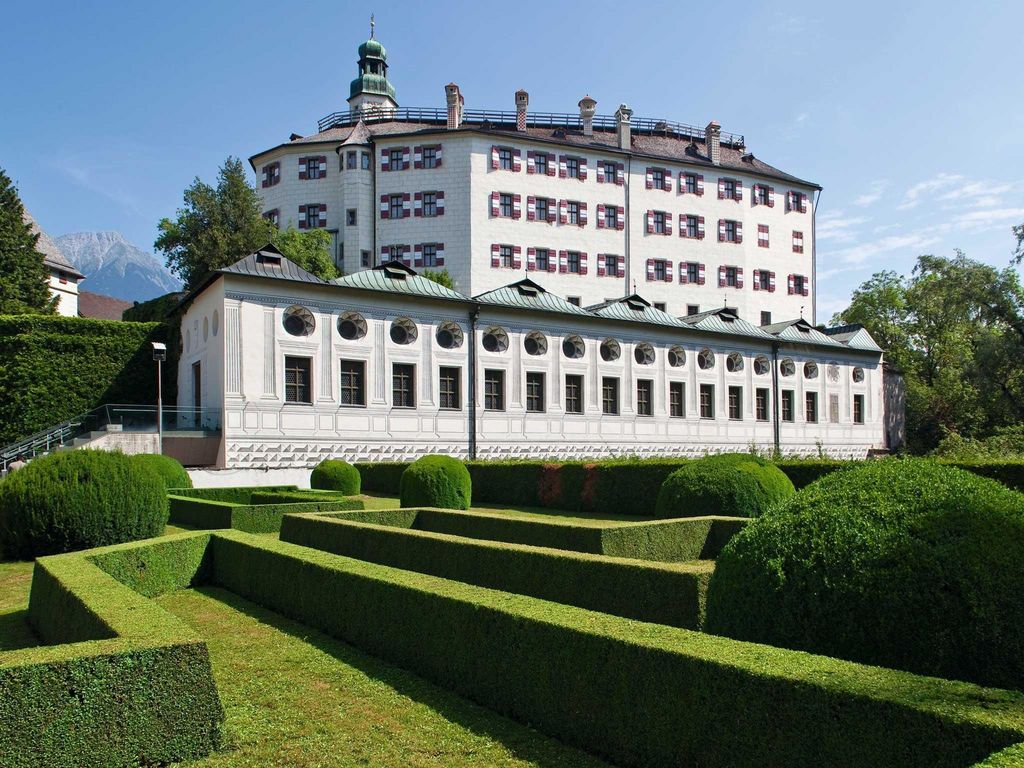
Schloss Ambras above Innsbruck is the canonical Renaissance Habsburg residence. Archduke Ferdinand II assembled his Kunst- und Wunderkammer between 1564 and 1595, and the cabinet of curiosities is widely cited as the world's first universal museum: a single display of natural specimens, art, weapons and ethnographic curiosities organised under one roof for systematic study.
The Spanish Hall is the Renaissance reception hall lined with portraits of the Tyrolean rulers. The Kunsthistorisches Museum operates the property today. The grounds and formal gardens are free outside the ticketed interiors.
Practical: open daily 10:00–17:00, closed November. Adult €12; under 19 free. From Innsbruck Hauptbahnhof, tram 6 or bus 4134 to Schloss Ambras, ~15 minutes. Plan your visit.[10]
7. Burg Hochosterwitz
Carinthia Apr–Oct Fourteen sequential gates against the Ottomans Map
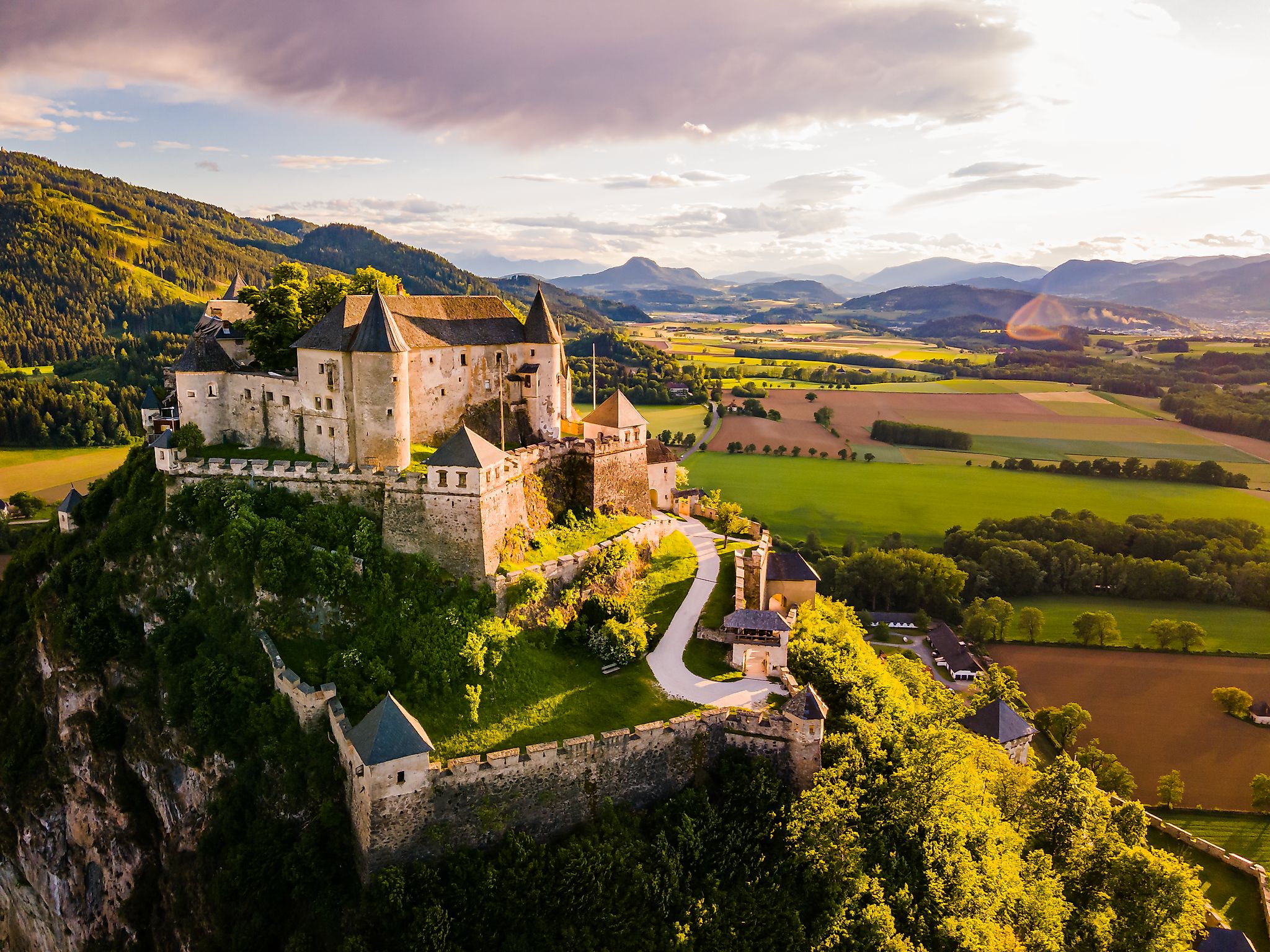
Hochosterwitz is one of Austria's most photogenic medieval fortifications. Christoph Khevenhüller and his cousin Georg, governor of Carinthia, modernised the rock-top fortress between 1570 and 1586 specifically to bear firearms against Ottoman pressure.[1] The fourteen successive defensive gates spiralling up the rock approach are the most distinctive sequential-gate defence in central Europe. Each gate carries a different defensive purpose; the spiral itself is the architecture.
The Khevenhüller-Metsch family has held Hochosterwitz for centuries: never sold, never lost. The walk up through the gates, the fortress chapel, the armoury and the views over the Carinthian basin are the visit.
::: cc-callout Watch out: the climb is steep and runs around 25 minutes on foot. A funicular operates May to September. The walk is the experience, but factor it into the day. :::
Practical: open daily April through October, 09:00–18:00 (until 17:00 in October). Closed November through March. Adult €18; child €9. From Klagenfurt, train to Launsdorf-Hochosterwitz station (~25 min), then 20-minute walk to the fortress base. Plan your visit.[1]
8. Schloss Eggenberg
Styria (Graz) Apr–Oct A mirror of the world in stone Map
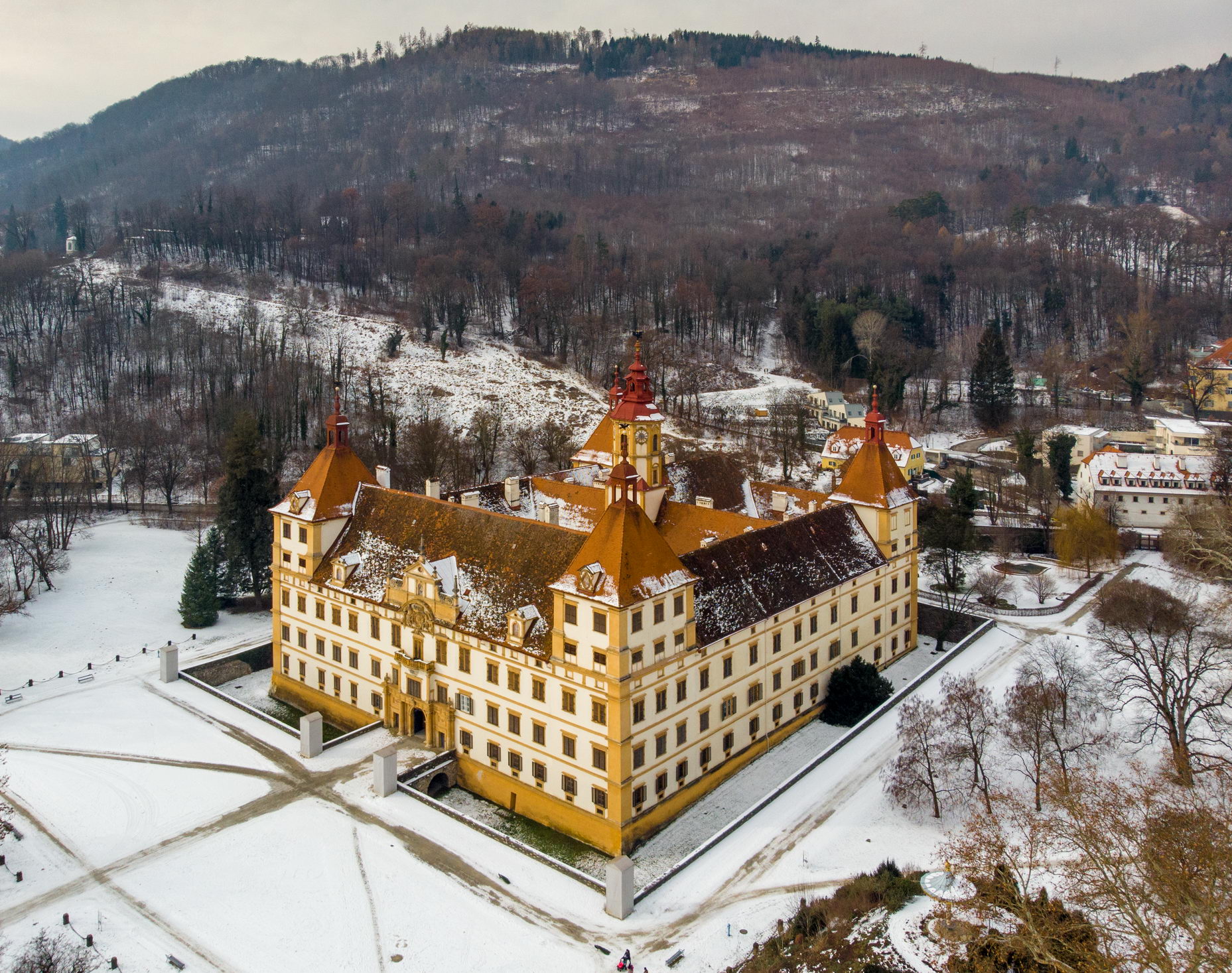
Eggenberg in Graz was built between 1625 and 1635 for Prince Hans Ulrich von Eggenberg, chief minister of Emperor Ferdinand II, as a speculum mundi (mirror of the world).[3] The numerical symbolism is the architecture: 365 windows for days of the year, 31 rooms across the principal floor for days of the lunar month, 24 state apartments for hours of the day, 12 bay-window seats for hours of daylight or months of the year. The most allegorical surviving Renaissance palace in central Europe.
UNESCO inscribed Eggenberg in 2010 as an extension to the 1999 Graz Old Town inscription. The Planetary Room, the formal gardens with peacocks, and the Universalmuseum Joanneum collections extend the visit to a half-day.
Practical: Piano Nobile state apartments open April through October, guided tours only, Tuesday to Sunday 10:00–16:00 hourly. Adult €17.50 (combined gardens and tour); gardens-only €2. Closed November through March for the apartments; the gardens stay open year-round. From Graz Hauptbahnhof, tram 1 to Schloss Eggenberg, ~15 minutes. Plan your visit.[3]
At a glance
| Castle | Region | When to go | |
|---|---|---|---|
| Schloss SchönbrunnHabsburg imperial summer residence | Vienna | Daily, year-round |
| HofburgImperial seat for 700 years | Vienna | Daily, year-round |
| Schloss BelvedereKlimt's Kiss and Prince Eugene's villa | Vienna | Daily, year-round |
| Festung HohensalzburgLargest fully-preserved castle in central Europe | Salzburg | Daily, year-round |
| Hellbrunn PalacePrince-Archbishop's trick-fountain villa | Salzburg | Apr–Nov |
| Schloss AmbrasWorld's first universal museum | Tyrol (Innsbruck) | Daily, year-round |
| Burg HochosterwitzFourteen sequential gates against the Ottomans | Carinthia | Apr–Oct |
| Schloss EggenbergA mirror of the world in stone | Styria (Graz) | Apr–Oct |
How many castles are in Austria?
The Bundesdenkmalamt (Austrian Federal Monuments Authority) lists around 1,500 protected castles across the nine provinces, including Burgen, Schlösser and Festungen.[4] Most carry the Denkmalschutz designation, which brings preservation obligations and tax benefits for compliant restoration.
Public access is the smaller question. State-trust dominance is unusually heavy: SKB operates Schönbrunn and the Hofburg apartments, the Burghauptmannschaft handles state residences, the Kunsthistorisches Museum runs Ambras, the Salzburg state operator runs Hohensalzburg. Several hundred more sit with private aristocratic families (Esterházy, Liechtenstein, Khevenhüller-Metsch). The remainder are private homes, very rarely open.
::: cc-callout Rule of thumb: if a name starts with Schloss, expect a baroque or Renaissance residence with state apartments, gardens and a museum function. If it starts with Burg or Festung, expect a medieval or early-modern fortress with thicker walls, fewer windows and a steep approach. :::
Famous, medieval, baroque and largest
Famous. Schönbrunn, Hohensalzburg and the Hofburg lead by visitor numbers; Belvedere follows on the Klimt collection. Hellbrunn and Mirabell trade on Salzburg footfall and The Sound of Music tourism (the Do-Re-Mi sequence used the choreography around the Mirabell Pegasus fountain in 1965).
Medieval. Hochosterwitz is the strongest medieval-into-early-modern survivor. Burg Dürnstein in the Wachau, where Duke Leopold V imprisoned Richard the Lionheart from 1192 to 1193 after the Third Crusade, is a ruined keep above the Danube. Burg Forchtenstein in Burgenland (Esterházy property) holds the most extensive private armoury collection in central Europe.
Baroque. The Eleonora–Maria Theresia phase at Schönbrunn, Hildebrandt's Belvedere and Jakob Prandtauer's 1702 rebuild of Stift Melk are the canonical examples. Schloss Esterházy in Eisenstadt, where Joseph Haydn served as Kapellmeister for thirty years (1761 to 1790), is the baroque headline outside Vienna.
Largest. Hohensalzburg at 32,000 square metres is the largest fully-preserved castle in central Europe by surviving fabric. Schönbrunn at 1,441 rooms is the largest Habsburg residence by floor area.
If you're looking to buy
The Austrian for-sale castle market is genuinely scarce. State-trust dominance and the concentration of the Habsburg residential stock in state museum portfolios mean most of what's visible on the buying market sits at the high end. Restored mid-tier Schlösser on alpine or Wachau-corridor sites typically clear in the €1 million to €10 million range. Renovation runs €2,000 to €5,000 per square metre under BDA-compliant scope, comparable to Germany with an alpine premium for specialist masonry and timber-framing trades.[4]
If you're seriously looking, the castles for sale in Austria page tracks current listings against this benchmark. Foreign-buyer rules vary by province under the Grundverkehrsgesetze; some provinces require local-authority approval for non-EEA buyers. For surveys, restoration budgeting and foreign-buyer mechanics, see our guide to buying a castle. For the wider continental context see the evolution of the castle.
Sources
1. Lepage, Jean-Denis G. G. Castles and Fortified Cities of Medieval Europe: An Illustrated History. McFarland, 2002.
2. Taylor, Robert R. Castles of the Rhine: Recreating the Middle Ages in Modern Germany. Wilfrid Laurier University Press, 1998.
3. Beltramo, S., Cantatore, F. & Folin, M. (eds.) A Renaissance Architecture of Power: Princely Palaces in the Italian Quattrocento. Brill, 2016. Eggenberg numerical symbolism per Universalmuseum Joanneum,
4. Bundesdenkmalamt (Austrian Federal Monuments Authority), province-level Denkmalverzeichnis.
5. Schloss Schönbrunn, official site (SKB).
6. Hofburg Vienna / Sisi Museum and Imperial Apartments, official site.
7. Schloss Belvedere, official site.
8. Festung Hohensalzburg, official site.
9. Schloss Hellbrunn, official site.
10. Schloss Ambras Innsbruck, Kunsthistorisches Museum.