
The 2026 European Castle Market Report
Our 2026 report on the European castle market: prices per square metre by country, where castles are cheapest, and just how few ever sell.
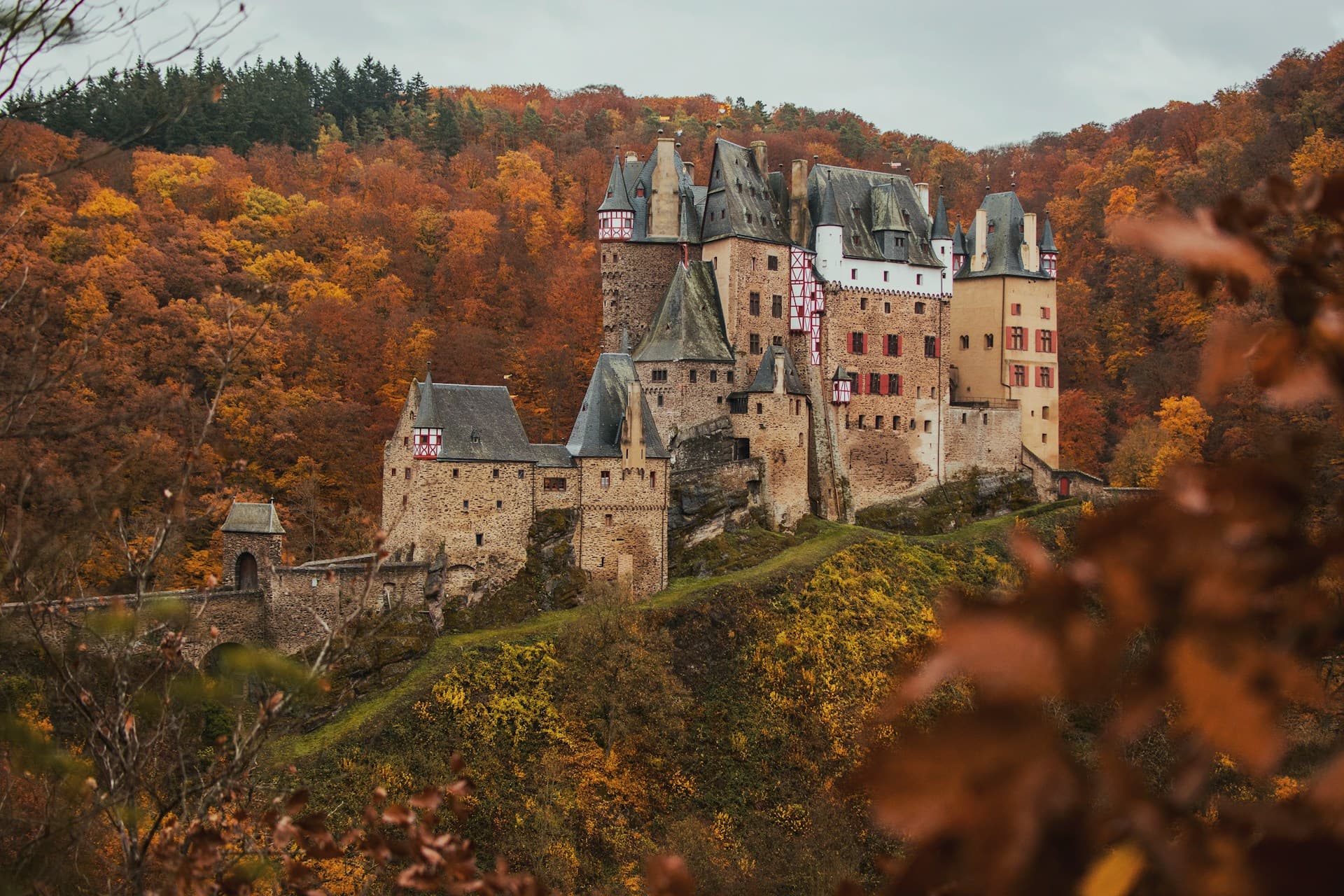
Most people have looked up the price of a castle at least once. And they are genuinely taken aback by how inexpensive some of these properties are, especially when compared to inner city apartments and housing. In some regards, a castle property is far more accessible to the average buyer than a house in a city they've lived their entire lives. With this rising interest, we wanted to explore the European castle market in a way that's never been done before. There's a genuine lack of data and prospective buyers are often shooting in the dark so we wanted to provide real data that people could then use to make informed investment decisions.
Whether you are a property investor, a buyer, a seller, you'll find a lot of great data in this one-of-a-kind report. Here are some of the more interesting takeaways we discovered:
- The typical castle is €1.7 million (€2,257/m² for a ~750 m² property)
- Price range is enormous. On the low end €200,000 (Castle Donovan, Ireland) to €42 million (Castello di Oliveto, Tuscany)
- Poland has the cheapest castle market (€778/m²). Ireland the most expensive (€3,333/m²)
- Around 75% of all listings are from France, it has the most active market
- Castles tend to sell 22% below asking price
- Bigger castles are generally cheaper per-square-metre than smaller castles
- Only around 200-400 castles sell in a year
- Castle ownership is only profitable when it's a business
The following report is a summary of our Castle Price Index, which is the deepest country-by-country picture of the European castle market assembled to date.
How we created the report
The index is built on 1,247 genuine castle listings, gathered from 36 platforms across 10 European markets in March 2026 and matched property by property to confirm each is a real castle, château or schloss. It is the deepest dataset of its kind assembled to date. Where we cite sold prices rather than asking prices, those are verified from public land registries: France's DVF, the UK's ScotLIS and HM Land Registry, Ireland's PSRA, and the Netherlands' Kadaster.
European castle prices
| Metric | Value |
|---|---|
| Median asking price | €1,740,000 |
| Median floor area | 750 m² |
| Median price per m² | €2,257 |
| Middle 50% range | €1,456–€3,373/m² |
And the full country index:
| Country | Listings | Median price | Median m² | Median €/m² |
|---|---|---|---|---|
| France | 933 | €1,690,000 | 710 | €2,292 |
| Italy | 96 | €2,825,000 | 1,350 | €1,698 |
| Spain | 65 | €2,200,000 | 950 | €2,421 |
| Belgium | 30 | €1,772,500 | 924 | €2,184 |
| Germany | 42 | €1,430,000 | 694 | €2,140 |
| United Kingdom | 22 | €1,989,000 | 691 | €2,787 |
| Ireland | 21 | €1,375,000 | 619 | €3,333 |
| Austria | 5 | €1,500,000 | 737 | €4,478 |
| Portugal | 12 | €1,932,500 | 650 | €2,957 |
| Poland | 10 | €1,194,800 | 1,689 | €778 |
| Switzerland | 9 | €10,200,000 | 800 | €16,000 |
The sample sizes for Austria, Portugal and Poland are small, so we read those only as indicative. Looking at Germany, Belgium, Spain, France and the UK, the mid-band price range is €2,100 to €2,800 per square metre. Ireland, Austria, and Switzerland are more expensive outliers. Switzerland barely belongs on this chart, we'll talk about this in depth later, in short the castle properties are for the ultra-high-net-worth individuals. The little data available from Eastern European markets like Poland, suggests genuinely cheap properties.
Next, we'll explore the most interesting discoveries from the report.
1. French castles dominate the market
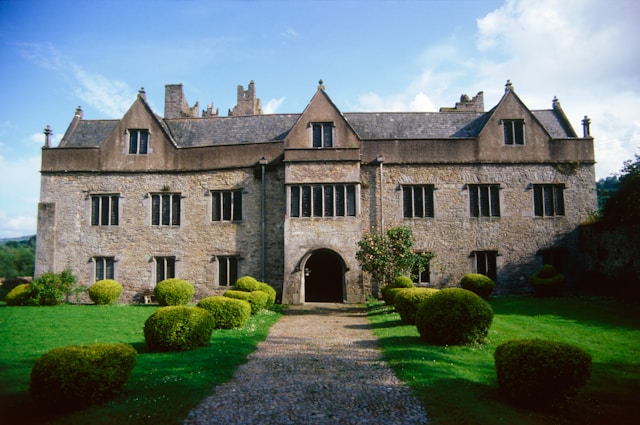
France is not just the biggest castle market in Europe; it is bigger than all the others combined. With 933 of the 1,247 listings, it is the deepest single-country castle dataset ever assembled from public listings, and at €2,292/m² it also sits near the bottom of the major Western European range. France is, in short, both the largest castle market and one of the cheapest.
It is also the most transparent. France publishes verified sold prices through DVF, and those records reveal a structural 22.0% discount to asking across 1,103 transactions, the kind of buyer intelligence no other large market exposes. Our French château buyer's guide works through what that means in practice, and you can find live property listings on our castles for sale in France page.
2. Italy hides expensive castle prices
Based on the raw numbers, Italy seemed to be the cheapest castle market per-square-metre (€1,698/m²). In reality, it was an illusion created by missing price data. On Italian domestic platforms, 29% of castle listings have no asking price, compared to 2% in France. So a third of the listings are hiding their asking price, and that's confusing the median estimation. When we looked closer at those hidden properties, we found that they were mostly the higher value properties, ones that had been restored and brought up to modern living standards, certainly properties that could command a much higher asking price compared to the average.
This observation was further confirmed by the government's own OMI valuation benchmark, which was 15% higher than our median estimation based on live listings. This means the disclosed listings skew toward the lower-condition tier. The true Italian market median, if every listing showed its price, would be closer to €2,500–€3,000/m². We unpack this fully in why Italian castles look cheaper than they are, and to see real castle listings from Italy, you can check our castles for sale in Italy page.
3. The size paradox: bigger castles are cheaper
Across the dataset, the price per square metre falls sharply as a castle grows, from €2,988/m² for properties of 100 to 500 square metres down to €775/m² for those over 5,000, a 3.9-fold spread. The reason is the buyer pool: a small castle is a home hundreds of people can picture owning, while a giant one is an institution that only works with a hotel or events business attached, and the buyers for that number in the dozens. Restoration costs, meanwhile, scale in a straight line. The full breakdown is in bigger castles are cheaper.
4. Verified transactions are still rare
Our Castle Price Index has more than 55 named, sold transactions, drawn from the handful of jurisdictions that expose property records: ScotLIS and HM Land Registry in the UK, PSRA in Ireland, Kadaster in the Netherlands, DVF in France, plus press-verified European sales. While this might seem like a small sample size of transactions, it's by far the best data we have available. Most of Europe doesn't publish individual transactions at all, it is quite a task to uncover what a property was actually sold for. Sometimes the press reports on notable castle sales, but even then the figure is unreliable, since there are vested interests in inflating the transaction to the public.
France and the UK were two exceptions though. These countries have a more thorough and accessible system which made analysis possible, and even uncovered some interesting patterns that buyers and investors should know. France's DVF underpins our entire ask-vs-sold analysis. ScotLIS and HM Land Registry give the UK its named castle sales, from Dalhousie to Picton to Ribbesford. Ireland's PSRA exposes commercial leases as well as freehold sales. And the Netherlands' Kadaster let us establish, for the first time, that Dutch castles pass overwhelmingly to heritage foundations rather than private buyers. Everywhere else, Germany, Italy, Spain and the whole of central Europe, individual prices stay private, and the market has to be extrapolated from the listings and the occasional press release.
5. There are 45,680 protected castles, and almost none sell
Europe has roughly 45,680 protected castle-type properties, and only 200 to 400 change hands in a typical year. That is a turnover of well under 1%, against 2% to 4% for prime residential property, making castles three to seven times less liquid than ordinary prime homes, with typical times to sell of two to ten years. The illiquidity is one reason why castles sell at a discount: most sit at just 4% to 80% of the per-square-metre price of prime residential in their own country.
The 740-fold spread: this is not one market
The single most striking number in the report is the distance between the floor and the ceiling. At the bottom, Schloss Weigsdorf (map) in Saxony sold in 2022 for €75/m². At the top, Castello San Giorgio di Portofino (map) sold in 2024 for €55,350/m². That is a spread of roughly 740 times between the cheapest and most expensive verified castle prices in Europe.
The castle market is unlike any other property market. What looks like one asset class, "the European castle," is really several distinct markets grouped into one category. There are derelict Eastern European palaces sold off for next to nothing, mid-market French and Italian châteaux that come with estate and vineyards, lakeside villa properties in Switzerland built for the ultra wealthy, and then coastal trophy estates where the prices are really dictated by location scarcity than anything to do with castles. We explore the two ends of the castle market further in the cheapest castles and the most expensive castles ever sold.
The Netherlands: a market built on foundations
This year's index adds the Netherlands for the first time: 527 protected castle-type properties, and five verified Kadaster transactions. The striking finding is that four of the five went not to private buyers but to heritage foundations (Stichtingen), a market structure unique in Europe and the product of Dutch monument policy. It is the clearest example in the whole dataset of how differently the question "who actually owns the castle" is answered from one country to the next. The detail is in why Dutch castles go to foundations, with the live market on our castles for sale in the Netherlands page.
The French regions are moving
The French government publishes sold data each year, which allows us to observe how regions behave and also track buyer interest over time. Here are a few of the key observations from our analysis:
- Normandy has the smallest ask-vs-sold discount of any région (−4%), with Calvados prices up 17.1% over 2023–2025. Active, fairly-priced demand within reach of both Paris and the Channel ports.
- The Dordogne, historically the British buyer's heartland, fell 17.8% over the same window, consistent with reduced UK demand after Brexit.
- Occitanie carries the biggest price discount, a 43% gap between asking and sold prices, rewarding patient buyers.
- Pays de la Loire sells within a few percent of asking.
The Brexit shift shows up in online search behaviour as much as in sold prices. UK searches for "chateau for sale France" run at around 4,200 a month, a steady stream of British demand that has not gone away so much as changed address, away from the Dordogne and toward Normandy and the Loire. One caveat sits inside the regional data: Gironde, around Bordeaux, fell nearly 30% over the window, but that is a post-COVID correction in wine-estate values rather than part of the British-buyer story, and it is worth separating from the rest.
Supply explains the prices
The reason France stays affordable despite being the most sought-after market is because it has the largest supply of castles. France holds 19,122 protected castles, 42% of the European total. Depth dilutes the scarcity premium: when a country has nearly twenty thousand protected castles, no single one can fetch a rarity price. The thinner markets (Ireland, Portugal, the UK) sit at the top of the per-square-metre range precisely because they have so few castles, and even fewer that reach the market.
Hospitality is what makes castles profitable
There is little to no money in residential castle properties. For a castle to turn a profit it needs to have a business attached. Verified castle-hotel rates in the index run from £63 a night (Lumley Castle) to €850 and up (Ashford Castle). These castles usually have multiple business verticals to offset any seasonal changes. While we cannot know for sure how profitable a castle business is, we can observe the change in property value. The only castle in our verified repeat-sale set to beat the S&P 500 was a hotel, Dalhousie Castle (map), up 124% over eleven years, while a passively restored residential castle lost 44%. A working castle with established occupancy is an asset; the same building without a revenue plan is a liability with turrets. We cover the stays in castles you can stay in and the numbers in castles vs the S&P 500.
What the 2026 picture adds up to
The European castle market is best understood not as one market but as a set of overlapping ones, defined more by size, liquidity and country policy than by any shared "castle premium." It is deep in France, opaque in Italy, foundation-led in the Netherlands, and bifurcated everywhere between cheap-to-buy and expensive-to-own. The median price of €2,257/m² is a useful anchor for buyers, but the real value of the data is the market-specific observations. The complete dataset, methodology and country detail can be found in the Castle Price Index.
Sources
Castle Collector, Castle Price Index (March 2026), and the canonical March 2026 listings dataset. Verified transaction data from DVF (data.gouv.fr), ScotLIS, HM Land Registry, PSRA Ireland and Kadaster. Protected-castle counts from national heritage registers (Mérimée, POP, RCE Rijksmonumenten and equivalents).