
Why Italian Castles Hide Their Prices
Nearly a third of Italian castle listings hide the asking price. Why Italy's market keeps prices secret, and what it means when comparing countries.
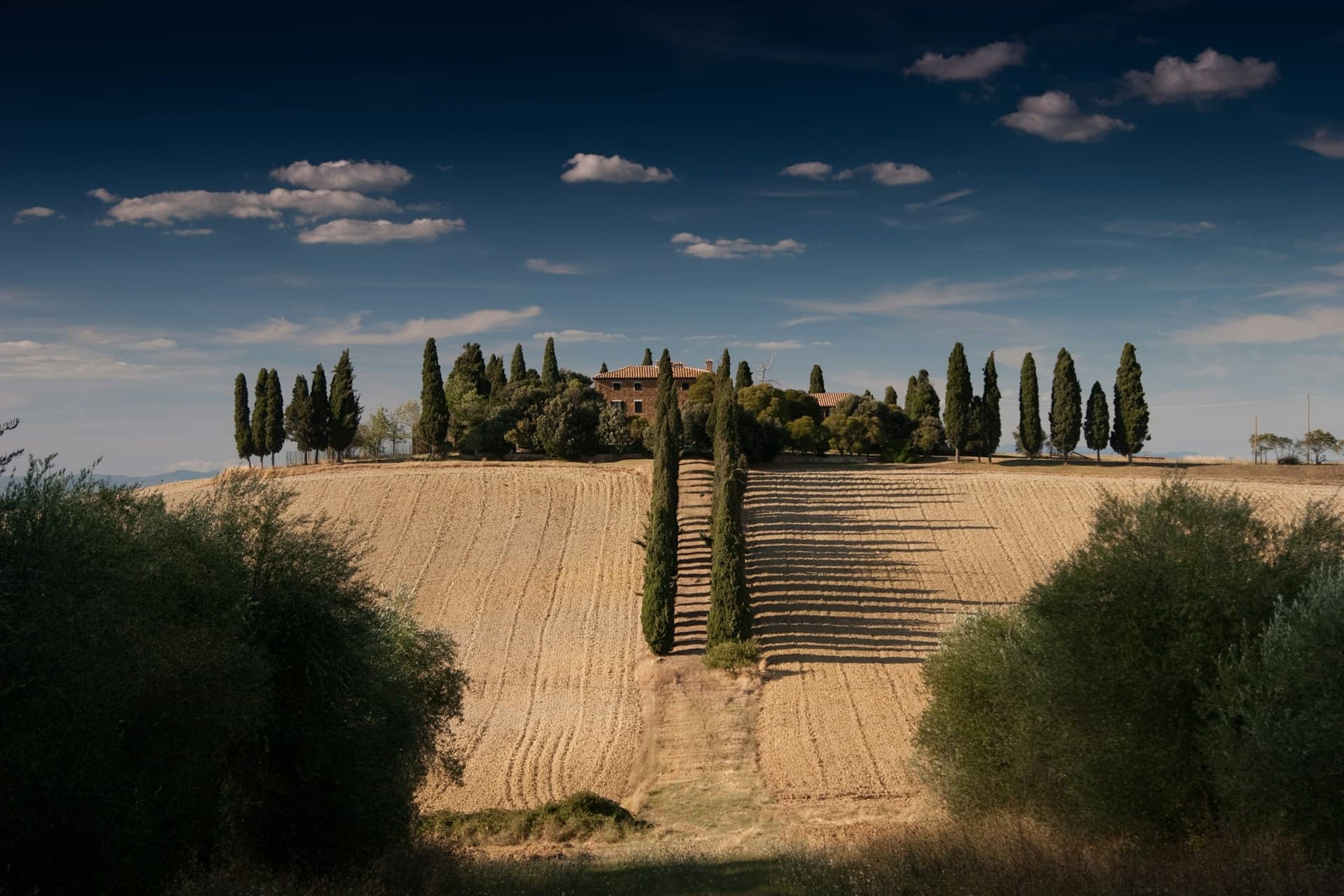
29% of listings for Italian castles show no asking price at all. In France, only 2% hide their price. The two largest castle markets in Europe have a 13-fold transparency gap, and it is not an accident. The castles Italy hides are the expensive ones, which gives the impression that the market is cheaper than it really is.
Compare castles for sale in Italy and France side by side and you'll come to the conclusion that Italy is cheaper. The Italian market has a median of €1,698/m², against €2,292/m² in France. Unfortunately these figures don't tell the full story.
A 13-fold transparency gap
On Italian domestic platforms, 29% of castle listings are "price on application," no figure shown. On the two largest French portals combined, it is 2%. Italy alone accounts for 34% of every price-hidden listing in our entire European dataset, the largest share of any single country.
The breakdown by platform tells you what is going on:
| Platform | Listings with no price |
|---|---|
| Lionard (premium Italian) | 48% |
| Castle Collector (Italy) | 33% |
| Knight Frank (Italy) | 33% |
| Castleist (Italy) | 22% |
| Romolini (Italy) | 18% |
| JamesEdition (international) | 0% |
| France (Belles Demeures + Belles Pierres) | 2% |
JamesEdition is an outlier because it enforces price disclosure, so a seller can't list a castle without its price. The hiding happens specifically on the Italian domestic and premium platforms.
The hidden castles are the expensive ones
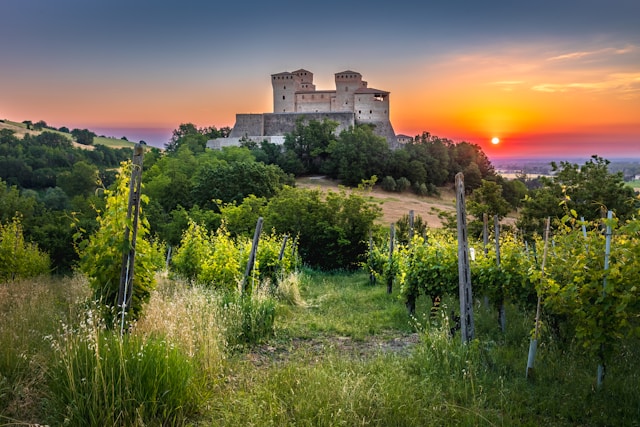
This is where it gets counter-intuitive. You might assume sellers hide low prices out of embarrassment. The opposite is true, and Italy's own government data proves it.
The Agenzia delle Entrate publishes official valuation bands (the OMI register) by zone and condition. For the closest castle proxy across ten castle-region communes, the figures are:
- OMI Normale (standard condition): €2,050/m²
- OMI Ottimo (restored condition): €2,562/m²
- Italian visible asking median: €1,698/m²
The disclosed listings sit 15% below the standard-condition benchmark and 32% below the restored-condition one. In other words, the castles that show their price are predominantly the lower-condition, cheaper ones. The restored, higher-value properties are the ones going dark. If every Italian castle disclosed its price, the true market median would land somewhere around €2,500 to €3,000/m², well above the visible figure and above France.
Why sellers do it
Hiding the price is deliberate market segmentation, not shyness. A restored, top-tier Italian castle does not convert well on a global aggregator full of price-shoppers, so the owner keeps it off those channels and sells it quietly through personal and broker networks, where the price is negotiated in private. JamesEdition's 0% rate is the proof: the only Italian castles that accept full international visibility are the ones whose sellers have already decided to compete on an open price.
What it means for a buyer
The takeaway is simple: Italy is not a cheap castle market. A buyer browsing only the disclosed listings is shopping the lower-condition tier without realising it. Our castles for sale in Italy page is the place to start, and our castles for sale in France page is the more transparent comparison.
This is exactly why price transparency is one of the things our Castle Price Index measures directly, country by country. France's openness is the reason our French château buyer's guide can be so specific about real prices; Italy's opacity is why we have to be more delicate when discussing median prices.
Sources
Price-on-application rates by platform and the OMI benchmark validation are from Castle Collector, Castle Price Index (March 2026), Sections 1b.5 and 1b.5a. OMI data: Agenzia delle Entrate, 2° semestre 2024, ten communes across Tuscany, Lombardy, Umbria, Piedmont and Veneto.