
Castles of Eastern Europe: Spiš, Corvin, Bánffy and the Buying Picture
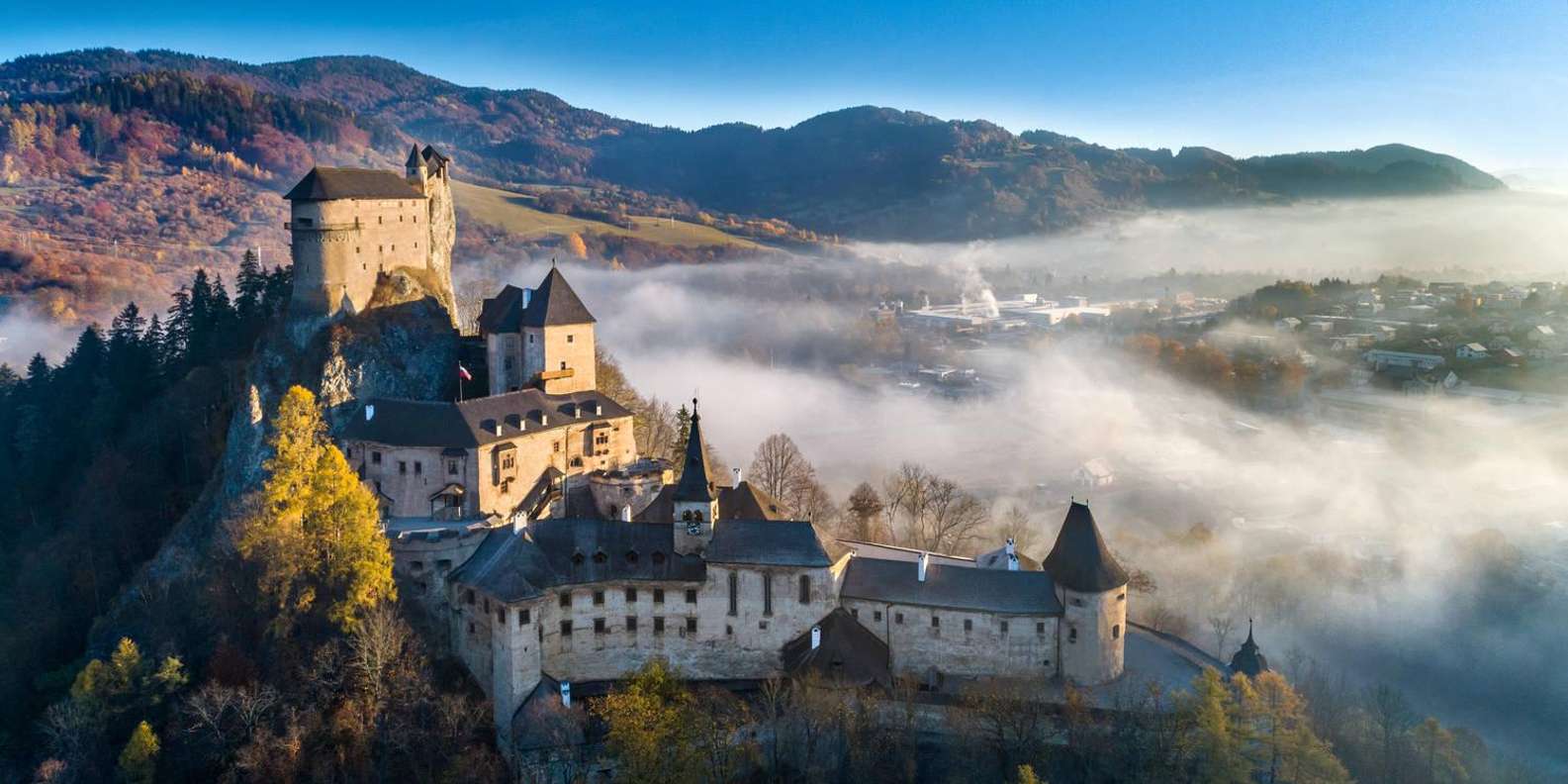
Spiš's hilltop ruin, Corvin's Hunyadi seat, Karlštejn's imperial chamber and the original Nosferatu castle at Orava.
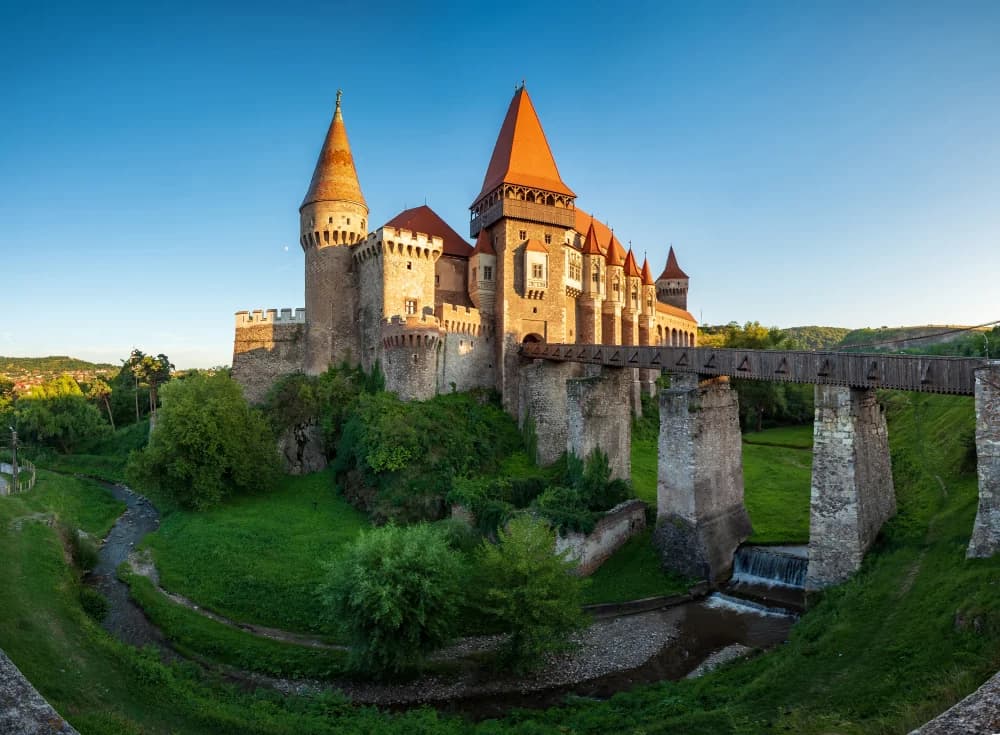
From the Teutonic brick fortress at Malbork to the Hunyadi seat at Hunedoara, twelve Eastern European castles that anchor a serious itinerary across the old Polish, Bohemian, Hungarian and Romanian lands.
Eastern Europe carries a different castle inheritance from the Loire or the Rhine. Brick replaces stone along the Baltic, where the Teutonic Order built a network of standardised fortresses to garrison its 13th and 14th-century crusade. Limestone hilltops carry the Hungarian and Slovak ruins of the Árpád and Anjou dynasties. Renaissance and Baroque palaces appear later than in the West, often built by Polish-Lithuanian magnates or Transylvanian voivodes who blended Italian floor plans with local defensive needs.
The visitor circuits cluster on three axes. The Bratislava-Krakow-Prague rail spine carries the densest traffic: Wawel, Spiš, Karlštejn and Český Krumlov all sit within reach of the main capitals. South of the Carpathians, Cluj and Sibiu open the Transylvanian circuit (Corvin, Bran, Bánffy). Budapest holds Buda Castle, the Hungarian counterweight to the others.
Each entry below covers what to see, when to go, what it costs, and how to get there. The roster runs from the world's largest brick castle to a 14th-century Bohemian keep built to hold the Imperial Crown.
1. Malbork Castle (Poland)
Pomerania Open daily, free Mondays World's largest brick castle Map
Marienburg, as the Teutonic Order called it, became the Order's headquarters in 1309 after construction had begun on the site in 1274. Aleksander Pluskowski's Archaeology of the Prussian Crusade documents Marienburg as the head of a network of around 30 subsidiary Order castles across Prussia, Pomerania and Lithuania (Lochstedt, Lauenburg, Lyck, Lötzen, Löbau, Leipe), built to a coherent brick template along the Baltic coast and inland river systems and paired with Lübeck Law and Magdeburg Law in the surrounding towns as integrated colonial infrastructure.[1]

The complex grew across the 14th century into the largest brick castle in the world by built floor area. UNESCO inscribed it in 1997. The visit splits into two routes: the Historical Castle Route (High Castle, Middle Castle, Grand Master's Palace, audio guide included) and the shorter Castle Grounds Route, free on Mondays.[2]
Practical: open daily, Mon 09:00–20:00 and Tue–Sun 09:00–19:00 in high season; reduced winter hours, confirm on site. Historical Castle Route adult PLN 80, reduced PLN 60. Castle Grounds Route adult PLN 35, reduced PLN 25 (free Mondays). Children under 7 free. Train from Gdańsk Główny to Malbork (about 50 minutes), then a 15-minute walk. Plan your visit.[2]
2. Wawel Royal Castle (Poland)
Kraków Open daily, timed entry per exhibit Polish coronation seat Map
Wawel sits on a limestone hill above a bend in the Vistula and held the Polish crown from the early Piast period through the move of the capital to Warsaw in 1596. The Renaissance courtyard built for King Sigismund I in the 1500s by Italian architects (Francesco Florentino, Bartolomeo Berrecci) is the architectural set-piece; Sigismund's Chapel on the cathedral's south side is widely cited as the most accomplished Renaissance building north of the Alps.

Wawel today is a complex of separately ticketed exhibitions: the State Rooms, the Crown Treasury and Armoury, the Castle Underground (Lost Wawel) and the Royal Gardens. The courtyards and hilltop are free.[3] The Sandomierska Tower is closed for conservation from 25 March 2026; the Crown Treasury hosts a Treasures from Łowicz temporary exhibit, March to June 2026.[3]
Practical: Mon 09:00–14:00 (limited exhibitions); Tue–Sun 09:00–16:00, timed entry per exhibition. Closed 1 January, Holy Saturday, Easter Sunday, Easter Monday, 1 November, 11 November, and 24–25 December. State Rooms PLN 53 (reduced PLN 40); Crown Treasury and Armoury PLN 43 (reduced PLN 32). Tram 8, 10, 13 or 18 to Wawel or Stradom; or a 10-minute walk from the Main Market Square. Plan your visit.[3]
3. Książ Castle (Poland)
Lower Silesia Open daily, year-round Silesia's largest castle Map
Książ stands on a sandstone cliff above the Pełcznica river outside Wałbrzych, the third-largest castle in Poland by area and the largest in Lower Silesia. The Hochberg family held it from 1509 to 1941. Construction layers run from the late 13th-century Bolko I keep through Baroque additions of the 1720s to early-20th-century neo-Renaissance and neo-Baroque expansions that brought it to its current 415-room footprint.

From 1943 the Nazi regime drove tunnel galleries beneath the castle as part of Projekt Riese, a partially completed underground complex whose intended function (Hitler's headquarters, an arms factory, or a research station) is still debated. The galleries are accessible on a separate ticket.[4]
Practical: open daily; Apr–Sep Mon–Fri 09:00–18:00 and Sat–Sun 09:00–19:00; Nov–Mar Mon–Fri 10:00–15:00 and Sat–Sun 10:00–16:00. Castle plus Palm House from PLN 49 adult (reduced PLN 39); Castle plus Underground plus Palm House PLN 69; full complex pass PLN 85. Bus from Wałbrzych Główny station; about a 2.5-hour drive from Wrocław. Plan your visit.[4]
4. Moszna Castle (Poland)
Opole Voivodeship Daily Apr–Oct; weekends only Nov–Mar 99 turrets fairytale Map
Moszna's silhouette (a forest of pinnacles, towers and gables crowding over a moated forecourt) is what the castle is known for. The core is a Baroque palace built in the late 17th century. The Tiele-Winckler family, Silesian industrialists who took the property in 1866, added the eastern neo-Gothic wing after an 1896 fire and the western neo-Renaissance wing between 1911 and 1914, producing the eclectic 99-turret count the operator still cites.

The chamber tour covers the Baroque dining hall, the Tiele-Winckler private apartments, and the smoking room with its wood-panelled hunting trophies. The 102-hectare English landscape park, with a magnolia collection that flowers in May, is free in low season. The castle also operates a hotel and restaurant on site.[5]
Practical: Apr–Oct daily 09:00–18:00; Nov–Mar Sat, Sun and holidays 09:00–18:00 for chamber tours. Adult ticket from PLN 40 (concessions available). Park free in low season; extra ticket for palace area in high season. Car via DK40/A4 from Opole (about 40 minutes); bus from Krapkowice or Strzelce Opolskie. Plan your visit.[5]
5. Spiš Castle (Slovakia)
Prešov region Closed for major reconstruction in 2026 One of Europe's largest castle ruins Map
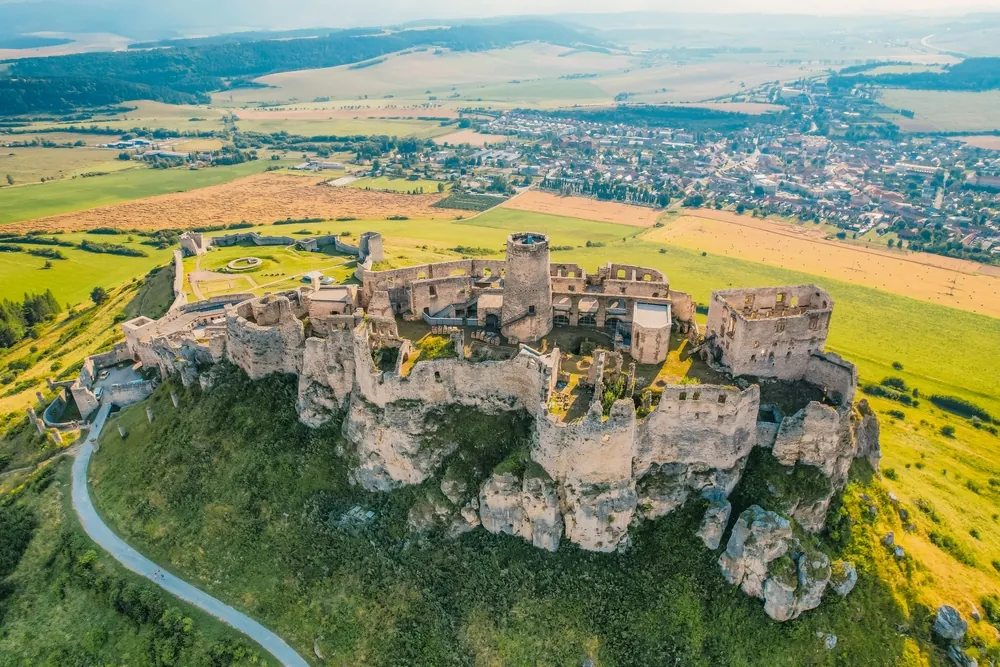
Spiš is the largest castle complex in central Europe by area, occupying a travertine hill above Spišské Podhradie in eastern Slovakia. The site spans roughly 41,000 square metres of integrated medieval fortification across multiple courtyards. The 12th-century Romanesque core was extended through the Gothic and Renaissance periods until a 1780 fire reduced the upper castle to the spectacular ruin visible today. UNESCO inscribed Spiš in 1993 as part of a wider cultural-monuments group covering the Spišské Podhradie town and the Spišská Kapitula chapter complex.[6]
The hill is visible from over 20 kilometres away, which is roughly the distance to Levoča (the medieval Saxon trading town that pairs naturally with a Spiš visit). The castle is managed by the Slovak National Museum's Spišské Múzeum branch. Multiple sources flag a 2026 closure for major reconstruction, with no announced reopening date; verify status before travelling.
Practical: closed for reconstruction works during 2026, verify site status before visiting. When open, May–Sep 09:00–19:00; reduced winter hours weather-dependent. Adult €5–€8, concessions €3 (indicative; prices change when the site reopens). Car via D1 to Spišské Podhradie plus a 10-minute walk from the car park; bus from Levoča or Prešov; train to Spišské Vlachy plus connecting bus. Plan your visit.[6]
6. Bratislava Castle (Slovakia)
Bratislava Closed Tuesdays Danube fortress crown Map
The four-towered limestone keep above the Danube has been Bratislava's defining silhouette since Sigismund of Luxembourg rebuilt it in the 1430s. Maria Theresa moved the Hungarian crown jewels here in the 1760s and turned the interior into a Baroque court residence. A fire in 1811 gutted the building; it stood as a ruin for 140 years until reconstruction between 1953 and 1968 returned it to its 18th-century footprint. The Slovak National Museum's Museum of History runs the interior today, with the Treasury vault below.[7]
The free castle grounds open 08:00–22:00 and give the panorama walk most visitors come for: the Danube curving south toward Hungary, the Soviet-era Most SNP bridge with its UFO restaurant, and on a clear day the Hainburg ridge in Austria. 2026 temporary exhibits include Marie Antoinette (through 17 September) and an African art show (through 31 December).[7]
Practical: museum open Wed–Mon 10:00–18:00 (last admission 17:00); closed Tuesdays. Castle grounds open daily 08:00–22:00. Museum of History adult €14; student €7; senior 65–69 €8; senior 70+ free. Combined museum and Marie Antoinette ticket €22. Free admission first Sunday of each month. Walk from Old Town (about 15 minutes uphill) or trolleybus 203/207 to Hrad. Plan your visit.[7]
7. Prague Castle (Czech Republic)
Prague Grounds free; circuits ticketed World's largest castle complex Map
Prague Castle has functioned continuously as the seat of Czech rulers since the Přemyslid prince Bořivoj founded a fortified site here in the 880s. It is widely cited as the largest coherent castle complex in the world by area, running roughly 570 metres long and 130 metres wide along the Hradčany ridge above the Vltava. Within its walls stand the Old Royal Palace (Vladislav Hall completed 1502, where Bohemian kings were crowned), St Vitus Cathedral (begun 1344 under Charles IV, completed 1929), the Romanesque St George's Basilica (920) and Golden Lane (a row of 16th-century artisan cottages along the inner wall).
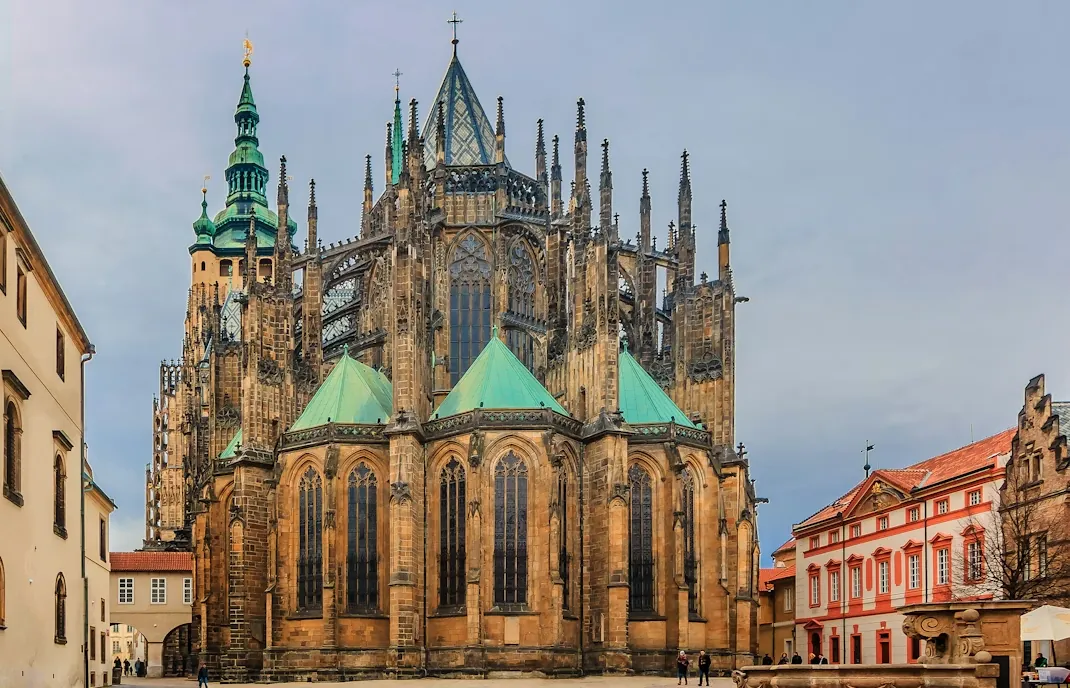
The Office of the President of the Czech Republic administers the complex today; the President's official residence still occupies the New Royal Palace. Grounds are open access; historic interiors require a circuit ticket.[8]
Practical: grounds open daily 06:00–22:00; historical interiors 09:00–17:00 in summer (Apr–Oct), 09:00–16:00 in winter (Nov–Mar). Prague Castle Circuit (Old Royal Palace, St George's Basilica, Golden Lane, St Vitus) adult CZK 450, valid two consecutive days. Story of Prague Castle exhibition CZK 300; Picture Gallery CZK 200. Limited access during state ceremonies. Tram 22 to Pražský hrad or metro Malostranská plus a 10-minute walk uphill. Plan your visit.[8]
8. Karlštejn Castle (Czech Republic)
Central Bohemia Tours only; reduced winter access Charles IV's crown jewel keep Map
Karlštejn is the Gothic fortress Charles IV built between 1348 and 1365 to hold the Bohemian crown jewels and the Imperial regalia of the Holy Roman Empire. The Chapel of the Holy Cross, on the top floor of the Great Tower, is the spiritual centre of the building: walls inlaid with semi-precious stones, a vaulted ceiling representing the heavens, and a 14th-century panel cycle by Master Theodoric (now partly displayed at Prague's National Gallery). The Imperial regalia stayed at Karlštejn until 1421; the Bohemian crown jewels remained until 1619.
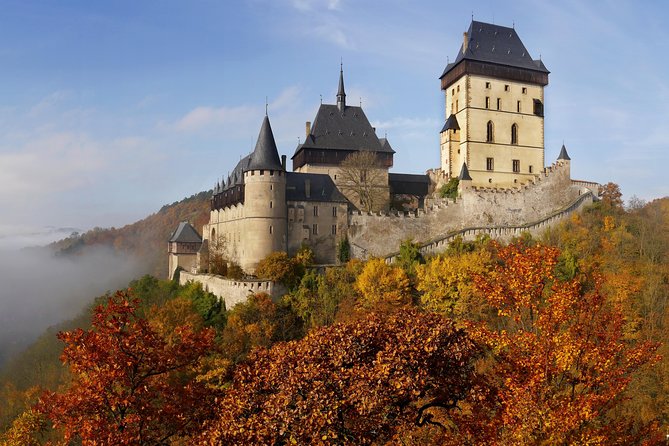
Tour I (the Imperial Residence) is the standard 55-minute visit through the lower-tower halls. Tour II runs 100 minutes and includes the Chapel of the Holy Cross, with strict visitor numbers and advance booking required. The walk up from Karlštejn village takes about 30 minutes.[9]
Practical: open year-round but seasonal. Apr–Oct daily 09:00–18:00 (typical); Jan–Feb Fri–Sun 10:00–15:00 (open daily 1–4 January); Mar, Nov, Dec mid-season hours. Tour I adult CZK 300 (about €12), free under 6. Tour II adult CZK 640 (about €26), advance booking required. Train from Prague to Karlštejn station via Beroun, then a 2-kilometre walk uphill. Plan your visit.[9]
9. Český Krumlov Castle (Czech Republic)
South Bohemia Closed Mondays UNESCO Renaissance town Map
Český Krumlov is the second-largest castle complex in the Czech Republic after Prague Castle, built on a granite spur above a horseshoe loop of the Vltava. The Lords of Krumlov founded the original fortress in the 1240s; the Rosenberg family held it through the late medieval and Renaissance period, the Eggenbergs from 1622, and the Schwarzenbergs from 1719 until nationalisation in 1947. UNESCO inscribed the historic centre in 1992. The Baroque Castle Theatre, intact in its original 1766 condition with surviving stage machinery, costumes and scenery, is one of only a handful of preserved working Baroque theatres in Europe.[10]
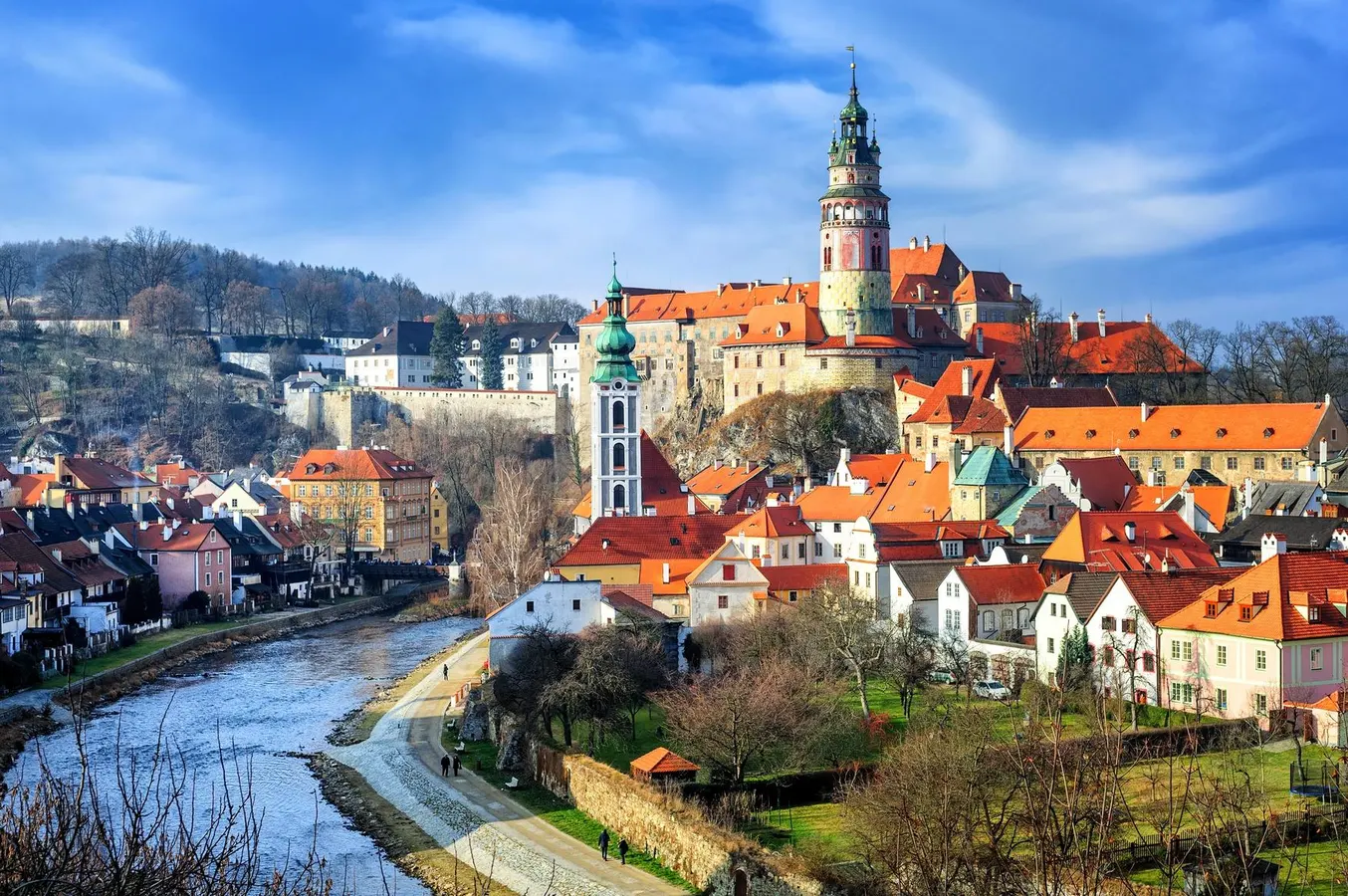
Tour I covers the Renaissance and Baroque interiors; the Castle Museum and Tower carry their own ticket; the Castle Theatre runs limited guided tours between May and September; the gardens are free.
Practical: Tour I open Tue–Sun, Apr–Oct only; closed Mondays. Jun–Aug 09:00–17:00; Apr, May, Sep, Oct 09:00–16:00. Most interiors closed Nov–Mar. Tour I adult CZK 300 (about €12), reduced CZK 240, child 6–17 CZK 90, under 5 free. RegioJet or Leo Express bus from Prague (about 3 hours), or train via České Budějovice. Plan your visit.[10]
10. Buda Castle (Hungary)
Budapest Closed Mondays Royal palace and museum quarter Map
Buda Castle (Budavári Palota) crowns the southern end of the Castle Hill above the Danube in Budapest's first district. Béla IV built the original keep here in the 1240s after the Mongol withdrawal; the Anjou and Sigismund kings extended it through the 14th and 15th centuries; Maria Theresa rebuilt it as a Baroque royal residence between 1749 and 1769. Soviet artillery destroyed most of the complex in the 1945 siege of Budapest; post-war reconstruction returned the silhouette but used the interiors for cultural functions rather than restoring royal apartments.

The palace today houses two major institutions: the Hungarian National Gallery (Hungarian painting and sculpture from the Middle Ages to the 20th century) and the Budapest History Museum, also called the Castle Museum or Vármúzeum, in the E wing, covering two thousand years of Buda, Pest and Óbuda. The recently restored St Stephen's Hall runs pre-booked guided tours with a maximum of 20 visitors per slot.[11]
Practical: Castle Museum / Budapest History Museum open daily 10:00–18:00 (last entry 17:30). Hungarian National Gallery open Tue–Sun 10:00–18:00, closed Mondays. Castle Museum adult HUF 3,800; student or youth (6–26) HUF 1,900; senior (62–70) HUF 1,900; under 6 and over 70 free. Hungarian National Gallery permanent exhibition adult around €9, with 50% discount for EU youth (6–26) and seniors (62+). Bus 16 or 16A from Deák Ferenc tér, or the Castle Hill Funicular from Clark Ádám tér. Plan your visit.[11]
11. Bran Castle (Romania)
Brașov County Open daily, year-round Bram Stoker's Dracula association Map
The Saxon merchants of Brașov built the original Bran fortress between 1377 and 1388 under a charter from Louis I of Hungary, as a customs post on the Bran-Rucăr pass between Transylvania and Wallachia. Queen Marie of Romania received the castle in 1920 as a gift from Brașov and modernised the interiors as a royal summer residence between 1920 and 1932. Communist nationalisation in 1948 removed it from the family; after a 2006 restitution decision, ownership returned to her Habsburg descendants (Archduke Dominic of Austria-Tuscany and his sisters), who operate the castle as a private museum today.[12]

The Bram Stoker association is essentially literary. There is no documented historical link between Vlad III Țepeș and Bran specifically; Stoker never visited Romania, and the castle of his 1897 novel is a composite. Bran fits the description well enough to have absorbed the legend, and the modern visit leans into it with a Time Tunnel exhibition and the Medieval Torture Chambers.
Practical: open daily year-round. Apr–Oct: Mon 12:00–19:00, Tue–Sun 09:00–19:00 (last entry). Nov–Mar: Mon 12:00–18:00, Tue–Sun 09:00–18:00. Adult RON 90; student (with card) RON 50; child 5–17 RON 30; senior 65+ RON 60. Bus 4011 or maxi-taxi from Brașov to Bran (about 30 km, around 50 minutes). Plan your visit.[12]
12. Corvin Castle (Romania)
Hunedoara, Transylvania Open daily Hunyadi Gothic stronghold Map
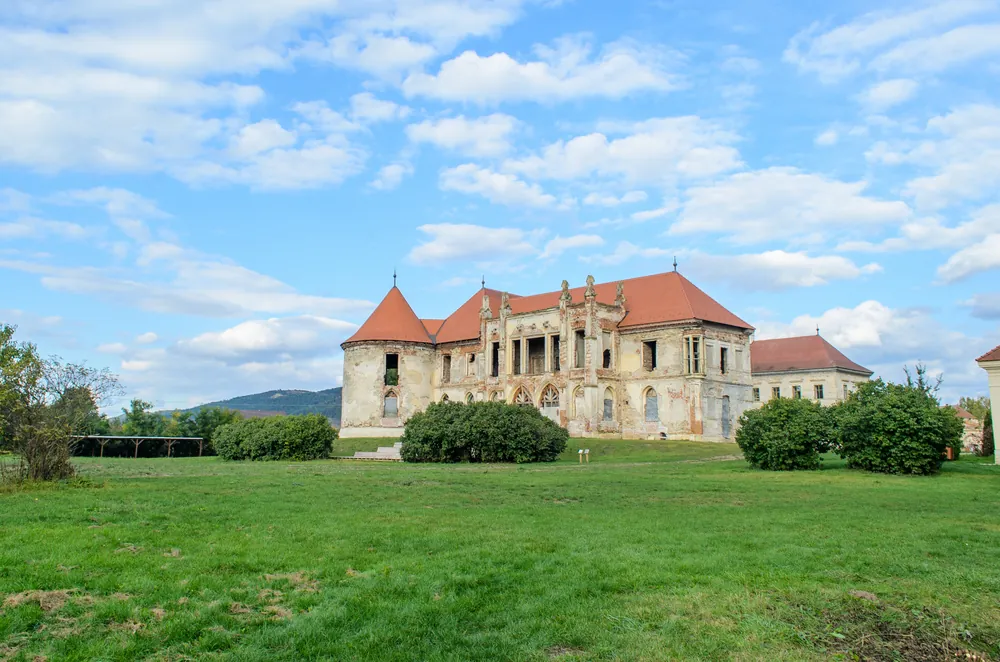
Corvin Castle (Castelul Corvinilor in Romanian, Vajdahunyad in Hungarian) is the most architecturally important Gothic castle in Romania. The Anjou kings built the original fortress in the 14th century on a former Roman camp site. Iancu de Hunedoara (János Hunyadi in Hungarian, Latinised as Joannes Corvinus), Voivode of Transylvania and Regent of Hungary, transformed it into his family seat between 1440 and 1456. Hunyadi commanded the mid-15th-century Hungarian campaigns against the Ottomans; his son Matthias Corvinus reigned as king of Hungary 1458–1490.[13]
The Knights' Hall, the Council Room, the Chapel and the Nje Boisia tower (a five-storey artillery bastion connected to the main castle by a 100-foot suspended corridor) survive from the Hunyadi fabric. A 94-foot well in the inner courtyard is reputed to have been dug by Turkish prisoners over 15 years. A lightning fire in 1854 destroyed the wooden upper structure; the castle stood derelict for a decade before a 40-year restoration began. The current presentation reflects multiple medieval and 19th-century campaigns.[13]
Practical: open daily; Mon–Thu 09:00–17:00 (typical), Fri–Sat extended evening hours, Sun 09:00–17:00. Confirm seasonal hours on the operator site. Adult ticket around RON 45; concessions for students and pensioners. Strada Curtea Corvineștilor 1-3, Hunedoara. From Cluj-Napoca, drive about 2.5 hours; from Sibiu, about 2 hours. Plan your visit.[13]
At a glance
| Castle | Region | When to go | |
|---|---|---|---|
| Malbork Castle (Poland)World's largest brick castle | Pomerania | Open daily, free Mondays | |
| Wawel Royal Castle (Poland)Polish coronation seat | Kraków | Open daily, timed entry per exhibit | |
| Książ Castle (Poland)Silesia's largest castle | Lower Silesia | Open daily, year-round | |
| Moszna Castle (Poland)99 turrets fairytale | Opole Voivodeship | Daily Apr–Oct; weekends only Nov–Mar | |
| Spiš Castle (Slovakia)One of Europe's largest castle ruins | Prešov region | Closed for major reconstruction in 2026 |
| Bratislava Castle (Slovakia)Danube fortress crown | Bratislava | Closed Tuesdays |
| Prague Castle (Czech Republic)World's largest castle complex | Prague | Grounds free; circuits ticketed | |
| Karlštejn Castle (Czech Republic)Charles IV's crown jewel keep | Central Bohemia | Tours only; reduced winter access | |
| Český Krumlov Castle (Czech Republic)UNESCO Renaissance town | South Bohemia | Closed Mondays | |
| Buda Castle (Hungary)Royal palace and museum quarter | Budapest | Closed Mondays | |
| Bran Castle (Romania)Bram Stoker's Dracula association | Brașov County | Open daily, year-round | |
| Corvin Castle (Romania)Hunyadi Gothic stronghold | Hunedoara, Transylvania | Open daily |
What counts as Eastern Europe here
The label is contested. The UN geoscheme groups Poland, the Czech Republic, Slovakia and Hungary into Eastern Europe; the Visegrád countries themselves usually self-identify as Central European. For an itinerary the regional spine is what matters: the Polish-Lithuanian, Bohemian, Hungarian and Romanian historical spheres, broadly the territory east of the German lands and north of the Balkans. Jean-Denis Lepage's pan-European fortification survey treats Eastern European medieval castles as a distinctive blend of Western Gothic influences and the Polish-Lithuanian-Hungarian Renaissance, with the brick-built Teutonic template along the Baltic, the limestone Hungarian highland castles, the Renaissance courtyards of the Polish magnates and the Saxon-built Transylvanian fortresses overlapping under shared dynastic networks (Anjou, Jagiellon, Habsburg).[14]
Famous, medieval, Gothic and largest
Famous. Prague Castle, Wawel and Bran lead the Eastern European visitor numbers; Karlštejn and Český Krumlov follow as the canonical Bohemian day trips out of Prague. Corvin in Hunedoara is the better Gothic visit on the Transylvanian leg.
Medieval. Malbork's 14th-century Teutonic high castle, Spiš's hilltop ruin and Karlštejn's Charles IV keep are the strongest medieval survivors. Bratislava is medieval in origin but its 1953–1968 reconstruction means most of the fabric is modern.
Gothic. Karlštejn's Chapel of the Holy Cross is the canonical Bohemian Gothic interior. Corvin's Knights' Hall and Council Room are the standout Gothic civil rooms in Romania. Malbork's Grand Master's Palace is the Order's high-Gothic showpiece.
Largest. Prague Castle is widely cited as the largest castle complex in the world by area; Malbork is the largest brick castle by built floor area; Spiš is one of the largest castle ruins in central Europe; Český Krumlov is the second-largest complex in the Czech Republic after Prague.
Sources
1. Pluskowski, A. The Archaeology of the Prussian Crusade: Holy War and Colonisation. Routledge, 2013, esp. pp. 150–158, 161, 164–184.
2. Muzeum Zamkowe w Malborku (Malbork Castle Museum), official site. Tickets, routes, opening hours and free-Monday policy at
3. Wawel Royal Castle State Art Collection, official site. Opening hours and ticket structure at
4. Zamek Książ, official site (Przedsiębiorstwo Zamek Książ, Wałbrzych). Opening hours and ticket combinations at
5. Zamek w Mosznej, official site. Opening hours, chamber tours and prices at
6. UNESCO World Heritage List, ref. 620, Levoča, Spišský Hrad and the Associated Cultural Monuments (1993, extended 2009).
7. Slovenské národné múzeum / Bratislava Castle, official site. Opening hours and grounds policy at
8. Prague Castle Administration / Office of the President of the Czech Republic, official site. Opening hours, circuit ticket and exhibitions at
9. Hrad Karlštejn, official site (Národní památkový ústav). Tour types, prices and seasonal hours at
10. Státní hrad a zámek Český Krumlov, official site (Národní památkový ústav). Opening hours by route at
11. Budapest History Museum / Castle Museum (BTM Vármúzeum), official site. Address (Building E, Buda Castle), opening hours and ticket prices at
12. Bran Castle, official site. Opening hours at
13. Castelul Corvinilor, official ticketing site,
14. Lepage, J.-D. G. G. Castles and Fortified Cities of Medieval Europe: An Illustrated History. McFarland, 2002, pp. 350–420 (Central and Eastern Europe).