
The Biggest Castle in Europe: Malbork, and Why the Metric Matters
Malbork in Poland is the biggest castle in Europe at 21 hectares of enclosed walls. The full ranking by metric: enclosed walls (Malbork wins), total grounds (Buda Castle), continuous occupation (Windsor).
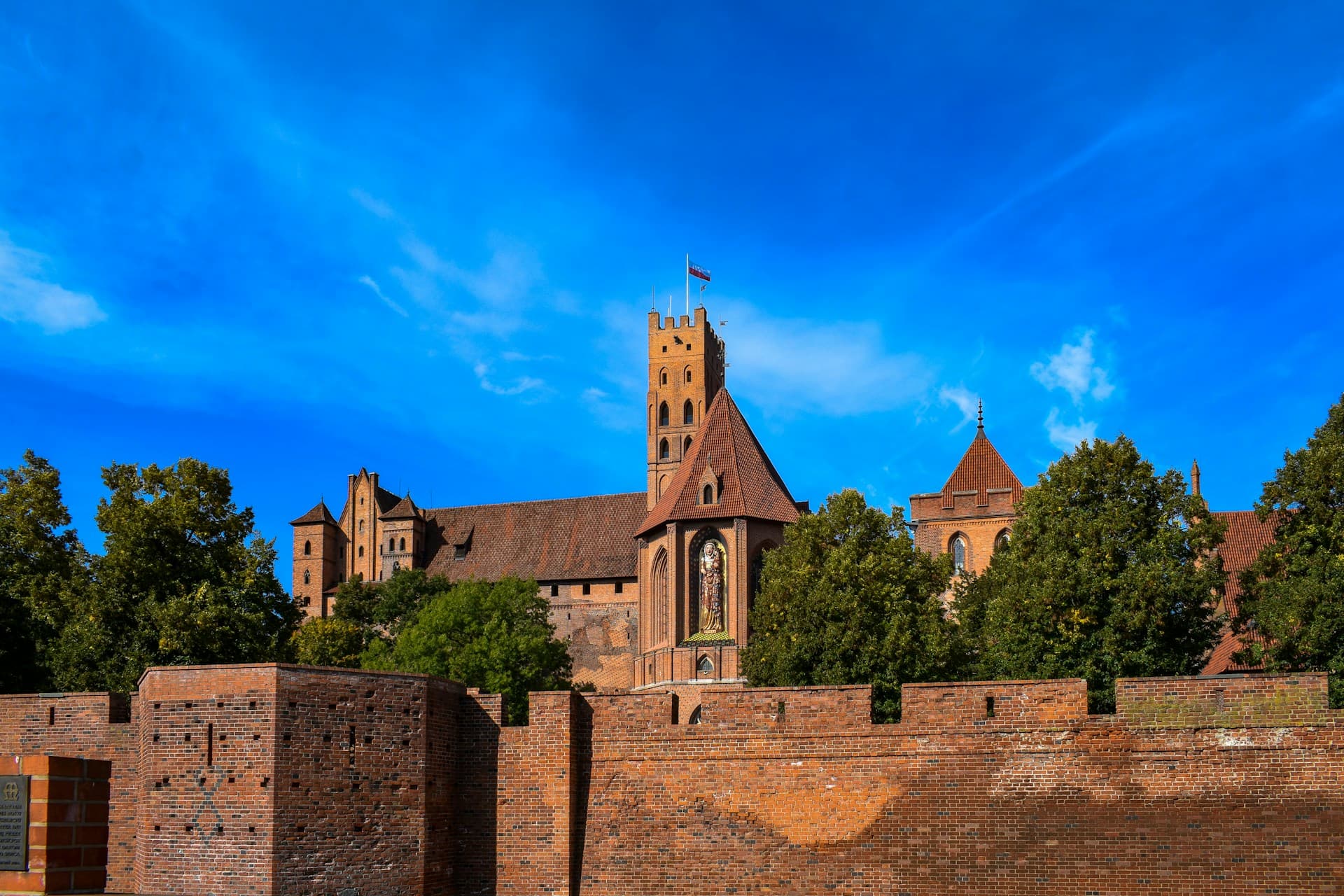
The biggest castle in Europe is Malbork in northern Poland, four times the size of Windsor. The harder question is what "biggest" actually means: by enclosed walls, by total grounds, or by how long someone has been living there.
The biggest castle in Europe is Malbork, on the lower Vistula in northern Poland. 21 hectares (52 acres) of enclosed walls, four times the area of Windsor and roughly thirty football pitches of fortified ground.[1] The Teutonic Knights began construction in 1274, made it their headquarters from 1309, and built it in brick because the Vistula delta has no useful stone. The reddish hue of the wall is specific to the kilns the Order set up along the Nogat. UNESCO inscribed the castle in 1997.
The honest complication is that "biggest" depends on the metric. Choose total grounds and Buda Castle's 4.73 km² Castle Hill site wins. Choose continuous occupation by a monarch and Windsor wins at over 950 years. Choose enclosed walls (the architectural-defensive metric) and Malbork wins by a four-times margin. This article picks the enclosed-walls metric and treats the others as worth knowing, not as competing answers. For the global frame including Mehrangarh and Himeji, see the largest castles in the world.
| # | Castle | Country | Enclosed area | Built from | Status |
|---|---|---|---|---|---|
| 1 | Malbork Castle | Poland | 21 ha (52 acres) | 1274 | UNESCO WHS, museum |
| 2 | Prague Castle | Czech Republic | 7.28 ha (18 acres) | c. 879 | Czech presidential seat, UNESCO |
| 3 | Buda Castle | Hungary | 4.73 km² Castle Hill | 1247 | National museums, UNESCO |
| 4 | Windsor Castle | England | 5.3 ha (13 acres) | 1070 | Active royal residence |
| 5 | Spiš Castle | Slovakia | 4.1 ha (41,426 m²) | 1120 | UNESCO WHS, ruin |
| 6 | Edinburgh Castle | Scotland | 35,737 m² (3.6 ha) | c. 1103 | Visitor attraction, military base |
| 7 | Hohensalzburg | Austria | 32,000 m² (3.2 ha) | 1077 | Visitor attraction, fully preserved |
Malbork Castle: 21 hectares of brick
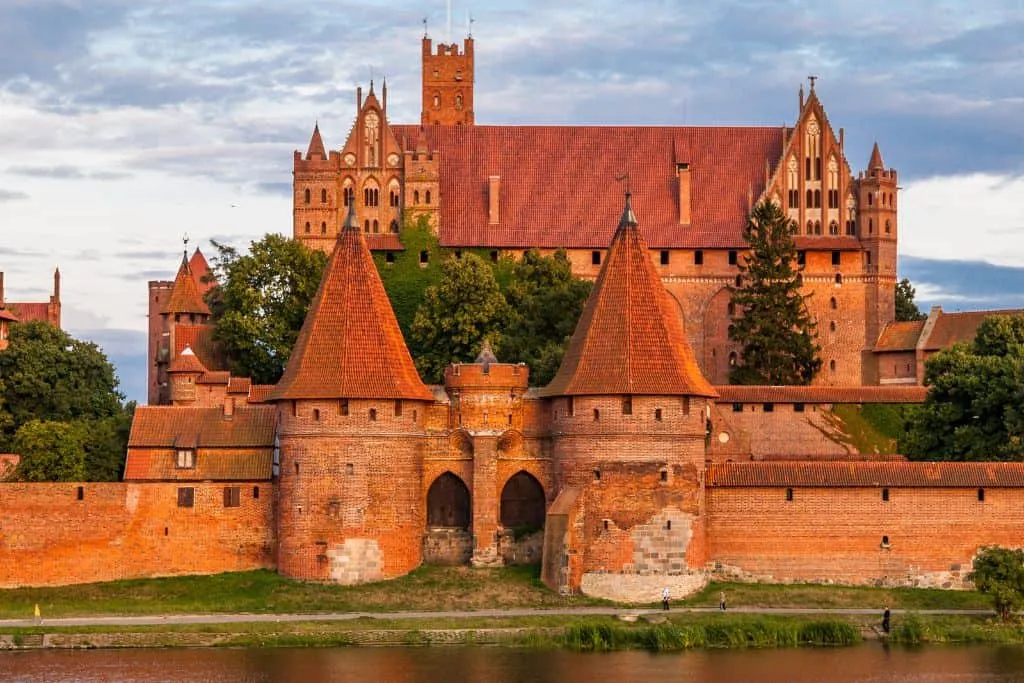
The Teutonic Knights began Malbork (Marienburg in the German chronicles) in 1274 as a regional headquarters in their Baltic crusade against the pagan Prussians. After the Order moved its main seat from Venice to Marienburg in 1309, the castle expanded relentlessly. At peak it housed roughly 3,000 knight-monks plus support staff, effectively a small city behind a single fortified perimeter. The Order's Baltic amber-trade monopoly paid for the construction. Scale follows revenue.[1]
The 21-hectare figure measures the enclosed walls (Outer Bailey, Middle Bailey, High Castle). The widely-cited 143,591 m² figure (the Marek Prokop KML measurement) covers the inner fortified area at a tighter boundary. Both are correct at different perimeters. Either way, Malbork is the largest brick fortress ever built. Pluskowski's chapter title in The Archaeology of the Prussian Crusade says it cleanly: "A Land of Red Castles."[1]
The complex sits in two timelines at once. Allied artillery hit Malbork in early 1945 and over half the structure had to be rebuilt across the post-war decades. The reconstruction is meticulous, and the UNESCO inscription in 1997 reflects both the medieval fabric and the post-war restoration achievement. The Castle Museum in Malbork operates the site today. For the wider Eastern European heritage context, see castles of Eastern Europe. For the live Polish listings, browse castles for sale in Poland.
Prague Castle: the largest ancient castle, by Guinness measurement
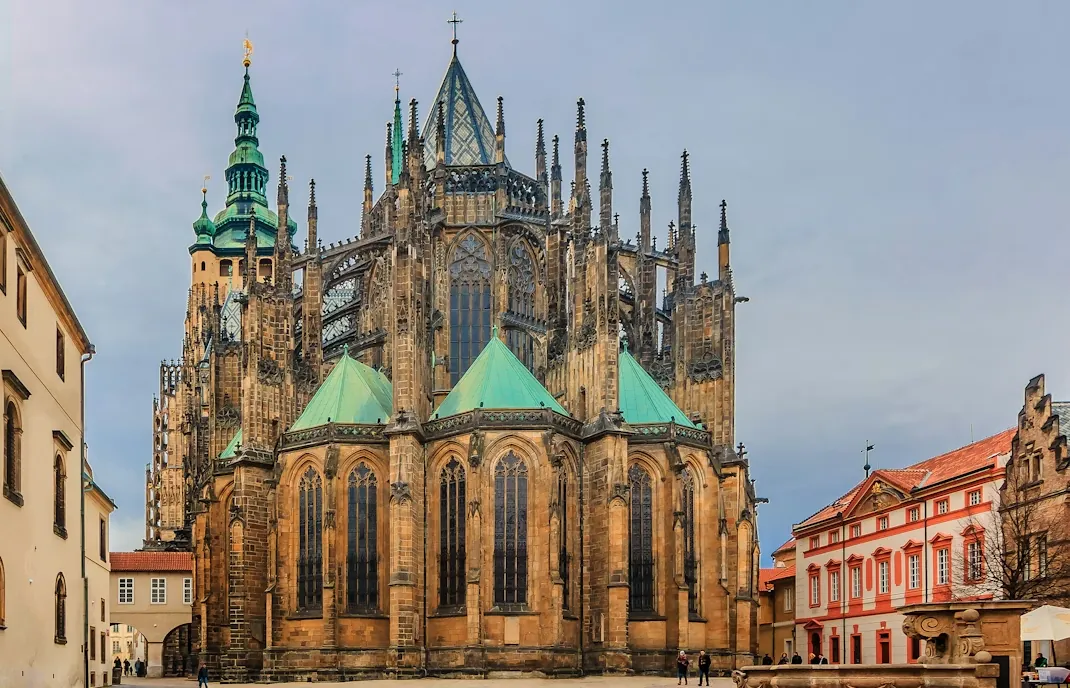
Prague Castle is widely cited via Guinness World Records as the largest ancient castle in the world. The qualifier matters: Guinness's "ancient" framing distinguishes it from Malbork, which is medieval rather than ancient. The footprint is an oblong polygon roughly 570 metres long by 128 wide on average, working out to 7.28 hectares enclosed.
Founded around 879 as a walled Bohemian seat, the complex carries Romanesque, Gothic, Renaissance and Baroque additions across over a thousand years of continuous use. St Vitus Cathedral within the precinct was begun under Charles IV in 1344, and the principal nave was only completed in 1929 for the millennium of St Wenceslas. The castle now serves as the official residence of the Czech President. The site drew 2.59 million visitors in 2024, more than any other tourist site in the Czech Republic. UNESCO World Heritage inscription covers the castle as part of the broader Historic Centre of Prague.
Buda Castle: 4.73 km² of Castle Hill if you count grounds
King Béla IV broke ground at Buda around 1247, in the years immediately after the Mongol invasion that had devastated Hungary. Under Sigismund of Luxembourg (1410-1437), the palace expanded into what contemporaries called probably the largest Gothic palace of the late Middle Ages. The palace itself sits at around 44,674 m² of built fabric, but the broader Castle Hill site spans 4.73 km²: the defining "biggest by total grounds" claim if total grounds is the metric you want.
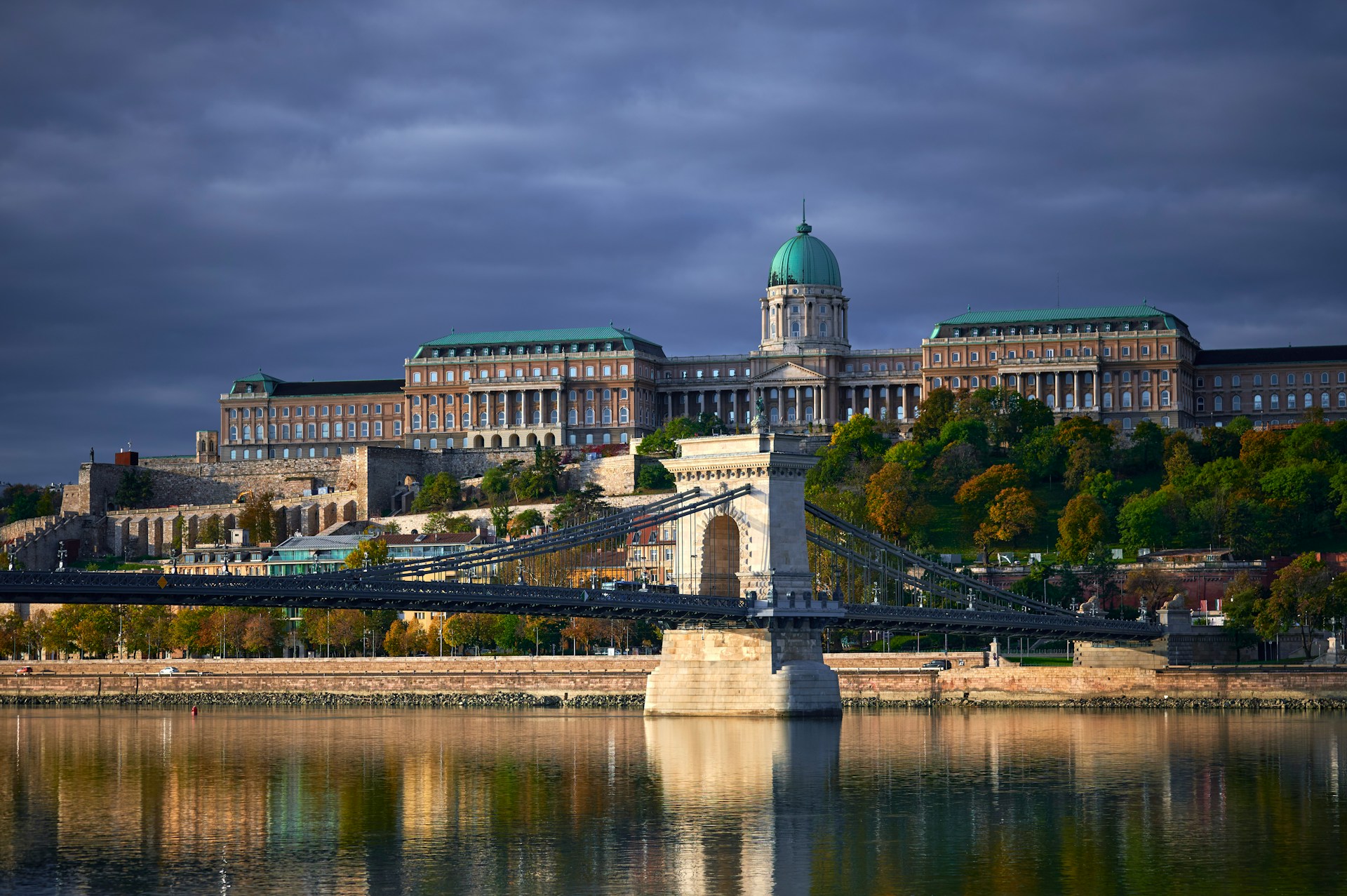
Buda's history is a sequence of repeated destructions. Ottoman occupation, Habsburg reconstruction, catastrophic Second World War damage in 1944-45. The current palace is the post-war reconstruction, completed in stages across the second half of the 20th century. Inside today: the Hungarian National Gallery, the Budapest History Museum and the National Széchényi Library. UNESCO inscribed the Banks of the Danube and the Buda Castle Quarter in 1987.
Windsor Castle: 950 years of continuous occupation
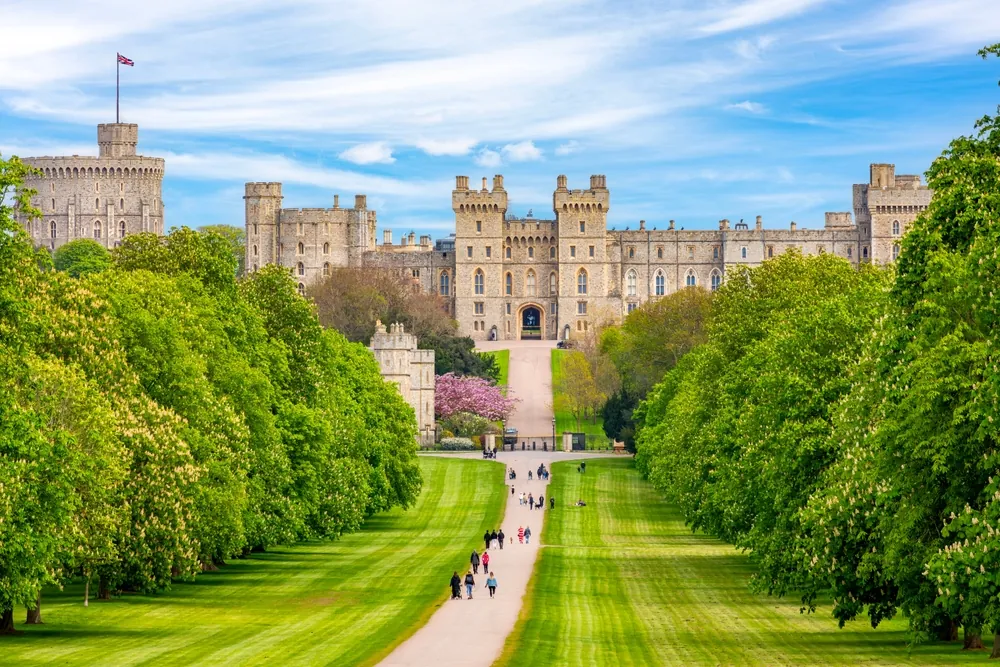
Windsor is the metric-bender on the list. By enclosed area it sits at around 5.3 hectares, smaller than Malbork by a factor of four. By continuous occupation it has no European competitor: William the Conqueror commissioned the original fortification in the decade after 1066, Henry I (1100-1135) was the first monarch to take up residence, and forty monarchs have shaped the architecture across the 950+ years since.[3] By built floor area Windsor is the largest inhabited castle in the world, around 45,000 m².
Inside sit the State Apartments, St George's Chapel (the burial place of Henry VIII, Charles I, and Elizabeth II), the Royal Archives, and the Round Tower on William's original motte. The 1992 fire destroyed nine principal rooms in the State Apartments and damaged over a hundred others; restoration finished on 17 November 1997 at a final cost of £36.5 million, well under the £60 million initial estimate. Around 70% of the cost was met by opening Windsor and the Buckingham Palace precincts to paying visitors for the first time, a shift in heritage funding that shaped the modern Royal Household model.[3]
For the live UK market, browse castles for sale in the UK.
Spiš Castle: 4.1 hectares of Slovak ruin
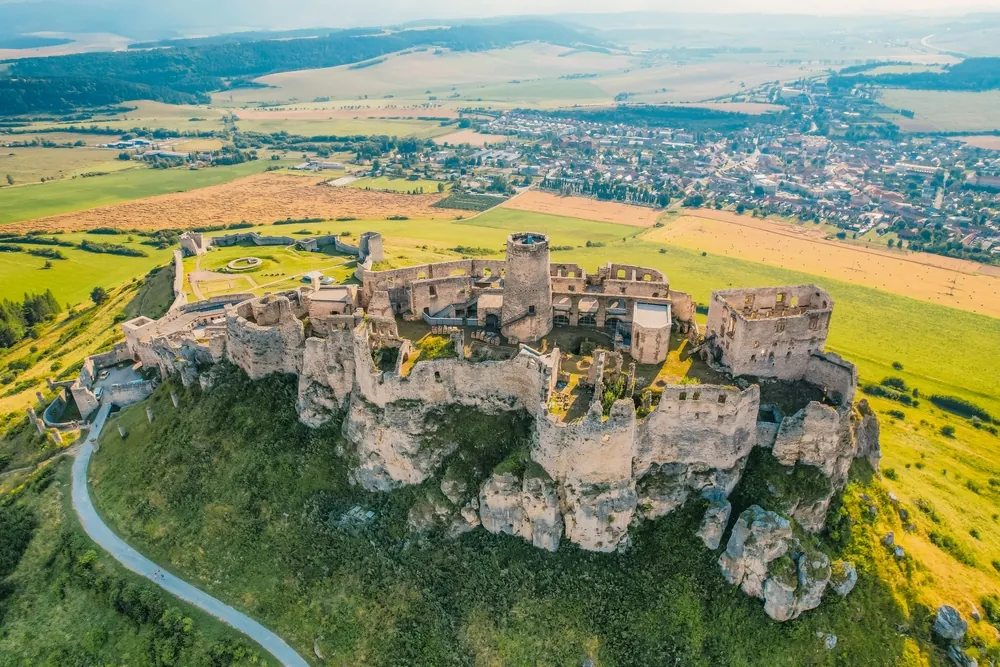
Spiš Castle sits on travertine cliffs above eastern Slovakia. First written record 1120; centuries as the administrative centre of Szepes County in the medieval Kingdom of Hungary. The 41,426 m² of fortified site (4.1 hectares) makes it the third-largest enclosed castle in Europe behind Malbork and Prague.
A 1780 fire reduced the castle to ruin and the structure stood abandoned for two centuries before 20th-century conservation stabilised the walls. UNESCO inscribed the site in 1993 alongside Spišská Kapitula and Žehra. The Spiš Museum occupies the restored sections. Visitor numbers run around 200,000 a year, with recent years approaching 212,000. The silhouette is visible from over 20 kilometres away across the Slovak hills.
Edinburgh Castle: 35,737 square metres of volcanic plug
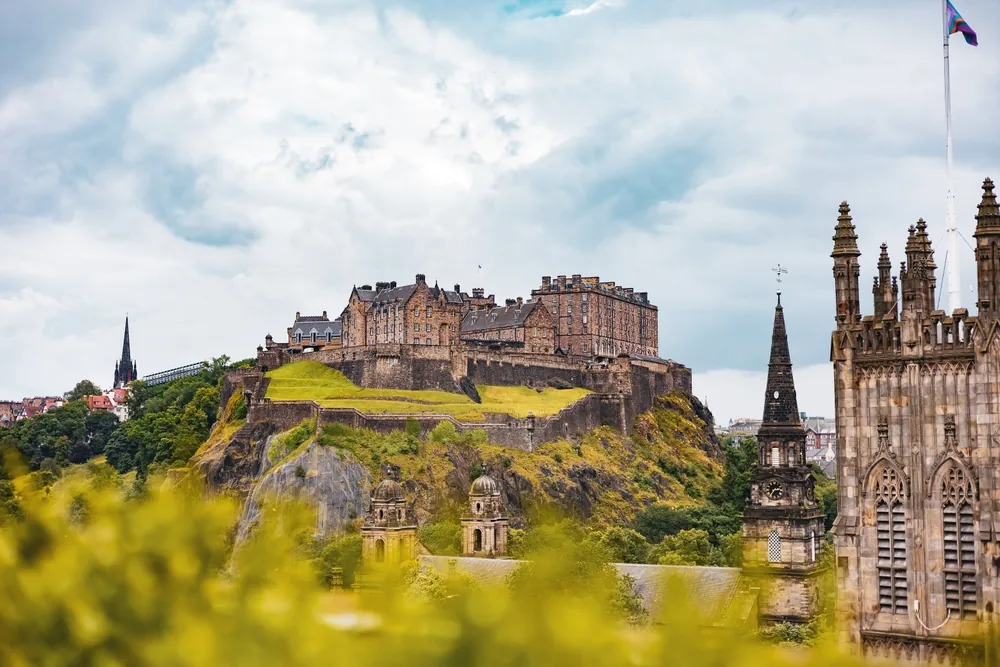
Edinburgh Castle sits on Castle Rock, a volcanic plug that has carried fortification since at least the 11th century. King David I built the present castle around 1103, and St Margaret's Chapel within the precinct dates from his reign (1124-1153), Edinburgh's oldest surviving building. The castle's total area is 35,737 m² (3.6 hectares).
Edinburgh is the most-besieged place in Great Britain: 26 sieges in roughly 1,100 years, per research published in 2014. Inside the castle today sit the Honours of Scotland (the Scottish crown jewels), the Stone of Destiny, and the Scottish National War Memorial. Historic Environment Scotland recorded 2,044,963 visitors in 2025, down from a 2019 peak of 2,201,354.[4] The Edinburgh Military Tattoo on the castle esplanade draws global audiences each summer.
Hohensalzburg: 32,000 square metres, never taken by force
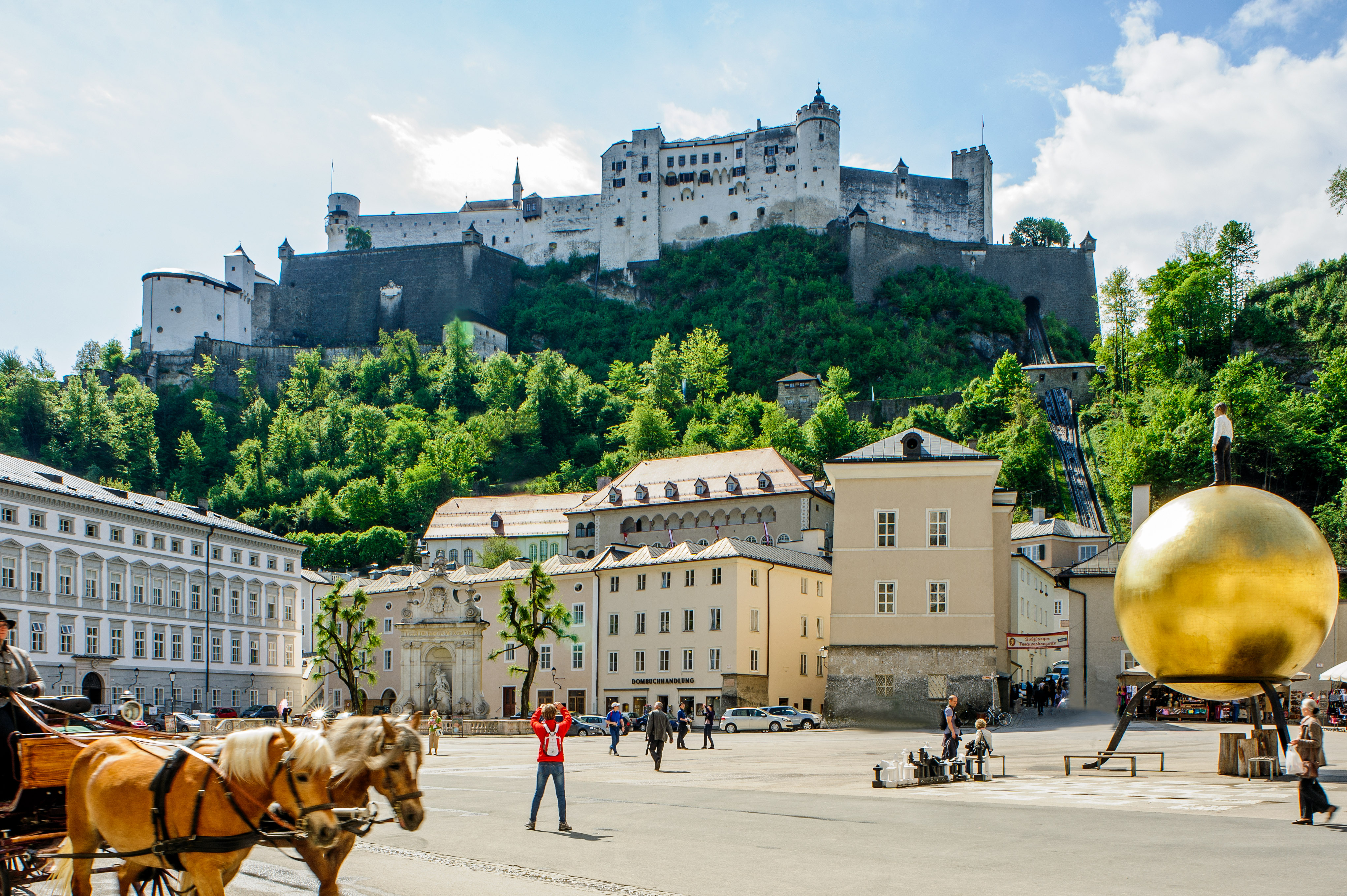
Festung Hohensalzburg closes the seven-castle list at around 32,000 m² above Salzburg's old town. Archbishop Gebhard von Helfenstein began construction in 1077 during the Investiture Controversy, and successive Prince-Archbishops expanded the fortress over five centuries.
The architectural distinction is preservation. Hohensalzburg has never been taken by force in nearly a thousand years. The 1525 German Peasants' War siege failed. Napoleon's troops in 1800 didn't need to fire a shot: the Prince-Archbishop's garrison surrendered without one. The medieval fabric survived intact. The Festungsbahn funicular has carried visitors from below the old town since 1892, and over three hundred chamber-music concerts run inside the fortress walls every season as the Salzburg Fortress Concerts. Around a million visitors a year. For the live Austrian listings, browse castles for sale in Austria.
What "biggest" means and where the data lands
Each metric is internally coherent and produces a different answer:
- Enclosed walls: Malbork at 21 hectares.
- Total grounds: Buda Castle Hill at 4.73 km².
- Continuous monarchical occupation: Windsor at 950+ years.
- Built floor area (inhabited): Windsor at around 45,000 m².
- Built floor area (total): Malbork at the 143,591 m² inner-fortified-area boundary.
For the global parent piece including Mehrangarh, Himeji, the Forbidden City and Aleppo, see the largest castles in the world. For the deepest-time question, see the oldest castles in the world.
Common questions
What's the biggest castle in Europe?
Malbork in northern Poland, with 21 hectares of enclosed walls. It's four times the size of Windsor and the largest brick fortress ever built.
Isn't Prague Castle the biggest?
Prague holds the Guinness World Record for the largest ancient castle. The qualifier matters: Guinness uses "ancient" to distinguish Prague from medieval-era castles like Malbork. By enclosed walls, Malbork is roughly three times the size of Prague.
What about Buda Castle's 4.73 km²?
That figure is the whole Castle Hill site, including grounds, gardens and roads, not the walled palace itself. By that measure (total grounds), Buda is the biggest. By enclosed walls, the palace is around 44,674 m², well behind Malbork.
What's the largest inhabited castle?
Windsor, by floor area at around 45,000 m². It's also the longest continuously occupied castle in Europe, with monarchs in residence for 950+ years.
Why was Malbork built so big?
It was the headquarters of the Teutonic Order from 1309. At its peak it housed around 3,000 knight-monks plus support staff. The Order's monopoly on Baltic amber paid for the build. Scale followed revenue.
How much of Malbork is original?
Roughly half. Allied artillery hit the castle in early 1945 and a substantial portion of the structure had to be rebuilt across the post-war decades. The reconstruction is meticulous, and the 1997 UNESCO inscription acknowledges both the medieval fabric and the post-war restoration.
What's the oldest castle on the list?
Prague, founded around 879. Hohensalzburg dates to 1077, Windsor to 1070, and Malbork is the youngest, started in 1274.
Sources
1. Pluskowski, Aleksander. The Archaeology of the Prussian Crusade: Holy War and Colonisation. Routledge, 2013.
3. Royal Collection Trust. Annual Review 2024-25. Royal Collection Trust, 2025.
4. Historic Environment Scotland. Annual Report 2024-25. Historic Environment Scotland, 2025.