FOR CASTLE COLLECTORS
Castle Collector InsightsExplore small castles on sale in Czech Republic
Explore small castles for sale in Czech Republic. From compact medieval towers to petite château residences and restored castle homes in Czech Republic.
Average castle features in Czech Republic
Showing avg. castle price in Czech Republic
Key metrics for Czech Republic
The Czech Republic is one of the best-value ways into a serious castle in Europe. Prices sit at the lower end of the continent, the market is open to EU buyers, and the country runs a tourism economy most western markets would envy outside the Loire. It also has one of the deepest pools of heritage anywhere: around 3,000 protected castles and chateaux, the fifth-largest count in Europe.
The state looks after about 100 of those as visitor sites, and they drew 4.0 million people in 2024, more than the Slovak, Hungarian and Polish state collections combined. That visitor economy matters if you have any thought of running a castle as a business, because the demand is already there.
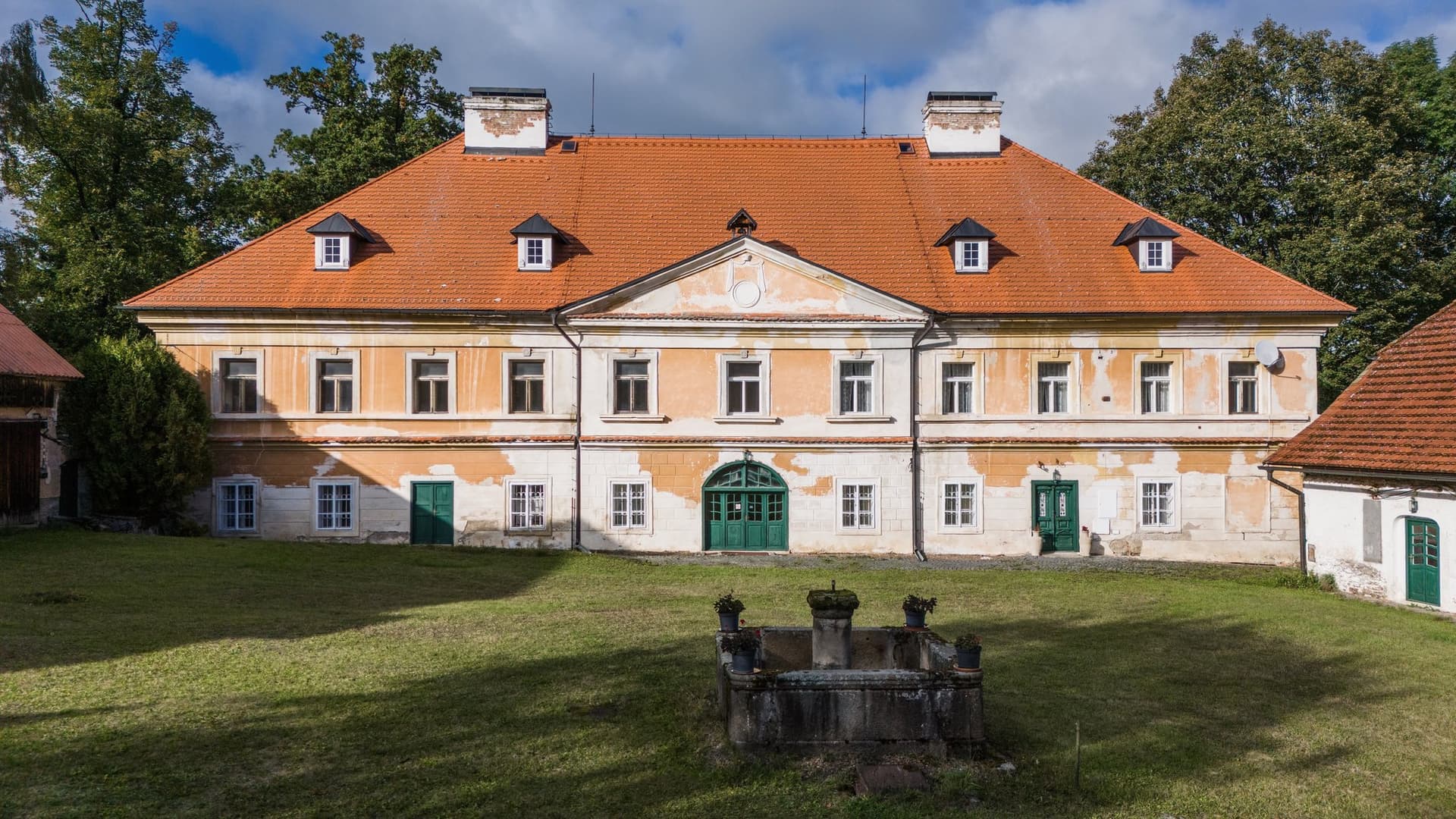
Most of what comes up for sale is the zámek, the palatial country residence, in the €500,000 to €2 million band. Almost all of those properties come with restoration work inherited from decades of communist-era state ownership, so condition, not price, is usually the real question. Prices across the wider European market are covered in the Castle Price Index.
Foreign buyers are welcome. EU and EEA citizens face no restrictions, and non-EU buyers carry a little extra paperwork but nothing like Poland's land permit. All-in buying costs run about 4 to 7%. The one thing to check carefully is a castle's ownership history, for reasons covered in the final section. For the wider process, see how to buy a castle.
A Czech castle typically costs between €500,000 and €2 million, one of the lowest ranges in Europe. Because the market is small and castles rarely come up, there isn't a reliable per-square-metre median the way there is in France or Germany. The clearest benchmark is Chateau Hostačov, which sold at around €1,750 per square metre, roughly a third of Prague's prime residential rate.
What you get in that band is a 500 to 2,000 square metre country residence, almost always with restoration scope attached. Forty to eighty years of deferred maintenance is the default condition outside the marquee names, so the purchase price is only the start of the budget.
Restoration runs around €800 to €2,000 per square metre, low by European standards thanks to local heritage trades, but the total still adds up on a large building. Czech banks lend little to foreign buyers on heritage property, so most purchases here are cash.
The Czech market splits into three historic regions: Bohemia across the western two-thirds, Moravia to the east, and a small strip of Silesia in the north. Which one you choose usually sets both the price and the way you'd run the place.
Bohemia is the visitor heartland and the densest day-trip ring in the country. Prague Castle leads it, recognised by Guinness as the largest ancient castle in the world at around 70,000 square metres, with Karlštejn, Konopiště, the UNESCO town of Český Krumlov and the Windsor-modelled Hluboká nad Vltavou around it. Most of the for-sale zámky sit here in the €500,000 to €2 million band, and the day-trip traffic supports a hospitality angle few markets at this price can match. See castles near Prague for the Bohemian cluster.
Moravia, to the east, runs on wine rather than day-trippers. The Lednice-Valtice cultural landscape, a UNESCO site and former Liechtenstein estate, is the centrepiece, with Mikulov leading the South Moravian wine region and Pernštejn the great Gothic survivor. The wine-country setting makes a working estate a more natural business here than in Bohemia.
Silesia, in the north-east, is the smallest and cheapest segment, with Gothic and Renaissance castles but thinner visitor infrastructure. A buyer who cares more about entry price than tourist traffic will find more here than the listing count suggests. For wider context, see castles of Eastern Europe.
A Czech castle is one of two things. There's the hrad, the medieval defensive castle, built of stone on a hilltop, of which Karlštejn and the core of Prague Castle are the great examples. And there's the zámek, the later palatial residence built for grand living rather than defence, which makes up most of the for-sale market.
The two trace the country's history in order: Gothic hrady raised under the Přemyslid dukes and Charles IV, then the Renaissance and Baroque zámky built by the great aristocratic families once defence stopped being the point. When you see a Czech castle listed, it's almost always a zámek.
The one due-diligence step that matters more here than in Western Europe is checking a castle's restitution history. After the war, the 1945 Beneš decrees confiscated the great aristocratic estates from families like the Liechtensteins, Schwarzenbergs, Lobkowiczs and Kinskýs. Laws passed after 1989 returned much of that stock to their descendants, and a handful of cases still move through the courts.
So on any castle that had aristocratic owners before 1948, use a solicitor who knows restitution practice and have them check the Katastr nemovitostí, the central title register, for any outstanding claim. The legal work is cheap; skipping it isn't.
Beyond that, buying here is straightforward. EU and EEA buyers face no restrictions, costs run about 4 to 7%, a clean purchase takes roughly four to six months, and most deals are done in cash. For the full cross-Europe framework, see how to buy a castle.
Stay informed with curated insights on market trends, tax and legal developments, and new castle investment opportunities.
By subscribing you agree to receive emails from Castle Collector. We’ll send a confirmation email first (double opt-in) and you can unsubscribe anytime. Privacy Policy