
Why Were Castles Built? Four Purposes Most Histories Miss
Castles were built for four overlapping purposes: defence, administration, economic control, and projection of authority.
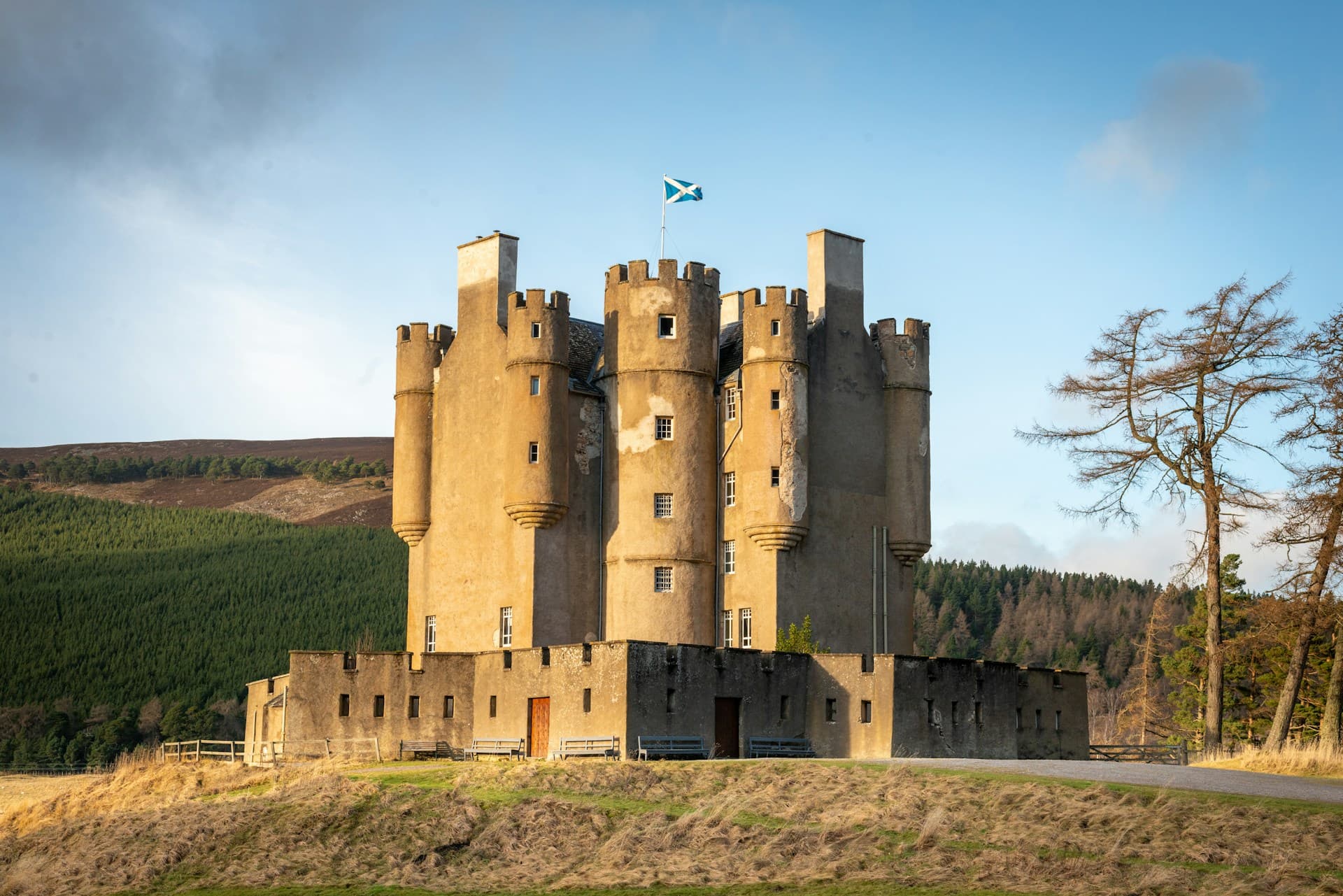
Castles were built for four overlapping reasons at once: defence, administration, economic control, and a public statement of who held power. Read any one of them in isolation and you miss three quarters of what the building was for.
A working medieval castle did all four jobs at the same time. Reading it as a purely military object misses most of the point.[4]
The contrarian beat is that castle-building followed conquest. William the Conqueror's lords built several hundred motte-and-bailey castles across England in the decades after 1066, designed to hold the new Norman territory in place during the post-Conquest pacification. Edward I built the Welsh ring in stone two centuries later for the same job. The Teutonic Order ran the same playbook across the Baltic from the 1230s. The Anglo-Normans did it in Ireland from 1169 onwards. Castles weren't a defensive response to a hostile world; they were the architecture of state-building.[2]
The four purposes, side by side
| Purpose | What it looked like in stone | Canonical example |
|---|---|---|
| Defence | Walls, towers, gatehouses, moats, machicolations | Krak des Chevaliers, Rochester |
| Administration | Great hall as court, treasury, household offices | Caernarfon (seat of the Justiciar of North Wales) |
| Economic control | Toll point, mill, granary, market right | Rhine corridor, 37 castles in 70km around 1500 |
| Projection of authority | Crenellated silhouette, status by royal licence | Bodiam, 1385 |
Source: based on Coulson, Castles in Medieval Society (Oxford, 2003) and Pounds, The Castle in England and Wales (Routledge, 1990).[1][2]
Defence: the obvious answer, and where it isn't enough
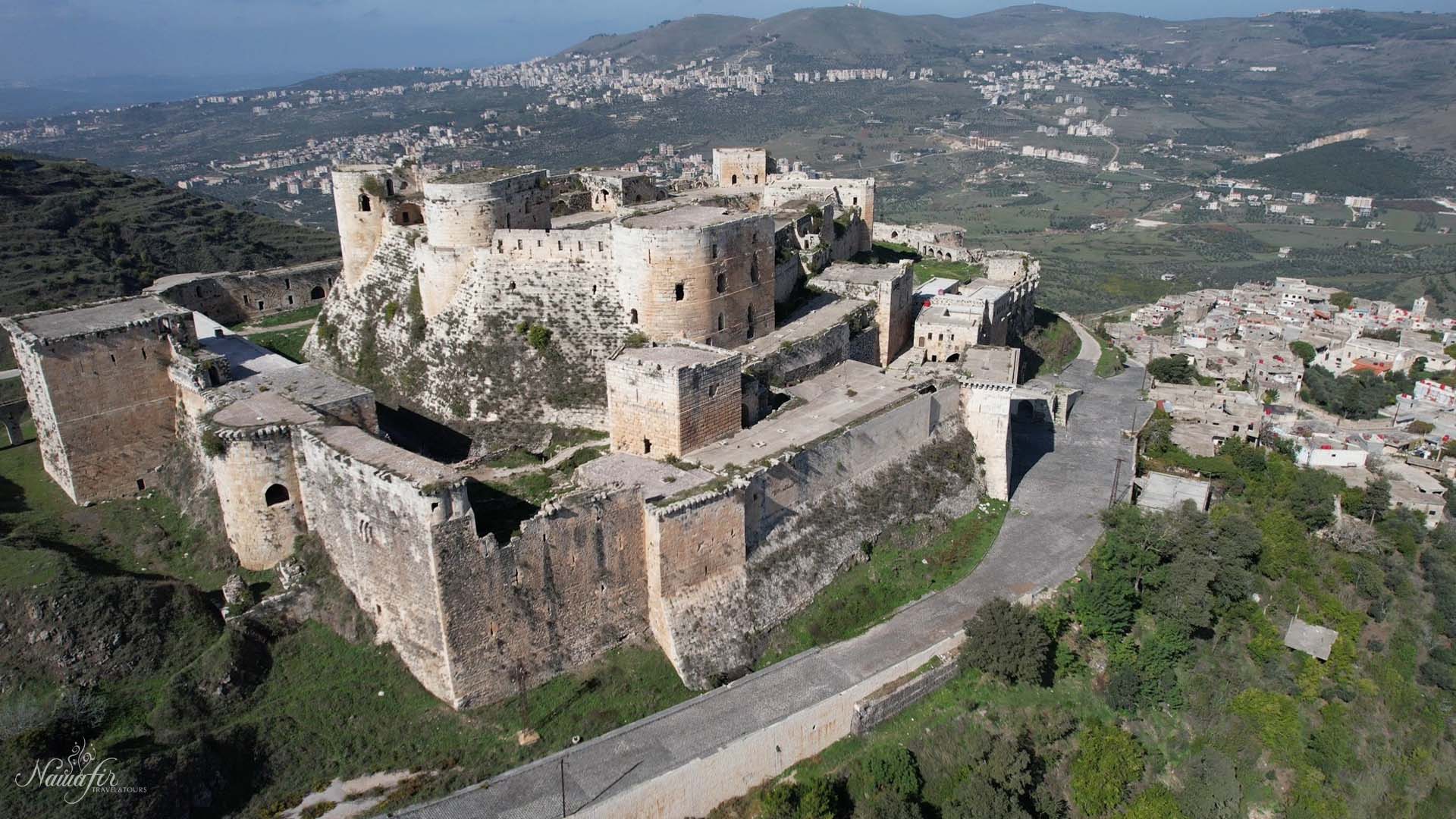
The military baseline is real. Stone walls, towers, gatehouses, moats, drawbridges, machicolations, arrow loops. Castles were genuinely defensible buildings, and sieges happened: King John's miners brought down a corner of Rochester Castle in 1215; Edinburgh Castle endured 26 sieges across roughly 1,100 years; Krak des Chevaliers held off Crusader-era assaults for over a century. A garrisoned castle could shelter local populations under siege for months, with granaries, wells, armouries and quarters built into the building.
The Teutonic Order's Malbork at peak housed around 3,000 knight-monks plus support staff inside a single fortified complex, effectively a small city under brick walls.[7]
But most medieval castles were never besieged. The defensive features mattered partly as legal-status markers, not just as practical defences. The licence to crenellate carried as much social weight as actual military function, and a crenellated silhouette signalled "permitted lord here" before any siege question entered.[1]
For the architectural anatomy that produced these defensive features, see parts of a castle.
Administration: the castle as seat of government
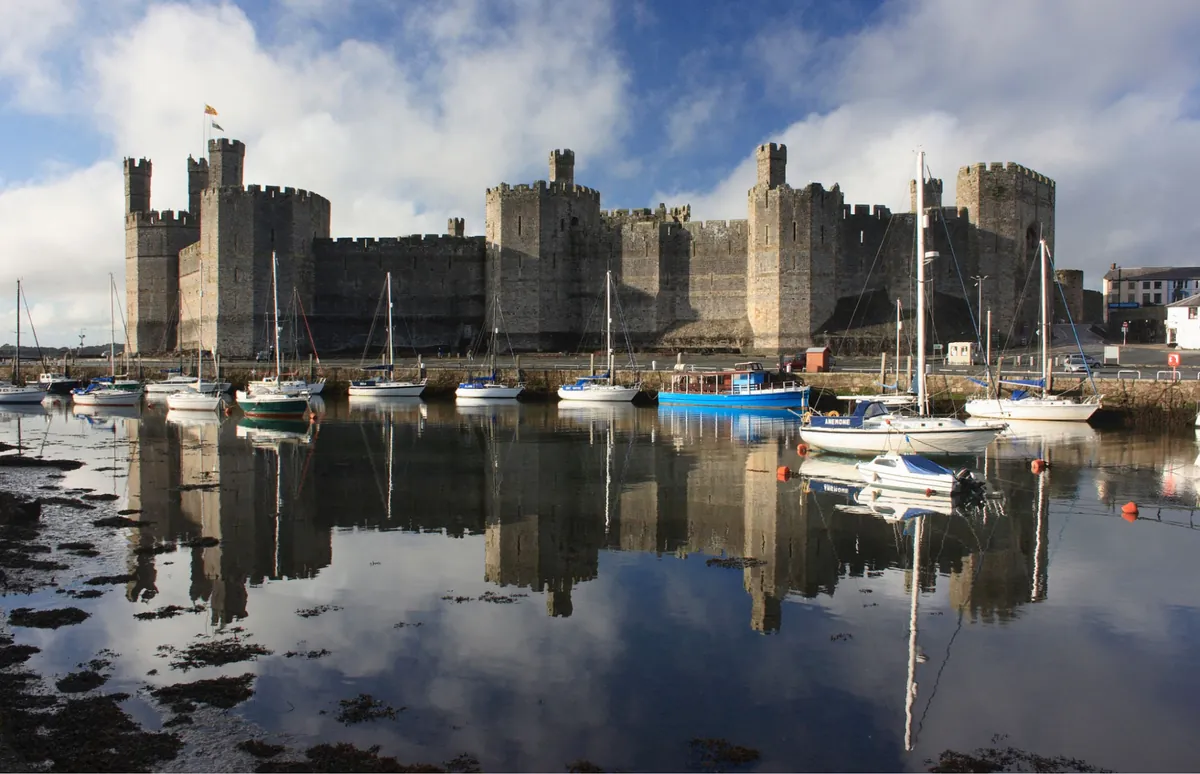
Medieval lords ruled from inside their castles. The great hall doubled as a court of law. Charters and rolls were stored in the keep or chapel. The treasury sat behind locked doors near the lord's private chambers. The household clerks, bailiffs and reeves lived under the same roof as the lord's family. A working castle was a stone seat of government as much as a stone fortress.[2]
After 1066, William the Conqueror's lords held their territory through the castle. Tax collection, justice, military levy, and feudal-court business all moved through the castle gates, and the castellan was the lord's day-to-day administrator across the surrounding territory. The pattern was tactical: the castle was the working office of the conquering elite.[2]
The Welsh ring was an administrative seat as much as a military one. Caernarfon was the seat of the Justiciar of North Wales, and the Edwardian castles housed the new English administrative apparatus that displaced the Welsh-language territorial system. The £80,000 the Crown spent across Caernarfon, Conwy, Beaumaris and Harlech wasn't only spent on military capacity; it was spent on the architecture of governance.[3][5]
Economic control: the toll booth, the mill, the market
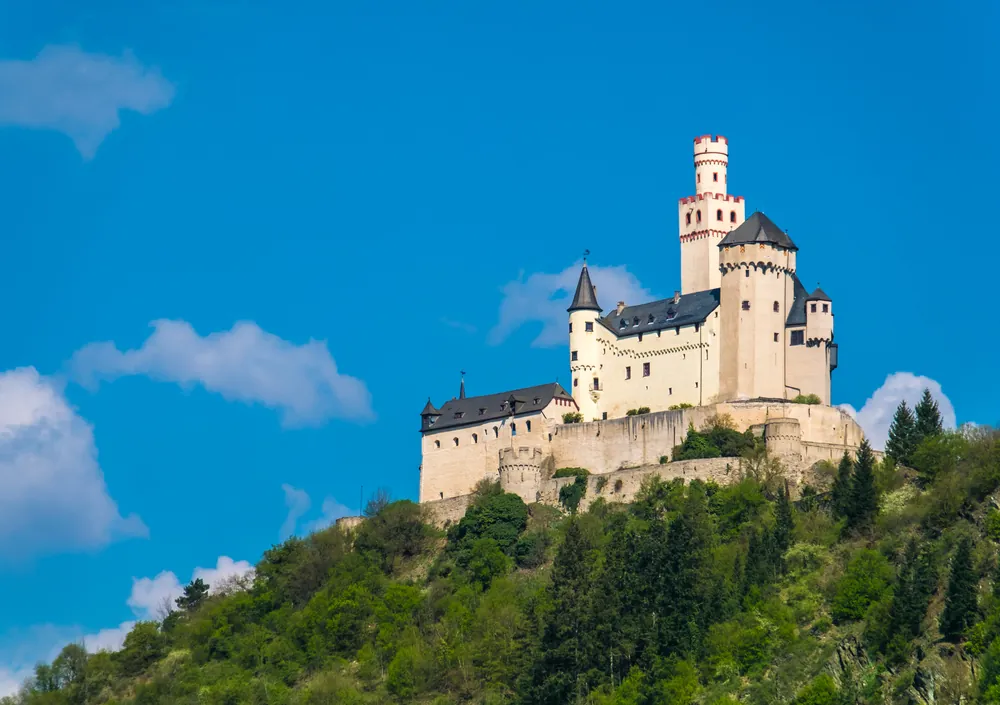
Castles sat on river crossings, mountain passes, market towns, and trade routes precisely because they could collect the tolls. The Rhine corridor between Bingen and Koblenz carried 37 castles around 1500, the densest medieval river-fortification line in Europe, because the river carried the trade and the castles taxed it.[9]
Beyond tolls, castles physically housed the mill, the granary, and the seigneurial right to hold market. Local economic life ran through the castle gate. The lord owned the bakery, the wine press, the oven and the law courts that adjudicated commercial disputes. The castle was the local economic switchboard.[2]
The Teutonic Order's amber-trade revenue paid for the construction of the largest castle in Europe by enclosed area. Scale follows revenue. Malbork is the architectural expression of the Order's Baltic commercial dominance, not just its military reach.[7]
The Italian variant ran a different logic. Italian urban castelli and palazzi fortificati emerged from urban faction warfare (Guelph versus Ghibelline; Florentine, Sienese and Pisan civic conflict) and from economic control of guild and craft revenues, not from the rural feudal-defensive necessity that dominated Northern Europe. The dominant medieval Italian "castle" was the urban tower-house, and Bologna's Asinelli at 97 metres or San Gimignano's surviving towers are the canonical examples of that civic-economic logic.[10]
Projection of authority: the licence to crenellate
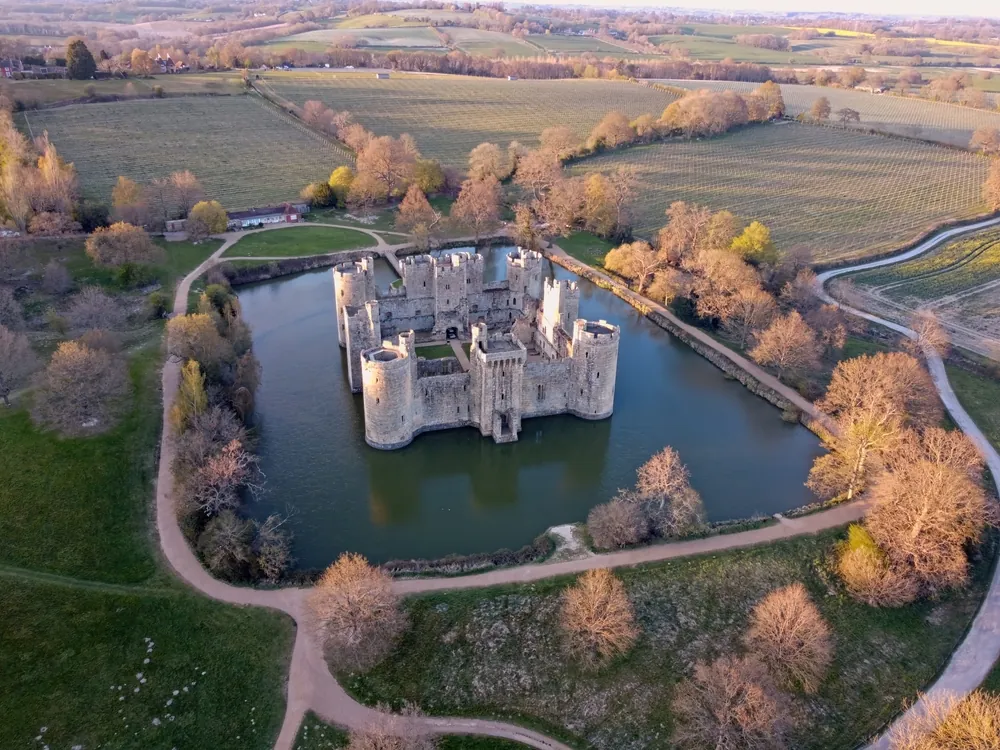
The strongest version of the status-marker reading is in Coulson 2003. The licence to crenellate was a royal or seigneurial privilege; receiving the licence was itself a status grant; building battlements without one was illegal. The crenellated silhouette signalled "permitted lord" before it signalled defence.[1]
Bodiam Castle is the canonical late-medieval status statement. Sir Edward Dalyngrigge built it in 1385 under a Royal Licence to crenellate, when artillery had already begun making moats militarily obsolete. He built it anyway. The reflective lake, the four corner towers, the gatehouse: all of it was a status statement rather than a working defensive system.[1]
The Caernarfon-as-Constantinople-quotation case is the Edwardian propaganda version. Master James of St George's polygonal towers and banded masonry across the Caernarfon curtain were deliberately modelled on the Theodosian walls of Constantinople: a deliberate Edwardian gesture, the conquest of Wales as the New Rome.[6]
The status-marker function outlived the practical military rationale by centuries. Tudor and Jacobean houses with crenellations and gatehouses were maintaining a status grammar long after artillery had retired the castle as a working fortress. The 19th-century Romantic-historicist reconstructions (Pierrefonds, Stolzenfels, Neuschwanstein) are the same instinct projected forward into post-defensive theatre.[11] For the chronological story of how the castle changed across the ages, see the evolution of the castle.
Conquest infrastructure: four programmes, one playbook
The clearest historical pattern is that major European castle-building campaigns followed major conquests. Four programmes ran the same playbook across the medieval centuries.
In Norman England after 1066, William's lords built several hundred motte-and-bailey castles within decades of the Conquest. Construction was fast and cheap (a few weeks with conscripted local labour), and most were rebuilt in stone in the 12th and 13th centuries. The White Tower at the Tower of London, completed around 1078 under William the Conqueror, is the canonical early-Norman royal stone keep.[2]
In Edwardian Wales between 1283 and 1330, Edward I produced the architectural masterpieces of the medieval European castle tradition. Caernarfon, Conwy, Beaumaris and Harlech were designed by Master James of St George of Savoy as a unified system of concentric defensive fortifications, and construction across the four cost approximately £80,000 in 1280s pounds, substantially more than the entire Crown revenue for several years of the campaign. The 1294 to 1295 Madog ap Llywelyn revolt added a further £55,000 in campaign expenditure plus £16,000 in Caernarfon repairs alone.[3] The Welsh ring nearly bankrupted the English Crown.
In Anglo-Norman Ireland after 1169, the same pattern produced Hugh de Lacy's Trim Castle (started 1173, the largest Anglo-Norman fortification in Ireland at roughly 30,000 m² of enclosed area), the Norman-keep tradition across Leinster and Munster, and after the 1429 Statute of Henry VI a century of subsidised tower-house construction in the Pale that produced over 7,000 surviving Anglo-Norman tower houses across the island, the densest concentration of late-medieval defensive residential architecture in Europe.[7]
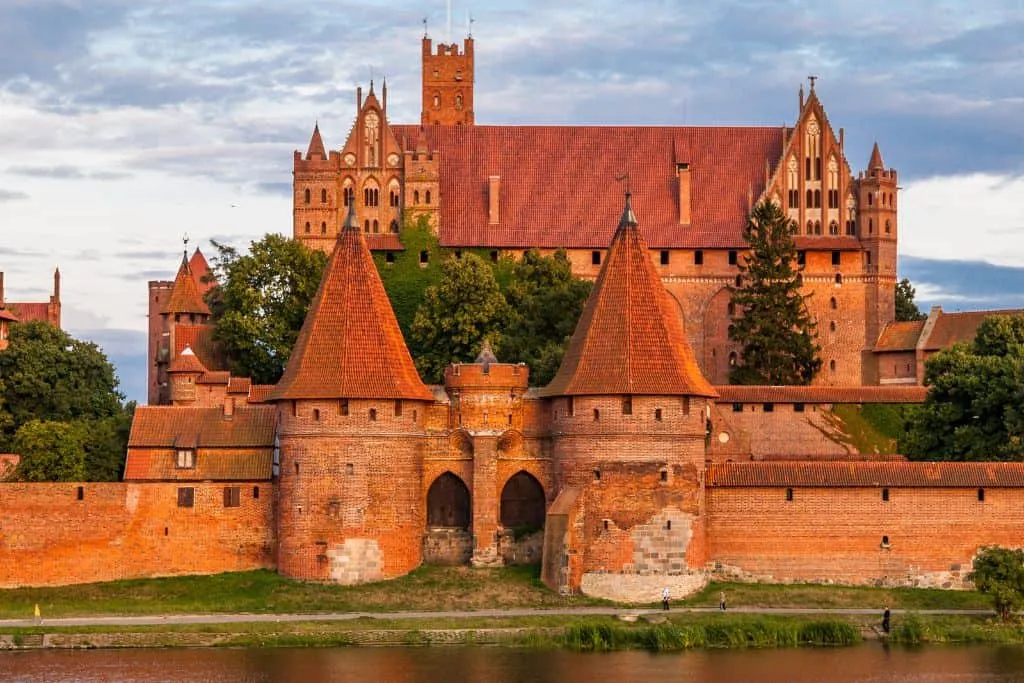
In the Baltic from 1230 onwards, the Teutonic Order built around thirty standardised brick castles across Prussia, Pomerania and Lithuania to a single architectural plan. Marienburg (Malbork) became the Order's headquarters from 1309, and the integrated castle-and-Lübeck-Law-town system was colonial infrastructure: castles as the military-administrative spine of religious colonisation. For the live Polish listings, browse castles for sale in Poland.
What the four purposes mean for the modern reader
A castle on a hilltop is rarely just a fortress. The Welsh-ring castles were administrative seats; the Rhine castles were toll-collecting commercial infrastructure; Bodiam was a status statement; Malbork was the headquarters of a religious-military colonial enterprise. The architectural details that look defensive (the crenellations, the murder holes, the moat) usually carried at least two functions and often four.
The way to read a medieval castle on the ground today is to ask which of the four purposes weighted heaviest at the moment it was built. A 12th-century Norman keep on a motte: defence and administration first, economic control second, status third. A 14th-century Welsh-ring castle: administration and projection of authority leading the design, with defence still genuinely engineered in. A 16th-century Italian fortified palazzo: economic control and projection of authority dominant, defence largely vestigial. A late-19th-century Romantic-historicist reconstruction (Neuschwanstein, Pierrefonds): projection of authority alone, the others stripped out.
For the live Welsh market that produced the Edwardian ring, browse castles for sale in Wales. For the Irish Anglo-Norman tradition, browse castles for sale in Ireland.
Castles were built to hold territory, to govern it, to tax it, and to declare who held the right to do all three. A working medieval castle was the architecture of all four answers at once.
Common questions
Were castles built for defence or for show?
Both, almost always at the same time. Coulson's central argument is that the licence to crenellate was a status grant before it was a defensive permission, and that most surviving medieval castles were designed with status as a leading consideration alongside genuine defensive engineering.[1]
How long did it take to build a medieval castle?
Motte-and-bailey castles could go up in a few weeks with conscripted labour. The Edwardian stone castles took decades: Beaumaris was begun in 1295 and never finished. Caernarfon's main building campaign ran from 1283 into the 1330s. The cost figure of around £80,000 across the four Welsh ring castles is the headline number.[3][5]
Why did castles stop being built?
Artillery. By the late 15th century, gunpowder cannon could reduce stone curtain walls in days rather than months. The fortified residence shifted to lower, thicker, angled-bastion designs (the trace italienne) that look nothing like medieval castles. The crenellated castle survived as a status grammar, not as a working defensive form.
Did peasants live inside castles?
Mostly no. Castles housed the lord's household (family, knights, clerks, servants, garrison) typically in the low hundreds at most. The local population lived outside the walls in villages and small towns, and entered the castle only for court business, market days, or to take shelter during open warfare. Malbork's 3,000-strong garrison was an outlier driven by the Teutonic Order's monastic-military scale, not the medieval norm.[7]
Who paid for them?
The Crown for royal castles (the Welsh ring drained the English exchequer); the lord for baronial castles (often funded by tolls, mills, and seigneurial dues collected through the castle itself); the Teutonic Order for its Baltic network (funded by the amber and grain trade); the Anglo-Norman tower-house boom in Ireland was state-subsidised under the 1429 Statute of Henry VI, the only example of a medieval government directly paying citizens to build castles.[7]
Are any castles still used for their original purpose?
A handful. Windsor Castle is still a working royal residence with state functions inside an 11th-century footprint. The Vatican operates from a fortified complex with continuous administrative function back to the medieval period. Most other "lived-in" castles today are private residences whose original administrative, military and economic roles have all dropped away.
Why are there so many castles in some regions and almost none in others?
Conquest history. The four programmes (Norman England, Edwardian Wales, Anglo-Norman Ireland, Teutonic Baltic) account for most of the dense castle clusters in Northern Europe. Regions that didn't experience medieval colonial conquest (much of Scandinavia, large parts of inland Iberia before the Reconquista) have far fewer surviving castles. Density follows the political project that built them.
Sources
1. Coulson, C. L. H. Castles in Medieval Society: Fortresses in England, France, and Ireland in the Central Middle Ages. Oxford University Press, 2003.
2. Pounds, N. J. G. The Castle in England and Wales: An Interpretive History. Routledge / Leicester University Press, 1990.
3. Davies, R. R. The Age of Conquest: Wales, 1063 to 1415. Oxford University Press, 1991.
4. Goodall, John. Castle: A History. Yale University Press, 2022.
5. Kenyon, John R. Medieval Castles of Wales. University of Wales Press, 2010.
6. Taylor, A. J. The Welsh Castles of Edward I. Hambledon Press, 1986.
7. Pluskowski, Aleksander. The Archaeology of the Prussian Crusade: Holy War and Colonisation. Routledge, 2013.
9. Taylor, Robert R. Castles of the Rhine: Recreating the Middle Ages in Modern Germany. Wilfrid Laurier University Press, 1998.
10. Beltramo, S. (ed.) A Renaissance Architecture of Power: Princely Palaces in the Italian Quattrocento. Brill, 2016.
11. Cannadine, David. The Decline and Fall of the British Aristocracy. Yale University Press, 1990.