
What Is a Manor House? The Category Between Castle and Country House
A manor house is a sub-noble fortified residence: the lord of the manor's house on the demesne in the medieval feudal system.
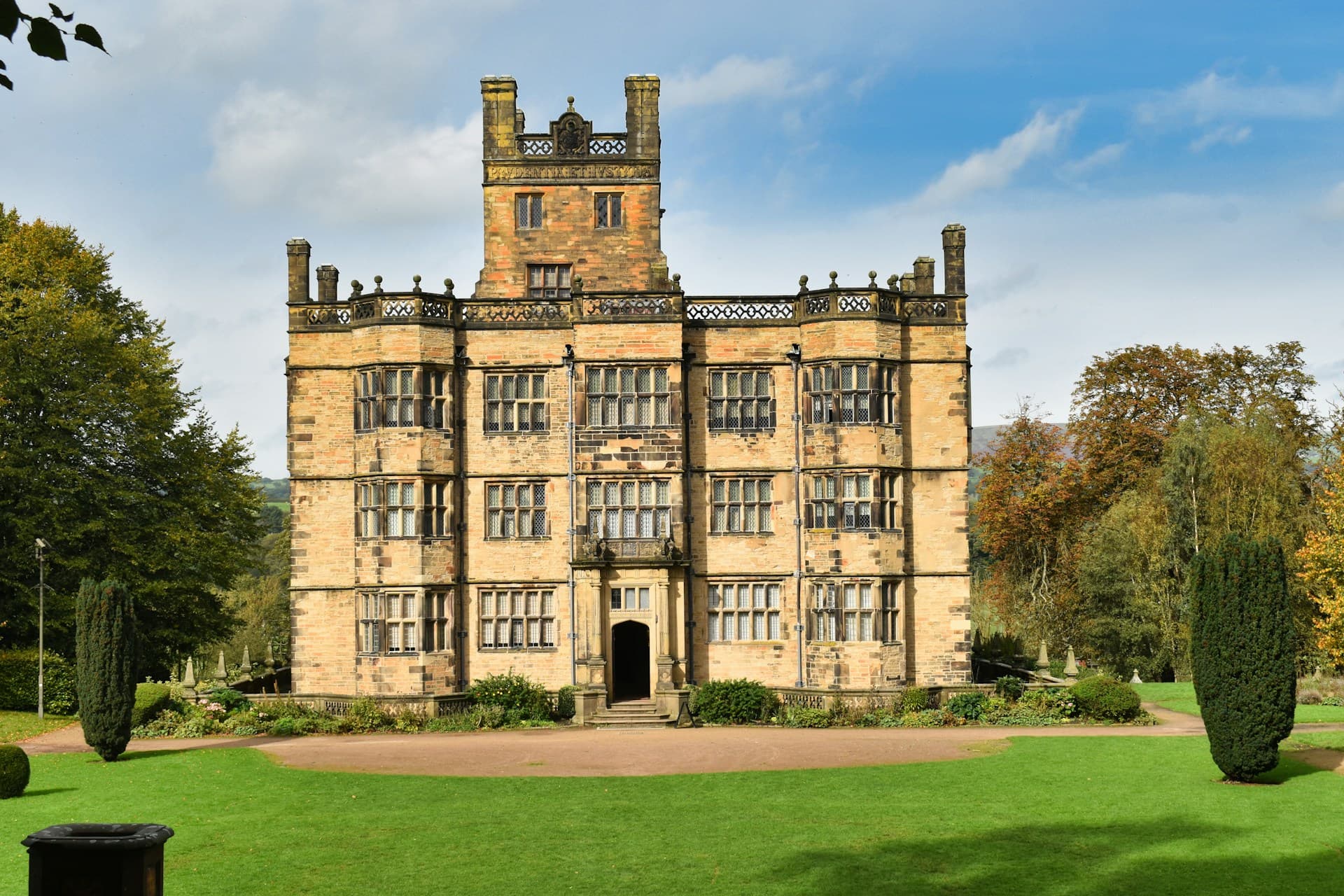
A manor house is the lord of the manor's residence: smaller than a castle, older than a country house, and the actual stock of England's surviving aristocratic homes. The Domesday Book counted around 13,500 of them in 1086. Most are still out there.
A manor house sits one rung below a castle in the medieval pecking order. The lord of a manor was a knight or squire, not a baron, holding his land as a sub-tenant of someone higher up. His house reflected the rank: a fortified residence with a moat and a stone hall, but no licence to crenellate and no full curtain wall.
The category matters because it's where most of the actual surviving stock lives. England's strict-protected NHLE-listed castles today number around 1,712. The Domesday manor count was around 13,500.[1] Castles get the photographs. Manors are the buildings you can actually buy.
The four categories, side by side
| Category | UK term | French | German | Sub-baronial? |
|---|---|---|---|---|
| Sub-noble fortified residence | manor house | manoir | Herrenhaus / Gutshaus | yes |
| Baronial fortified residence | castle | château | Burg / Schloss | no |
| Royal residence | royal palace | château royal | Schloss / Palais | no |
| Post-medieval country residence | country house | maison de campagne | Landhaus | no |
Source: based on Coulson, Castles in Medieval Society (Oxford, 2003), and Goodall, Castle: A History (Yale, 2022).[1][4]
The medieval manorial system
A manor was the basic unit of feudal landholding in post-Conquest England. The lord (typically a knight or squire) held the demesne (the land farmed for the lord's own benefit, rather than rented to tenants) directly, and held jurisdictional rights over his tenants.[1] William's Norman bureaucrats counted around 13,500 manors in the Domesday Book of 1086, and the system stabilised across the late medieval period at somewhere between ten and fifteen thousand active manors.
A baron was a tenant-in-chief holding land directly of the king. A manor lord was usually a sub-tenant holding his manor of a baron or other tenant-in-chief above him. The architectural distinction follows the legal one. A baron held the right to a castle, with a royal licence to crenellate (formal permission to build battlements). A manor lord held the right to a manor house, without the licence.
The lord of the manor presided over three layered manorial courts: the court baron for tenant disputes, the court leet for petty law and order, and the view of frankpledge in some manors. The manorial-court system was gradually abolished between 1922 and 1977.[1] For the parallel piece on the larger residential category, see the difference between palace and castle.
What a manor house actually looks like
The medieval manor house was organised around a great hall. The lord's solar (his private upper-floor chamber) sat at the upper end above a private chamber. The screens passage divided the hall from the kitchen-and-buttery wing at the lower end. The hall served as the manor's courtroom, banquet space and reception room: a single multi-purpose space that did the working business of the lordship.[4]
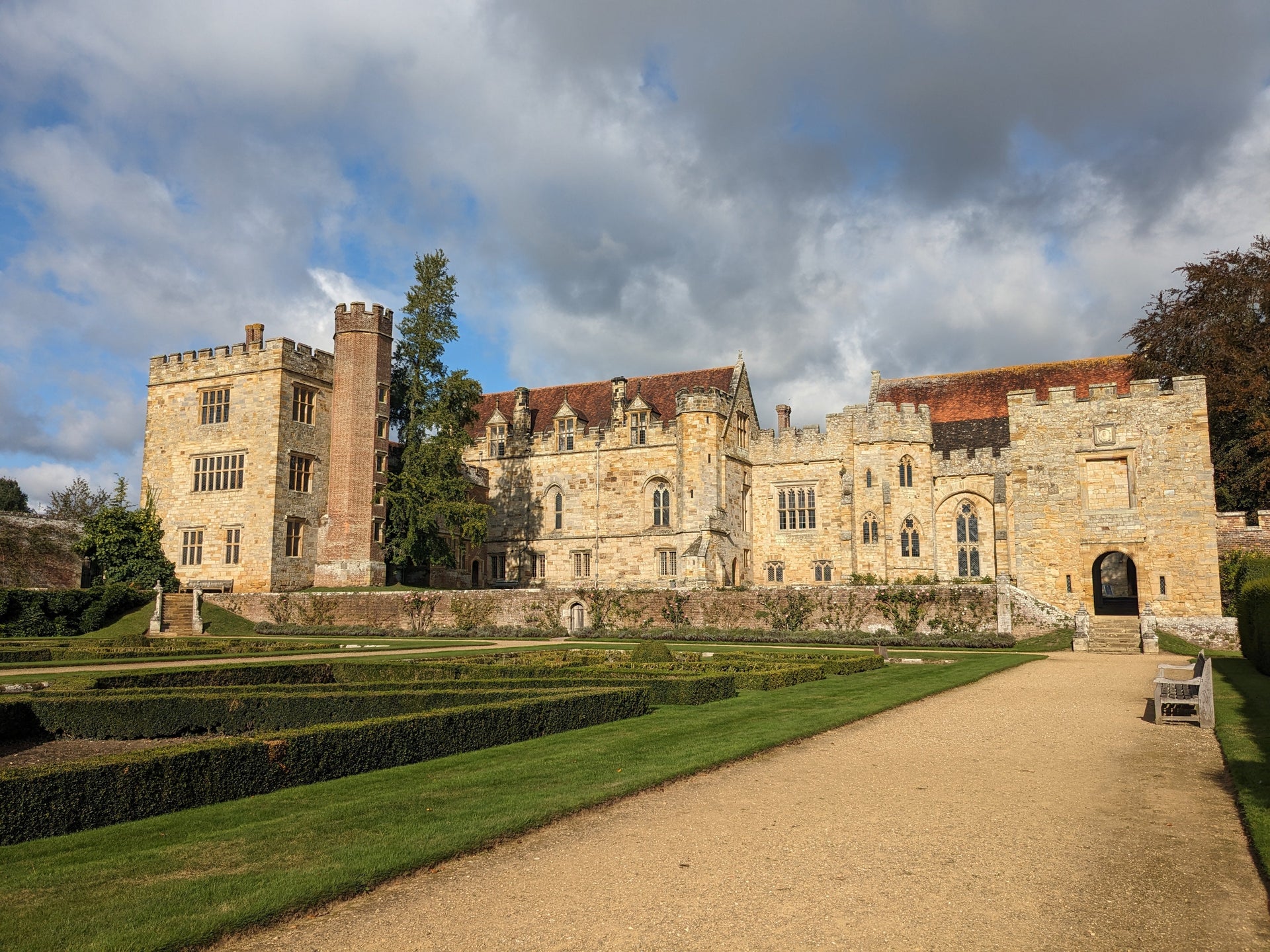
Defensive features were sub-noble in scale. A moat that signalled status more than it stopped attackers. A stone hall block. Sometimes a fortified gatehouse. Many early manor houses were timber-framed, with stone replacements coming through the 13th and 14th centuries. The Tudor and Jacobean manor (Hardwick Hall, Knole, Penshurst Place) is the canonical English form: an open courtyard plan with hall plus chamber wing, glazing taken to extremes, status moves built into the silhouette.
For the architectural anatomy that bridges manor and castle, see parts of a castle.
The cross-European sub-baronial residence family
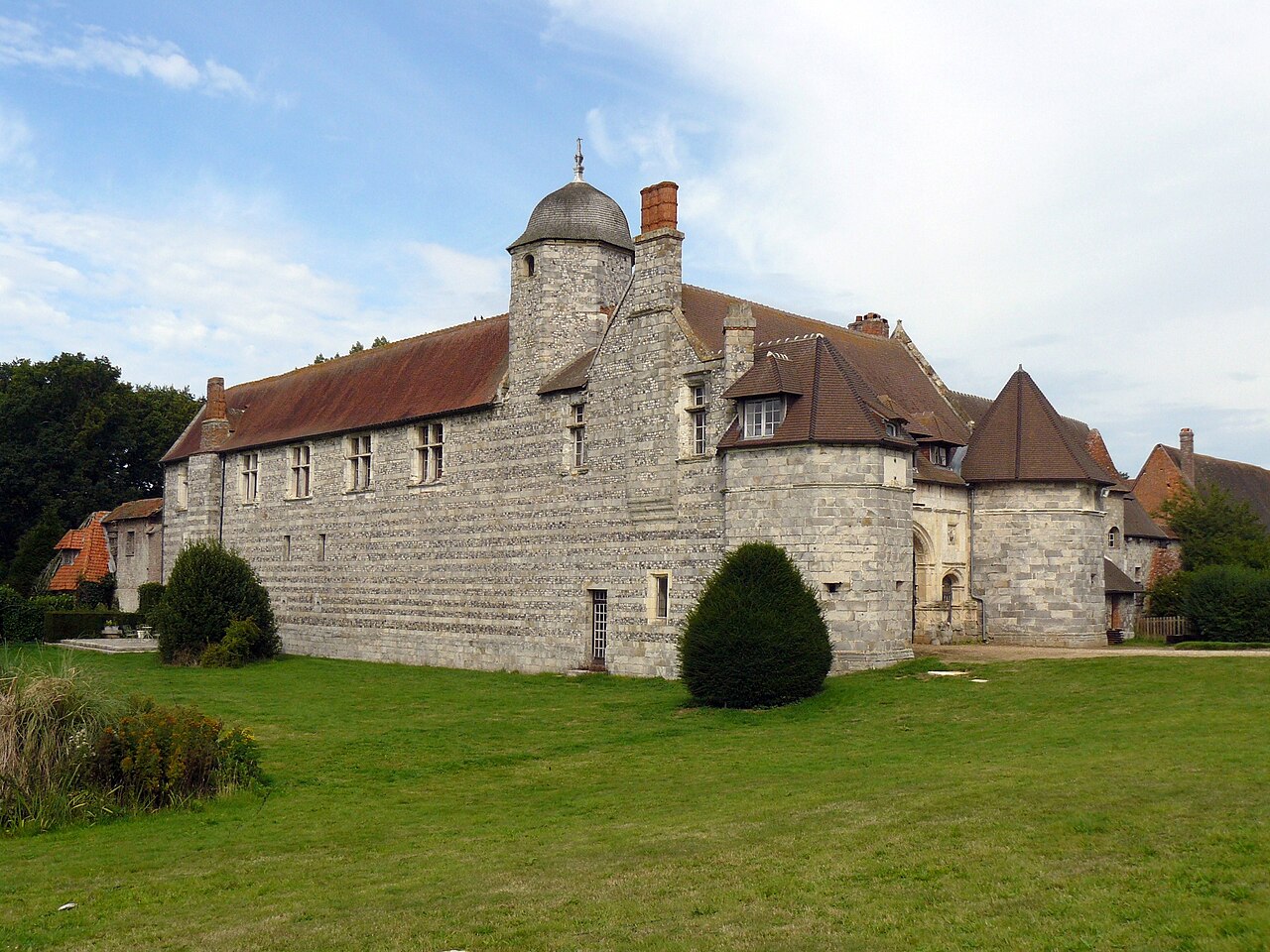
The English manor has equivalents across most of medieval Europe, under regional names that obscure the shared category. The French manoir is the closest match. William's Norman lords brought the form across the Channel after 1066, and the post-Conquest English manor is partly a Norman manoir grafted onto Anglo-Saxon thegnly precedent. The tradition runs densest in Normandy itself (Manoir d'Ango, Manoir d'Argentelle, dozens of survivals along the Pays d'Auge cider route) with a parallel Breton tradition.[5]
The German Herrenhaus (literally "lord's house") and Gutshaus (estate house) cover the same category. The tradition runs particularly dense across the East Prussian Junker aristocratic territories. The post-1945 land reform abolished the Junker class, and the post-1990 reunification market produced a wave of restorable East German Gutshäuser that defines the contemporary German distressed-tier heritage market.
The pattern repeats further afield. Italy's casa padronale, Spain's pazo, Poland's dwór, Hungary's kúria, the Czech zámeček: all sub-baronial fortified residences, all equivalents of the English manor. The vocabulary is regional. The category is European-wide.
What the legal distinction means when buying
In the UK, most properties advertised as manor houses fall under Grade II listing under the Planning (Listed Buildings and Conservation Areas) Act 1990. Grade I and Grade II* manors exist but are the minority of the market. For the listing-tier breakdown see what are listed buildings and for legal detail see the historic property legal requirements guide.
A manor-specific curiosity is the lordship of the manor. Some UK manor houses come with the manorial title still attached as a separate property right. The 2002 Land Registration Act gradually removed manorial titles from the Land Registry, and post-13 October 2013 manorial rights had to be re-registered against successors in title to retain effect. A manor house can be sold separately from the lordship, and modern UK manorial titles sometimes trade on their own for £5,000 to £25,000. A small number of UK manors retain residual rights of common (rights to take wood, pasture and similar from the surrounding land) that survived the 2002 reform. Worth a solicitor's check.
French manoirs sit under the Monument Historique framework and German Herrenhäuser under Denkmalschutz. The legal regimes are country-specific. The category, a sub-baronial fortified residence built for a working lordship, is shared across most of Europe.
For the general buying process that applies equally to manor houses and castles, see how to buy a castle.
The Domesday Book counted 13,500 manors. Most of them are still standing, in some form, somewhere on a heritage-property market. The category is the actual furniture of English landed history. Castles are the photogenic exception.
Common questions
What's the difference between a manor house and a castle?
Legal rank of the owner. A castle was the residence of a baron or higher, with a royal licence to crenellate. A manor house was the residence of a knight or squire holding from a baron above him, without the licence. Manor houses had moats and stone hall blocks but no curtain walls.
What's the difference between a manor house and a country house?
Period and function. A manor house is medieval to Jacobean, with the great hall as the working centre of a feudal lordship. A country house is post-medieval (broadly 17th century onward), built for a non-feudal landed family with no manorial-court function. Many country houses sit on the site of an earlier manor.
How many manor houses are there in England?
The Domesday Book counted around 13,500 manors in 1086. Most of those original buildings are gone, but the sites typically survive with a later building on the same plot. Active heritage-listed manor houses today run into the low thousands, mostly Grade II.[1]
Does a manor house come with the lordship of the manor?
Sometimes, but not automatically. The lordship is a separate property right. Since the 2002 Land Registration Act, manorial titles had to be re-registered to retain effect against successors in title. Modern manorial titles trade on their own for £5,000 to £25,000.
Is a manor house a good buy compared to a castle?
For most buyers, yes. The per-square-metre price is roughly 60 to 80% of a comparable castle. Maintenance is lower without the curtain walls, towers and moat work, and Grade II listing gives more latitude on restoration than Grade I.
What's the European equivalent of an English manor house?
French manoir is the closest, particularly in Normandy and Brittany. German Herrenhaus and Gutshaus cover the same category. Italy's casa padronale, Spain's pazo, Poland's dwór, Hungary's kúria, and the Czech zámeček all map to the same sub-baronial residence type.
Sources
1. Coulson, C. L. H. Castles in Medieval Society: Fortresses in England, France, and Ireland in the Central Middle Ages. Oxford University Press, 2003.
2. Tinniswood, Adrian. The Power and the Glory: Life in the English Country House Before the Great War. Basic Books, 2024.
4. Goodall, John. Castle: A History. Yale University Press, 2022.
5. Fenwick, Hubert. The Châteaux of France. Robert Hale, 1976.