
Palace vs Castle: What's the Actual Difference?
A castle has defensive walls and seigneurial function. A palace is purpose-built for status, with no fortification. Versailles is a palace; Windsor is both.

A castle is fortified. A palace is not. That's the answer in one line. The longer one (the part that matters if you're buying, restoring, or just trying to read a heritage register) has more to it.
The technical definition adds one wrinkle to the simple test. A castle has to be both a residence and a defensive structure. That's what separates it from a fortress (military only, no permanent residents) and from a country house (residential only, no defensive function). A palace sits on the residence side without the defensive side.
That distinction sounds academic. It isn't. It determines which heritage tier a building falls into, what restoration constraints apply, what it costs per m² in the market, and what it can earn as a venue. The category line is real money.
The four categories, side by side
Category | Defensive function | Residence | Canonical examples |
|---|---|---|---|
Castle | Yes (walls, donjon, moat) | Yes (lord's residence) | Tower of London, Caernarfon, Marienburg |
Palace | No (purely residential) | Yes (ruler's seat) | Buckingham, Versailles, Sanssouci |
Fortress | Yes (military only) | No permanent residence | Spandau Citadel, Festung Marienberg |
Country house | No | Yes (gentry seat) | Chatsworth, Highclere |
Source: based on Goodall, The Castle: A History (Yale, 2022), and Coulson, Castles in Medieval Society (Oxford, 2003).[1]
The simple test
If the building has thick masonry walls, a defended entry, a moat or a substantial keep, and someone lived in it as their principal residence, it's a castle. If it has none of that and was built to impress rather than defend, it's a palace. Edge cases (Hampton Court, the Royal Alcázar) get classified by their original function, not their current one.
The edge cases are where it blurs
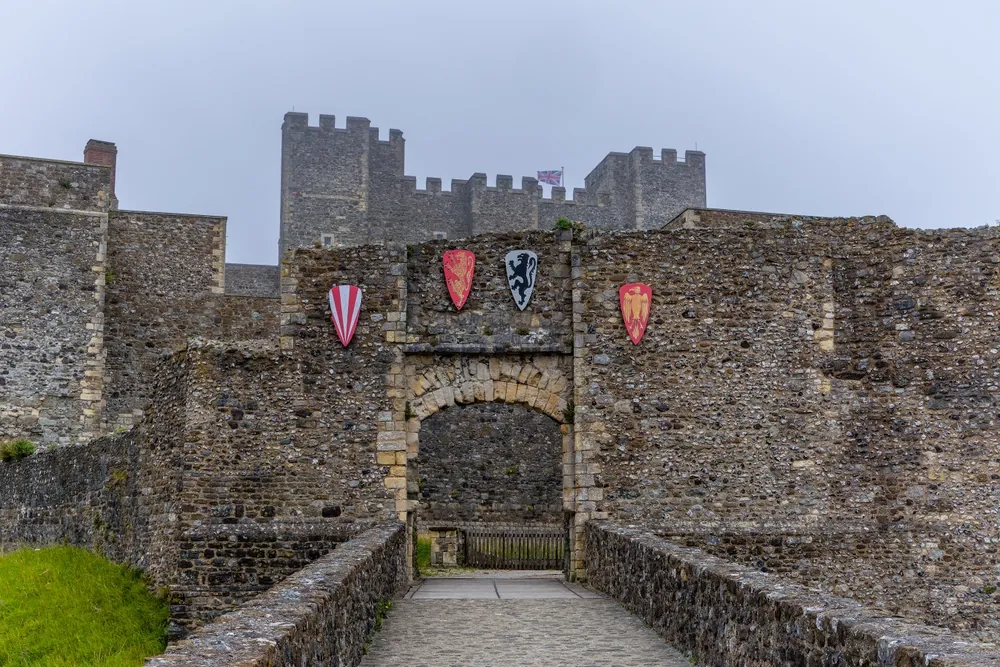
Many European buildings started as medieval castles with real defensive function and slid into residential-only use as the centuries passed. Hampton Court began as Cardinal Wolsey's fortified residence; Henry VIII converted it to a royal palace. The Royal Alcázar of Seville still wraps the original 913 CE Umayyad fortified walls around what now operates as a working palace. Windsor Castle is the cleanest hybrid in England: still actively royal residence, still inside an 11th-century motte-and-bailey footprint, classified as a castle in the heritage register and a palace in royal protocol.
The honest answer for these is that classification depends on what question you're asking. Original function, current function, or some weighted blend each give different answers. Heritage law uses original function and built fabric. Tourist marketing uses whichever word sells the ticket.
How European heritage frameworks actually distinguish them
National heritage law treats the line as substantive, with country-specific terminology:
Country | Castle term | Palace term | Notable nuance |
|---|---|---|---|
Germany | Burg (medieval defensive) | Schloss (post-medieval residential) | Distinct consent tiers under Denkmalschutz |
Italy | Castello | Palazzo | Six registers total: rocca, torre, fortezza, cittadella, palazzo fortificato also separate |
France | Château (covers both) | Palais | The château term is broad: covers medieval and post-medieval together |
Spain | Castillo | Palacio | BIC framework also distinguishes alcázar, fortaleza, atalaya |
UK | (single tier) | (single tier) | Listed Building Consent treats castles and palaces under the same statutory regime |
The German distinction is the cleanest. A 12th-century Burg with documented military origins gets treated differently from a 19th-century neo-Gothic Schloss built for industrial wealth. France collapses the line: the château category captures both medieval castles and post-medieval pleasure residences without taxonomic split. That's why French national counts run higher than German equivalents (45,000 châteaux vs Germany's tighter Burg/Schloss split). The category boundary isn't the same in every country, even though the underlying buildings often are.[2]
What the distinction means for buyers
Four ways the category line shows up in the market:
- Castles trade at a 10–30% per-m² premium over comparable country houses of the same period. The CPI median across 1,118 indexed European castle listings sits at €2,250/m². Country-house equivalents at the same floor area generally clear lower. The "castle" tag (turrets, moat, defensive geometry) supports the premium even when the residential utility is the same.
- Heritage protection runs deeper on castles. A medieval Burg or château fort typically falls into the highest protection tier (Grade I in England, classé Monument Historique in France, BIC in Spain). The defensive fabric (moats, curtain walls, towers, gatehouses) must be preserved substantially intact. A 19th-century Schloss or palais sits a tier lower with more interpretive restoration latitude.
- Maintenance economics differ. Defensive features generate ongoing liabilities a palace's residential interior doesn't carry. Routine moat upkeep alone can run €15,000 to €40,000 a year. Tower roof repair on a stone donjon requires specialist masonry trades at materially higher day rates than ordinary roof work.
- Visitor-economy potential differs. Castle hotels run a 30–50% nightly-rate premium over comparable country-house hotels in the same region. Ashford Castle in Ireland models at around €25.1 million gross/year on €1,105+/night room rates, the upper limit of what the category supports commercially. A palace conversion clears at country-house-tier rates rather than castle-tier rates because the romantic-castle visitor draw isn't there.
In ordinary English usage the line vanishes
Tourist marketing routinely ignores the distinction. Versailles is colloquially called a "castle" by international visitors. The Tower of London is called a "palace" in some Royal Collection contexts. Highclere Castle (the Downton Abbey location) is technically a 19th-century country house with castle-style decorative features, not a defensive castle.
Watch out
If you're buying, the formal heritage classification governs consent and tax, not the marketing copy. A property listed as a "castle" may be a country house in the relevant national register, with materially different obligations. Check the entry in the controlling heritage framework before contracting.
Common questions
Is Buckingham Palace a castle?
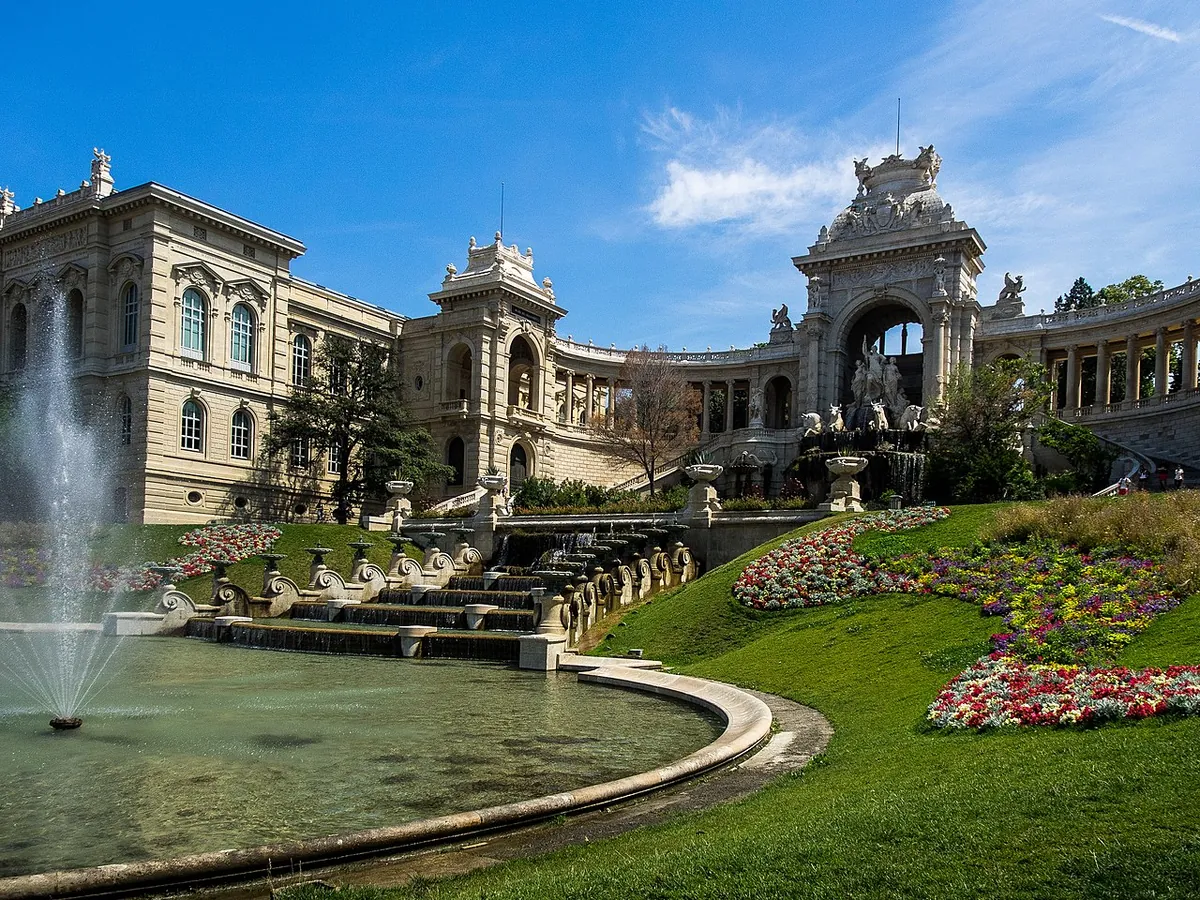
No. Buckingham Palace was built between 1703 and 1837 as a townhouse and converted to a royal palace. It has no defensive features, no moat, no curtain wall, no donjon. It's the canonical post-medieval European palace.
Is the Tower of London a castle?
Yes. Despite the "Tower" name and the contemporary use as a museum and Crown Jewels store, the Tower of London is a fortified residential complex with curtain walls, towers, a moat (drained 19th century) and the White Tower donjon. Heritage England classifies it as a castle.
Is Windsor Castle a castle or a palace?
Both, depending on the question. Original function: castle (William the Conqueror, c. 1070, motte-and-bailey). Current function: principal royal residence with state apartments. Heritage classification: castle. Royal protocol uses "castle" too.
Why does France count more châteaux than Germany counts Burgen?
Because château is taxonomically broader than Burg. French heritage law uses château to cover both defensive medieval castles and non-defensive post-medieval pleasure residences. German heritage law splits Burg from Schloss. The headline-count gap reflects taxonomy, not the actual building stock.
Does the UK distinguish castles from palaces in heritage law?
No. The Planning (Listed Buildings and Conservation Areas) Act 1990 treats both under the same Listed Building Consent regime. Distinctions come through the I/II*/II grading rather than through category.
What's the safest way to know?
Look up the property in the relevant national register: the National Heritage List for England, the base Mérimée in France, the BIC register in Spain, the Denkmalschutz listing in Germany. The register is authoritative. Marketing copy isn't.
Sources
1. Goodall, J. The Castle: A History. Yale University Press, 2022; Coulson, C. Castles in Medieval Society. Oxford University Press, 2003.
2. French Ministry of Culture, base Mérimée (Inventaire général du patrimoine culturel).; German Denkmalschutz, federal and Länder registers.; Italian Ministero della Cultura, heritage register.; Spanish Bien de Interés Cultural framework, Ministerio de Cultura.