FOR CASTLE COLLECTORS
Castle Collector InsightsExplore hill top castles on sale in Luxembourg
Browse hill top castles for sale in Luxembourg. Discover elevated fortresses, hilltop château estates, and castles with panoramic views in Luxembourg.
Average castle features in Luxembourg
Showing avg. castle price in Luxembourg
Key metrics for Luxembourg
Luxembourg packs one of the densest concentrations of medieval castles in Europe into a country smaller than the average English county, yet almost none of them are for sale. The state owns most of the great castles and runs them as public monuments, so the private market is tiny: a handful of trophy properties priced in the millions, with effectively nothing at the cheap end.
Sitting on the Franco-German border gives the country a hybrid style that is neither fully French nor German, borrowing from the French château and the German Burg at once. The closest market in character and price is neighbouring Belgium, which is worth looking at alongside it.
Foreign buyers are welcome under the usual EU rules. Buying costs are moderate, around 7% in registration and transcription plus notary fees, and a purchase takes four to eight months. The number that stands out is restoration: at €2,000 to €5,000 per square metre, Luxembourg has the highest contractor rates in Europe, so the work costs more here than anywhere else on the continent. For the process, see how to buy a castle.
A Luxembourg castle is a trophy purchase, plain and simple. The market is too small to have a reliable median, but the verified sales run from about €4.8 million to €11 million, with nothing at the cheap end.
At the top, Schengen Castle, where the 1985 border agreement was signed, sold for €11 million in 2016, around €2,200 per square metre. That rate per square metre looks modest for so famous a castle, but that says more about the restrictions on a politically sensitive state property than about the building itself. Wintrange, a 1610 Renaissance castle on the Moselle, was listed by Sotheby's at €4.8 million, and a couple of others have sat around the €3.5 to €3.8 million mark. There is no restoration-project tier here the way there is in Germany or Hungary; what comes up is already grand and already expensive.
On top of the purchase come the highest building costs in Europe, €2,000 to €5,000 per square metre, plus the 7% in transfer costs. The practical takeaway is simple: this is a market for the trophy band or not at all. For how those numbers sit against the rest of the continent, see castles for sale across Europe, and put the running costs into a proper cost to own a castle budget before you go near an offer.
Luxembourg is small enough that its whole castle landscape fits inside an hour's drive, which is why it doesn't really split into separate regional markets the way larger countries do. It's one small pool, clustered in a few valleys.
The heart of it is the Vallée des Sept Châteaux, the Valley of the Seven Castles, which runs about 24 kilometres along the Eisch and links Mersch, Schoenfels, Hollenfels, the two Ansembourgs, Septfontaines and Koerich. It's the single best-known castle route in the country.
To the north sit the two giants: Vianden, the great hilltop fortress restored from ruin, where Victor Hugo wrote during his exile in 1871, and Bourscheid, the largest by enclosed area, set on a ridge above the Sûre. East is Beaufort, where a medieval ruin and an inhabited 1649 Renaissance castle share one property, and Clervaux, home since 1994 to the UNESCO-listed Family of Man photography exhibition. South lies the Moselle wine country and Schengen.
A Luxembourg castle is a hybrid, sitting right on the line between the French château and the German Burg and borrowing from both. The country's position on the old Franco-German frontier shaped everything built there, so a Luxembourg castle rarely looks purely one thing or the other.
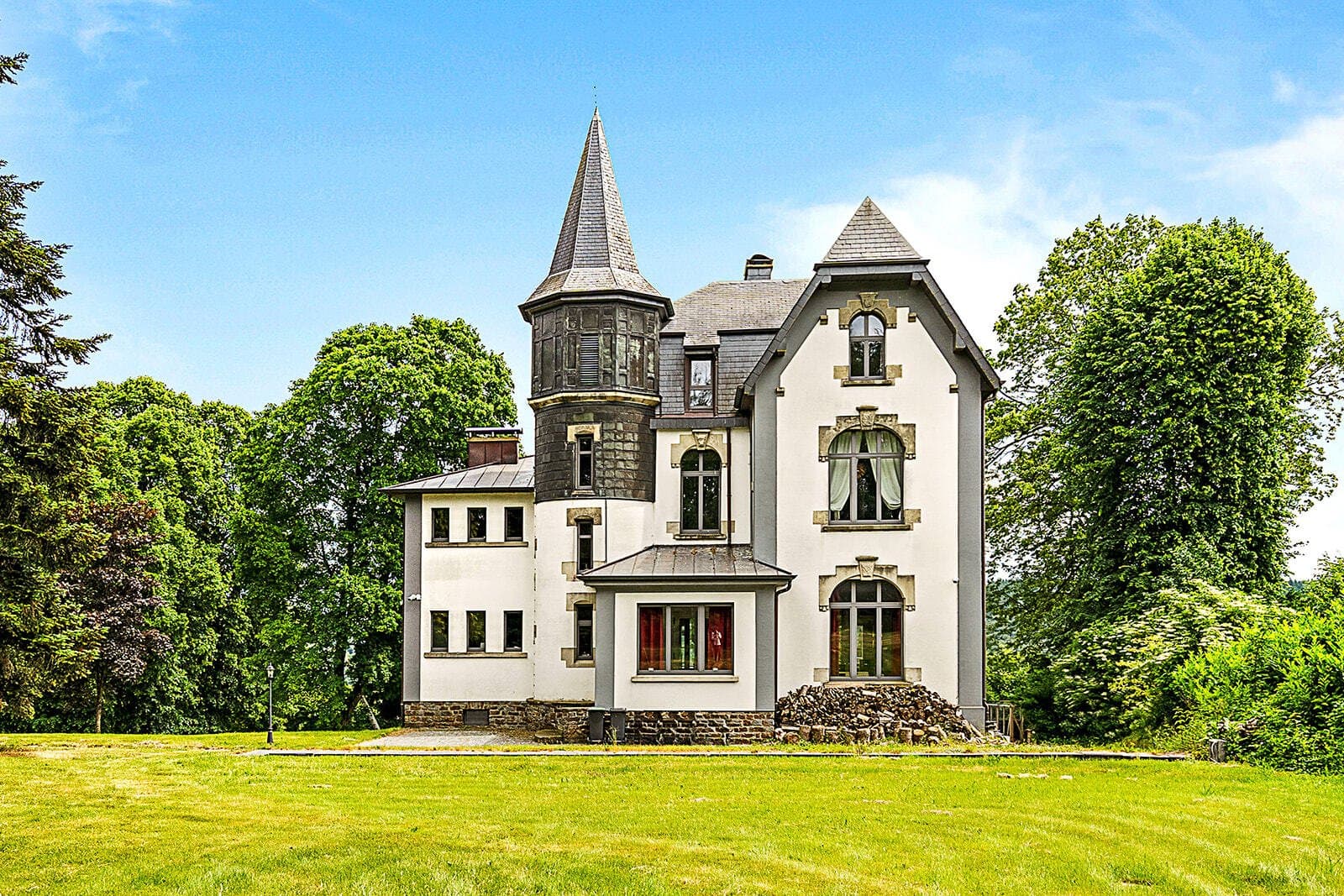
In practice it comes in two broad kinds. There's the medieval hilltop fortress, built for defence on the ridges above the rivers, like Vianden and Bourscheid. And there's the later fortified residence, built or rebuilt for comfortable living once defence stopped being the point, like the 1649 castle at Beaufort or Renaissance Wintrange on the Moselle. The for-sale market, when anything appears, is almost always the second kind.
Stay informed with curated insights on market trends, tax and legal developments, and new castle investment opportunities.
By subscribing you agree to receive emails from Castle Collector. We’ll send a confirmation email first (double opt-in) and you can unsubscribe anytime. Privacy Policy