
5 Myths About Buying a Castle: Debunked With Market Data
Castles aren't unaffordable: Romania at €191/m², Poland at €632/m². 5 buying myths verified market data debunks across 1,118 indexed listings.
Most of what gets repeated about buying a castle doesn't survive the actual numbers. The market is just illiquid enough that folk wisdom outruns the data by years. Here are the five most persistent myths, and what verified transactions actually show.
The reason these stories survive: across 14 countries with around 46,000 protected castle-type properties, just 200 to 400 sales close each year. That's three to seven times slower than the normal property market in the same countries.[1] In a market that thin, the eye-catching anecdote spreads faster than the average.
Myth 1: "You can buy a French castle for €1"
The €1 castle headlines are technically true within a narrow definition. Italian municipalities, French rural communes and Spanish Galician councils all run €1-token sales for derelict heritage stock.
The reality: the buyer is locked into €500,000 to €5 million of restoration within 3 to 5 years, monitored by the heritage authority. Miss the deadline and the property goes back to the state.
For context, here's where the open market actually sits:
| Country | Median asking | Listings indexed |
|---|---|---|
| France | €2,285/m² | 945 |
| Spain | €2,368/m² | 61 |
| Belgium | €2,200/m² | 29 |
| Germany | €1,971/m² | 42 |
| Italy | €1,750/m² (true median €2,500–€3,000 adjusted) | 100 |
At France's typical price, a 700 m² castle works out at around €1.68 million.[1] The floor sits far lower: the Castle of Zlatna in Romania sold at €191 per square metre (still €191,000 at 1,000 m²), and Schloss Weigsdorf in Saxony sold at auction in 2022 for €170,000 (a 2,269 m² wreck left over from the GDR era). Both needed major restoration after the purchase.
The myth survives because the headline number is true. The total cost (purchase plus restoration plus running costs) lands in the millions on essentially every credible €1 deal.
Myth 2: "Heritage protection makes restoration impossible"
UK Listed Building Consent applications pass at roughly 92% through the Local Planning Authority. The myth that approvals take years and that the system is set against you doesn't survive the numbers.
The reality: heritage rules limit what you can do, not whether you can do anything. Aysar Orbasli's Architectural Conservation: Principles and Practice sets out the basic principles (do as little as possible, make changes reversible where you can, use sympathetic materials). Within those rules, most countries let owners rearrange interiors, upgrade services, fit better insulation and add sympathetically designed new wings.[2]
Approval timelines vary but stay within workable bounds:
| Jurisdiction | Typical timeline |
|---|---|
| UK Local Planning Authority (Listed Building Consent) | 8–13 weeks |
| Spain (BIC) | 2–4 months minor; 6–12 months major |
| Germany (Denkmalschutz, Länder) | 3–9 months |
| France (Monument Historique, DRAC) | 4–12 months |
| Poland (Wojewódzcy Konserwatorzy Zabytków) | 2–6 months |
| Italy (Soprintendenza) | 6–18 months major |
The extra cost is real. James Davey's Building Conservation Contracts and Grant Aid notes that heritage-grade work usually adds 20 to 40% to standard restoration costs for materials, methods and specialist labour.[3] The tax breaks that offset it are also real: in Germany, owners can deduct 100% of certified restoration from their tax over 12 years; in France, classified Monument Historique restoration is fully deductible against income.
Myth 3: "Castles always appreciate, they're not making any more of them"
The actual record of sold castles directly contradicts the always-going-up claim. Two cases at opposite ends:
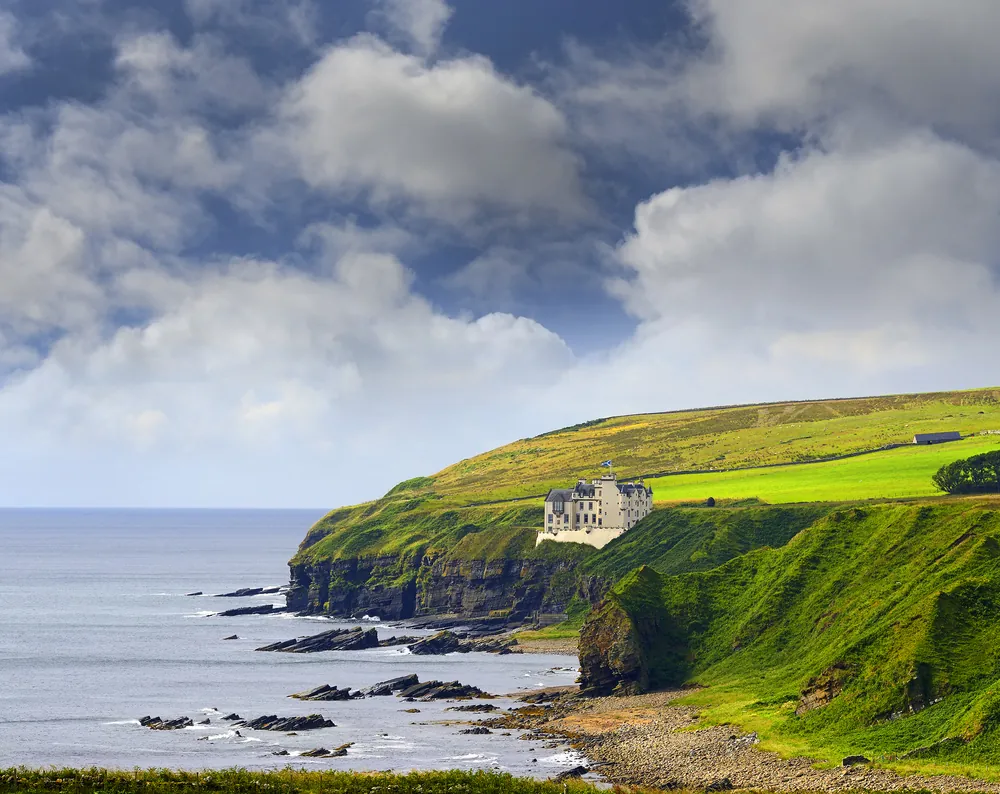
Dalhousie Castle (Midlothian). £2.5m in April 2012 to £5.6m in October 2023, a 124% gain over 11 years alongside an active 29-room hotel.[1] The strongest example we've tracked.
Ribbesford House (England). Bought for £810,000 in 2018, plus £3 million in restoration, sold for £450,000 by 2025/26. £3.81 million in went out the door, £450,000 came back, an 88% loss.[1]
Ayton Castle in the Scottish Borders sits between: £2.4m in 2014 to £3.25m in 2026, a 35% gain over 12 years (sold to comedian Alan Carr).
David Cannadine's Decline and Fall of the British Aristocracy traces the 20th-century shift from sitting on a castle as a private home to running it as a commercial heritage business, the only way many of these places have survived. The Carnarvon family's operation at Highclere, with around 60 full-time staff plus 150 part-time in summer, is the textbook case.[4][5]
Myth 4: "Restoration grants will cover most of the cost"
Grant schemes across Europe cover much less than people think.
The reality: grants typically cut 15 to 35% off restoration costs, not the 50%+ people often quote. Tax breaks add another 10 to 25% depending on the buyer's tax band. Add it all up and most owners get back 25 to 50% of restoration spend. That's real money, but it doesn't come close to closing the gap on restoration costs.
What's actually on offer, country by country:
- France (Monument Historique) funds up to 40 to 50% of approved restoration for fully classified properties; lower-tier inscrit properties get 25 to 35%. Most private château owners aren't fully classified, so the tax break is usually more useful than the cash grant.
- Germany (Denkmal-AfA §7i) is the most generous heritage tax break in Europe: owners can deduct 100% of certified restoration from their income tax over 12 years. The catch: you have to live in the property, and every cost has to be pre-approved by the local heritage office.
- UK Historic Houses Association members spend an average of £160,000 a year per property on routine maintenance, against £480 million of urgent repairs still outstanding across the membership, plus nearly £901 million more of repairs put off (around £1.38 billion in total across 1,500+ properties).[6]
- Historic Environment Scotland distributed £10 million in 2024/25, up from £5.7m the year before. Useful at the project level (typical awards are £10,000 to £250,000), not enough to move the needle on a portfolio of properties.
Myth 5: "Castle insurance is impossible to obtain"
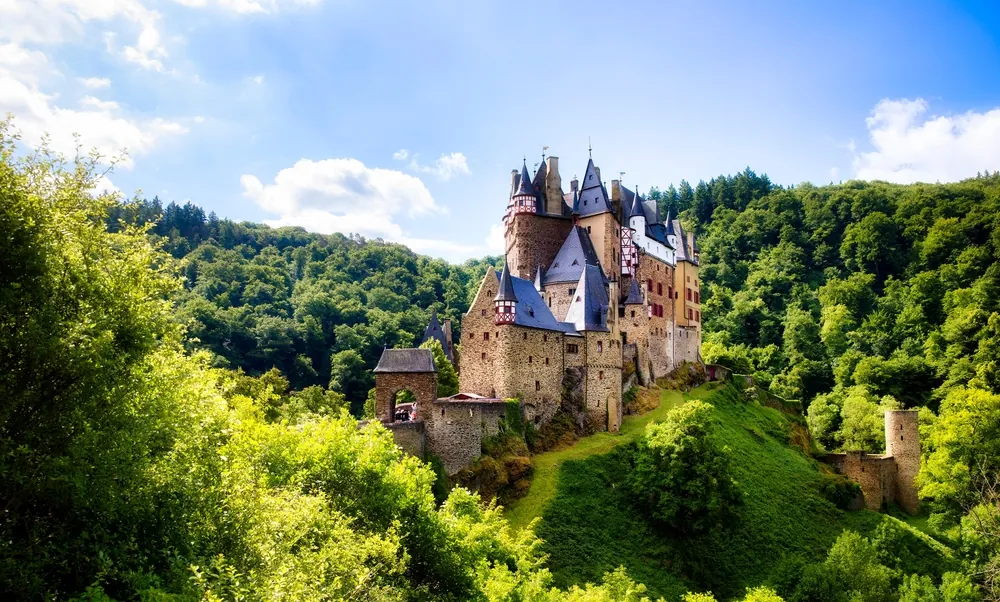
Heritage building insurance costs more than normal home insurance but is widely available. Specialist heritage brokers (Ecclesiastical, Hiscox Heritage and Allianz Cornhill in the UK; Generali Patrimoine in France; Allianz Privatkunden in Germany) cover the bulk of the European market.
The reality: the premium reflects real risk, but you can cut it sharply by reinforcing the building. Research by Sevieri and others (2020) documents that heritage buildings are notably more vulnerable than modern ones, mainly because of the age and condition of their masonry.[7] A 2022 study of Florence's historic centre quantified the offset: expected annual flood and earthquake losses fell from €3.15 million to €1.55 million (a 51% cut) once basements were flood-proofed and steel tie-rods retrofitted for earthquakes.[8]
The same pattern holds at the castle level. Premiums on properties that have been reinforced typically run 30 to 50% below an unreinforced equivalent. Per €1m of cover, expect €4,000 to €8,000 a year unreinforced, €2,500 to €5,000 reinforced. On a €5m castle that means €20,000 to €40,000 a year unreinforced, €12,500 to €25,000 reinforced.
The myth survives because most buyers approach normal home insurers instead of heritage specialists. The specialists can write cover for almost any standing structure, given documentation, a structural survey, and a record of work done.
Common questions
Are €1 castle schemes ever worth chasing?
They can be, if the buyer has the cash and patience for €500,000 to €5 million of mandatory restoration on a 3 to 5 year deadline. As a general way in, the open-market floor (€170,000 to €200,000 for an unrestored castle) is usually a cleaner entry.
What's the cheapest verified European castle sale?
The Castle of Zlatna in Romania at €191 per square metre (€191,000 for 1,000 m²) and Schloss Weigsdorf in Saxony at €170,000 for 2,269 m². Both needed major restoration after.
How long do approvals actually take?
UK Listed Building Consent usually comes through in 8 to 13 weeks. Continental Europe runs 2 to 18 months. None of the major systems takes years for a normal application.
Can you make money on a castle as a private home?
Rarely, on the data. Dalhousie (+124%) and Ayton (+35%) both ran active businesses. Ribbesford (−44% despite £3m in restoration) is the cautionary case.
Which European country has the most generous heritage tax break?
Germany's Denkmal-AfA §7i scheme, which lets owners deduct 100% of certified restoration over 12 years. The trade-off: you have to live in the property and every cost has to be pre-approved.
Is castle insurance very different from country-house insurance?
Pricing is broadly similar per €1m of cover once you've done the reinforcement work. The real difference is needing a heritage-specialist broker rather than a general home insurer.
What's the biggest predictor of a profitable castle purchase?
A real way to earn from it: hotel, events, farming, film location, paid visitor access. That income covers restoration and maintenance. Owning a castle without one is where the heaviest losses come from.
Sources
1. Castle Collector, Castle Price Index, March 2026.
2. Orbasli, A. Architectural Conservation: Principles and Practice. Wiley-Blackwell, 2007.
3. Davey, J. Building Conservation Contracts and Grant Aid: A Practical Guide. RICS / Spon Press, 2003.
4. Cannadine, D. The Decline and Fall of the British Aristocracy. Yale University Press / Vintage Books, 1990 / 1999.
5. Carnarvon, F. (8th Countess of Carnarvon). Lady Almina and the Real Downton Abbey (Crown, 2011); Lady Catherine, the Earl, and the Real Downton Abbey (Crown, 2013); Seasons at Highclere (Hodder & Stoughton, 2021).
6. Historic Houses Association, Key Statistics 2024.
7. Sevieri, G. et al. A multi-hazard risk prioritisation framework for cultural heritage assets. Natural Hazards and Earth System Sciences, 2020.
8. Arrighi, C. et al. Multi-risk assessment in a historical city. Natural Hazards (Springer), 2022.