
How Many Castles Are in Wales?
Wales has around 600 castle sites, which gives it the highest density of castles per square mile of any country in the world. No nation packs more strongholds into less ground.
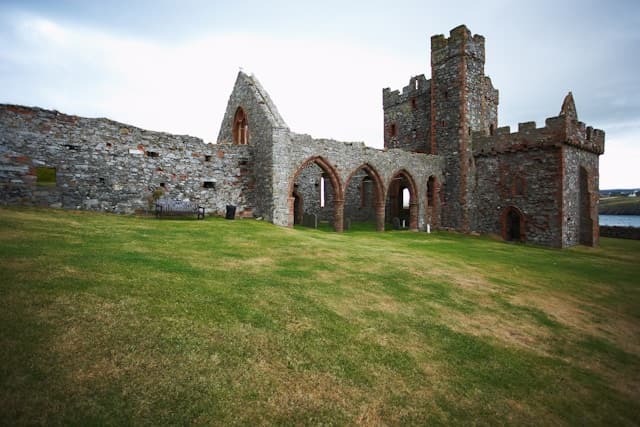
Wales has around 600 castle sites, which gives it the highest density of castles per square mile of any country in the world. No nation packs more strongholds into less ground. The reason is brutal and simple: Wales was conquered, and conquest builds castles. First Norman lords fortified the borderlands, then Edward I ringed the north with stone to hold a hostile country by force. Concentrated war left behind concentrated castles.
That ~600 figure comes from Cadw, the Welsh Government's heritage service, counting castle sites broadly: standing castles, ruins, and earthwork remains together.[1] Narrow the count to the formal protected tier of castles and fortified manors and the number is 293.[1] Either way, set those figures against a country smaller than New Jersey and you get the headline that makes Wales famous among castle hunters. For its size, nowhere on earth has more.[2]
Why such a small country has so many castles
A castle is not a monument to peace. It is a tool for holding ground you do not yet securely own, and Wales was ground that changed hands again and again for over two centuries. Every wave of fighting left its fortifications behind.
The first builders were the Normans. After 1066 they pushed west into the Welsh borderlands, and the king handed semi-independent lords, the Marcher lords, a free hand to carve out territory and keep whatever they could hold.[3] They held it with castles. The border country, the Marches, filled up with motte-and-bailey strongholds thrown up fast in earth and timber, then rebuilt in stone as the lords dug in. This was not one planned campaign but generations of private conquest, each lord fortifying his own patch against the Welsh and sometimes against each other.
Then came the king himself. When Edward I crushed the last independent Welsh princes in the 1280s, he did not trust the conquest to hold on its own.[3] He built an iron ring of castles across the north to pin the country down for good, and the scale of the spending was staggering.[2] At one point in the early 1290s the works at his Welsh castles ran into tens of thousands of pounds, dwarfing the parallel construction at the Tower of London. Wales was not garrisoned. It was occupied in stone.
Native Welsh castles versus the conquest castles
It is easy to picture Welsh castles as purely English imports, but that misses half the story. The Welsh princes built castles too, and a handful still stand.
These native strongholds are smaller and rougher than the great English fortresses, shaped by the mountains they sit in rather than by a royal treasury. Dolwyddelan in Snowdonia is the traditional birthplace of Llywelyn the Great, the prince who came closest to uniting Wales, and its square tower keeps watch over a high mountain pass. Castell-y-Bere below Cader Idris was a princely seat built by Llywelyn in the 1220s, its long narrow plan following the rock it stands on. These were the castles of an independent Wales, raised by Welsh rulers to defend Welsh land.
The conquest castles are a different breed entirely: bigger, colder, and built to dominate. The contrast between the two is really the whole history of medieval Wales told in stone.
Six famous Welsh castles worth knowing
A few names carry the country's reputation, and most of them belong to Edward I's ring.
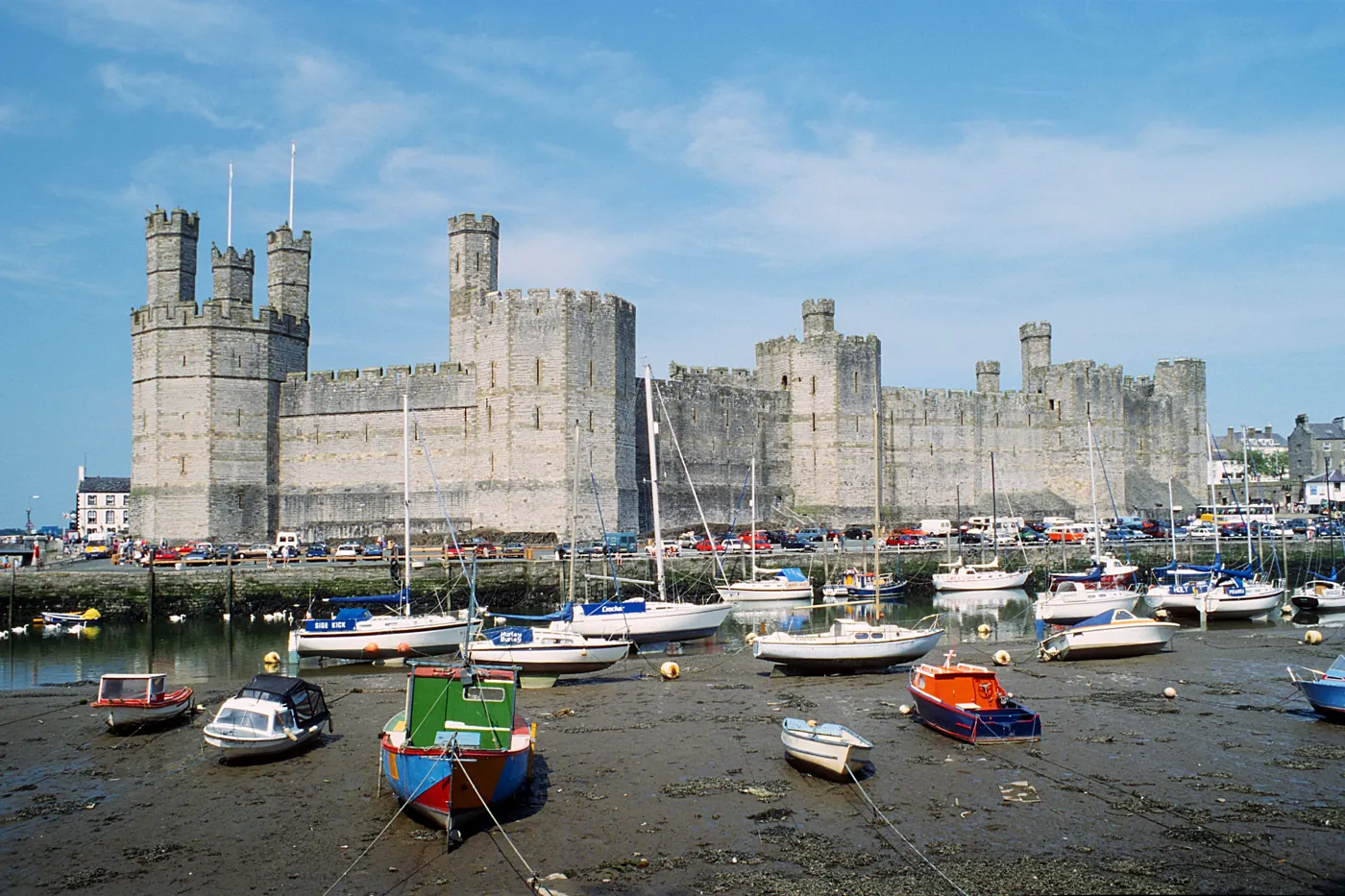
Caernarfon is the masterpiece of the conquest. Begun in 1283, its polygonal towers and banded masonry were modelled deliberately on the walls of Constantinople, a piece of imperial theatre meant to overawe the Welsh.[2] It still hosts the investiture of the Prince of Wales.
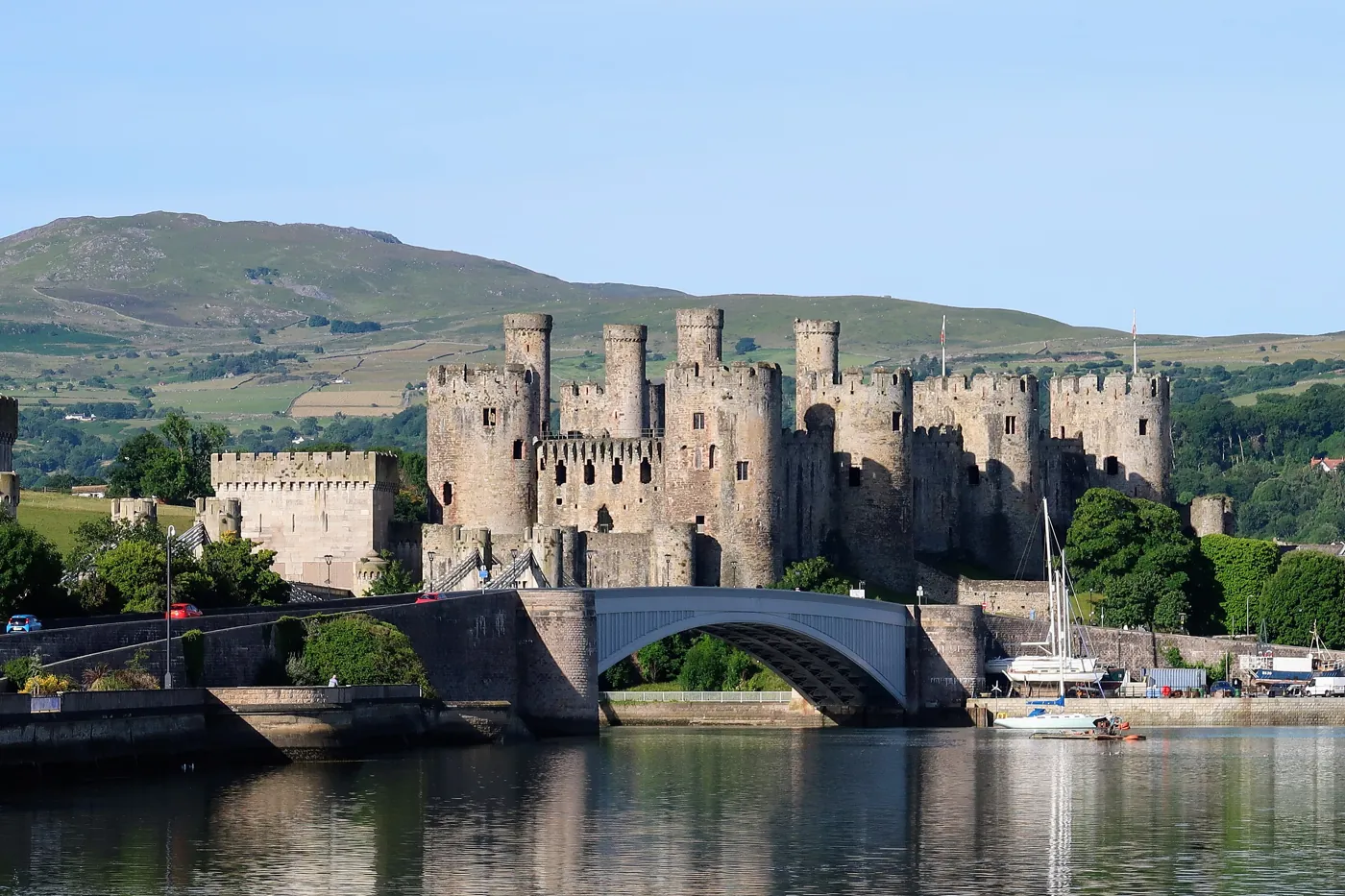
Conwy went up alongside it in just six years, and its medieval town walls survive almost whole: a 1.3 km circuit with 21 towers wrapping the old town, the most complete fortification of its kind in Britain.[2]
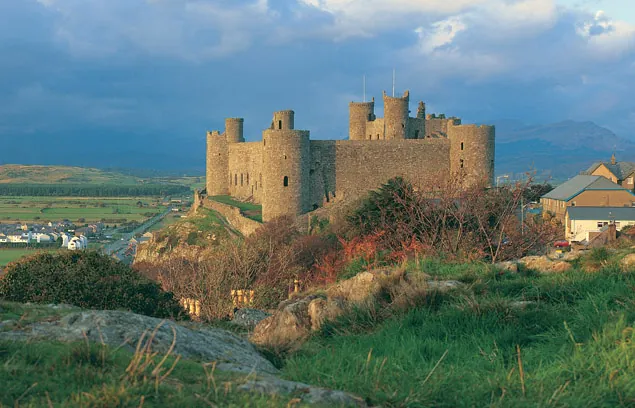
Harlech clings to a crag above Cardigan Bay and earned the longest siege in English history, eight years during the Civil War. Earlier, Owain Glyndŵr captured it and ran his Welsh revolt from inside its walls.[2]
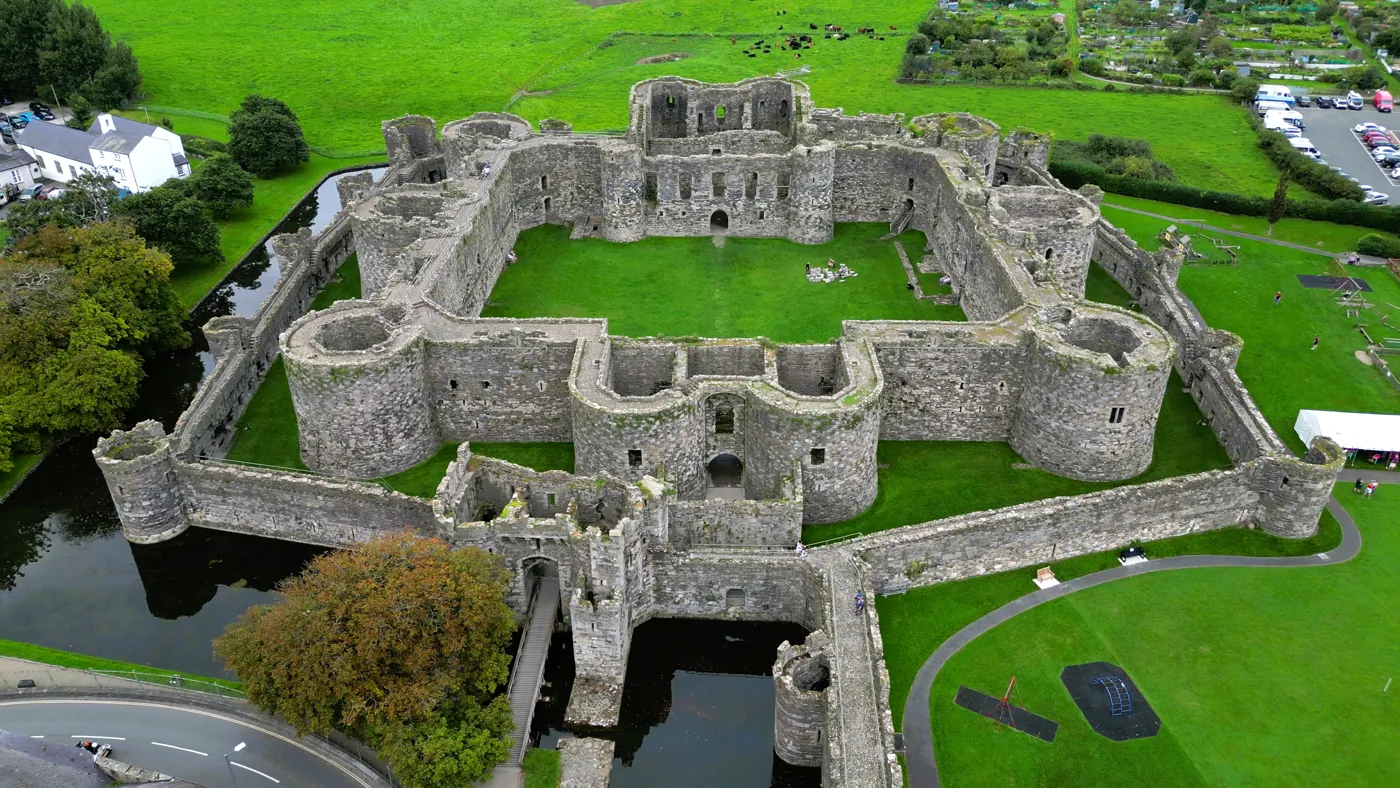
Beaumaris on Anglesey is the most perfect concentric castle ever designed, with walls inside walls in flawless symmetry. The money ran out before it was finished, which is why it has no soaring towers; it remains the great unfinished masterpiece of medieval military design.[2] These four castles share a single UNESCO World Heritage listing.
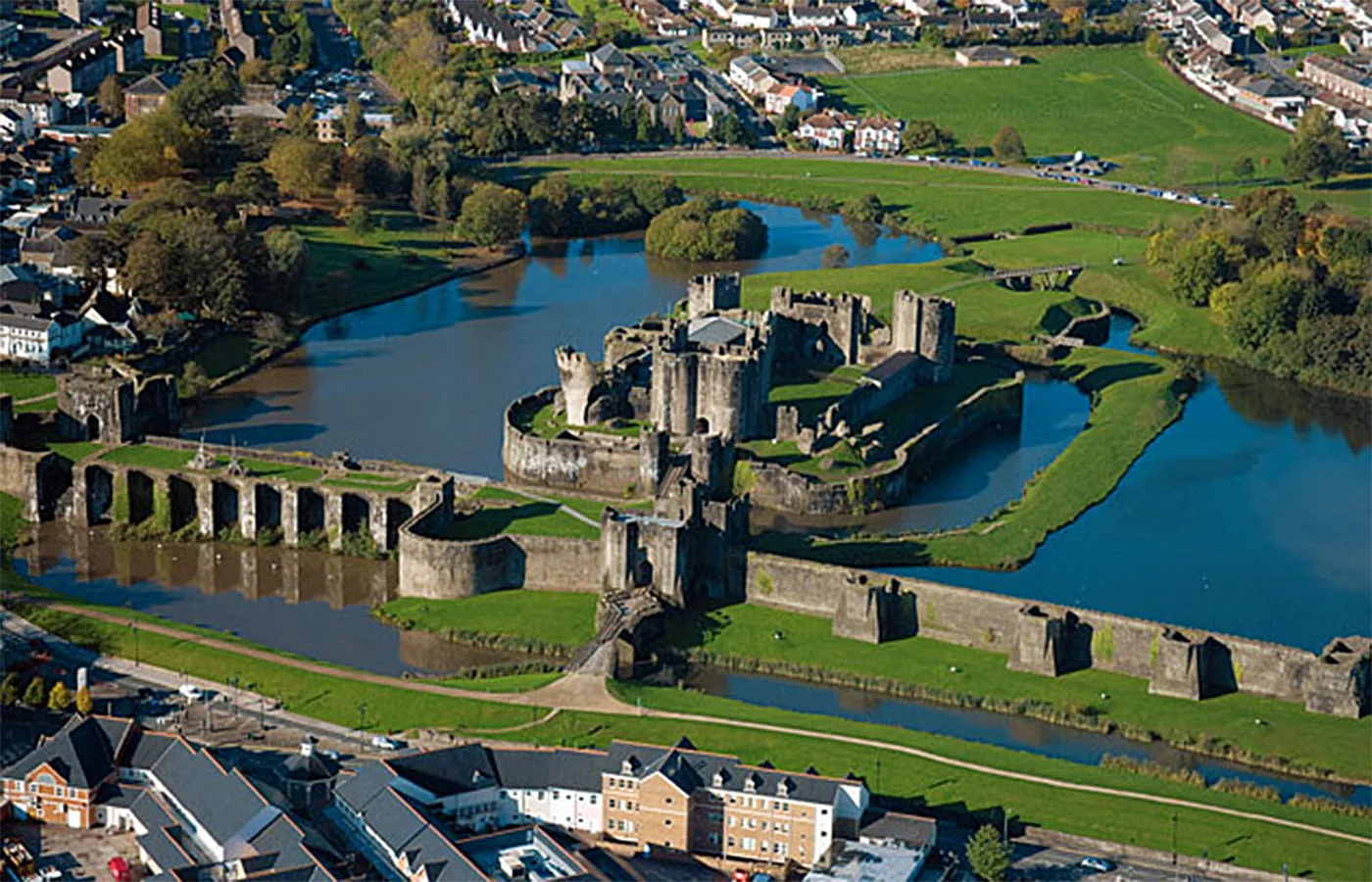
Caerphilly in the south is the second-largest castle in Britain after Windsor, sprawling across some 30 acres behind concentric rings of water defences. It is best known today for its south-east tower, which leans at an angle more pronounced than the tower at Pisa. It was raised in the 1260s by a Marcher lord, not the king, proof that the magnate castle-builders matched royal ambition years before Edward arrived.[2]
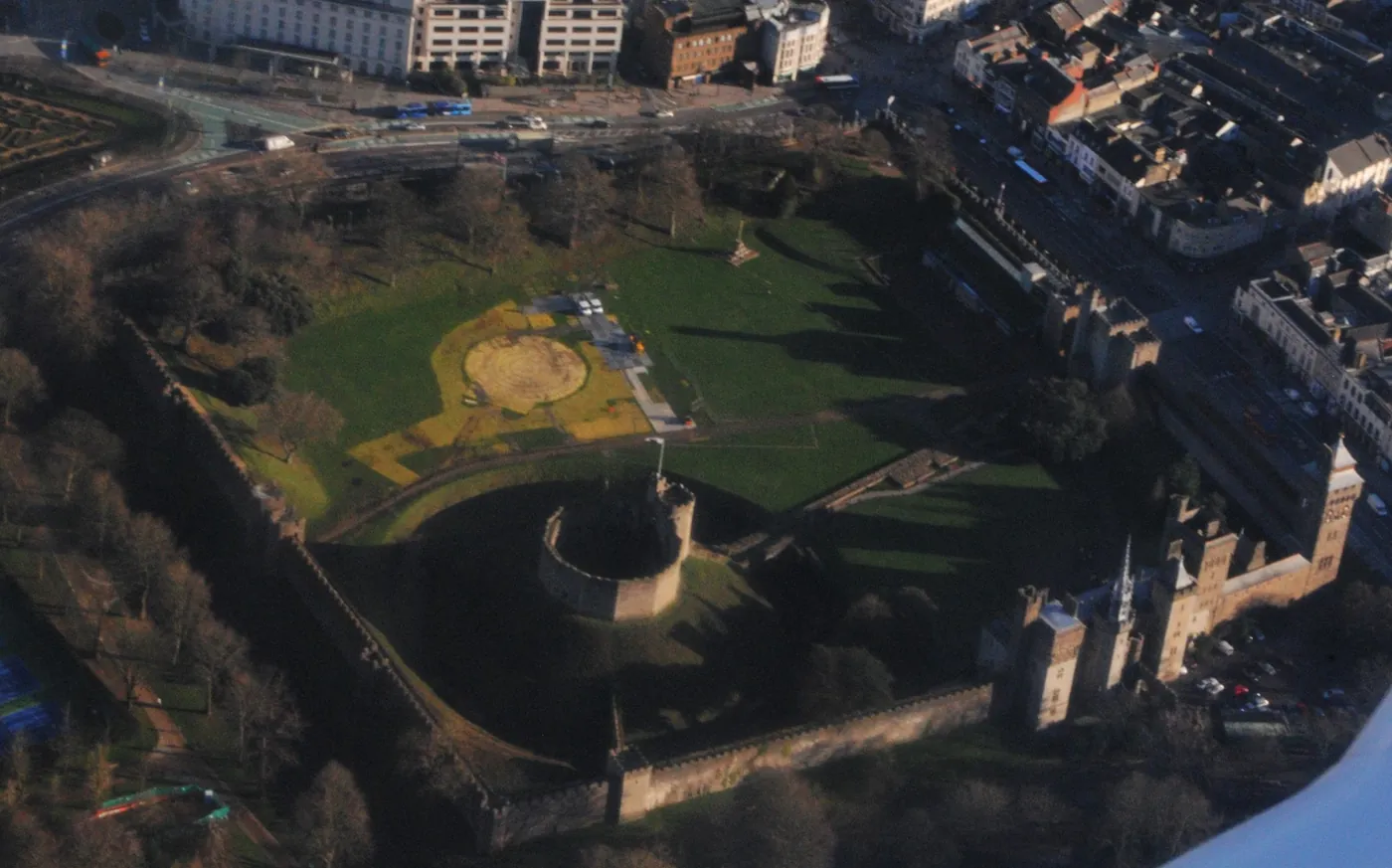
Cardiff Castle layers the whole story into one site: a Norman keep on Roman foundations, wrapped in the most lavish Victorian Gothic interiors in Britain, commissioned by the immensely wealthy 3rd Marquess of Bute and designed by William Burges. It is the most-visited castle in Wales on foot traffic and sits in the middle of the capital.
Where to see them, and where to buy one
The great Welsh castles sit largely in public hands. Caernarfon, Conwy, Beaumaris, Harlech, Caerphilly and the two native princely castles, Dolwyddelan and Castell-y-Bere, are all run by Cadw and open to visitors; Cardiff Castle is run by the city. Our guide to castles in Wales maps out where they sit and how to plan a route through them.
A surprising number of Welsh castles are also privately owned, and some change hands. Wales has produced the highest verified castle sale on record in the UK, and smaller Welsh castles and fortified houses come to market more often than people expect. You can browse what is currently available through our listings of Welsh castles for sale.
And if Wales packing 600 castles into so little space makes you wonder how it stacks up against the giants, it does not actually have the most castles overall. We settle that question in which country has the most castles, where Wales wins on density and loses on raw count.
Sources
1. Cadw, Welsh Government historic environment service. https://cadw.gov.wales
2. Kenyon, John R. Medieval Castles of Wales. University of Wales Press, 2010.
3. Davies, R. R. The Age of Conquest: Wales, 1063–1415. Oxford University Press, 1991.