
How Many Castles Are in Germany?
Germany has roughly 25,000 castles and palaces when you count ruins, medieval fortresses and later palatial residences together.
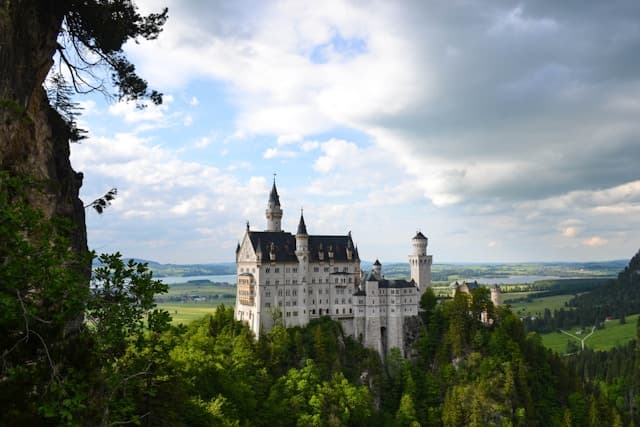
Germany has roughly 25,000 castles and palaces when you count ruins, medieval fortresses and later palatial residences together. By the strict measure of medieval castle sites, the figure is about 8,500. Either way, Germany holds more medieval castles than any country in Europe except France, which only edges ahead on the broad château count, and the reason comes down to a thousand years of political fragmentation.
The wide gap between those two numbers, 8,500 and 25,000, is not a contradiction. It is the difference between counting one kind of building and counting several. The lower figure comes from EBIDAT, the European castle database run from the University of Marburg, which records around 8,500 medieval castle sites across Germany's sixteen federal states.[1] Widen the definition to take in post-medieval palaces and substantial fortified manor houses, and the total climbs to 20,000 to 25,000 surviving fortified structures.[1] Both figures are correct. They just answer slightly different questions.
Why Germany has so many castles
The short version is that "Germany" spent most of its history not being a country at all. For around a thousand years the land was a patchwork of hundreds of separate territories, duchies, princedoms, free cities, church lands and tiny lordships, loosely held together under the Holy Roman Empire. Each of those rulers, large or small, wanted a seat of power, and a fortified one signalled status as much as it provided defence.
Multiply that impulse across hundreds of competing territories and several centuries, and the castles pile up. Around 15,000 castles went up during the Holy Roman Empire, with ownership reserved for perhaps the top 8 to 10 percent of the elite who could afford the outlay. Germany was not unusually warlike compared with its neighbours. It was unusually divided, and division is what builds castles.
The Rhine, where castles crowd the river
Nowhere is that density clearer than along the Rhine. The stretch of the Upper Middle Rhine Valley between Bingen and Koblenz, now a UNESCO World Heritage Site, carries more than forty castles across roughly 65 kilometres of slopes and ridge tops. They are packed in tightly, and the reason is money.
The Rhine was a trade artery, and a lord who held a stretch of riverbank could tax every merchant vessel passing below. So they built toll castles, sometimes within sight of one another. Around the year 1500, on the run between Bad Godesberg and Bingen, at least twenty castles on the east bank and more than seventeen on the west bank were extracting tolls from river traffic.[2] The most theatrical of them, Burg Pfalzgrafenstein, sits on an island in the middle of the river near Kaub, a stone ship that seems to swim toward passing boats.[2] It is the only Rhine castle never taken by force.
Burg versus Schloss: why the count splits
A lot of the confusion around German castle numbers dissolves once you know that German uses different words for what English flattens into one. A Burg is a medieval military fortress: thick walls, a central keep, usually perched on a hilltop. A Schloss is a later palatial residence, ornamental rather than defensive, mostly built between the sixteenth and nineteenth centuries. A Festung is a post-medieval star fortress or citadel.[3]
The 8,500 figure is essentially a Burg count, medieval fortresses with documented military origins. The 25,000 figure adds the Schlösser and the fortified manors on top. So when one source says Germany has 8,500 castles and another says 25,000, both are right; they are simply drawing the line in different places. It matters in practice too, because a twelfth-century Burg and a nineteenth-century neo-Gothic Schloss pass through Germany's heritage protection system along different paths.
Six German castles worth knowing
A handful of names carry most of the country's castle fame:
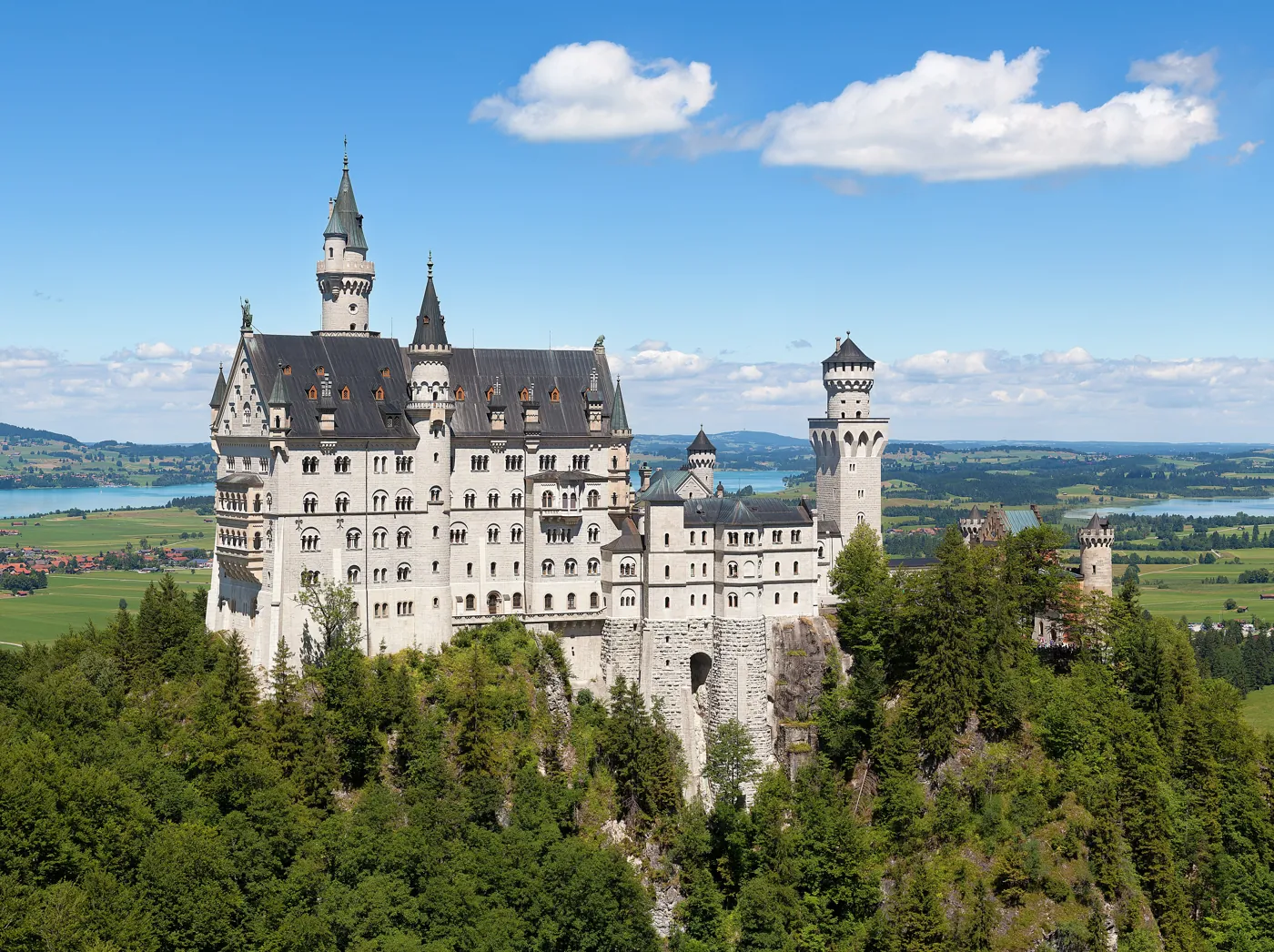
Neuschwanstein is the one almost everyone pictures, the Bavarian fantasy palace King Ludwig II raised between 1869 and 1886. Its silhouette became the model for Disney's Sleeping Beauty Castle. It draws over a million visitors a year and was added to the UNESCO list in 2025.
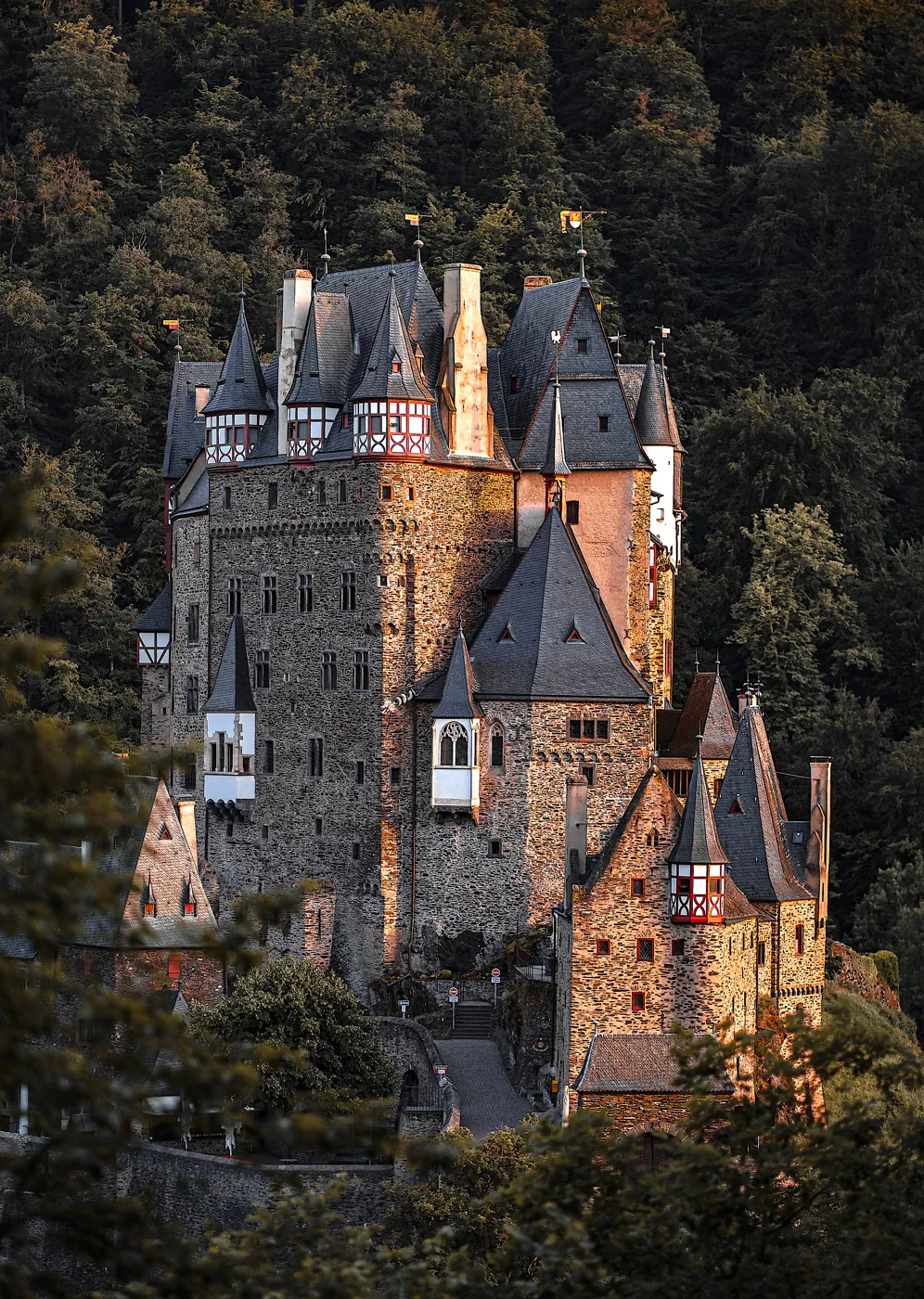
Burg Eltz, in a forested valley in Rhineland-Palatinate, has stayed in the same family for 33 generations since at least 1268, never destroyed in any regional war. The current count still lives there. It appeared on the 500 Deutsche Mark note from 1965 to 1992.
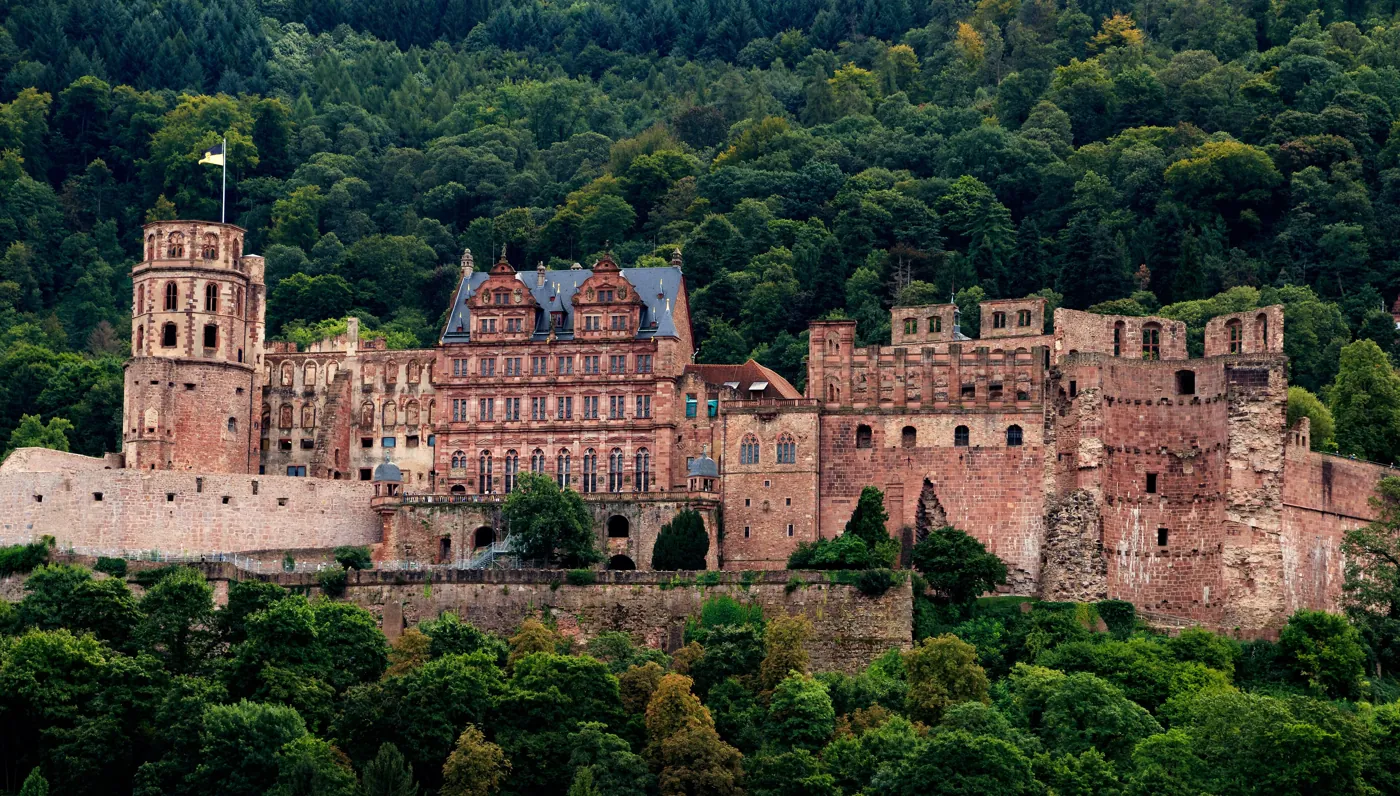
Heidelberger Schloss is the great red-sandstone ruin above the Neckar, partly wrecked in the wars of the 1690s. The debate over whether to rebuild it helped settle the modern principle that ruins should be conserved rather than reconstructed.
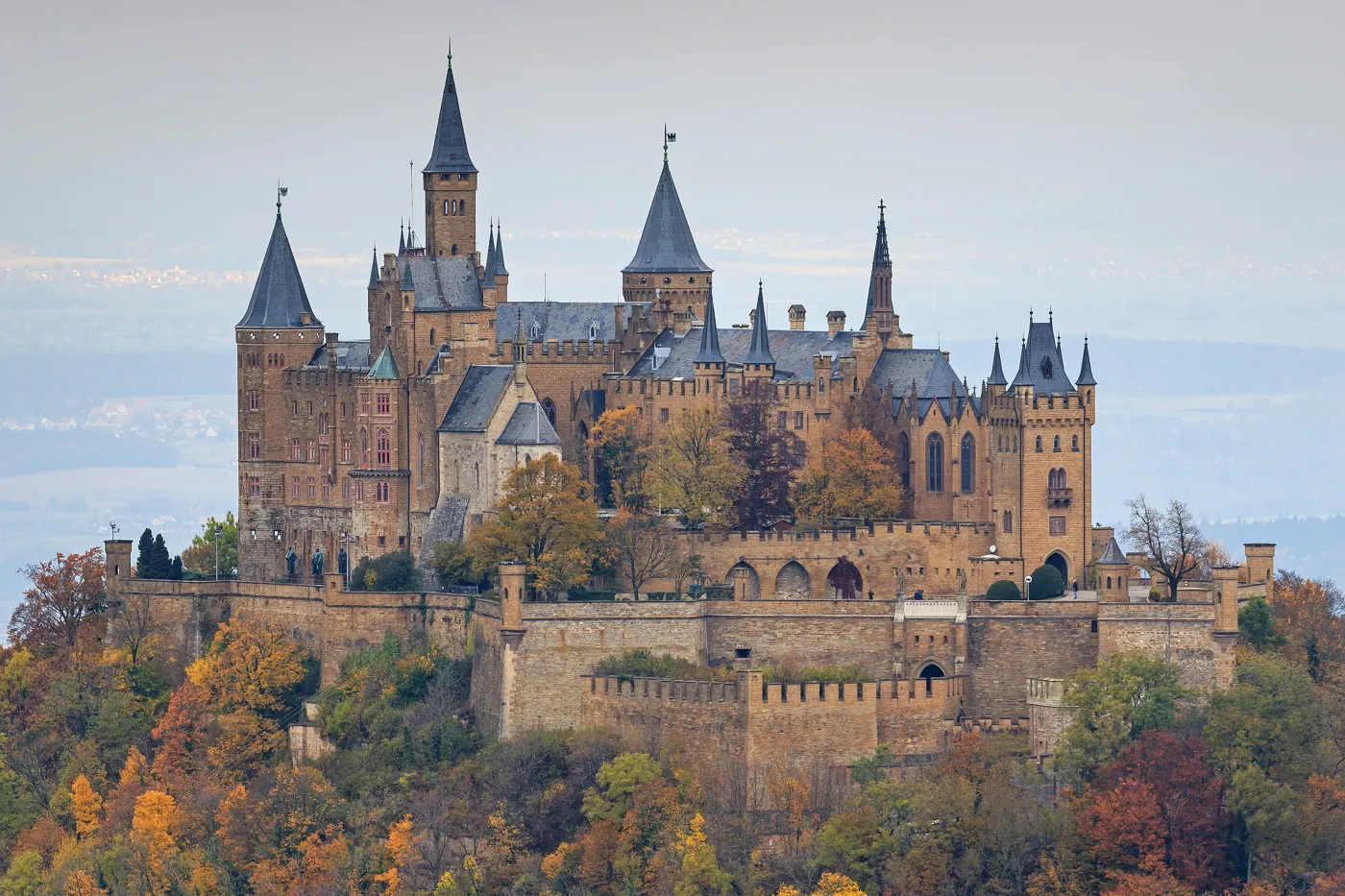
Burg Hohenzollern in Baden-Württemberg is the ancestral castle of the Hohenzollern dynasty, the family that produced the kings of Prussia and the German emperors. The hilltop version standing today is a nineteenth-century neo-Gothic rebuild and remains in private family hands.
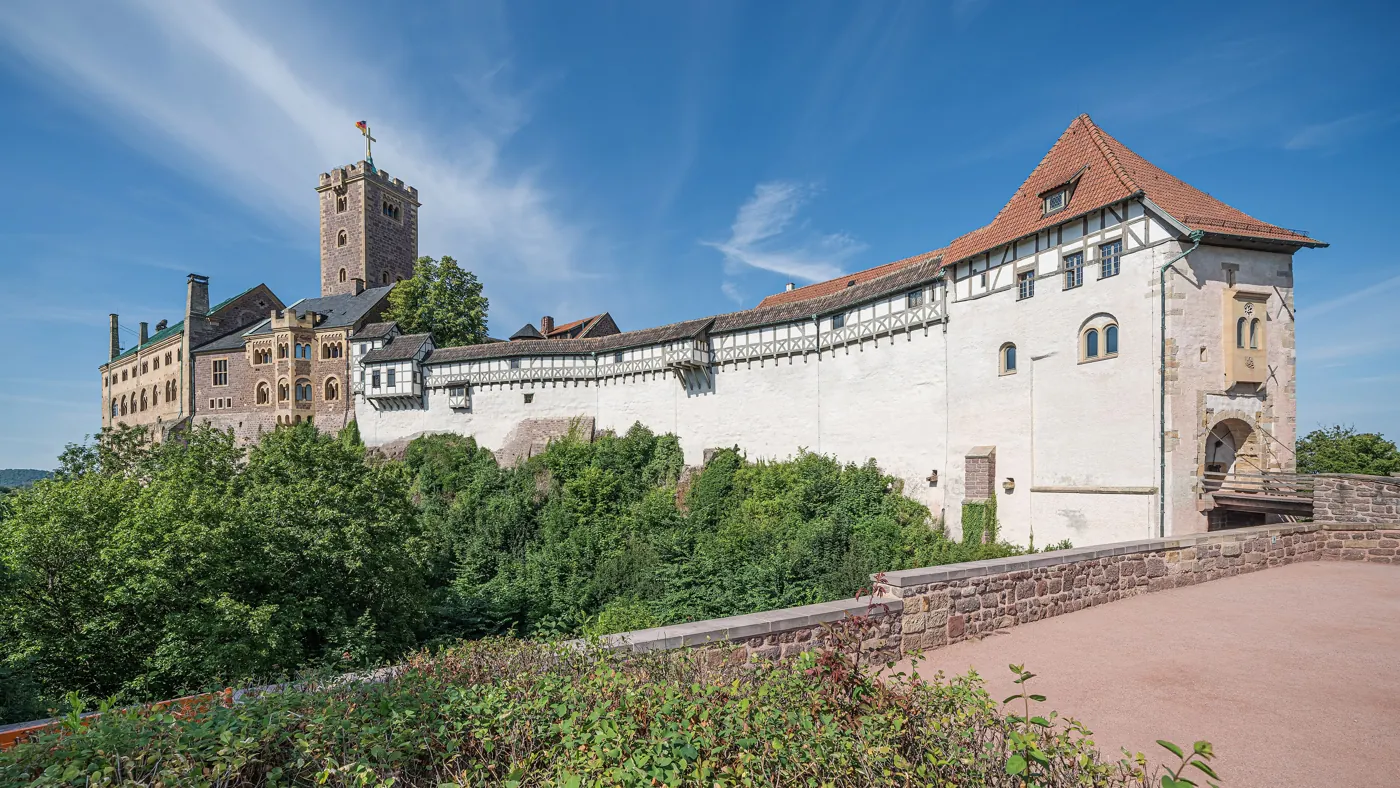
Wartburg, above Eisenach in Thuringia, is where Martin Luther translated the New Testament into German in 1521 and 1522 while sheltering in disguise. It is a UNESCO World Heritage Site and one of the castles Ludwig II had in mind when he dreamed up Neuschwanstein.
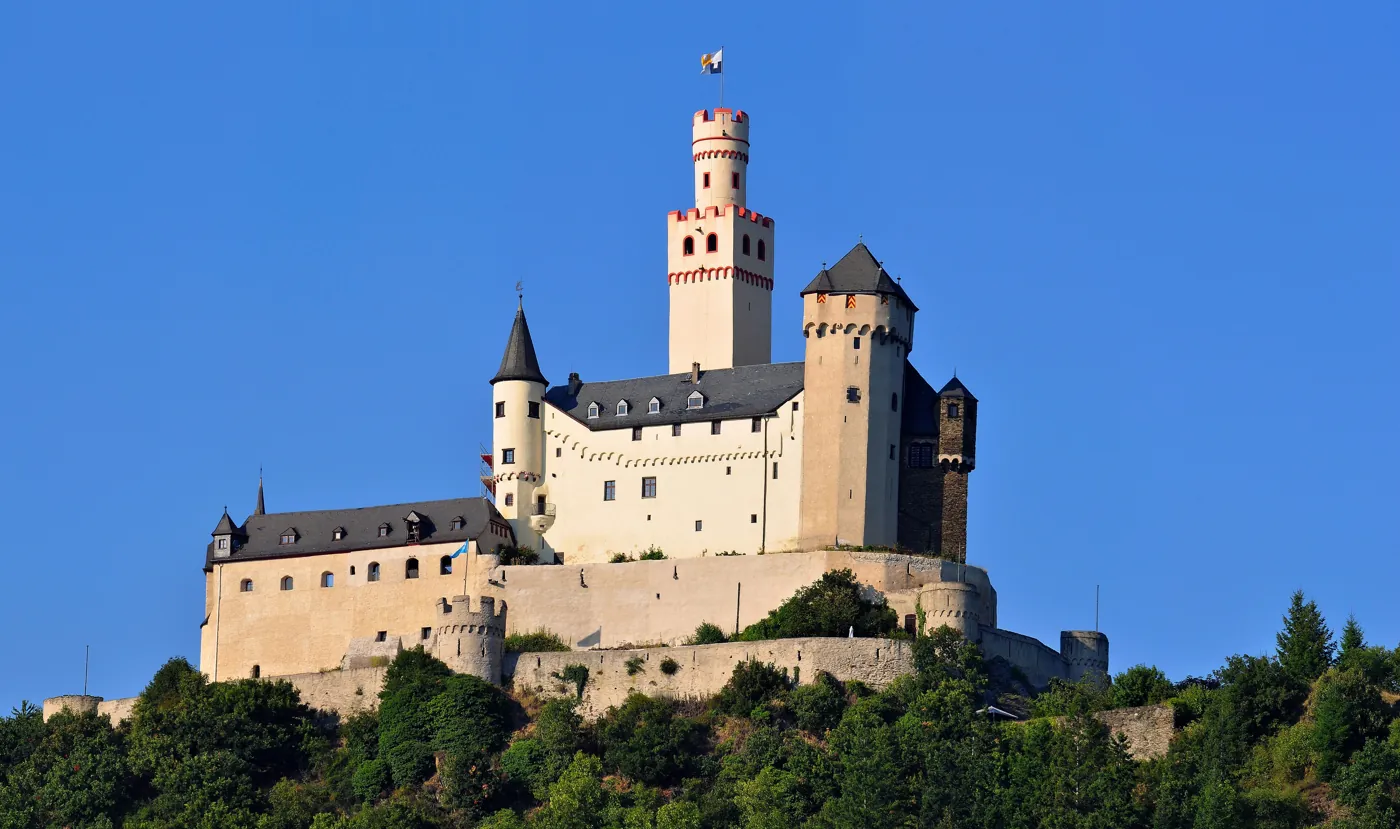
Marksburg, perched 150 metres above the Rhine at Braubach, is the one Middle Rhine castle that survived the river's wars intact and still looks the part of a working medieval stronghold. It now houses Germany's leading castle-research institute.
The German castle market today
The famous names are visitor sites, not for sale. But the broader pool of 25,000 fortified buildings means a steady supply of smaller castles, manors and Schlösser does change hands, and Germany is one of the more open markets in Europe for it. Foreign buyers face no purchase restrictions, prices run the full range from distressed eastern auction lots to multi-million-euro trophies, and the country offers a restoration tax break with no real equal elsewhere on the continent.
If you want to see the famous ones in person, the place to start is our guide to the best castles to visit in Germany. If you are thinking about ownership rather than a day trip, browse the German castles currently for sale. And for how Germany stacks up against France, Wales and the rest, see which country has the most castles.
Sources
1. EBIDAT, European Castle Database, Europäisches Burgeninstitut, Deutsche Burgenvereinigung, Marburg. https://www.ebidat.de
2. Taylor, Robert R. The Castles of the Rhine: Recreating the Middle Ages in Modern Germany. Wilfrid Laurier University Press, 1998.
3. Goodall, John. Castle: A History. Yale University Press, 2022.