
Europe's Cheapest Castle Markets
The cheapest countries to buy a castle in Europe, ranked by verified price per square metre, and why the cheapest markets rarely stay cheap.
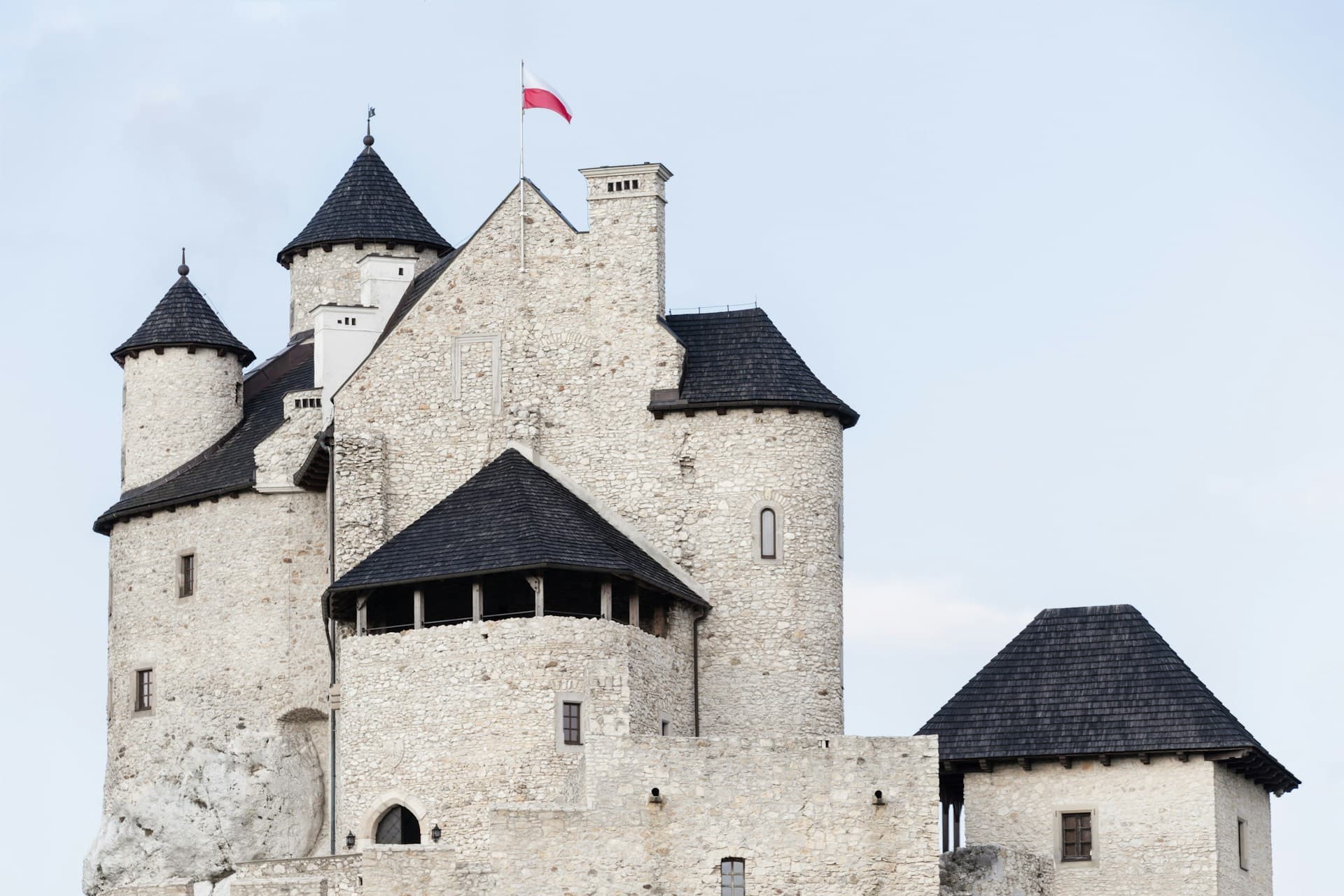
There is this illusion that castles are these invaluable assets that only the billionaire class would have access to. So when people stumble across castle listings for the first time they are genuinely surprised to find that many castles are actually cheaper than a house or apartment in a major city. And with the rising cost of property ownership, buyers are continually searching for more affordable options. So we've crunched the data to have a look at where the cheapest castle properties are in Europe. Obviously, there are many other hidden costs (which we'll discuss later), but for now, many buyers will be interested in what market will take their cash the furthest.
The median price for a castle in Europe is around €1.7 million, €2,257 per square metre. That's the middle price across all the markets, now let's go country by country to see what each market has to offer.
| Country | Median €/m² | Median price | Median floor area |
|---|---|---|---|
| Poland | €778 | €1,194,800 | 1,689 m² |
| Italy | €1,698 | €2,825,000 | 1,350 m² |
| Germany | €2,140 | €1,430,000 | 694 m² |
| Belgium | €2,184 | €1,772,500 | 924 m² |
| France | €2,292 | €1,690,000 | 710 m² |
Poland is clearly the cheapest European market. Italy and France are not as cheap but quite competitive (more on them in Italy and France) and the median numbers don't do them justice. But overall, we can say that the cheap markets are Eastern.
Poland: the cheapest major market
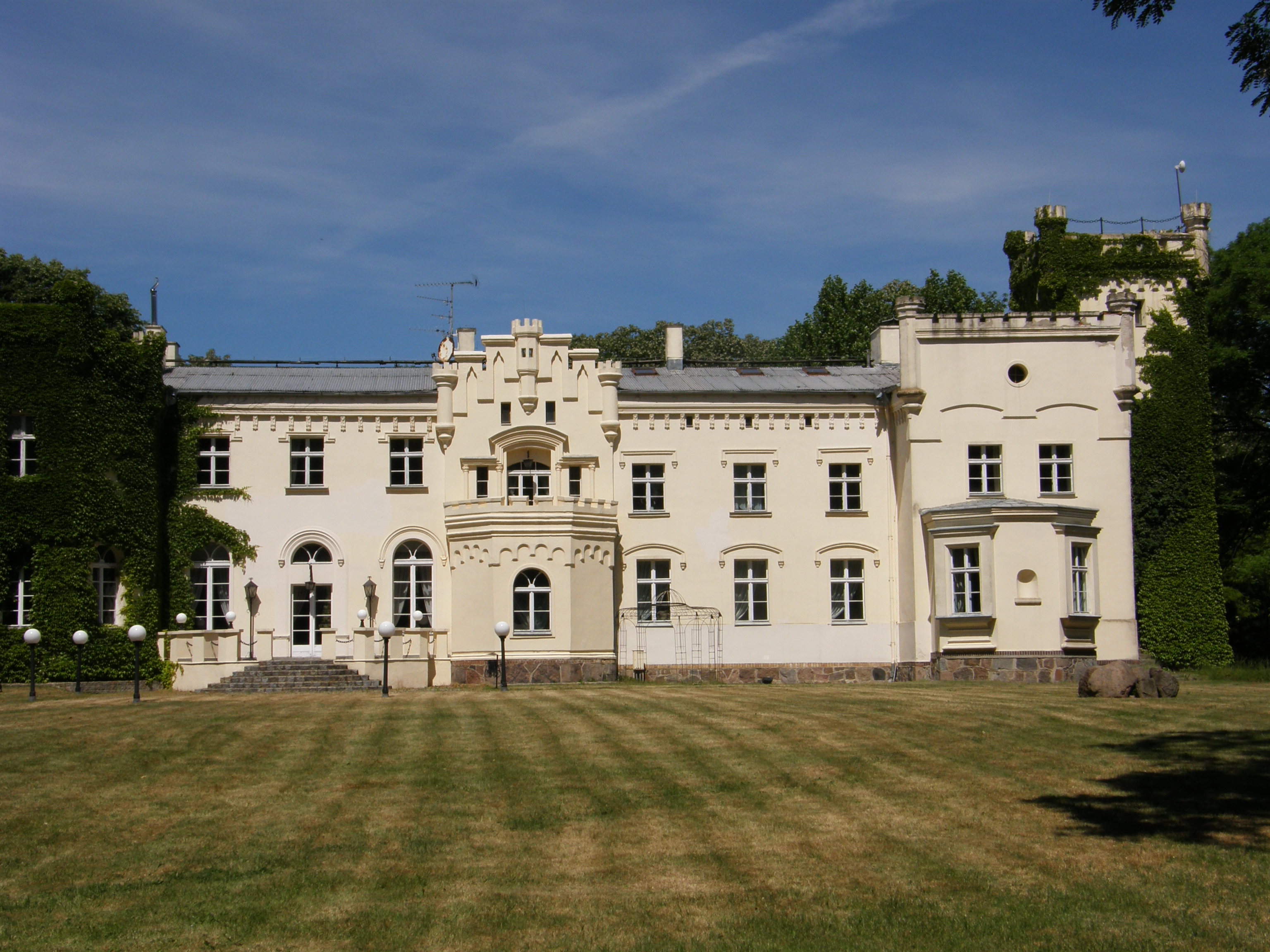
At roughly €778/m², Poland is the cheapest sizeable castle market in Europe, about 34% of the European median (€2,257/m²). It is also, usefully, one of the most transparent: none of the Polish listings in our data hide their price, the same openness France has and Italy lacks.
What you are buying for that price is space, and a lot of it. The median Polish castle listing runs to 1,689 square metres, the largest of any country in the index, and the Polish market is dominated by big restoration-required palace and manor estates in Silesia, Mazovia and Lesser Poland. This is the classic central European pattern: vast floor areas at low per-square-metre values, because the price is discounted given the state of the property and repair costs.
The verified floor
Asking prices tell one story; confirmed sales tell a starker one. These are real Eastern and central European castle transactions, and they set the true bottom of the market.
- Schloss Weigsdorf (map), Saxony, Germany: €170,000 in 2022 for 2,269m², or €75/m², the lowest verified price in the whole dataset. We tell its full story in the €170,000 castle.
- Zlatna Castle, Alba County, Romania: €260,000 in 2021 for 1,358m², or €191/m².
- Zichy Castle, Somogy County, Hungary: around €1.68m in 2007 for 5,934m², or €283/m².
- Hostačov Chateau, Vysočina, Czech Republic: about €3.15m in 2022 for 1,800m², or €1,750/m².
- Salbek Castle, Arad County, Romania: sold in 2017 in the €350,000 to €700,000 range, to the Botnar Foundation.
A recurring detail in that list is who buys: foundations and mission-driven groups appear repeatedly (Salbek to the Botnar Foundation, Hostačov to an effective-altruism-linked group), because at this end of the market a castle is less an investment than a project that needs a backer with a reason beyond returns.
Even the east has a ceiling, mind: Gniew Castle, a 14th-century Teutonic Order fortress in Pomerania, sold for around €13m in 2009, and Koloděje Chateau near Prague went for roughly €9.3m in 2010. Cheap is the rule in the east, not a guarantee.
The catch: restoration does not get cheaper
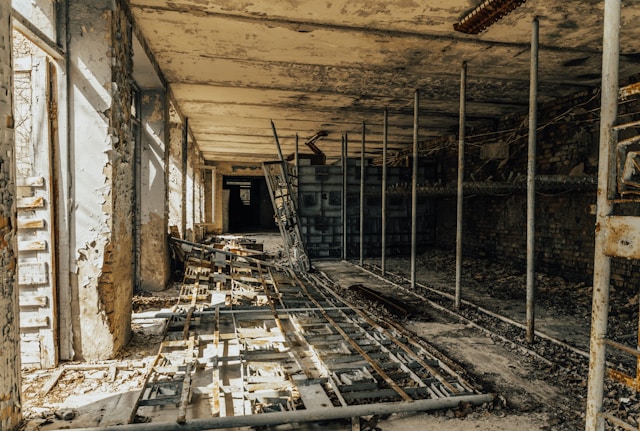
Here is what the low entry prices conceal. The cost of buying an Eastern European castle is local; the cost of restoring one is European. Heritage-compliant work runs to Western benchmarks almost regardless of where the building stands, because the things it requires are priced continent-wide:
- Skilled heritage trades, stone masons, specialist carpenters, slate roofers, charge near-EU-wide rates for genuinely historic work.
- Protected and monument-listed buildings require certified contractors in most jurisdictions, which removes the cheap-labour option.
- Materials such as lime mortars, hand-cut slate and matched timber profiles carry European prices wherever they are shipped.
- Retrofitting heating and services into a stone heritage structure costs much the same in Silesia as in Surrey.
Weigsdorf is the clearest illustration: a €170,000 purchase against a restoration estimate of €2.7m to €8.5m, which is 16 to 50 times the entry price. In every one of the cases above, the restoration budget dwarfs the purchase by an order of magnitude.
What the cheap castle actually costs
Put real numbers on it. Take a 2,000m² Polish or Czech castle bought for €500,000, a realistic entry-level figure for the cheap markets:
- Purchase: €500,000
- Restoration at a mid-range €2,000/m²: €4,000,000
- Ten years of carrying costs at €40,000 a year: €400,000
- Ten-year total: roughly €4,900,000
On those figures, the €500,000 purchase price is about 10% of the true cost of ownership. The number that gets you in the door is the smallest one you will spend. This is the same lesson the French renovation case studies in our château buyer's guide teach with named budgets: the building is the cheap part.
When a cheap castle makes sense, and when it doesn't
The Eastern European castle is not a bad buy. It is a specific buy, suited to specific people.
It makes sense for:
- Buyers who can do real work themselves. The single biggest cost lever is project management: self-managing and doing the unskilled work yourself can roughly halve the cost of interior renovation, the difference between the DIY and full-contractor figures seen in real French case studies.
- Buyers with a clear revenue plan, hospitality, events, retreats, that turns the building into a business rather than a money pit. As the investment data shows, a castle with a revenue model is the only version that reliably holds its value.
- Buyers with the patience for a ten-year-plus restoration, because that is the realistic timeline and every documented case has run long.
- Buyers who treat the purchase as the smallest line in the budget, not the headline.
It does not make sense for:
- Anyone hoping to refurbish quickly and resell. The restoration rarely returns at sale, as the verified investment cases in castles vs the S&P 500 show.
- Anyone without the working capital to fund a multi-million-euro restoration.
- Anyone anchored on the entry price and unprepared for what comes after it.
The bottom line
Europe's cheapest castles are genuinely cheap to buy and genuinely expensive to own, and the gap between those two facts is the whole story of the eastern market. Poland and the Czech Republic offer more castle per euro than anywhere else on the continent, but only the buyer who budgets for the restoration, not the purchase, should go looking. The full country index and the restoration benchmarks behind these figures are in the Castle Price Index, and for the opposite extreme, see the most expensive castles ever sold.
Sources
Country medians, verified transactions and renovation benchmarks from Castle Collector, Castle Price Index (March 2026), Sections 1.4, 1b.2 and 4. Individual transaction figures via Profit.ro, dpa, Radio Prague, Atlatszo and Interia.