
Coral Castle: The 1,100-Ton Monument One Man Built Alone
In a corner of southern Florida stands a castle carved from more than a thousand tons of stone, built entirely by one small man, working alone, mostly at night, who never let anyone watch.
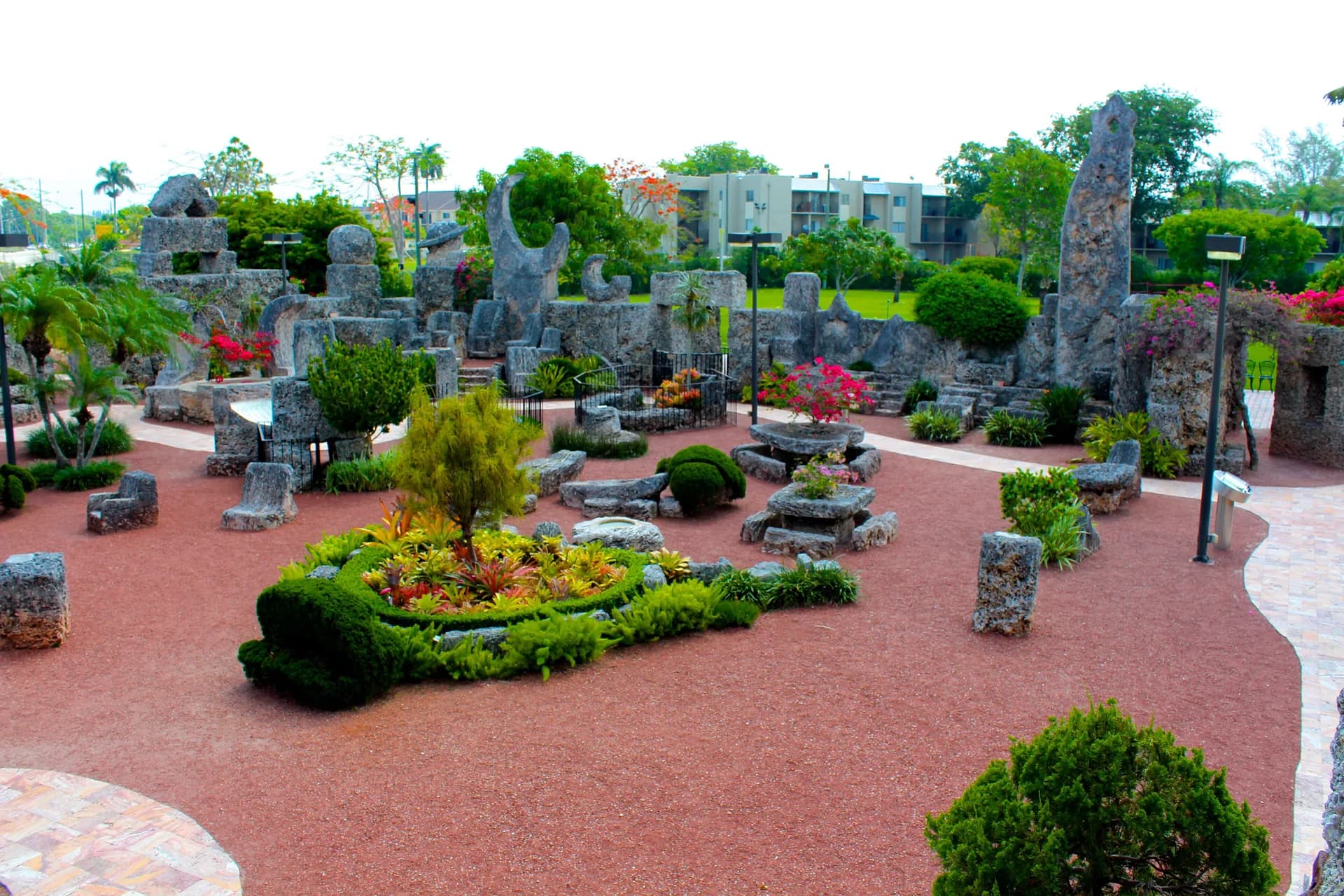
In a corner of southern Florida stands a castle carved from more than a thousand tons of stone, built entirely by one small man, working alone, mostly at night, who never let anyone watch. He did it for a woman who had jilted him the day before their wedding. How a single person quarried, moved and set blocks heavier than the ones at Stonehenge, with no machinery and no help, is a genuine mystery that engineers still cannot fully explain. This is the story of Coral Castle and the heartbroken man who made it.
Coral Castle in Homestead, Florida is the strangest castle in America, and the most personal. It was not built by a dynasty or a developer. It was built by Edward Leedskalnin, a Latvian immigrant who stood barely five feet tall and weighed about a hundred pounds, over roughly 28 years of solitary labour. Two things keep people coming: the love story behind it, and the simple, nagging question of how on earth he did it.
At a glance
| Location | Homestead, Florida, United States |
| Built | 1923 to 1951, by hand |
| Builder | Edward Leedskalnin, working alone |
| Material | More than 1,100 tons of oolite limestone |
| Known for | The one-man construction mystery and a lost-love story |
| Open | Daily, as a museum |
The Jilted Bridegroom
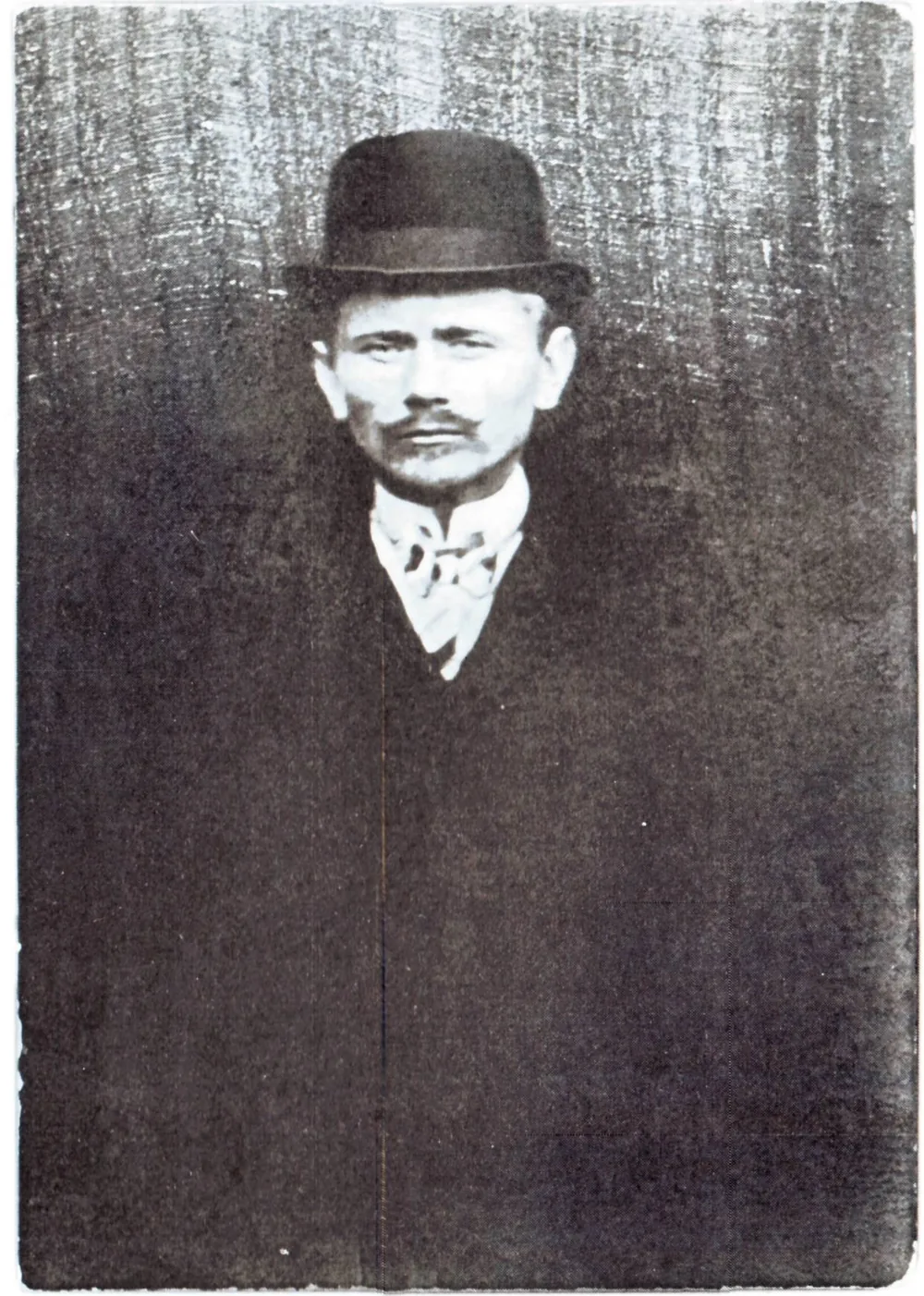
The whole thing begins with a broken engagement. In 1913, in Latvia, Edward Leedskalnin was due to marry Agnes, a girl of sixteen he always afterwards called his "Sweet Sixteen." The day before the wedding, she called it off, reportedly over the age gap between them. Leedskalnin was heartbroken, and he never married.[1]
He left Latvia, drifted across North America, and by around 1918 had settled in Florida. There he bought a patch of land and began, alone, to carve a monument to the love he had lost, telling visitors he hoped that one day Agnes would come to Florida and see what he had built for her. She never did. As late as 1983, the castle's manager said he believed she was still alive and knew of the monument raised in her name, but that she had never visited and the two had never spoken again.[2]
A Castle Carved by One Man, at Night
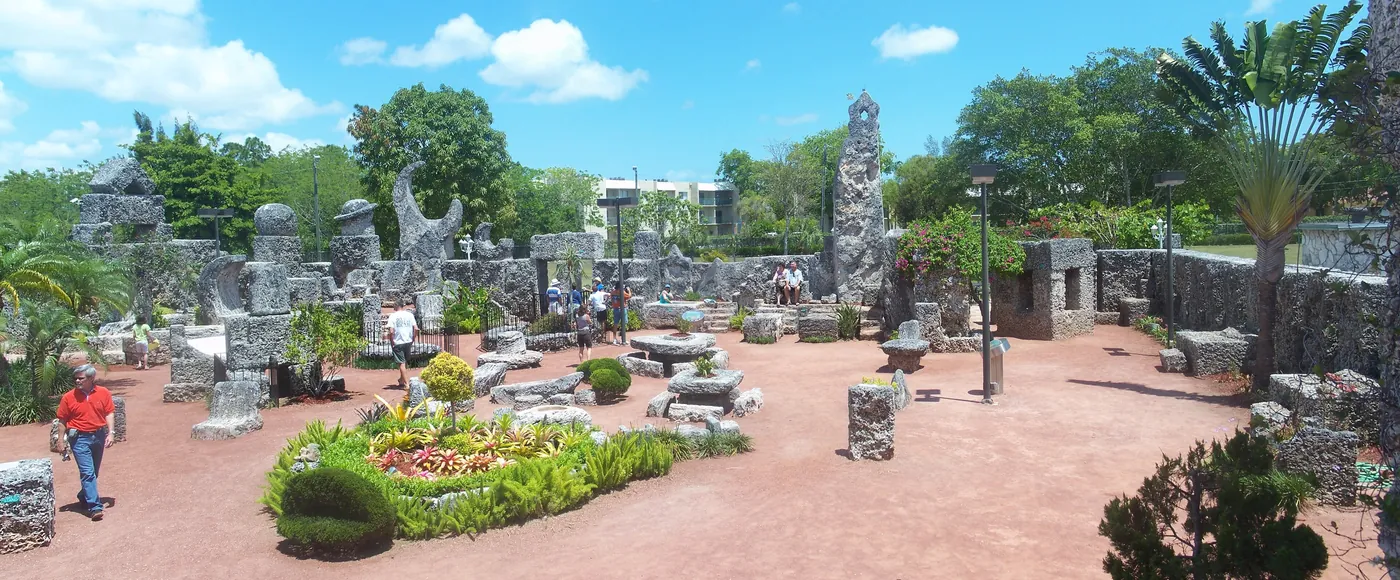
Leedskalnin worked in almost total secrecy. He quarried the oolite limestone himself, sculpted it with tools he made from salvaged car parts and scrap, and he did the heavy work after dark, refusing to let anyone watch. Over the years he shaped more than 1,100 tons of rock into walls, towers, furniture and astronomical instruments.[3]
The most remarkable part came in the mid-1930s, when he decided to move the entire creation from its first site at Florida City to its present home in Homestead, several miles away. He hired a truck and driver, but loaded and unloaded the massive stones himself, again allowing no one to see how. He spent the rest of his life there, opening the place as a roadside attraction he called Rock Gate Park and charging ten cents to look around.[2]
How Did He Do It?
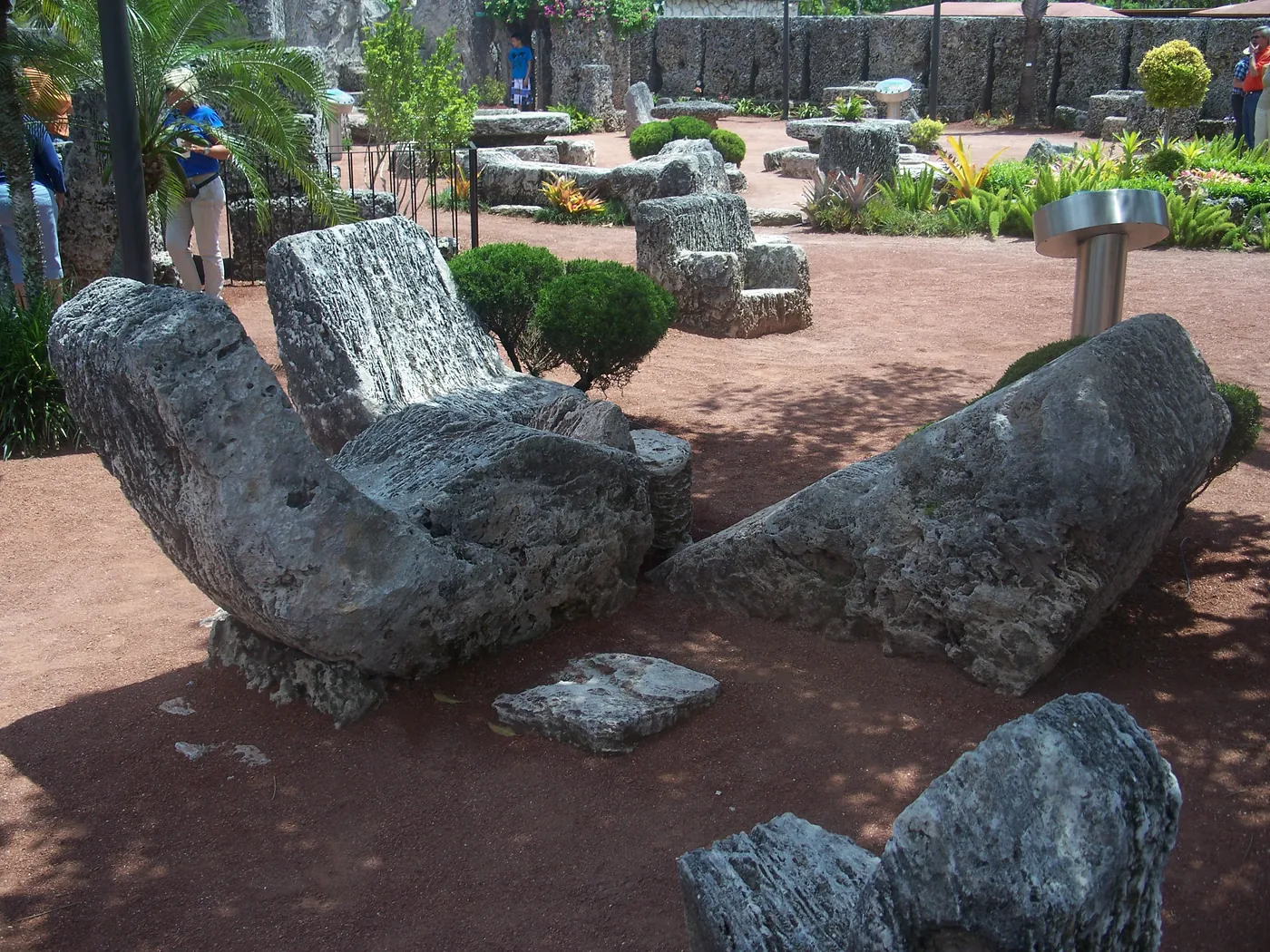
This is the question that has kept Coral Castle famous. The finished work has no discernible tool marks, and the pieces meant to move do so with almost no effort: solid-stone rocking chairs a child can rock, and a nine-ton gate so finely balanced it once swung open at the push of a finger.[3]
Leedskalnin never explained himself plainly. Asked how he managed it, he would only say that he "understood the secret of the pyramids," or that moving heavy stone was easy "if you know how." The rational answer, which most engineers accept, is that oolite limestone is porous and much lighter than solid granite, and that a patient man with levers, tripods, pulleys and wedges can move astonishing weights given enough time. He clearly had the time, and the stonemason's knowledge.
The mystery survives because two things resist that tidy explanation: the sheer scale of what one small man achieved, and his own refusal to show anyone. Into that gap rushed the legends, that he used "reverse magnetism" or anti-gravity, even that two teenagers once saw the blocks float "like hydrogen balloons." There is no evidence for any of it, and Coral Castle belongs with the genuine engineering puzzles rather than the supernatural ones. But the cryptic little man left just enough silence for the stories to grow.
What He Left Behind
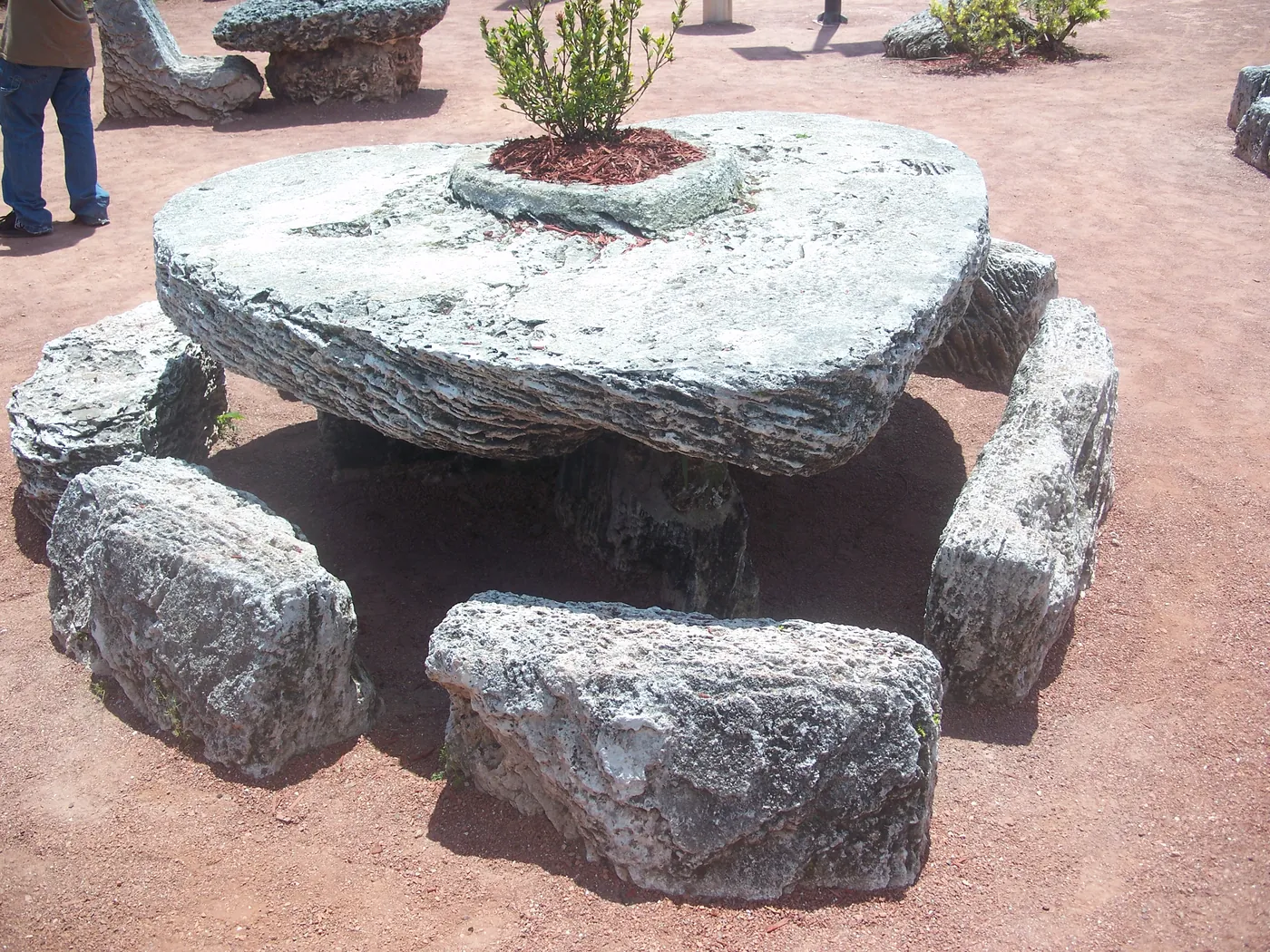
The castle is really a sculpted garden of the things one lonely man wanted around him: a throne room, a heart-shaped table, a sundial, a working telescope aligned on the Pole Star, a "repentance corner," and beds and chairs all cut from solid rock. The nine-ton revolving gate became its signature, the engineering trick everyone came to test.
Leedskalnin died in 1951, leaving no will, and the castle passed to a nephew who had no money to run it. In 1953 it was signed over to Julius Levin, a retired Chicago jeweller, who restored it, reopened it and gave it the name Coral Castle; Leedskalnin himself had only ever called it Rock Gate. Levin sold it in January 1981 for $175,000 to Coral Castle, Inc., which owns and runs it to this day, and the site joined the National Register of Historic Places in 1984.[2]
It is, in the end, a monument with no one living in it and no one it was built for, which gives it something in common with Boldt Castle, another grand American castle raised for a love that was lost before it could be finished. And for all its strangeness, Coral Castle is still a property that has been bought and sold like any other: for what genuine castles change hands for today, see the most expensive castles ever sold and the current castles for sale.
Coral Castle Isn't the Only One
Coral Castle is the most famous castle built by a single pair of hands, but it is not the only one. It belongs to a small, obsessive tradition of solo builders.
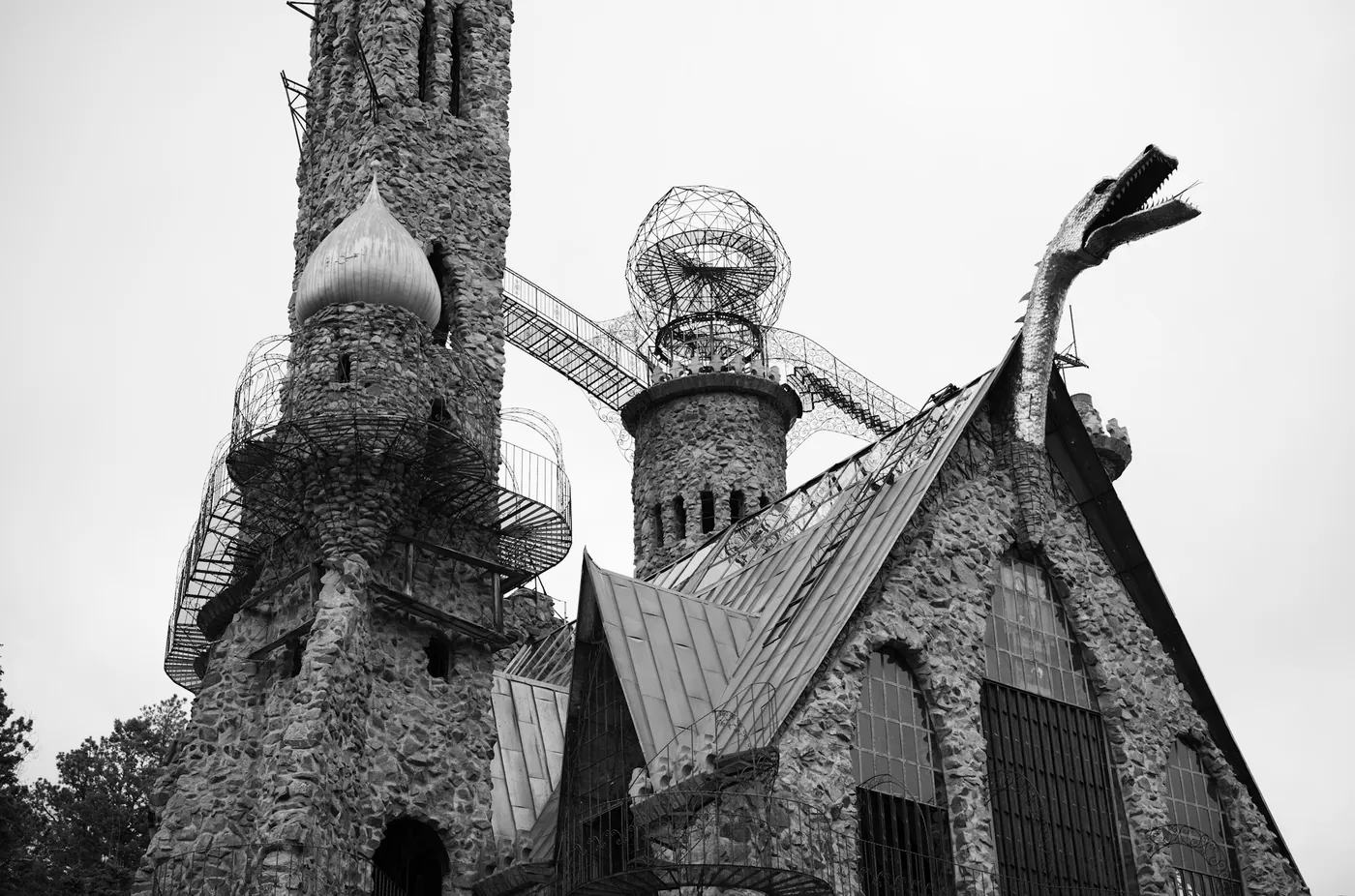
In Colorado, Jim Bishop spent half a century, from 1969 to 2019, raising Bishop Castle, a soaring structure of stone and iron with a tower reaching some 160 feet, built without blueprints and almost entirely alone. In France, a rural postman named Ferdinand Cheval spent 33 years assembling his Palais Idéal at Hauterives from stones he gathered on his daily mail round, finishing in 1912 and carving into it the words "the work of one man"; it is now a protected national monument. On the California coast at Cambria, Arthur Beal spent 51 years from 1928 chiselling his "anti-Hearst Castle," Nitt Witt Ridge, from a pickaxe, a shovel and whatever he could salvage.
What they share with Leedskalnin is not technique but temperament: decades of solitary, unpaid devotion to a vision no one else could quite see. Coral Castle is simply the one that came with a love story and a mystery attached.
Visiting Coral Castle
Coral Castle sits at 28655 South Dixie Highway in Homestead, about an hour south of Miami and an easy detour on the way to the Florida Keys. It is open daily as a museum, and admission, from around $25 for adults, includes a short documentary on Leedskalnin and a guided tour that walks you through the famous gate and the story behind each stone. Check the official site for current hours and prices before you go.[4] For other castles across the country, see our guide to castles in the United States.
Sources
1. Encyclopaedia Britannica, "Coral Castle," on Edward Leedskalnin, the broken 1913 engagement and the "Sweet Sixteen" story. https://www.britannica.com/place/Coral-Castle
2. State Library and Archives of Florida (Florida Memory), Coral Castle: A Tribute to Lost Love, including the relocation to Homestead and the later accounts of Agnes. https://www.floridamemory.com/items/show/274509
3. Coral Castle Museum, official site, history and construction. https://coralcastle.com/
4. Coral Castle Museum, official site, visitor information. https://coralcastle.com/visit/