
Transylvania Castle: Bran, Peleș, and the Heritage Circuit Western Tourists Miss
Bran Castle is the Dracula-tourism focal point of Romania, and it isn't Vlad III's home. Bram Stoker never visited Romania.
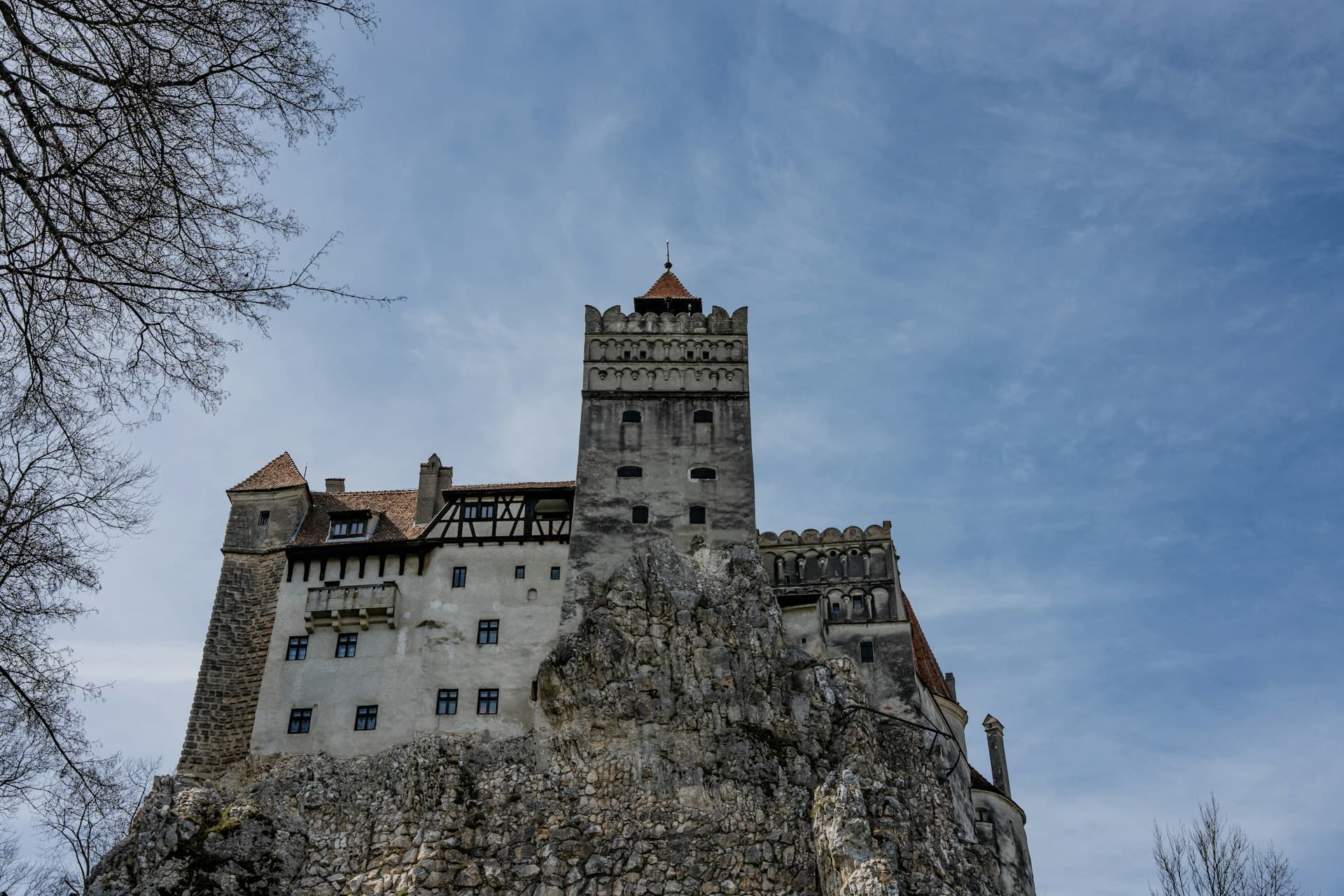
Bran Castle is the Dracula-tourism focal point of Romania, and it isn't Vlad III's home. Bram Stoker never visited Romania. The "Bran is Dracula's castle" idea is a 1990s Western-tourism story laid on top of a 14th-century Saxon customs castle that Vlad III may have ridden past once or twice and never owned.
The Romanian heritage castle circuit the country actually built for itself sits mostly fifty kilometres away from where the tourist buses stop. Peleș is the German-romantic palace that Hohenzollern-Sigmaringen prince Carol I commissioned for the Romanian royal family in 1873. Corvin is the Gothic-Renaissance Hunyadi fortress where Vlad III actually was held prisoner, by Matthias Corvinus, from 1462 onwards. Bánffy is the Versailles of Transylvania, restored partly on funding from a music festival held in its ruined wings. We start with Bran, because that is where the buses go.
The four castles, side by side
| Castle | Built | Style | Why it matters |
|---|---|---|---|
| Bran | 1377 onwards | Saxon-Habsburg defensive, with 1920s Romanian National Style interiors | Customs fortress turned royal residence, marketed as Dracula's castle |
| Peleș | 1873 to 1914 | German Neo-Renaissance | The actual Romanian royal residence, built for Carol I |
| Corvin | 14th and 15th century | Gothic-Renaissance | Hunyadi family seat where Vlad III was held prisoner from 1462 |
| Bánffy | 17th century | Transylvanian Baroque | Country complex restored on music-festival funding |
Sources: Pluskowski, The Archaeology of the Prussian Crusade (Routledge, 2013); Beltramo, Renaissance Architecture of Power (Brill, 2016); Castle Collector verified-sale records.[1][2][3]
Bran Castle: the customs castle that became a Habsburg residence
Built from 1377 onwards by the Saxons of Brașov under licence from Louis I of Hungary, Bran Castle was a customs and frontier fortress on the Carpathian pass between Transylvania (then Hungarian-Saxon territory) and Wallachia (the Romanian principality to the south). Multiple medieval and 19th-century reconstructions sit on top of the original fabric. The current silhouette, with white stucco walls and dark wood-shingle towers in a cliff-edge position above the village of Bran, is mostly Saxon-Habsburg rather than Wallachian.
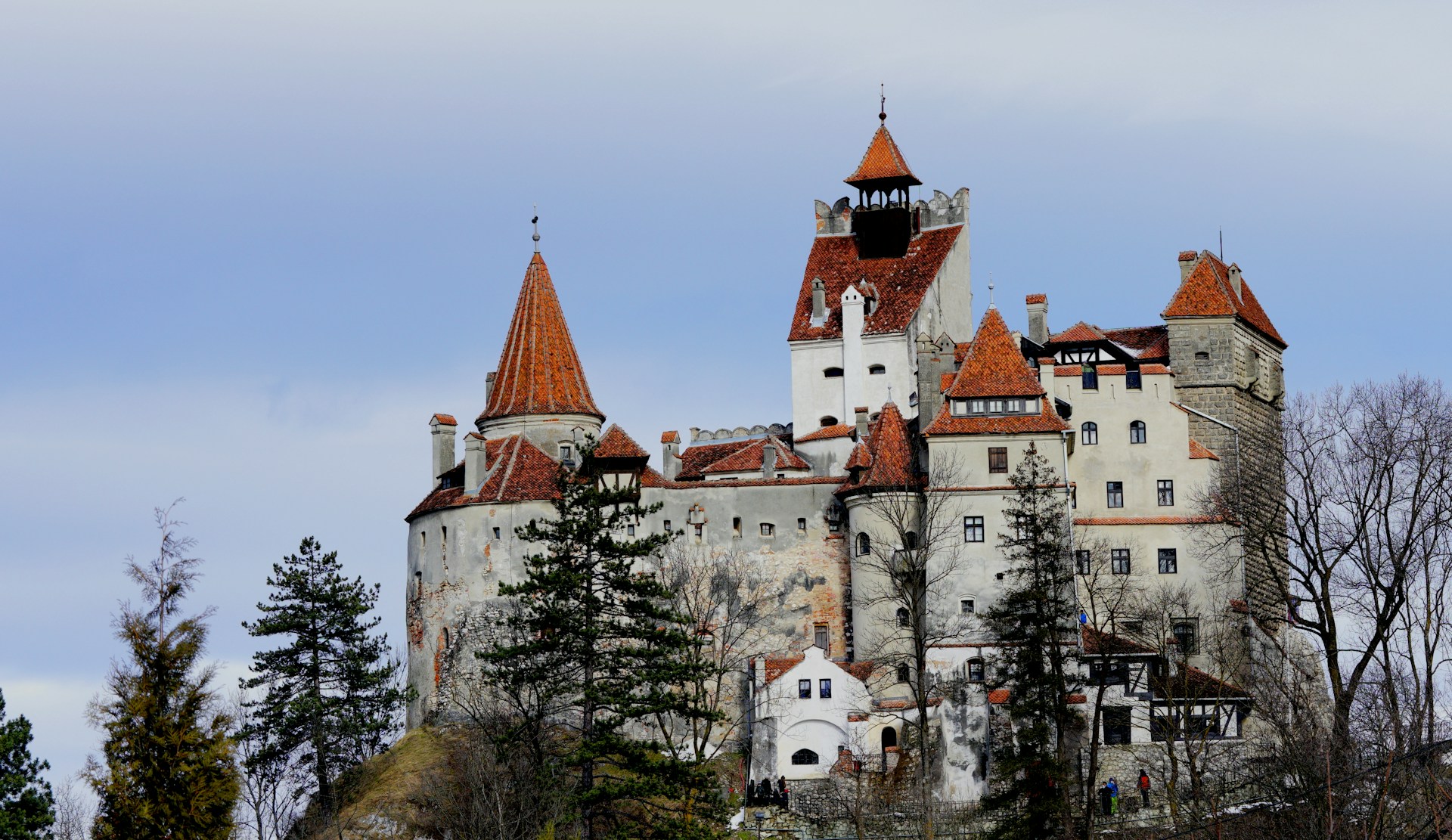
The most-photographed phase of Bran's history is its Romanian royal chapter. In 1920, the city of Brașov gave the castle to Queen Marie of Romania, granddaughter of Queen Victoria, in thanks for her wartime service. She rebuilt and decorated the interiors through the 1920s in a Romanian National Style mixed with Arts and Crafts and Tudor Revival registers: heavy carved wood, tapestry, Romanian peasant motifs filtered through a queen's design eye. Most of what visitors photograph at Bran today is hers, not the medieval Saxon fabric underneath.
The castle was confiscated by the communist regime in 1948 and restituted in 2006 to her grandson Archduke Dominic of Austria-Tuscany and his two sisters. The restitution was a political event in Romania at the time, with a reported state-buyback discussion that the Habsburg heirs ultimately declined. The property is now privately operated as a museum.
The Dracula problem sits on top of all of that. Bram Stoker wrote Dracula in 1897 from Whitby and the British Museum reading room, drawing the Wallachian voivode Vlad III Țepeș (1431 to 1476) into a Gothic-fiction frame layered on second-hand Carpathian travel-book material, primarily Emily Gerard's 1885 The Land Beyond the Forest. He never set foot in Romania. The Bran-as-Dracula's-castle association is a 1990s Western-tourism construction that Bran's modern operators leaned into, with one wing of the castle now given over to a deliberately curated horror-and-vampires display for the day-trip trade.
What you actually see when you walk through Bran: Marie of Romania's furniture, Carol I-era Romanian royal interiors, the Saxon defensive plan visible in the layout but covered by a century and a half of Habsburg redecoration. Vlad III never substantively occupied the place.
Peleș Castle: the actual Romanian royal residence
Fifty kilometres south of Bran, in the Prahova Valley town of Sinaia, sits the genuine Carpathian royal castle Western tourists think they're going to Bran to see. Peleș was the German-style Neo-Renaissance summer palace of Carol I, the first King of Romania, commissioned in 1873 and completed in 1914. It is the most architecturally rich royal residence in Romania.
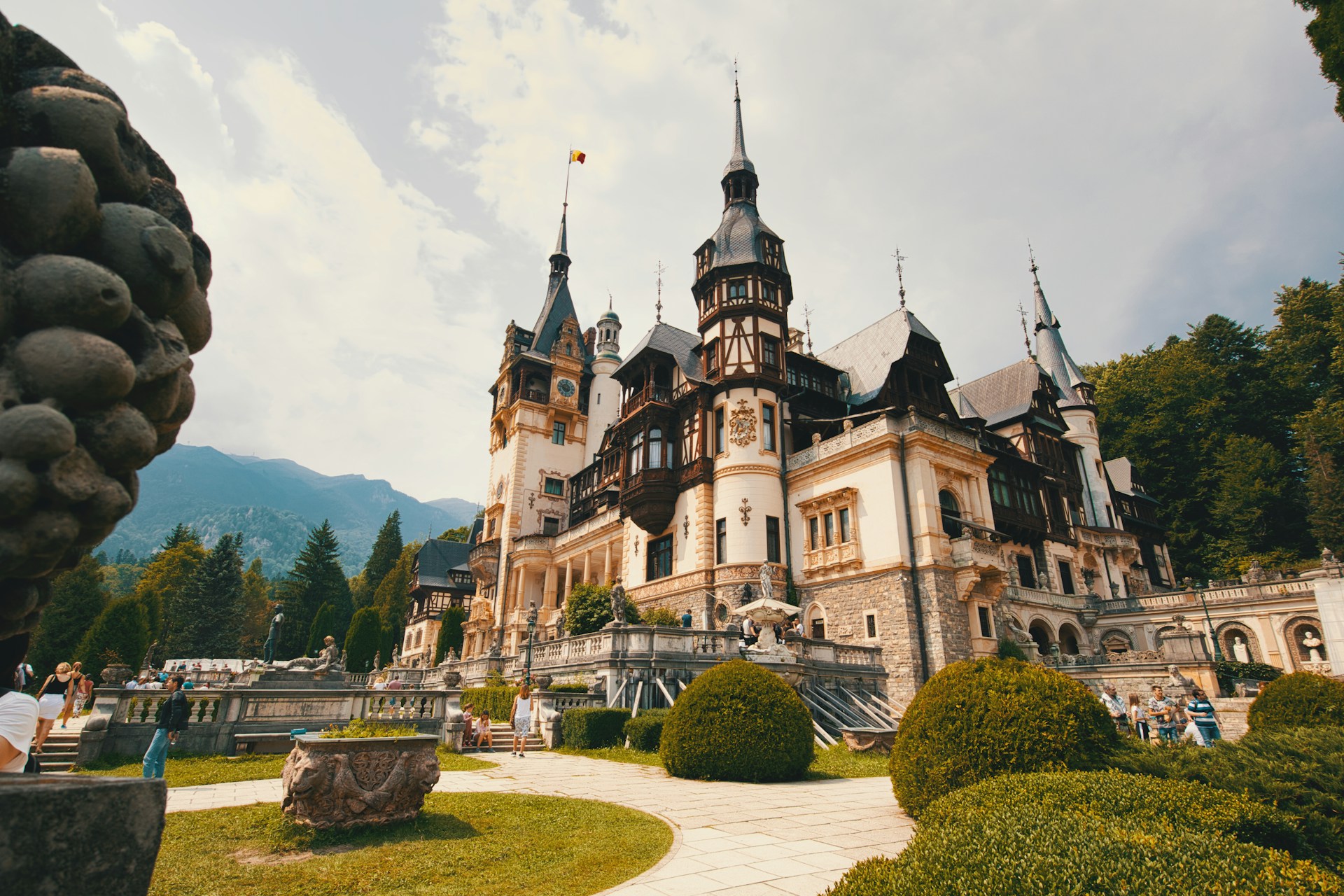
The Romanian royal canon is a German-court import. Carol I was a Hohenzollern-Sigmaringen prince invited to take the throne of the United Principalities of Wallachia and Moldavia in 1866, in a moment when the new Romanian state needed a constitutional monarchy with European prestige and no local dynastic baggage. He spoke German throughout his life. The architect of Peleș was Wilhelm Doderer, with Karel Líman taking over the long build. The result is a German-romantic palace in the Carpathian foothills, closer to a Bavarian Wittelsbach hunting lodge than to anything else in Eastern Europe. That is the point.
The interiors run heavy German-romantic carved wood, leather wall coverings, weapons collections, the Carol I library. Pelișor, the smaller adjacent castle built between 1899 and 1903 by Líman for Carol's nephew Crown Prince Ferdinand and his wife Marie of Romania (the same Marie who later received Bran), carries the regional Art Nouveau register. Marie's Pelișor interiors are the canonical Eastern European Art Nouveau set piece.
Peleș National Museum operates the complex on behalf of the Romanian Ministry of Culture. The canonical heritage-tourism circuit is Peleș-Bran-Brașov in a single day along the DN1A road through the Prahova Valley. Anyone who came to Romania for Dracula's castle and skipped Peleș has missed the actual story.
Corvin Castle: the Hunyadi fortress where Vlad III was actually held
If you want a real Vlad III castle in the Romanian heritage canon, Corvin Castle at Hunedoara is it. Vlad was held prisoner here by Matthias Corvinus from 1462 onwards, after his first Wallachian reign collapsed in the Ottoman campaign of that year. Twelve years in the lower keep at Corvin is more time than Vlad ever spent in any single fortress.
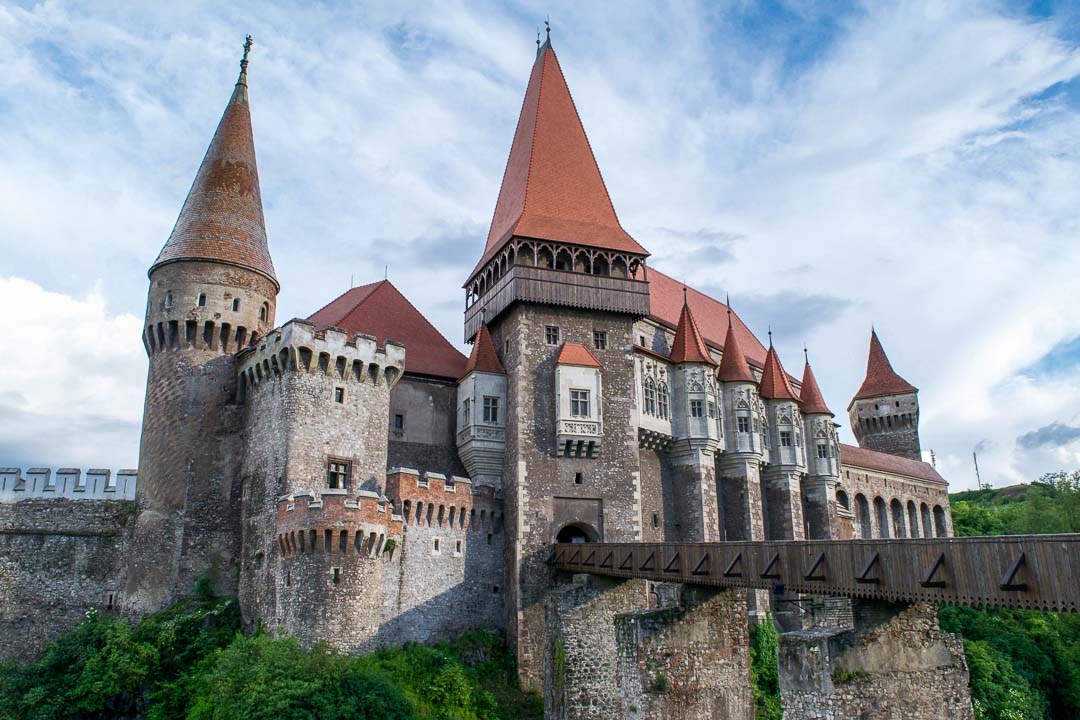
Corvin is Gothic-Renaissance, the principal seat of the Hunyadi family. János Hunyadi, regent of Hungary 1446 to 1452, held off the 15th-century Ottoman advance into the Carpathian basin. His son Matthias Corvinus, king of Hungary 1458 to 1490, ran the most ambitious Italian humanist patronage programme in 15th-century Central Europe. Andrea del Verrocchio produced profile portraits of ancient condottieri for "Mattia Corvino"; the Corvinus library at Buda was among the largest princely libraries of the period.[2] The Hunedoara castle carries Hunyadi-era Gothic plus Renaissance refurbishments under Matthias.
The architectural detail visitors photograph is the flying-buttress Gothic bridge across the deep Zlaști ravine, the most-reproduced castle image in Romania. The castle itself reads as European Gothic with Italian-quattrocento accents, plus a Dansker-style toilet-and-storage tower extension transmitted from Teutonic Order architecture into the Hungarian royal canon.[1] The kind of cross-European architectural vocabulary that proves the 14th-century military-architecture conversation ran through Eastern Europe.
The Romanian state operates the castle through the Hunedoara local authority. Below the castle, the post-industrial steelworks town of Hunedoara, a communist-era industrial legacy, produces a striking visual contrast with the medieval-Renaissance fortress on the rock above. For castles for sale in Hungary, the Hunyadi-era kastélyok and former Hungarian noble seats stretching across the historical Kingdom of Hungary form a wider regional market. Corvin sits at its medieval centre.
Bánffy Castle: festival-funded restoration
In Bonțida, Cluj County, sits the Versailles of Transylvania. Castelul Bánffy was a 17th-century Baroque country complex held by the Hungarian-Transylvanian Bánffy family for three centuries. Before German military occupation in 1944 and subsequent communist-era neglect, it carried one of Eastern Europe's most important Baroque country-residence interiors. By 1989 it was a substantial ruin.
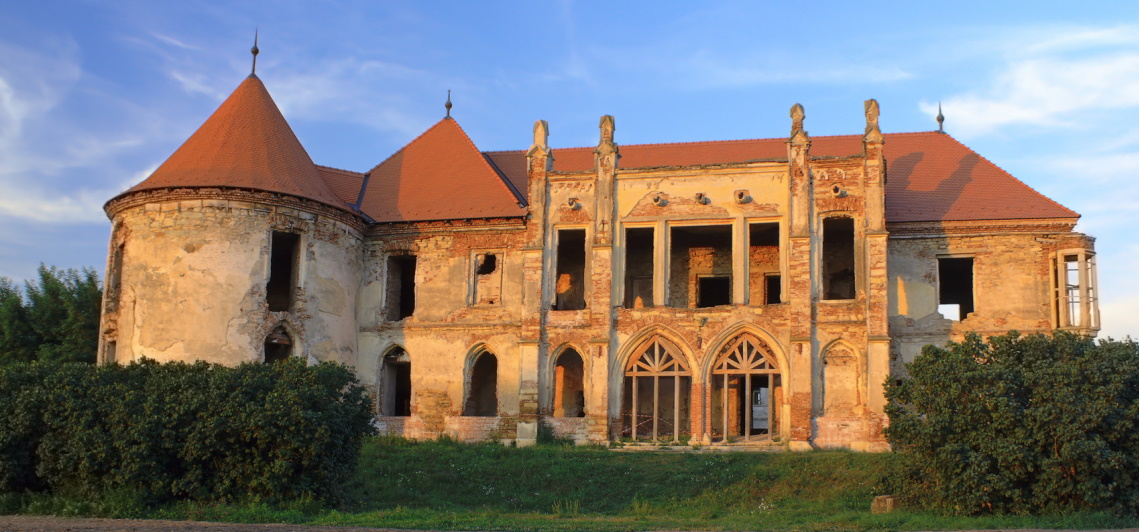
The restoration story is the most contrarian beat in the Transylvania heritage circuit. The Transylvania Trust launched the Bánffy programme in 1999 as a long-term conservation project. Since 2013 the Electric Castle music festival has held its annual four-day event on the grounds, drawing tens of thousands of attendees each summer, with festival licensing revenue channelled directly into the conservation budget. The model is the canonical European festival-as-restoration-funding partnership: a Baroque ruin paying for its own re-roofing through electronic-music ticket sales.
The visual register during festival weekend is unique to the site. Festival stages press up against partly-restored Baroque facades, sound-system trusses sit alongside scaffolding for stonework, and the contrast compresses the Bánffy story into a single image: Romanian-Hungarian Transylvanian Baroque heritage rebuilt on the back of a contemporary Romanian cultural moment that did not exist a generation ago.
Vlad's actual fortresses (and why they're not in Transylvania)
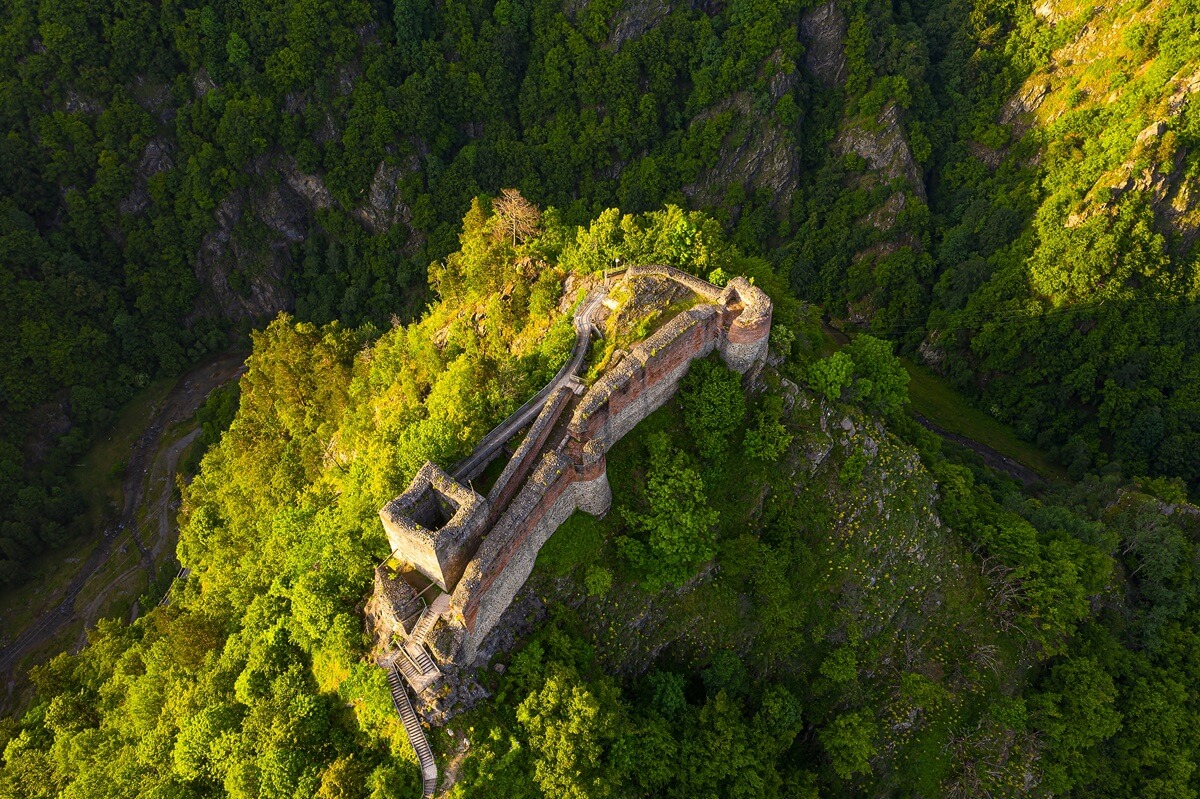
The geographic correction the Dracula-tourism canon has never registered: Vlad III's actual fortresses sit in Wallachia, the Romanian principality south of the Carpathians, not in Transylvania to the north. Poenari Citadel, perched above the Argeș gorge in the Făgăraș Mountains, is the genuine Vlad III refuge. He used it during the 1462 Ottoman campaign that ended his first reign. The 1888 earthquake substantially damaged the fortress, and what survives is a stone ruin reached by a long staircase climb up through Carpathian forest from the road below. The view from the top across the Argeș gorge is the only Vlad-Țepeș-as-actual-figure register in the Romanian heritage canon.
The Princely Court of Târgoviște was the Wallachian capital under Vlad III. Substantial archaeological excavation has exposed the Princely Palace foundations; the surviving Chindia Tower stands as the major above-ground fragment. It operates as a state museum.
Neither site is on the Transylvania heritage-tourism circuit, and neither runs at a scale comparable to Bran. The historical Vlad III is largely a Wallachian story. The Carpathian-tourism Dracula is a 20th-century Transylvanian construction. The geography never quite matched the marketing.
The wider circuit and the entry-tier market
Saxon-Hungarian-Romanian Transylvania carries the densest concentration of medieval and Renaissance castles in Eastern Europe: Corvin, Bánffy, Bran, Peleș, plus Făgăraș, Râșnov, and the Saxon fortified-church villages of Biertan, Viscri and Sighișoara (the seven Villages with Fortified Churches were UNESCO inscribed in 1993). Andrew II of Hungary brought the Teutonic Order to Burzenland in southern Transylvania in 1211 to defend the eastern frontier against the Cumans, ejecting them in 1225 after the Order tried to establish independent territorial sovereignty.[1] Transylvania was the European frontier-fortification testing ground a full half-century before the Order moved north and built Malbork.
For buyers, Romania is one of the most accessible European heritage-property markets at the entry tier. EU citizens face minimal restrictions on castle purchase, and the Castle of Zlatna sits at €191 per square metre on Castle Collector's verified-sale dataset, the lowest €/m² recorded for a European castle in our records: a Carpathian foothills 19th-century country residence at the floor of the European market.[3] For the broader regional buying-picture, the heritage-grant framework, and the price-floor argument across Eastern Europe, see castles of Eastern Europe.
Common questions
Did Vlad III ever live in Bran Castle?
No. Vlad III may have ridden past Bran during 15th-century Wallachian campaigns, but he never owned it and never substantively occupied it. Bran was a Saxon customs fortress under Hungarian licence. Vlad's actual fortresses sit in Wallachia: Poenari Citadel and the Princely Court of Târgoviște.
Why is Bran called Dracula's Castle then?
It is a 1990s Western-tourism construction. Bram Stoker wrote Dracula in 1897 without ever visiting Romania, drawing on Emily Gerard's 1885 Carpathian travel writing. Bran's silhouette matched the Stoker-novel description well enough that modern operators leaned into the association for the day-trip trade.
What is the actual Romanian royal castle?
Peleș, in Sinaia, fifty kilometres south of Bran. It was commissioned in 1873 by Carol I, the first King of Romania, a Hohenzollern-Sigmaringen prince. It is a German-style Neo-Renaissance summer palace and the architectural high point of Romanian royal heritage.
Where was Vlad III actually held prisoner?
Corvin Castle at Hunedoara, by Matthias Corvinus from 1462 onwards, for around twelve years. Corvin is a Hunyadi-family Gothic-Renaissance fortress and the most architecturally important Hungarian royal castle on Romanian territory.
Can foreigners buy castles in Romania?
Yes. EU citizens face minimal restrictions, and the entry tier is the lowest in Europe: the Castle of Zlatna sold at €191 per square metre, the floor of Castle Collector's verified-sale dataset.[3] Non-EU buyers typically purchase through a Romanian SRL company structure.
What is the canonical Transylvania heritage circuit?
Peleș-Bran-Brașov in one day along the DN1A through the Prahova Valley. Add Corvin (a longer drive west) and Bánffy (north, near Cluj) for a fuller circuit. Făgăraș and the Saxon fortified-church villages of Biertan, Viscri and Sighișoara round out the broader UNESCO-inscribed picture.
How does Bánffy Castle pay for its restoration?
The Electric Castle music festival has held its annual four-day event on the grounds since 2013, with festival licensing revenue going to the Transylvania Trust conservation budget. The festival-as-restoration-funding model is unusual in European heritage and works as a template other Baroque ruins could copy.
Sources
1. Pluskowski, Aleksander. The Archaeology of the Prussian Crusade: Holy War and Colonisation. Routledge, 2013. Pages 33, 114, 116, 215.
2. Beltramo, S. (ed.) Renaissance Architecture of Power: Princely Palaces in the Italian Quattrocento. Brill, 2016. Pages 347, 395, 405.
3. Castle Collector. Castle Price Index. March 2026.