
How Many Castles Are in Scotland?
Scotland has roughly 3,000 castles under the broad definition, which counts standing castles, ruins, and earthworks together.
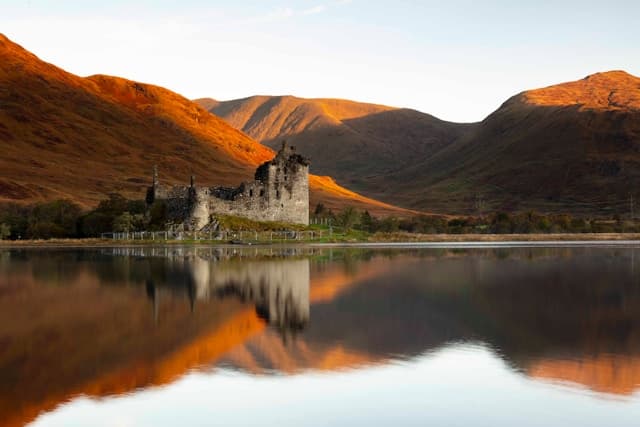
Scotland has roughly 3,000 castles under the broad definition, which counts standing castles, ruins, and earthworks together.[1] Narrow it to the official protected list and the figure is 1,103 castles on the Historic Environment Scotland register.[1] Narrow it again to castles that still stand substantially intact, and you are left with around 750.[1] For a country of just over five million people, that is one of the densest concentrations of castles anywhere in the world.
The reason the answer shifts so much is that "castle" is a loose word. Do you count a ruined wall on a hilltop, or only a roofed building you could walk into today? Scotland's figures stretch across that whole range, from a grass-covered mound that was once a wooden fort to a fully restored tower house lived in right now. Below is what each number really means, and why Scotland ended up with so many.
The three numbers, explained
The headline figure of around 3,000 is the broad count. It sweeps in everything from prehistoric hillforts to medieval stone keeps and later fortified mansions, including the many sites that survive only as fragments or footprints in a field.[1]
The figure of 1,103 is the strict count: castles that Historic Environment Scotland (HES), the national heritage agency, lists or otherwise protects in law. These are the sites judged important enough to safeguard, graded by national, regional, or local significance.[1]
The figure of around 750 describes castles that are substantially intact, meaning enough of the building survives to read it as a castle rather than a ruin.[1] This is the number that matters most if you want to visit one, stay in one, or buy one, because it covers the properties that are still standing and, in many cases, still in use.
Why Scotland is so castle-dense
Three forces piled castles onto a small country, and all three came down to the need to defend a home and hold ground.
The first was the long war with England. For centuries the border between the two kingdoms was a war zone, raided and fought over again and again. Lairds and landowners on both sides of the line built fortified homes because an undefended house was an invitation to be burned out. The Scottish Borders are still thick with the remains of these strongholds.
The second was rivalry between the clans and noble families themselves. Scotland's power was spread among many families who feuded over land, cattle, and standing. A defensible house was not a luxury but a basic precaution against your neighbours, and that pushed castle-building deep into the countryside rather than concentrating it in a few royal centres.
The third, and the most distinctly Scottish, was the rise of the tower house. From the mid-1300s onward, Scottish builders raised hundreds of these compact, fortified homes: tall, narrow stone towers, several storeys high, with thick walls, a single defensible entrance, and the living rooms stacked one above another.[2] They were cheaper and quicker to build than the great curtain-walled castles of England and Wales, and they suited a country where many families needed defence but few could afford a sprawling fortress. A laird could put one up in a few years and still hold off a raiding party, which is exactly what the times demanded.
The tower house is the defining Scottish castle form, and its sheer number is the main reason the broad count runs so high.[2] Many were later softened into comfortable homes, with extra wings, gardens, and larger windows added once the danger passed, which is why so many survive in good condition today rather than as ruins. The thickest cluster of intact 16th and 17th-century examples sits in Aberdeenshire and the north-east.
Six castles that show the range
Scotland's castles run from raw clifftop ruins to lived-in family seats. A handful capture the spread.
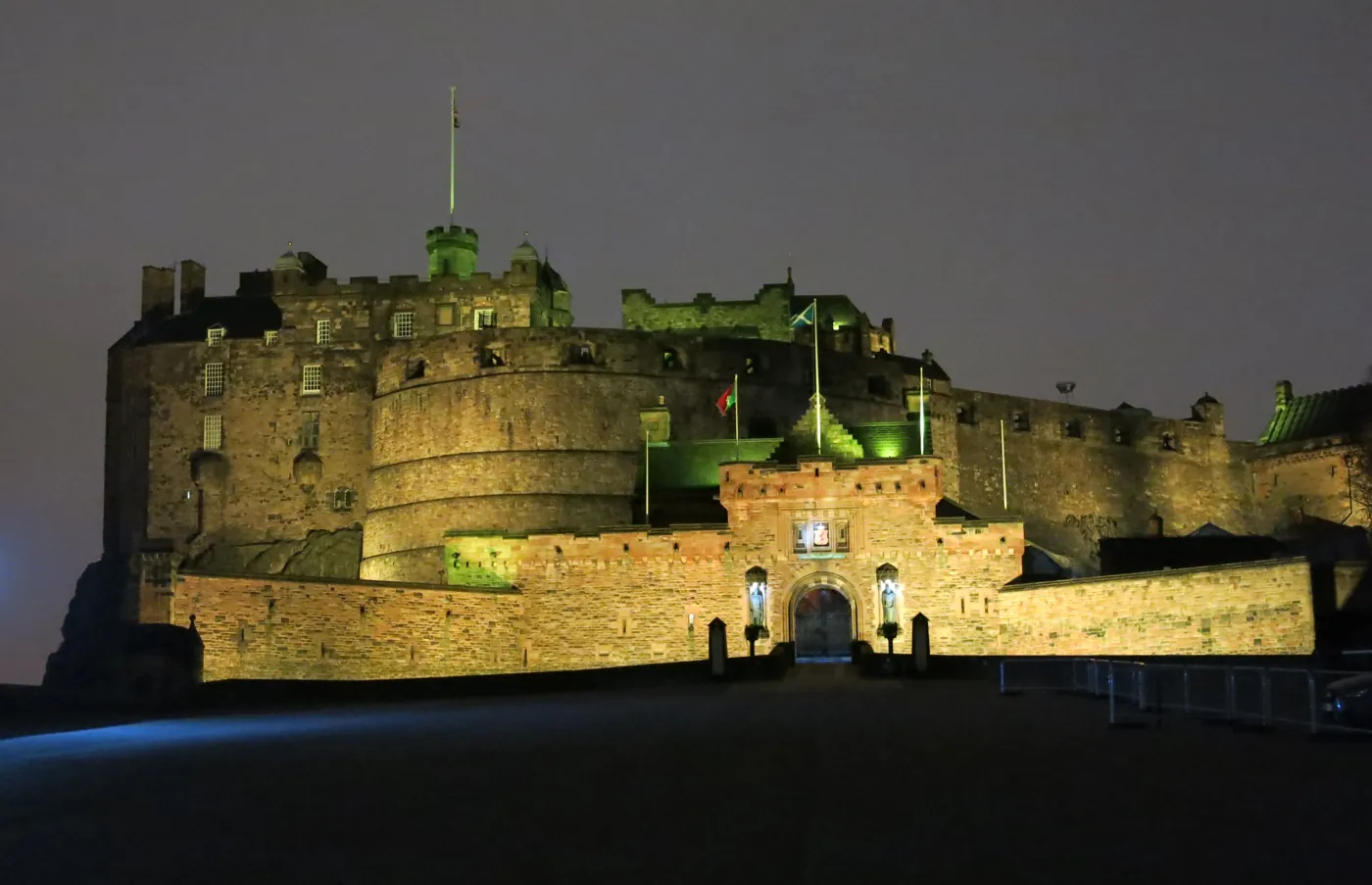
Edinburgh Castle (map) sits on a volcanic crag above the city and is Scotland's most-visited paid attraction, drawing around 2.2 million people a year. It holds the Scottish Crown Jewels and the Stone of Destiny, and a chapel on the rock dates from the early 1100s.
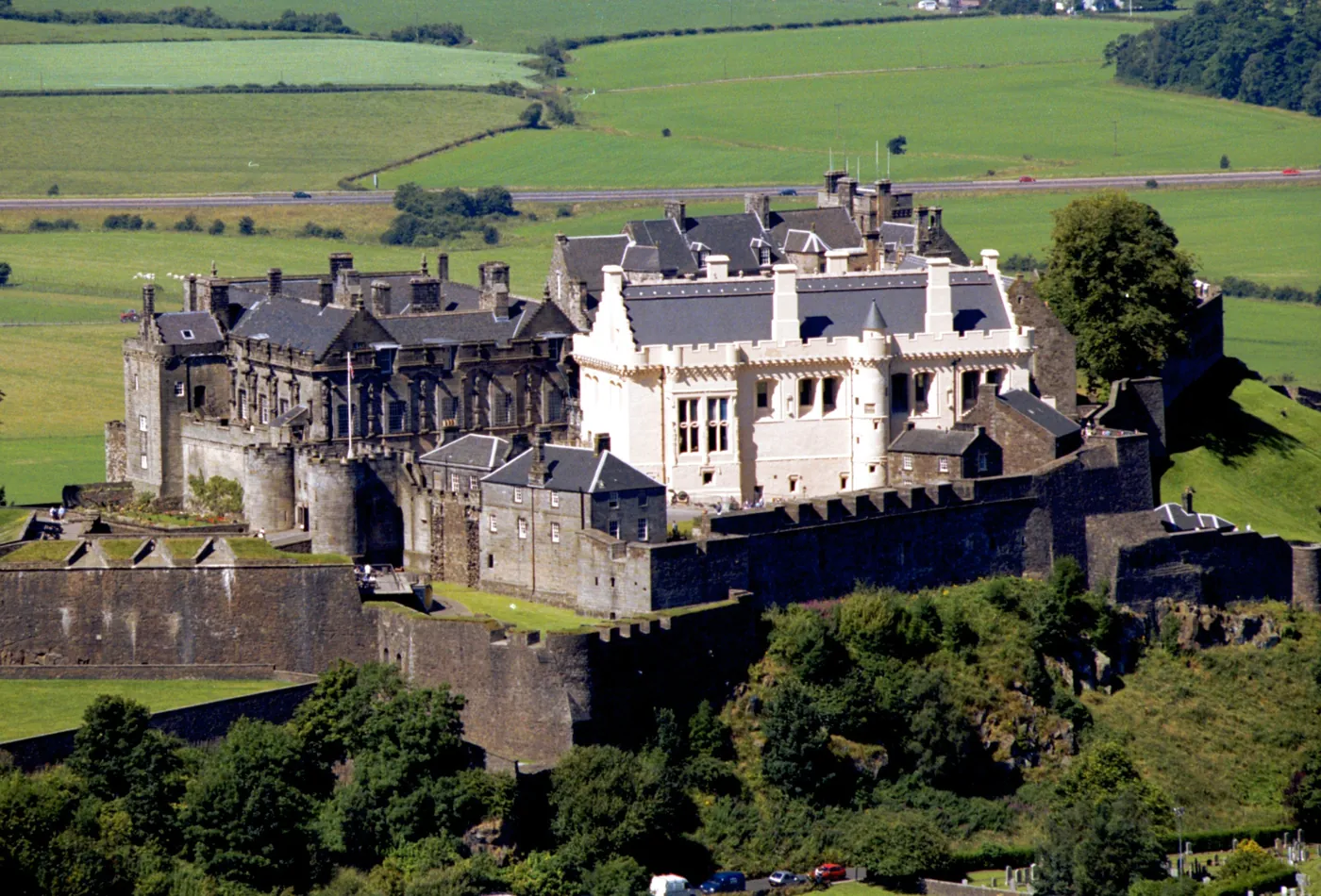
Stirling Castle (map) guards the narrow neck of land between the Lowlands and the Highlands. Mary Queen of Scots was crowned here in 1543, and its restored Renaissance royal palace is the finest surviving example of Scottish court decoration anywhere.
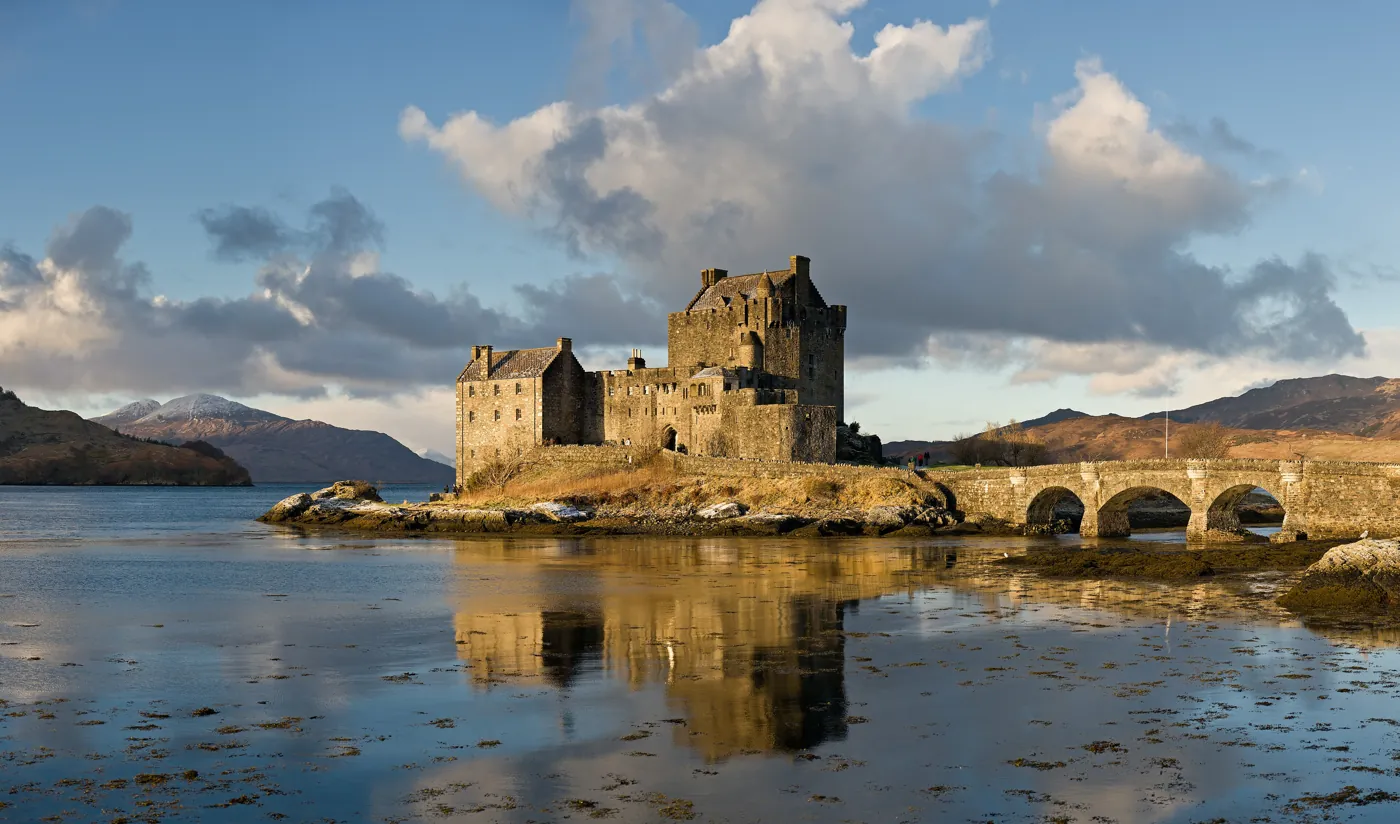
Eilean Donan (map) is the picture-postcard one: a small island fortress where three sea lochs meet in the western Highlands. Largely destroyed in a 1719 rising and rebuilt in the early 20th century, it is the most photographed castle in the country.
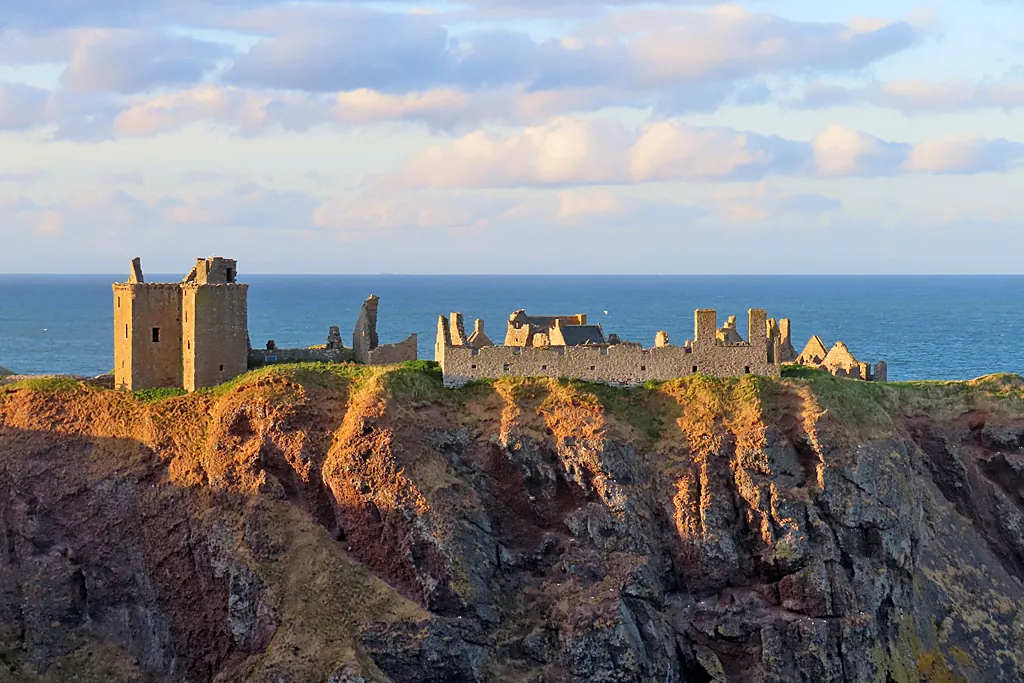
Dunnottar Castle (map) clings to a cliff promontory near Stonehaven and is Scotland's most dramatically sited ruin. The Scottish Crown Jewels were hidden here during a siege in the 1650s to keep them from Cromwell's army.
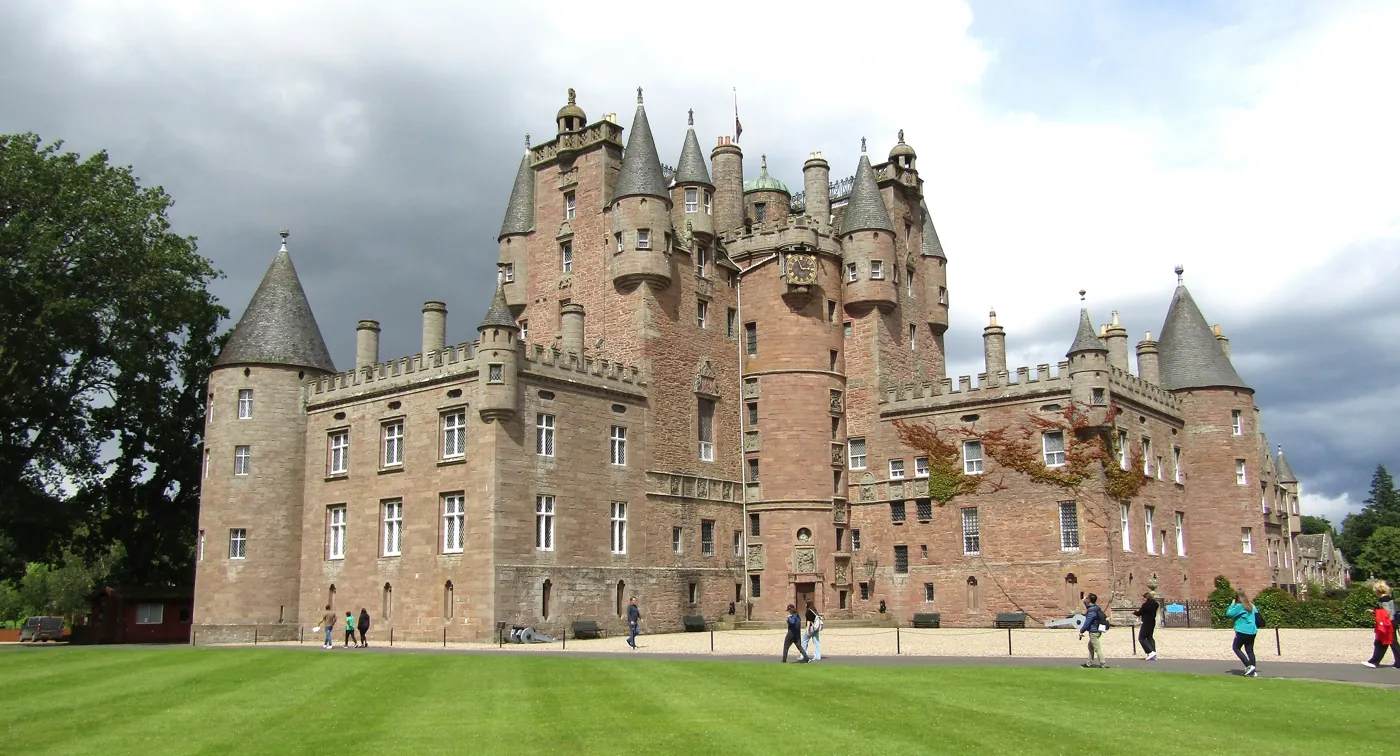
Glamis Castle (map) in Angus has been home to the same family for more than 650 years and was the childhood home of the Queen Mother. It is a fine example of a medieval tower grown into a grand family seat.
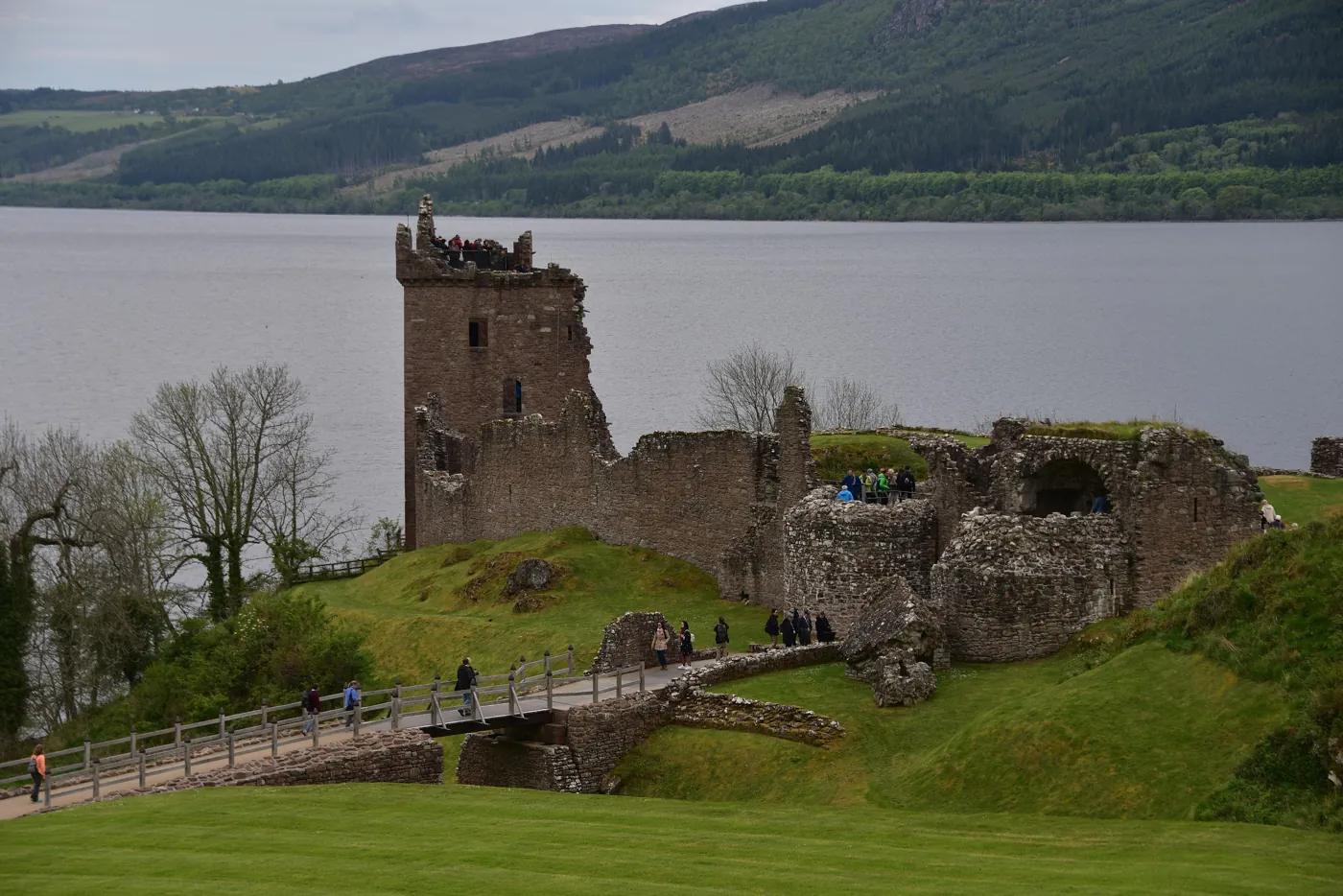
Urquhart Castle (map) stands in ruins on the western shore of Loch Ness. Blown up in 1692 to keep it out of enemy hands, it now draws crowds to the tourism trade along the loch.
Where to see them, and how to own one
Scotland's best-known castles are open to visitors, run by HES, the National Trust for Scotland, or private owners. The historic environment is worth around £6 billion a year to the Scottish economy and supports more than 81,000 jobs, so these buildings are far from museum pieces gathering dust. For a fuller tour of the country and its regions, see our guide to castles in Scotland.
A surprising number are also for sale at any given time, from restored tower houses to castle hotels. Scotland is unusual in that it charges no extra purchase tax on overseas buyers, which keeps it open to international interest. You can browse what is currently on the market on our Scottish castles for sale page.
If you are curious how Scotland's roughly 3,000 stacks up against the rest of the world, we lay out the full league table in which country has the most castles.
Sources
1. Historic Environment Scotland, statutory listed buildings and scheduled monuments register. https://www.historicenvironment.scot
2. MacGibbon, David, and Thomas Ross. The Castellated and Domestic Architecture of Scotland. David Douglas, 1887.