FOR CASTLE COLLECTORS
Castle Collector InsightsExplore 6 Castles on Sale in Greece
Browse Greek castles and fortified towers for sale, from Venetian sea forts and Frankish keeps to Mani stone towers across the islands and mainland.
Average castle features in Greece
Showing avg. castle price in Greece
Key metrics for Greece
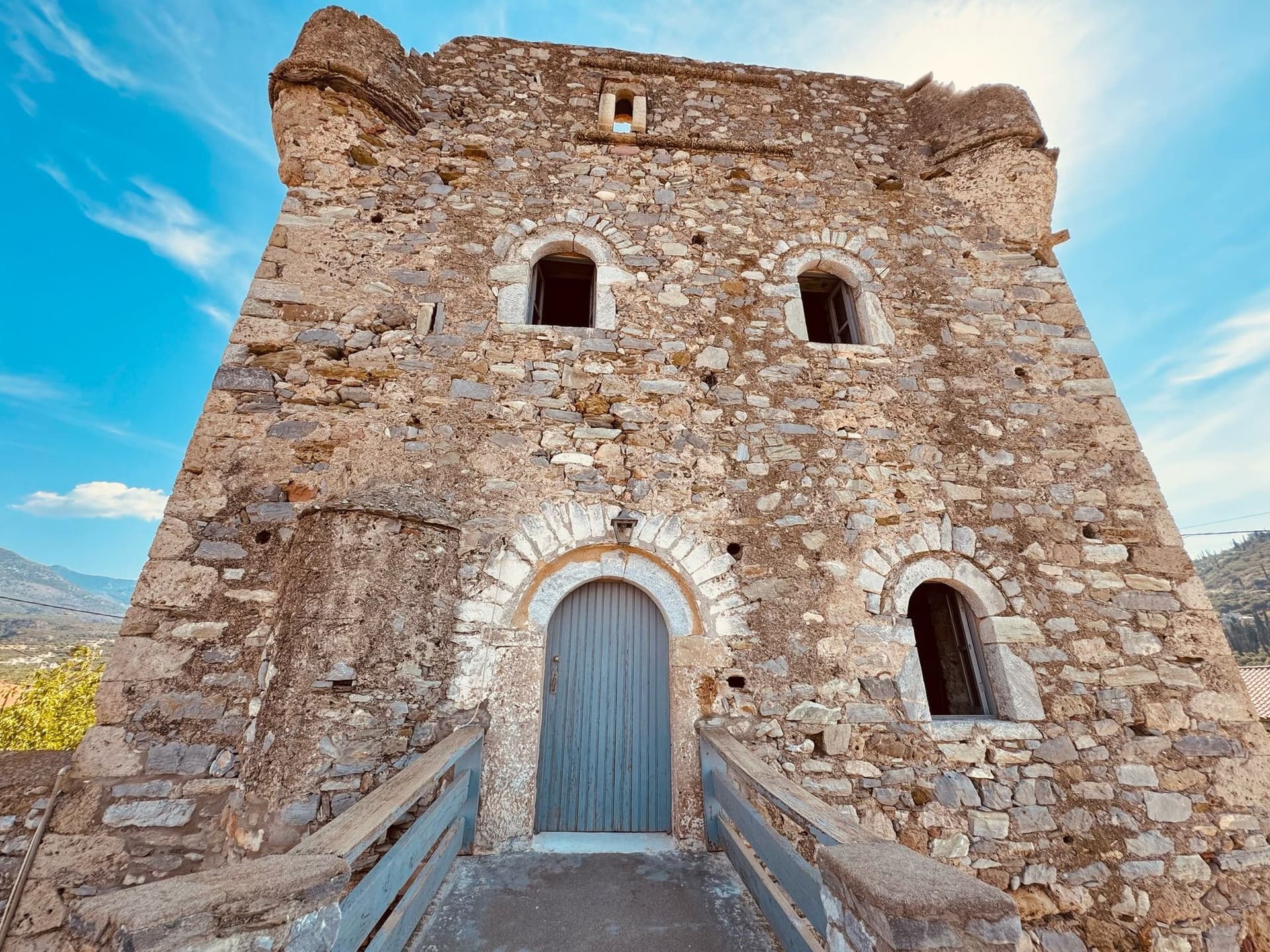
Greece has one of the most distinctive castle markets in Europe. What comes up for sale isn't the grand medieval fortress but the pyrgospita, the fortified stone tower house: tall, narrow and built in bare stone, a genuine defensive home rather than a military fort. Maniot families raised them during the clan feuds of the 1600s to 1800s, when a taller tower meant a more powerful family, and they survive in their hundreds across the Mani peninsula in the southern Peloponnese.
Alongside the Mani towers sit the stone mansions of Pelion and private houses inside the old walled towns of the islands. The appeal is the same across all of them: real fortified buildings at a fraction of what a French château costs, with restoration projects starting in the low hundreds of thousands.
Two things affect any purchase, both covered in the final section: whether you need a permit to buy as a non-EU citizen, and Greece's strict heritage rules. There's also a genuine bonus for restorers, because doing up a heritage building can unlock residency through the Golden Visa at its lowest tier. For the wider process, see how to buy a castle.
A Greek tower house runs from about €225,000 for a restoration project up to a little over €1 million for a fully restored one. There's no reliable published median, since the market is small and specialised, but live listings map the range out clearly.
In the Mani, a stone tower needing work sits around €225,000, often on a large rural plot where much of the value is really the land. A restored, habitable tower runs about €350,000, and at the top a fully renovated 17th-century coastal tower has been marketed as a castle at €1.1 million. Because a tower is tall rather than wide, the footprint is small, usually 50 to 130 square metres, so the rate per square metre can look high (roughly €2,000 for a project up to €7,000 for a small restored tower) even while the total price stays modest by Western European standards.
Pelion, on the mainland, works the same way with its stone mansions: a renovation project from around €105,000, a restored three-storey house from around €250,000 to €550,000. As with every cheap-castle market, the purchase price is only half the story. Restoration is the bigger cost, and in Greece it can also be the slower one, because of the heritage approvals covered below.
Greece's private stock clusters in a handful of areas, and each has its own kind of fortified building.
The Mani, in the southern Peloponnese, is the heart of the market and the reason most people arrive. Its tower-house villages, Areopoli, Itilo and the dramatic cluster at Vathia, hold the densest and most genuinely castle-like private stock in the country. If you want a real fortified tower, this is where to look, though ownership in some villages is fragmented across families, which can make a clean purchase slow.
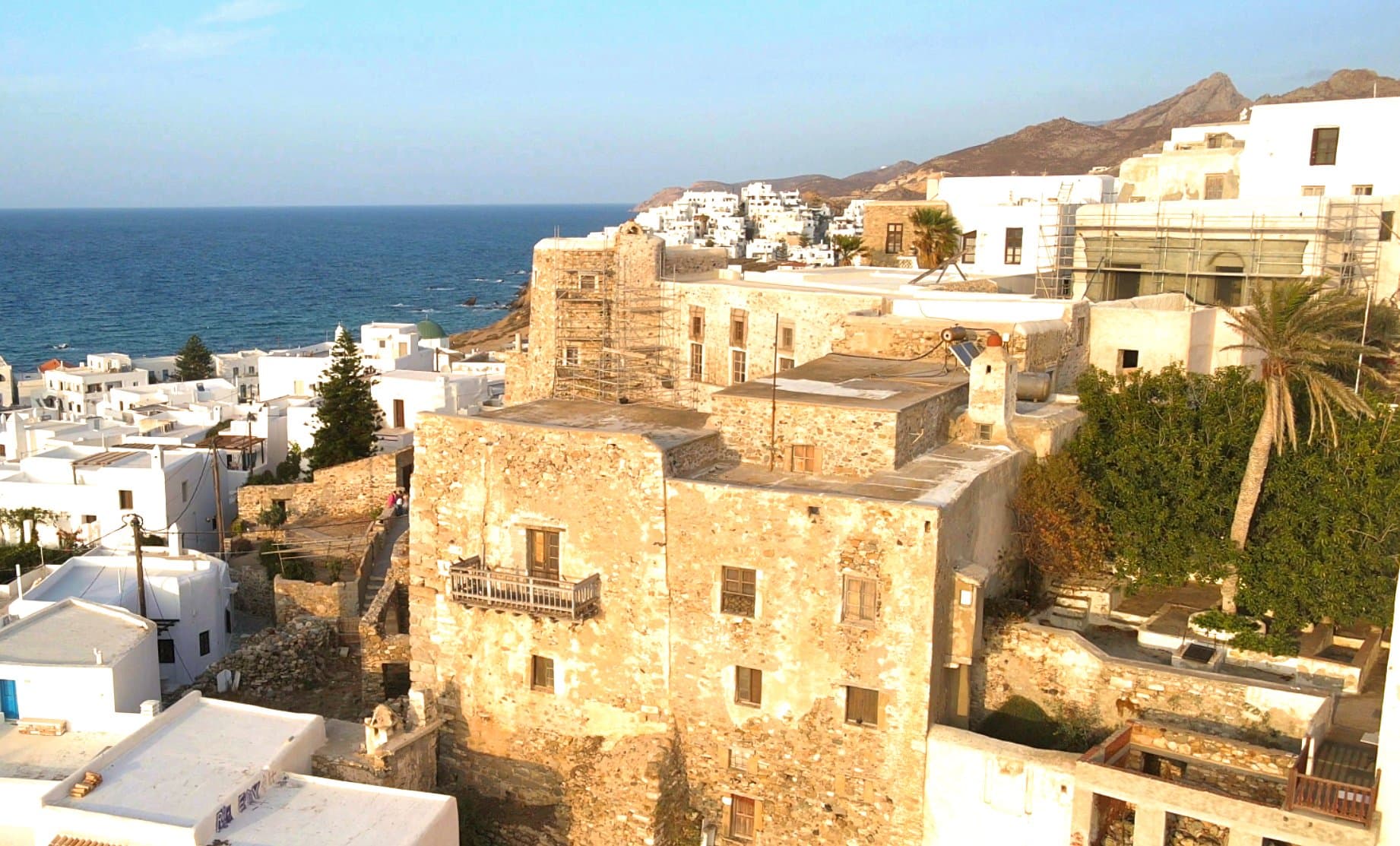
Pelion, on the mainland near Volos, is the stone-mansion market, a mature and well-restored stock of archontika in villages like Makrinitsa and Vizitsa. The islands are the third strand: private houses inside medieval walled quarters, from the Venetian towers of Naxos to the medieval houses inside the UNESCO walls of Rhodes Old Town, one of the few walled towns in Europe where you can still buy a home inside the fortifications. Crete adds Venetian and Ottoman old-town mansions in Rethymno and Chania, while inhabited castle towns like Monemvasia, Nafplio and Koroni offer stone houses within their historic walls. For the wider picture, see castles for sale across Europe.
In Greece, "castle" means two very different things. The kastro is the medieval fortress or walled town, the Byzantine, Frankish and Venetian stronghold, and these are almost all state-owned monuments. When people picture a Greek castle, this is usually it, and it isn't on the market.
The pyrgospita, or tower house, is the other kind, and the one you can actually buy. It's a fortified family home rather than a military fort, built tall and narrow in stone, and it belongs above all to the Mani, where clan warfare turned domestic architecture into something close to a private castle. The related archontiko, the grander stone mansion found in Pelion and on the islands, rounds out the private market.
Three things matter most when buying a castle in Greece, and it pays to understand all of them before you fall for a tower. The first is who you are. EU and EEA citizens can buy anywhere in Greece with no restriction. Non-EU buyers can buy across most of the country, but in designated border and island zones, which include the Dodecanese and Rhodes among others, a purchase needs a permit from a committee that involves the defence ministry. That process typically takes two to six months and isn't guaranteed, so check a property's zone before you commit.
The second is the Golden Visa, and here heritage buyers have a real advantage. Greece raised its residence-by-investment thresholds in 2024 to €400,000 across most of the country and €800,000 in Athens, Thessaloniki and the busier islands. But a €250,000 floor survives specifically for restoring a listed or heritage building, so doing up an old tower house can earn residency at the lowest tier available, which is a genuine reason to buy this kind of property rather than a modern villa.
The third is heritage law, which is strict and worth respecting. Anything built before 1830 is automatically protected, and in practice almost every project on an old building goes through archaeological review before work can start, which can add months to the timeline on top of the normal permits. Buying costs run about 8 to 10% all-in, with a transfer tax of roughly 3%. None of it is a dealbreaker, but a Greek tower rewards patience, so budget time as well as money and read up on buying a castle as a foreigner before you start.
Stay informed with curated insights on market trends, tax and legal developments, and new castle investment opportunities.
By subscribing you agree to receive emails from Castle Collector. We’ll send a confirmation email first (double opt-in) and you can unsubscribe anytime. Privacy Policy