
Castle EPC Ratings and Heating Costs
A castle's EPC letter grade measures carbon, not running cost, so it misleads buyers on heating bills. What to check instead before you buy.

For a castle owner, the most costly bill is energy. A castle can easily spend tens of thousands of dollars each year on heating and powering. Energy bills for the castle market are harder to estimate because each property varies significantly and there's a serious lack of data available.
For example, if you are buying a castle that has been out of commission for five years, you have no idea what that annual bill is going to look like. You might get a rude surprise when you are hit with a five figure bill. This is exactly why we wanted to analyse the energy costs in active castles. Hopefully with this data we can educate prospective buyers on how they can more accurately assess the energy cost.
Castle energy performance grades
Energy grades for properties are misleading, mostly because they are misunderstood. You might see an A grade rating and assume the property is using energy efficiently and therefore the energy bill will be less expensive than a G rated property. That's not the case. The grade rating measures carbon expenditure not cost or efficiency. We pulled and analysed 29 castle EPCs for the Castle Price Index, and the pattern is consistent: the A-to-G letter does not track the running cost.
| Castle (unit) | m² | Rating | kWh/m²/yr | Est. annual cost | £/m²/yr | Fuel |
|---|---|---|---|---|---|---|
| Ripley Castle (map), Boar's Head | 960 | B | 800 | ~£61,400 | ~£64 | Gas |
| Amberley Castle (map), hotel | 1,760 | D | 591 | ~£99,000 | ~£56 | Oil |
| Ayton Castle (map), main castle | 1,953 | G | 519 | £77,500 | £39.68 | Wood pellets |
| Roch Castle, castle house | 173 | G | 447 | £3,826 | £22.12 | Electric |
| Aldourie Castle, main house | 1,330 | E | 298 | £15,347 | £11.54 | Biomass |
| Eilean Donan, Donan House | 244 | C | 141 | £1,264 | £5.18 | Oil |
| Barcaldine, Black Castle Cottage | 102 | C | 121 | £632 | £6.20 | Heat pump |
Ripley Castle's Boar's Head Hotel holds a B energy rating. It burns 800 kWh per square metre a year and costs about £64 per square metre to run. Amberley Castle is rated D, burns 591 kWh per square metre, and costs about £56. The better-graded castle uses 35% more energy per square metre and costs more to heat.
The grade measures carbon, not cost
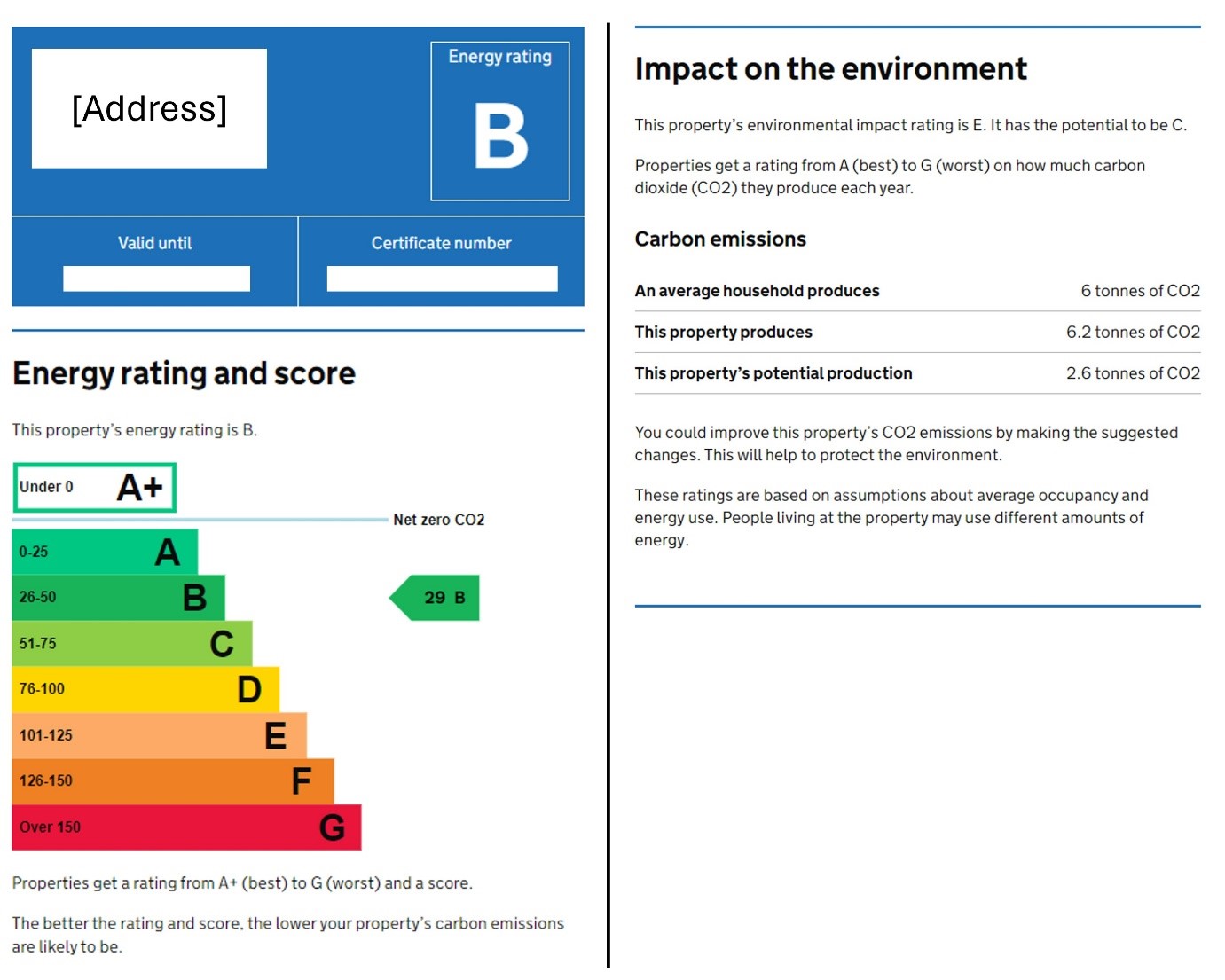
The EPC asset rating, the A-to-G letter, is a measure of carbon dioxide per square metre per year, not energy used or money spent. Different fuels carry very different carbon intensities per kilowatt-hour.
Natural gas emits less carbon per kWh than heating oil. So a gas-heated castle can burn a great deal of energy and still post a respectable grade, because it is the carbon, not the consumption, being scored. Ripley's Boar's Head burns 800 kWh/m²/yr on gas and lands a B. Amberley burns less, 591 kWh/m²/yr, but on oil, and lands a D.
A castle can burn a tremendous amount of energy, rack up a huge bill and still post a high letter grade.
Ayton Castle
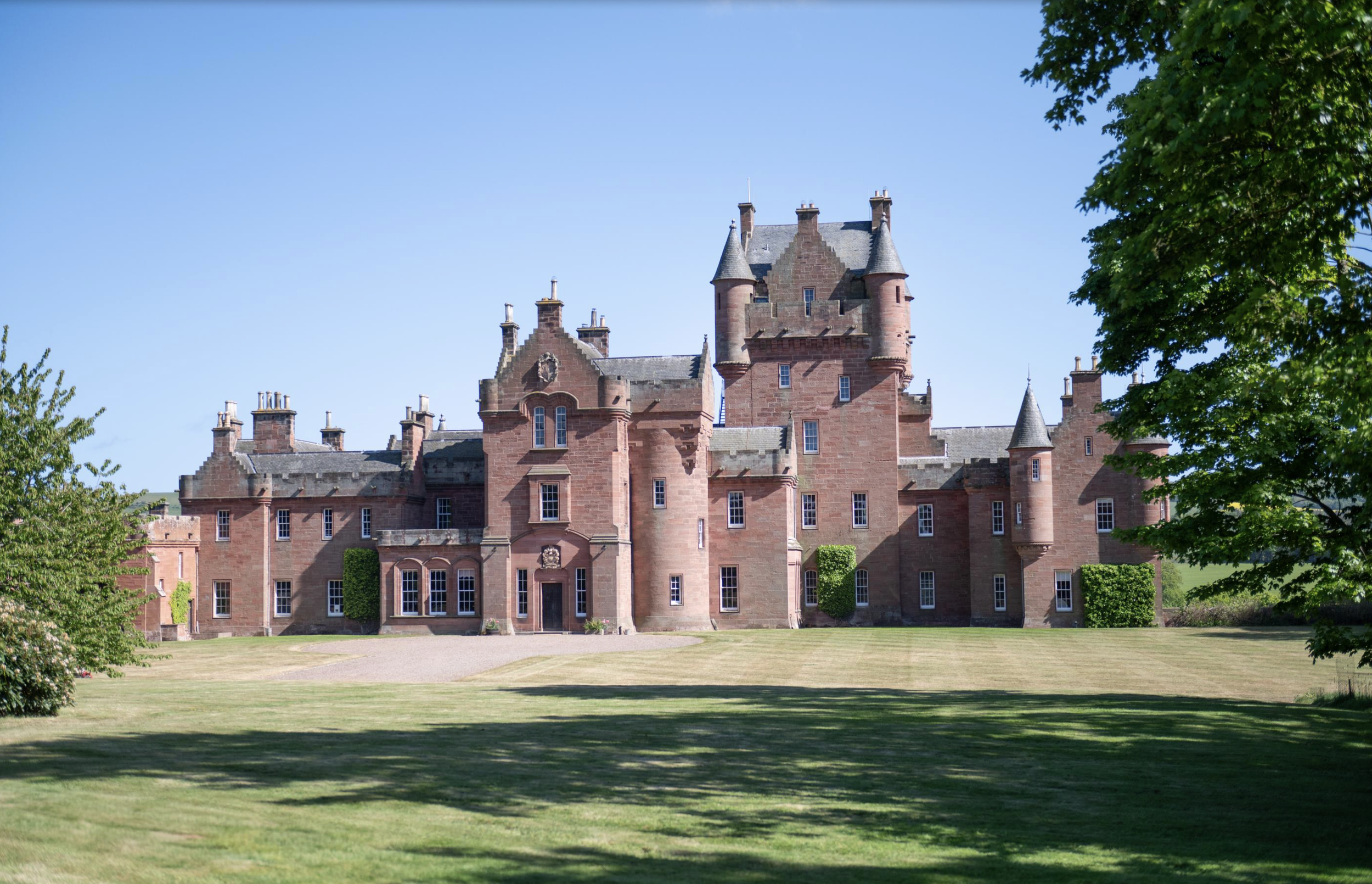
Ayton Castle, bought by Alan Carr in early 2026, is rated G, the worst grade on the scale. Its EPC states an annual energy cost of around £77,500, more than twice the median UK household income, simply to heat the building. Yet Ayton runs on wood pellets at an implied cost of roughly £0.076 per kWh, which is competitive with oil. A G-rated castle on a cheap, low-carbon fuel can cost less per useful unit of heat than a higher-graded one on gas.
What a buyer should actually look for
Don't worry too much about the letter grade; here's what's important:
- The kWh/m²/yr figure, the real energy intensity of the building.
- The fuel type and the current local price per kWh, because that converts energy into money.
- The derived £/m²/yr cost, the closest thing to a true running-cost comparison.
- The A-to-G grade last, and only as a guide to carbon compliance, never as a guide to cost.
A stone castle will almost never grade well. So put the grade aside, and figure out how much heat the building loses and what you pay for the fuel that replaces it.
Why this changes the renovation plan
Now that you understand what's really influencing the energy bill, you can factor that into your renovation plans. Insulating a stone castle is expensive, typically £100,000 to £500,000, and heavily constrained by heritage rules on what you can and can't do. Swapping the heating system is usually a better decision. If you move from oil to wood pellets or to a heat pump, that can cut the effective cost per kWh by 30% to 50%, and you avoid the headache of council approval plus you can reallocate that investment into another aspect of the castle.
So the right question for a castle buyer is not "how do I improve the EPC grade," it is "where is the cheapest joule of heat going to come from, given what I am and am not allowed to change in this building."
The full EPC index, and the running-cost figures behind it, sit in the Castle Price Index. If you are interested in purchasing a castle in the UK, our castles in Scotland and in England pages get updated with new listings all the time, so that's a great place to start. We've also written an article on the true cost of owning a castle which explains all the costs associated with ownership.
Sources
Energy figures from the UK EPC Register, 29 castle property certificates analysed in Castle Collector, Castle Price Index (March 2026), Section 5a. Ayton Castle cost from its published EPC; ownership reported via Knight Frank and BBC (2026).