
What Are the Most Beautiful Castles in England? 15 Heritage Properties Worth Visiting
Norman strongholds. Tudor palaces. Royal residences. Some still inhabited after 950 years. Fifteen English castles worth visiting—and what makes each exceptional.
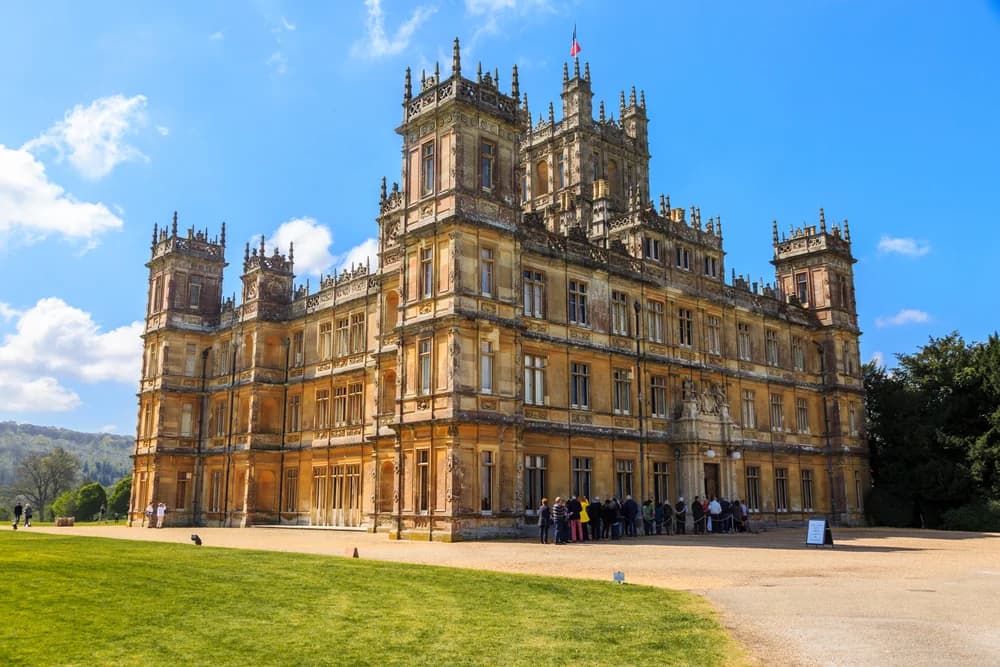
England's castles chart nearly a millennium of architectural ambition, royal intrigue, and strategic command. From Norman strongholds erected in the shadow of conquest to Tudor palaces designed to dazzle visiting monarchs, these fortified residences remain among the most compelling heritage properties in Europe.
The Tower of London has witnessed every major chapter of English history since 1066. Windsor Castle has housed 40 monarchs across 950 years of continuous occupation. Bodiam's symmetrical towers and complete moat define the romantic ideal of medieval fortification.
What follows are 15 English castles of particular distinction - from UNESCO World Heritage Sites drawing millions annually to private ancestral seats still occupied by their founding families.
1. Windsor Castle
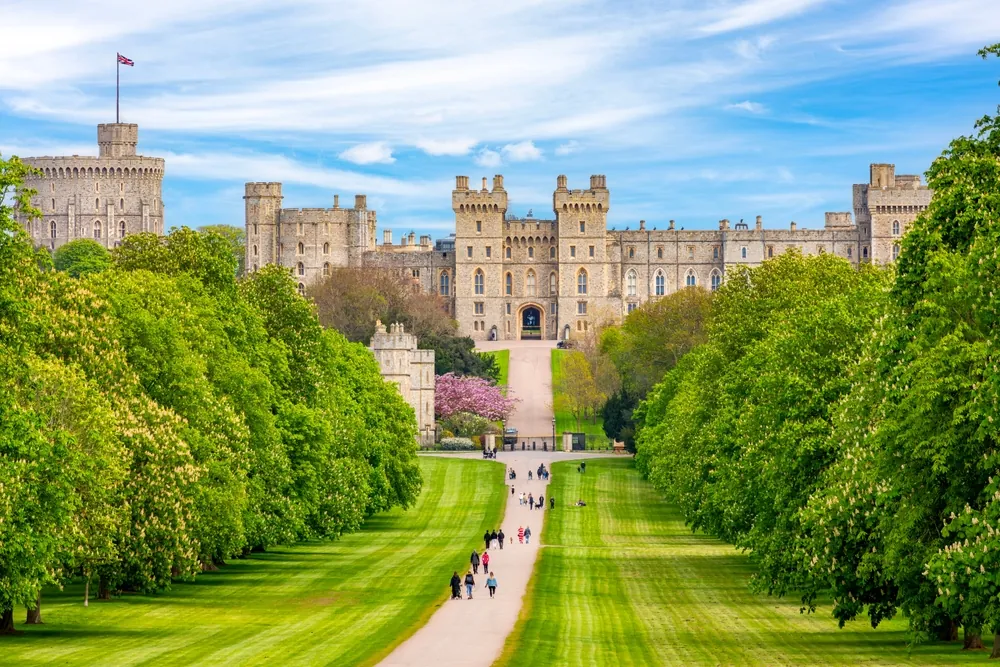
The longest continuously occupied palace in Europe and the largest inhabited castle in the world, Windsor has served as home to 40 monarchs since William the Conqueror established the original fortification in 1070.
Windsor Castle spans 13 acres with more than 1,000 rooms. This extraordinary residence remains the official home of King Charles III, continuing a tradition of royal occupation unbroken since the Norman Conquest.
The castle's architectural character owes much to George IV, who commissioned extensive reconstruction between 1824 and 1865 at a cost equivalent to £300 million today. The State Apartments showcase some of Britain's finest interiors, while St George's Chapel represents one of the most accomplished examples of Perpendicular Gothic architecture in existence. This 15th-century chapel serves as the burial place of ten monarchs, including Henry VIII, Charles I, and Queen Elizabeth II.
A devastating fire in 1992 damaged more than 100 rooms, prompting a £37 million restoration completed entirely without taxpayer funding. Visitors can explore the State Apartments, Queen Mary's Dolls' House, and witness the Changing the Guard ceremony that has continued for centuries.
2. Tower of London
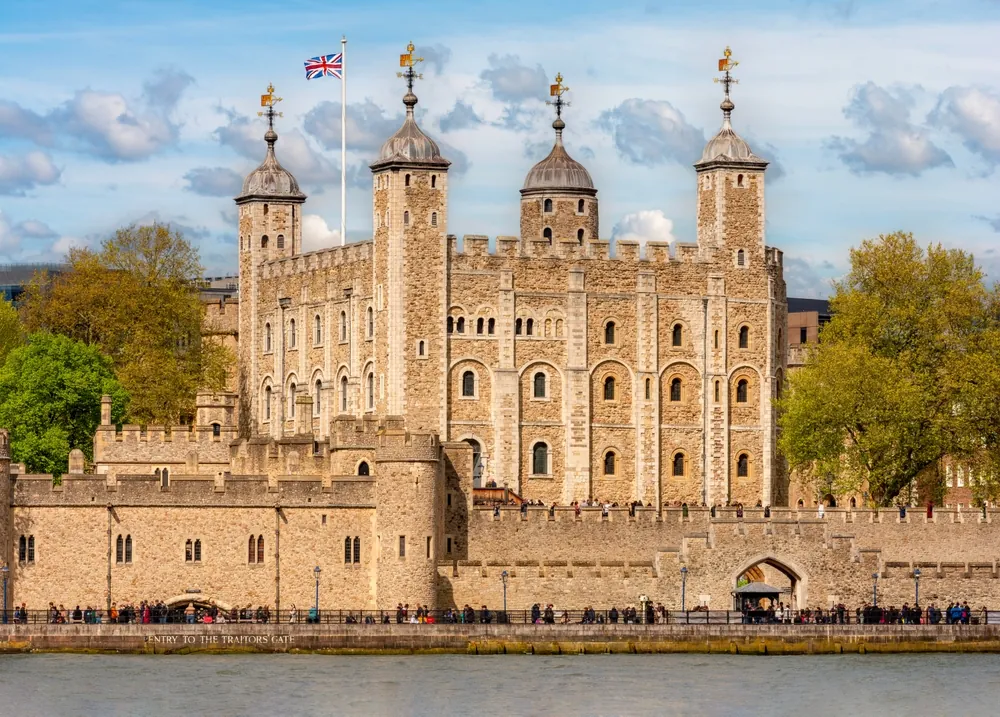
William the Conqueror's most enduring architectural statement and the most visited paid attraction in England. The Crown Jewels, housed here since 1661, comprise one of the world's most valuable collections of ceremonial regalia.
The iconic White Tower, completed around 1078, established the template for Norman military architecture and has witnessed nearly a thousand years of English history unfold within its walls.
The Crown Jewels contain 23,578 gemstones. The Imperial State Crown alone includes 2,868 diamonds, 273 pearls, 17 sapphires, 11 emeralds, and 5 rubies, along with the legendary 317-carat Cullinan II diamond. These remain working pieces, used at the State Opening of Parliament and coronations.
The Tower has served variously as royal residence, armoury, treasury, Royal Mint, and most famously, as a prison. Anne Boleyn and Catherine Howard met their ends here. The Ceremony of the Keys has been performed without interruption for over 700 years. Yeoman Warders - the famous "Beefeaters" - continue to guard the fortress and guide visitors through its layered history.
3. Warwick Castle
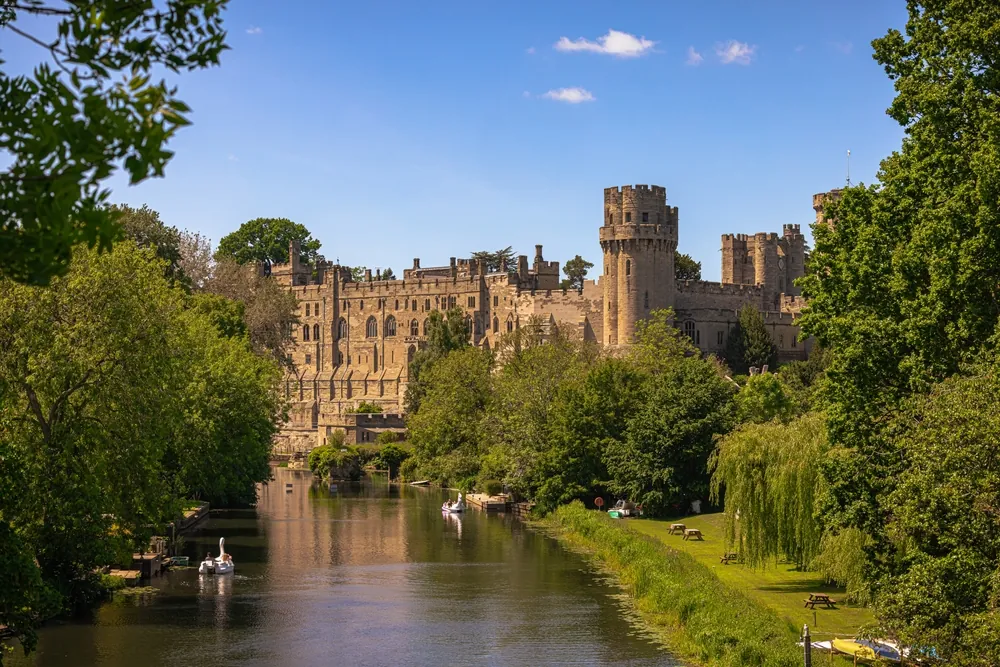
One of England's finest examples of medieval military architecture, its battlements and towers rising dramatically above a strategic meander of the River Avon. Home to Richard Neville, the "Kingmaker" Earl of Warwick, whose political machinations during the Wars of the Roses earned him this legendary epithet.
William the Conqueror established the original wooden fortification in 1068. The imposing stone structure visitors see today developed primarily during the 14th century under the Beauchamp earls.
The fortress's 14th-century defenses, including Caesar's Tower at 147 feet and the adjacent Guy's Tower, rank among the most sophisticated military installations of their era.
Sold by the Percy family in 1978 for £1.3 million, Warwick Castle has operated as a heritage attraction since, now owned by Merlin Entertainments. The 64-acre grounds feature working medieval siege engines, falconry displays, and one of the world's largest trebuchets. The State Rooms preserve remarkable Victorian interiors, including wax figures depicting an 1898 weekend party attended by the Prince of Wales.
4. Leeds Castle
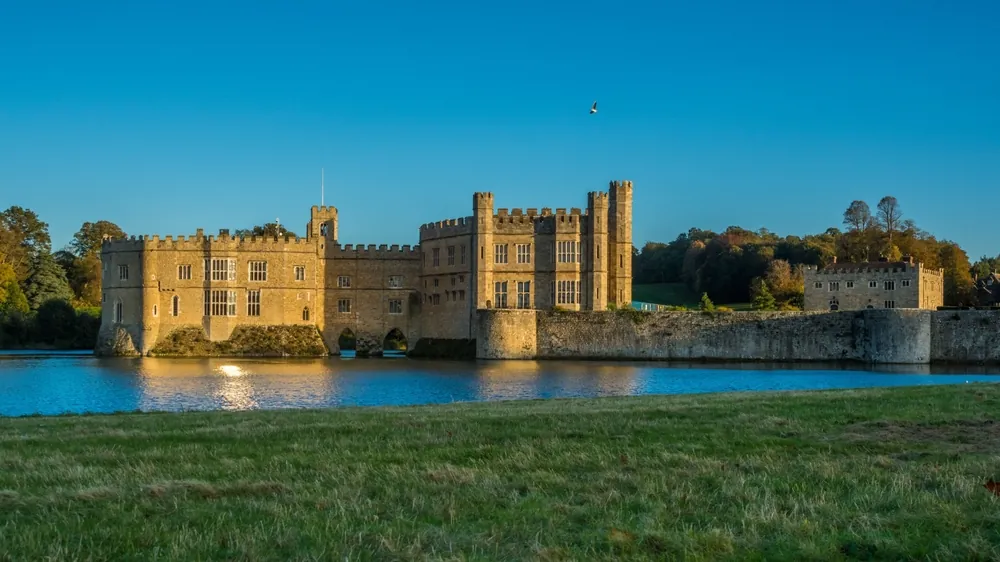
Often described as "the loveliest castle in the world," Leeds Castle occupies an enchanting position across two islands in the River Len. Six medieval queens called it home, including Eleanor of Castile, Isabella of France, and Catherine of Aragon.
Despite its name, the castle has no connection to the Yorkshire city. It takes its designation from Led, chief minister to King Ethelbert IV of Kent, who established a Saxon manor here in 857 AD.
Henry VIII lavished attention on the property, transforming it for his first wife before the castle passed to Anne of Cleves following his divorce from Catherine of Aragon.
American heiress Lady Baillie purchased Leeds Castle in 1926 for £180,000 and invested over $2 million in its restoration, employing French designers to create the elegant interiors visible today. During World War II, the castle served as a hospital for burned Commonwealth airmen. Lady Baillie left the property to the Leeds Castle Foundation in 1974, ensuring public access in perpetuity. The 500-acre grounds include a celebrated maze with secret grotto, aviary, and vineyard.
5. Alnwick Castle
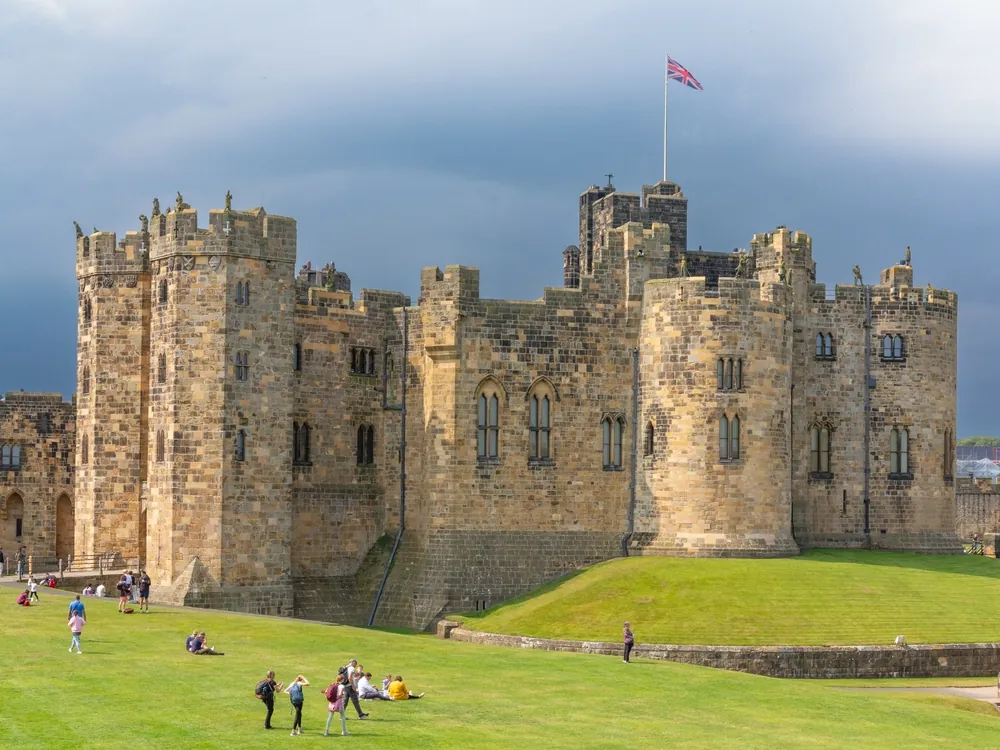
The second-largest inhabited castle in England after Windsor, and the ancestral seat of the Percy family for over 700 years. The 12th Duke of Northumberland maintains the family residence within its walls today.
The castle achieved international recognition as the primary filming location for Hogwarts in the first two Harry Potter films, with the Outer Bailey serving as the setting for students' first broomstick flying lessons. This cinematic association has generated substantial visitor interest, complementing the castle's historical significance as home to Harry "Hotspur" Percy, the legendary warrior immortalized by Shakespeare.
The State Rooms underwent comprehensive Italianate Victorian remodeling in the 19th century and now house an exceptional collection, including Cucci Cabinets originally commissioned for Louis XIV and a 14,000-volume library. The castle's 150 rooms span architectural styles from medieval fortification to Renaissance grandeur.
The adjacent Alnwick Garden, developed at a cost of £42 million, features the world's largest treehouse complex and a Poison Garden containing cannabis and opium poppy.
6. Dover Castle
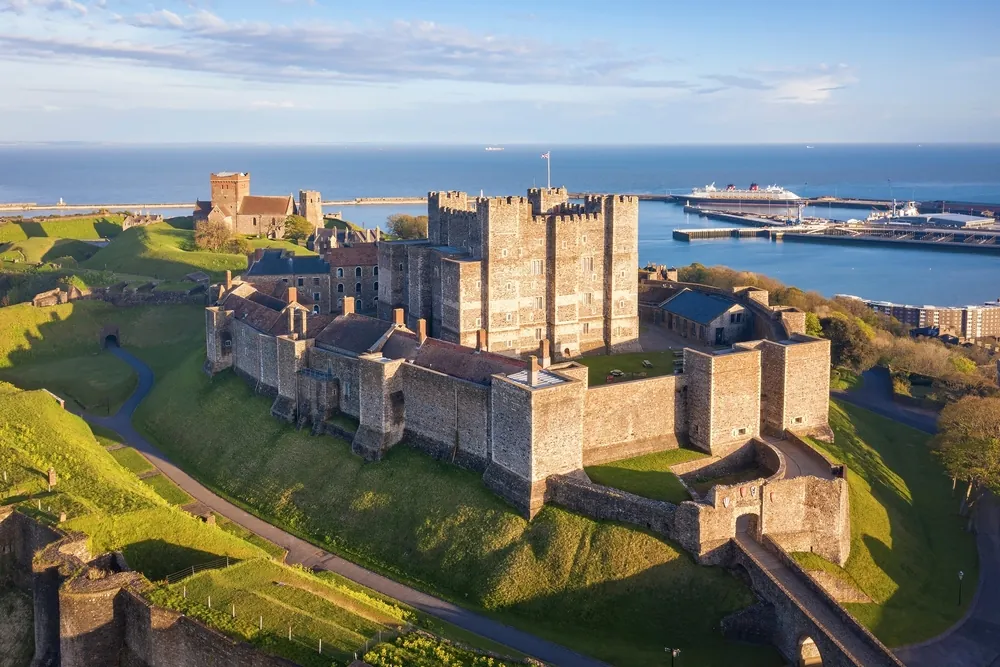
Known as the "Key to England," Dover Castle occupies one of the most strategically significant positions in British history. The site contains a Roman lighthouse that ranks as the oldest standing Roman structure in England.
The Great Tower, constructed under Henry II from 1179, established Dover as one of the most sophisticated defensive installations in medieval Europe. The castle's military importance persisted into the 20th century, most dramatically during World War II when Vice Admiral Bertram Ramsay coordinated Operation Dynamo from the secret wartime tunnels beneath the fortress.
The evacuation of 338,000 Allied troops from Dunkirk remains one of the most remarkable military operations in history.
The three miles of underground tunnels, originally constructed as Napoleonic-era barracks capable of housing 2,000 troops, served subsequently as a military hospital, telephone exchange, and Cold War Regional Seat of Government. Visitors can explore the casemate level and experience recreated wartime conditions. English Heritage invested £2.45 million between 2007 and 2009 to recreate the Great Tower's medieval interiors.
7. Bamburgh Castle
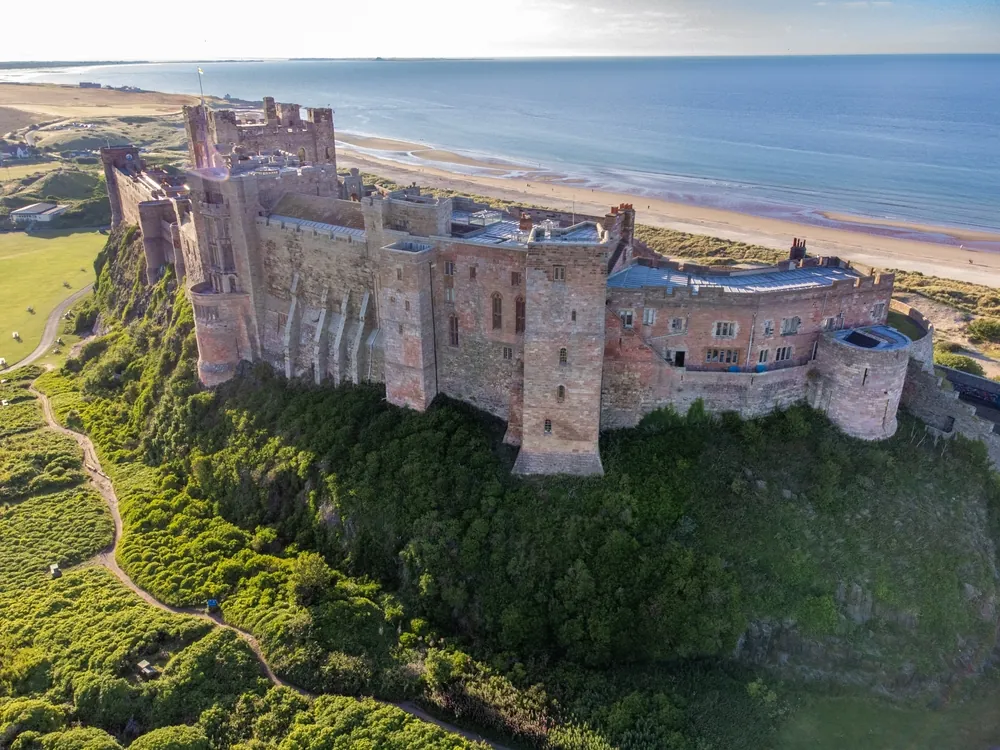
Rising 150 feet above the Northumberland coastline on an outcrop of volcanic dolerite, Bamburgh commands views across the North Sea to the Farne Islands and Holy Island. Recognizable to millions as "Bebbanburg" in the Netflix series The Last Kingdom.
The site has been fortified for over 1,400 years, originally serving as capital of the Anglo-Saxon kingdom of Bernicia. The castle's name derives from Queen Bebba, wife of King Æthelfrith, around 600 AD.
During the medieval period, Bamburgh endured numerous sieges, becoming the first castle in England to fall to gunpowder artillery during the Wars of the Roses in 1464.
Victorian industrialist William Armstrong purchased the ruined castle and undertook comprehensive restoration, creating the structure visible today. The Armstrong family maintains residence and opens the nine-acre grounds and treasure-filled State Rooms to visitors. The King's Hall serves as the castle's centrepiece.
8. Bodiam Castle
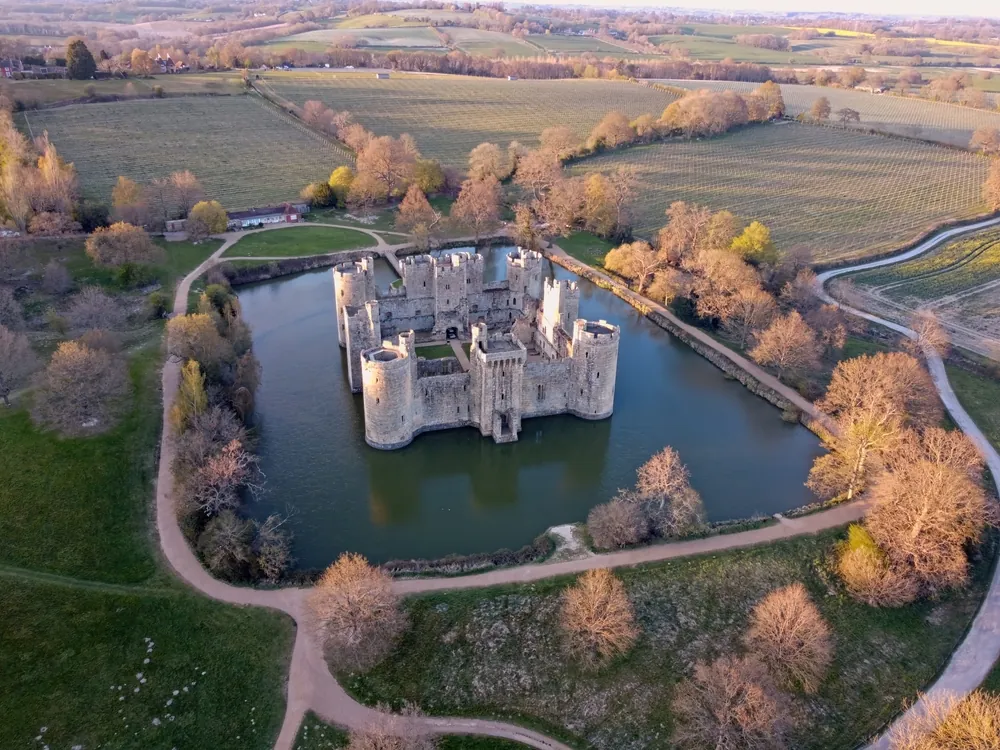
The romantic ideal of medieval fortification. Symmetrical towers and a complete moat create what historian Charles Coulson described as "the popular ideal of a medieval castle."
Sir Edward Dalyngrigge constructed this quadrangular fortress in 1385, ostensibly to defend against French invasion during the Hundred Years' War.
The castle's design prioritized visual impact alongside military function. The complete moat, fed by natural springs and maintained at depths of five to seven feet, encircles walls that never faced significant attack. The 28 garderobe (toilet) shafts draining directly into the moat hint at the practical realities of medieval castle life.
Lord Curzon purchased the ruined castle in 1916, undertaking restoration work between 1919 and 1925 before bequeathing it to the National Trust. Though the interior remains largely ruined due to deliberate slighting during the English Civil War, the exterior walls stand remarkably intact, offering visitors an authentic experience of late medieval military architecture.
9. Arundel Castle
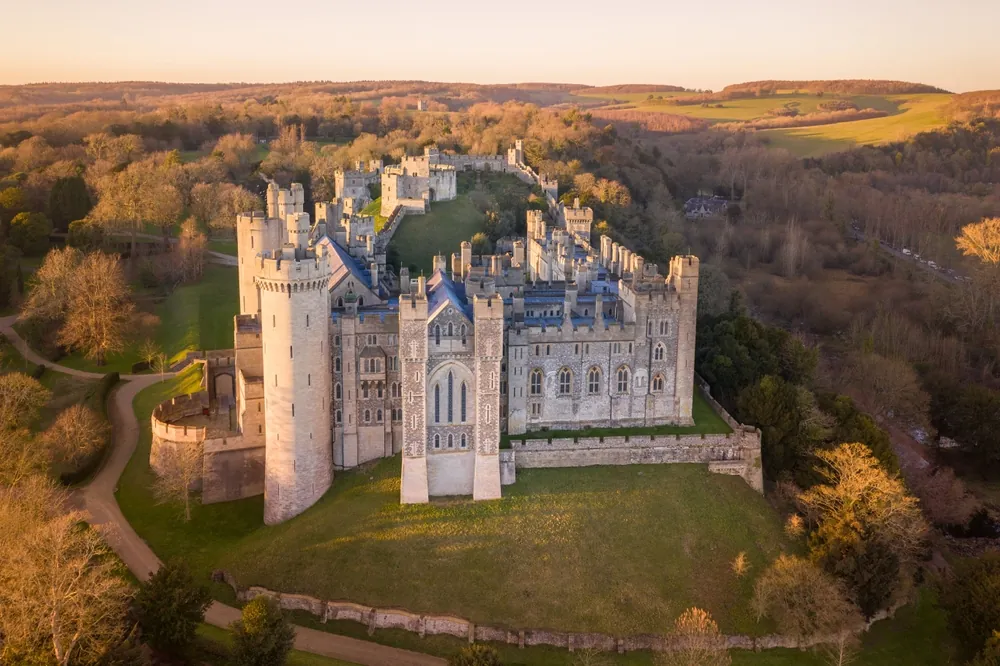
The ancestral seat of the Dukes of Norfolk for over 850 years, making it one of the longest continuously inhabited country houses in England. The 18th Duke of Norfolk currently resides within the castle.
The castle's position on a prominent hill overlooking the River Arun and South Downs provides commanding views that justified its strategic importance from the Norman Conquest onwards.
The Howards rank among England's premier noble families, having produced two queens (Anne Boleyn and Catherine Howard were both nieces of the 3rd Duke) and the Earl Marshal of England, a hereditary office held by successive Dukes of Norfolk.
Queen Victoria and Prince Albert visited in 1846, prompting extensive refurbishment, including specially commissioned furniture still displayed in the guest apartments. The 15th Duke completed comprehensive Victorian restoration by 1900, making Arundel one of the first English country houses fitted with electric lighting, central heating, and service lifts. The 40-acre grounds include the Collector Earl's Garden, designed as a tribute to the 14th Earl of Arundel's passion for antiquities.
10. Highclere Castle
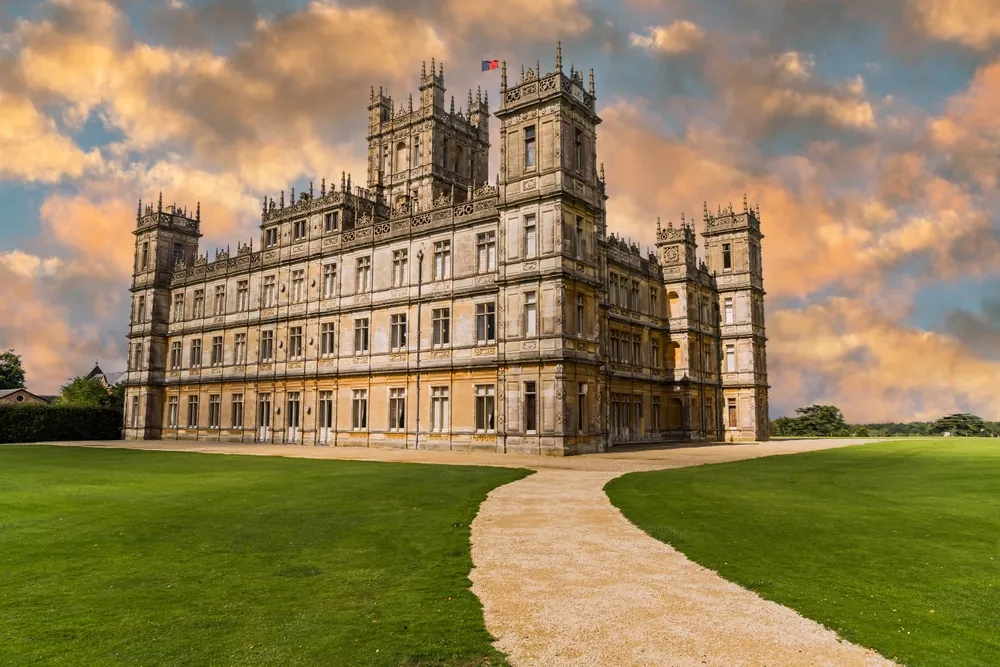
The primary filming location for Downton Abbey, though its history as the seat of the Earls of Carnarvon stretches back to 1679. Sir Charles Barry, architect of the Houses of Parliament, designed the Victorian mansion visible today.
Lady Carnarvon describes Highclere as "possibly the most important Victorian House still lived in in England."
The 5th Earl of Carnarvon achieved lasting renown as co-discoverer of Tutankhamun's tomb alongside archaeologist Howard Carter in 1922. The Egyptian Exhibition in the castle cellars celebrates this extraordinary find with artifacts and interpretation of the excavation.
The 8th Earl and Countess of Carnarvon maintain the family residence and open the 200-room castle and 1,000-acre grounds to visitors at select times throughout the year. During World War I, the castle served as a hospital for wounded soldiers, while World War II saw it provide refuge for evacuated London children. Tickets frequently sell out months ahead.
11. Hever Castle
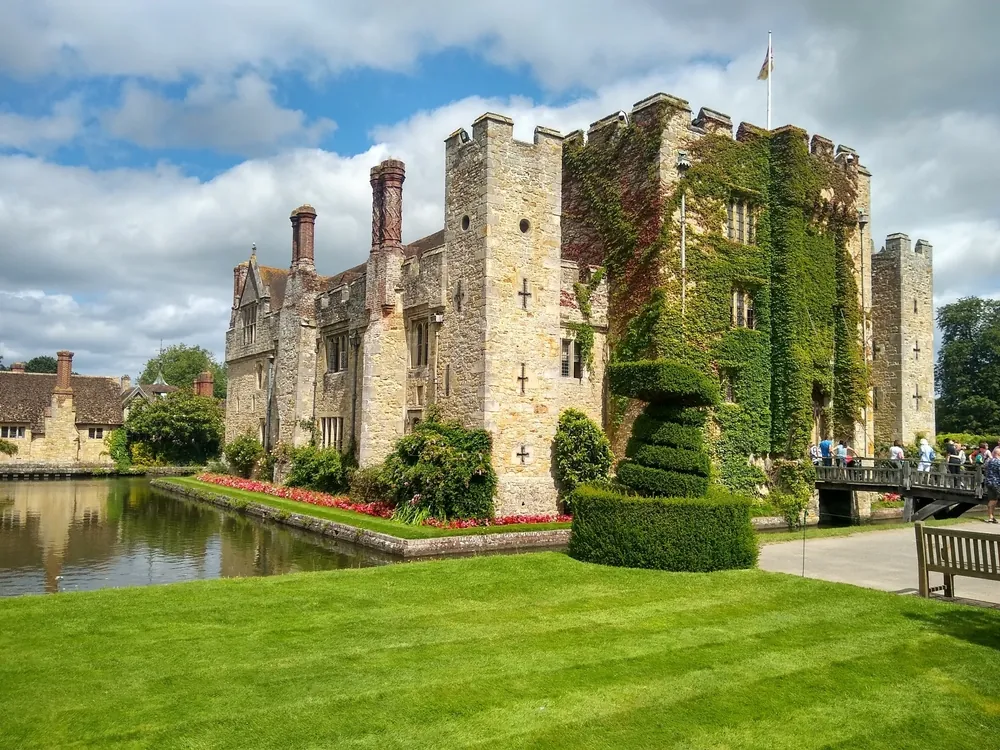
The childhood home of Anne Boleyn, second wife of Henry VIII and mother of Elizabeth I. The double-moated castle witnessed the king's courtship of Anne - a relationship that would ultimately reshape England's religious and political landscape.
The castle's oldest surviving feature, its gatehouse, contains what is claimed to be England's oldest working portcullis. Anne Boleyn's prayer books, bearing her inscriptions and signature, remain on display in the Book of Hours room. Following Anne's execution and her father Thomas Boleyn's death in 1539, Henry VIII granted the castle to his fourth wife, Anne of Cleves.
American newspaper magnate William Waldorf Astor purchased the neglected castle in 1903 and invested his fortune in comprehensive restoration. Astor insisted his craftsmen use authentic Tudor and Elizabethan methods and materials where possible, creating the seamless blend of medieval, Tudor, and Edwardian elements visible today.
The 125-acre grounds include award-winning gardens, a yew maze planted in 1904, and accommodation in the Astor Wing.
12. Corfe Castle
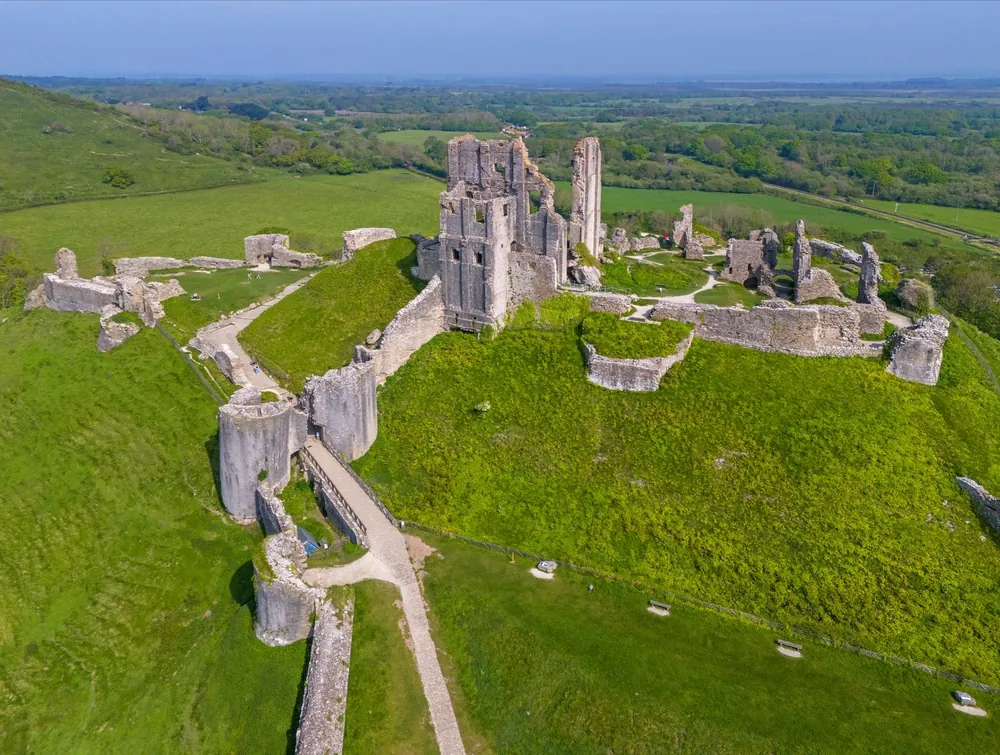
One of England's most photographed and evocative heritage sites. Dramatic ruins rise above a gap in the Purbeck Hills, the result of parliamentary slighting following Lady Mary Bankes's legendary three-year defense during the English Civil War.
William the Conqueror founded the stone fortress shortly after the Norman Conquest, making it one of the earliest castles in England to be built at least partially in stone rather than the wooden palisades typical of the period.
The castle's turbulent history includes the murder of teenage King Edward the Martyr in 978 AD. King John expanded the fortress significantly, using it to store royal treasure and imprison political opponents, including 22 French knights he allegedly starved to death in the dungeon.
Lady Mary Bankes held out against Parliamentary forces for nearly three years despite being heavily outnumbered. Betrayal by a garrison officer finally led to the castle's capture in 1645. The National Trust has owned the site since 1982, having received it as part of the Bankes family bequest that also included Kingston Lacy.
13. Durham Castle
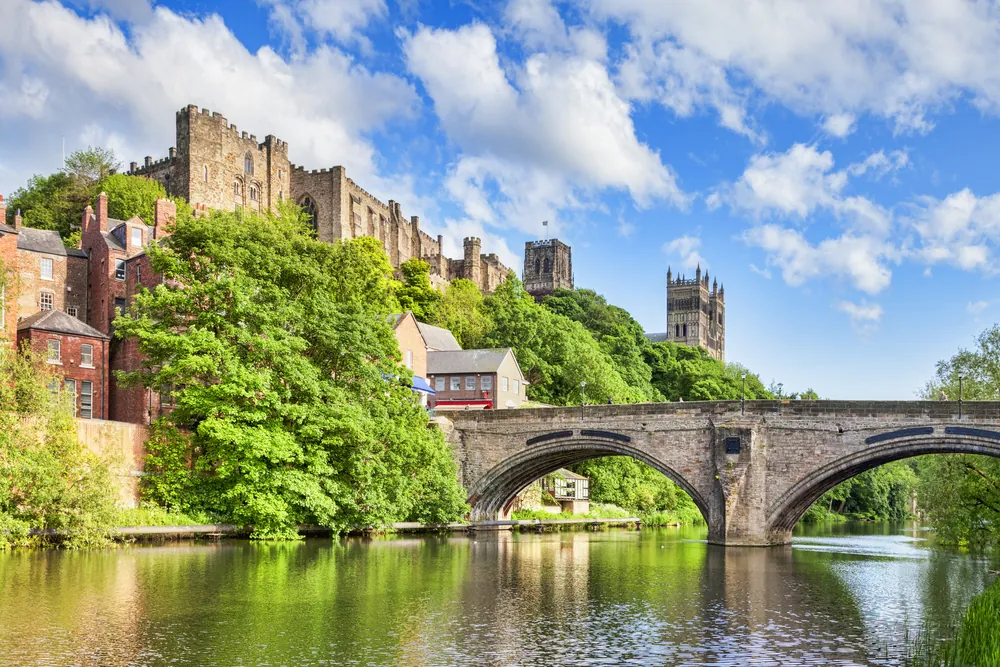
Together with Durham Cathedral, this castle forms a UNESCO World Heritage Site inscribed in 1986, recognized as one of the finest examples of Norman architecture in Europe.
William the Conqueror ordered the castle's construction in 1072, just six years after the Norman Conquest, establishing it as the seat of the Prince-Bishops of Durham who wielded extraordinary secular and religious authority.
The Prince-Bishops governed what was effectively an autonomous state forming the buffer zone between England and Scotland from the late 11th century until 1836. They commanded their own army, levied taxes, minted coinage, and exercised judicial authority rarely matched by other English clergy.
The Norman Chapel, dating to approximately 1080, ranks among the oldest surviving parts of the castle and is one of the most precious testimonies to Norman architecture anywhere. Since 1837, the castle has served as home to University College, Durham, with students residing within its medieval and Tudor rooms.
14. Rochester Castle
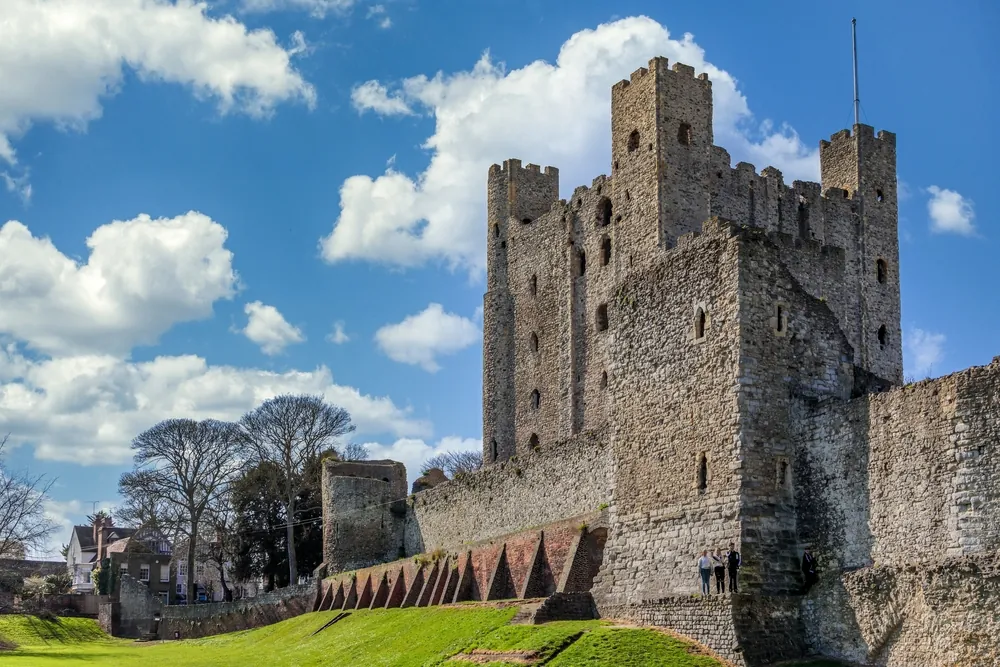
The tallest Norman keep in England, rising 125 feet above the strategic River Medway crossing. The castle endured one of medieval England's most celebrated sieges in 1215, when King John used the fat from 40 pigs to fire a mine that brought the southern corner crashing down.
Bishop Gundulf, who also contributed to the Tower of London, began the stone fortification between 1087 and 1089, with Archbishop William of Corbeil completing the magnificent keep around 1127.
During the 1215 siege, King John's sappers tunneled beneath the keep after bombardment failed to breach the walls. The defenders retreated behind an internal cross-wall, surrendering only when starvation forced their hand. The cylindrical replacement tower, visible today, marks where the original square turret collapsed.
Military historian Allen Brown ranks Rochester's keep "among the finest and oldest in all England." Though partially ruined, the structure remains substantially intact, offering visitors atmospheric exploration of its four floors, thick walls, and defensive galleries. The castle's position adjacent to Rochester Cathedral creates a compelling heritage destination.
15. Kenilworth Castle
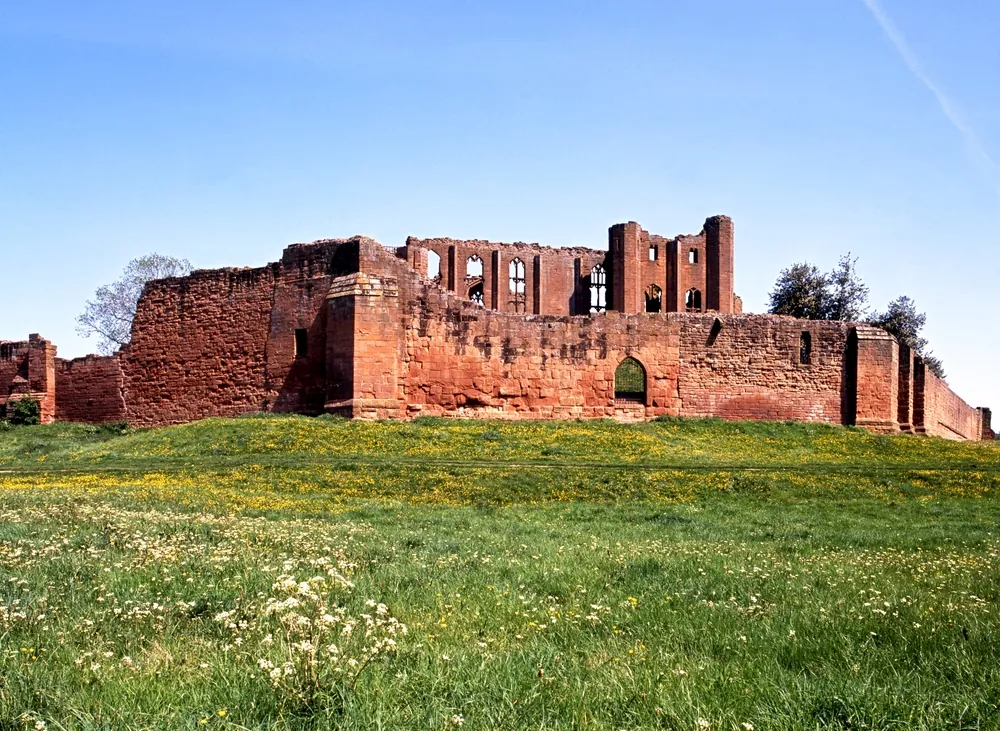
Architectural historian Anthony Emery described Kenilworth as "the finest surviving example of a semi-royal palace of the later Middle Ages, significant for its scale, form and quality of workmanship." The fortress witnessed the longest siege in medieval English history.
In 1266, supporters of Simon de Montfort held out for six months against royal forces - the longest siege in medieval English history.
The castle's most celebrated chapter began in 1563 when Elizabeth I granted it to her childhood friend and rumored romantic interest, Robert Dudley, Earl of Leicester. Dudley transformed Kenilworth from medieval fortress into magnificent Tudor palace, spending vast sums on extensions and gardens designed to attract the queen during her regular progresses through England.
Elizabeth's visit in July 1575 lasted 19 days, the longest stay at any courtier's house during her reign. Dudley's lavish entertainment reportedly cost £1,000 per day, nearly bankrupting him despite his considerable wealth. English Heritage has recreated the Elizabethan garden Dudley designed specifically for this visit. The castle's fortifications were dismantled in 1650 after the English Civil War, and Sir Walter Scott's 1821 novel Kenilworth subsequently established the romantic ruin as a major tourist destination.
Why Do England's Castles Matter?
England's castles chart the nation's history with remarkable clarity. The Norman Conquest of 1066 introduced castle-building on a systematic scale, establishing a network of fortifications to control newly acquired territory. The Tower of London, Windsor, Warwick, and Dover all trace their origins to this transformative period.
The medieval centuries saw castles evolve from purely military installations into centers of administration, justice, and aristocratic display. The great halls of Kenilworth and Warwick hosted parliaments and royal courts, while their dungeons confined political prisoners whose fates shaped succession disputes and civil conflicts.
The Tudor period transformed castle architecture fundamentally, prioritizing comfort and display over defensive capability. Leeds Castle, Hever, and Kenilworth all underwent renovations that replaced arrow loops with expansive windows and military gatekeeps with decorative gardens. Henry VIII's establishment of the Church of England, catalyzed by his relationship with Anne Boleyn of Hever Castle, redistributed enormous ecclesiastical wealth - some of which funded castle construction and renovation.
The English Civil War (1642-1651) effectively ended the castle's military function. Parliamentary slighting of Corfe, Kenilworth, and numerous other fortifications deliberately rendered them indefensible, creating the romantic ruins that would captivate Victorian antiquarians and modern tourists alike.
Can You Buy a Castle in England?
Genuine medieval castles rarely reach the open market in England. When they do, prices typically range from £5 million to £25 million, depending on condition, size, and estate lands included.
The market for English castles and historic properties attracts discerning collectors worldwide, though opportunities to acquire genuine medieval fortifications remain exceptionally rare. Unlike France, where over 40,000 châteaux provide a broader market, England's castle inventory reflects centuries of concentrated ownership by the Crown, Church, and established noble families.
Properties reaching the market in 2025 include Ripley Castle in Yorkshire, offered at £15 million (reduced from an original asking price of £21.9 million), marking the first time this 14th-century Grade I-listed estate has been available for purchase in over 700 years. Appleby Castle, a Grade I-listed Norman fortress with 25 acres of parkland, will be offered at auction in October 2025.
Specialist agents including Knight Frank, Strutt & Parker, and Carter Jonas maintain dedicated country house and estate departments with expertise in heritage transactions. Grade I and Grade II* listings impose significant conservation obligations but may also unlock heritage grants and tax advantages.
For those seeking heritage property ownership without the responsibilities of a medieval fortress, England offers castellated manor houses, Gothic Revival mansions, and converted defensive structures including Martello towers and sea forts.
Discover Your Heritage Property
England's castles represent irreplaceable assets combining architectural significance, historical provenance, and enduring appeal. Whether your interest lies in visiting these remarkable structures or exploring ownership opportunities, understanding their heritage enhances appreciation of what makes each property exceptional.
Castle Collector provides access to curated listings of castles, manor houses, and historic estates across England and beyond. Our network connects discerning buyers with properties of genuine architectural merit and documented historical significance.