
15 Best Castles in Germany Worth the Journey
20,000+ castles. The highest concentration in Europe. Disney inspiration. Medieval fortresses. Some were never destroyed. Germany's fifteen finest—and how to visit.
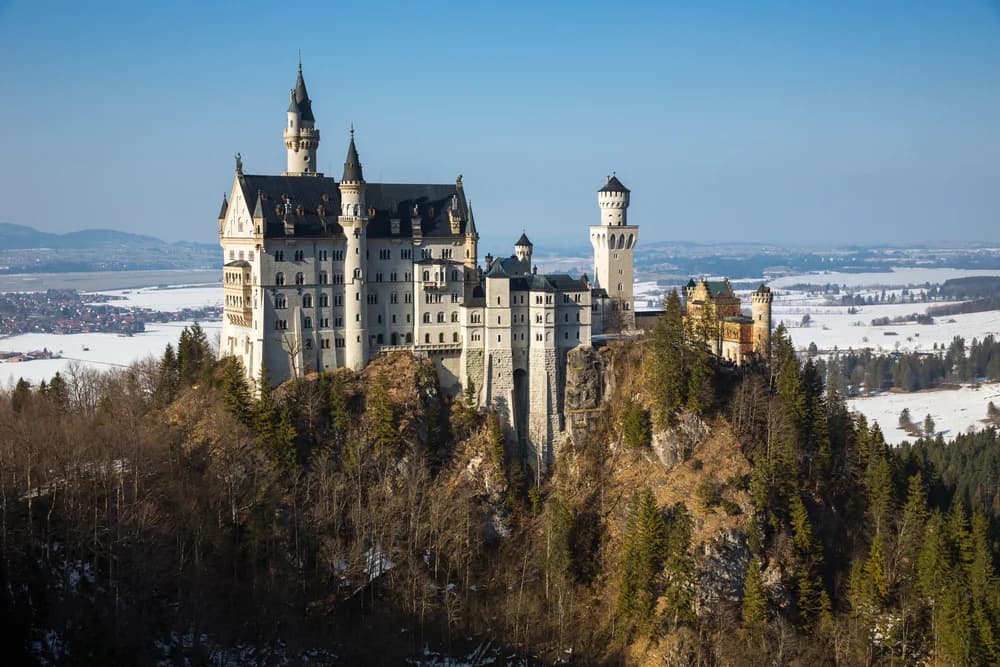
Germany holds the highest concentration of castles in Europe, with estimates ranging from 20,000 to 25,000 structures still standing. From romantic 19th-century creations that inspired Disney to medieval fortresses that have never fallen, these castles represent centuries of architectural ambition and cultural heritage.
Several remain in private hands, with properties occasionally reaching the market through specialist agents.
What Are the Most Beautiful Castles in Germany?
The most beautiful castles in Germany include Neuschwanstein, Heidelberg, Burg Eltz, Hohenzollern, and Wartburg. Each represents a distinct architectural tradition, from Romanesque fortresses to Romantic Revival palaces. The following profiles rank Germany's finest castles by architectural significance, historical importance, and visual impact.
1. Neuschwanstein Castle
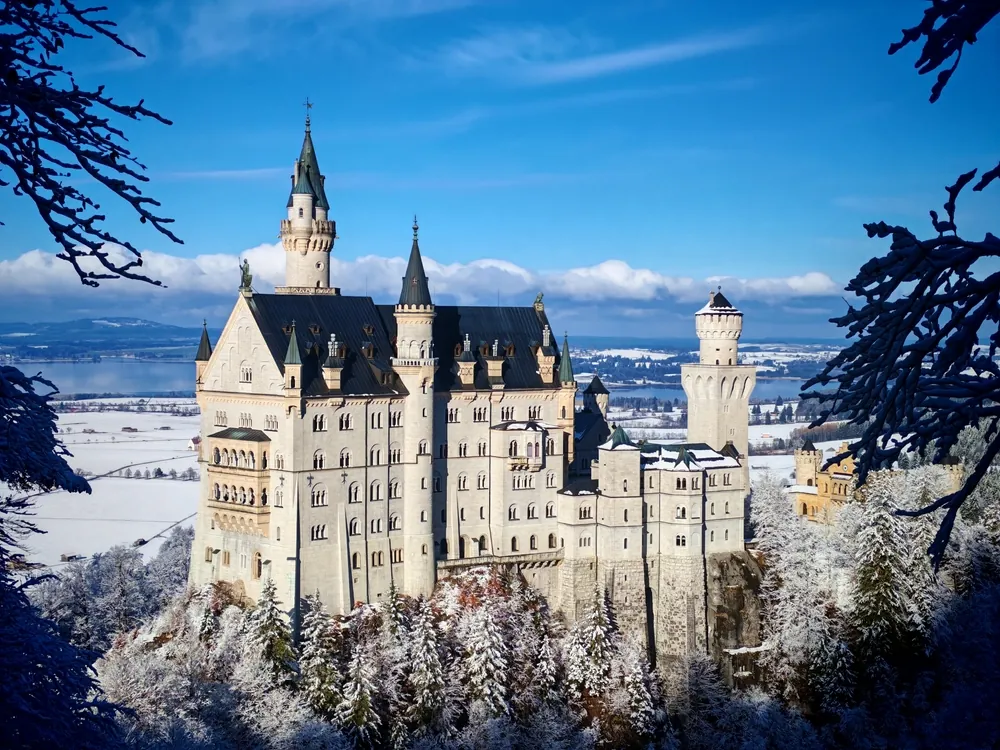
Neuschwanstein is the most famous castle in Germany and perhaps the world. Commissioned by King Ludwig II as a private retreat, it became the primary inspiration for Disney's Cinderella Castle. At 65 meters, Guinness World Records recognizes it as the tallest castle in the world. Ludwig lived there only 172 days before his death in 1886, and construction was never completed. Of its 200 rooms, only 15 were finished.
The castle joined the UNESCO World Heritage List in July 2025 as part of "The Palaces of King Ludwig II." The throne room and minstrels' hall showcase elaborate Byzantine and Romanesque revival interiors that took 17 years to complete.
Estimated value: €500–550m
Ludwig II spent €500 million in today's terms and never finished it—only 15 of 200 rooms were completed. Physical assets suggest €150–180 million. But 1.4 million visitors, Disney inspiration royalties baked into global consciousness, and UNESCO status (2025) multiply that dramatically. Germany's most valuable tourist asset after Berlin's museums.
How to visit: Two hours from Munich by car. Shuttle buses run from Hohenschwangau village. Tickets sell out quickly in summer; advance booking through the official website is essential.
2. Heidelberg Castle
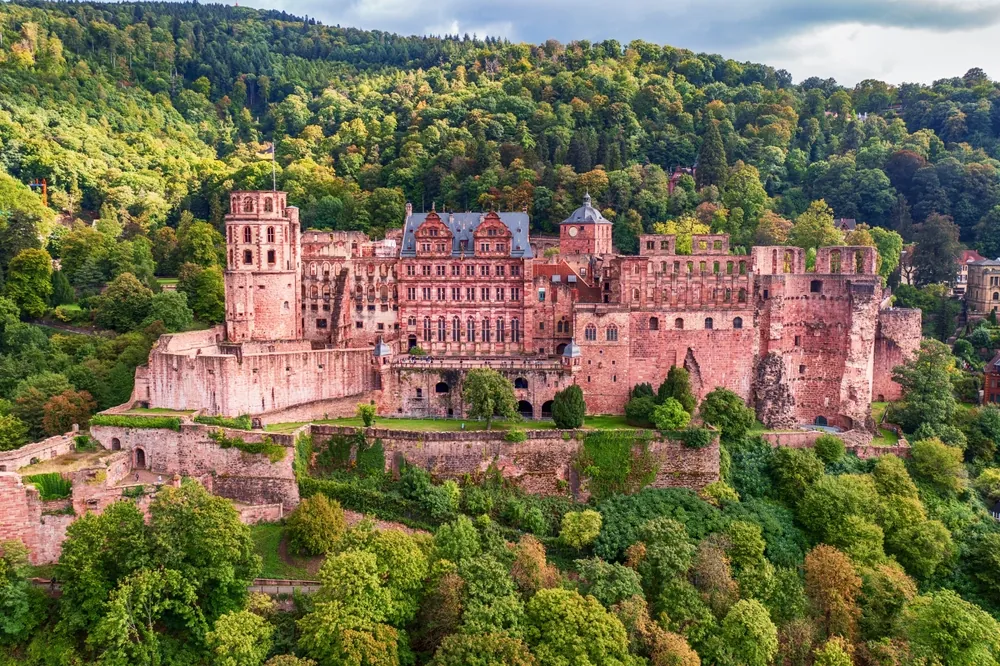
Heidelberg Castle ranks among the most important Renaissance structures north of the Alps. Though partially ruined following French destruction in 1689 and lightning strikes in 1764, the surviving Ottheinrichsbau (built 1556) remains the finest example of German Renaissance palace architecture.
The castle became a symbol of German Romanticism in the 19th century, attracting painters including J.M.W. Turner and writers such as Mark Twain and Goethe.
The castle houses the world's largest wine barrel (220,000 liters, built 1751) and the German Pharmacy Museum. In the early 1900s, a heated "monumental dispute" debated whether to rebuild the castle or preserve it as a romantic ruin. Preservationists prevailed, establishing early principles of heritage conservation.
Estimated value: €350–400m
Partially ruined since French destruction in 1689—physical assets calculate to €80–100 million with the ruin discount applied.
But 1.1 million visitors, the finest German Renaissance architecture north of the Alps, and status as the defining symbol of German Romanticism (Turner painted it, Twain wrote about it, Goethe visited) push income capitalization far higher. The 19th-century debate over whether to rebuild or preserve as romantic ruin established modern conservation principles.
How to visit: Funicular railway from Kornmarkt or a 315-step walk from the old town. One hour from Frankfurt.
3. Burg Eltz
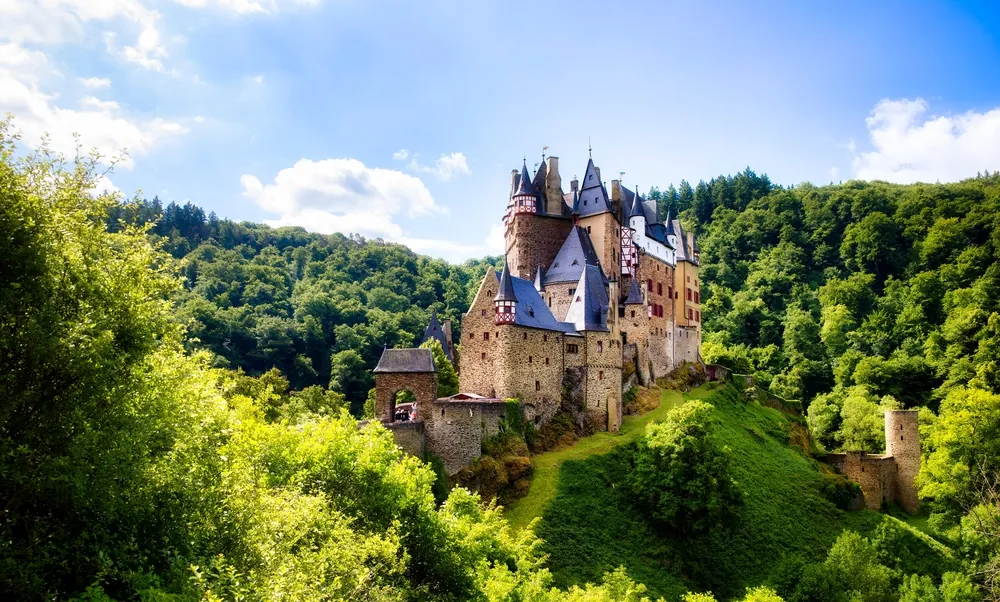
Burg Eltz represents one of the rarest achievements in European castle heritage: it has never been destroyed. The same family has owned it for over 850 years, spanning 33 generations. Nestled in a forested valley on a 70-meter rock spur, the castle escaped the wars that devastated most Rhine and Moselle fortifications. It appeared on the German 500 DM banknote from 1961 to 1995.
The castle combines Romanesque, Gothic, and Baroque elements accumulated over centuries. Eight towers rise to 35 meters, and the 80 rooms still contain original furnishings from the family's 850-year residence. Dr. Karl Graf von und zu Eltz-Kempenich, the 33rd generation owner, maintains part of the castle as a private residence while opening other sections to the public. For more information, see the official Burg Eltz website.
Estimated Value: €95–115m
Physical calculation: €25–30 million for a compact medieval castle in the Moselle Valley. But "never destroyed" and "850 years, same family" are premiums money can't manufacture. Featured on the 500 DM banknote. 250,000 visitors despite remote forest location. The Eltz family's 33-generation stewardship makes market valuation theoretical—this will never sell.
How to visit: Day trip from Cologne or Frankfurt. Train to Moselkern station, then taxi or 5 km forest walk.
4. Hohenzollern Castle
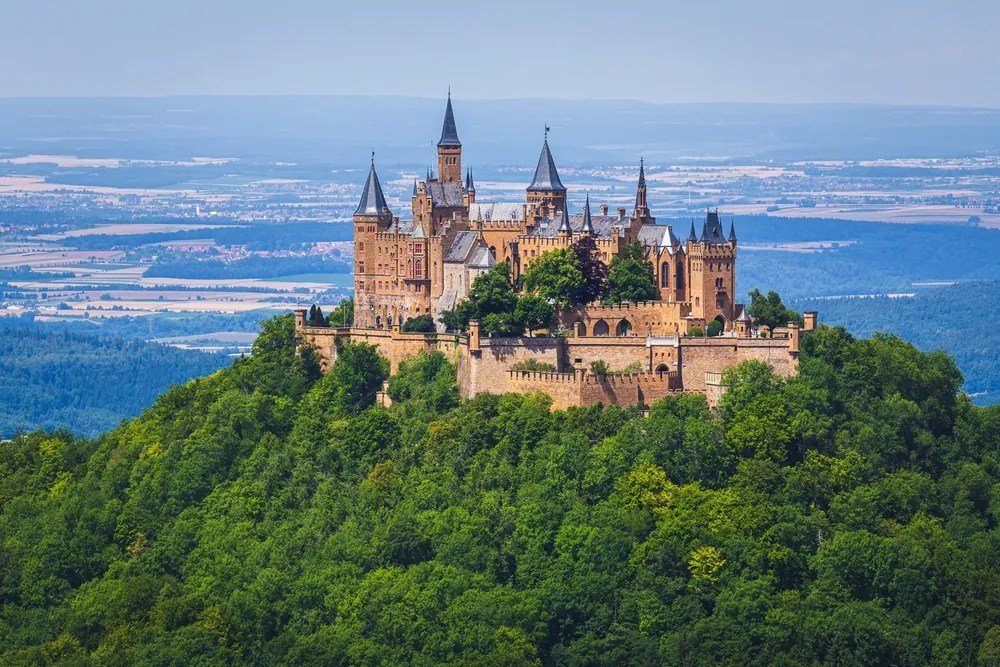
Hohenzollern Castle rises dramatically from Mount Hohenzollern at 855 meters elevation. The ancestral seat of the Prussian royal family, it was rebuilt in Neo-Gothic style by King Frederick William IV between 1846 and 1867. The first castle on this site dates to 1267. The House of Hohenzollern still owns and operates the castle today, making it one of Germany's most significant privately-held heritage properties.
The 140-room castle houses the Prussian Crown and other royal treasures. During World War II, it served as a refuge for valuable artifacts from museums across Germany. The castle's dramatic silhouette has featured in films including A Cure for Wellness (2016). The family operates its own brewery, producing PREUSSENS beer on site.
Estimated Value: €120–150m
Neo-Gothic rebuild calculates to €40–50 million—impressive but 19th-century, not medieval. The multiplier is provenance: the ancestral seat of Prussian kings and German emperors, still privately owned by the Hohenzollern family. 350,000 visitors, Prussian Crown on display, dramatic 855-meter hilltop. Royal heritage commands royal premiums.
How to visit: One hour from Stuttgart by car. Shuttle buses from the parking area to castle entrance.
5. Wartburg Castle
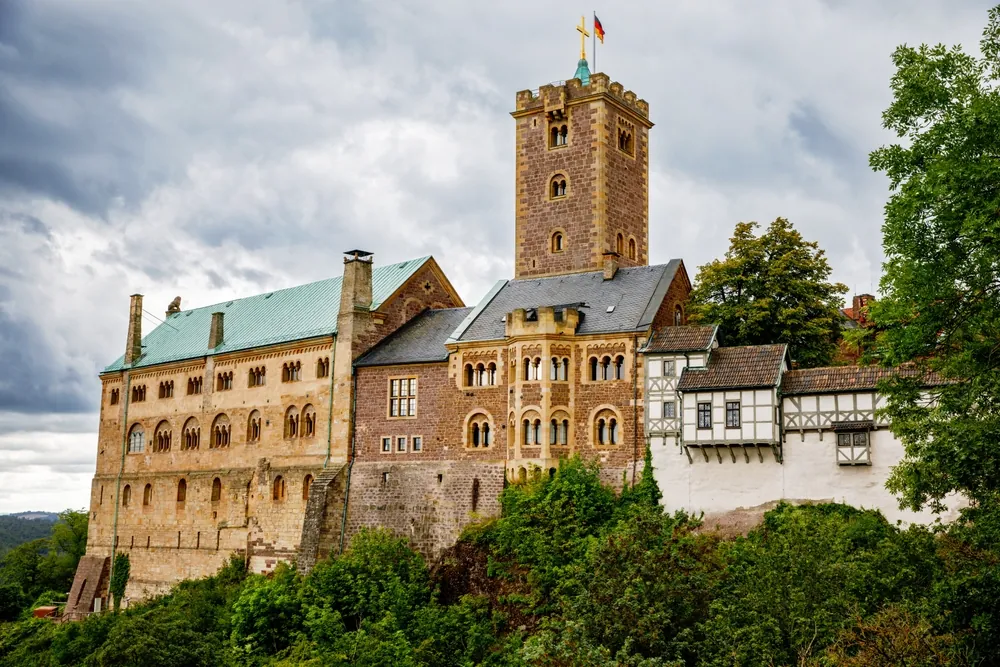
Wartburg Castle holds unparalleled significance in German cultural history. Martin Luther hid here in 1521-22, translating the New Testament into German in just ten weeks, a work that standardized the German language and accelerated the Protestant Reformation. The 12th-century Palas represents the best-preserved non-ecclesiastical Romanesque building north of the Alps. UNESCO inscribed Wartburg as a World Heritage Site in 1999, citing it as an "outstanding monument of the feudal period."
The castle's cultural connections extend beyond Luther. St. Elizabeth of Hungary lived here in the 13th century. The legendary Minstrel Contest of 1206 inspired Wagner's opera Tannhäuser. The 1817 Wartburg Festival launched the German student movement for national unity. King Ludwig II visited Wartburg before designing Neuschwanstein, drawing direct inspiration from its towers and halls. See the UNESCO listing for full details.
Estimated value: €400–450m
Physical calculation reaches €35–45 million—well-preserved Romanesque Palas, hilltop setting. The multiplier is singular cultural significance: Martin Luther translated the New Testament here in ten weeks, standardizing the German language and accelerating the Reformation. UNESCO World Heritage since 1999. Wagner's Tannhäuser. The 1817 student movement. Ludwig II visited before designing Neuschwanstein. German identity carved in stone.
How to visit: 30-minute uphill walk from Eisenach town center or bus. English guided tour daily at 13:30. A Romantik Hotel operates within the castle walls (from €150/night).
6. Schwerin Palace
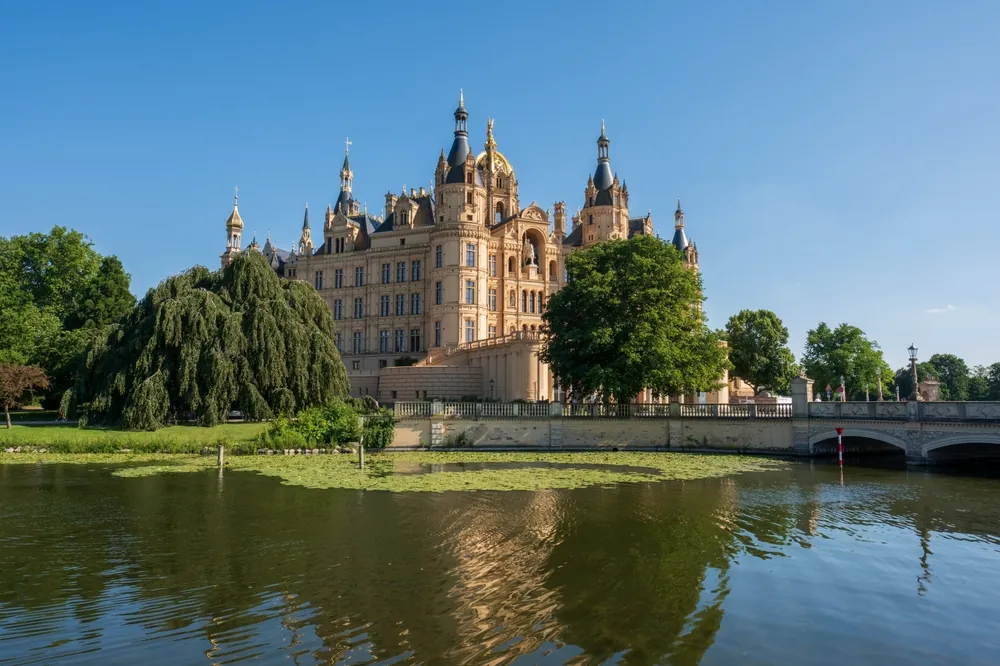
Schwerin Palace, nicknamed the "Neuschwanstein of the North," sits on an island in Lake Schwerin. UNESCO added it to the World Heritage List in July 2024, making it Germany's 54th inscribed site. The palace contains over 630 rooms and was modeled on the French Renaissance châteaux of the Loire Valley, particularly Chambord. Today, it serves as the seat of the Mecklenburg-Vorpommern state parliament while also operating as a museum.
The palace emerged from a collaboration between Germany's leading 19th-century architects: Gottfried Semper, Friedrich August Stüler, and Georg Adolf Demmler. The interiors showcase Carrara marble columns, gilded cast-iron doors, and an extensive porcelain collection. Baroque gardens with an orangery, grotto, and cascade surround the island setting. According to local legend, a ghost called "Petermännchen" roams the halls. Visit the official Schwerin tourism site for current opening times.
Estimated value: €180–220m
630 rooms on a lake island calculate to €100–130 million—impressive but 19th-century, not medieval. UNESCO inscription in 2024 adds legitimacy premium. The palace serves as state parliament while operating as museum, creating dual institutional value. Loire Valley inspiration, Semper and Stüler architecture, Baroque gardens. The "Neuschwanstein of the North" earns its nickname.
How to visit: 90-minute train journey from Hamburg. Entry to gardens is free; museum tours require tickets.
7. Marksburg Castle
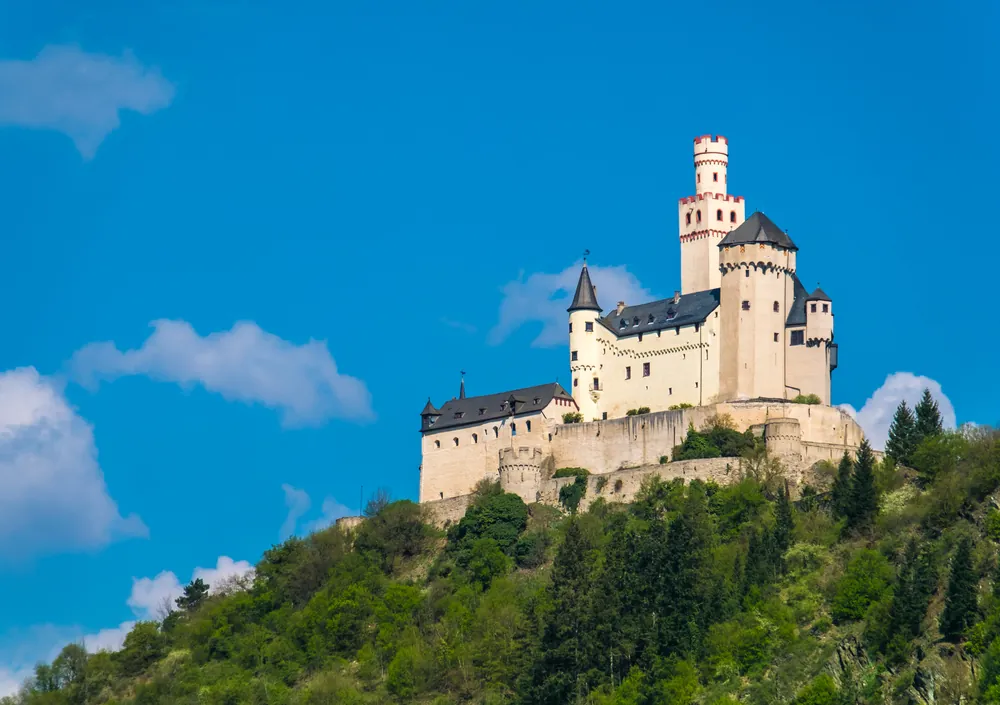
Marksburg is the only hilltop castle on the Middle Rhine that has never been destroyed. While nearly all castles between Bingen and Koblenz fell to Swedish armies in the Thirty Years' War or French troops in 1689, Marksburg survived through a combination of strong fortifications and strategic neutrality. The castle has been continuously occupied for over 900 years and now serves as headquarters of the German Castles Association (Deutsche Burgenvereinigung).
The 39-meter tower and medieval interiors offer an authentic glimpse into castle life. Visitors can see the kitchen, armory, torture chamber, and chapel of St. Mark (from which the castle takes its name). In 1900, the German Castles Association purchased Marksburg for a symbolic 1,000 Goldmarks with the support of Kaiser Wilhelm II. An exact replica was constructed in Japan in 1990.
Estimated value: €45–55m
Physical assets suggest €20–25 million for a compact Rhine fortress. But "only hilltop castle on the Middle Rhine never destroyed" is a premium money can't replicate—every other fortress between Bingen and Koblenz fell to Swedish or French armies.
German Castles Association headquarters since purchasing it for 1,000 Goldmarks in 1900. Japan built an exact replica. UNESCO Rhine Gorge listing.
How to visit: Guided tours only. Accessible by car from the B42 or by Rhine cruise boat to Braubach.
8. Cochem Castle (Reichsburg)
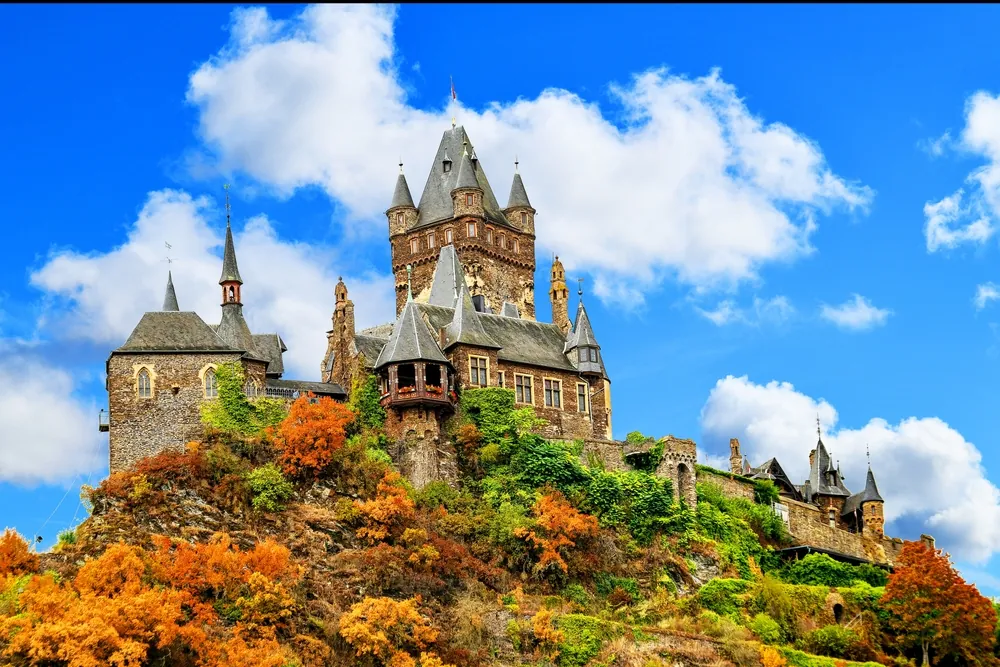
Cochem Castle crowns a prominent hill 100 meters above the Moselle River. Though the original 11th-century fortress was destroyed by French troops in 1689, Berlin industrialist Louis Ravené purchased the ruins in 1868 for just 300 Prussian Thalers and rebuilt it in romantic Neo-Gothic style. The castle represents one of the finest examples of German Burgenromantik, the 19th-century movement to restore medieval castles as symbols of national identity.
Ravené died in 1879 before seeing his castle completed. His son finished the interiors, which now display Renaissance furniture, tapestries, and a notable Knight's Hall. The town of Cochem acquired the castle in 1978 for 664,000 DM (approximately €340,000). Today, Reichsburg Cochem hosts medieval banquets, weddings in the castle chapel, and annual festivals.
Estimated value: €50–65m
Neo-Gothic rebuild on medieval ruins—physical assets €8–12 million with the 19th-century discount. Berlin industrialist Louis Ravené bought the ruins for 300 Thalers in 1868 and created the Burgenromantik exemplar. The town acquired it in 1978 for 664,000 DM—possibly Germany's best municipal heritage bargain. 300,000 visitors, medieval banquets, Moselle Valley postcard silhouette.
How to visit: 15-minute walk from Cochem town center or shuttle bus. Guided tours every 15 minutes.
9. Nuremberg Imperial Castle (Kaiserburg)
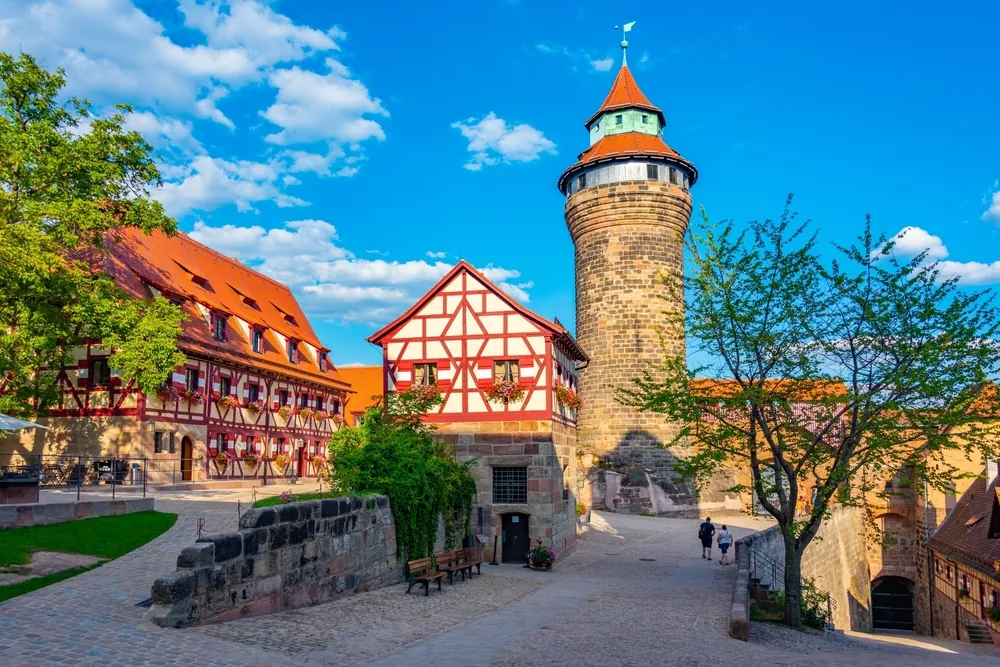
Every Holy Roman Emperor between 1050 and 1571 stayed at Nuremberg Castle. Emperor Ludwig IV visited 74 times; Charles IV, 52 times. The 1356 Golden Bull designated Nuremberg as the location where every newly elected ruler must hold his first Imperial Diet. For nearly 400 years, the castle also stored the Imperial Regalia, including the crown, scepter, and orb used in coronations.
The Romanesque double chapel (c. 1200) represents the most significant architectural element. Upper and lower chapels connected only through a ceiling opening, physically representing medieval social hierarchy.
The 47-meter-deep well and Sinwell Tower offer insights into medieval engineering and defense. The Bavarian Palace Administration manages the complex, which suffered significant damage in 1944-45 before careful post-war restoration.
Estimated value: €120–150m
WWII reconstruction discount brings physical assets to €35–45 million. But every Holy Roman Emperor from 1050 to 1571 stayed here—Ludwig IV visited 74 times. The Imperial Regalia (crown, sceptre, orb) lived here for 400 years before moving to Vienna.
Romanesque double chapel with ceiling opening physically representing medieval hierarchy. Imperial significance commands imperial premiums.
How to visit: 10-minute walk from Nuremberg old town. Combination tickets cover the Palas, chapel, museum, tower, and well.
10. Hohenschwangau Castle
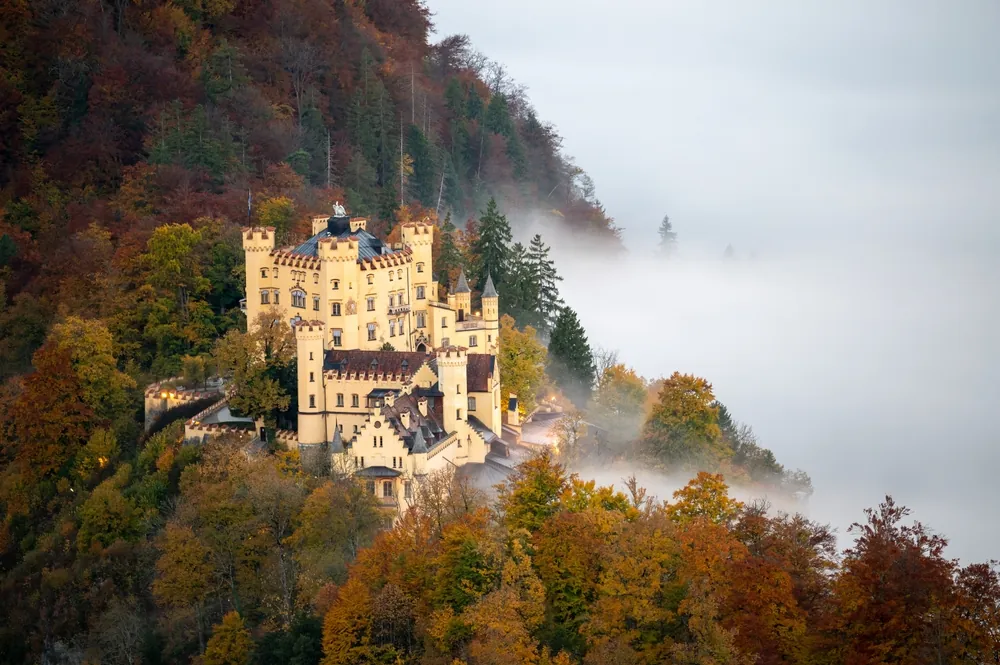
Hohenschwangau Castle served as the childhood summer residence of King Ludwig II, who spent hours gazing from its windows at the construction site that would become Neuschwanstein across the valley. His father, Maximilian II, rebuilt the castle in Neo-Gothic style on 12th-century ruins. The interior frescoes depicting medieval legends planted the romantic obsessions that later consumed Ludwig's castle-building ambitions.
The castle offers a more intimate experience than its famous neighbour. Horse-drawn carriages ascend the narrow road through the rock cutting. The banquet hall's Wilkina Saga frescoes and the queen's bedchamber showcase refined Biedermeier-era decorative arts. Combination tickets with Neuschwanstein are available, though this castle operates independently from the Bavarian Palace Administration.
Estimated value: €150–180m
Physical calculation: €20–25 million for a compact Neo-Gothic castle on 12th-century ruins. The premium is proximity and provenance—this was Ludwig II's childhood home, where he gazed across the valley at the construction site that became Neuschwanstein.
Those Wilkina Saga frescoes planted the obsessions that created Germany's most famous castle. Synergy value is real.
How to visit: Same village as Neuschwanstein. Shared parking at Hohenschwangau. Guided tours only.
11. Burghausen Castle
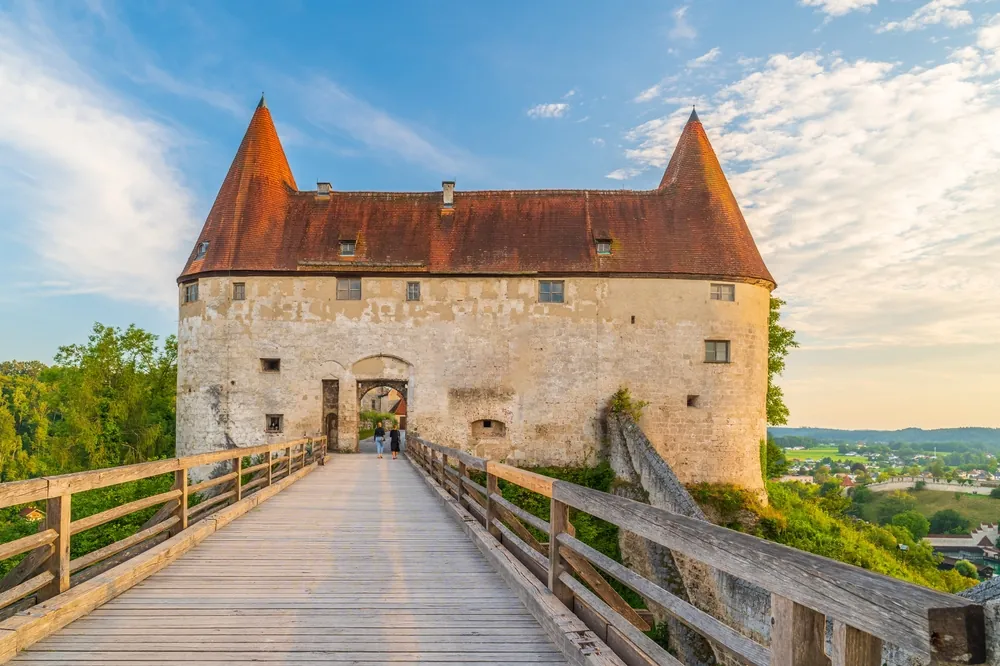
Burghausen Castle stretches over one kilometer along a ridgeline between Munich and Salzburg, making it the longest castle complex in the world. Built by the Dukes of Bavaria-Landshut from 1255, it comprises six courtyards connected along the hilltop above the Salzach River. The first few courtyards have been partially privatized, meaning some residents now live within the medieval walls.
The complex includes a Gothic church, armory, gateways, and guard towers that developed organically over 500 years. The original castle at the far end features a picture-perfect courtyard with cobblestones and arched gateways. Panoramic views extend across the Austrian border. See the Bavarian Palace Administration for visitor information.
Estimated value: €55–75m
One kilometer of castle stretching across a ridgeline—25,000 m² calculates to €65–80 million, but mixed state/private ownership complicates valuation. "Longest castle in the world" status adds premium. Six courtyards, some now with private residents living inside medieval walls. Between Munich and Salzburg, capturing traffic from both.
How to visit: Between Munich (1 hour) and Salzburg (30 minutes). Free access to courtyards; museum tickets for interiors.
12. Lichtenstein Castle
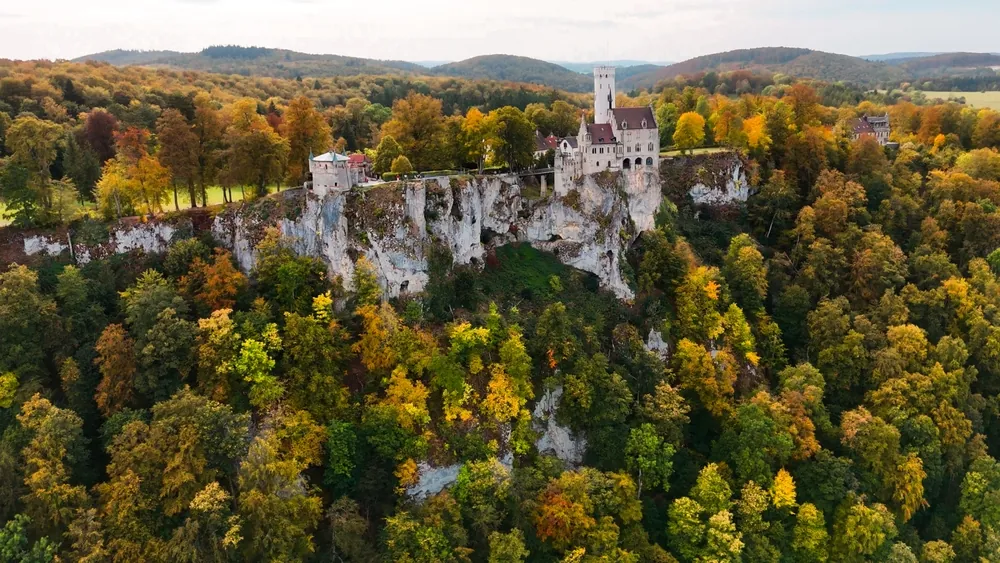
Lichtenstein Castle, known as the "Fairytale of Württemberg," perches dramatically on a cliff edge in the Swabian Alb. Duke Wilhelm of Urach built it in Neo-Gothic style after being inspired by Wilhelm Hauff's 1826 novel of the same name. The castle represents one of the finest examples of literary-inspired castle construction, where romantic fiction directly shaped architectural reality.
Less crowded than Germany's famous castles, Lichtenstein offers intimate guided tours through its compact interiors. The viewpoint provides sweeping panoramas across the surrounding landscape. The Dukes of Urach continue to own the property, making it one of Germany's notable privately-held heritage estates.
Estimated value: €20–30m
Compact cliff-edge castle calculates to €7–10 million—a dramatic setting but a small footprint, 19th-century construction. The story sells it: Duke Wilhelm of Urach built it after reading Wilhelm Hauff's 1826 novel, making it one of Europe's finest examples of fiction shaping architecture.
How to visit: Best accessed by car. Parking area near the castle with short walk. Near Hohenzollern Castle (30 minutes).
13. Mespelbrunn Castle
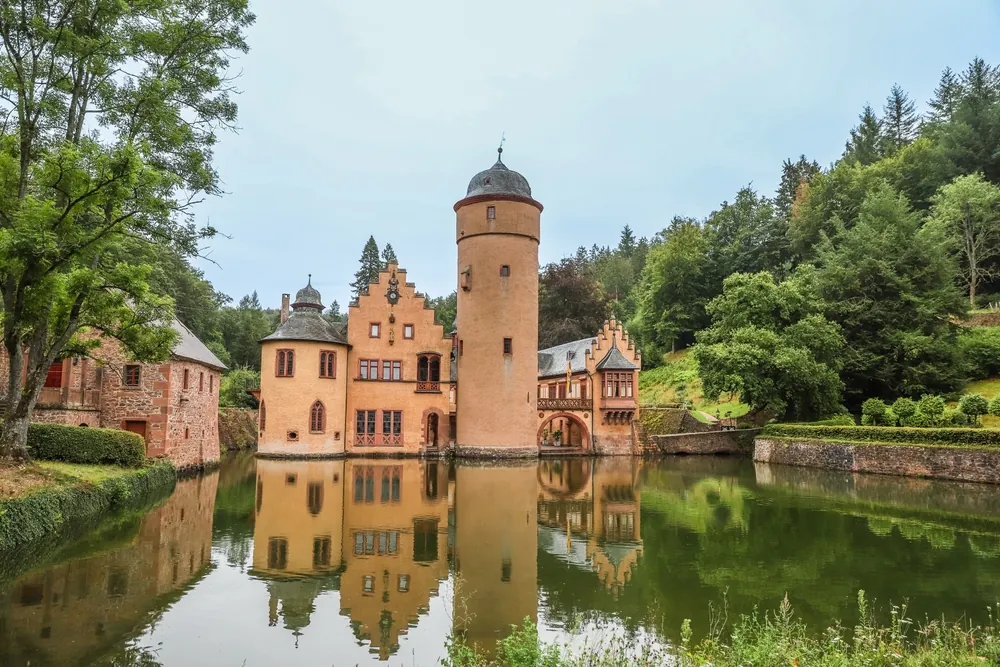
Mespelbrunn ranks among Germany's most photographed castles. The cream-colored manor with its distinctive tower reflects perfectly in the surrounding pond, creating an image of serene beauty. Located just one hour from Frankfurt in the Spessart Forest, the castle has remained in the same family since the Archbishop of Mainz granted the property in 1412.
Local tradition holds that the Brothers Grimm stayed at Mespelbrunn and drew inspiration from its tower for the tale of Rapunzel. The single door set 20 feet above the courtyard does invite such imaginings. The intimate scale and forest setting make this castle particularly atmospheric in autumn mist or winter snow.
Estimated value: €15–22m
Water castle reflecting in its pond—physical assets €10–12 million. Same family ownership since 1412 adds provenance premium. The Rapunzel legend (Brothers Grimm allegedly stayed here) provides marketing value. One hour from Frankfurt, most photographed castle in Germany. Intimate scale and forest setting create atmosphere that larger castles cannot match.
How to visit: One hour from Frankfurt by car. Limited public transport; car recommended.
14. Sigmaringen Castle
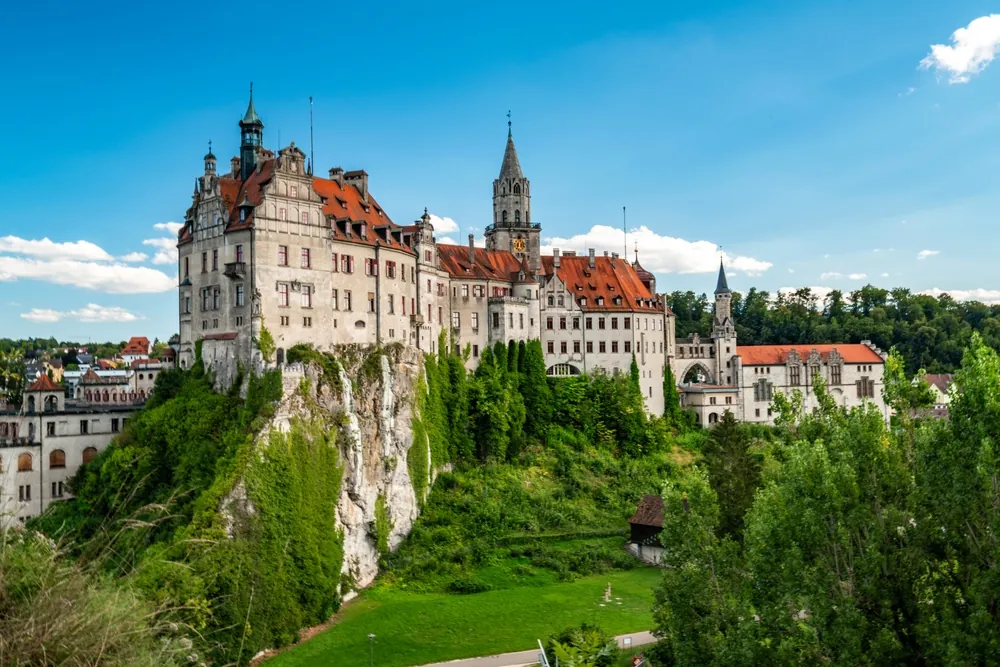
Sigmaringen Castle dominates the upper Danube from a dramatic cliff-top position. The largest castle on the Danube, it serves as the ancestral seat of the Swabian branch of the House of Hohenzollern. After fire destroyed much of the structure in 1893, the family rebuilt it in historicist style within just five years, an impressive feat of late 19th-century construction.
The castle houses one of Europe's largest private armory collections, with over 3,000 weapons displayed across multiple halls. The Hohenzollern-Sigmaringen family continues to reside in part of the castle while opening extensive sections for public tours. During World War II, the castle briefly served as the seat of the Vichy French government in exile.
Estimated value: €55–70m
Largest castle on the Danube, clifftop position—physical assets €60–75 million, but 1893 rebuild applies a discount. Hohenzollern-Sigmaringen provenance adds royal premium. 3,000-weapon armory collection is museum-quality.
Briefly served as Vichy French government seat in WWII—a historical footnote that adds intrigue. Family still resides in part of the castle.
How to visit: On the Danube Cycle Path. Train service to Sigmaringen; the castle is a short walk from the station.
15. Pillnitz Palace
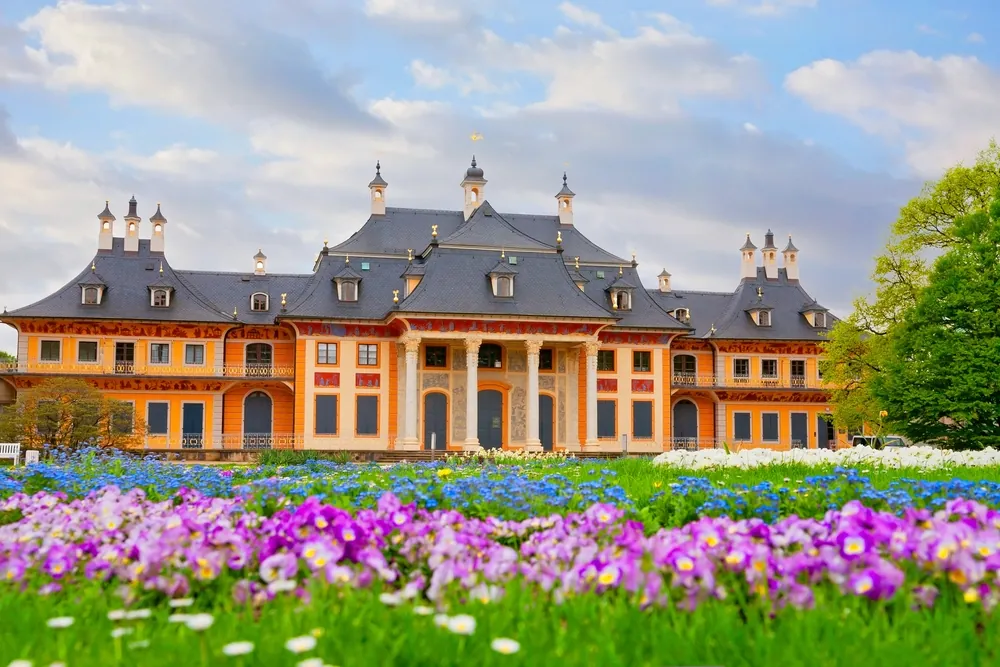
Pillnitz Palace served as the summer residence of the Saxon electors and kings. Three interconnected palaces, the Riverside Palace, Upper Palace, and New Palace, frame formal Baroque gardens on the banks of the Elbe River. The distinctive Chinoiserie elements reflect the 18th-century European fascination with Asian decorative arts.
The complex includes Germany's largest cast-iron greenhouse (the Palm House), an English garden with pavilions, and a 230-year-old camellia that blooms each spring under a mobile protective house. The 1791 Declaration of Pillnitz, signed here by European powers threatening intervention against revolutionary France, marked a turning point in European history.
Estimated value: €85–110m
Three interconnected Baroque palaces on the Elbe—physical assets €50–60 million. Chinoiserie elements reflect 18th-century European fascination with Asian decorative arts. The 230-year-old camellia with its mobile protective house is unique. Declaration of Pillnitz (1791) marked turning point in European history.
Accessible by historic paddle steamer.
How to visit: Eastern Dresden, accessible by historic paddle steamer on the Elbe, bus, or car.
What Makes German Castles Distinct?
German castles are distinctive for their density, diversity, and the 19th-century Romantic Revival that preserved and reimagined them. With an estimated 20,000-25,000 castles and palaces, Germany holds the highest concentration of such structures in Europe.
This density reflects centuries of political fragmentation: hundreds of independent territories, each with rulers who built fortifications to defend their domains.
The Castle Romanticism Movement
Burgenromantik, or Castle Romanticism, transformed German castles during the 19th century. Wealthy industrialists and aristocrats purchased ruins and rebuilt them as romantic ideals of medieval architecture. Neuschwanstein, Hohenzollern, Cochem, and Lichtenstein all emerged from this movement.
These reconstructions often incorporated elements that never existed in the original medieval structures but reflected contemporary dreams of chivalric heritage.
The movement connected to German nationalism and the quest for national unity. Castles became symbols of shared Germanic identity. This cultural significance led to exceptional preservation efforts: the German Castles Association, founded in 1899, has worked for over 125 years to protect these structures.
Architectural Diversity
German castles span every major European style: Romanesque fortresses like Wartburg and Nuremberg; Gothic strongholds along the Rhine; Renaissance palaces like Heidelberg; Baroque residences like Pillnitz; and Romantic Revival creations like Neuschwanstein. This diversity results from the long construction periods of many castles, which accumulated architectural elements across centuries.
The Rhine and Moselle valleys hold particular concentrations. During the medieval period, a castle stood roughly every 2.5 kilometers along the Rhine, each controlling river trade and collecting tolls.
Most were destroyed in the Thirty Years' War or by Louis XIV's armies, making survivors like Marksburg and Burg Eltz exceptionally rare.
Private Ownership and Modern Living
Several German castles remain in private hands, some with the same families for centuries. The Eltz family has owned Burg Eltz for over 850 years. The Hohenzollerns maintain Hohenzollern Castle. The Dukes of Urach own Lichtenstein. These continuities of ownership often ensure better preservation than state management, as families maintain personal connections to their ancestral homes.
German castles occasionally reach the market through specialist heritage agents. While the most famous properties never sell, smaller castles and manor houses appear regularly.
Prices range from €500,000 for restoration projects requiring significant investment to €10-30 million for turnkey estates with modern amenities. France leads the European castle market in volume, but German properties often command premiums for their substantial construction and preserved interiors.
Acquire a Piece of German Heritage
Germany's castles represent centuries of architectural ambition, from medieval fortresses to Romantic Revival palaces. While the most celebrated properties remain in state or noble family hands, exceptional heritage estates do occasionally reach the market for discerning collectors.
Explore our current collection or register for private notifications when exceptional German properties become available.